-
-
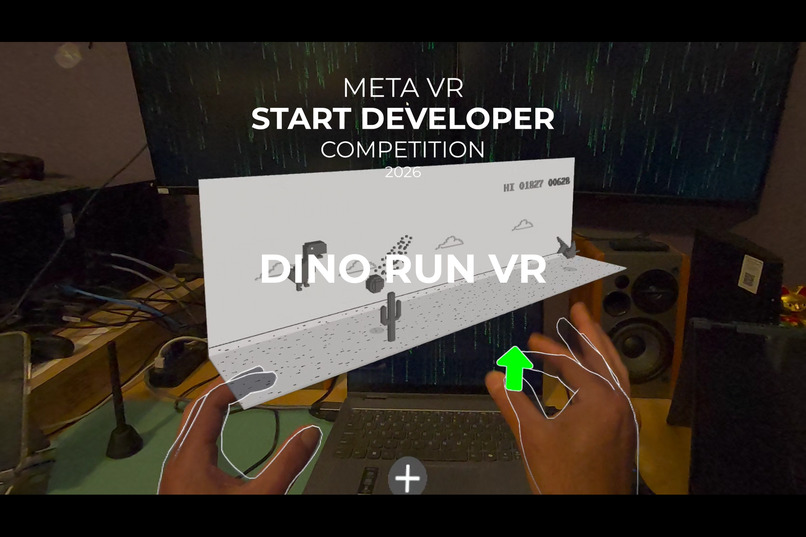
intro
-
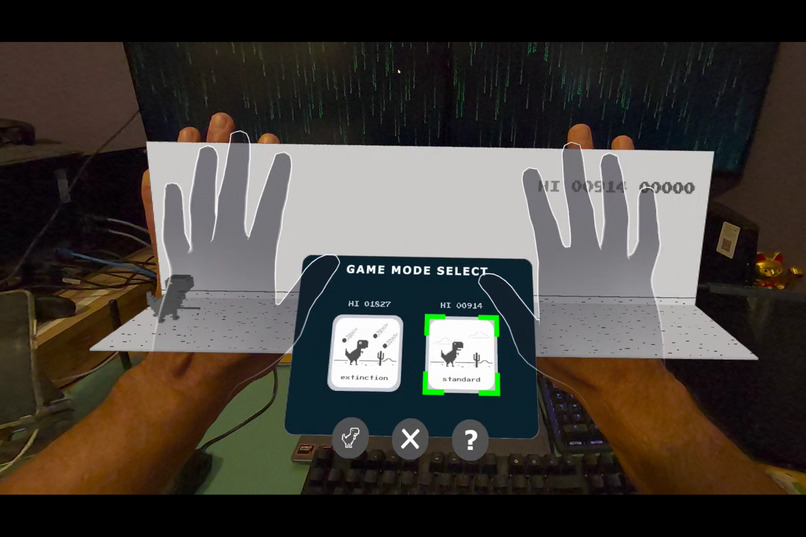
hands + mixed-reality
-
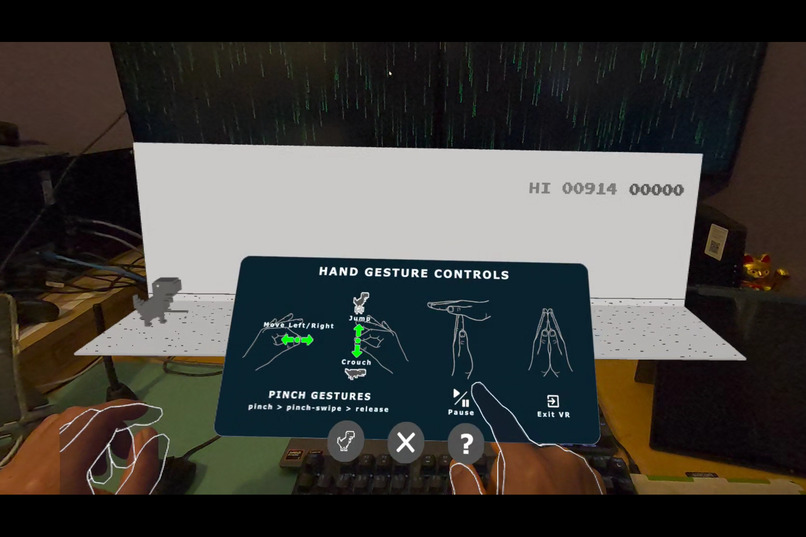
hand-gesture controls
-
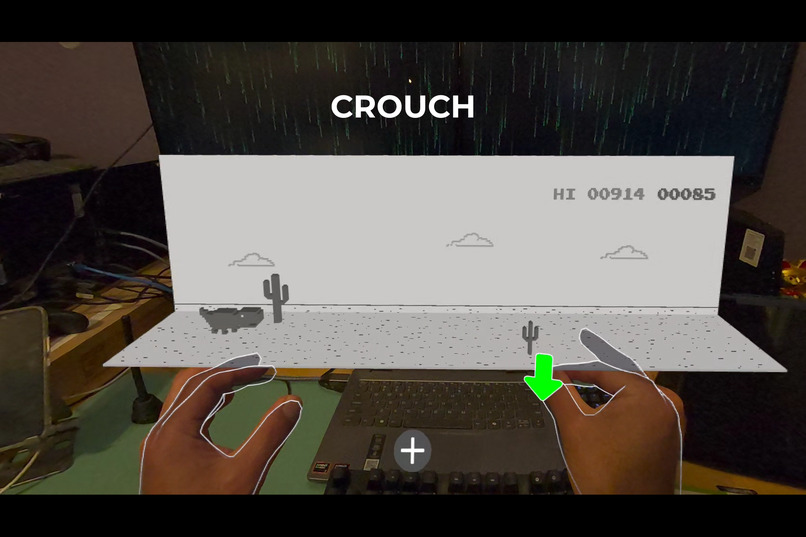
crouch
-
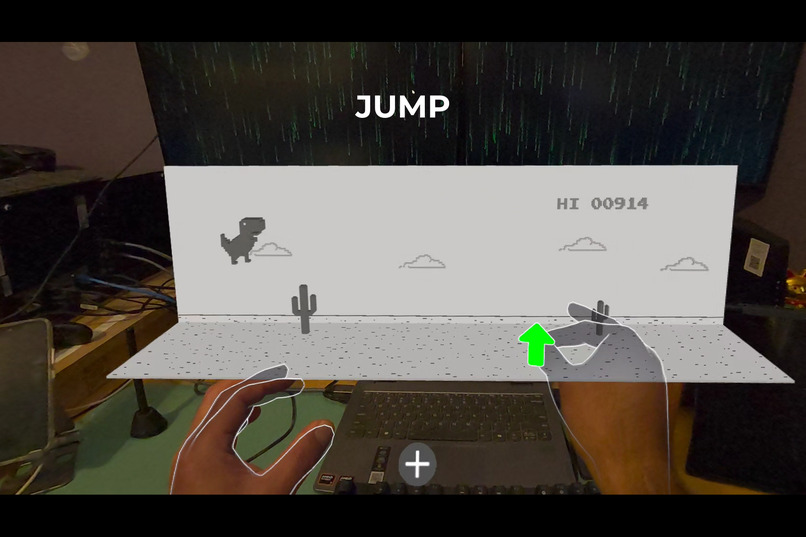
jump
-
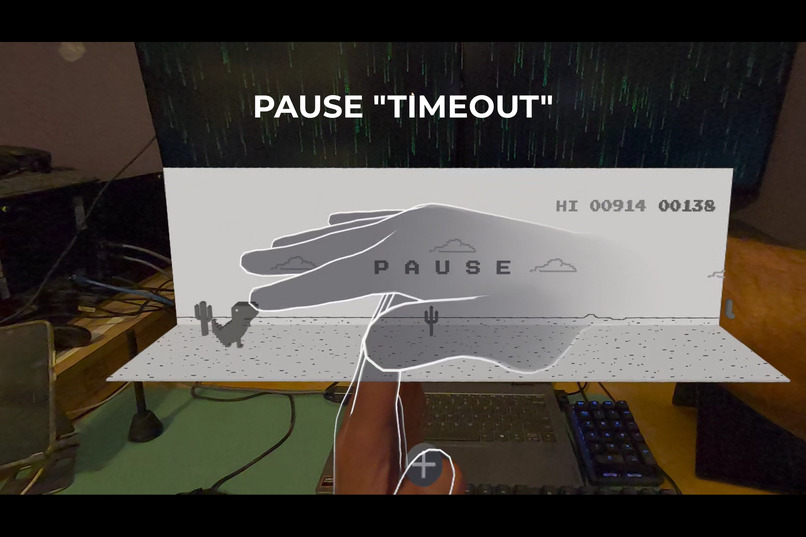
timeout
-
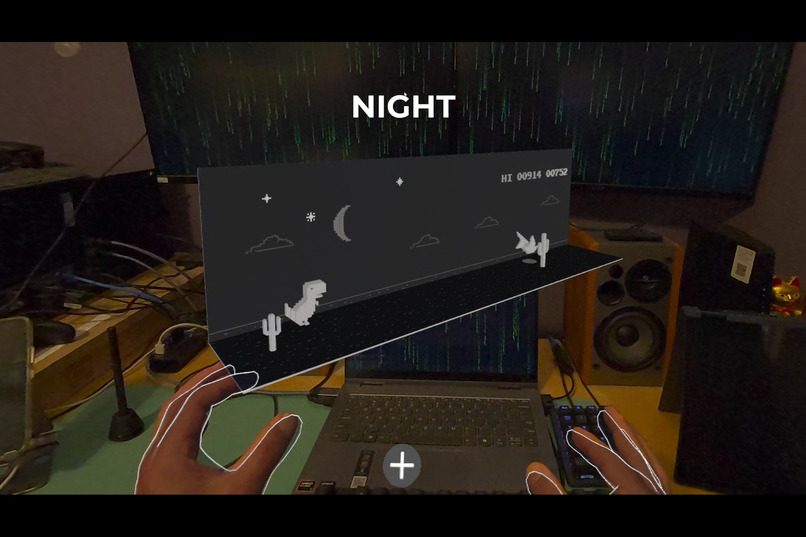
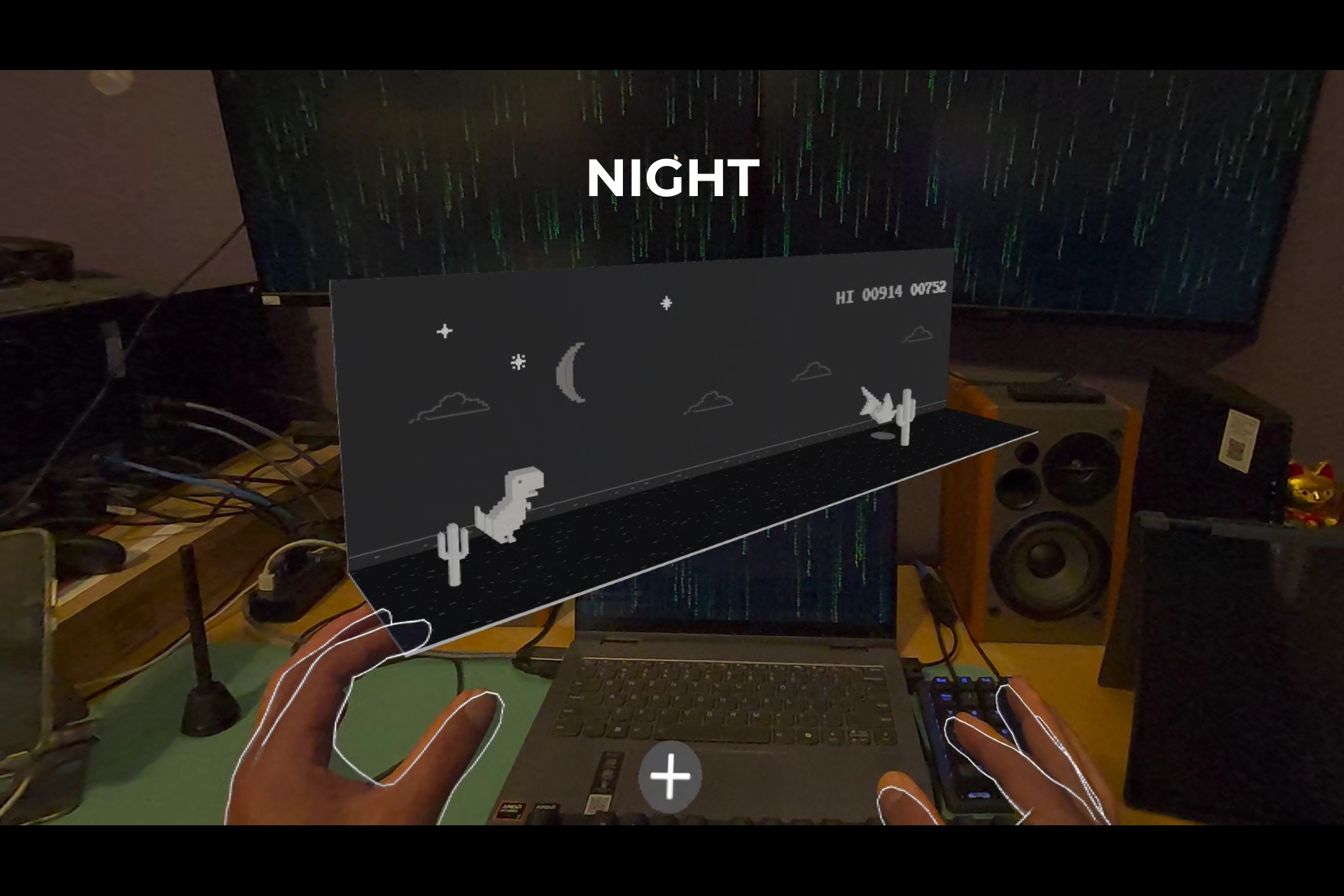
night
-
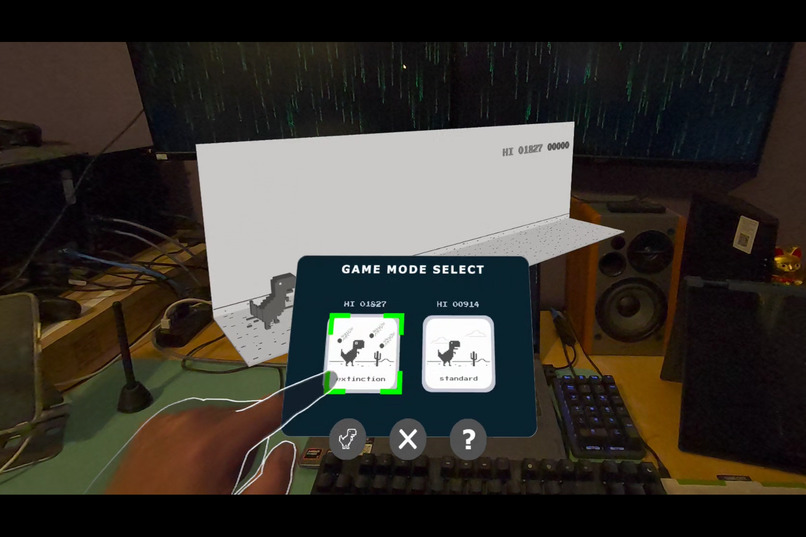
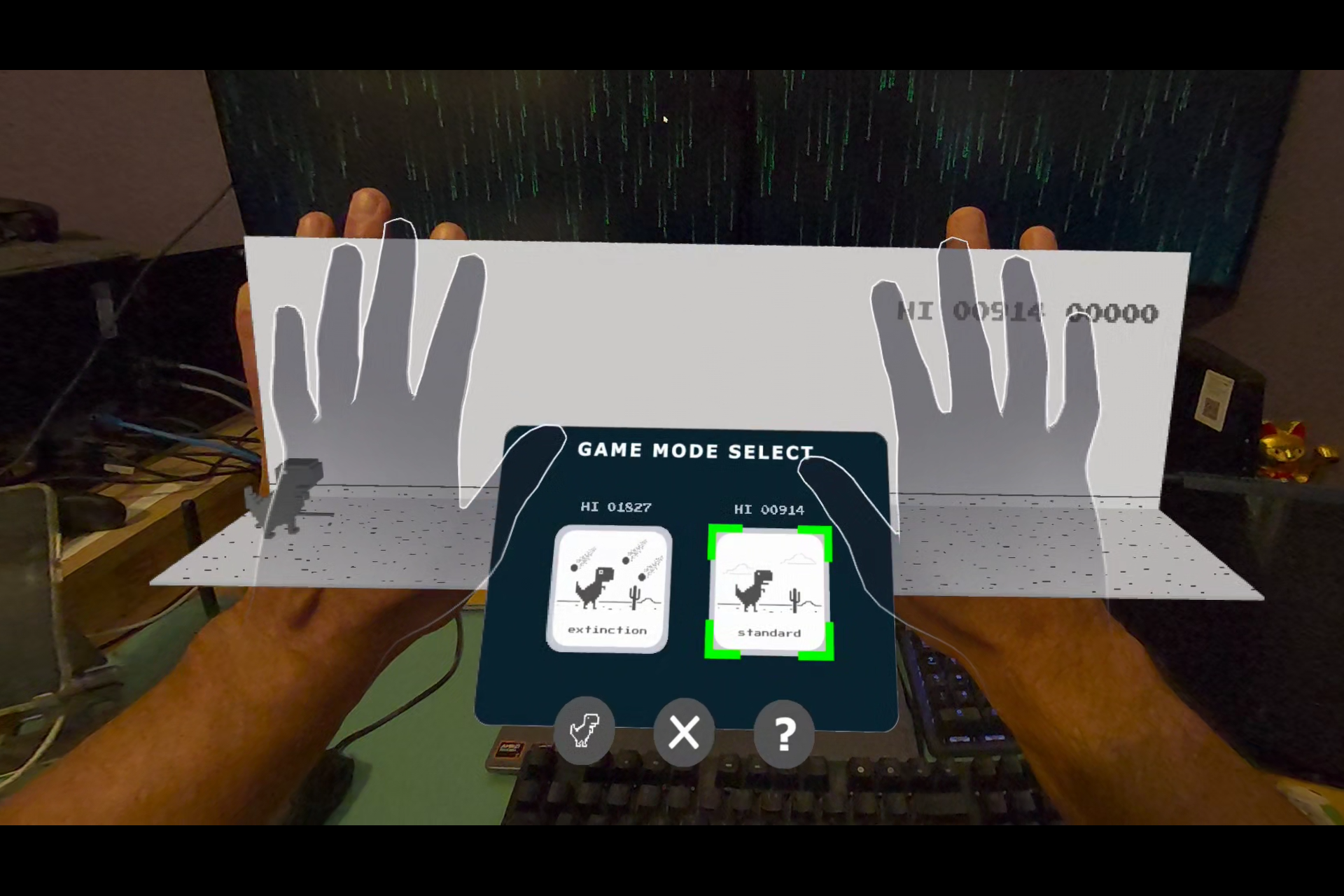
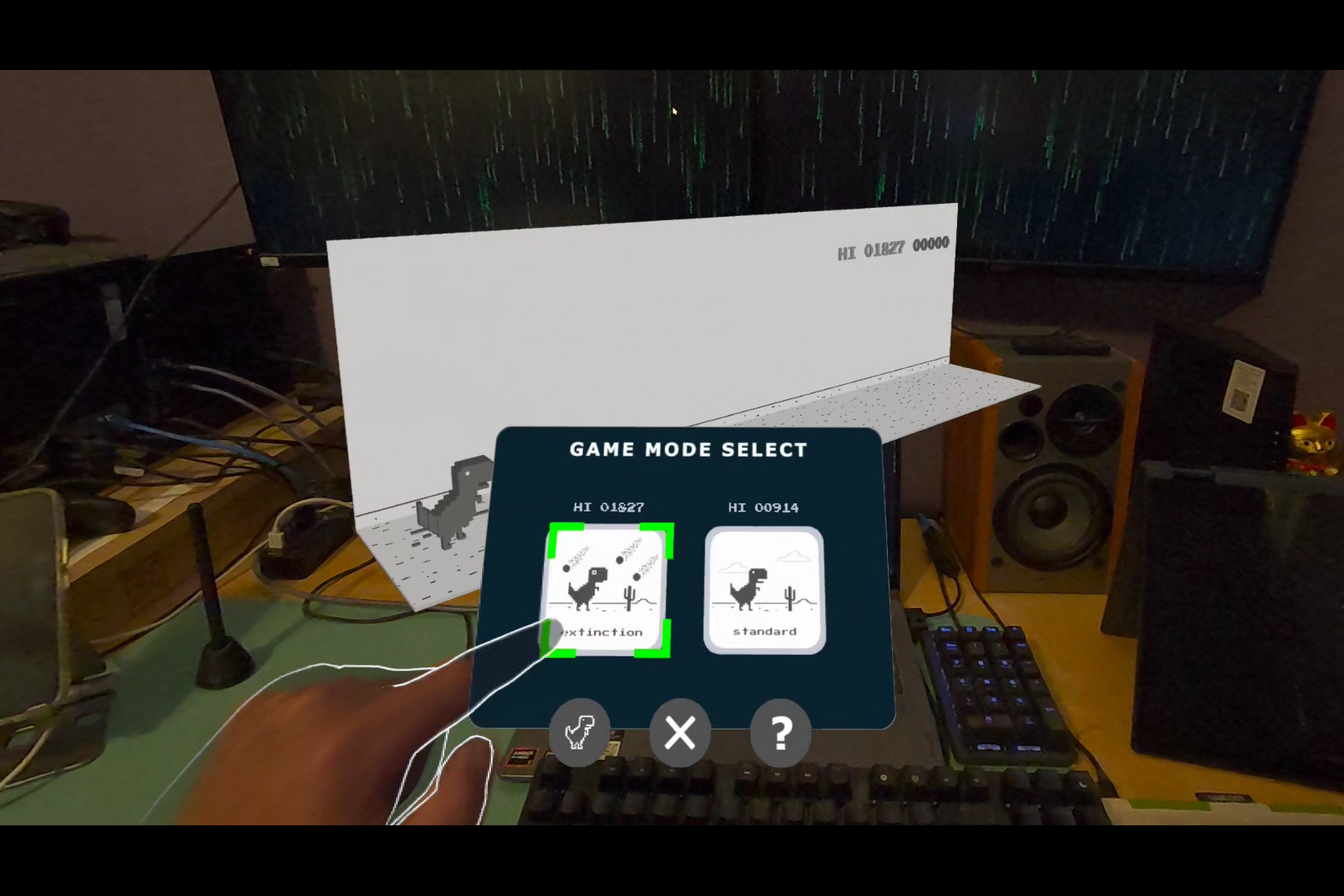
game mode select - extinction
-
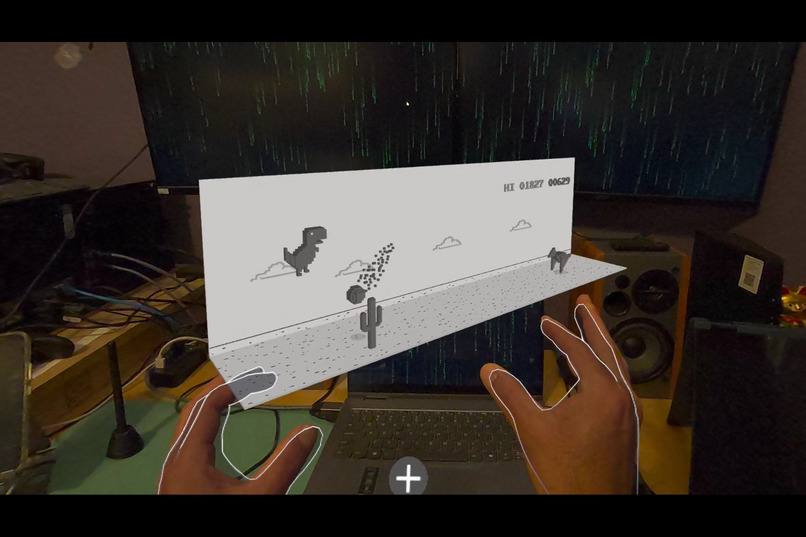
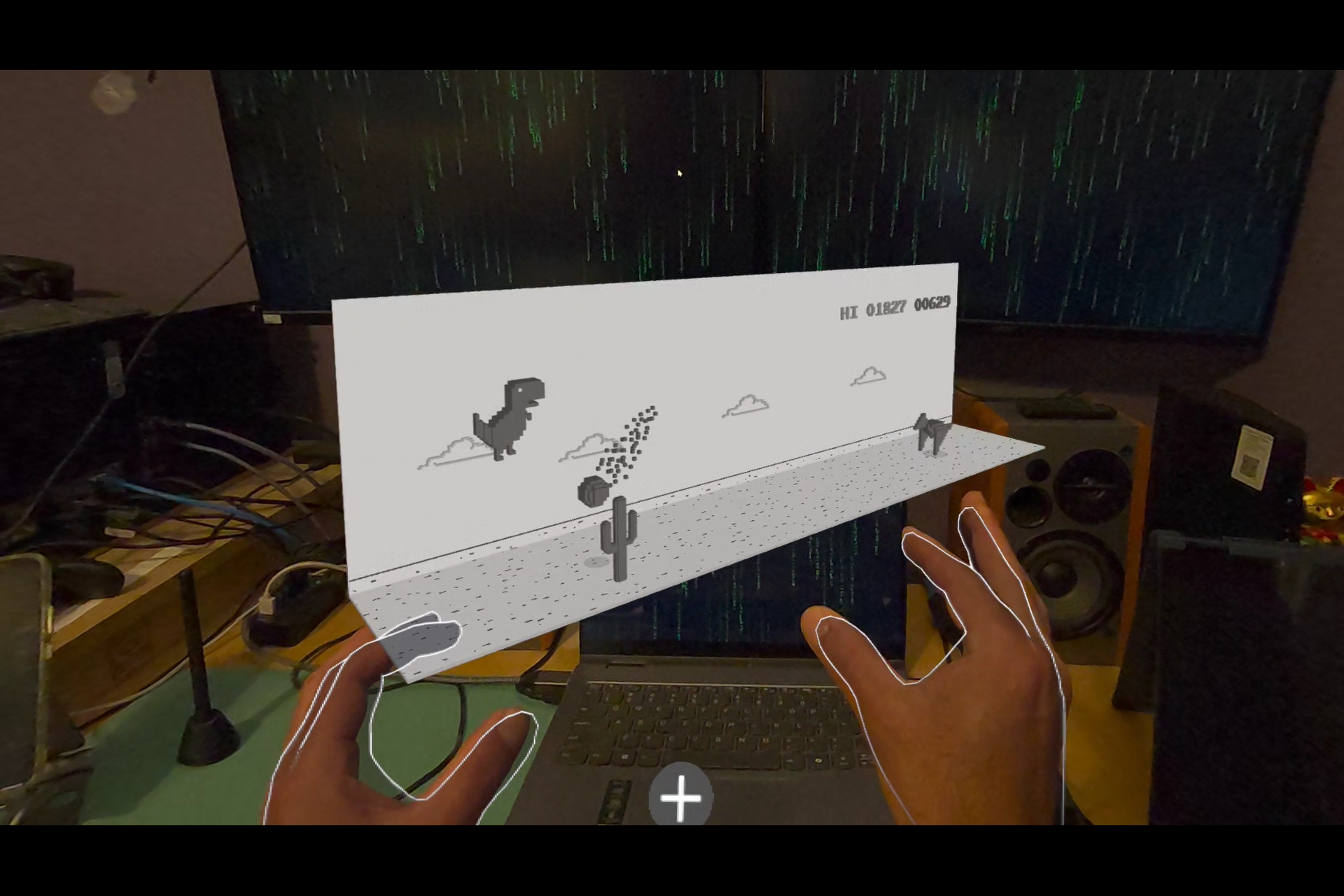
extinction mode - meteor
-
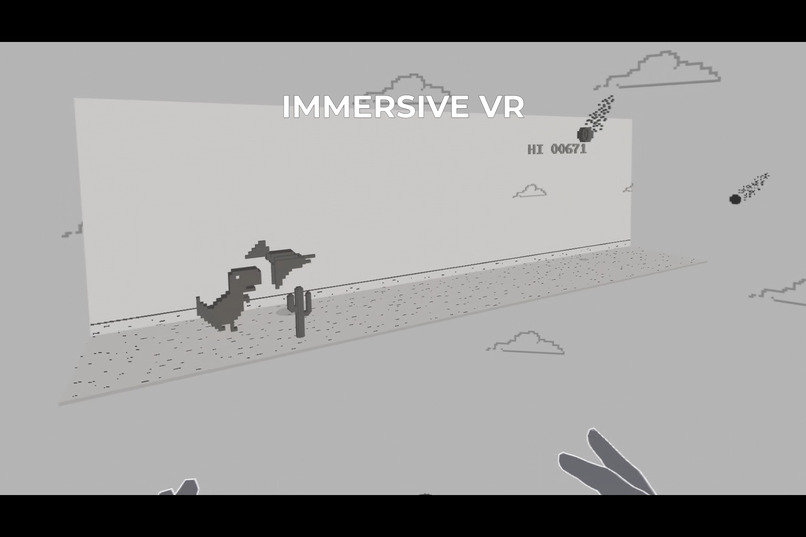
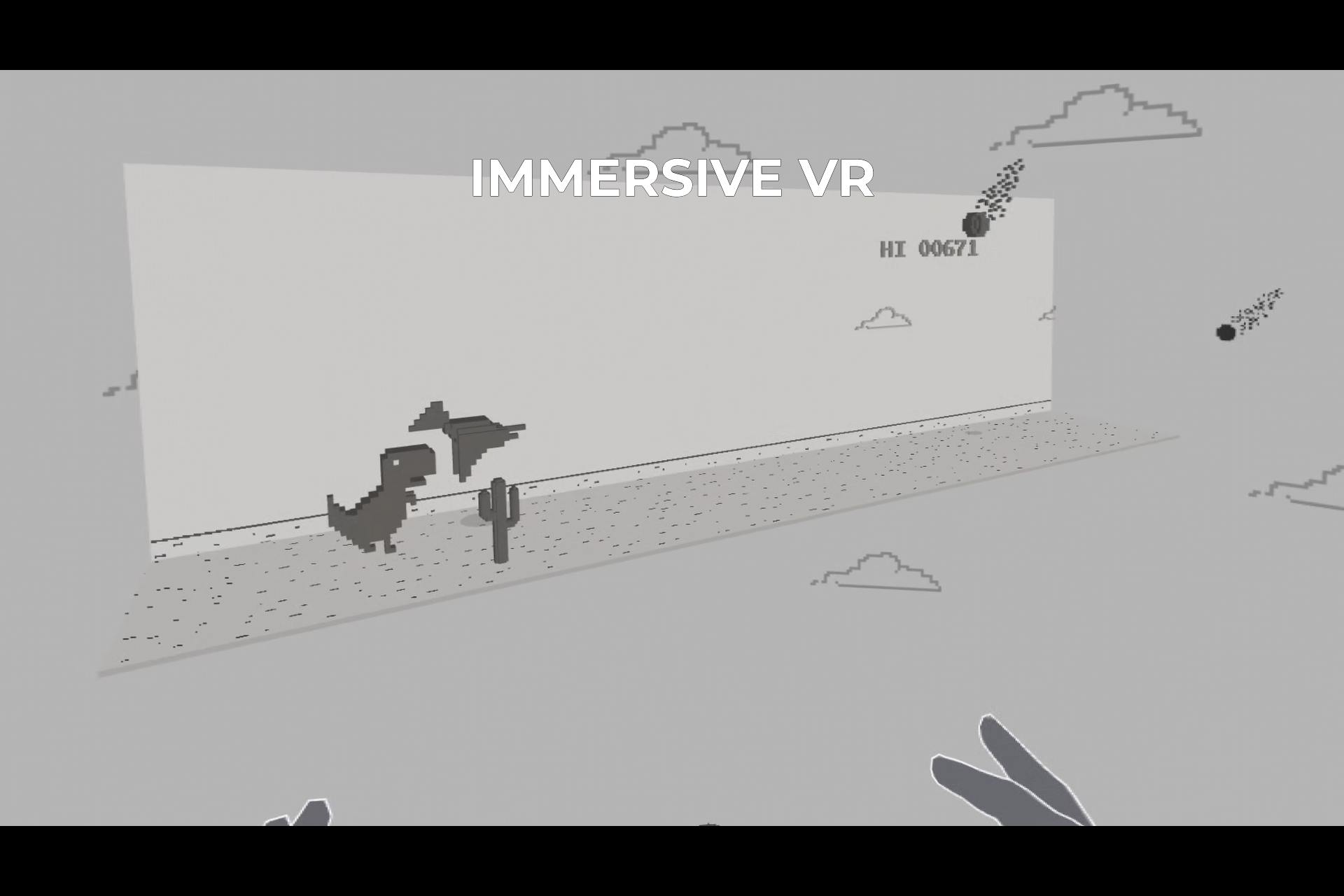
immersive-vr
Inspiration
Almost everyone knows the classic "no internet" Chromium T-Rex runner or "Dino Runner". While experimenting with WebXR, I've wanted to create a game for a while now and leverage what I've learned. "Dino Runner" offered the most simple gameplay mechanic to help limit my game ambitions (scope creep), while still allowing for some creative license in virtual reality.
My goal was to create a frictionless, zero-install game for Meta Quest (and other devices!) that satisfies both the "Airplane Seat Test" (comfortably playable while seated in a small space) and the "Bus Stop Test" (instant cold-start in the browser with short, replayable 1–5 minute runs), playable 100% with just your hands.
What it does
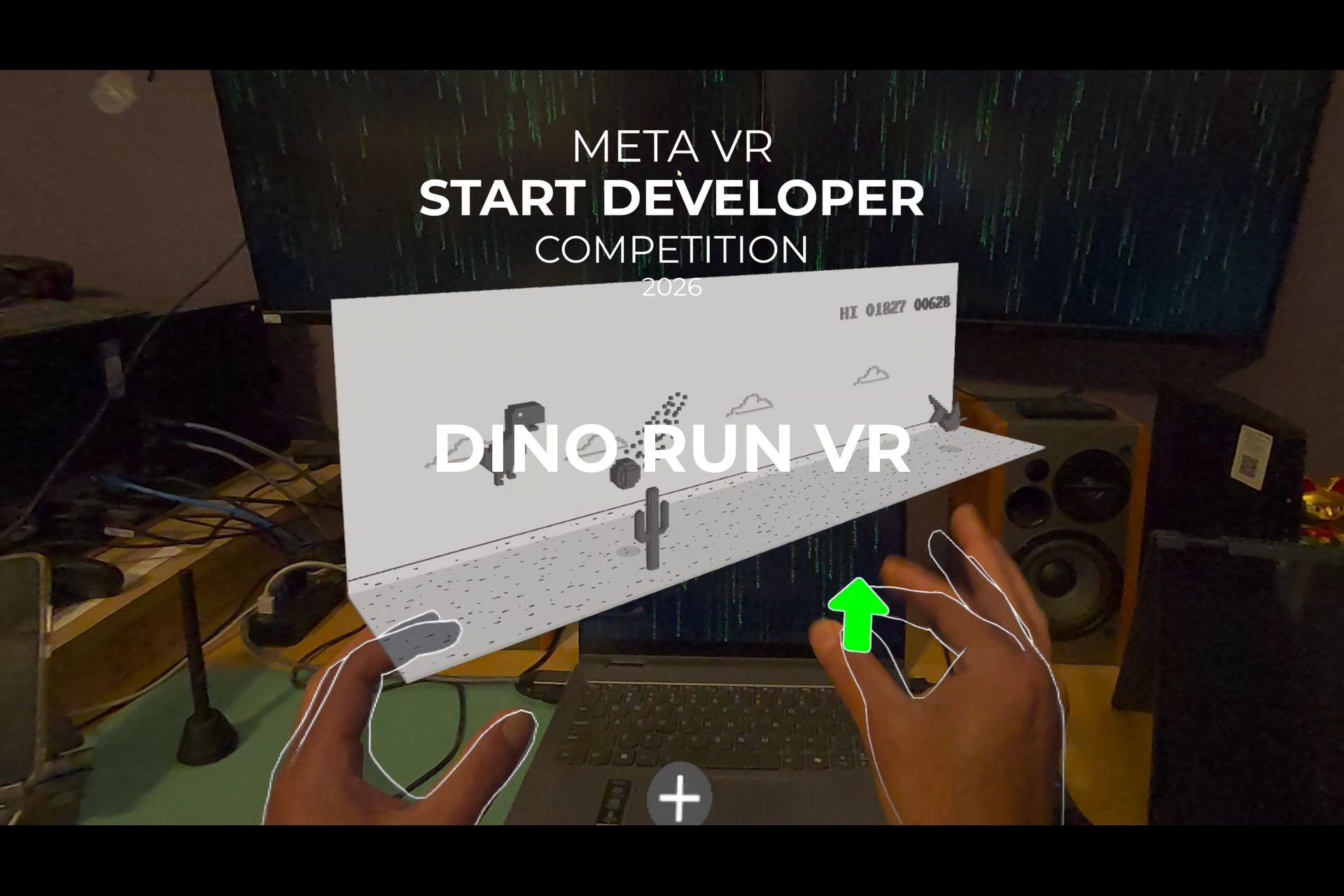
Dino Run VR reimagines the endless runner as a spatial, 3-lane tabletop game:
- Mixed Reality & Full VR: Play in Passthrough MR with the miniature desert diorama floating over your furniture, or toggle into a 360° Immersive VR prehistoric mesa skybox.
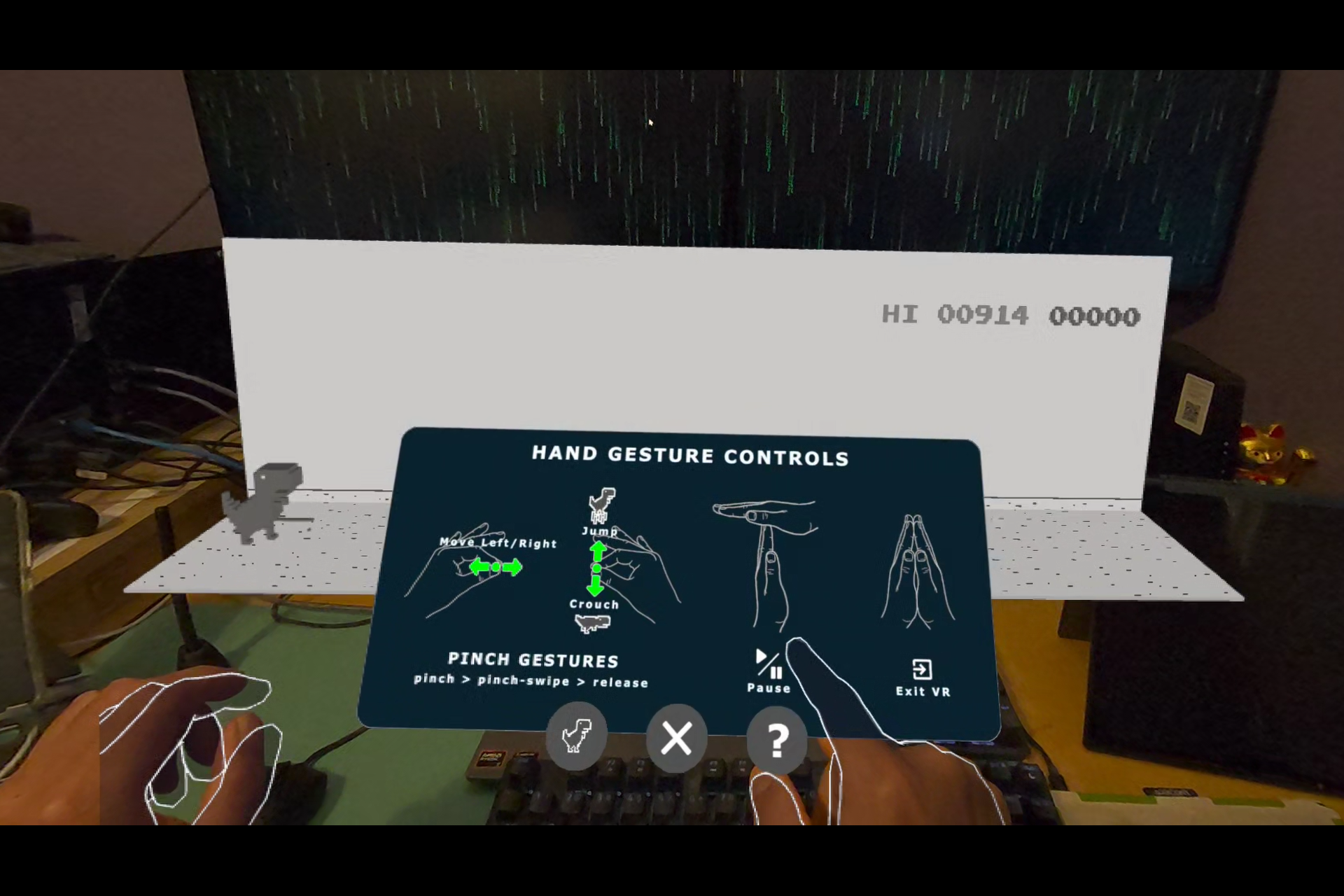
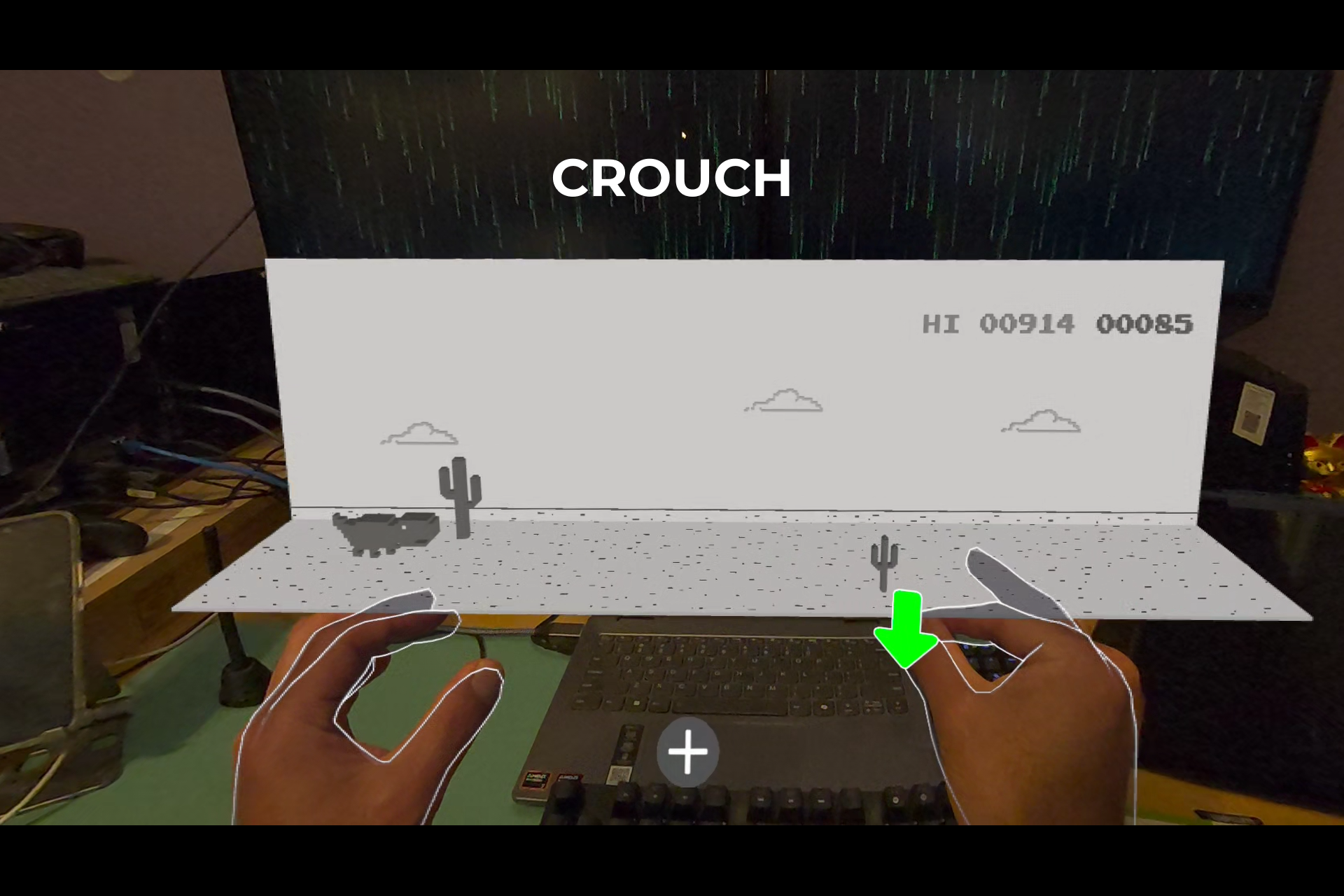
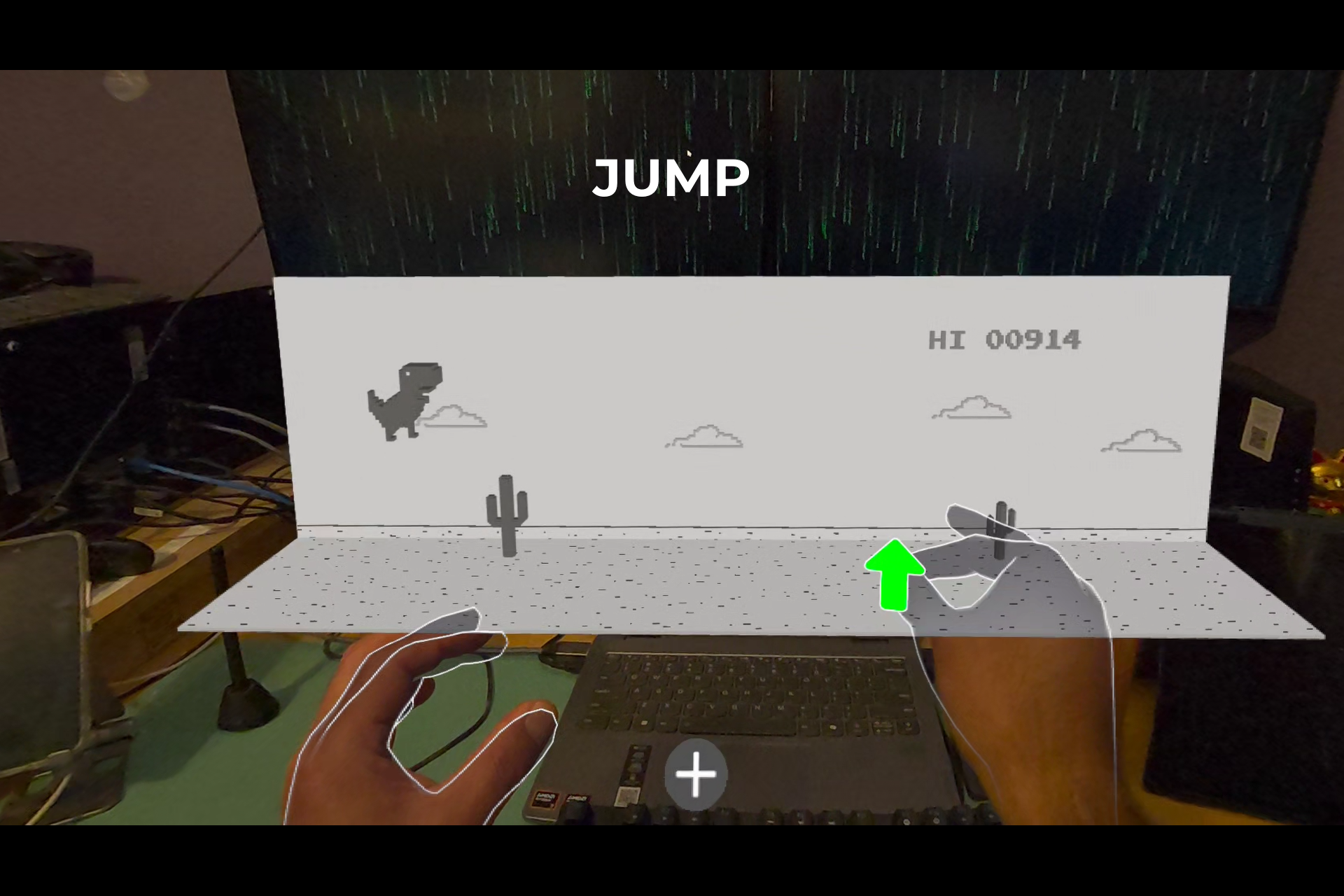
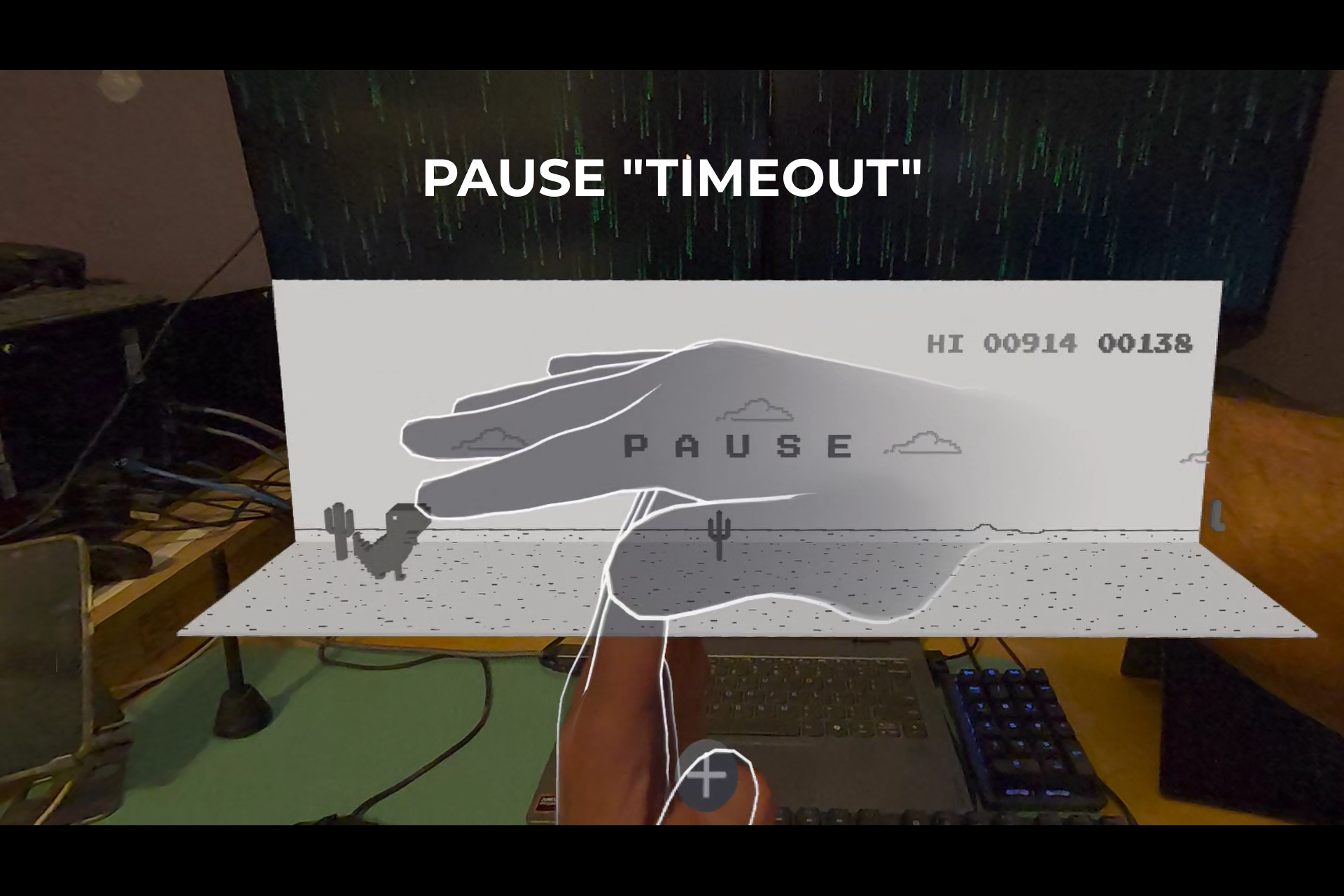
- 100% Hands-First Controls: No controllers required. Reach out with bare hands to grab, move, push/pull, and rotate the diorama in your room. During gameplay, right-hand swipe up to jump, right-hand swipe down to duck under flying pterodactyls, left-hand swipe left/right to switch lanes, touch hands in a "T" timeout gesture to pause/unpause, or hold palms together in a "Prayer" gesture to exit.
- Extinction Mode: Alongside Standard Mode, Extinction Mode introduces more intense difficulty, driving 8-bit chiptune music that speeds up with the game, falling meteors with ground-impact effects (whole diorama shakes), and swooping pterodactyls.
- Zero-Install WebXR: Runs directly inside the Meta Horizon Browser at
https://meta-2026.dino-run-vr.pages.devwith no downloads or sideloading. Also supports VR controllers, desktop keyboard, gamepads, and touchscreens.
How we built it
- 3D Assets: I recreated the original 2D pixel sprites into 3D voxel-style models using MagicaVoxel and Blender, keeping the retro aesthetic while giving every cactus, dino frame, and pterodactyl volumetric depth and shadows.
- Engine & Framework: Built with TypeScript, React Three Fiber (Three.js),
@react-three/xr, and Preact Signals for reactive state management without React re-render overhead. - Audio: Howler.js and the Web Audio API power both the dynamic tempo-scaling chiptune soundtrack and procedural FM/noise synthesis for UI clicks and meteor impacts.
- Iterative AI Workflow: Built iteratively on top of my prior WebXR experiments using Google Gemini / Antigravity for pair-programming, shader tuning, and performance profiling.
Challenges we ran into
- Fast-Release Hand Grab Stickiness: When grabbing the diorama with bare hands in WebXR, standard index-finger sphere intersectors tended to "stick" for several frames during a fast release. I solved this by implementing a disguised ray-cast grab against a double-sided bounding volume with zero minimum distance and hidden ray visuals up close, making grab-and-release feel instant.
- First Pterodactyl Frame Stutter: When the score first hit the threshold to spawn a flying pterodactyl, compiling its shader and uploading geometry caused a noticeable frame hitch on Quest. I built an offscreen GPU pre-warmer (
gl.compile) that initializes all obstacle variants and materials during scene load so spawns are stutter-free. - Preventing Accidental Lap Gestures: Resting hands in your lap or dropping your arms could accidentally trigger a duck swipe. I added view-cone filtering and vertical floor clamping relative to the headset gaze so gestures only register when your hands are intentionally held in the active play zone.
- Translucent Hand Rendering Artifacts: Standard transparent 3D hand meshes suffer from ugly internal triangle overlap when fingers cross. I solved this using a multi-pass shader setup: a front-face depth pre-pass (
colorWrite: false) followed by a semi-transparent color pass and a skinned inverted-hull outline pass.
Accomplishments that we're proud of
- Complete Controller-Free Flow: From launching VR, positioning the diorama, selecting modes on the floating 3D placard, playing, pausing, restarting after a crash, to exiting the session - you never have to pick up a controller or return to a 2D menu.
- Optimized Standalone VR Performance: Eliminating garbage collection inside
useFrameloops, pooling obstacles, and enforcing single-sided geometry significantly reduced frame stutters to keep gameplay smooth and responsive on standalone headset hardware. - Tactile Diorama Shake in VR: Since shaking the player's camera in VR causes motion sickness, meteor impacts physically shake and tilt the miniature diorama stage itself while keeping WebGL clipping planes synchronized.
What we learned
This is my very first completed game. Building it taught me how different spatial UI and hand tracking are compared to flat screens. Small details - like targeting the "cyclopean eye" (the true midpoint between both VR eyes) and using horizon-locked radial billboarding so sprites and interactive panels always face you squarely without tilting or angling awkwardly when you move your head, or adding a tiny cooldown after releasing the diorama so you don't accidentally poke a button - make the difference between a frustrating prototype and something that feels natural.
What's next for Dino Run VR
- Launching publicly on heyvr.io and itch.io after competition judging concludes.
- Expanding support and tuning for next-gen lightweight AR/MR glasses and gaze-and-pinch (
transient-pointer) input, with plans to test and adapt for XReal Aura, Meta Project Phoenix, and Apple Vision Pro. - Adding global leaderboards.
- Exploring webcam-based hand and eye/head tracking for non-immersive desktop play - leveraging Google Antigravity and agentic coding to bring bare-hand swipe gestures and a live parallax perspective shift to standard desktop webcams. This would be really cool.
Attribution & Open-Source Heritage
Dino Run VR is an original spatial adaptation inspired by the open-source Chromium T-Rex Runner (created by Sebastien Gabriel, Alan Bettes, and Edward Jung, BSD 3-Clause License). All 3D voxel/polygonal models, spatial shaders, gesture engines, and WebXR controllers are original works. Classic 2D sprites and 8-bit sound effects are used under the BSD 3-Clause License, with full audio/asset credits listed inside the in-game Info & Credits panel.


