-
-
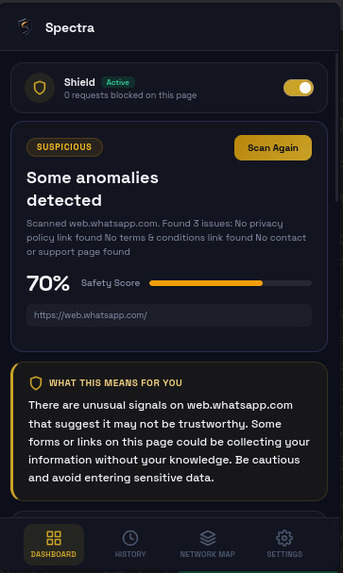
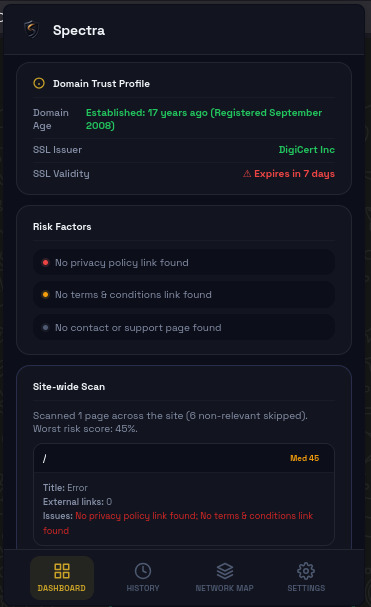
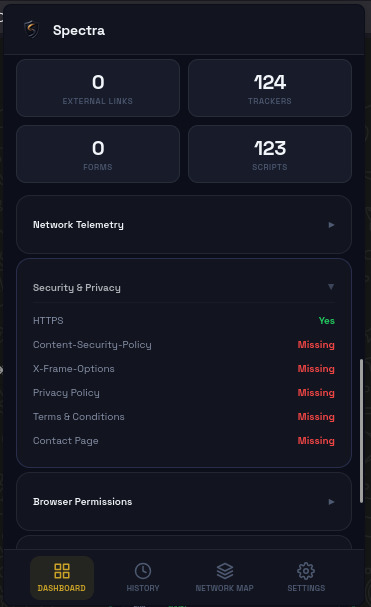
dashboard tab
-
-
-
-
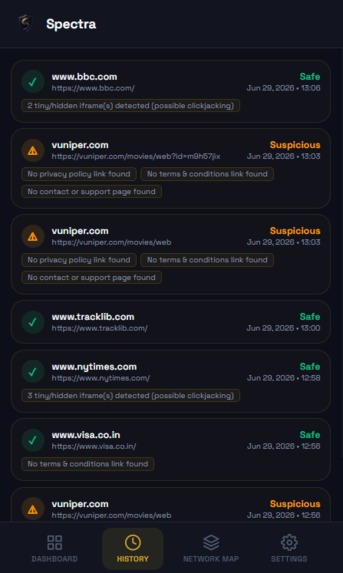
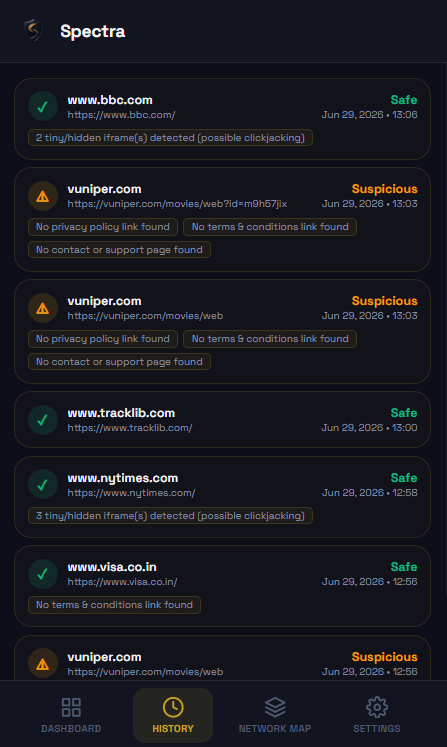
history tab
-
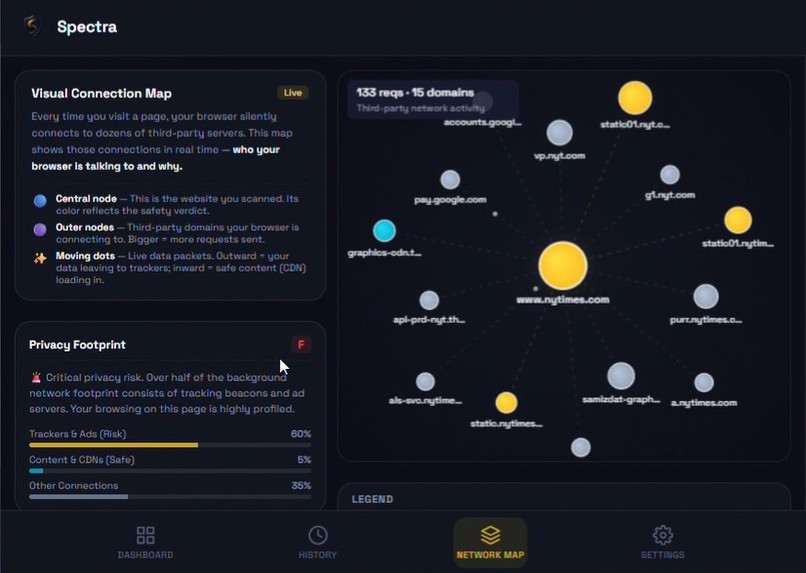
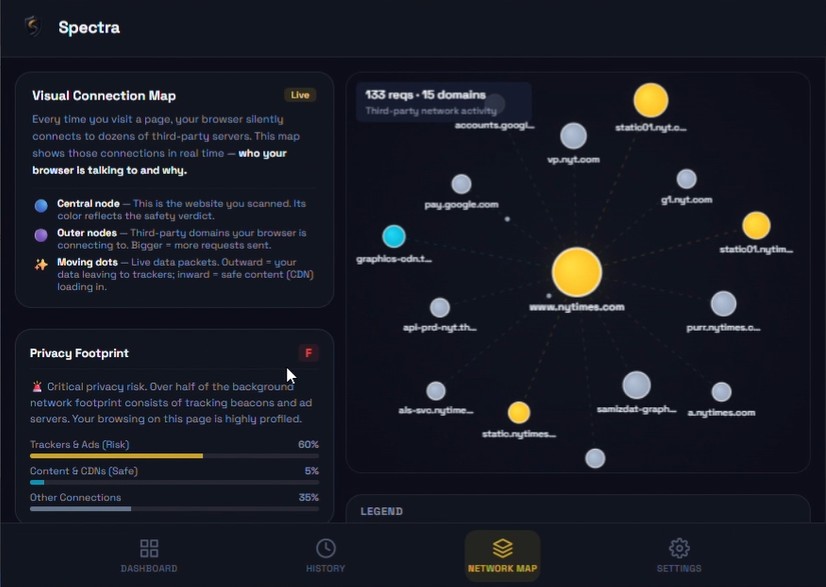
network analysis graph
Inspiration
With the increase in AI and bots, anyone can make a website easily, what this is also means is it allows malicious users to create fake phishing web sites on a much larger scale, this creates a threat to many users, a lot of people can be easily convinced to share their private information to these websites putting their data at a risk. so having a simple extension like this will always come in handy.
What it does
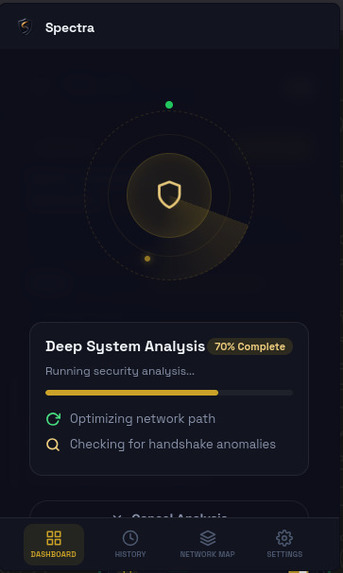
Spectra is a Chrome browser extension. You click Scan Now on any page and it shows you a full breakdown of what that site is doing.
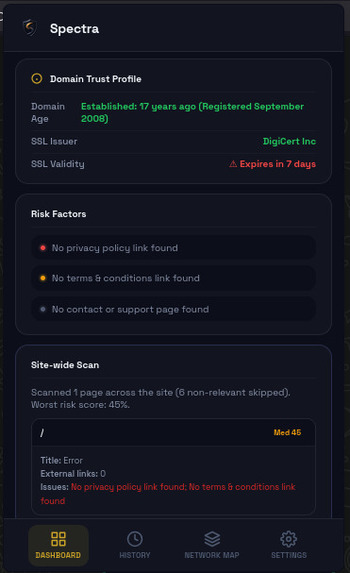
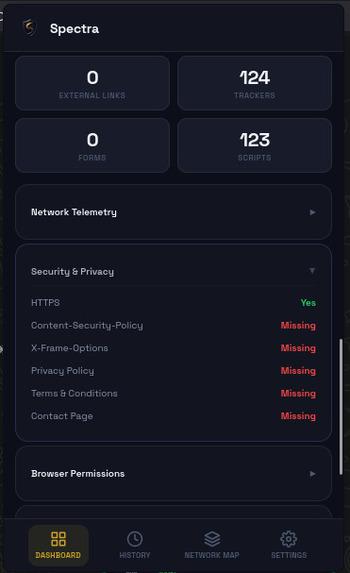
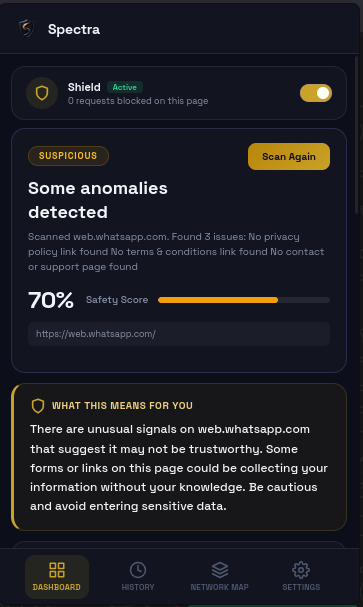
Dashboard tab (after scanning): A verdict — Safe, Suspicious, or Dangerous — with a 0–100 safety score Domain Trust Profile — how old the domain is and who issued its SSL certificate Risk Factors — specific flagged issues (e.g. "Form submits data to an external domain", "3 tracking scripts detected") Site-wide Scan — each sub-page crawled with its own score and issues (if deep scan is on) Form Security Analysis — whether login/payment forms were found and if they're on HTTPS Quick stats: External Links · Trackers · Forms · Scripts Expandable detail sections: Network Telemetry, Security & Privacy headers, Browser Permissions, Hidden Elements, External Links, Tracker Ranking A Shield bar at the top showing how many requests were blocked, with a toggle to turn blocking on/off Network Map tab: An animated canvas showing every third-party domain the page connects to — nodes sized by request volume, color-coded by type (analytics, ads, tracking, CDN), with a Privacy Footprint breakdown. Settings tab: Toggle deep scan on/off and add trusted sites to a whitelist.
How we built it
Extension (frontend): Chrome Manifest V3 with vanilla JavaScript content.js injects into every page and collects the telemetry background.js runs as a service worker, intercepts requests, and installs the tracker block rules at startup popup.html / popup.js renders the scan results Backend:
Python + FastAPI scorer.py — rule-based pre-scorer with weighted categories (phishing, malware, credential theft, etc.) scraper.py — fetches and parses pages with httpx + BeautifulSoup, also handles the deep crawl domain_info.py — RDAP lookup for domain age + direct SSL socket check for cert info app.py — ties it all together, calls Gemini if available, exposes /analyze, /analyze-url, /trust-profile, /classify-domain, and /report/{token} endpoints
Challenges we ran into
Trying to add more features on a simple extension required a much more creative thinking
Accomplishments that we're proud of
Built a fully working extension + backend from scratch during the hackathon The hybrid design (rule scorer + Gemini) means it works even without an API key It also provides various useful information regarding the website your browsing, giving users more transparency to whats happening behind the scenes.
What we learn
being able to layout a plan that works well within a team is a crucial first step learning to think of a product as a system rather than just a solution, because that helps us pin point gaps or areas where we are not familiar with, and provides a path to approach it with ease
What's next for Spectra
Adding more AI powered features scaling the system to handle more complex environments expand from an extension to a fully usable software tool

Log in or sign up for Devpost to join the conversation.