Inspiration
I wanted to bridge the gap between 'I have an idea' and 'let's make it live' instantly. Traditional website builders are almost gone, and the new trendy AI website builders are complex and take time. I asked myself, what if I want to build websites in just 90 seconds? With the release of Gemini 3 Pro, with super reasoning capability that can not just generate code, but also make architectural planning and visual design strategy, I built WebQ, so users can build websites as quickly as under 90 seconds, which not just builds a simple website but performs deep reasoning to plan the architecture and visual strategies then build the website along with all the required visuals.
What it does
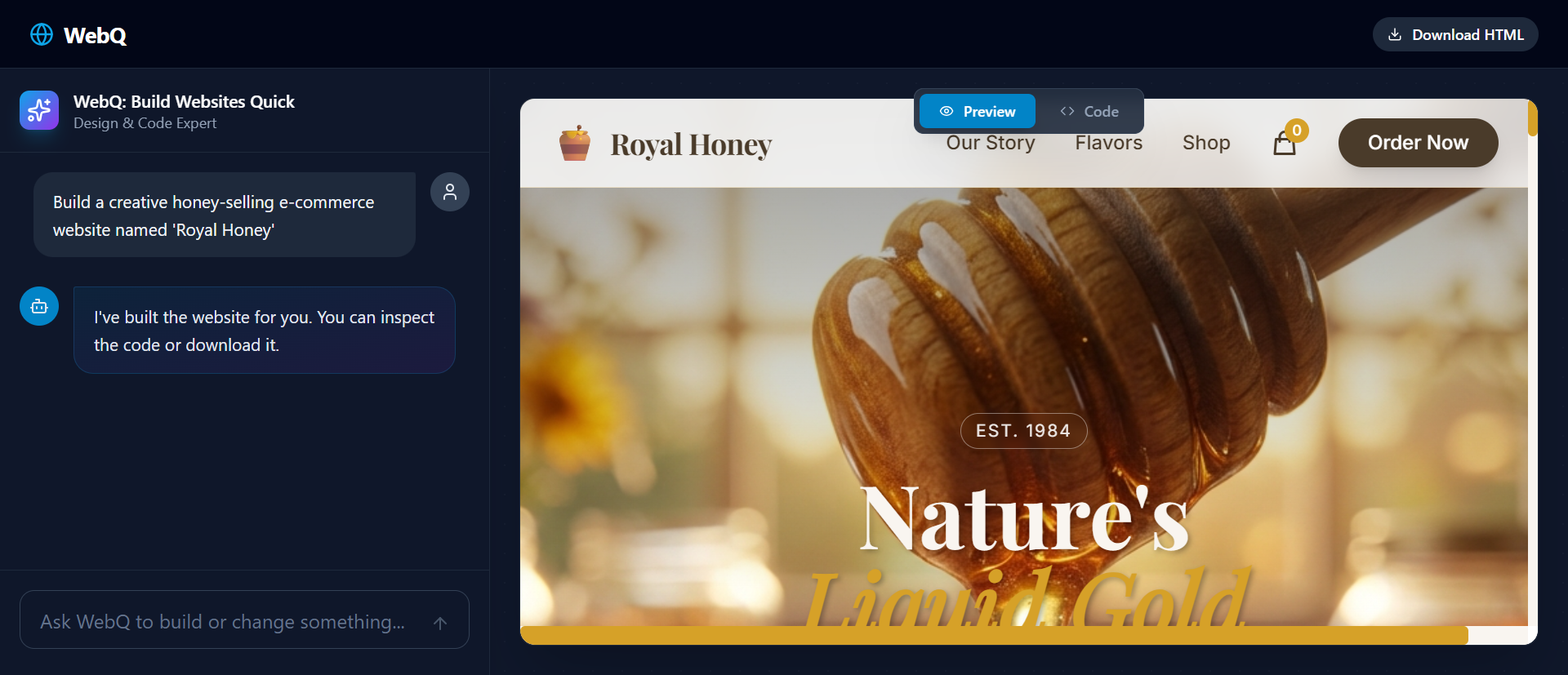
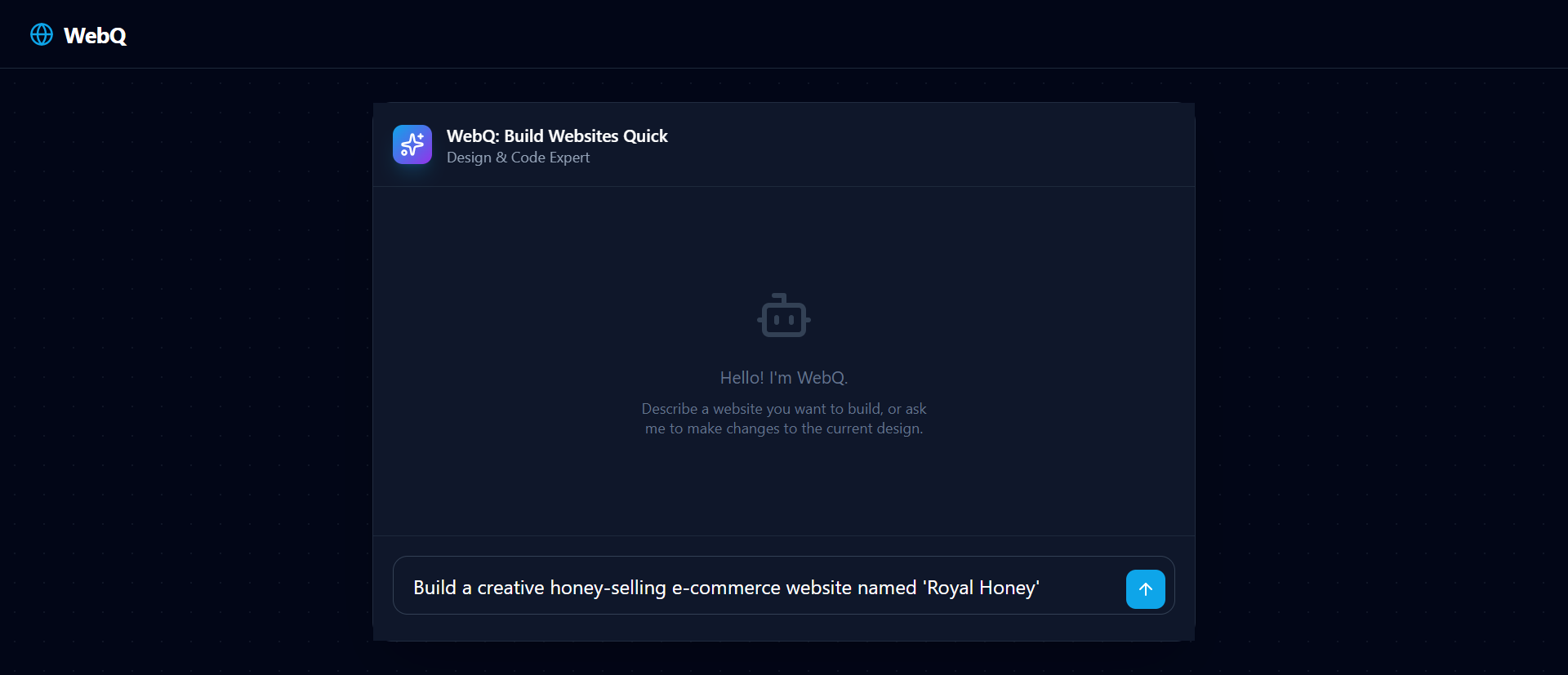
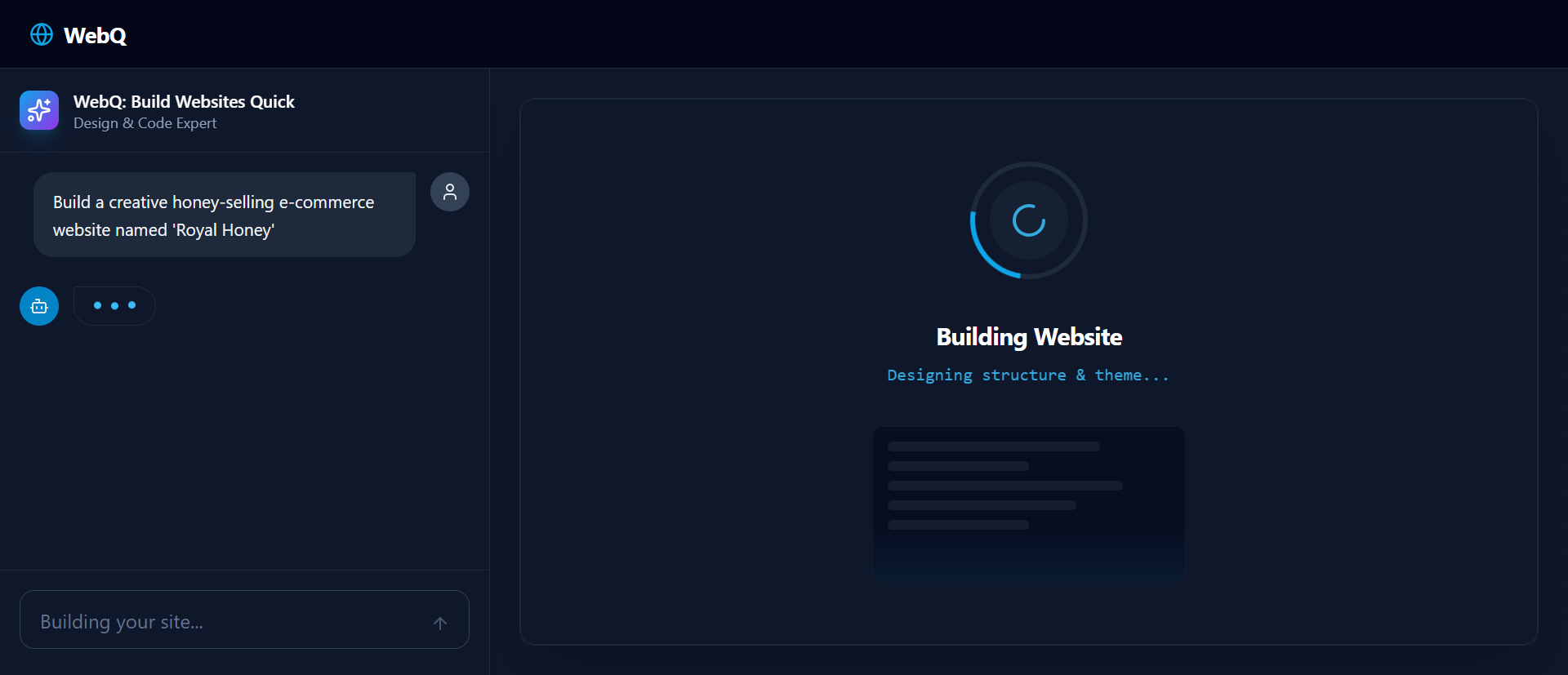
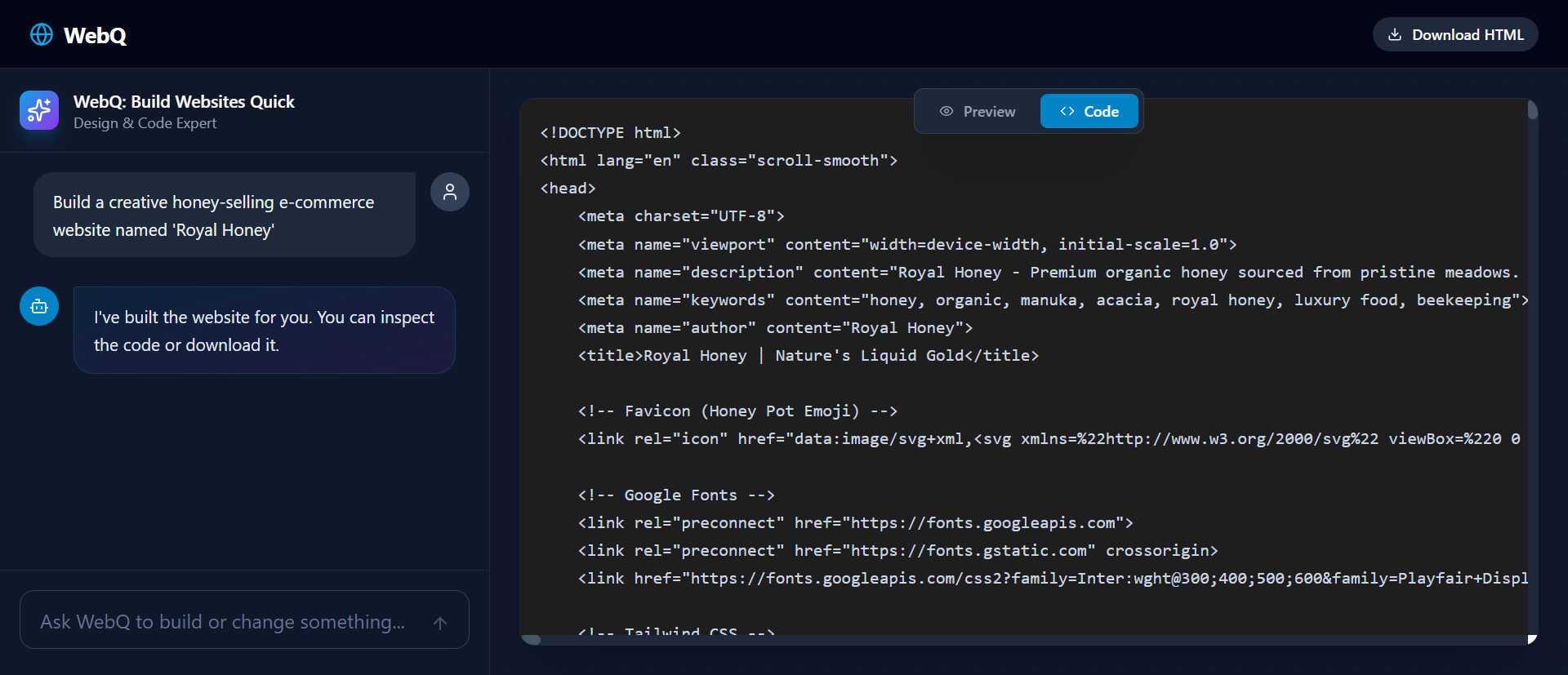
WebQ is an intelligent website builder that turns users' simple text prompts into a fully functional, deployed-ready website in under a minute. Before coding, it acts as a "Chief Design Officer," creating a JSON-based project plan that defines the suitable theme, colors, and user experience strategy. Then it doesn't just use placeholders. It identifies required visuals (like hero images or products) and generates high-quality images, and uses those on the site. It writes a complete, single-file HTML file using Tailwind CSS, ensuring the code is modern, responsive, and error-free. Users can chat with WebQ to refine the results, such as changing the theme to dark mode or changing the button shape, etc.
How we built it
I built WebQ on the AI Studio; it's built with React 19 and Vite for the frontend, but the core engine is Gemini 3 Pro. The new thinkingConfig (budget: 8192 tokens) is utilised to allow the model to "think" through the design process before outputting the plan. Multi-agent workflow is implemented. The first call leverages the CDO persona to output structured JSON. Gemini-3-pro-image-preview is implemented to dynamically generate assets that match the site's aesthetic context. Tech: React, Tailwind CSS, Lucide React, and the @google/genai SDK.
Challenges we ran into
I faced the most challenges in keeping the AI aware of the previous state during edits. On AI Studio, I implemented a 'Plan-Aware' update system where the AI receives the existing JSON plan and only modifies what's requested, preserving the rest of the design integrity along with the visuals.
Accomplishments that we're proud of
The first accomplishment that I am very proud of is 'Zero-Config Images', where the system automatically decides where an image is needed and what it should look like, removing the manual work for the user. The second one is 'Speed', going from a prompt to a rendered, interactive, ready-to-deploy website in under 90 seconds.
What we learned
I learned so many things, but among them, I aspire learning the 'multi-step reasoning' most, which breaks the building process into "Plan -> Assets -> Code", producing significantly better results than asking for everything in one massive prompt.
What's next for WebQ: Build Websites Quick
Next, I am planning to implement a multi-framework code generation where the AI will suggest to users to choose a particular framework, such as NextJS, React, Astro, etc., depending on the users' requirement of the site and auto-deploy to Vercel, Netlify, etc. platforms. I am also building 'MobiQ', where users can create 'ready-to-deploy' native mobile apps, and the most important upgrade I want to bring to WebQ is to integrate it with 'MobiQ' to build the web-based admin panels or dashboards for apps built on 'MobiQ', so users can build ready-to-deploy, production-grade, and corporate level a full-mobile apps right on 'MobiQ'.

Log in or sign up for Devpost to join the conversation.