-
-

Logo
-
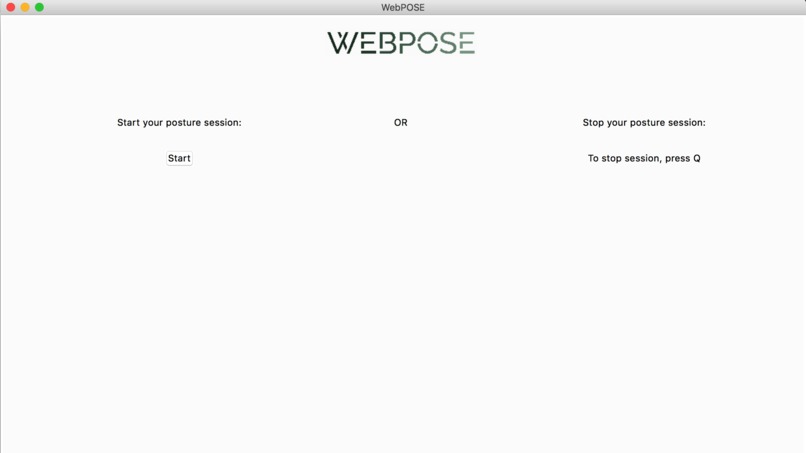
WebPOSE GUI
-
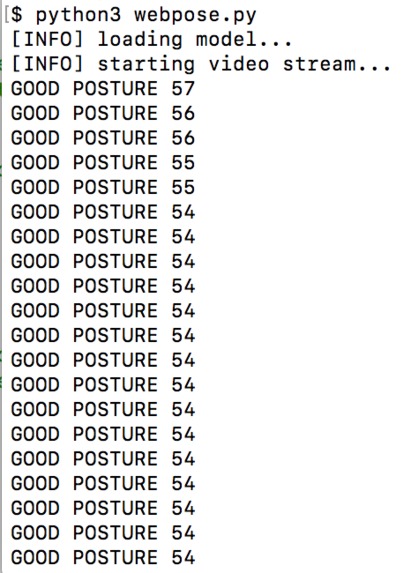
WebPOSE Instant Output

Inspiration
In today's society, over 40% of children are diagnosed with bad posture. Every person is either on their computer, laptop, or phone, looking down at their screens. The COVID-19 pandemic has caused an indefinite dependency on computers amongst students and the workforce. This leads to great amounts of stress on the shoulders and can lead to health problems, primarily osteoarthiritis. This applies to both the school and corporate environments.
What it does
To help solve the aforementioned problems, I created WebPOSE, which uses Computer Vision and Faster R-CNNs to recognize the user's current posture and suggest a position change when necessary.
How I built it
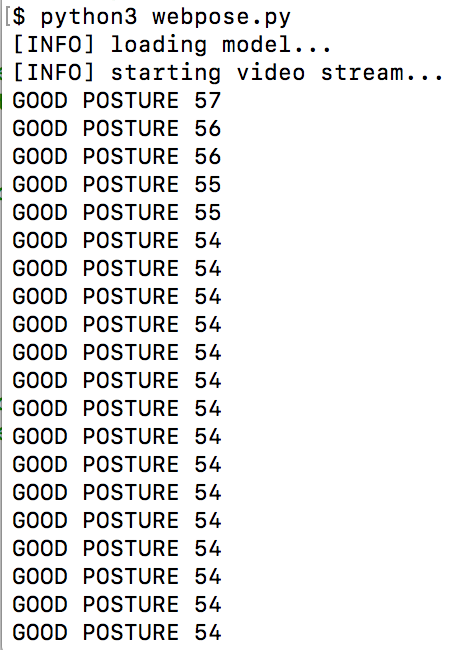
Coded in Python, I take advantage of OpenCV and the Haar Cascades to develop my algorithm. I have exploited existing technologies to develop WebPOSE. The way the algorithm works is that it detects significant changes in the distance from the user to the laptop/computer screen. A certain threshold passage records as a posture issue, causing an immediate alert.
Challenges I ran into
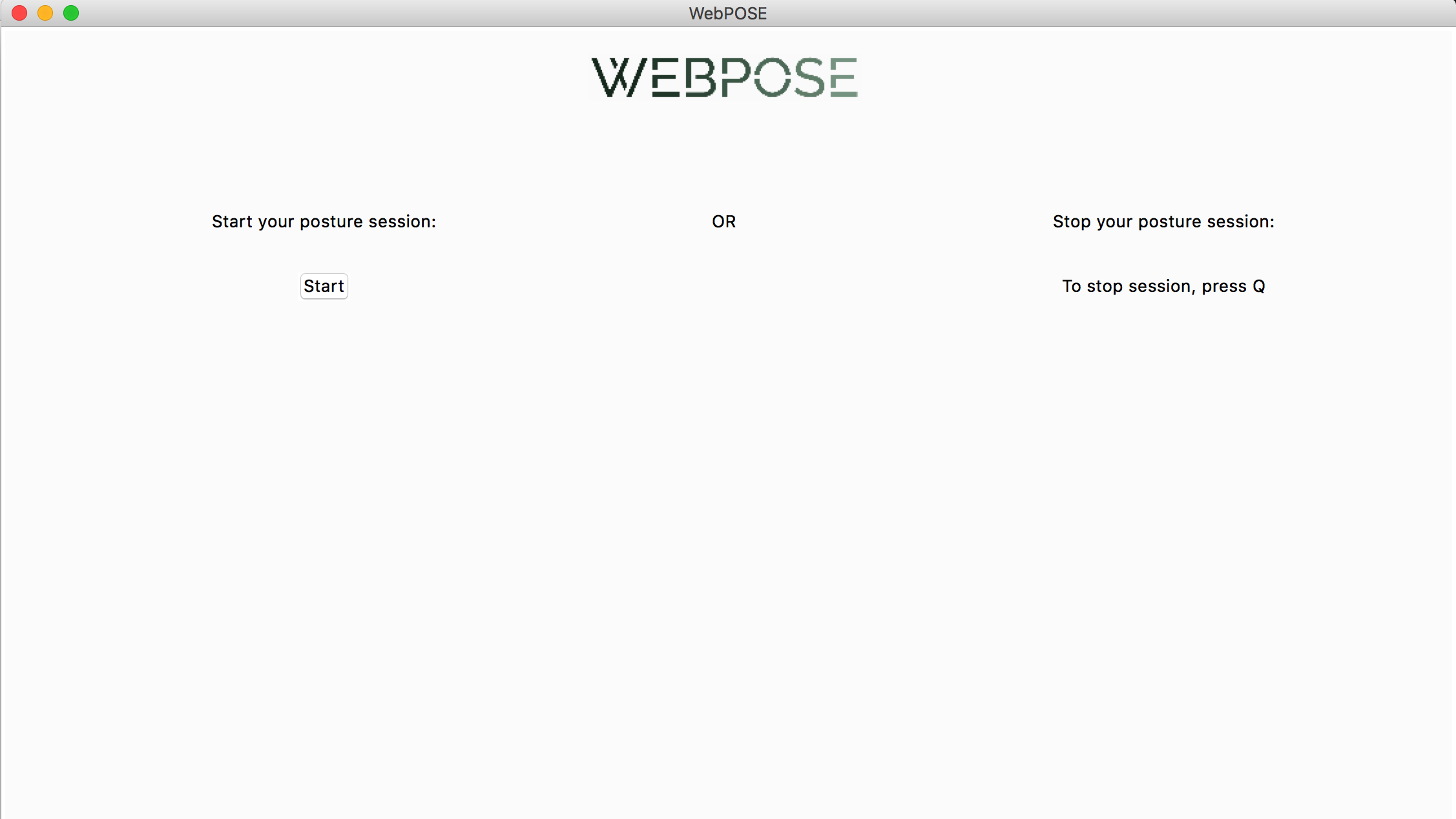
I was not very familiar with how to create a GUI with Tkinter in Python. This caused me some trouble; although the GUI is not as advanced, I had no idea how to use it. Alongside that, the training of my visual recognition model was failing periodically for unknown reasons which proved to be a setback.
Accomplishments that I'm proud of
I was able to successfully develop a Python GUI (although simple) and I was able to finish my project on time :) !! Overall, I'm happy to have participated in SharkHacks.
What I learned
Start early, and you won't need to submit right on the deadline! I also learned quite late that good Git proficiency is vital for version control... I think I'm going to go relearn Git now.
What's next for WebPOSE
Implementation into everyday environments, such as in offices to provide possible healthcare benefits, analyze student engagement in classrooms, and later be able to diagnose certain diseases with data from this app. Possible Beta testing in schools/offices would be amazing! Not only that, but a mobile version that checks both screen time, and how close someone is to their phone. I also want the data to be able to be shared with one's doctor which can help mainstream the application, thus scaling the app further.


Log in or sign up for Devpost to join the conversation.