Inspiration
I’ve always been fascinated by how operating systems work and how we interact with them. The idea behind WebOS was to recreate that experience—a personal OS in your browser, without needing to install anything, without logins, and with a rich set of AI tools and apps. I wanted to explore whether we could create a fully browser-based, anonymous, app-powered environment that feels like a lightweight desktop OS.
Inspired by platforms like Puter, Windows 11 UX, and emerging cloud workspaces, I aimed to build something lightweight, fast, AI-friendly, and expandable by design.
What it does
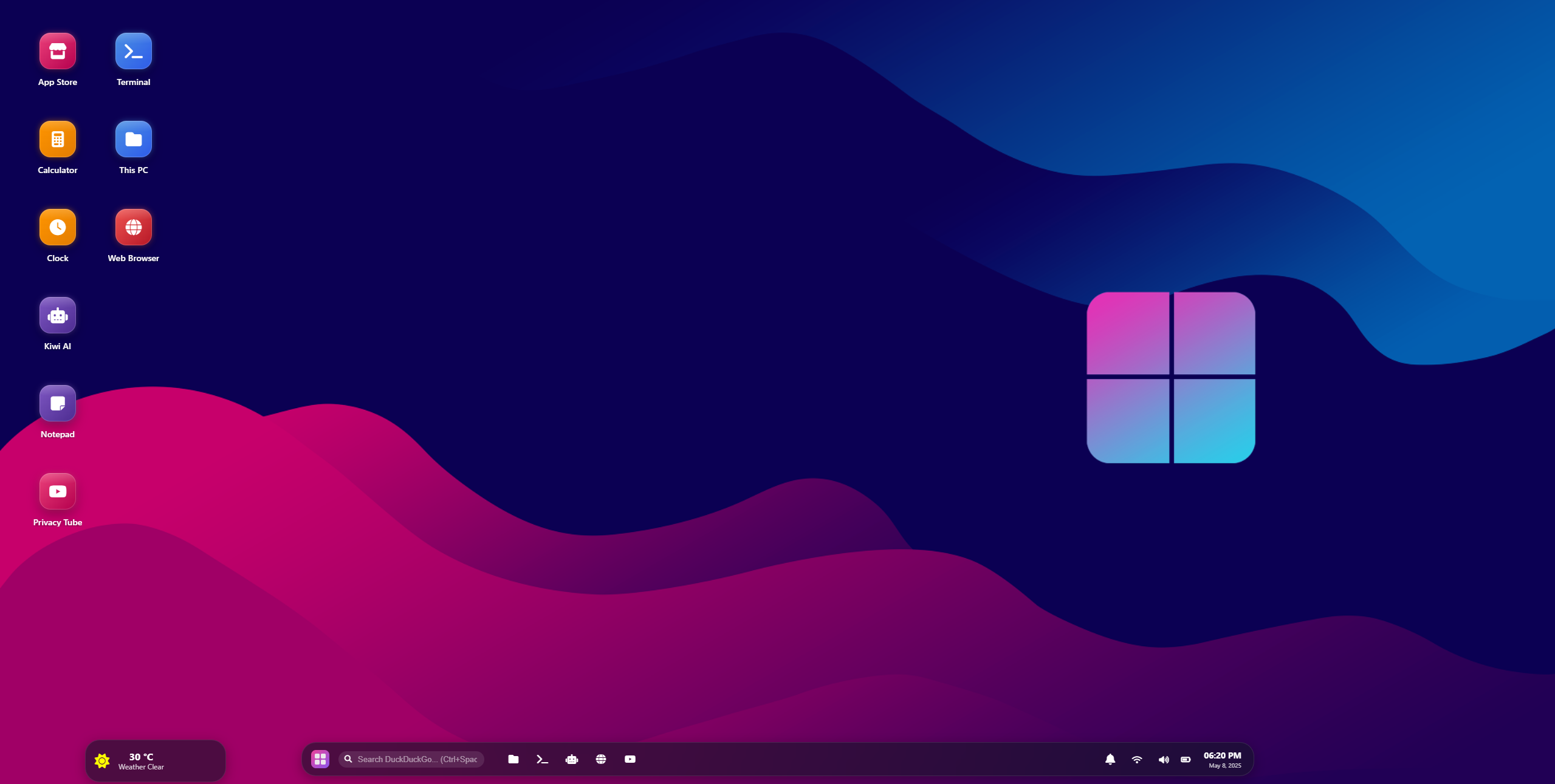
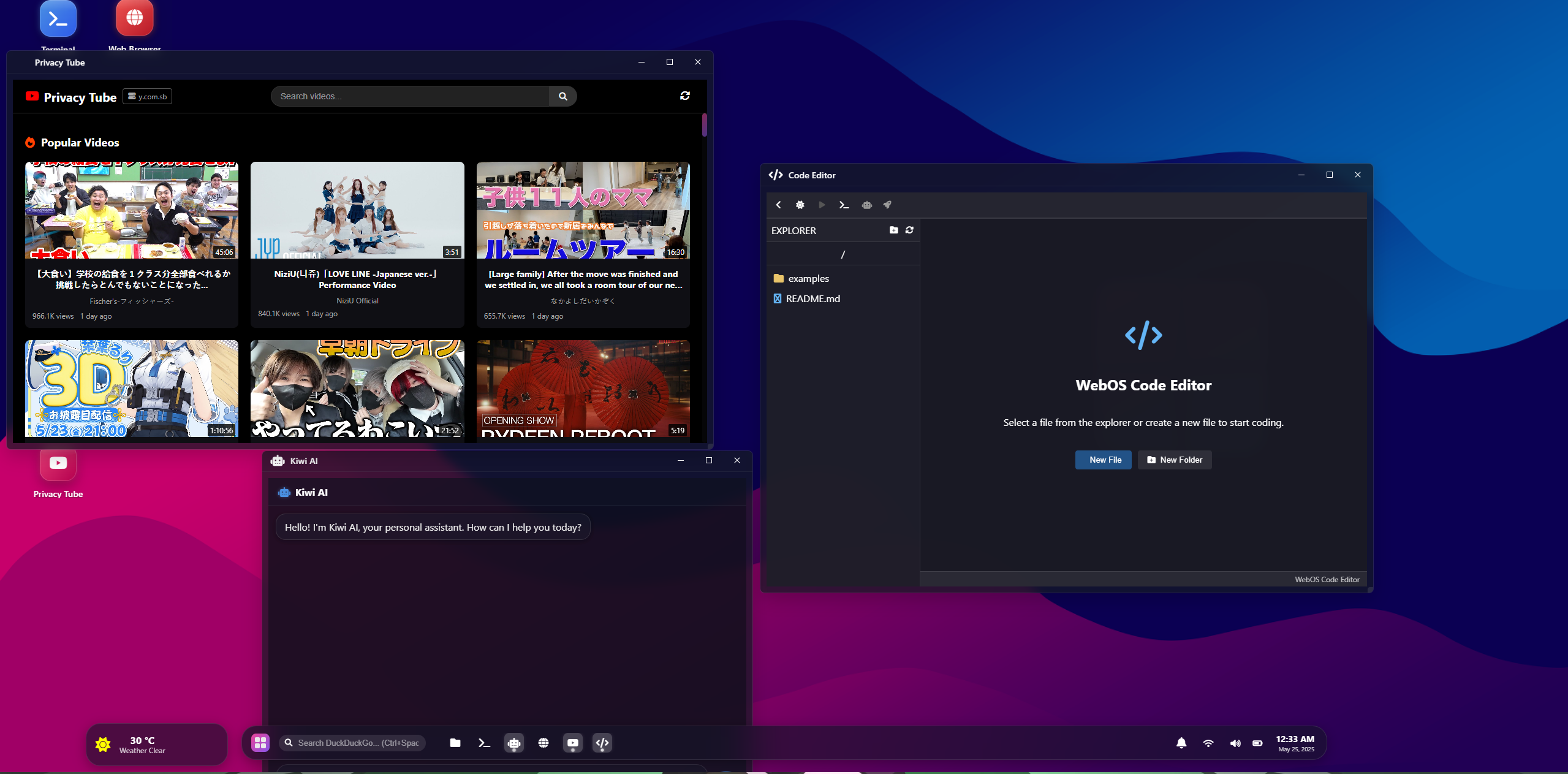
WebOS, a futuristic, fully browser-based desktop experience designed to work instantly without installation or login. Imagine a sleek, AI-enhanced OS that works directly in your browser, complete with:
✅ A terminal with custom commands ✅ Built-in LLM assistant ✅ A modern desktop UI (Windows/Linux-style) ✅ Anonymous usage — no tracking or login needed ✅ Web App Store with games, tools, and utilities ✅ Infinite potential for education, developers, and productivity
How we built it
Frontend: Built with React, TypeScript, and TailwindCSS
Window System & Desktop UI: Custom window manager for draggable/resizable apps
Backend: Some parts are serverless, APIs served through Express.js, Socket.IO
AI Integration: Used OpenRouter API to access Claude, Gemini, Mistral, etc.
Streaming: Implemented event-based streaming using text/event-stream to simulate real-time model responses
Proxy Layer: Used CORSProxy.io for bridging models if needed
App System: Apps are stored as modular React components, loaded dynamically
Challenges we ran into
CORS restrictions from OpenRouter and model APIs
Handling streamed responses from AI models correctly in the frontend
Keeping the system lightweight and fast despite dynamic apps
UI layering and focus management in custom windowing
Discovering which model providers were free and stream-enabled
Accomplishments that we're proud of
Created a working OS simulation from scratch
Integrated multiple AI models seamlessly
Designed a modular app system that can scale
Provided anonymous, login-free access with instant usability
Developed a custom socket system for communication and AI tasks
What we learned
How to architect modular web systems that feel like native desktops
How to manage real-time AI interactions in a clean and efficient way
The power of OpenRouter for unified AI access
Limitations of CORS and how proxies can work in web-only apps
UI/UX design considerations for windowed interfaces
What's next for webOS
Add real-time file storage with Firebase or Supabase
Personal login and profile customization
Introduce a marketplace for 3rd-party app uploads
Implement web search with Brave or SerpAPI
Offer collaborative apps: shared whiteboard, multiplayer games
Monetization options like premium AI access, in-app purchases, or team plans
Built With
- axios
- corsproxy.io
- css3
- express.js
- html5
- javascript
- node.js
- react
- socket.io
- tailwindcss
- typescript
- uuid
- vite


Log in or sign up for Devpost to join the conversation.