-
-
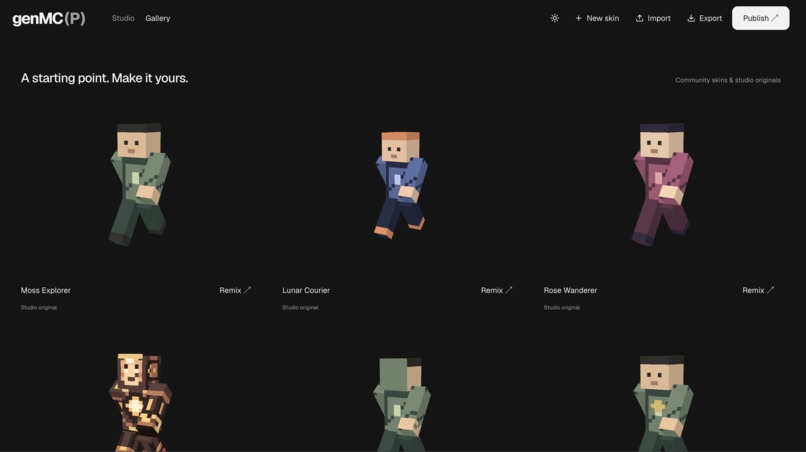
skin gallery
-
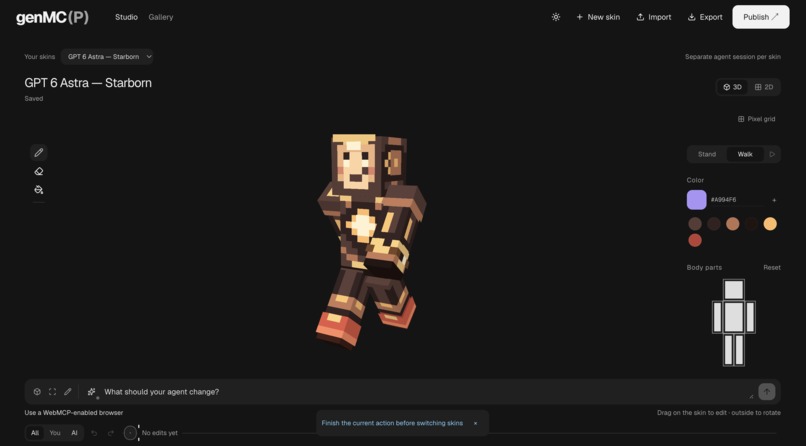
manual skin creation
-
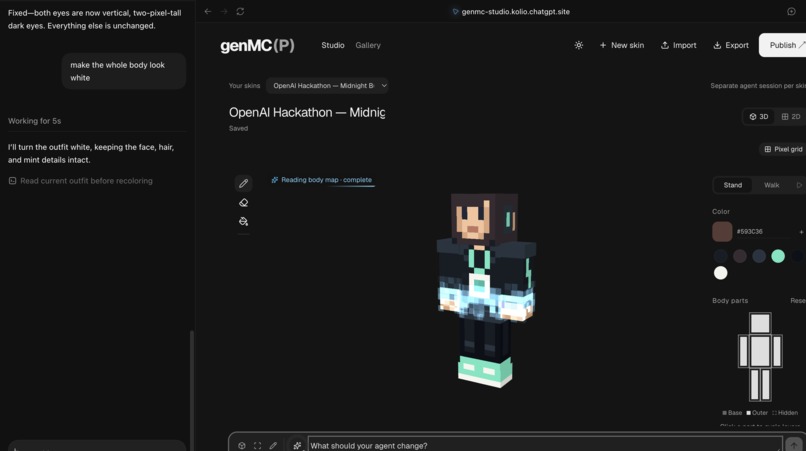
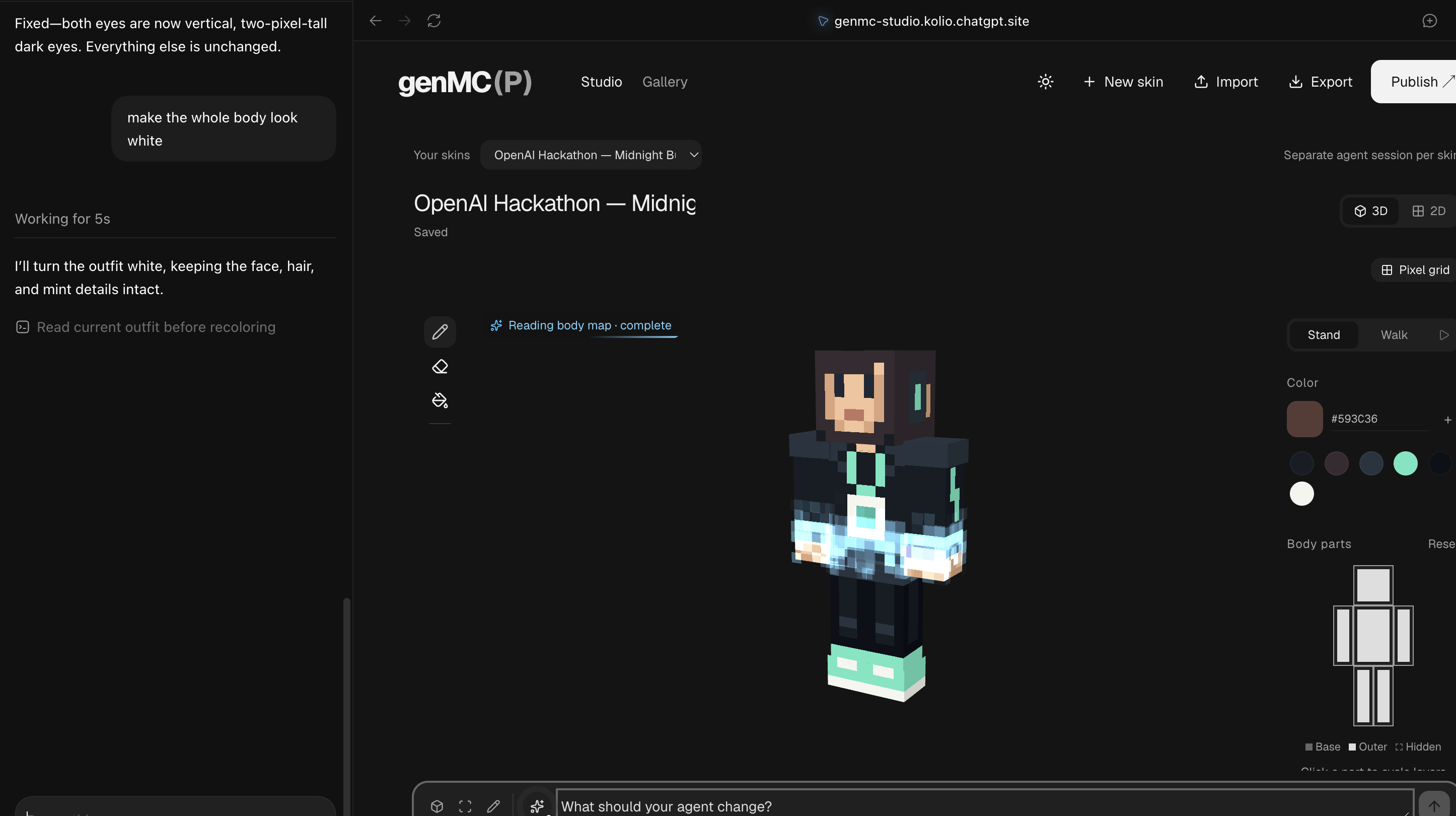
shimmering while agent is working on the skin
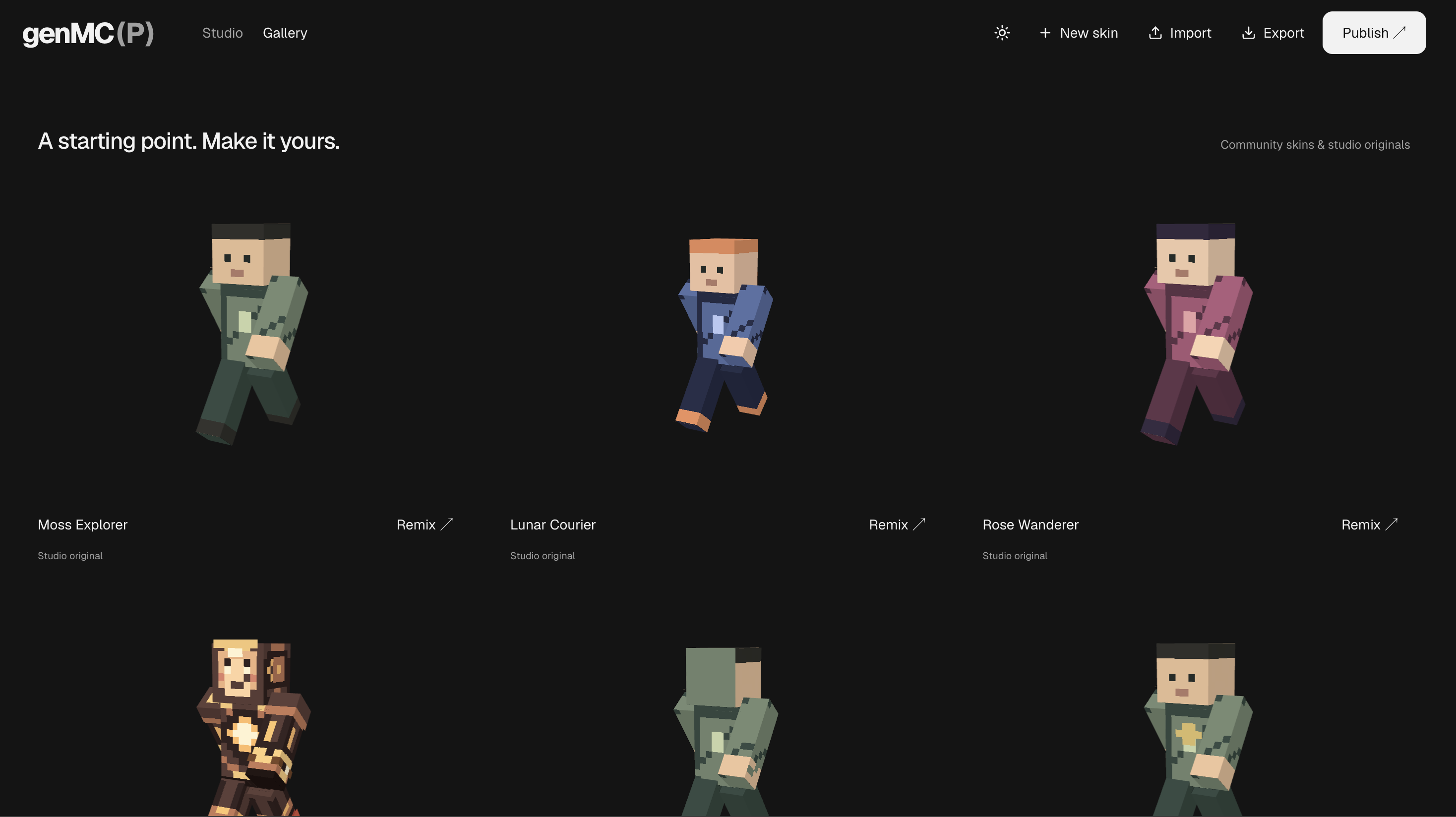
Inspiration
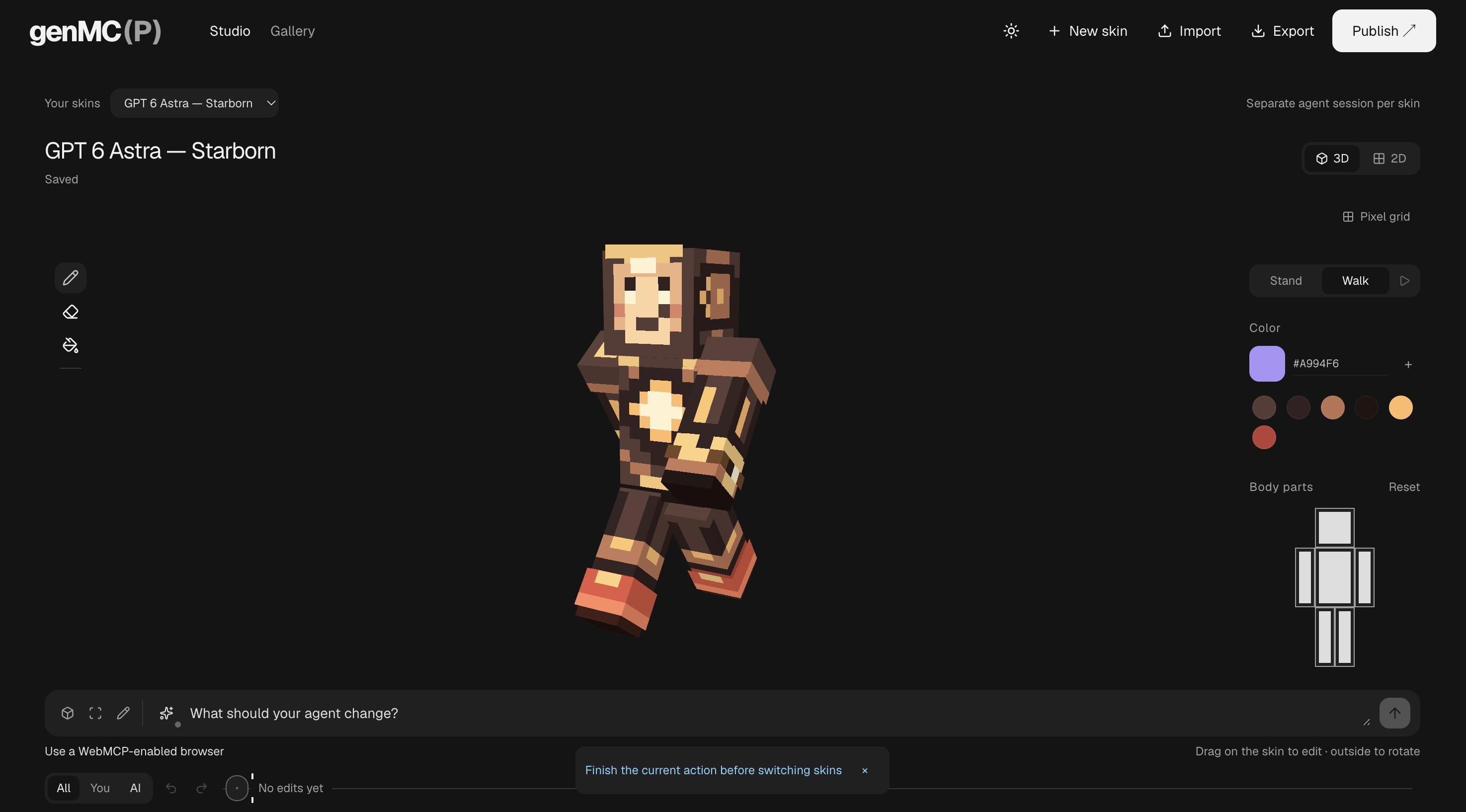
Creating Minecraft skins has always been a personal benchmark for AI model performance—especially spatial reasoning. A model must understand how a flat texture wraps around a 3D character, not just produce a convincing front view.
With genMC(P), I wanted to turn that benchmark into a shared workspace where humans and agents create and refine skins together.
How I built it
I built the editor with React, TypeScript, and Three.js. WebMCP gives agents structured tools to inspect skins, edit pixels, and respond to user instructions.
Users can paint directly, mark areas, and send messages while the agent works. Each skin has its own session. Gallery skins open as private copies, and publishing requires human confirmation.
The backend uses Cloudflare Workers, D1, and R2, deployed through ChatGPT Sites.
Challenges
The biggest challenges were mapping 2D textures correctly onto 3D body parts and keeping human and agent edits coordinated.
Session and revision checks prevent stale edits. Message tracking distinguishes “read” from “completed.” I also learned that a marked area should be guidance by default—not a restriction that prevents the agent from completing the task.
What I learned
Good agent integration needs more than tools: it needs clear state, visible feedback, and human control.
Minecraft skins remain a surprisingly demanding spatial-reasoning test. WebMCP turns that test into an interactive creative process, where users can guide the model and improve the result together.
Built With
- codex

Log in or sign up for Devpost to join the conversation.