-
-

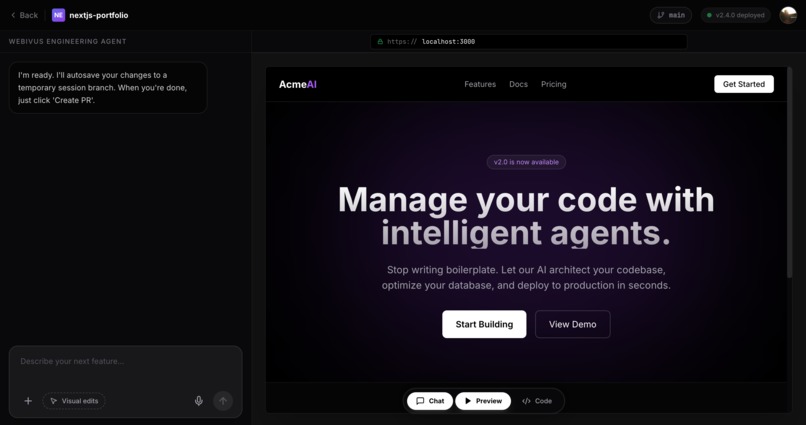
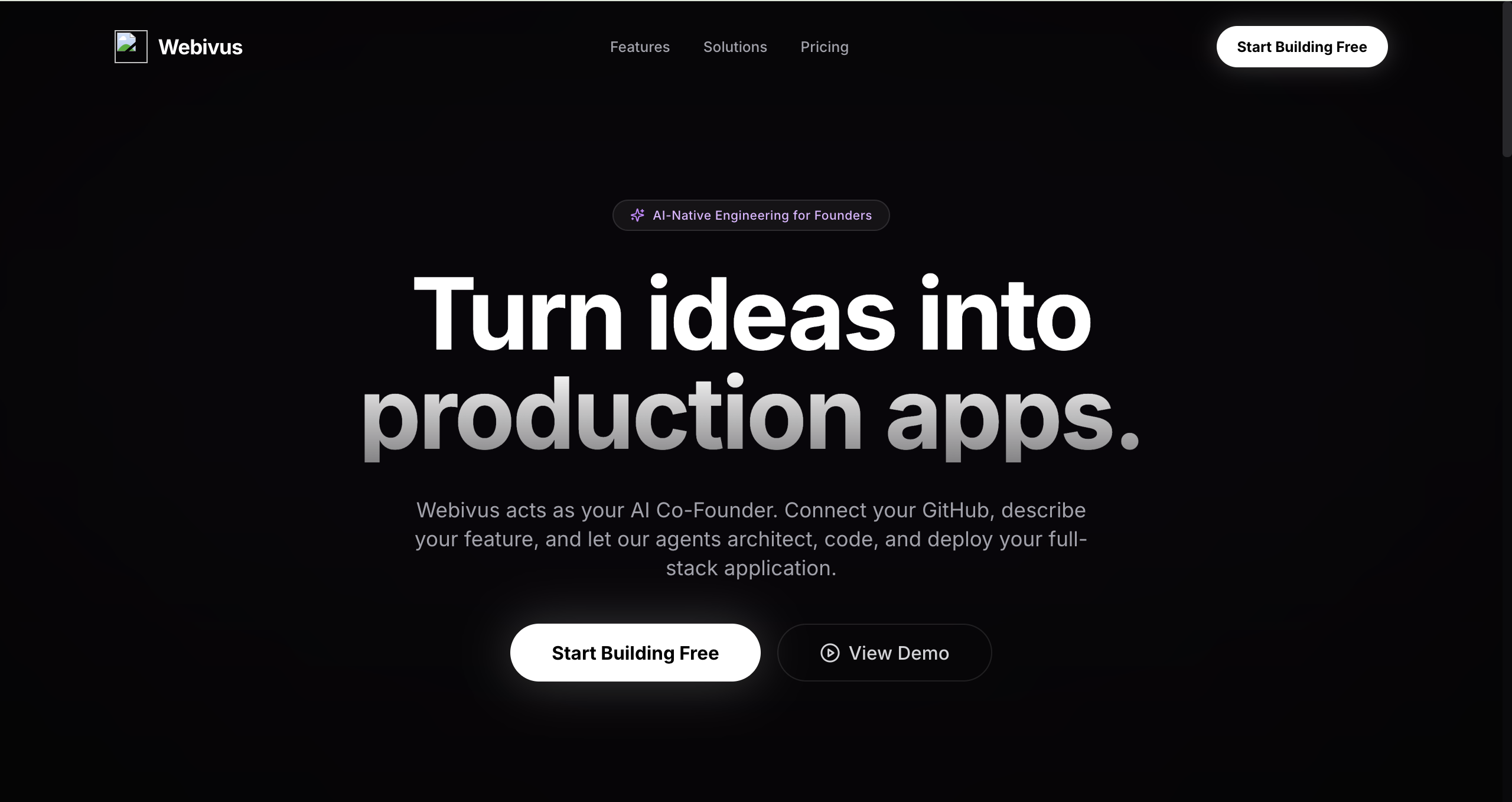
Landing page
-
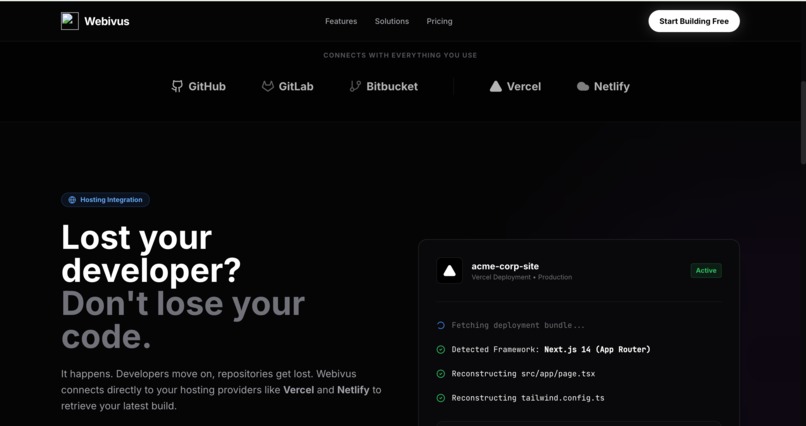
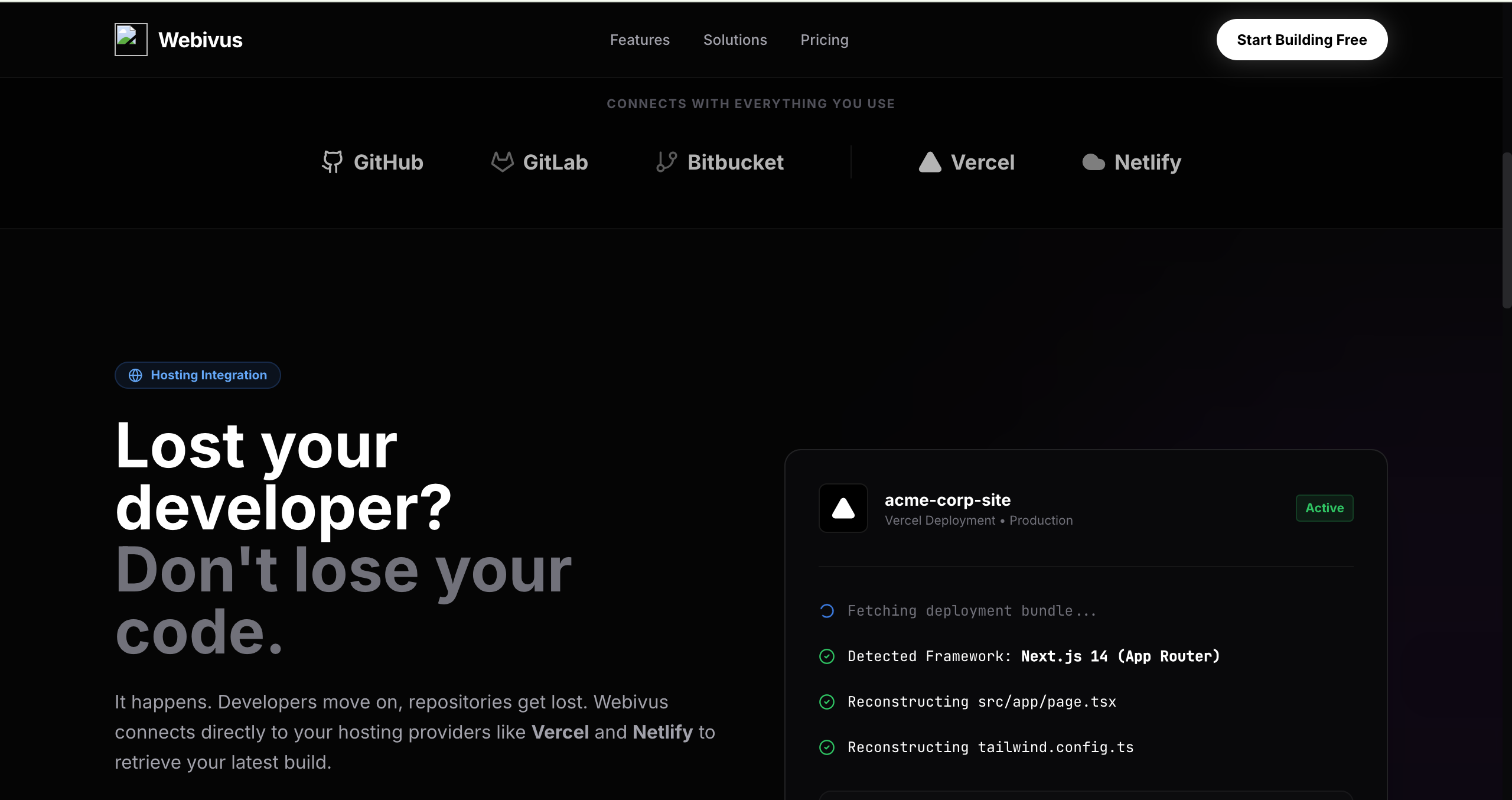
Connection with third party apps
-
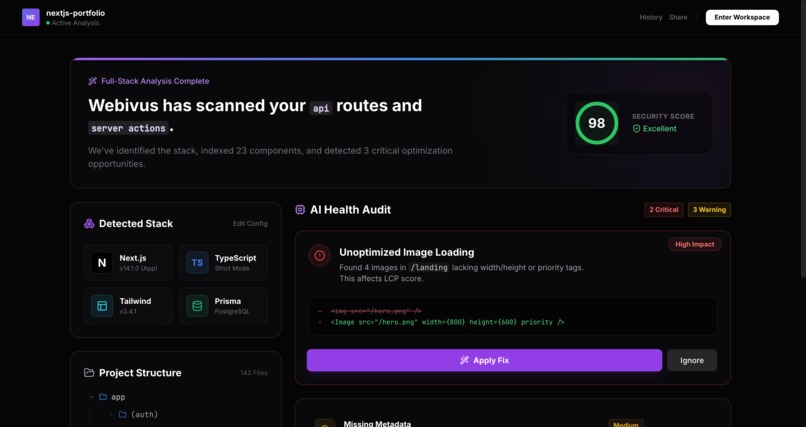
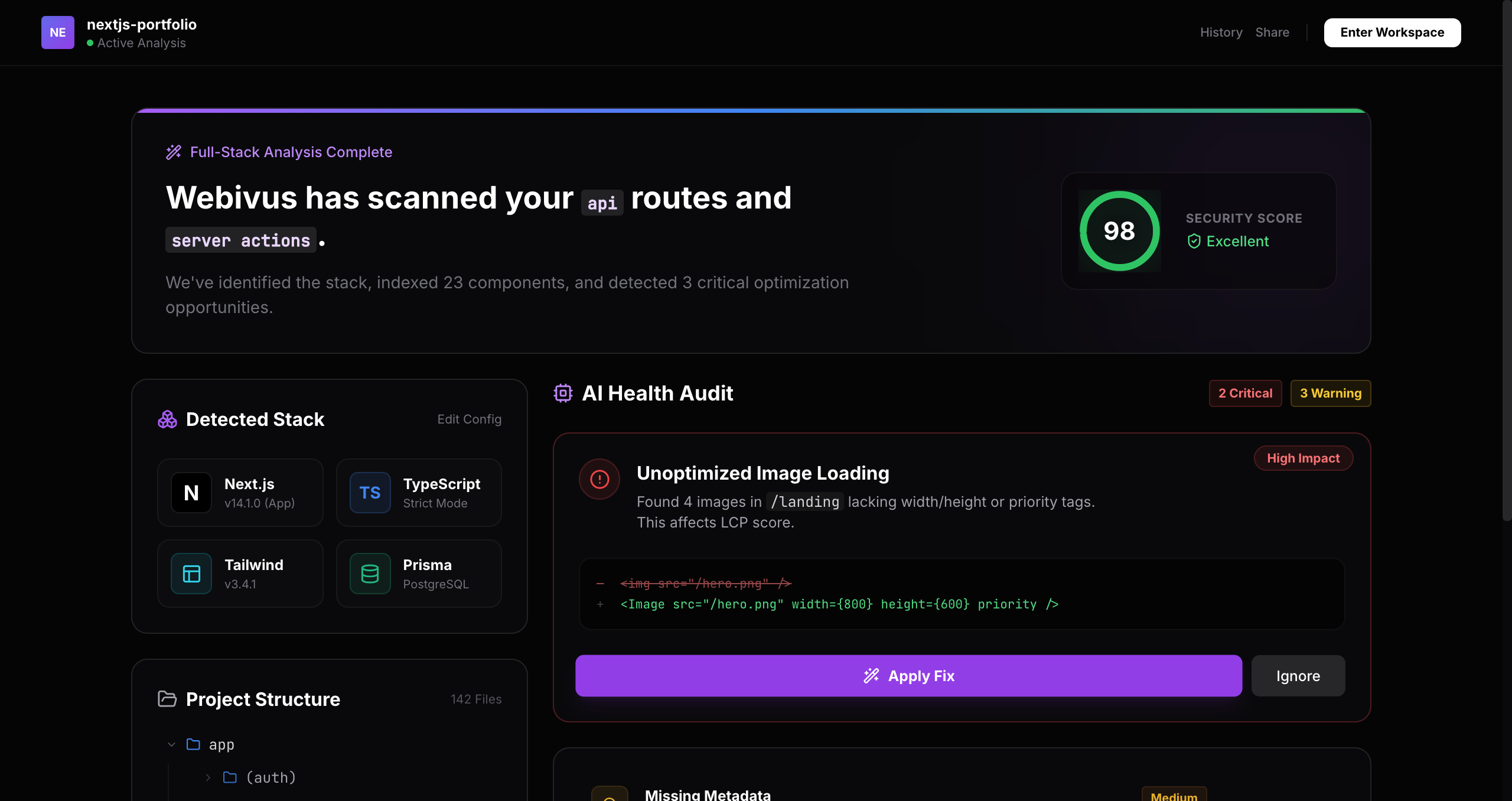
Analysis of code
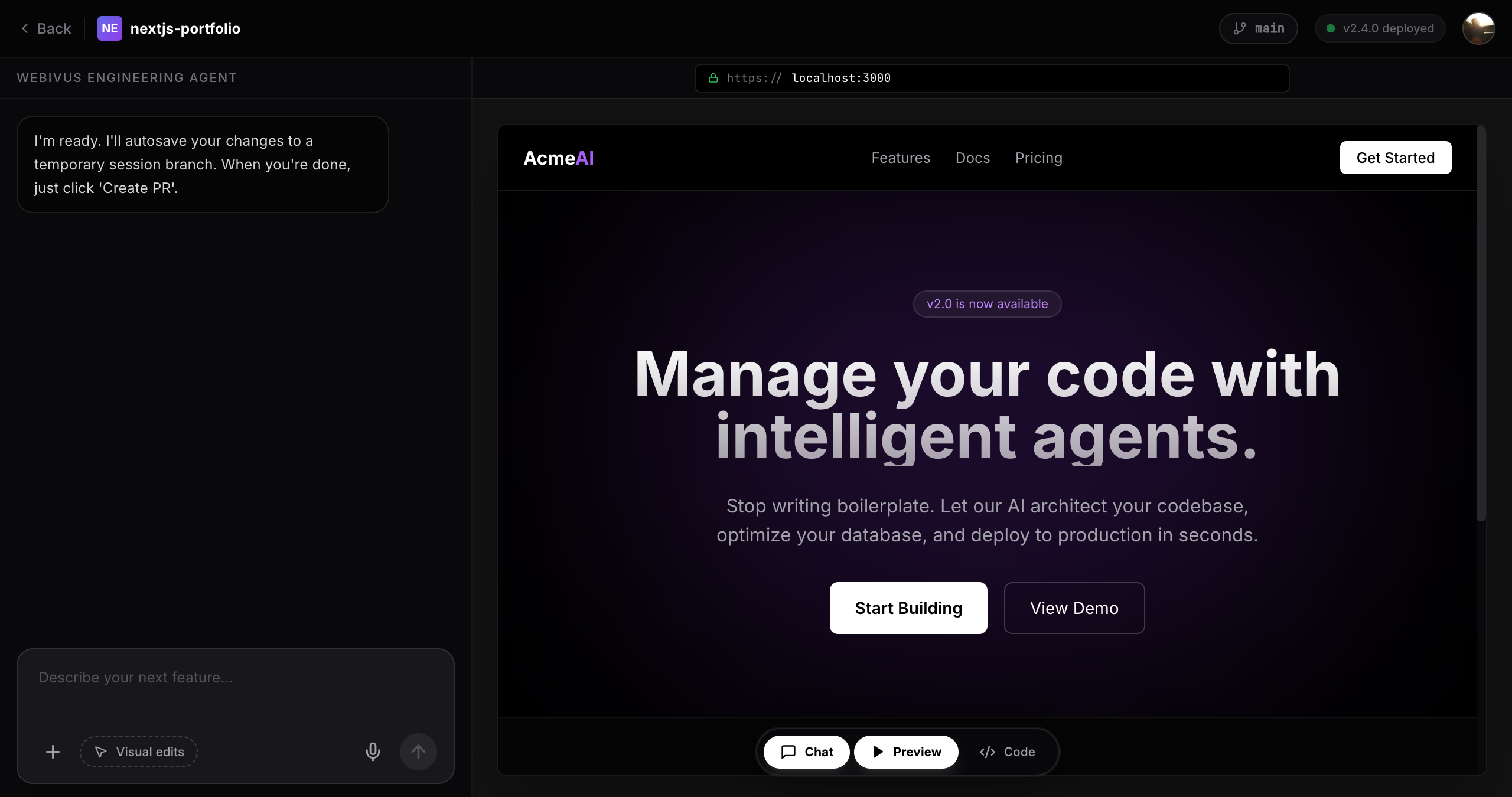
Inspiration
Every business with a custom-coded website hits the same wall. A developer builds the site — React, Next.js, Vue — and Day 1 is great. Then the developer moves on. Welcome to Day 2. Your hero image is broken on mobile. SEO meta tags are missing. A dependency is outdated and creating security holes. You need a heading changed, a pricing section added, or a bug fixed that's killing conversions. Your options? Hire a freelancer ($50–150/hour, 3–7 day wait for a text change). Retain an agency ($500–5,000/month). DIY with Stack Overflow and prayers. Or try AI code builders like Lovable, Bolt, or Cursor — except they only build NEW sites from scratch. They can't touch your existing production codebase. There are 50+ AI tools to BUILD websites. There are zero AI tools to MAINTAIN them. Building is a one-time event. Maintenance is a $3,600–$60,000/year recurring problem for every business with a website. We've personally managed 60+ client websites over 7 years and lived this pain daily. Clients hate paying $150 for a text change. They hate waiting 3 days even more. So we built the solution.
What it does
Webivus Code AI is an autonomous multi-agent platform powered entirely by the Gemini 3 model family that maintains custom-coded websites through natural conversation. Connect your code in seconds: Know your repo? Connect GitHub, Bitbucket, or GitLab with one click Don't know what a repo is? Just connect your hosting platform (Vercel, Netlify, etc.) — we fetch your code for you This is key: most site owners don't even know they have a GitHub repo. They only know where their website is hosted. We solve for them too. 6 specialized AI agents work as your dev team: Agent Model What It Does Planner Gemini 3 Flash Project manager — breaks your request into steps, assigns the right agents Analyzer Gemini 3 Pro Scans your entire codebase using the 1M token context window — understands your architecture, design patterns, tech stack, versions, and generates a full health audit Developer Gemini 3 Pro Senior engineer — writes, fixes, and creates code that matches YOUR existing patterns and design system, not generic templates SEO Specialist Gemini 3 Flash Analyzes and improves meta tags, structured data, sitemaps, content structure Reviewer Gemini 3 Flash QA & security — scans all changes for 40+ vulnerability patterns (API key leaks, SQL injection, XSS, etc.) before anything ships GitOps Gemini 3 Flash DevOps — handles branching, commits, pull requests, and deployment Tell it what you need in plain English: "My landing page conversion is down. Can you figure out why?" "Add a testimonials section that matches my current design" "Fix the mobile menu — it won't close when I tap a link" "Improve SEO across all blog pages" "Update React from v17 to v18 and fix any breaking changes" Everything follows professional Git workflows: Agent creates a session branch — your main branch is NEVER touched All changes happen in isolation Live preview — see exactly how changes look Reviewer agent checks every change for security issues Automated pull request with detailed descriptions Nothing merges without your human approval Connected to Vercel/Netlify? Approved changes auto-deploy
Built for EVERYONE — not just developers:
Non-technical business owners: "Change the pricing from $49 to $59" → done Marketing teams: "Add a Black Friday sale banner" → done Founders: "The contact form is broken on iPhone" → diagnosed and fixed Agencies: Manage multiple client sites, let AI handle routine maintenance You don't need to know React, Git, or what a "pull request" is. You see a chat, a visual preview, and an Approve button. That's it.
How we built it
AI Models — Strategic dual-model architecture: Gemini 3 Pro powers the Analyzer and Developer agents — these need deep reasoning and the 1M token context window to understand entire codebases and write contextually-aware code Gemini 3 Flash powers the Planner, SEO, Reviewer, and GitOps agents — these are called frequently and need speed + cost efficiency without sacrificing quality
Google Ecosystem:
Google AI Studio Build — for designing, building, and testing the multi-agent orchestration pipeline Google Antigravity — powers the entire backend infrastructure build using Google Stitch — used for UI design and prototyping the workspace interface Frontend & Backend: Next.js + React.js with TypeScript — full-stack framework powering the dashboard, workspace, chat interface, code editor, and live preview PostgreSQL — primary database for user accounts, projects, session history, agent logs, and Git operation tracking pgvector — vector database extension for semantic code search and codebase embeddings, enabling agents to find relevant code files based on natural language queries rather than just keyword matching Agent Orchestration: Built using LangGraph and LangChain for the agent workflow — each agent has a defined role, input/output schema, and handoff protocol The Planner agent acts as the router, analyzing user intent and delegating to the appropriate specialist agents pgvector enables semantic retrieval: when a user says "fix the contact form," the system finds the relevant components through vector similarity rather than requiring exact file paths Session-based workflow: multiple changes within a conversation are consolidated into a single clean branch and PR Security Layer: 40+ vulnerability detection patterns built into the Reviewer agent Detects: Stripe/AWS/GitHub API keys, SQL injection, XSS (innerHTML, dangerouslySetInnerHTML), command injection, eval(), hardcoded secrets, CORS wildcards, .env modifications, and more Every code change is scanned before reaching the pull request Git Integration: GitHub OAuth for authentication + GitHub App API for repo operations Session-based branching strategy — creates webivus/session-{id} branches Automated PR creation with agent-generated descriptions and change summaries Bitbucket and GitLab support planned
Codebase Analysis:
Leverages Gemini 3 Pro's 1M token context to analyze entire projects in a single pass — no chunking needed pgvector stores codebase embeddings so agents can semantically search for relevant files across large projects that exceed even the 1M context window Auto-detects: tech stack + versions, framework patterns, component architecture, design system (colors, fonts, Tailwind classes), SEO status per page, security posture, outdated dependencies Generates a comprehensive health audit score
Challenges we ran into
The "done but not done" problem: Early versions of our agents would respond "changes applied" but the code changes weren't actually persisted. We had to build a robust file operation layer that verifies every write operation and maintains state across the agent pipeline. Context window management: Even with Gemini 3 Pro's 1M tokens, large monorepo codebases can exceed limits. We built an intelligent indexing system where the Analyzer creates a structured map of the codebase, so the Developer agent can request specific files on-demand rather than loading everything at once. Agent coordination: Getting 6 agents to work together without stepping on each other required careful orchestration. The Planner agent needed to understand not just WHAT to delegate, but in what ORDER — the Analyzer must run before the Developer, and the Reviewer must check code before GitOps creates the PR. Non-technical user experience: Developers think in files and functions. Business owners think in outcomes ("make it look better on phones"). Translating vague human intent into specific multi-file code changes required building an intent classification layer in the Planner agent. Security without friction: We couldn't just block every potential security pattern — some are legitimate. The Reviewer agent needed to understand context: eval() in a config parser is different from eval() processing user input. Accomplishments that we're proud of 6 specialized agents orchestrated into a cohesive dev team — not a single monolithic prompt, but a real multi-agent system where each agent excels at one thing
Hosting platform import — solving for users who don't know they have a GitHub repo. This one insight opens the product to millions of non-technical site owners
40+ security vulnerability patterns detected automatically before any code ships Context-aware code generation — changes match the user's existing design system, naming conventions, and component patterns. The AI adapts to YOUR code, not the other way around Professional Git workflows automated — session branches, code review, PRs, human approval. The exact workflow used by top engineering teams, now accessible to anyone Strategic model selection — Pro for deep reasoning tasks, Flash for speed-critical tasks. Real cost optimization, not just throwing the biggest model at everything
What we learned
Gemini 3 Pro's 1M context window is a game-changer for code analysis — being able to reason over an entire codebase in one pass fundamentally changes what's possible in AI-powered development tools pgvector + Gemini embeddings solve the "big codebase" problem — for projects that exceed even the 1M context window, storing code embeddings in pgvector lets agents semantically search for relevant files. When a user says "fix the checkout flow," the system finds the right components through meaning, not just filenames The gap between "build" and "maintain" is massive — the AI developer tools space is crowded with builders, but maintenance is a completely unaddressed blue ocean Non-technical users don't need simpler tools — they need smarter ones — instead of dumbing down the interface, we made the AI smart enough to translate plain English into professional development workflows
Built With
- gemini-3-flash
- gemini-3-pro
- github-api
- google-ai-studio
- google-antigravity
- google-stitch
- langchain
- langgraph
- multi-agent
- next.js
- pgvector
- postgresql
- react.js
- typescript

Log in or sign up for Devpost to join the conversation.