-
-
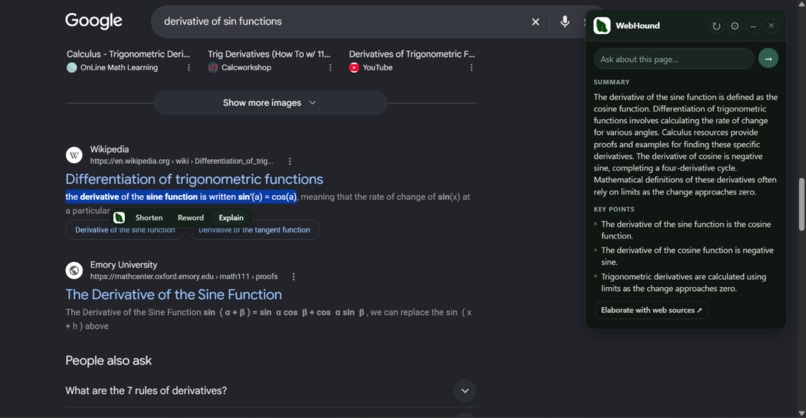
Google search
-
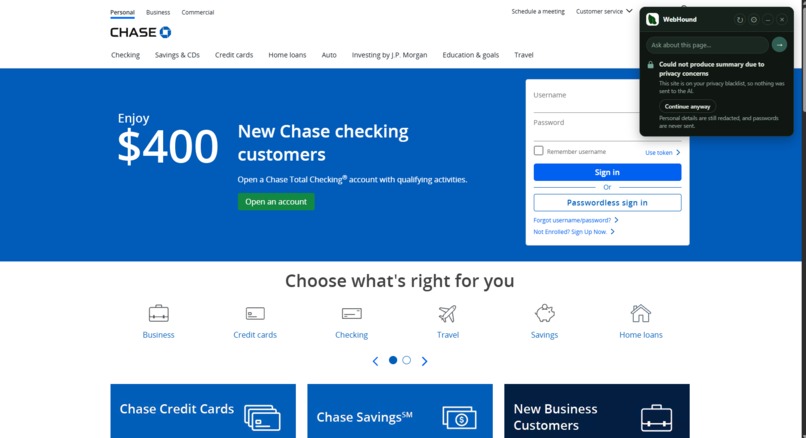
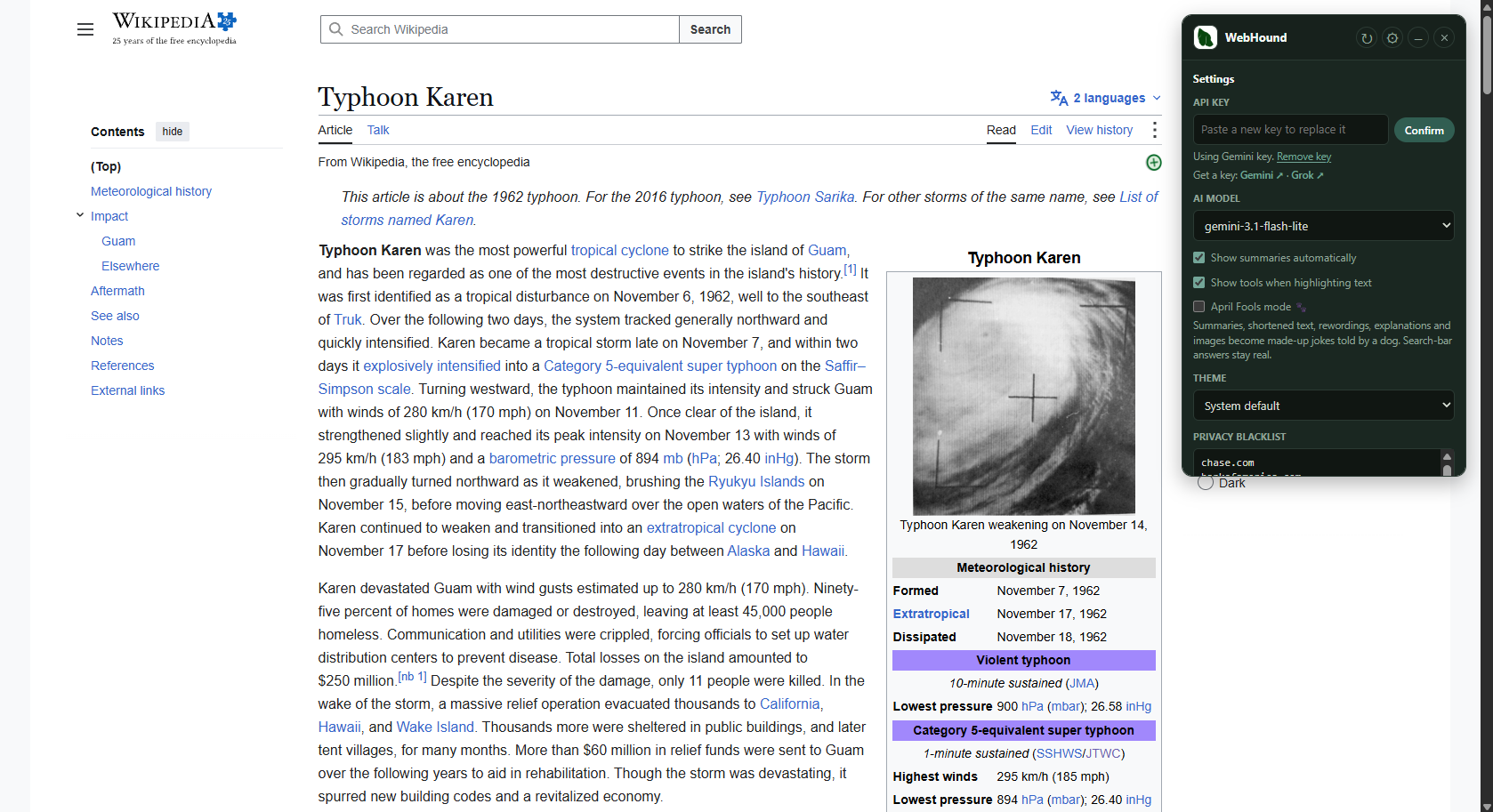
Privacy protection
-
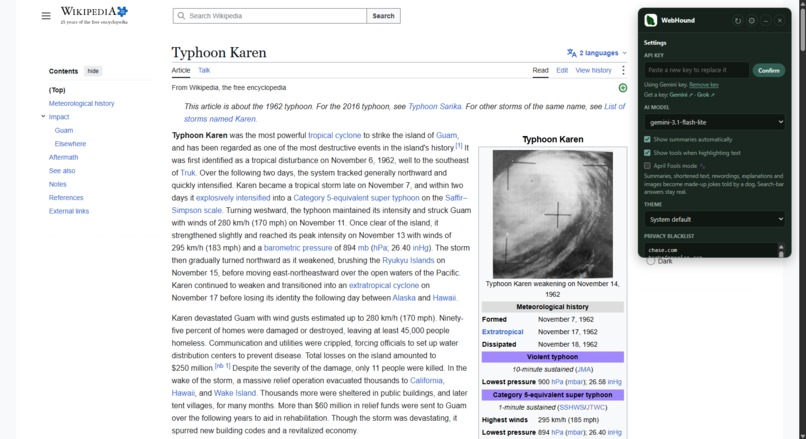
Settings
-
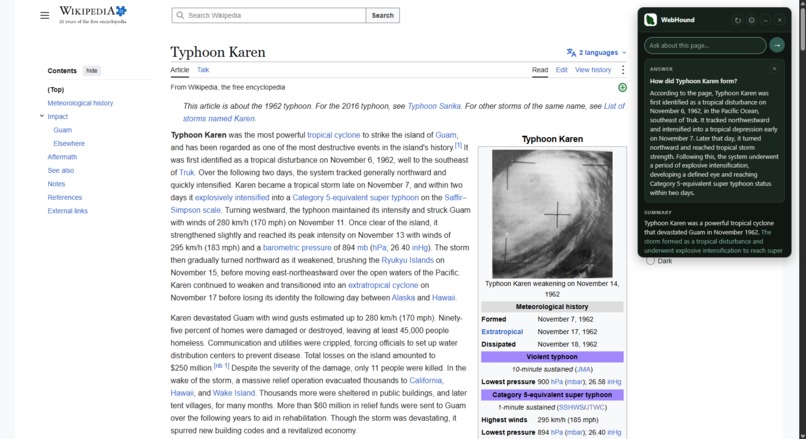
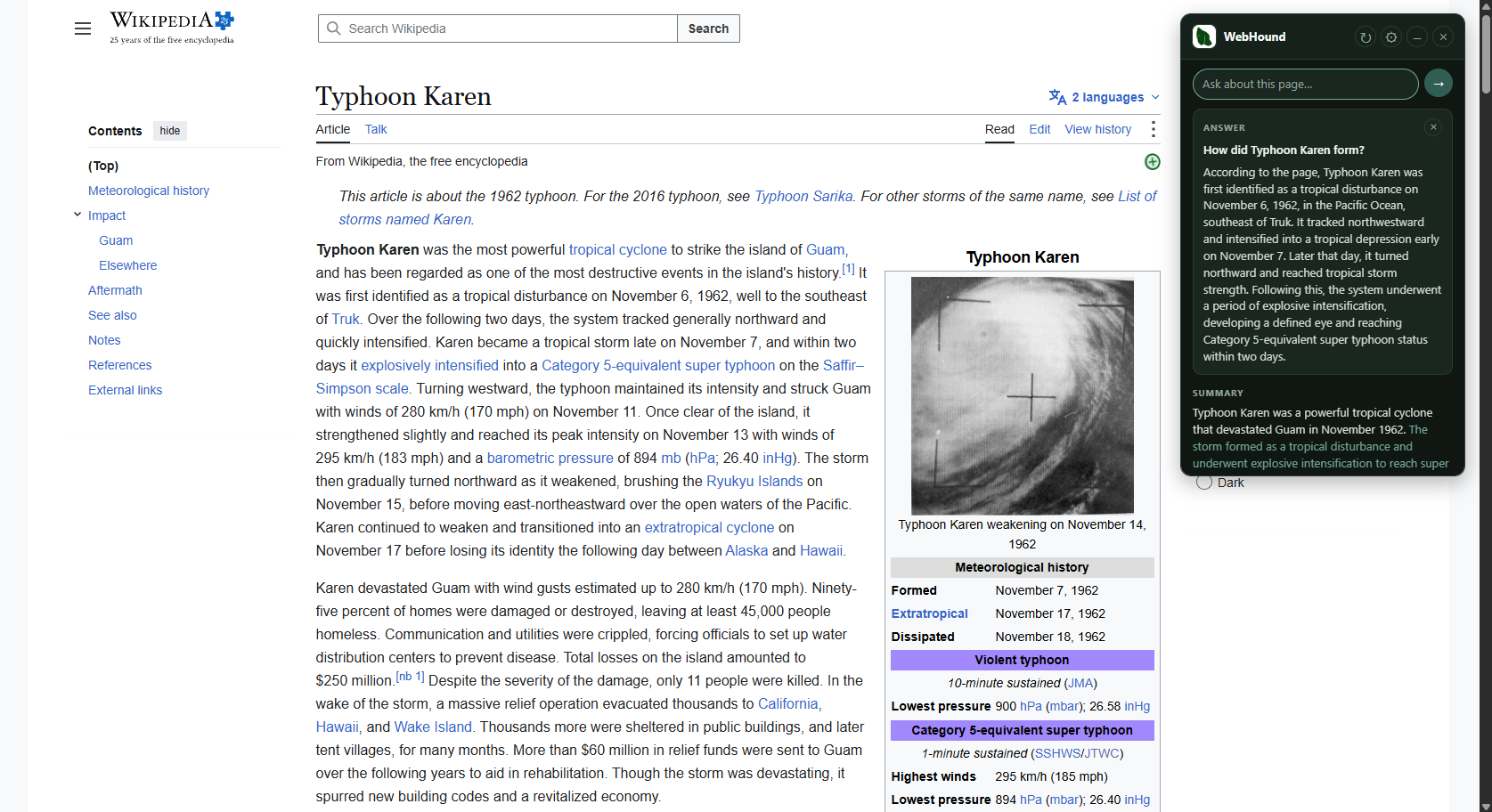
Wikipedia page
-
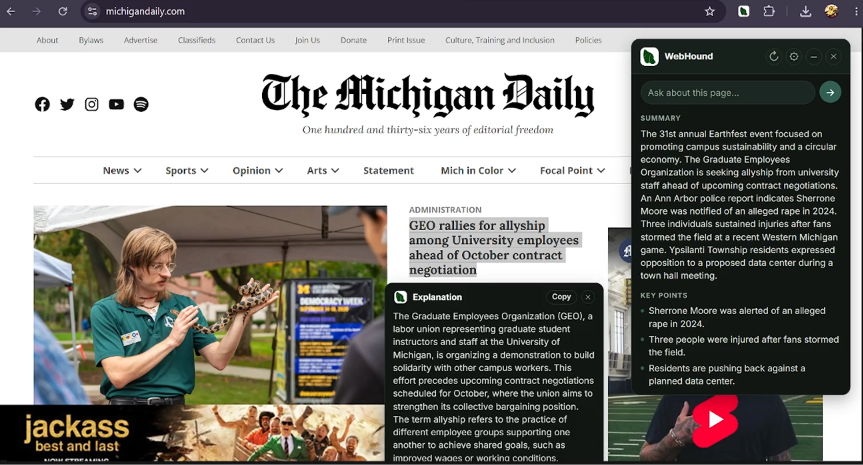
Highlited text
-
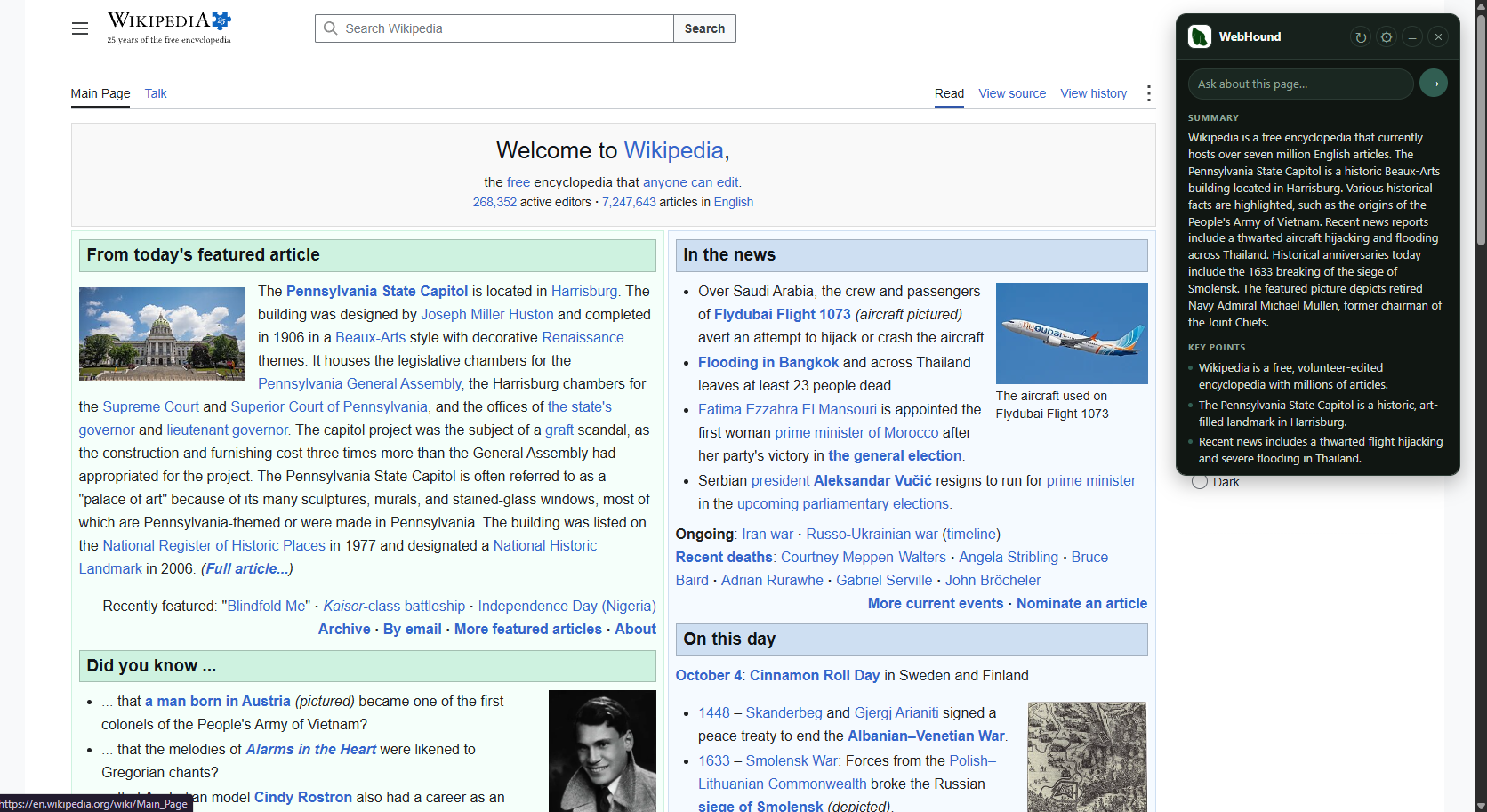
Wikipedia home
Inspiration
We've all spent too much time trying to understand articles and webpages for minutes and minutes, until we realize that this is not what we're looking for. And, we've needed clarification on certain sentences or paragraphs, but without the context pasting that into a chatbot like ChatGPT can often lead to inaccurate or unrelated answers.
What it does
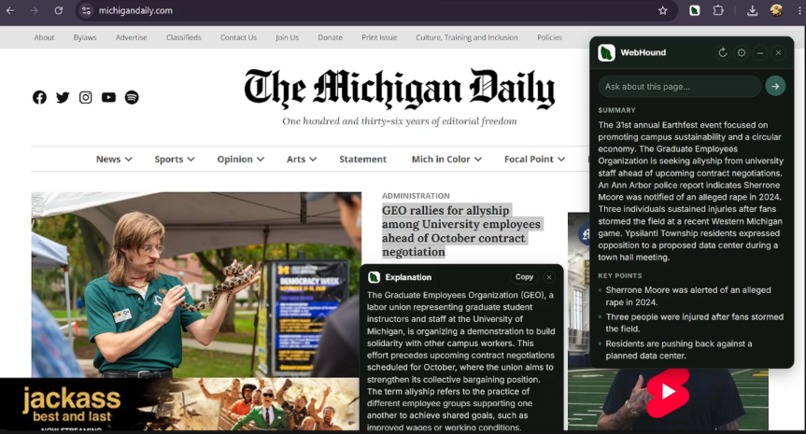
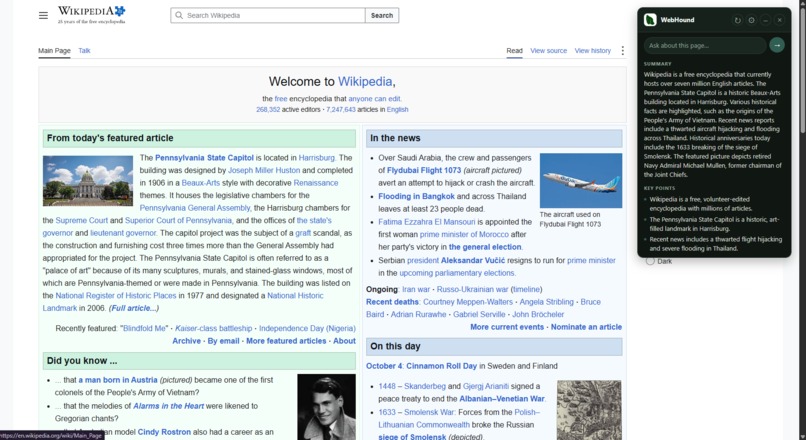
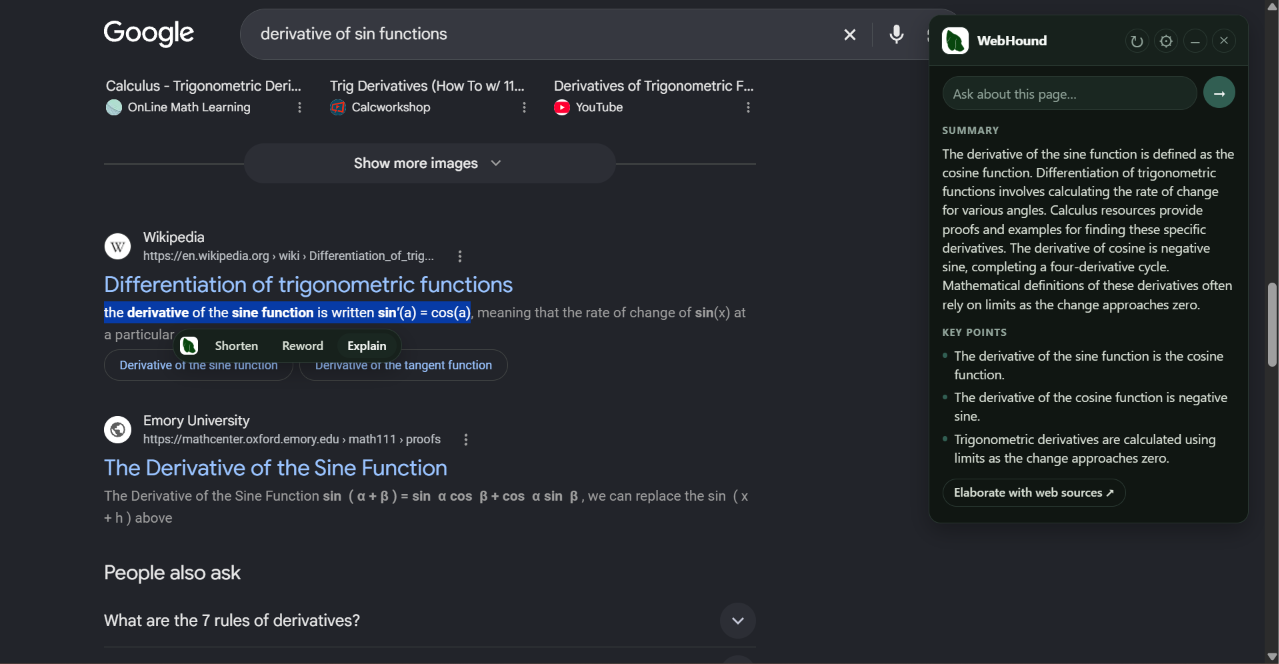
WebHound seeks to remedy these problems by integrating directly in your browser windows, getting the context directly from the page, and generating a brief summary of the entire page based on how long it is. Follow ups can be asked for more clarity, and explanations and images can be generated off of selected text anywhere in the webpage.
How we built it
We researched how exactly Chrome extensions are built and immediately got to building a design in Figma. After we finished a rough design, we got to implementing it with a combination of Cursor and Claude Code, and we designed multiple prototypes that each add new features and tweak small parts of the previous prototype.
Challenges we ran into
Initially, we all had different ideas and concepts that we were developing separately, and we were developing them in a way that was difficult to combine after we were done. This slowed down our development process because we had to spend extra time trying to combine each other's individual project iterations. After this, we knew that we had to collaborate especially when working on the core component of the project (the extension), and half of us dedicated our time on the peripheral parts like the design, website, or devpost submission. This led to a lot more overall productivity because we weren't getting pushed back.
Accomplishments that we're proud of
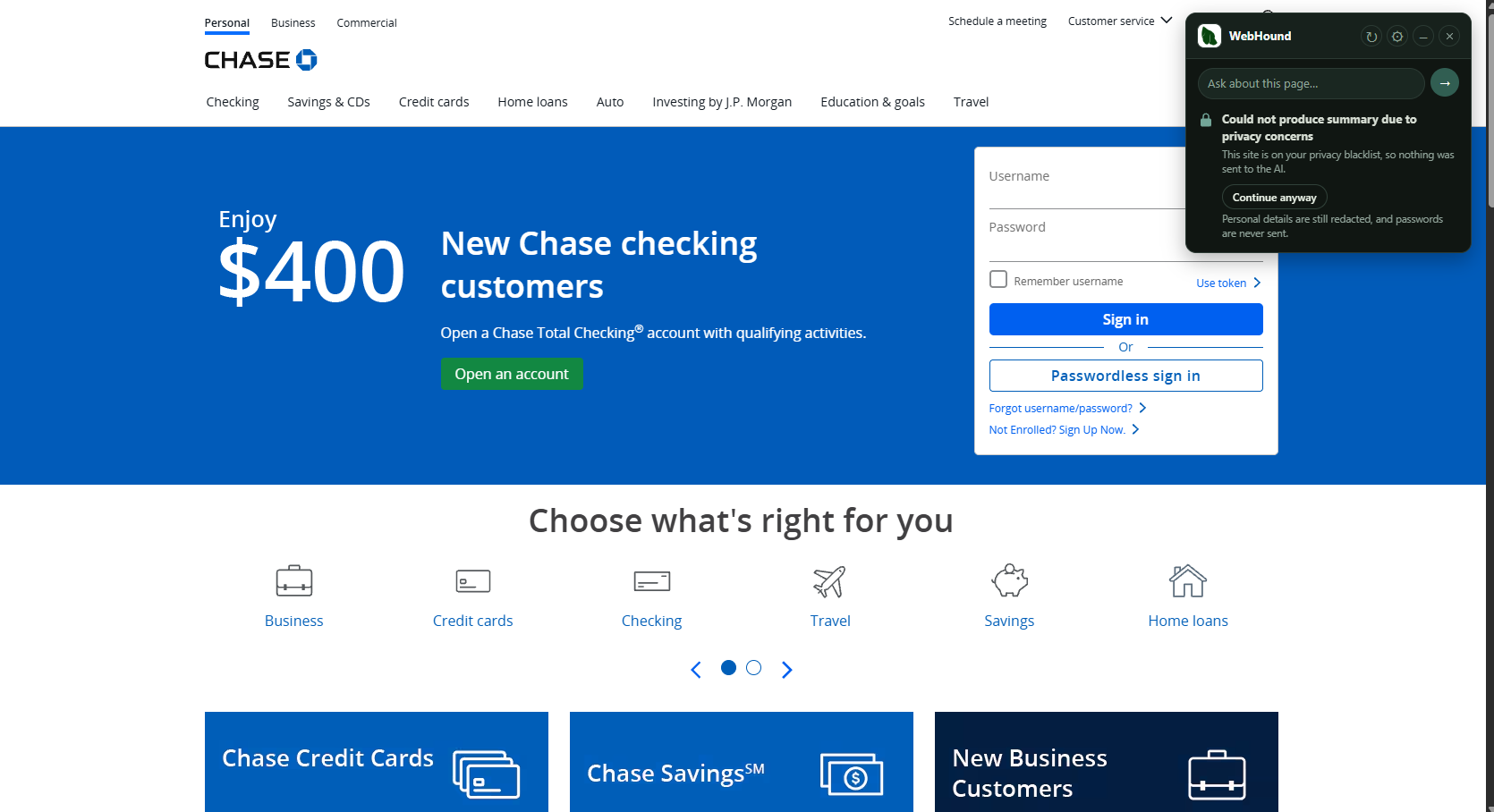
We successfully built a working prototype of our initial idea that works with all of the functionality we initially had. Now, we all have new ideas that we didn't have at the start of what we could improve upon. We also made this extension more privacy friendly from the restrictions put in place; considering the major privacy risks from AI, this is a huge step in the right direction.
What we learned
We learned how chrome extensions are made, and that they are very simple and similar to a website. We also learned prompting techniques to spend less API calls to achieve the same task, as API calls were a limiting factor for us, especially for Figma where we ran out of API calls extremely early into the design phase.
What's next for WebHound
We need to fully implement the cross-compare tool which compares the current tab to other open tabs. This is especially useful for shopping, where there are so many minor differences between products that are difficult to quickly evaluate for a human. Currently, they would need to ask a follow up in order to get comparisons, but with this cross-compare tool the user would just need to select tabs to include in the compare. Additionally, the user has to supply their own API key right now. This is not friendly for non-technical users, so we would need to implement our own backend with our own API key, as putting the API key within the extension would make our API key vulnerable and known to anyone downloading our extension.
Built With
- css
- cursor
- figma
- gemini
- grok
- html
- javascript


Log in or sign up for Devpost to join the conversation.