-
Landing Page
-
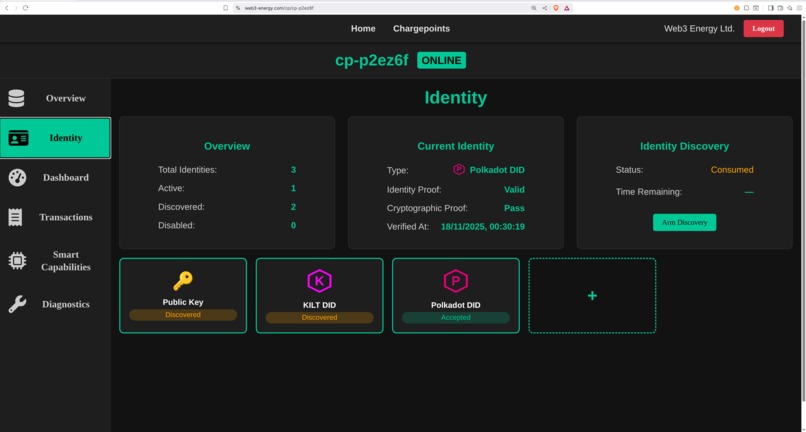
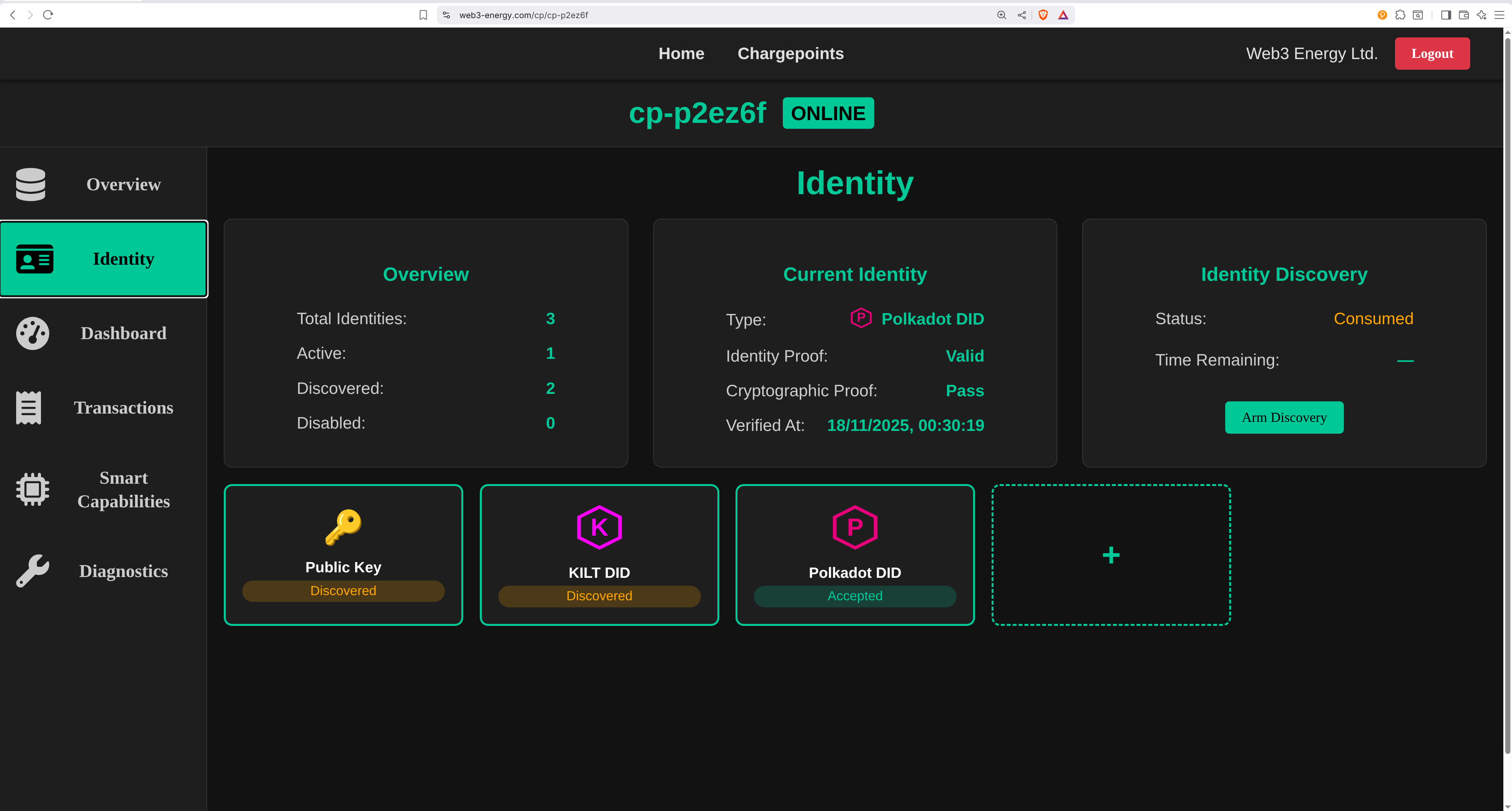
Chargepoint connected using W3CP and Polkadot Identity
-
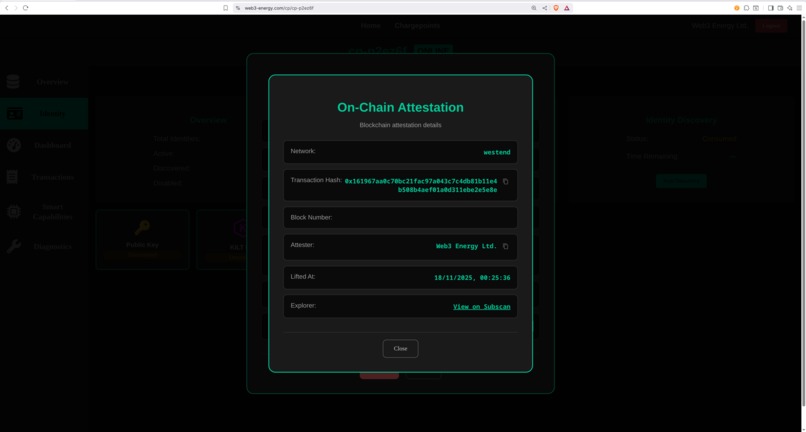
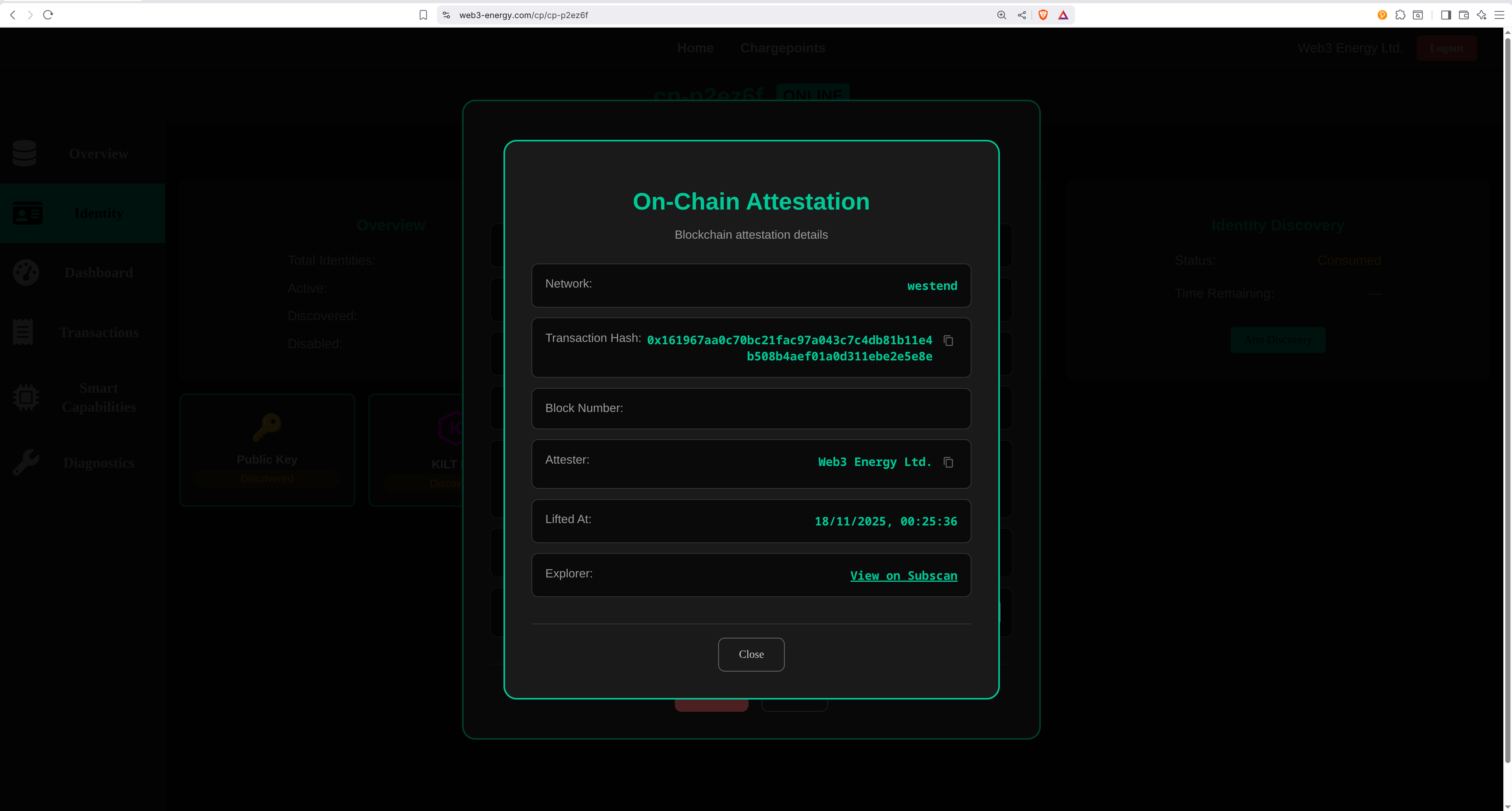
On Chain Attestation
Inspiration
Because the energy and EV ecosystem is growing fast, yet device identity is stuck in the past — fragmented, insecure and proprietary. We believe Web3-verified identities are the inevitable future, enabling chargers and energy devices to prove who they are without central authority. W3CP exists to bring trust, interoperability and cryptographic truth to global charging infrastructure.
What it does
W3CP provides a unified Web3 identity layer for chargepoints and energy devices, letting them authenticate using public keys, certificates, or blockchain-backed DIDs (Polkadot, KILT, EWC). The demo shows a full on-chain “identity lift” for a Polkadot-based chargepoint.
How we built it
A fully deployed AWS (all terraformed) PoC with a Quarkus backend, a Vue frontend, a chargepoint emulator, and a Polkadot sidecar enabling on-chain attestations. Everything works end-to-end in real time.
Challenges we ran into
WebSocket security over ALB, stable CORS for identity flows, on-chain remark encoding, Westend decoding quirks, and building a working DID flow under hackathon time pressure.
Accomplishments that we're proud of
Live PoC deployed on AWS, real cryptographic identity verification, instant DID discovery, and a working on-chain Polkadot attestation — all built and live.
What we learned
Web3 identity fits EV charging far better than legacy PKI alone. Combining DIDs + lightweight backend logic creates a secure, scalable pattern for energy devices.
What’s next for Web3 Energy
Production-ready DID registry, support for KILT and EWC lifts, hardware integration, and pushing W3CP toward an open standard for the EV industry.
Built With
- amazon-web-services
- java
- javascript
- node.js
- quarkus
- terraform
- vue


Log in or sign up for Devpost to join the conversation.