
Inspiration
I encountered many limitations while exploring Sillytarven and would like to understand the specific architecture of the web version to see what my current knowledge is sufficient.
What it does
The regular expression code is made independent of the sillytarven dependency by relying on the agent, and runs independently on the webpage.
How we built it
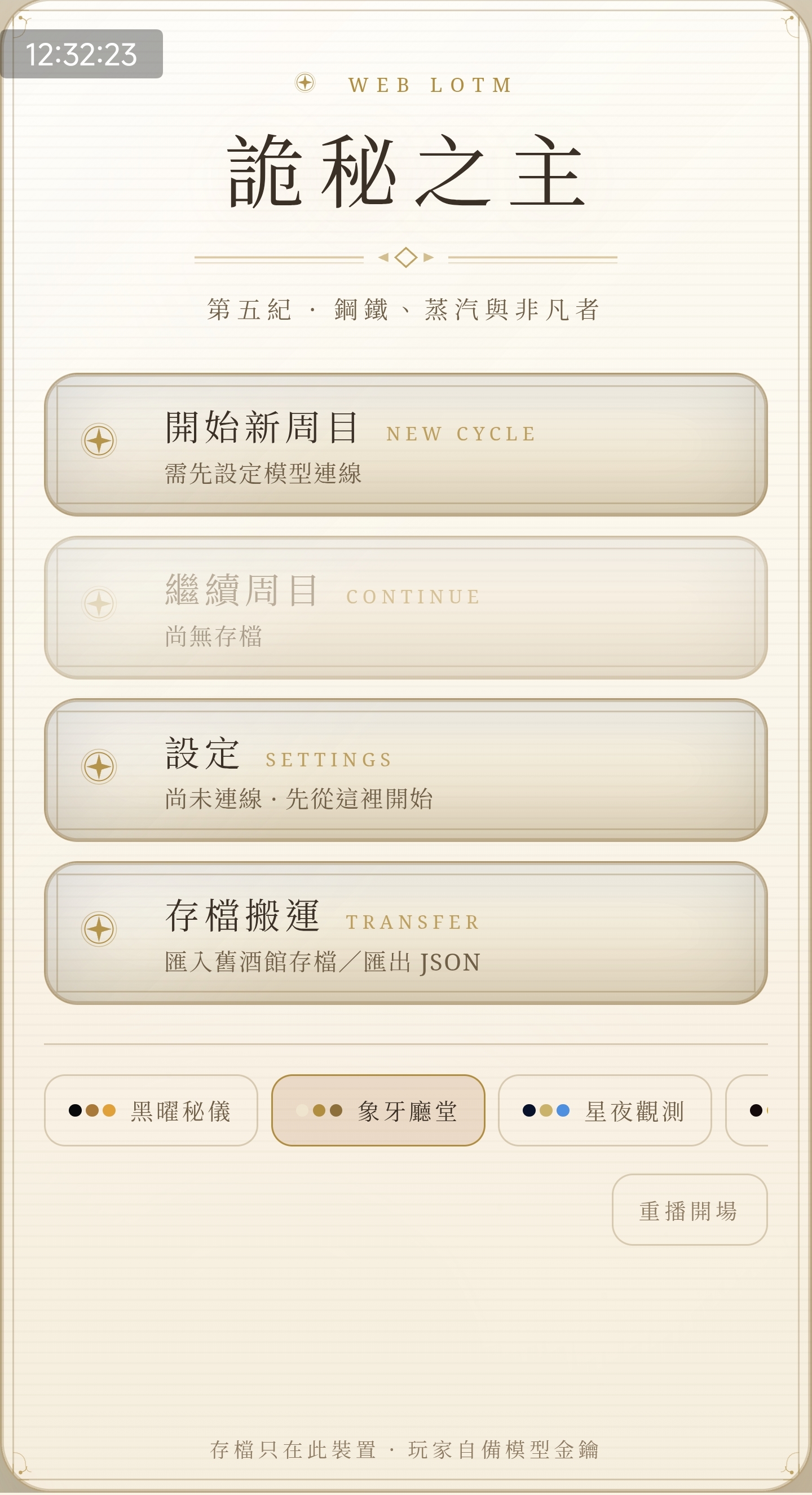
After completing the basic overall port, we'll revamp the entire UI and identify any issues with the runtime logic. We plan to add subagent concepts later to enhance the gameplay experience.
Challenges we ran into
Without a coding background, understanding many things requires constantly opening a web-based GPT client and having it explain things in plain language.
Accomplishments that we're proud of
I've always thought it's really cool to be able to leverage AI to do things that I can't fully do on my own.
What we learned
I can't say how much I've learned yet, as much of it is still based on the original architecture. However, this is the first time I've realized that deploying a webpage doesn't necessarily have to cost money. I'm currently working hard to port and troubleshoot the UI interaction logic, and clarify the differences in dependencies between the webpage and the Sillytarven environment before making feature adjustments.
What's next for Web lotm
First, ensure that players already using Sillytarven can enjoy a seamless and low-friction experience before starting development of new features. Currently, the most anticipated approach is to use subagent-like concurrent API logic to address the issue of overly heavy prompts in a single API. This involves using a cheaper model coupled with detailed environmental variables and clearly defined task distribution to improve the gameplay experience and reduce costs.

Log in or sign up for Devpost to join the conversation.