-
-
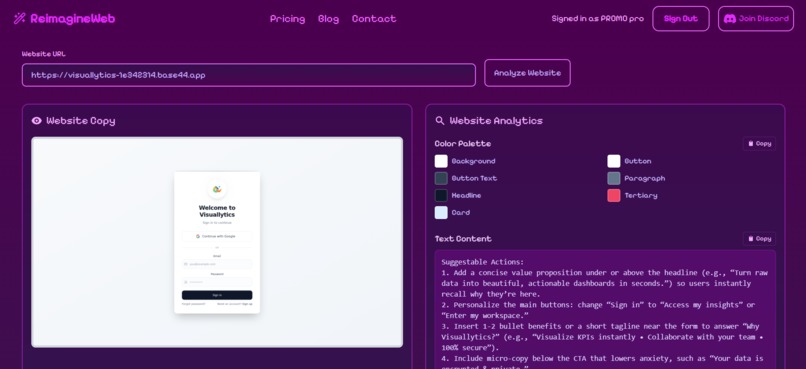
reimagineweb.dev
-
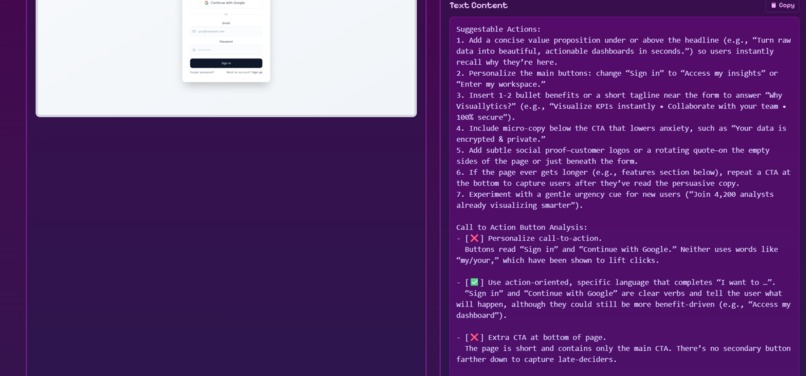
Analysis of our Prototype from reimagineweb.dev
-
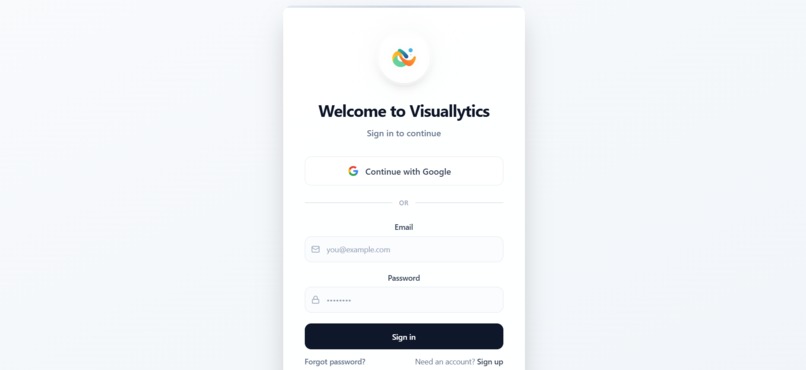
Landing Page
-
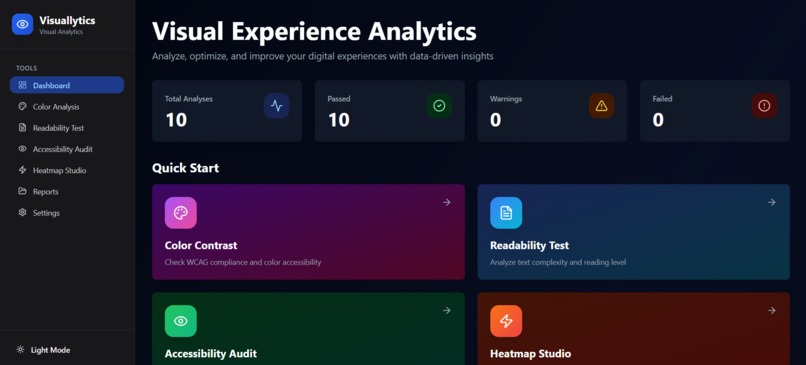
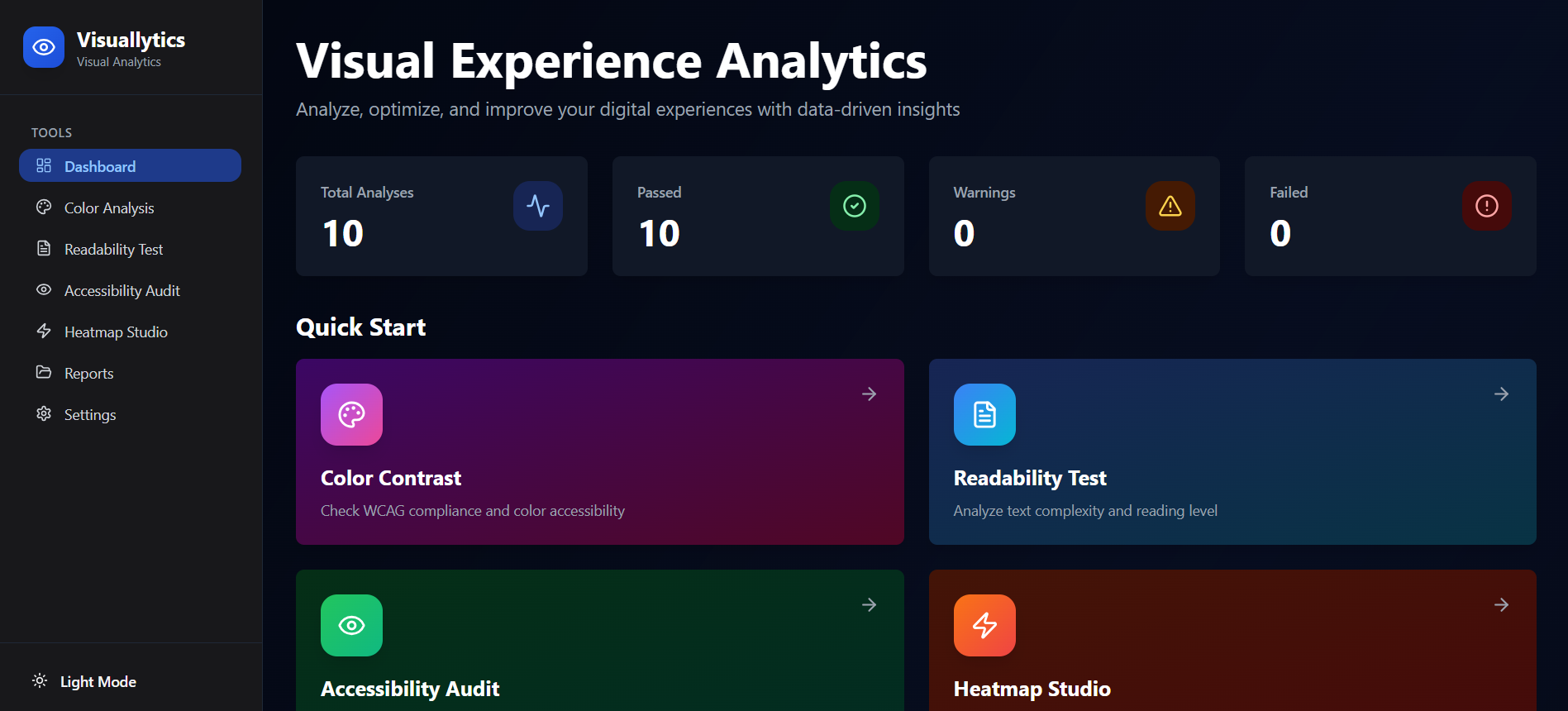
Dashboard
-
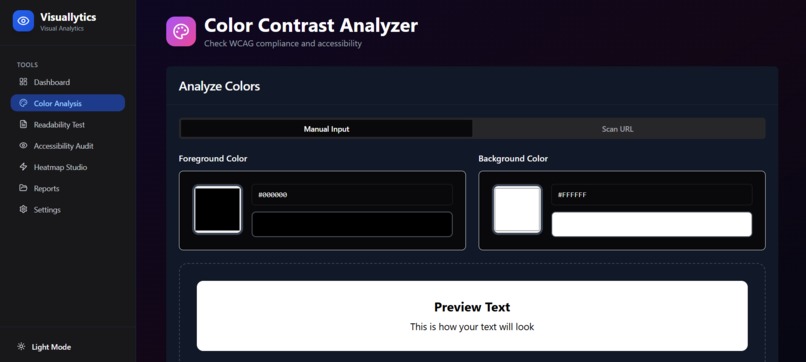
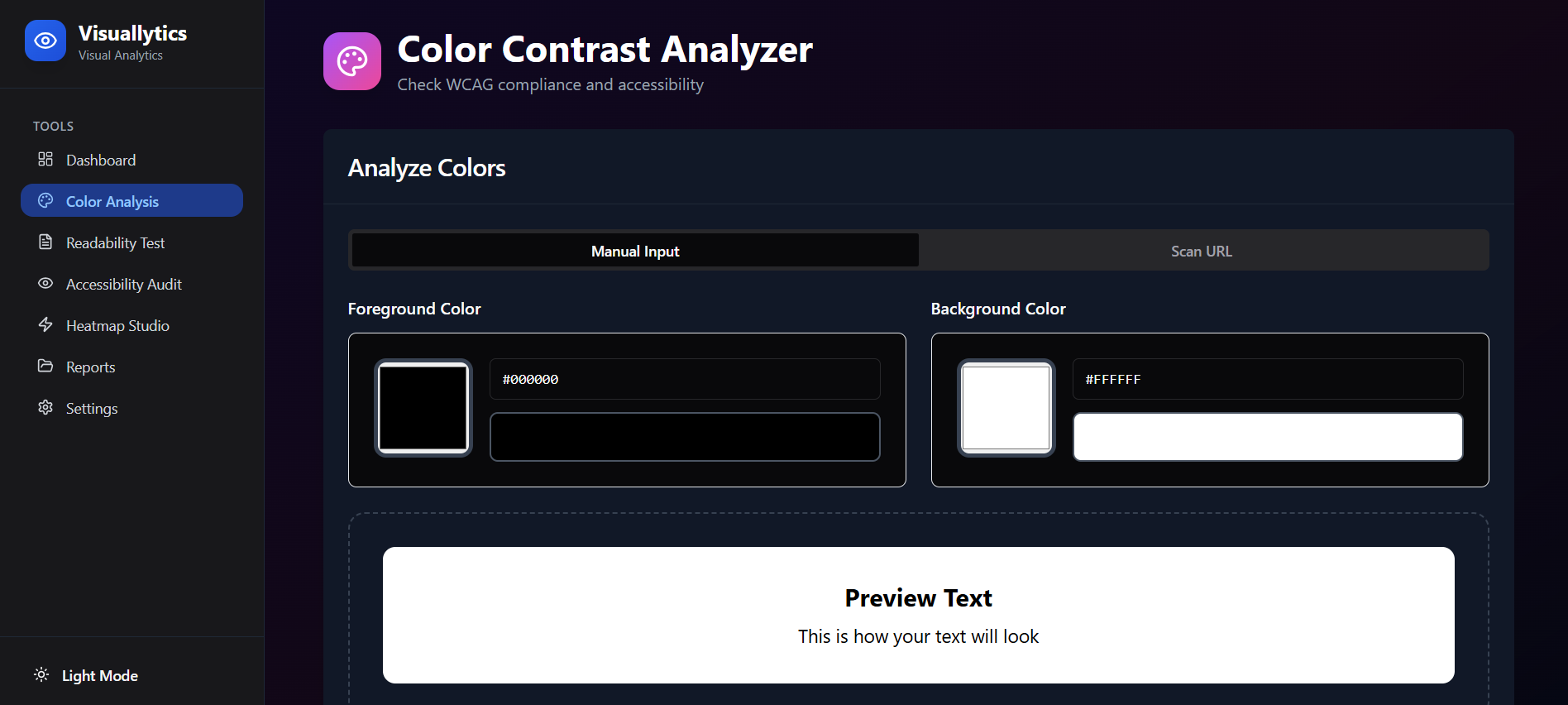
Color Contract Test
-
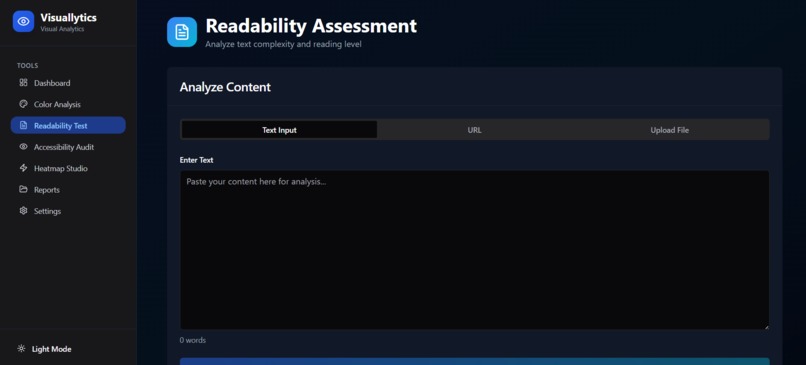
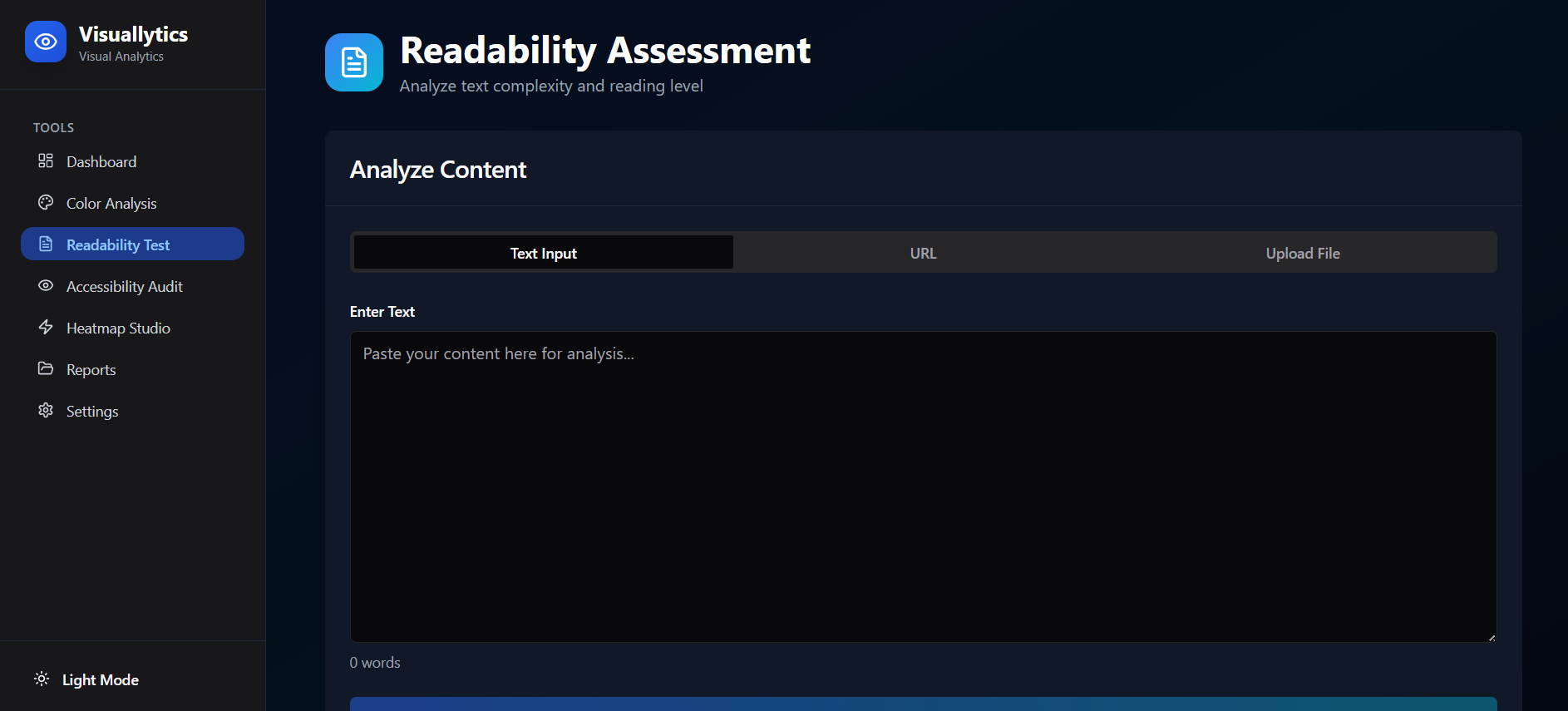
Readability Test
-
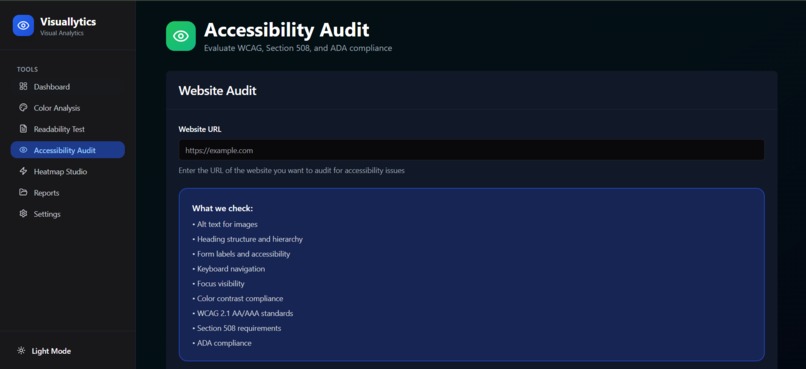
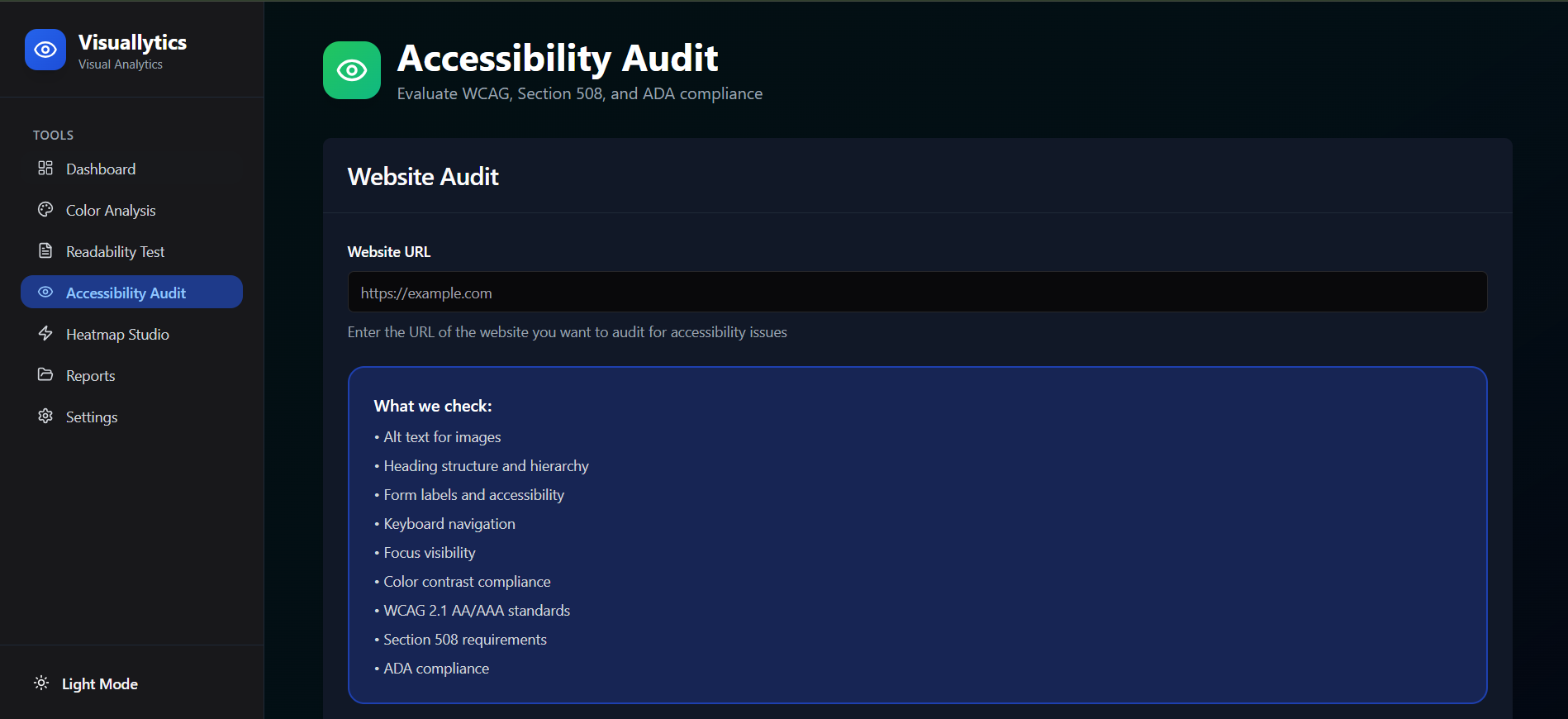
Accessibility Test
-
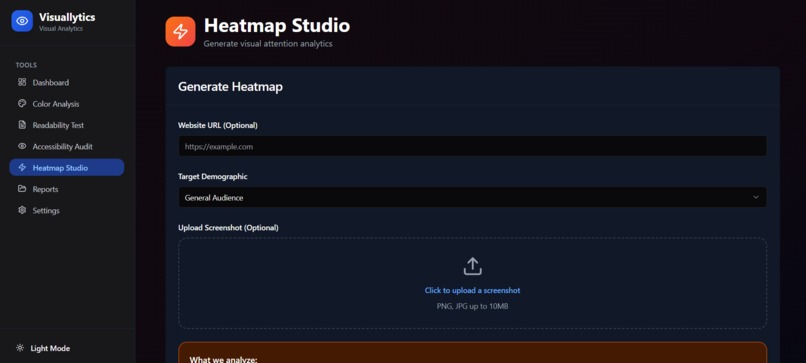
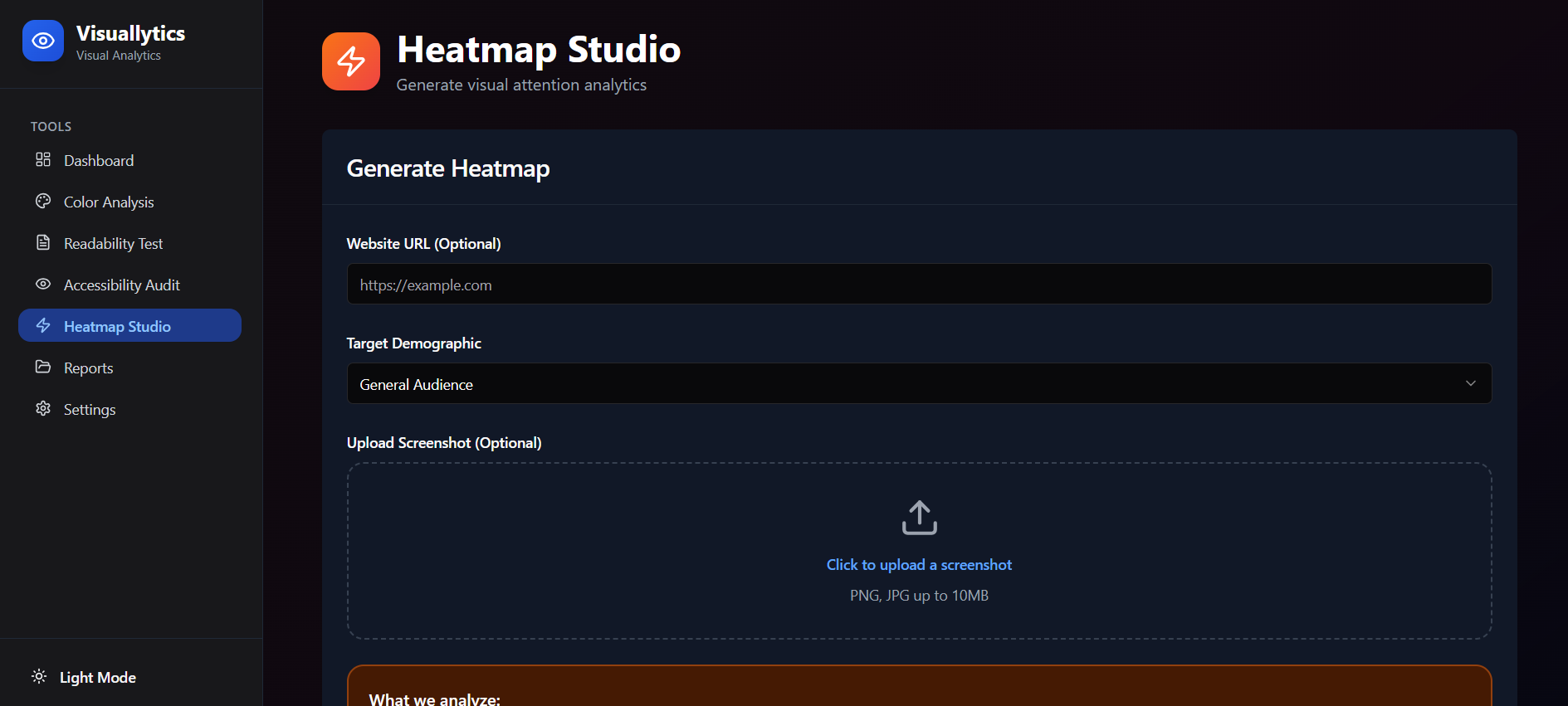
Heatmaps Generation
-
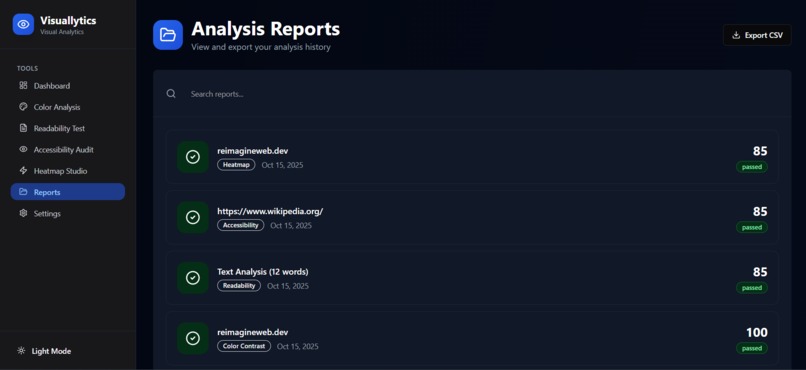
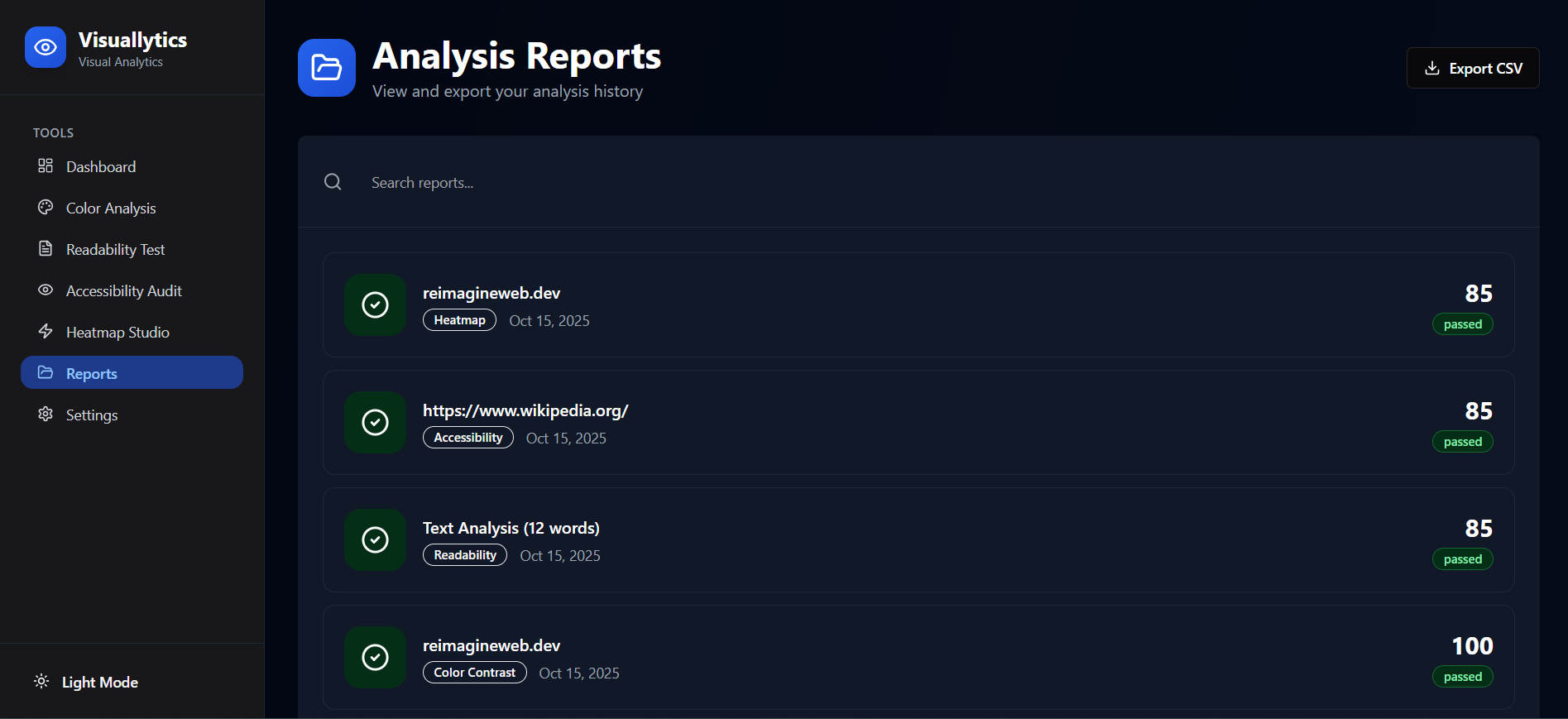
Analysis Reports
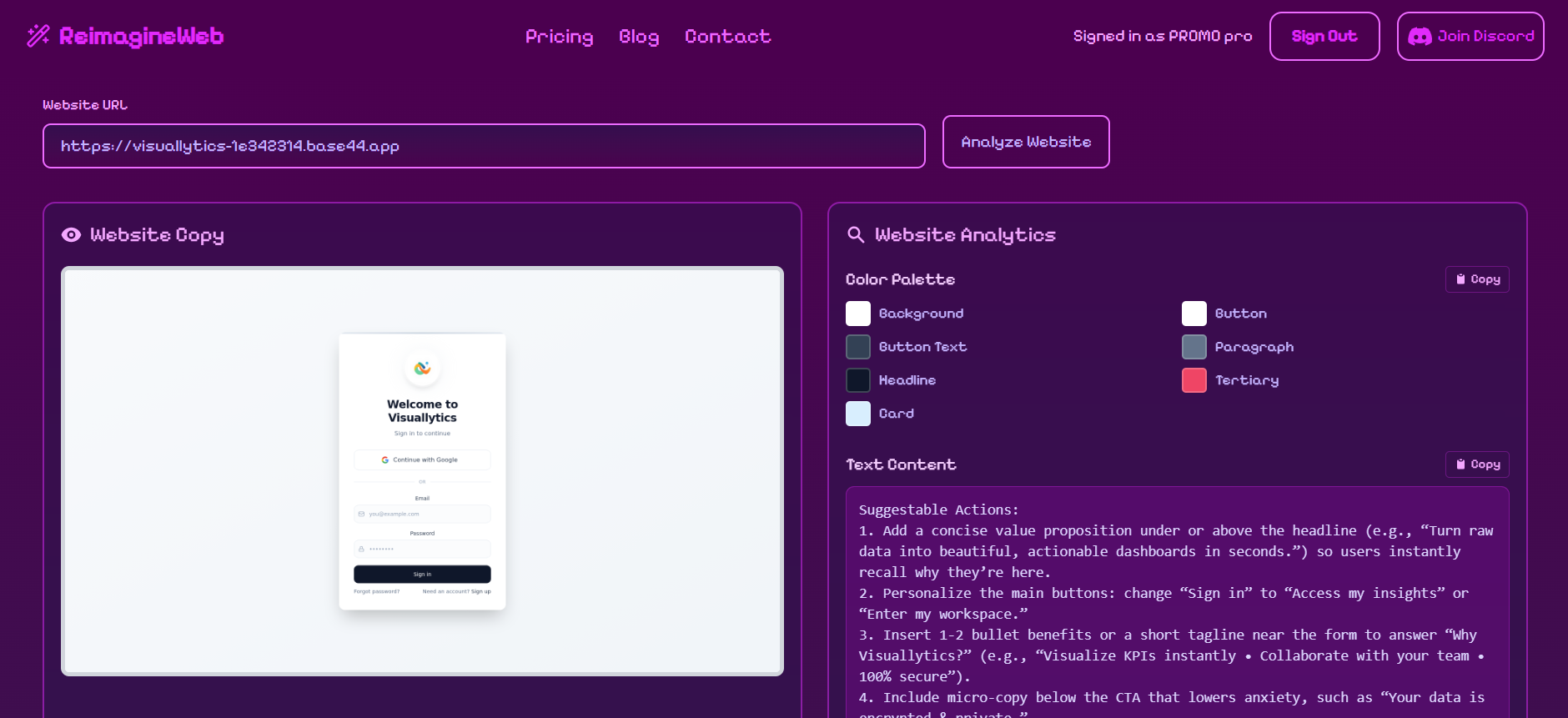
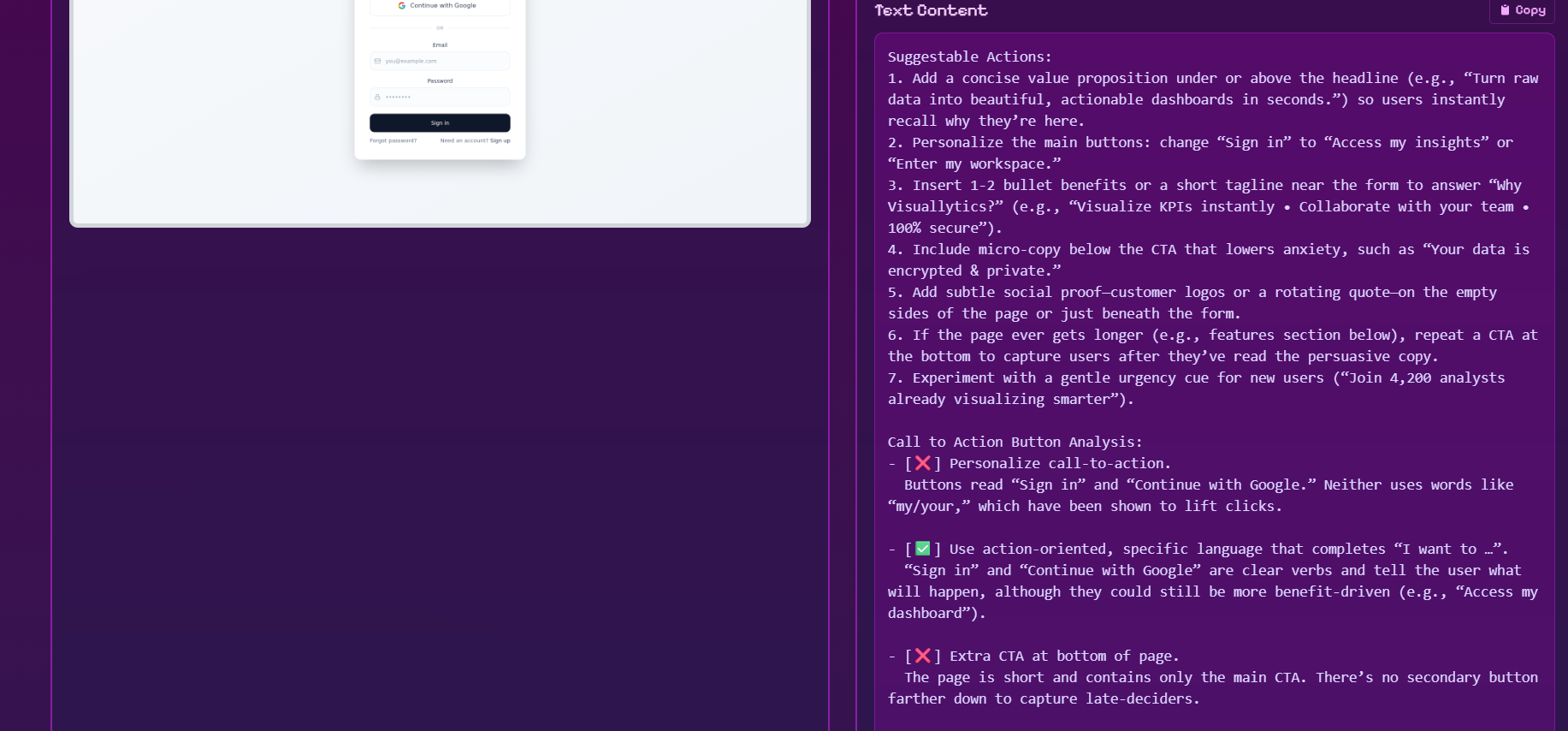
Inspiration
We were inspired to build Visuallytics after noticing how organizations struggle to capture, visualize, and act on their data in real time. With the explosion of data sources and the complexity of modern business environments, there is a growing need for intuitive, robust analytics platforms that are both accessible and scalable.
What it does
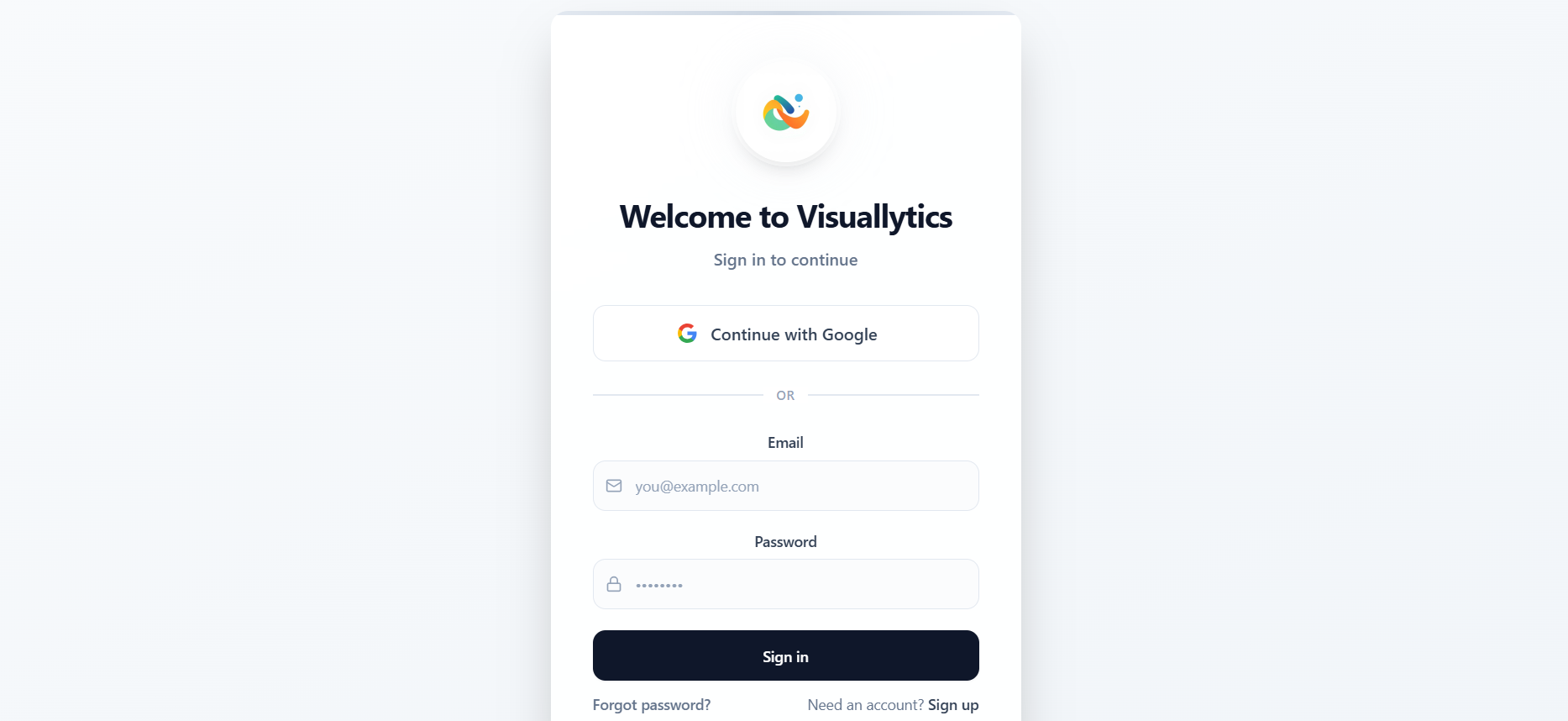
Visuallytics is a web-based analytics platform that enables users to seamlessly visualize, analyze, and interpret their data. The app provides interactive dashboards, customizable reports, and easy integration with common authentication methods (Google and email). The core idea is to make advanced analytics accessible without the need for deep technical expertise.
How we built it
We designed Visuallytics as a cloud-hosted application using the following tech stack:
- Frontend: Modern frameworks (e.g., React.js or Vue.js) for a snappy, responsive UI.
- Backend: A scalable backend architecture built with Node.js or Python, serving RESTful APIs.
- Authentication: Integrated OAuth 2.0 for Google sign-in and secure email/password login.
- Database: Managed cloud databases for real-time data persistence and analytics.
- Deployment: Hosted on a reliable cloud platform for global availability (e.g., AWS, Azure, GCP).
Challenges we ran into
- Authentication integration: Balancing usability and security in sign-in options took careful planning.
- Data visualization complexity: Ensuring interactive visuals render quickly, even with large data sets, required performance tuning.
- User experience: Making the app intuitive for both technical and non-technical users was an ongoing challenge.
Accomplishments that we're proud of
- Smooth, multi-provider authentication experience.
- Fast, interactive dashboards that scale from small to large datasets.
- Clean, modern design that new users can navigate easily.
What we learned
- Carefully planning user authentication flows saves support headaches later.
- Performance must be considered from day one, especially with visualization-heavy apps.
- User feedback is crucial—real users always reveal issues you miss during development.
What's next for Web Hackers
We plan to:
- Add more data connectors and support for additional 3rd-party platforms.
- Implement AI-driven insights and recommendations.
- Enhance collaboration features so teams can share and act on data findings together.


Log in or sign up for Devpost to join the conversation.