-
-
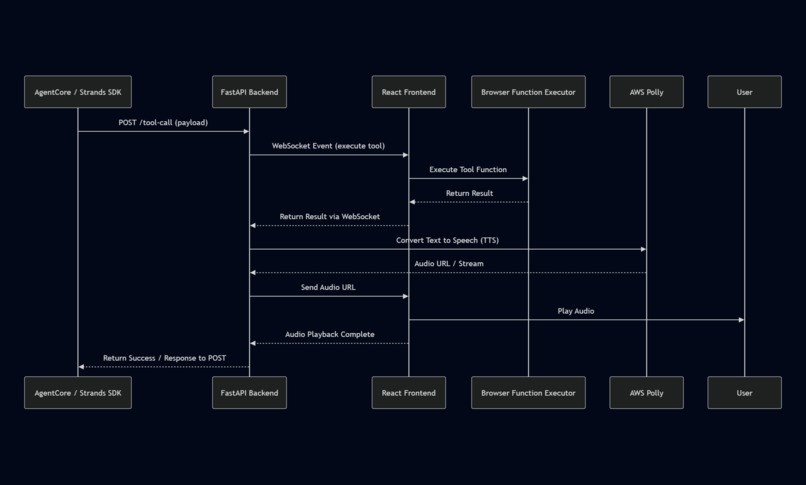
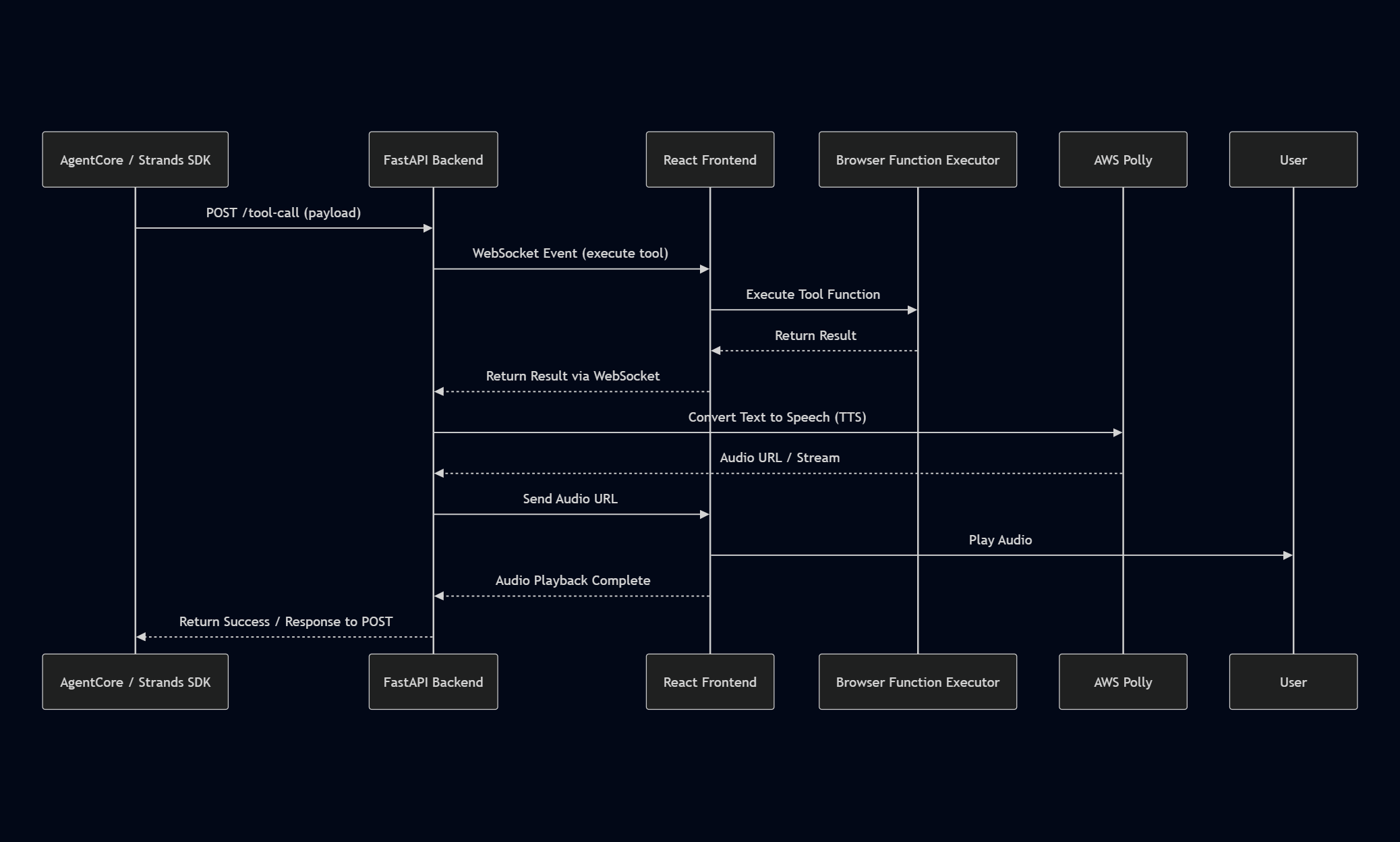
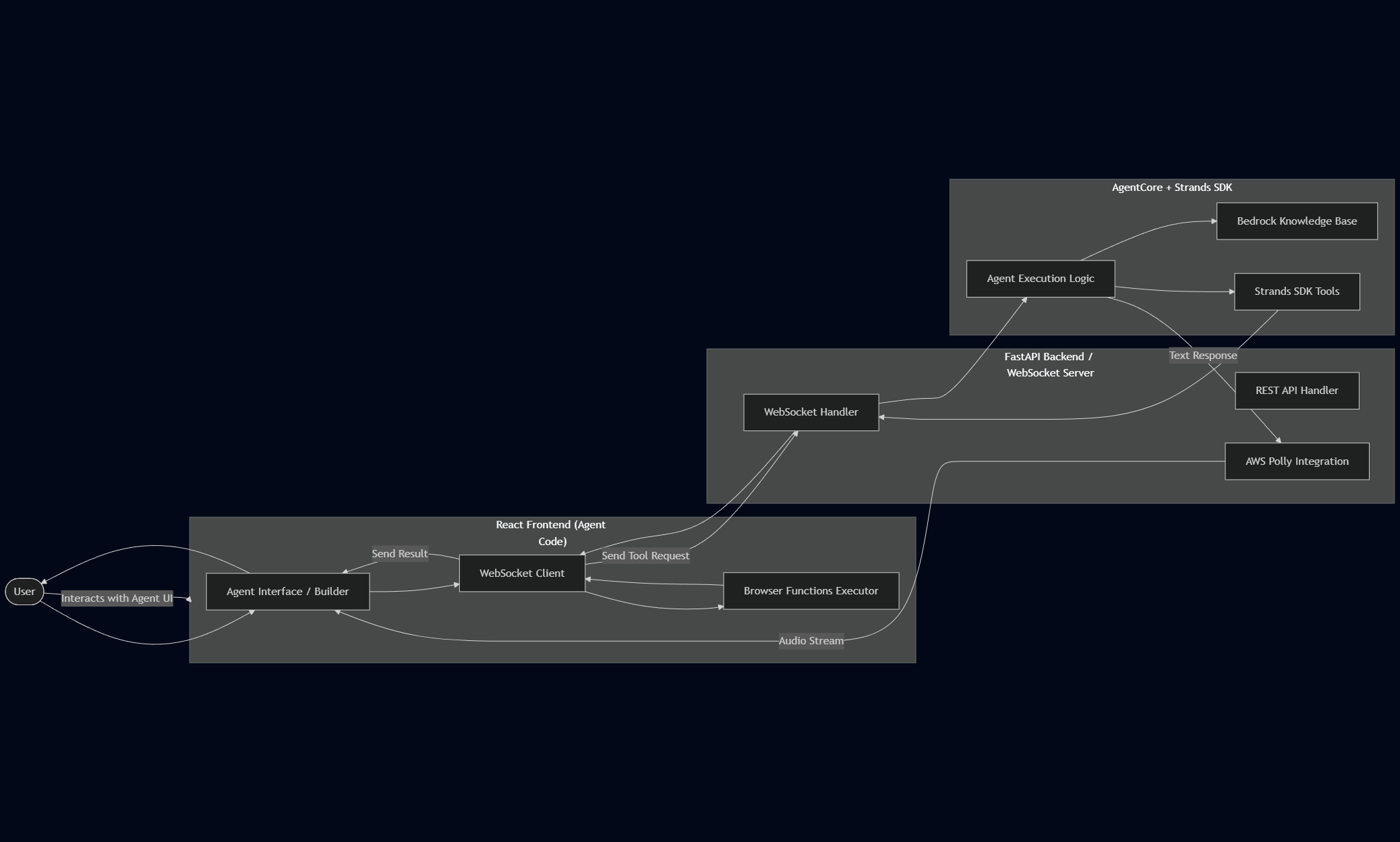
Tool Call and Speech Flow
-
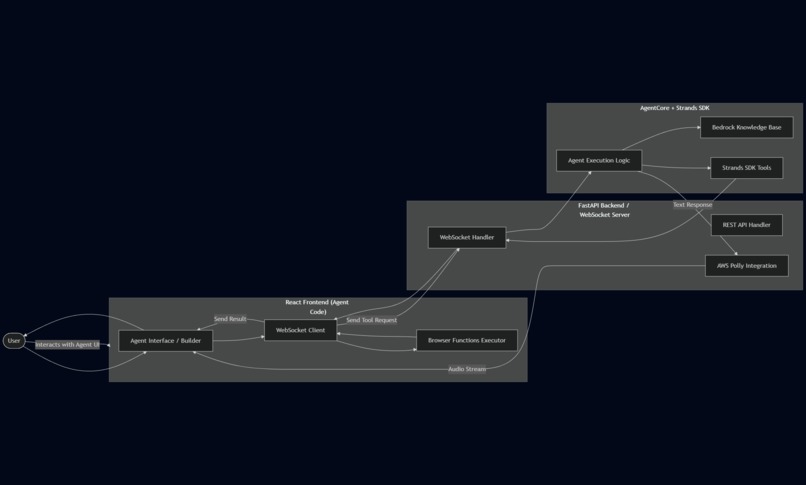
Agent and Frontend communication
-
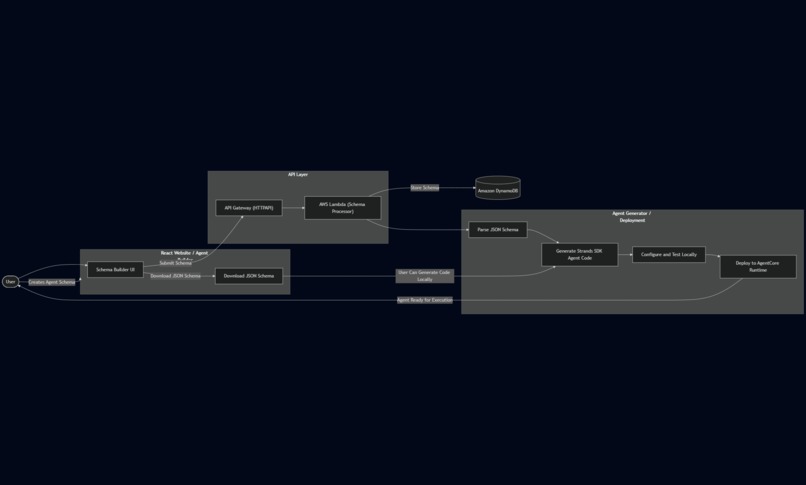
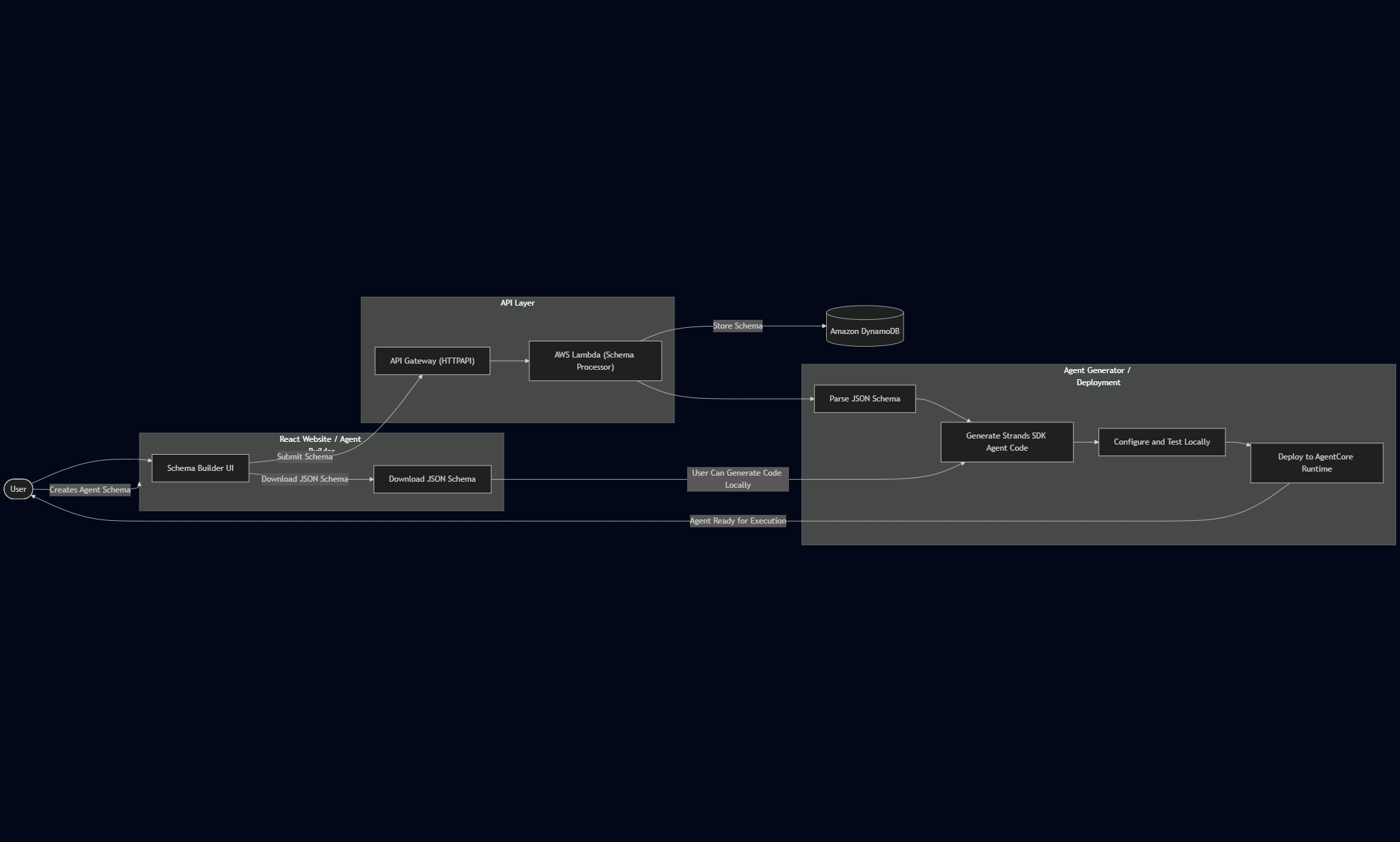
Agent Schema UI
AgentSphere
Inspiration: The Need for Smarter Browser Automation
Today's browser AI tools are largely simplistic, often functioning as little more than chatbots that call an API. The next generation—true autonomous agents that can perform multi-step tasks—face significant hurdles. They are often slow, expensive, and error-prone, typically because they run in isolated environments disconnected from the user's actual browser.
We set out to create a platform that makes browser agents fast, interactive, and intelligent. Our goal was to move beyond simple text interactions to enable complex, multi-agent workflows that are deeply integrated with the browser, while ensuring the system remains cost-effective and accessible.
What It Does
Our platform is a comprehensive, no-code environment for building and deploying sophisticated AI agents that operate directly in the browser. It transforms the complex process of coding agentic systems into a visual, intuitive experience. It can be thought of in a way that the Frontend exposes the Tools which the Agent can call to run actions, get data and insights, enabling new use cases at low cost.
Core Capabilities:
- Visual Agent Builder: Design complex multi-agent workflows without writing code.
- Schema-Driven Development: Export designs as JSON schemas to generate ready-to-run Strands SDK code
- Real-Time Browser Execution: Agents trigger live browser functions through Action Hooks with visual feedback via the Agent Orb
- Voice-Enabled Interactions: Integrated AWS Polly text-to-speech for natural agent communication -Multi-Agent Pattern: Uses Agents as Tools for predictable and efficient execution handling multiple tools for UI Interactions. The platform enables users to create agents for any use case—from research assistants and customer support agents to workflow automators—all through a JSON Schema rather than traditional programming.
How We Built It
We engineered a robust, full-stack system that seamlessly connects visual design to powerful execution through real-time communication.
Technical Architecture:
- Frontend: React-based application with visual builder, real-time Agent Orb, and Action Hook system
- Backend: FastAPI server handling workflow orchestration and WebSocket communication. Initially planned to use AWS Websocket API Gateway as it is Scalable, but due to time constraints, created the Backend.
- Agent Core: Strands SDK agents running on AgentCore runtime using Agents as Tools Pattern.
- Real-Time Layer: AWS WebSocket API Gateway for low-latency browser-backend communication
- Voice & Storage: AWS Polly for text-to-speech, with DynamoDB and S3 for data persistence
This architecture supports complex multi-agent workflows where agents can reason, execute browser actions, and communicate through multiple modalities simultaneously.
Challenges We Ran Into
Building a seamless, multi-component AI system presented significant technical hurdles that required innovative solutions.
Key Technical Challenges:
- Reliable Code Generation: Translating visual schemas into precise, executable Strands SDK code required robust mapping and validation
- Concurrency Control: Preventing overlapping agent invocations to avoid conflicting tool calls and workflow corruption
- Real-Time Coordination: Designing the Agent Orb for clear visual feedback without overwhelming users or impacting performance
- AI Behavior Management: Preventing infinite loops and repetitive actions through careful prompt engineering and system design
- End-to-End Latency: Optimizing every component in the execution chain to maintain responsive, real-time interactions
- Cost Optimization: Balancing powerful capabilities with affordability through strategic model selection and S3 vector storage
Each challenge required deep technical consideration to ensure the platform remained reliable, responsive, and cost-effective.
Accomplishments That We're Proud Of
We successfully delivered a platform that pushes the boundaries of what's possible with browser-based AI agents.
Key Achievements:
- Production-Ready Multi-Agent Platform: A fully modular system capable of orchestrating complex workflows.
- True Browser Integration: Real-time execution of browser-side functions via Action Hooks, enabling agents to interact with live web applications
- Multi-Modal Experience: Seamless integration of visual interfaces, functional execution, and voice responses for a cohesive user experience
- Reproducible Workflows: Schema-driven approach ensures all agent designs are version-controlled, shareable, and deployable with one click
These accomplishments represent significant advancements in making sophisticated multi-agent AI accessible and practical for real-world applications.
What We Learned
The development process provided valuable insights into building effective AI systems and platforms.
Key Insights:
- Multi-Agent Superiority: Decomposing tasks across specialized agents proves dramatically more effective than single-agent approaches for complex workflows
- Integration Value: Combining backend reasoning with frontend execution and voice output creates an emergent experience that exceeds the sum of its parts
- Schema-First Advantage: Declarative agent design ensures systems remain maintainable, debuggable, and scalable as complexity grows.
These learnings have shaped our approach to platform design and will continue to inform future development decisions.
What's Next
Our roadmap focuses on enhancing performance, expanding capabilities, and growing the platform's ecosystem.
Future Directions:
- Performance Optimization: Further reducing latency and token usage to make agent execution faster and more cost-effective
- Deep Observability: Implementing advanced tracing and debugging tools for better workflow monitoring and performance insights
- Expanded Template Library: Growing the collection of pre-built agents and tools to accelerate development and enable more complex workflows
- Ecosystem Growth: Enhancing integration capabilities and community features to support broader adoption and use cases


Log in or sign up for Devpost to join the conversation.