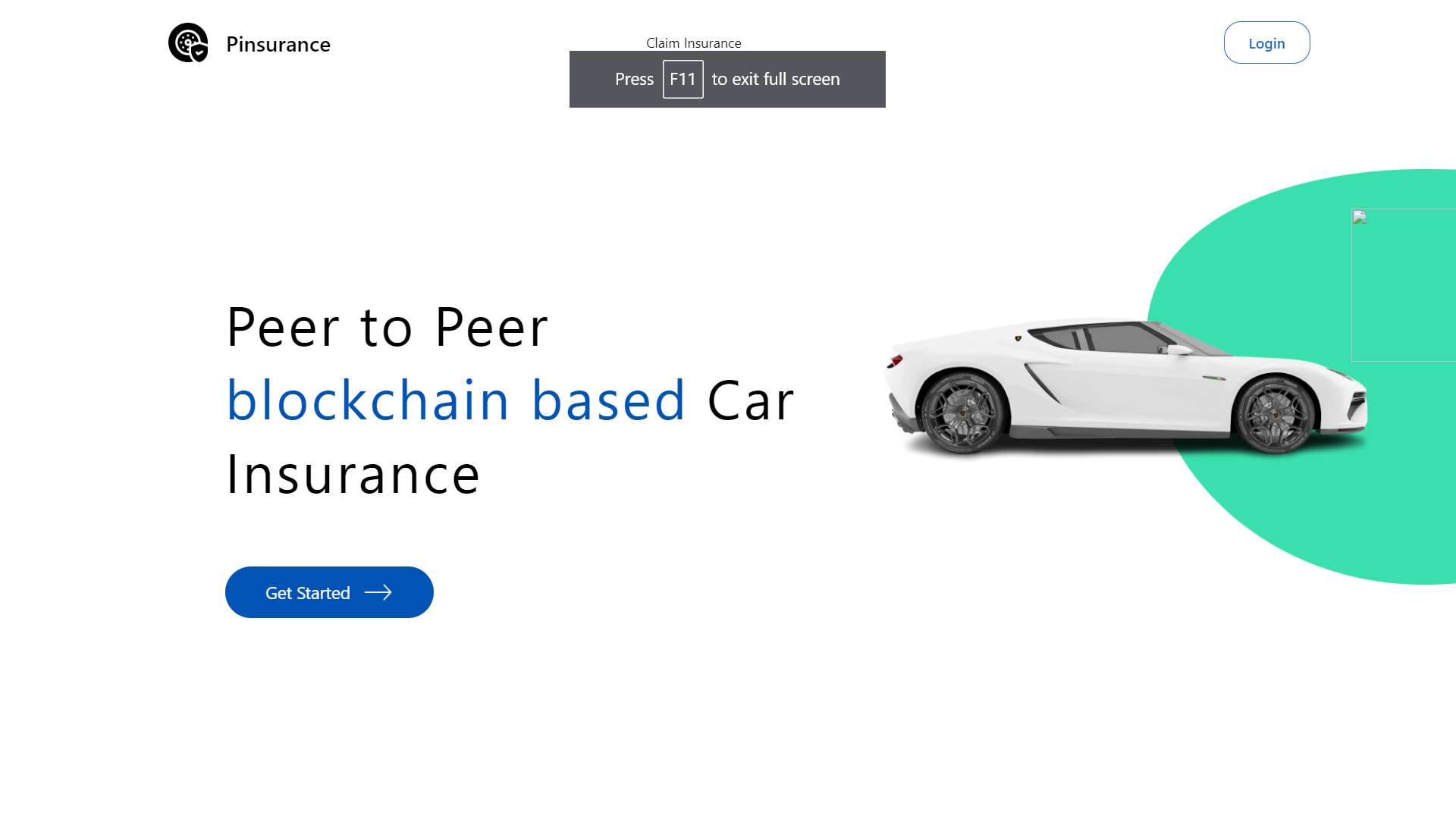
What the Project is all about? Pinsurance is a blockchain-based P2P defi platform for car insurance. In this model group of individuals, friends, family or known people who are like-minded and share common interest join together and pool their resources for mutal aid, introducing a sense of control, trust, and transparency. User can create or join an Insurance Pool with peers and pool their premium in it. After joining pool, user pools the premium amount for their vehicle to the pool. After all peers pools their amount, pool become active for one year then they can mint their Policy NFT.
Policy NFT is your immutable tamper-resistant representation that you own an insurance policy. An embedded QR-Code in the NFT provides all the necessary information about your insurance policy when scanned.
Any pool member can make a Claim Request from thier pool, for this they have to provide a support document for their claim request. Claim request along with support document is broadcast to all the pool members. Pool members verifies and vote for claim request. Vote > 50% approves claim request else request is declined. Once approved the claimer can witdhraw the requested amount from the pool. In-app Video call features enables pool members to easily discuss and resolve any claim request.
Check out the project slides -> Slides
Problem Statements Lack of transparency Transparency on where customer money goes. In this model, everything is recorded on-chain and is fully transparent, including all claims, pool contributions, and transactions. Pool members know each other or at least can know each other. This creates more transparency in this insurance model. Transparency builds trust among policyholders, which is essential for the success of any insurance model.
Centralisation Issue Blockchain-based P2P insurance is decentralized. This removes the need for a central authority. Smart contract automation removes the practical need for an intermediary centralized insurance company. This model puts pool members in control of their insurance policies. They can decide on the terms, the amount of the premiums, and the payout in case of a claim. This control provides them with a sense of ownership and responsibility, which encourages them to act responsibly.
Moral Hazard This model solves the moral hazard associated with traditional insurance coverage. When members share the same affinity and know each other socially, there is a disincentive to file fraudulent or unnecessary claims.
Refunds Most policyholders believe that there is a moral hazard in the tradintional insurance business. They believe that since insurance companies exist for a profit motive, they will try to deny as many claims as they can. The excess in the pool at the end of the coverage period is often retained by the insurance company as part of its revenue. But in this model any funds that are available in the pool when the coverage period ends are refunded to its members.
Frauds & Malpractice This model reduces fraud because pool members are responsible for verifying claims made by other members. This peer review process can prevent fraudulent claims from being approved. Blockchain technology provides enhanced security features, such as cryptographic algorithms and decentralized storage of data, which make it difficult for malicious actors to hack or manipulate the data. This security feature reduces the risk of fraud and increases the trust among policyholders.
Reach & Accessibility This model is not limited by geographical boundaries, and pool members can be located anywhere in the world. This global reach can make insurance accessible to underserved communities who may not have access to traditional insurance models. The Policy NFT can act as a global proof that you own an insurance. All transaction happen via cryptocurrency (USDC in case of Pinsurance) which in now being more and more accessible.
How I built it So, First I researched about my idea, made a bird's eye view of the entire project, listed out all the features Pinsurance will have, made a rough sketch of the entire UI/UX. Then wrote few test contracts, gained clarity and confidence about idea. Then started the actual development. Was working on UI/UX and contracts simultaneaoulsy. Smart contracts was evolving throughout the project journey.
Challenges I ran into Writing, testing and development of smart contracts was without a doubt most challenging part for me. Faced unexpected bugs in contract and web3.storage (IPFS) integartion. Had to think a lot about the overall structure and idea-execution for the entire project.
What I learned Aye! It was hell of learning in last 40-45 days. Loved every second of pinsurance development journey. Learned more new concepts of solidity, about contract interaction and how to deal with multiple contracts, gained more confidence on contract development. Improved my skills on frontend and contract integration part. Got more experience on project management. Explored different web3 technologies and solutions.
What's next for Pinsurance Will introduce real-time notification of any envents happening in the dapp. User will get notified via Emails, Whatsapp or Telegram about new claim requests, claim status, pool expiration and other stuff. I am working to integrate Push Protocol for notification part. Will add other login methods like social login using Web3Auth, login via ENS domain or Unstoppable domain. Aim is to make user onboarding seamless and as easy as possible. Will make setting the pool terms and condition more flexible for users.
I am constantly looking for new invoation and solution in web3 and related technologies and if it improves the user experience, I try to integrate it in my projects.
Built With
- 01
- built-with-solidity-fantom-blockchain-(-testnet-)-web3.storage-(-ipfs-)-javascript-reactjs-redux-html
- connect-kit
- css
- hudlle
- remix
- wagmi
- web3.storage-(-ipfs-)-javascript-reactjs-redux-html


Log in or sign up for Devpost to join the conversation.