Inspiration
Climate change often feels overwhelming because the biggest sources of impact in daily life are hidden. People want to make more sustainable choices, but when they buy clothing, they usually have no clear way to understand the environmental cost of what they are purchasing. We wanted to make that invisible impact visible in a way that feels simple, immediate, and useful.
That idea led us to build WeaveWise, a tool that starts with something almost everyone already has access to: a clothing tag. By turning a garment label into a readable impact report, we wanted to give people a practical starting point for climate action through everyday decisions.
What it does
WeaveWise helps users understand the environmental footprint of their clothing by analyzing garment tags.
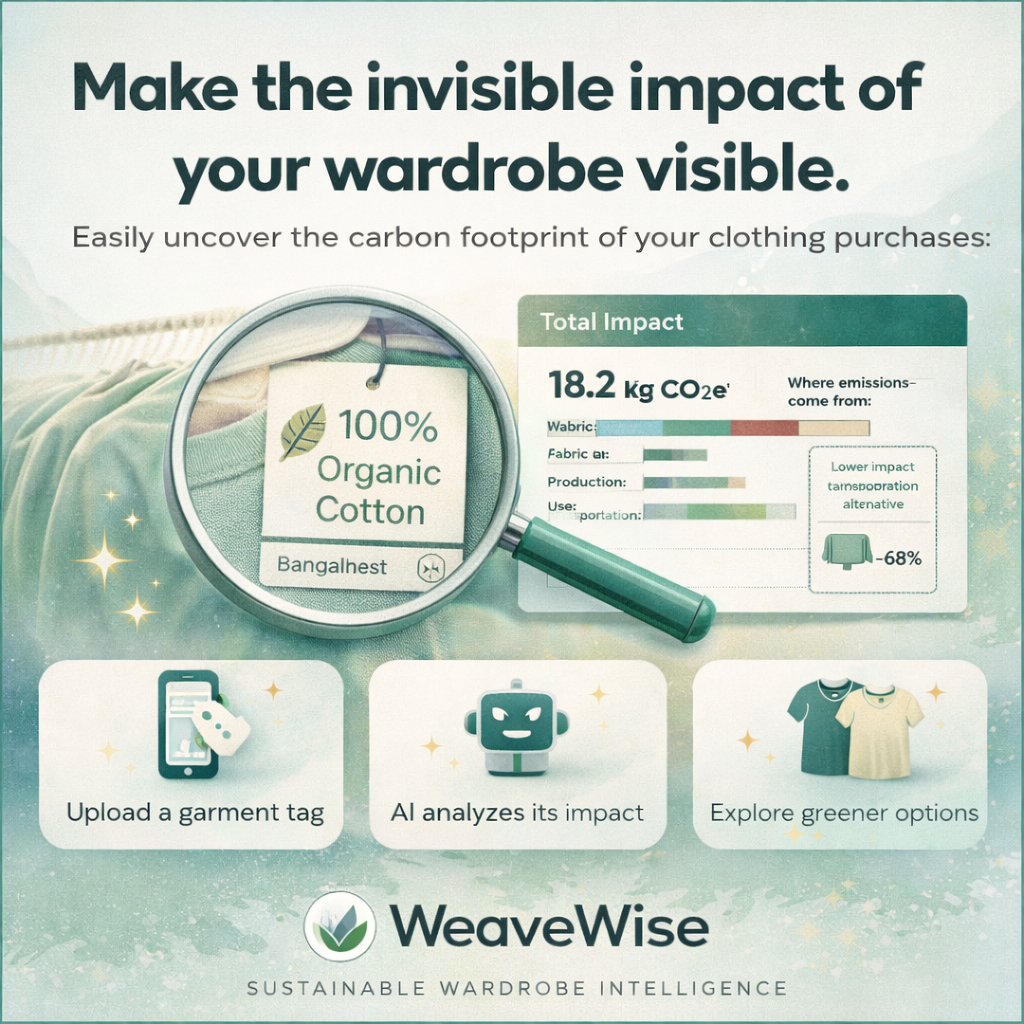
A user uploads a photo of a clothing tag, and the system:
- extracts the text from the image
- identifies useful information such as materials, country of origin, and care details
- searches for sustainability context and supporting data
- generates an easy-to-read impact summary
- combines multiple pieces into a broader wardrobe-level report
The goal is to translate raw garment information into something a normal customer can actually understand and act on.
How we built it
We built WeaveWise with a full-stack architecture:
- Frontend: React + Vite + TypeScript
- Backend: FastAPI + Python
- Database: MongoDB Atlas
- AI / orchestration: LangGraph-based workflow plus Groq-powered model calls
- External enrichment: Bright Data search integration
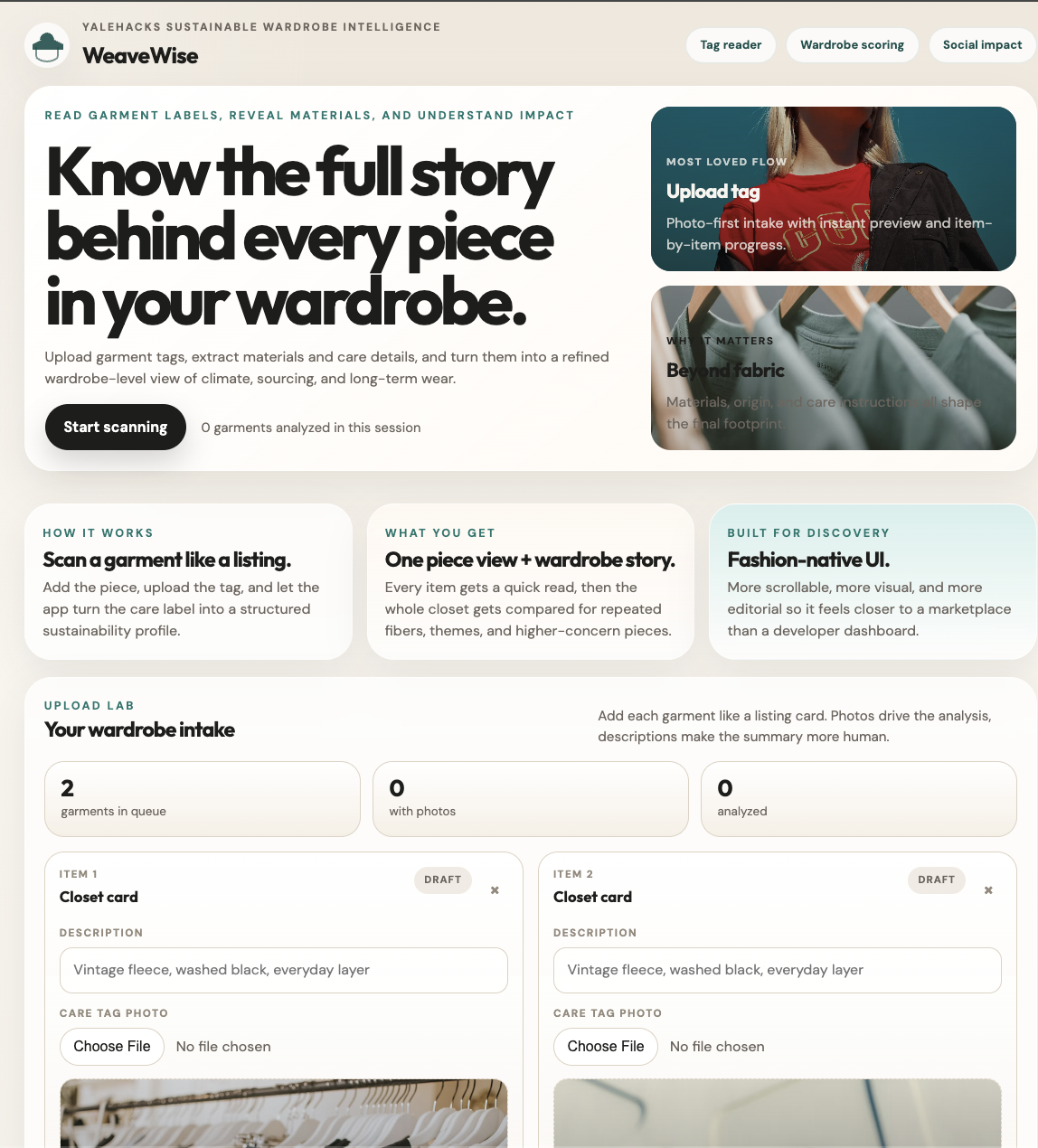
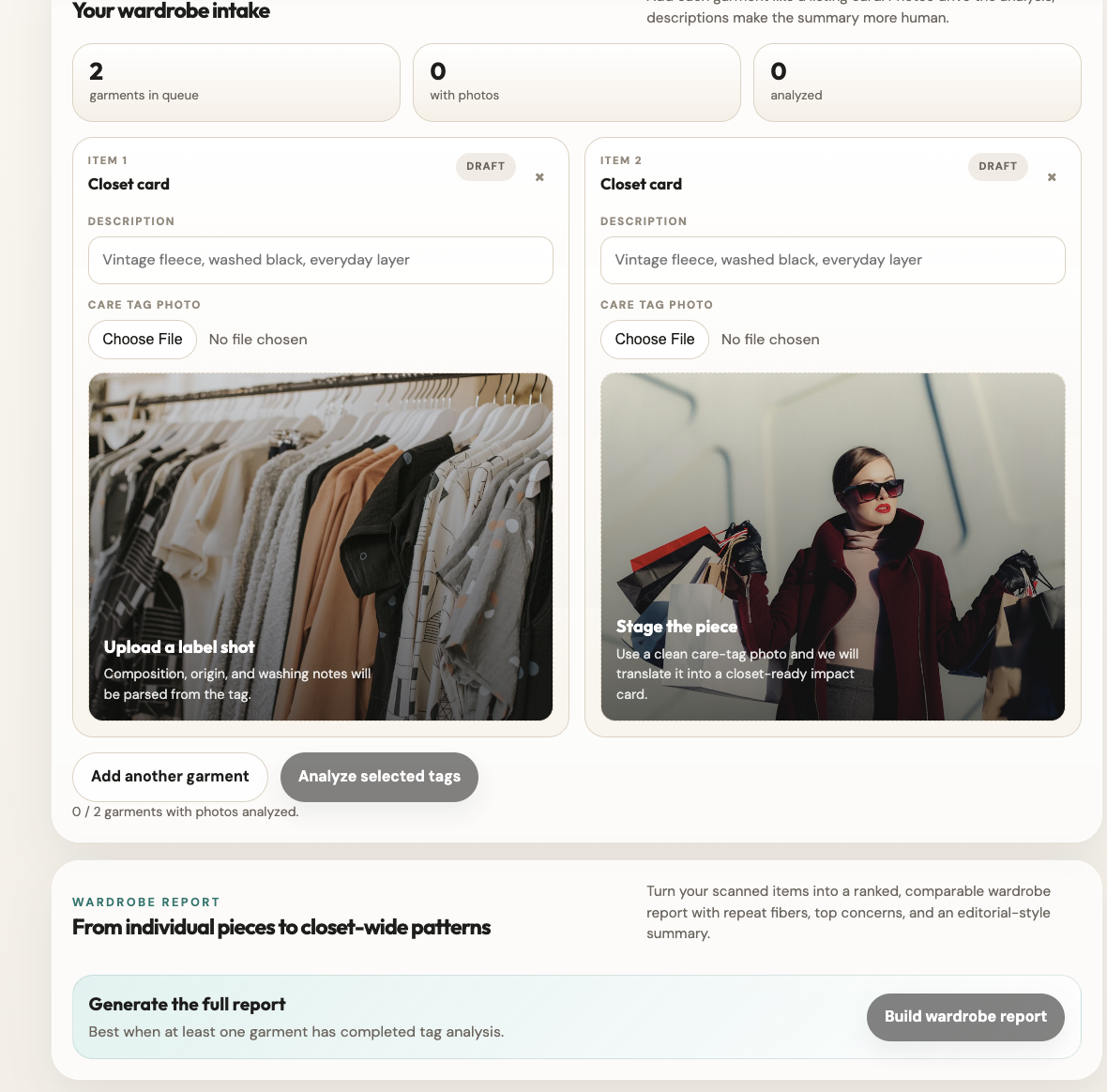
On the frontend, we created a more fashion-forward interface that feels closer to a polished consumer product than a prototype. Users can upload garment tag photos, preview pieces, and generate wardrobe-level summaries in a way that feels visual and approachable.
On the backend, we created API routes for OCR ingestion, graph-based analysis, search enrichment, and wardrobe reporting. MongoDB is used to support session persistence and forms the foundation for future structured sustainability datasets such as material lookup tables, country factors, and care instruction impacts.
We also redesigned the presentation layer so the output is not just technically correct, but also customer-friendly. Instead of showing raw model-style markdown output, WeaveWise formats impact reads into clean, readable sections.
Challenges we ran into
One of the biggest challenges was that clothing sustainability data is much less centralized than data in areas like food or nutrition. There is no single open API that tells you the carbon footprint of a garment from its tag alone. That meant we had to think carefully about how to combine OCR, structured parsing, web search, and database-backed enrichment into a realistic workflow.
Another challenge was turning model output into something people would actually want to read. Early summaries looked too raw and technical, so we spent time improving both the UI and the way impact information is presented.
We also had to handle practical engineering issues like branch merges, environment setup, local secret management, dependency alignment, and making sure the app worked cleanly across frontend and backend.
What we learned
We learned that a strong climate-tech product is not only about having the right model or the right data source. It is also about trust, readability, and user experience. If users cannot understand the result, they will not use it to change behavior.
We also learned how to connect a modern AI workflow to a full-stack application in a way that feels like a real product: from OCR, to structured interpretation, to searchable evidence, to final user-facing insights.
What's next for WeaveWise
This project is just the beginning. Our next steps include:
- building a richer MongoDB-backed textile impact database
- improving clothing-tag parsing reliability across more brands and formats
- estimating carbon footprint with more structured per-material scoring
- adding alternative suggestions with lower-impact options
- making the wardrobe report more personalized and actionable
- supporting stronger sourcing and care-stage insights
Long term, we want WeaveWise to become a consumer tool that helps people make smarter, lower-impact decisions every time they shop.
Why this matters
WeaveWise is built around a simple idea: people cannot change what they cannot see.
By revealing the environmental story behind clothing in a way that feels understandable and immediate, we hope to turn climate concern into practical action, one purchase at a time.
Built With
- bright-data
- css
- fastapi
- groq
- html
- javascript
- langgraph
- mongodb-atlas
- pymongo
- python
- react
- typescript
- vite

Log in or sign up for Devpost to join the conversation.