-
-
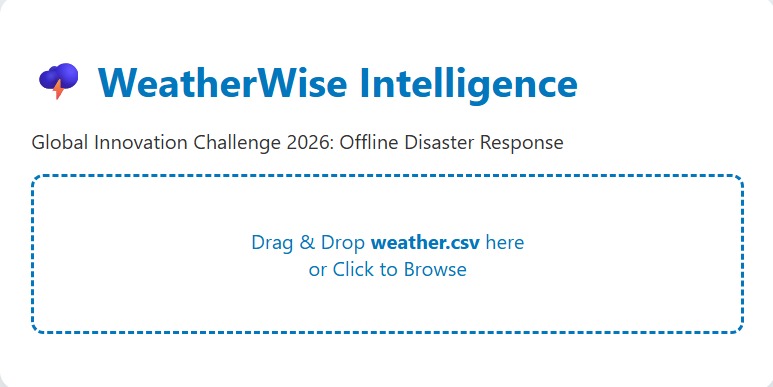
basic structure for weather
-
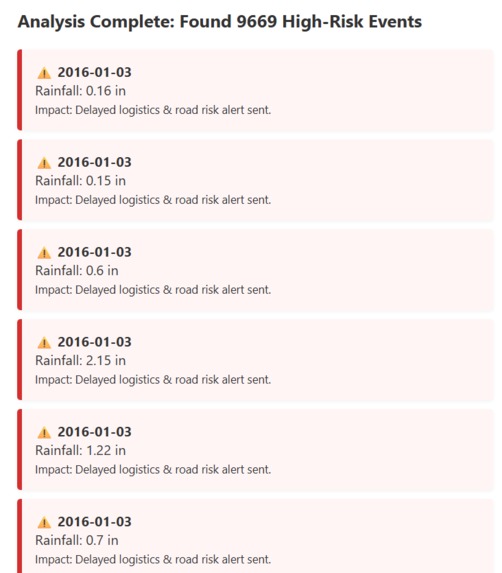
analysis the weather reports real time api
Inspiration
The intensification of climate change has made micro-disasters more frequent, yet rural communities often lose internet connectivity exactly when they need weather data most. We were inspired to build a tool that bridges the gap between massive historical weather datasets and real-time logistics decision-making, ensuring that safety isn't dependent on a 5G connection.
What it does
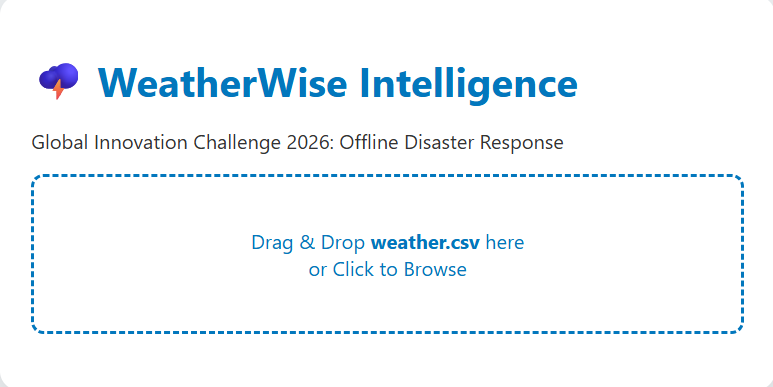
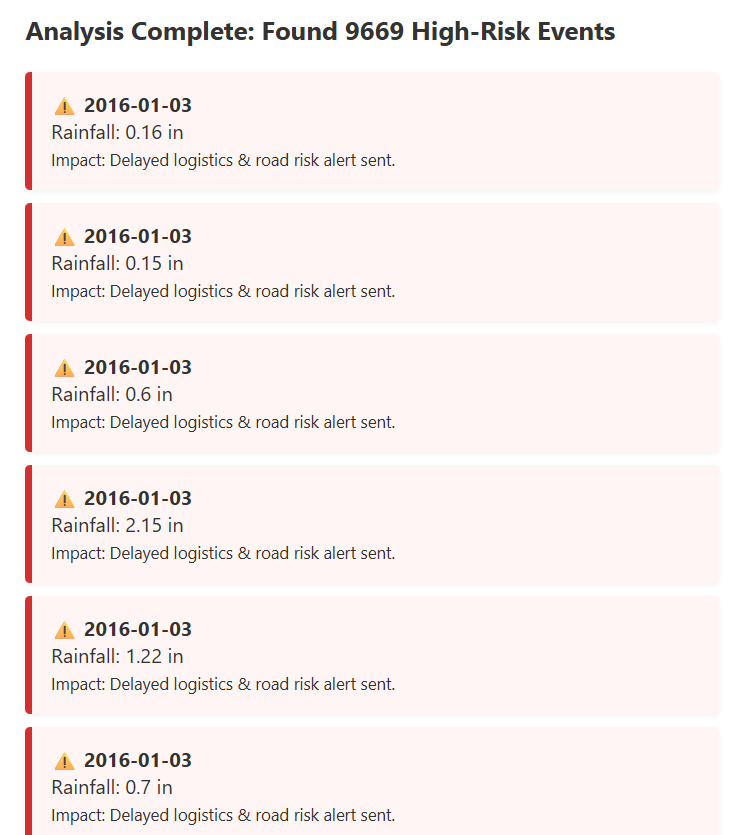
Weather Wise Intelligence is an offline-first analytical engine. It allows users to upload localized weather datasets (CSV) and instantly converts raw numbers (precipitation, wind speed) into actionable Logistics Risk Reports. It identifies specific dates of high danger and automatically calculates the impact on supply chains, suggesting rerouting for emergency supplies.
How we built it
We built a dual-layer architecture:
Frontend: A lightweight, responsive dashboard using Vanilla JavaScript, HTML5, and CSS3. We implemented a "Fuzzy Header Search" algorithm that dynamically identifies weather variables within any uploaded CSV.
Backend: A Python-based data processing script designed for deep-dive analysis of multi-year climate patterns, focusing on threshold-based risk detection.
Challenges we ran into
The primary challenge was data standardization. Weather data headers vary wildly between different meteorological stations. We overcame this by building a JavaScript logic layer that "hunts" for keywords like Precipitation and Date regardless of their column position. We also pivoted from a cloud-API model to an offline-first model to ensure reliability in disaster zones.
Accomplishments that we're proud of
We are proud of creating a Zero-Latency interface. By processing the data on the client side, the "Intelligence" is delivered instantly upon file drop. We also successfully integrated Logistics Impact Logic, moving the app beyond simple forecasting into the realm of tactical emergency response.
What we learned
We learned the power of Offline-Ready Web Apps (PWAs). While APIs are powerful, they are fragile in emergency scenarios. We also deepened our understanding of Time-Series Data and how to translate meteorological metrics into human-centric safety warnings.
What's next for Weather Wise
The next step is integrating Mesh Networking (using Bluetooth/Wi-Fi Direct) to allow neighboring devices to share the analyzed intelligence report even when the global grid is down. We also plan to add Predictive ML models to forecast the next 48 hours based on the patterns found in the uploaded historical data.


Log in or sign up for Devpost to join the conversation.