Inspiration
What we seek to do with Weather dog is to make weather and environmental information more accessible and cheap for future generations. In more rural areas where this type of information is difficult to acquire, Weather dog can be used. Relative to common weather station models on Amazon, Weather dog is significantly cheaper.
What it does
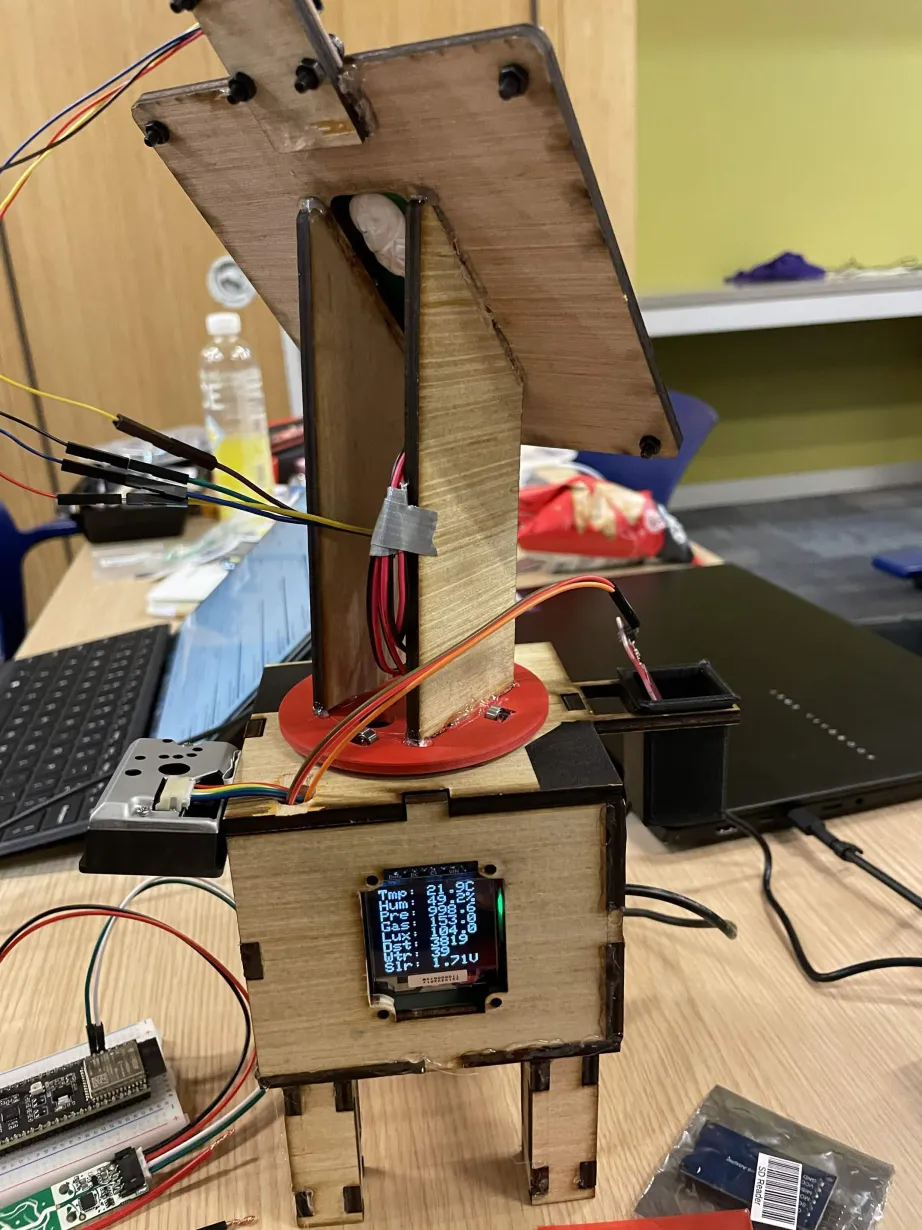
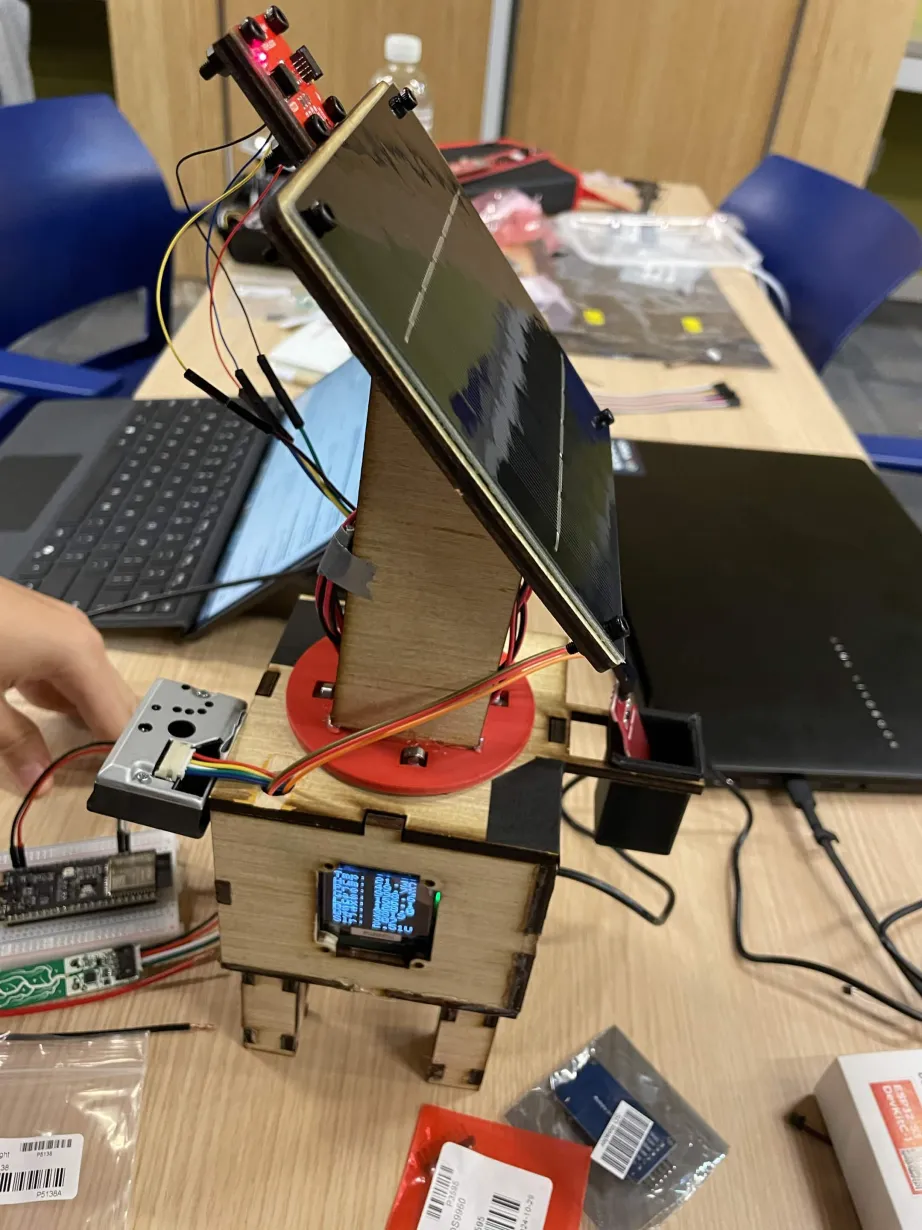
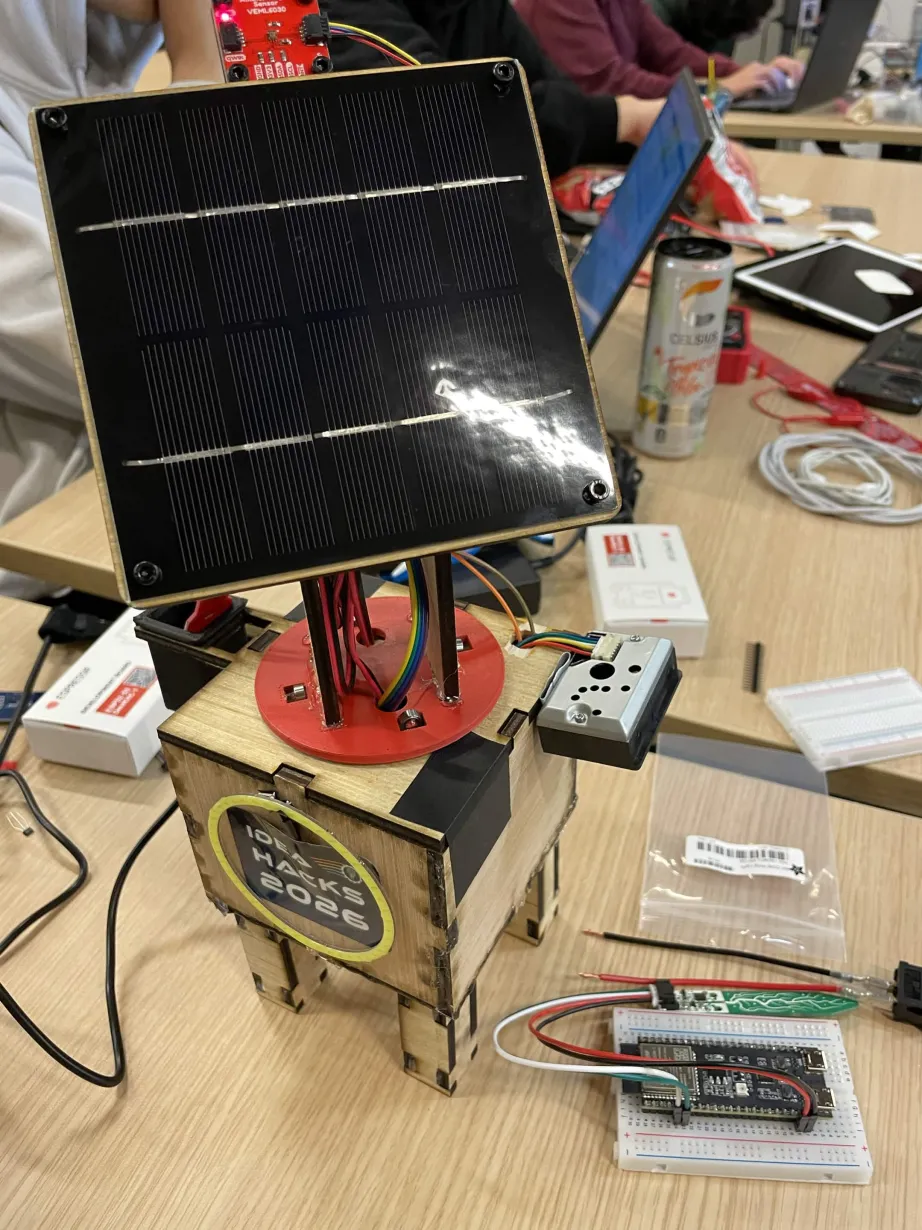
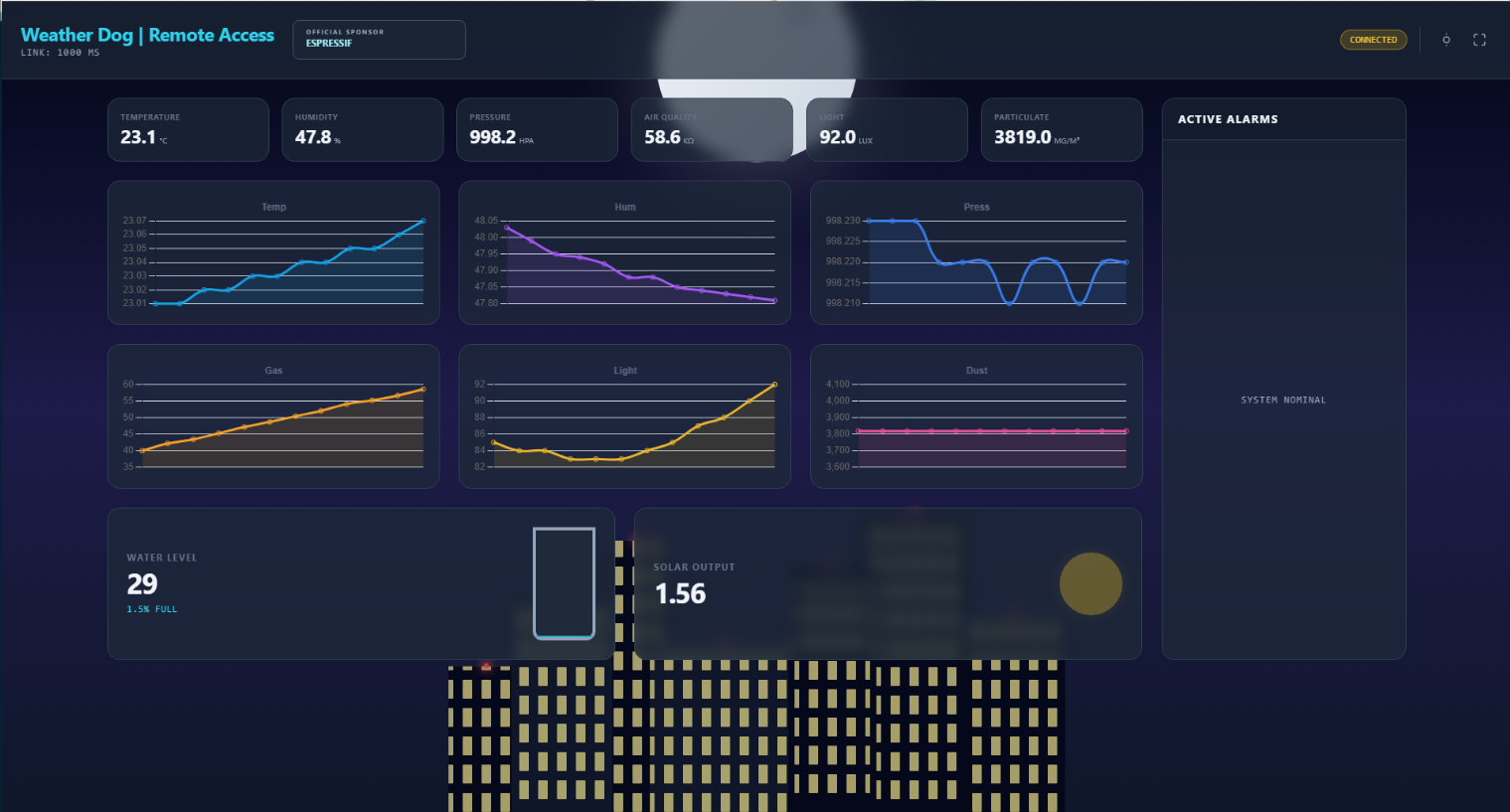
Weather Dog measures environmental conditions like humidity, temperature, air quality, and the presence of dust to name a few. This data is displayed on both an OLED Screen and a separate website. Its most valuable feature is its ability to maximize the amount of solar energy harvested. Over time, it continuously searches the area near it for a bright source of light and orients itself in that direction to capture as much sunlight as possible.
How we built it
In terms of the manufacturing process, approximately 80% of the parts were made from laser cut wood. Only two of the parts on the entire device were 3D printed. The reason for this was to stay on pace and not waste time due to long printing processes. The electronics include various sensors that sit on top of breadboards. These breadboards sit inside of the housing, protecting them from the elements.
Challenges we ran into
Integration was the first big challenge we ran into. We spent numerous hours trying to fit the electronics inside of the housing the first time we tried. Initially, our electronics couldn’t fit inside due to the way we oriented the electronics. One approach we took to resolve this interference was to try and squeeze the electronics on two of the breadboards onto one, reducing the amount of space wasted. Another issue that we ran into was related to systems engineering. When we tested the sensors independently, they worked properly, but when integrated together, they started posing issues. This just required constant debugging and searching for errors.
Accomplishments that we're proud of
One big achievement of ours is the success we had with the integration. We were able to successfully fit the electronics into the housing without making any major cuts to the housing. This saved us a lot of time that would’ve been wasted in re-manufacturing the parts. In addition, we were able to successfully produce a website that displayed the sensor data in a more visually appealing and clear fashion, allowing the information to be understood more easily.
What we learned
One of the big lessons that we learned was the importance of being able to successfully integrate the electronics into the model. We had to be very conscious of the required geometric constraints and things that were required from the people working on the electronics. We also learned the value of cutting out unnecessary parts. The first iteration of some of our work was over-engineered.
What's next for Weather Dog
One thing that we would like to see is an improvement in the housing design. We had interferences between the motor and the top plate of our housing initially that required us to remove a breadboard. We would also like to be able to use the energy from the solar panel to support a load or power a device.
Built With
- c++
- esp32

Log in or sign up for Devpost to join the conversation.