
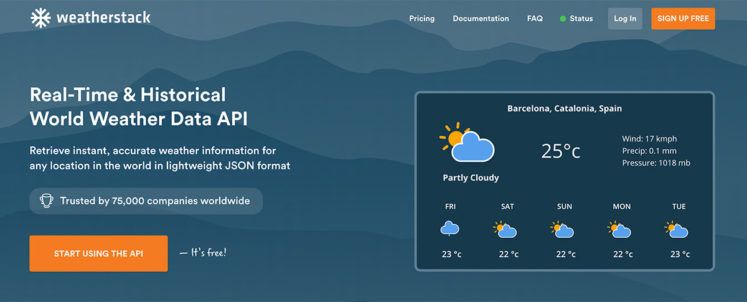
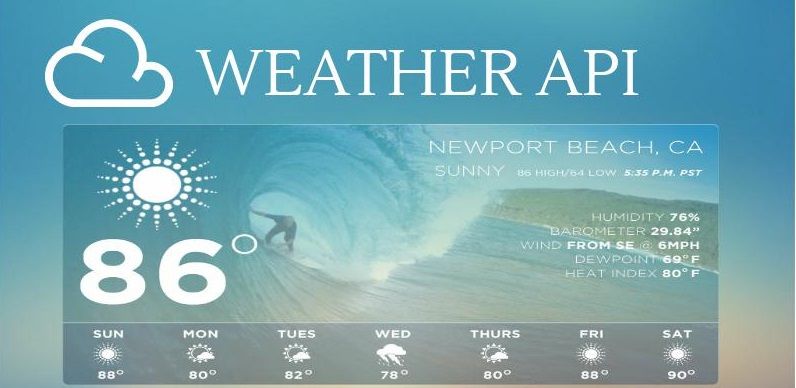

Weather APIs are Application Programming Interfaces that provide access to current & historical weather data on a global scale. There are several public weather APIs like OpenWeatherMap API, Dark Sky API, & Visual Crossing Weather API. These REST APIs can be used to build powerful weather apps. You can read about the basics of APIs
Weather APIs give detailed information beyond just temperature, precipitation, and humidity, but also UV index and pollution levels. Time series data lets you discover trends and patterns and plan events based on weather conditions.
These APIs can also be a useful resource for disaster management, as some come with built-in alerting and notification mechanisms on a global scale.
To help you navigate your options, we’ve created this article that compares various Weather APIs, shares different use cases and pricing, and helps you find them via the Rakuten RapidAPI marketplace.
Top 10 Weather APIs:
- OpenWeatherMap API
- Dark Sky API
- Weather API
- Simple Weather API
- Weather2020 API
- Air Quality API
- Weather by Location API
- Visual Crossing Weather API
- AccuWeather API
- AerisWeather API
Why Is It Important to Use Weather API
Numerous industries, like aviation, agriculture, energy, and utilities are directly connected to weather conditions, as temperature changes, increasing or decreasing precipitation amounts, and other atmospheric conditions affect business performance hard enough. Therefore, if you still don’t use a weather api, you risk your business, as you’re missing out on an incredible element that can both raise your profits and significantly reduce it.
The weather APIs allow you to access recent weather data including daily weather forecasts, wind speed and direction, precipitation number, and other weather alerts. Such details help clients to create deeper insights into the process of optimizing business processes, reducing costs and taking advantage of additional revenue opportunities.
Built With
- api
- python

Log in or sign up for Devpost to join the conversation.