Inspiration
We heard about the surprising fact that weather is correlated with a lot of health conditions. Due to the high availability of weather data and the low availability of live ER wait time estimates, we wanted to create a solution that would approximate the ER wait time based on the weather.
What it does
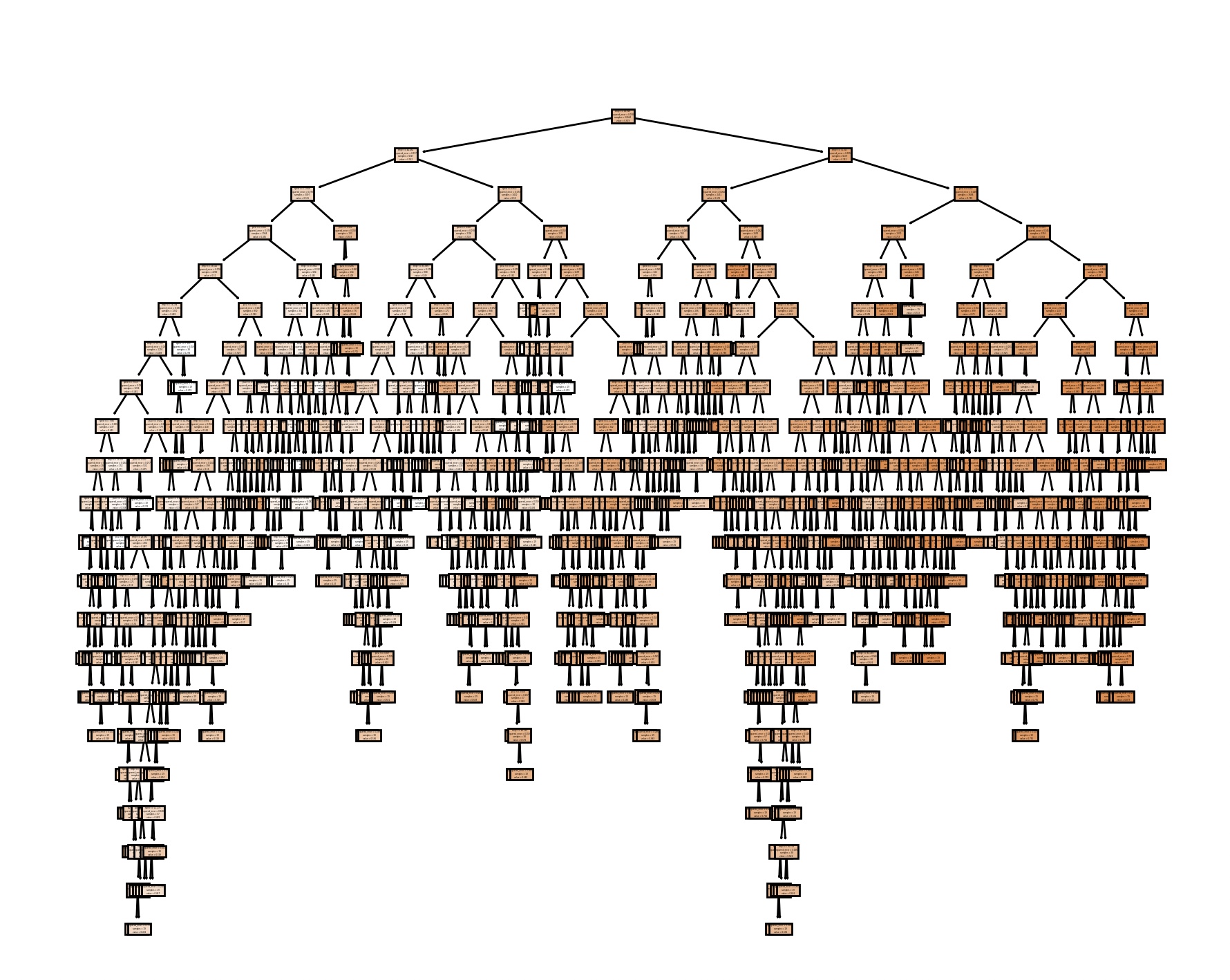
The first part of the solution is the regression model. It tracks 3 features and outputs an expected wait time score. We trained it on historical weather data (provided by airport automated weather observation stations) and hospital ER rates (provided by the AHRQ.
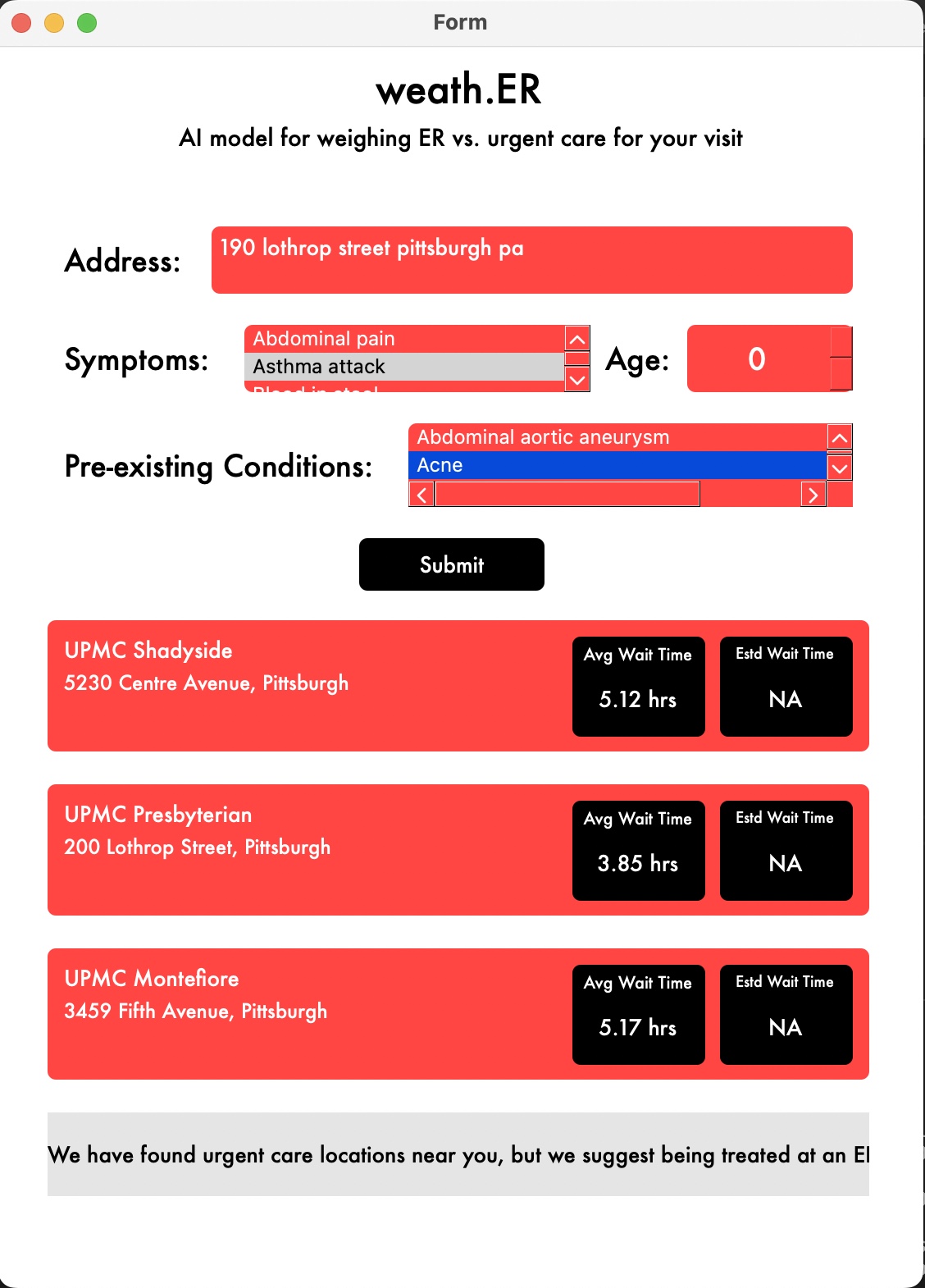
The second part is based on the GUI. A user enters an address, symptoms, and prior conditions. The address is sent to the Google Maps API to retrieve nearby hospitals, after which clinics and individual physicians are filtered out. The results are further segregated into urgent care and emergency room categories.
How we built it
The project is built entirely in Python. Geocoding, nearby hospital fetching, and elevation detection is made possible through Google cloud API's. AI was trained on national publicly-available databases on emergency department admissions from 2017 to 2020. Meteostat is used for local weather fetching at time of form submission. GUI is built with PyQt.
Challenges we ran into
This was our first time with machine learning! We collectively struggled through it but are very proud of our results.
Accomplishments that we're proud of
In addition to our on the go introduction to machine learning, we faced an uphill battle in getting all elements of our system integrated. The final product works exactly as intended has been highly accurate in predicting wait times based on verification datasets.

Log in or sign up for Devpost to join the conversation.