-
-

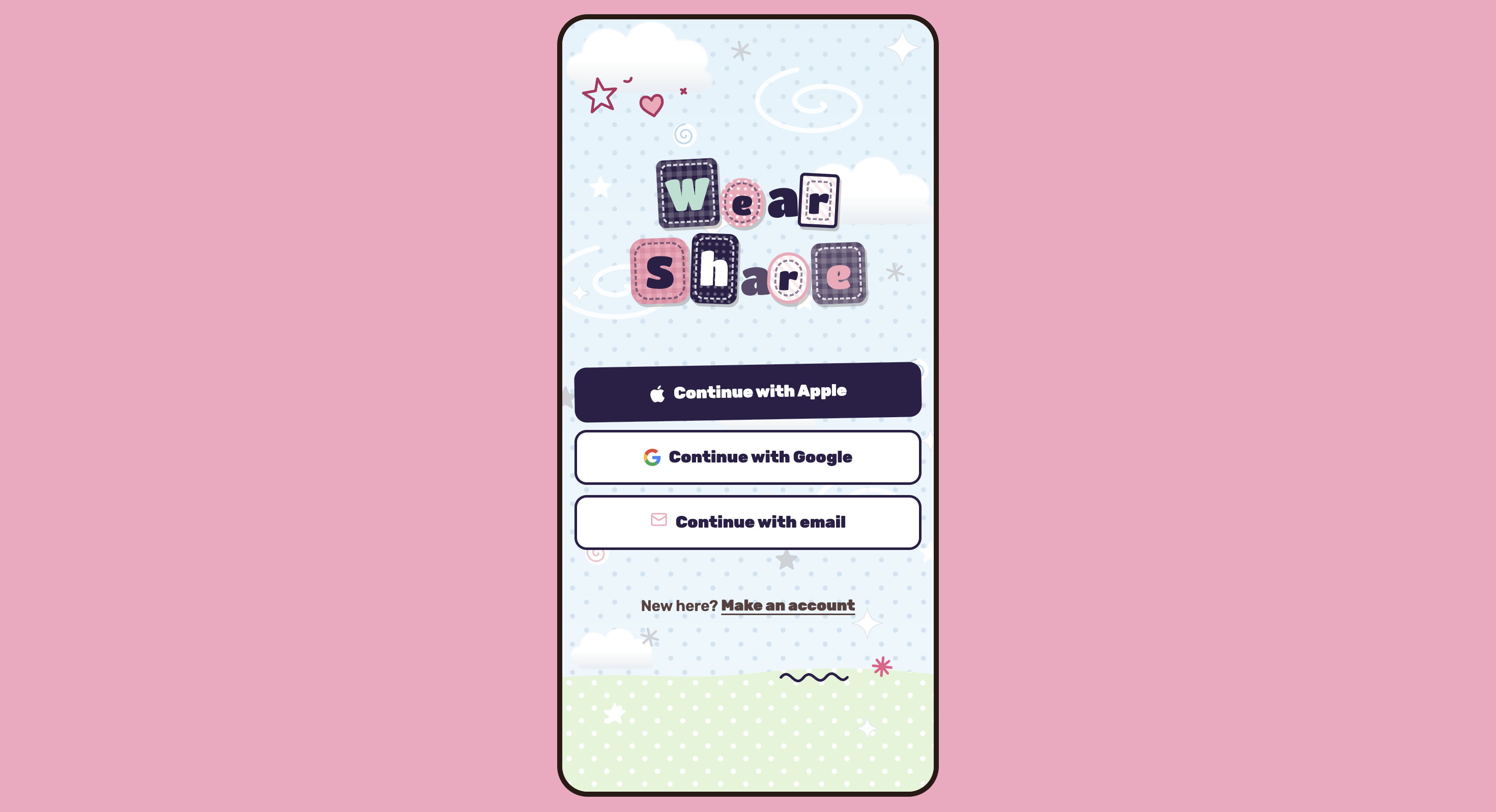
sign-in screen
-
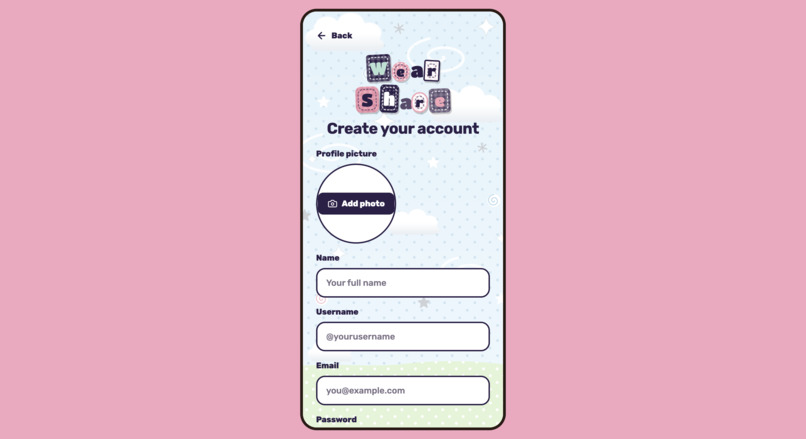
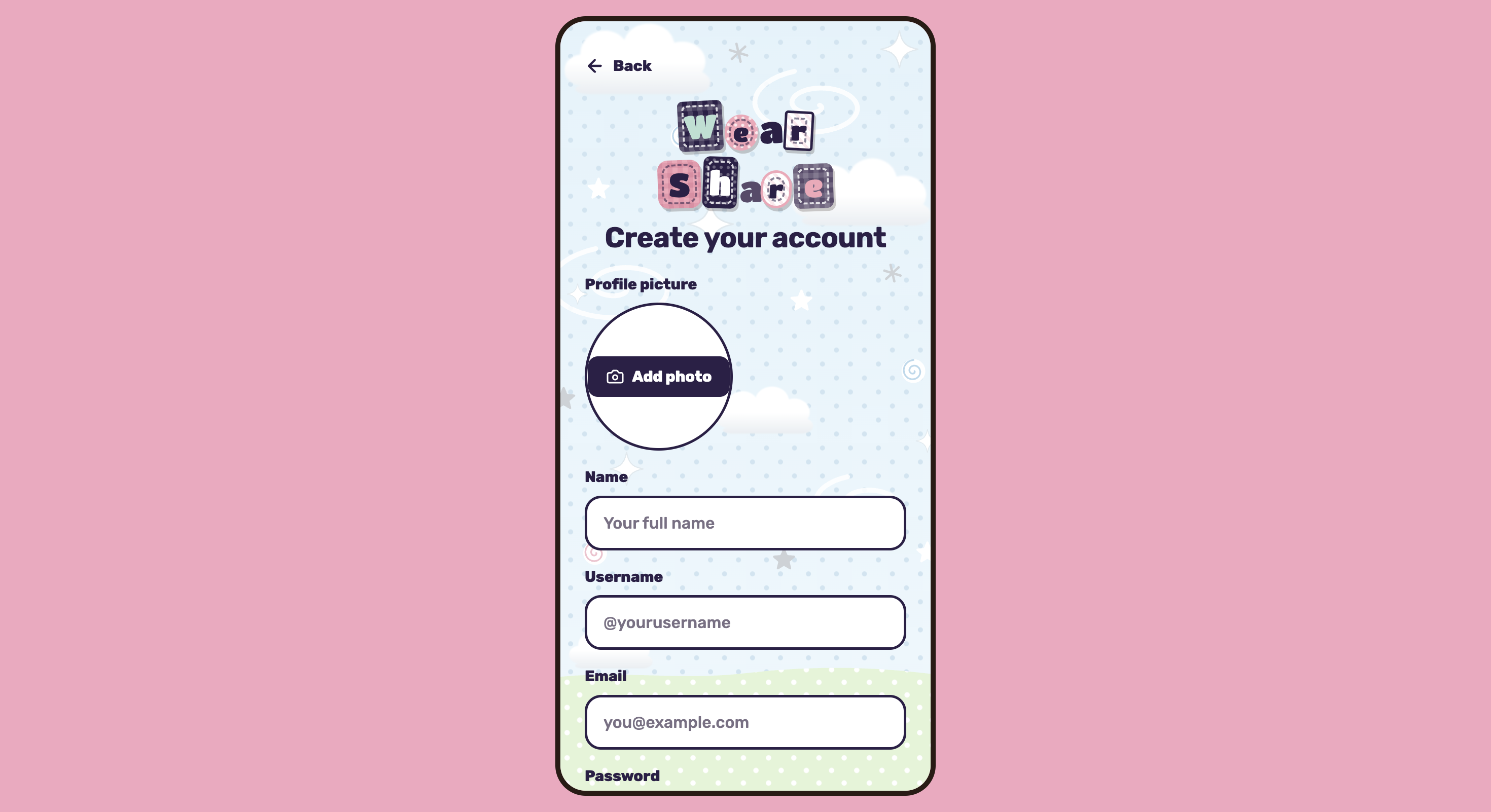
create an account
-
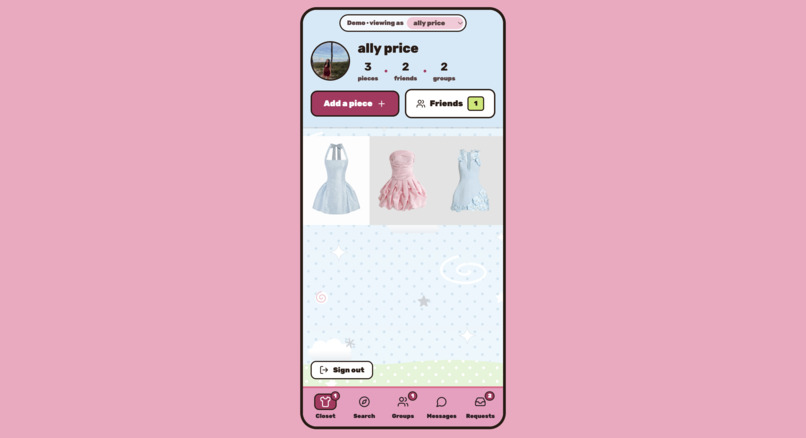
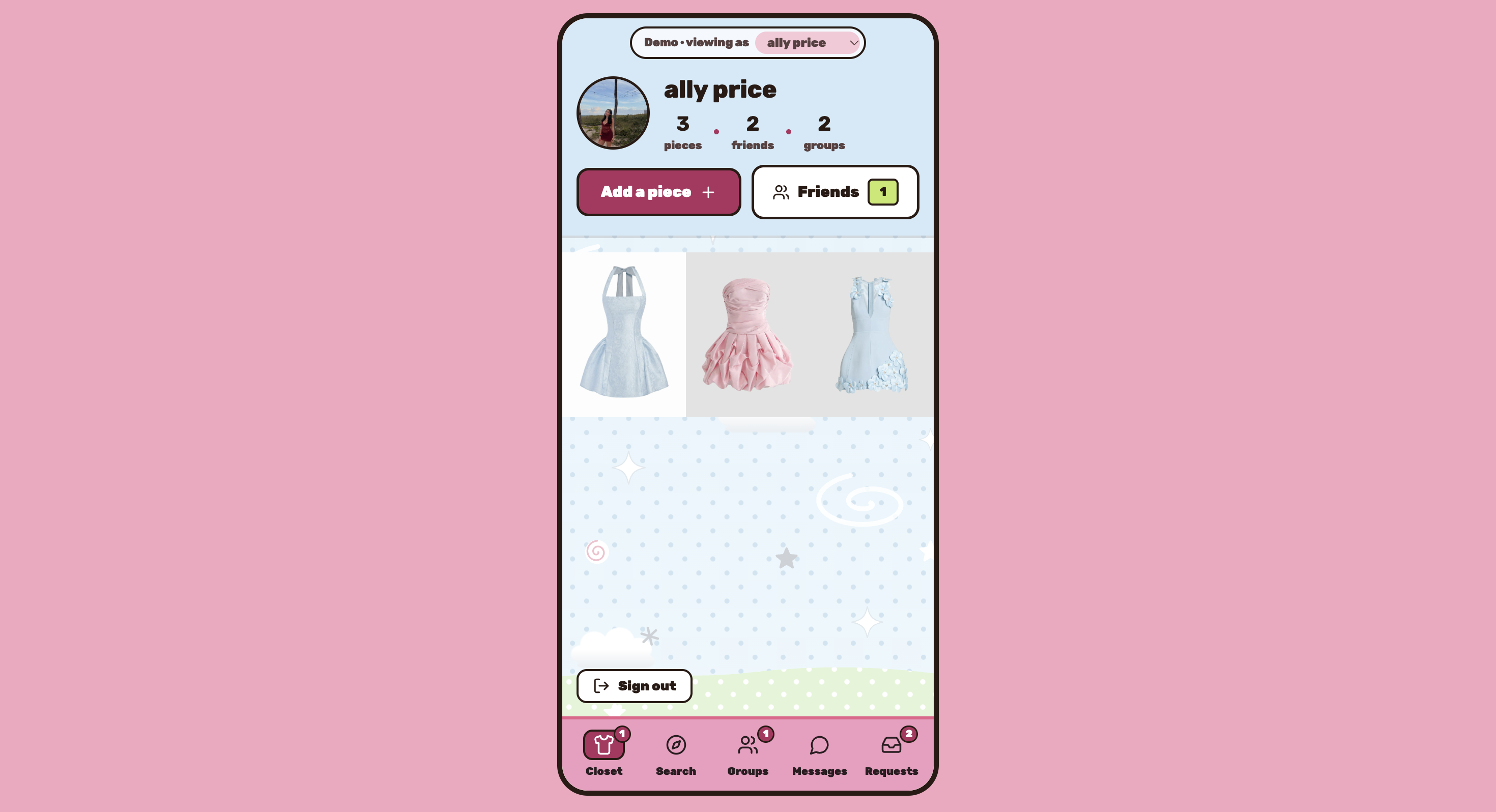
your closet
-
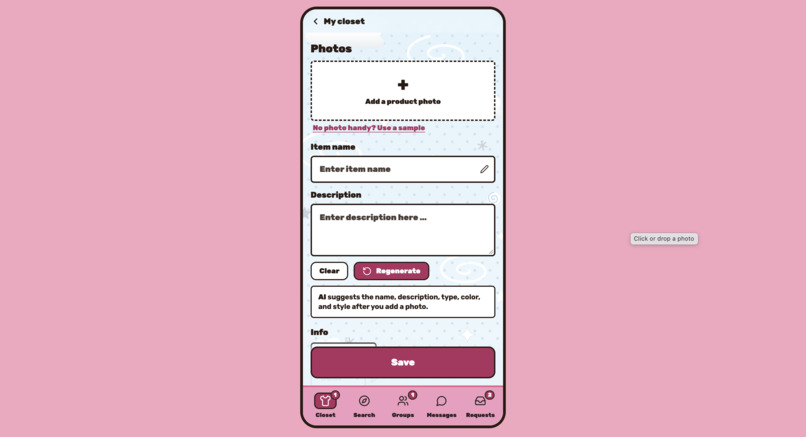
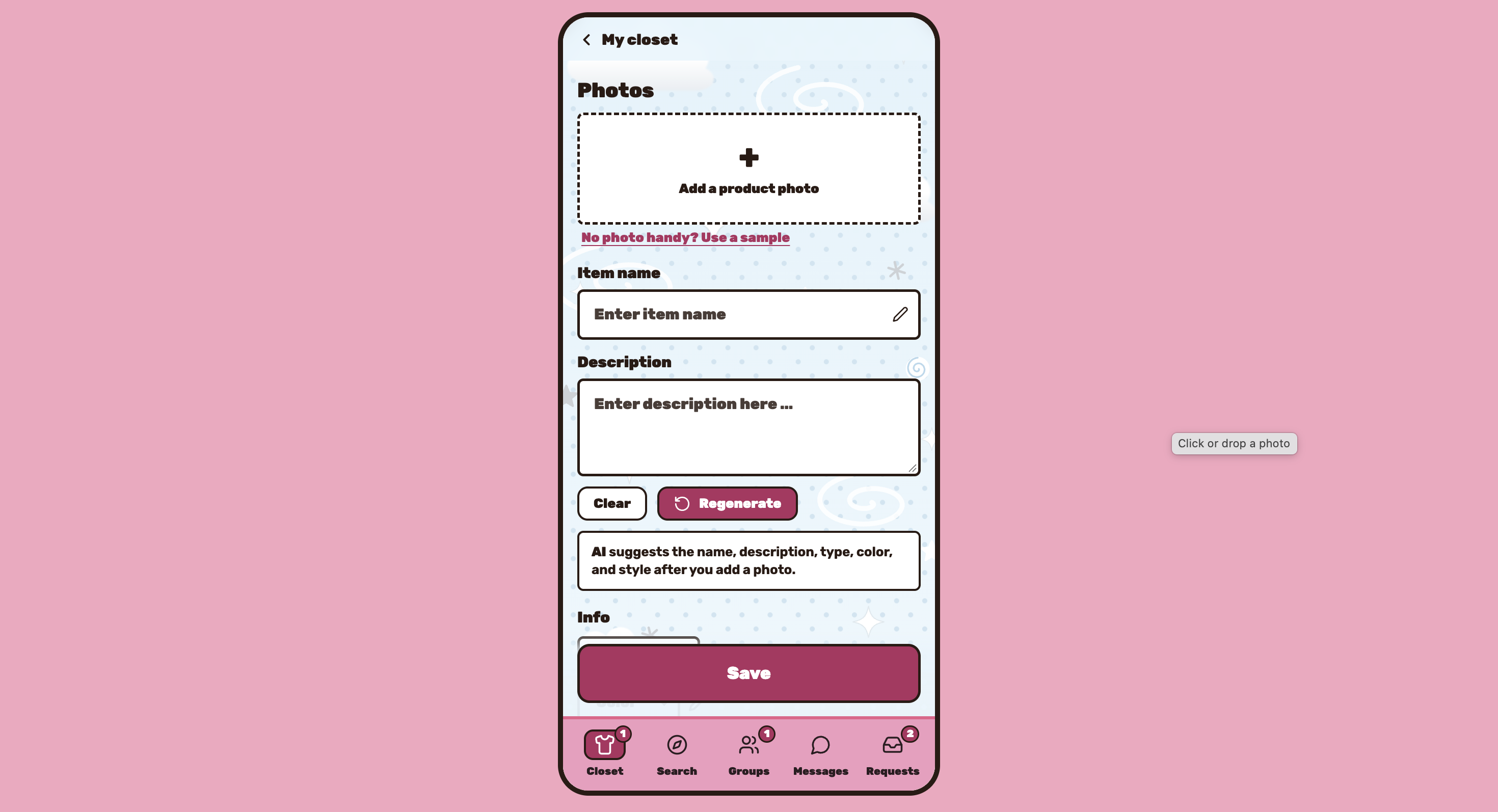
create a listing
-
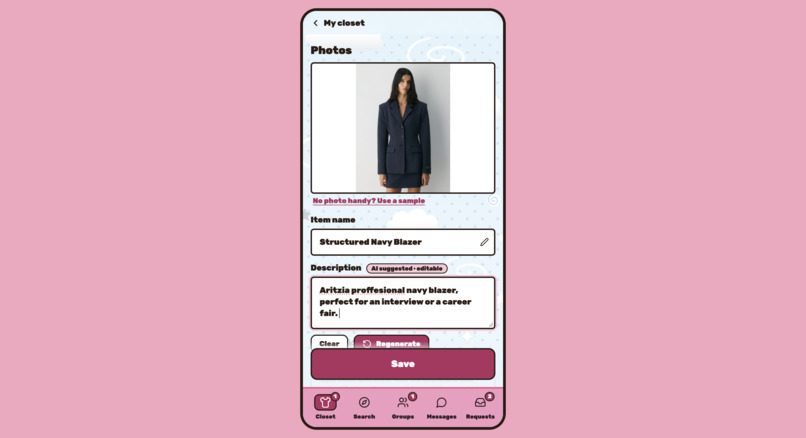
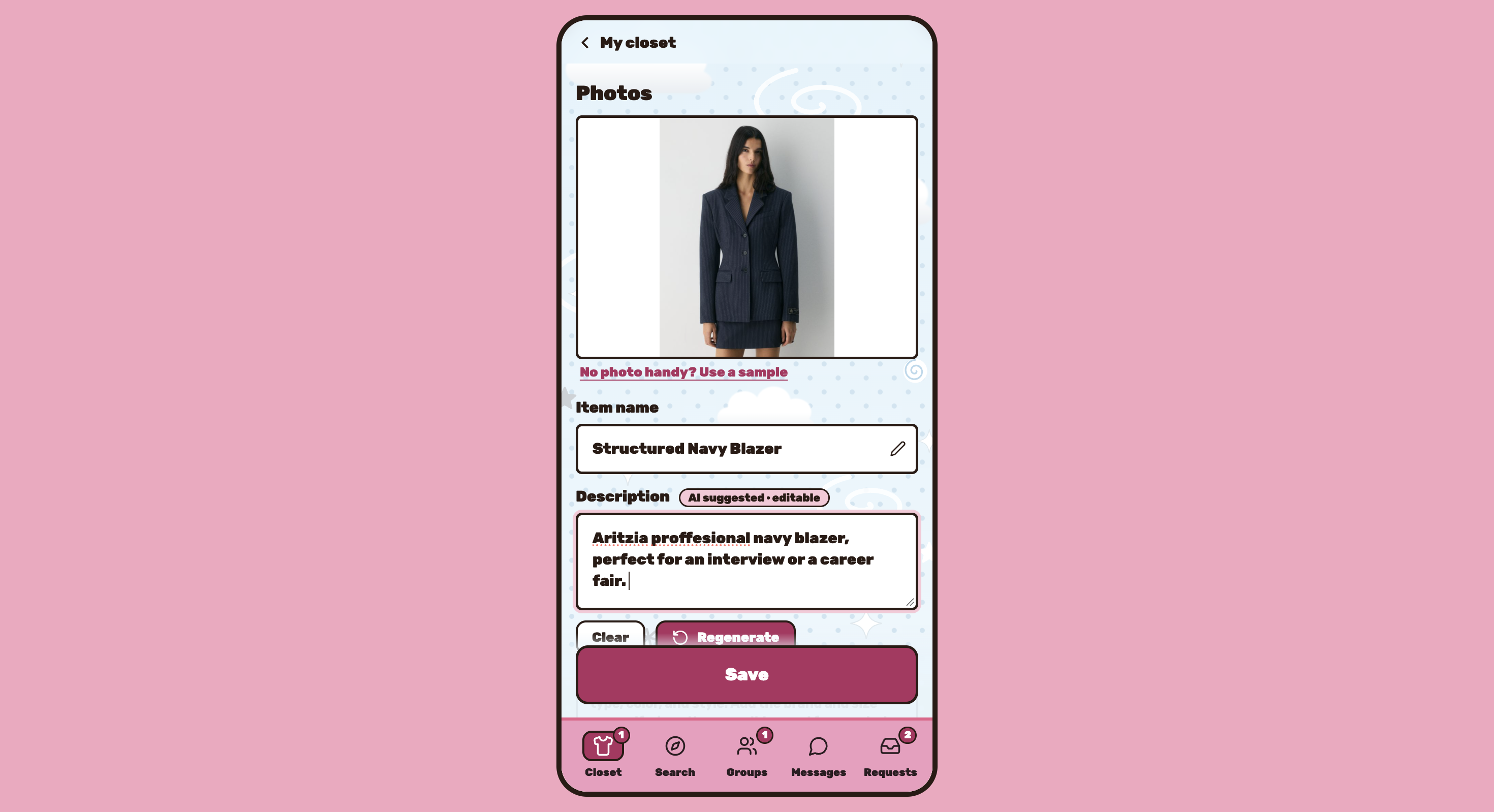
AI-powered generative description
-
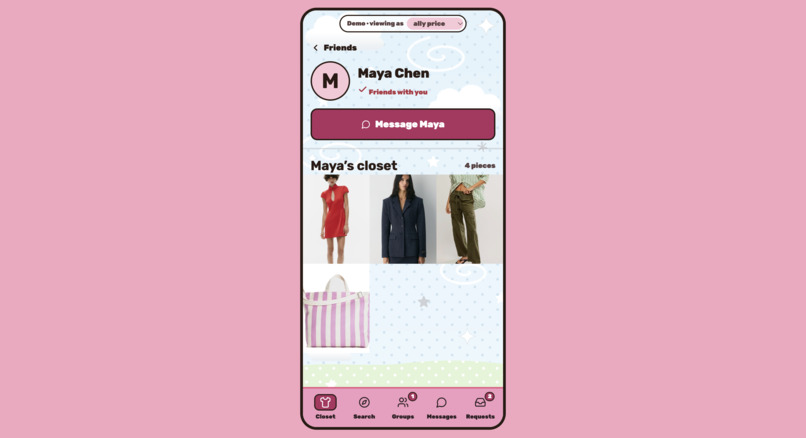
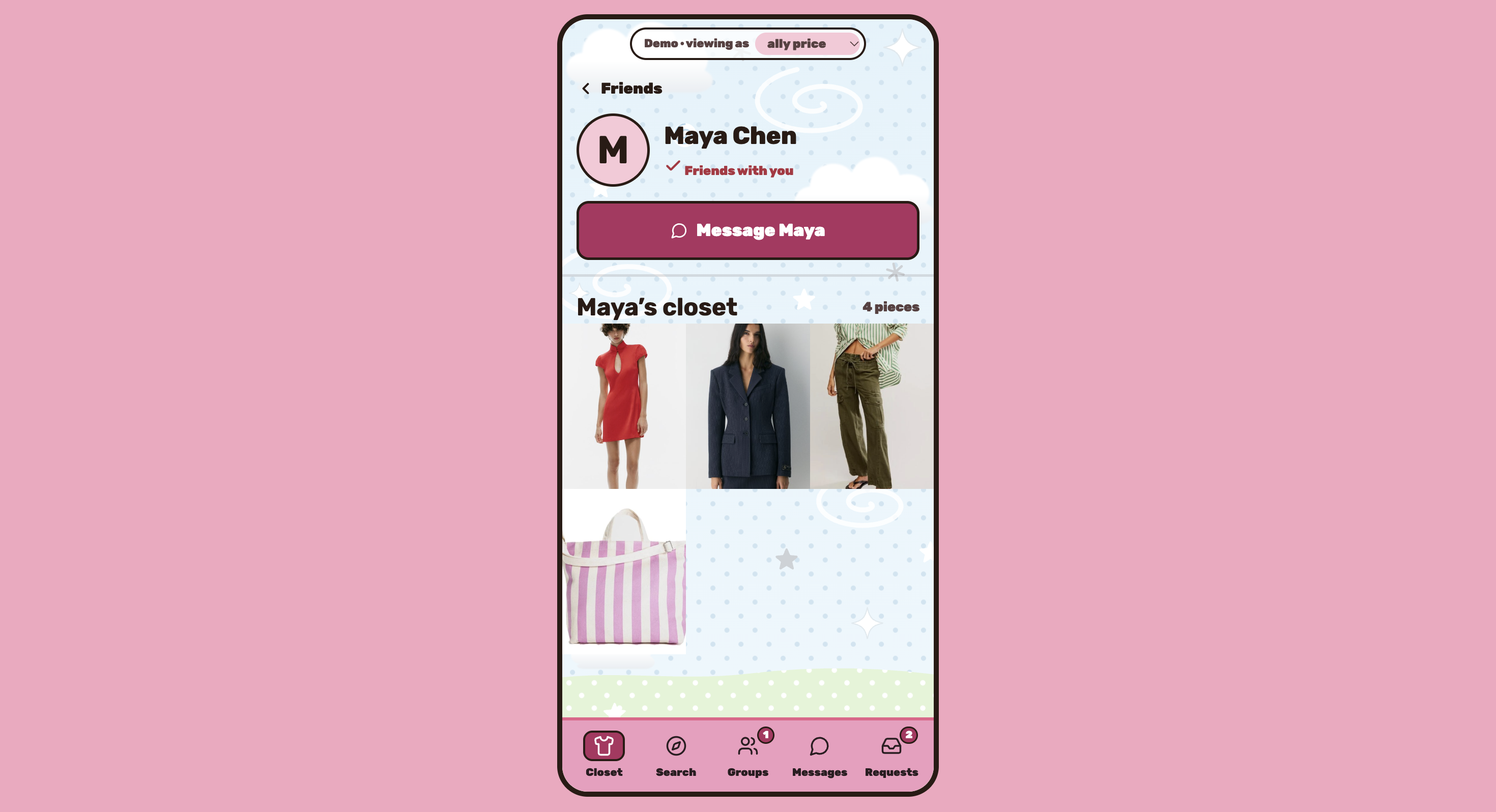
your friend's closet
-
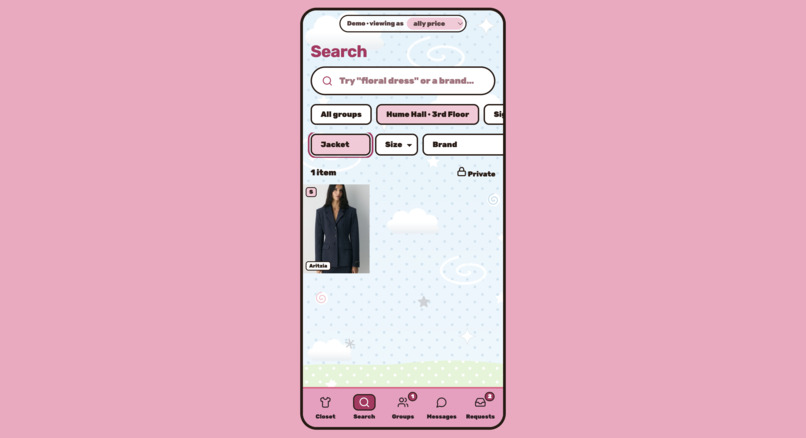
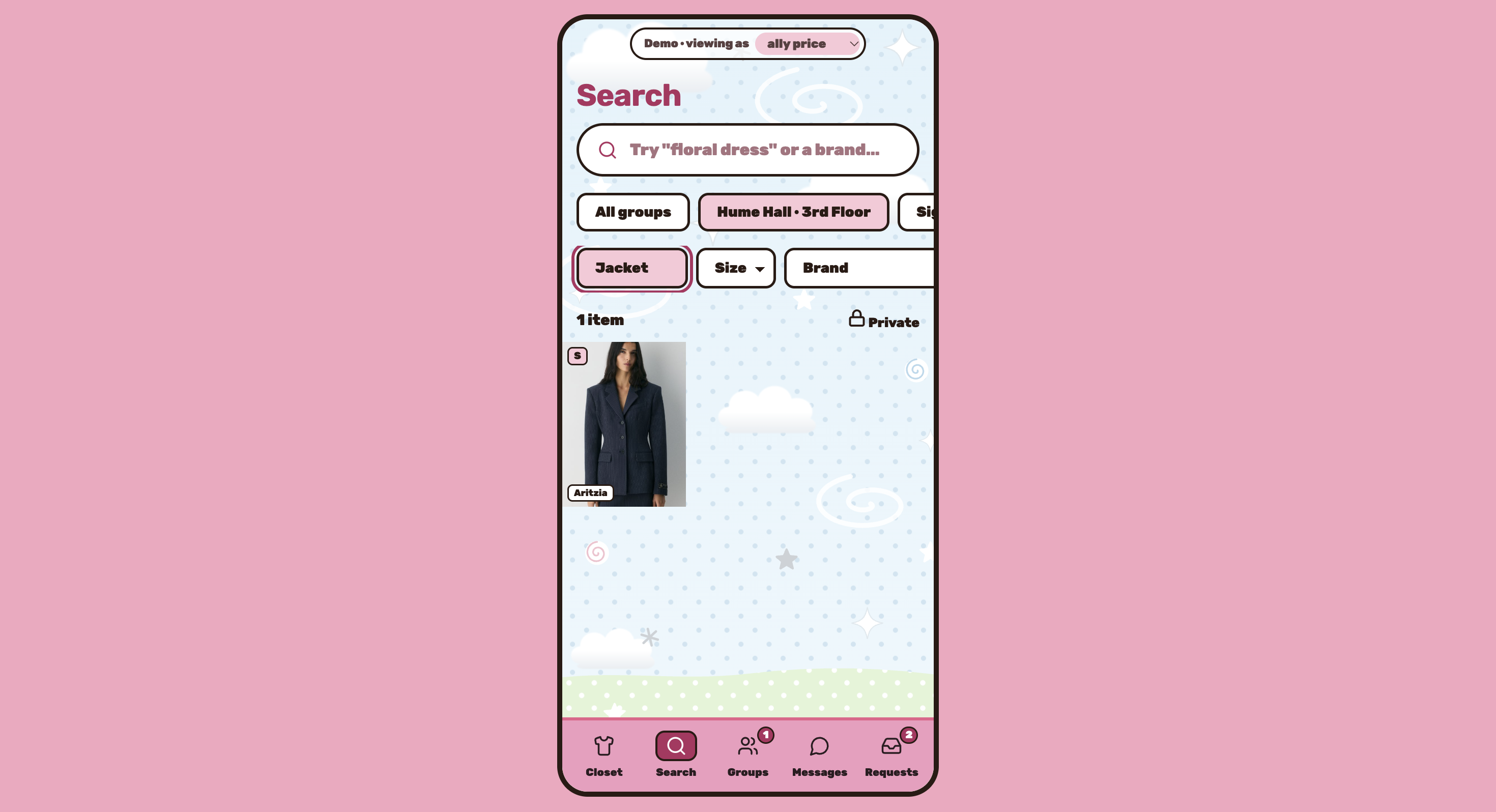
filterable search function
-
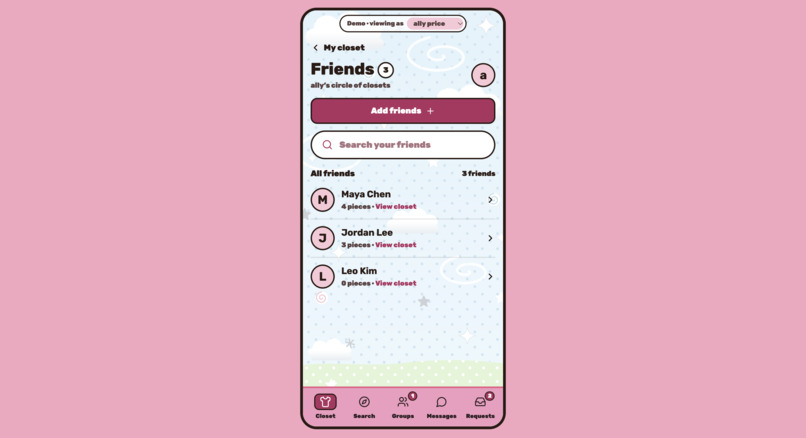
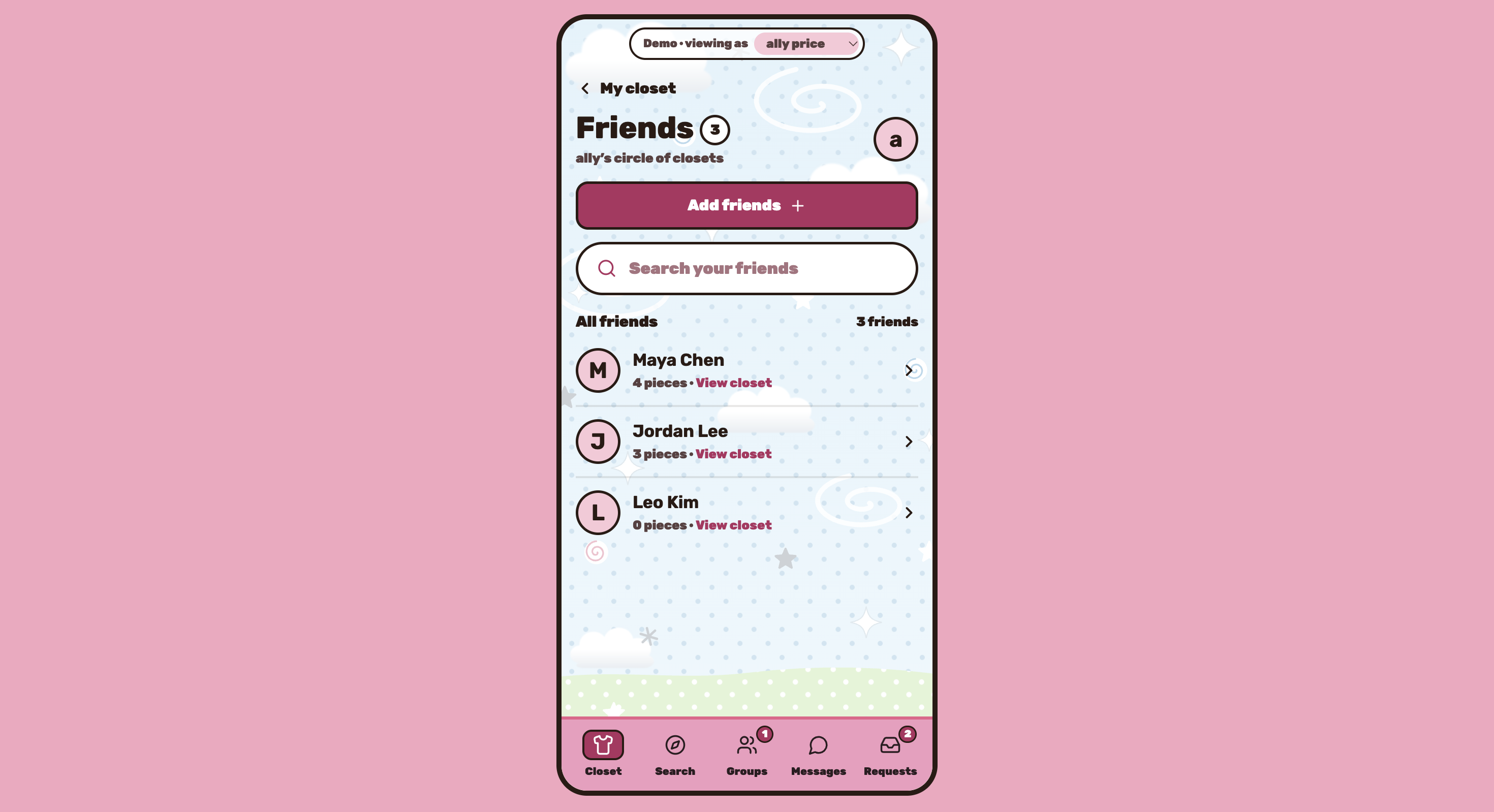
your friends
-
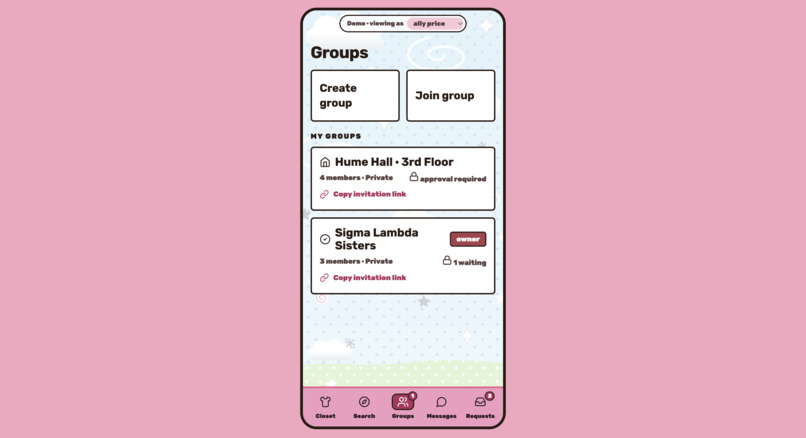
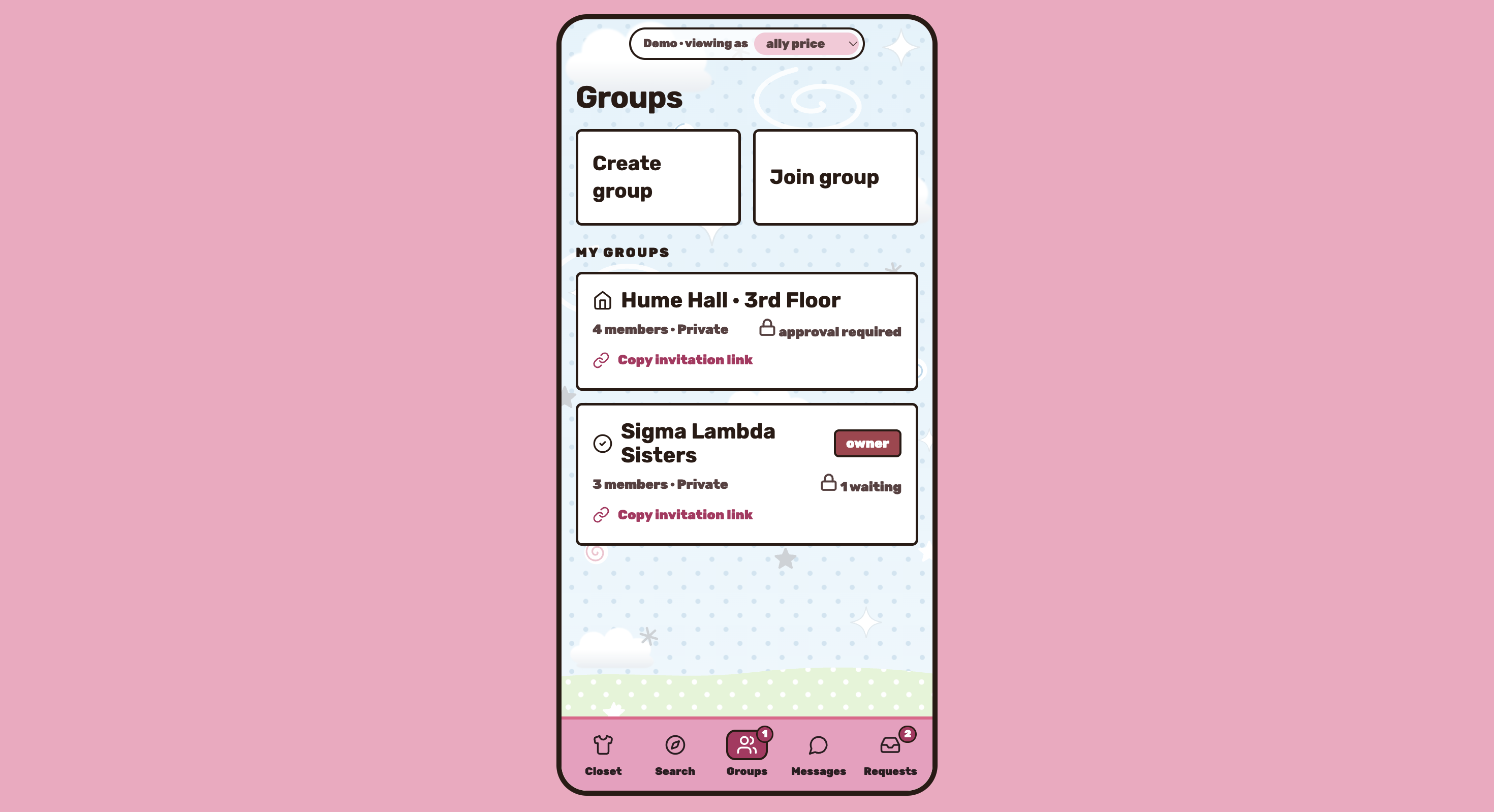
groups screen
-
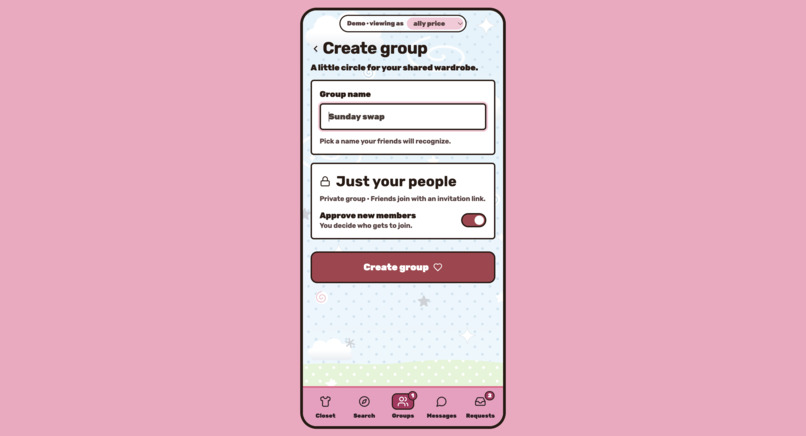
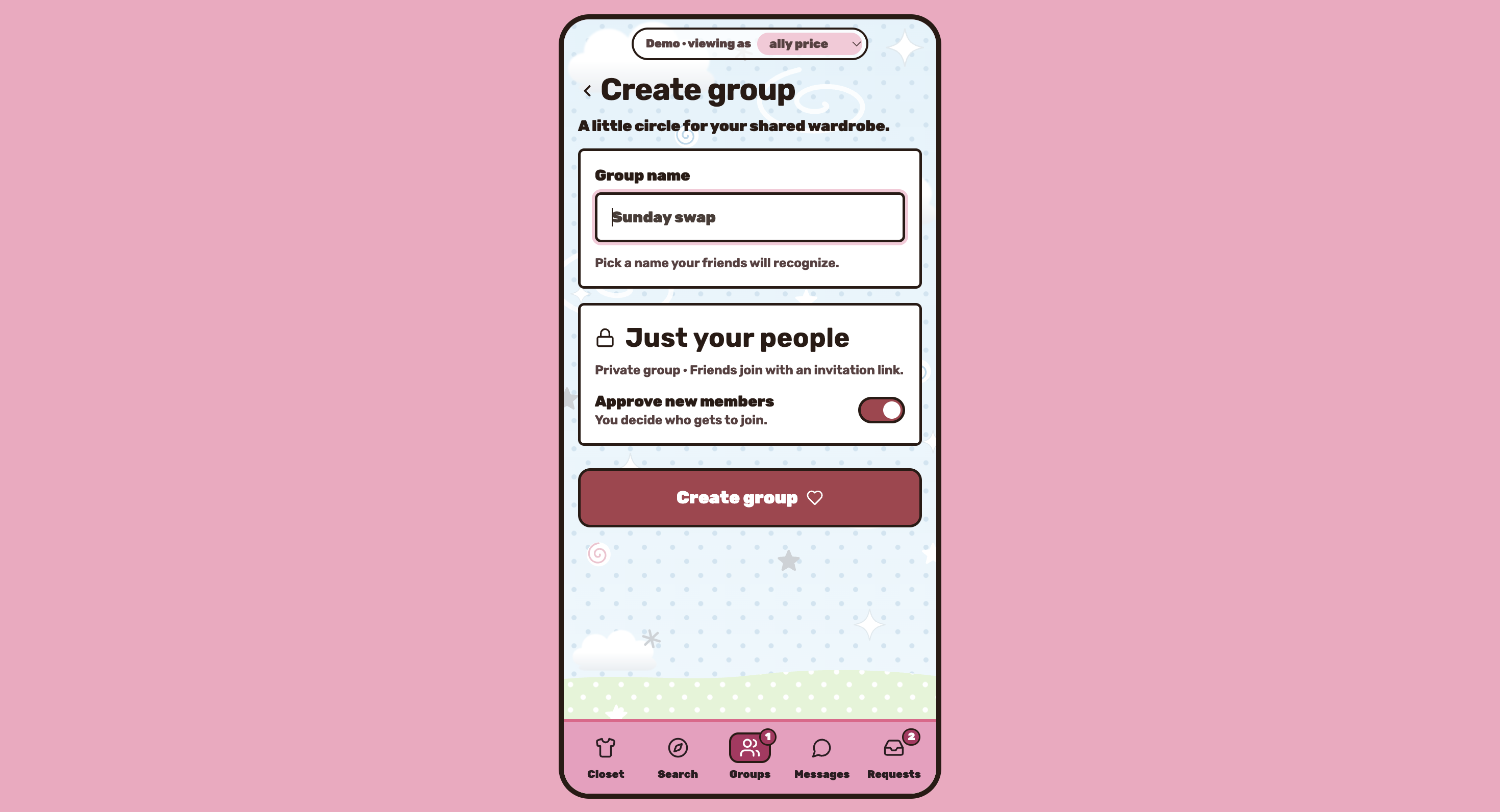
create a new group
-
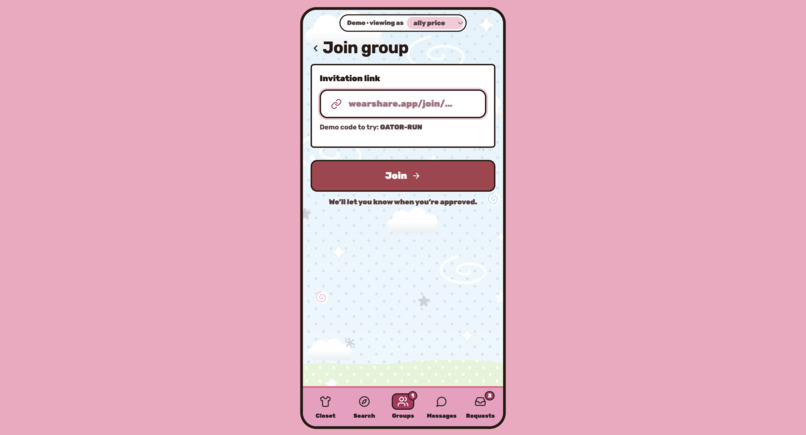
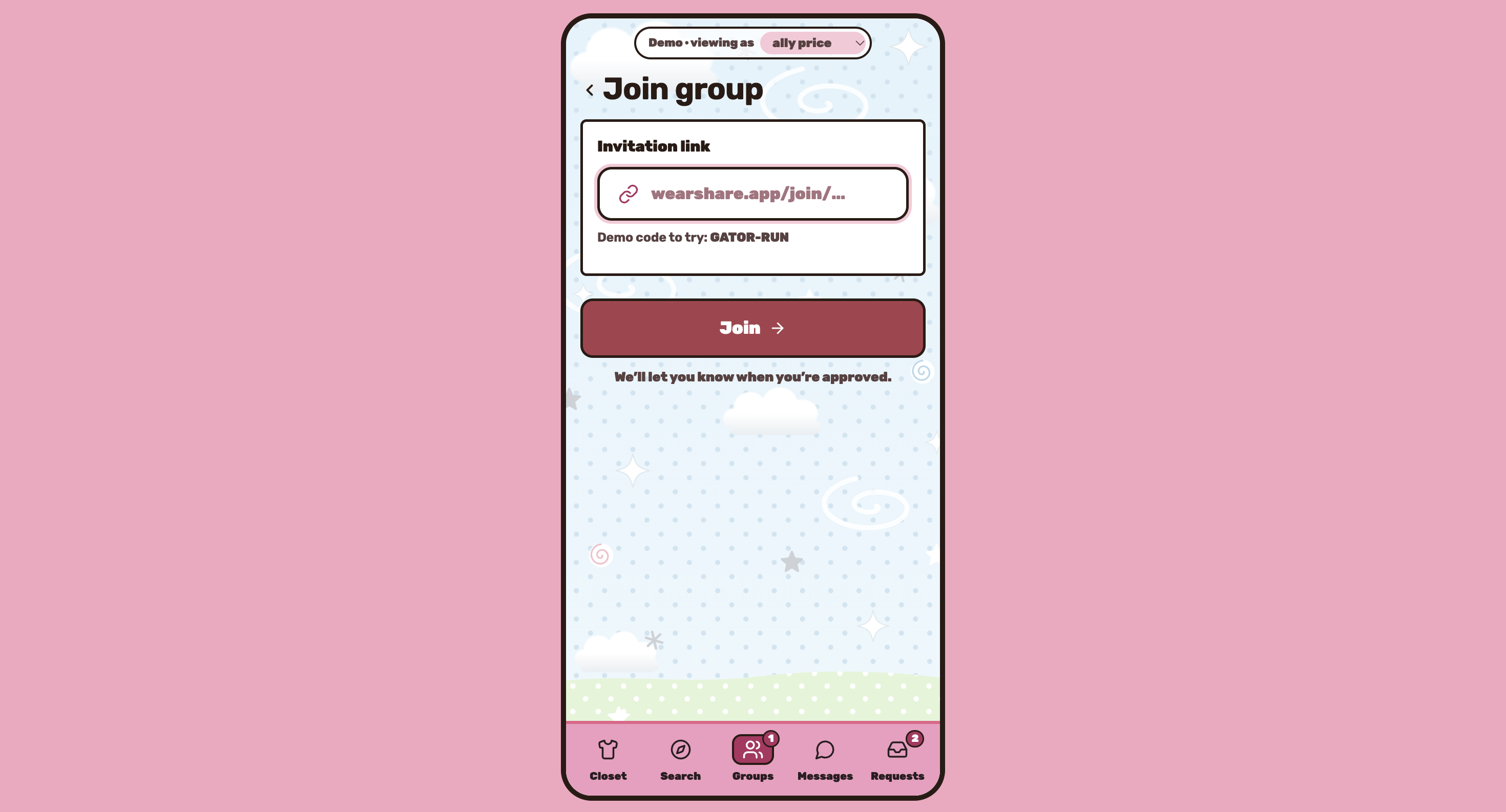
join an existing group
-
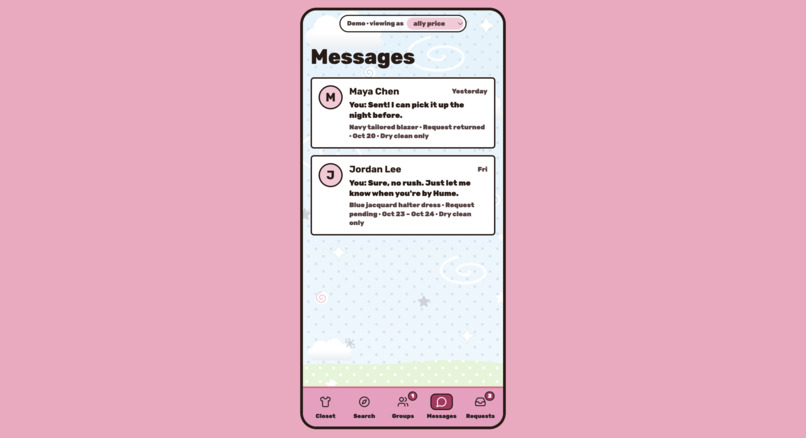
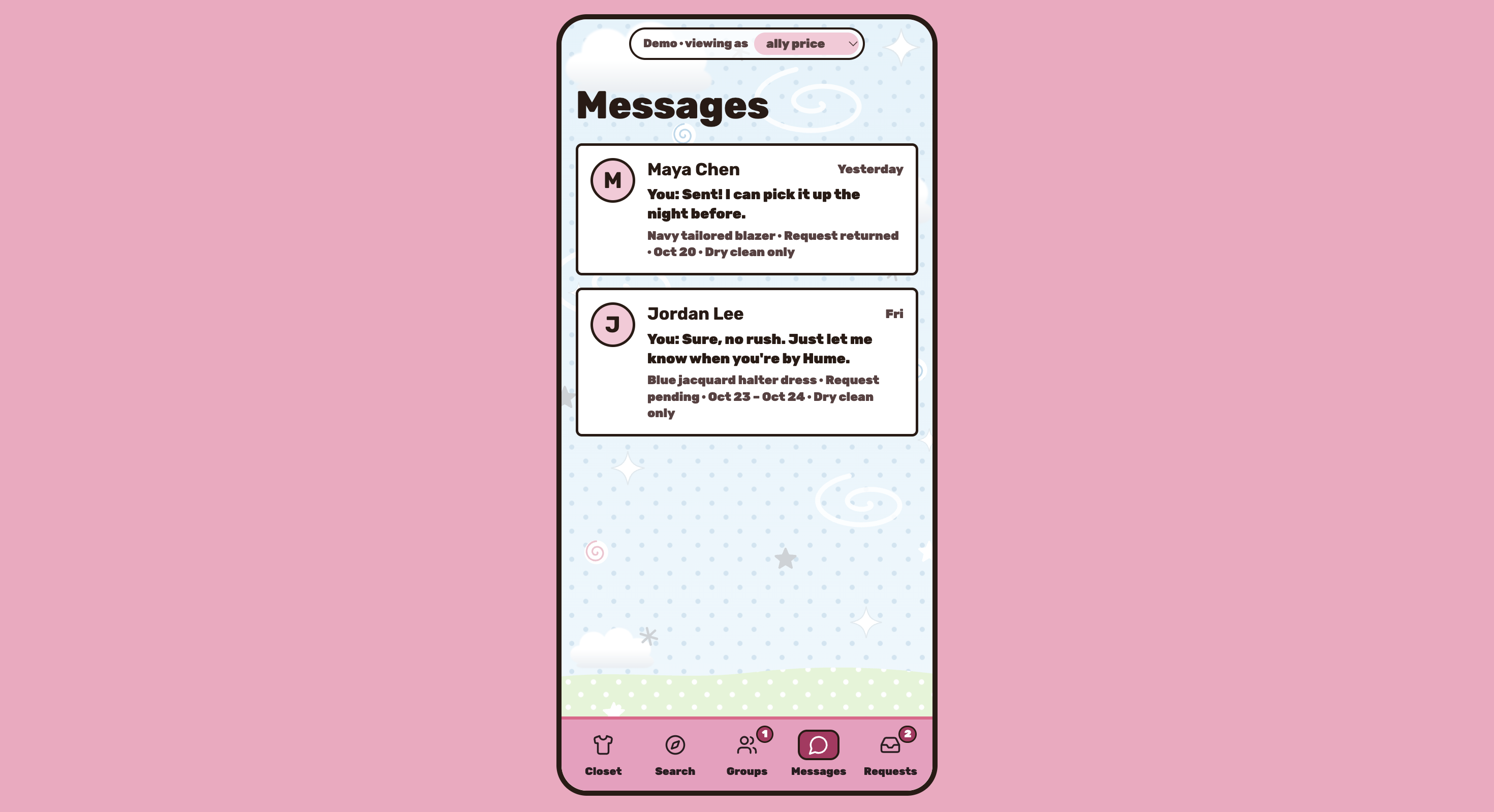
direct messages
-
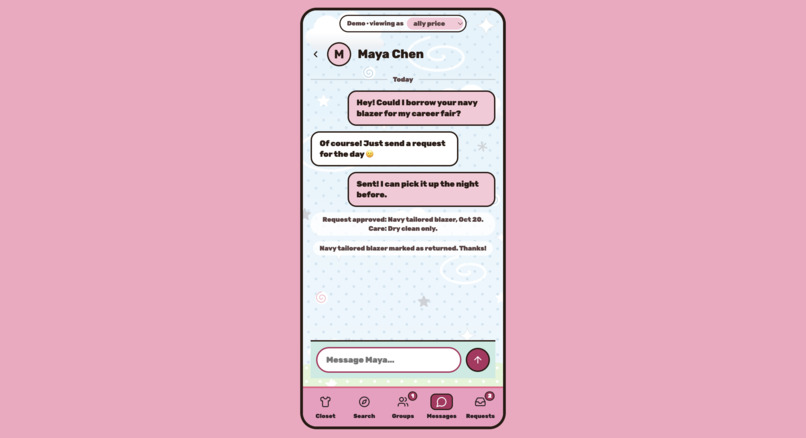
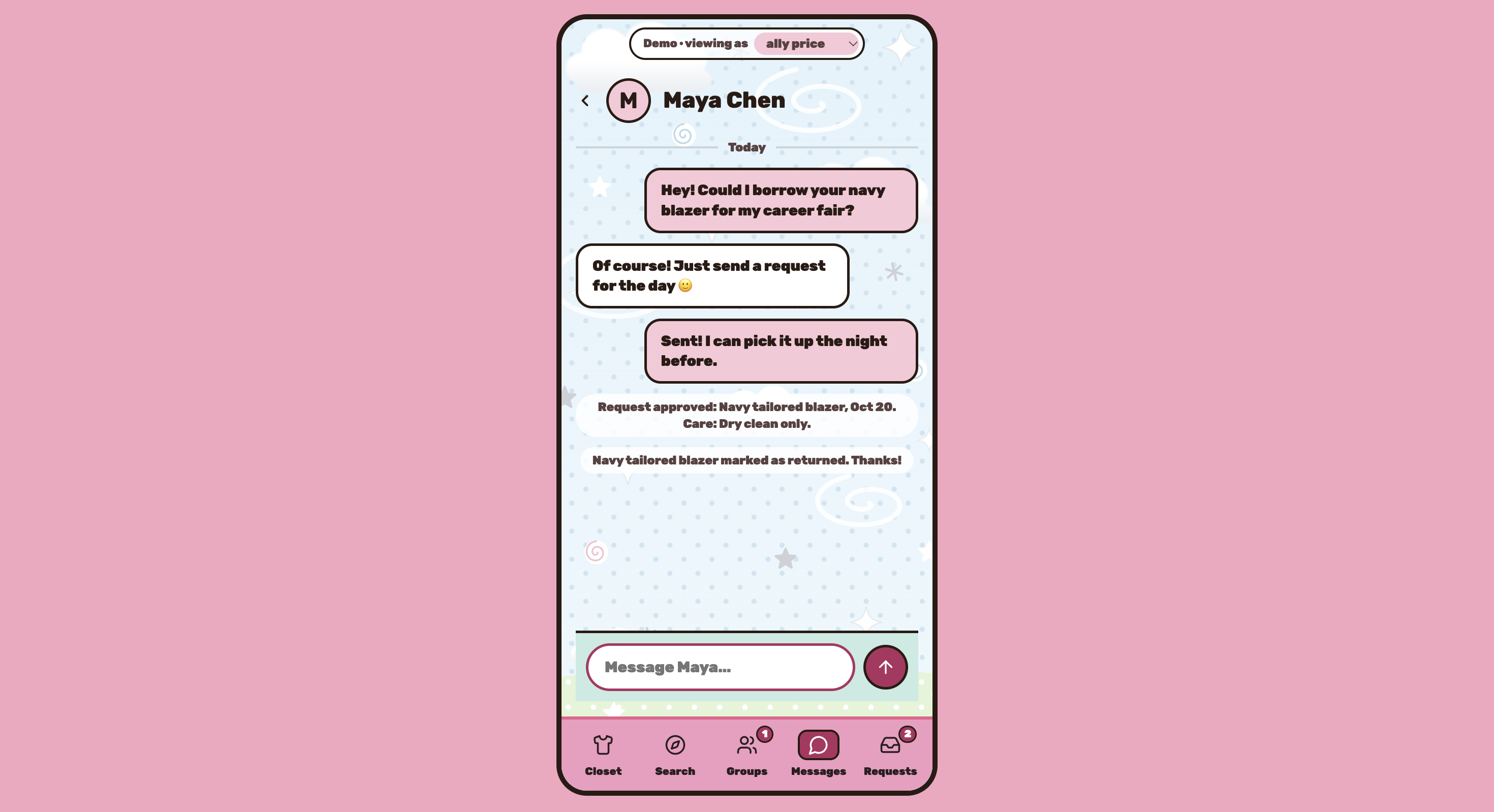
messaging interface
-
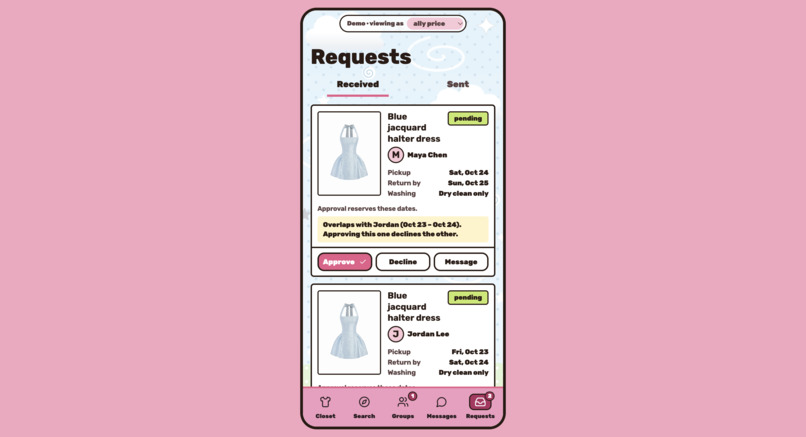
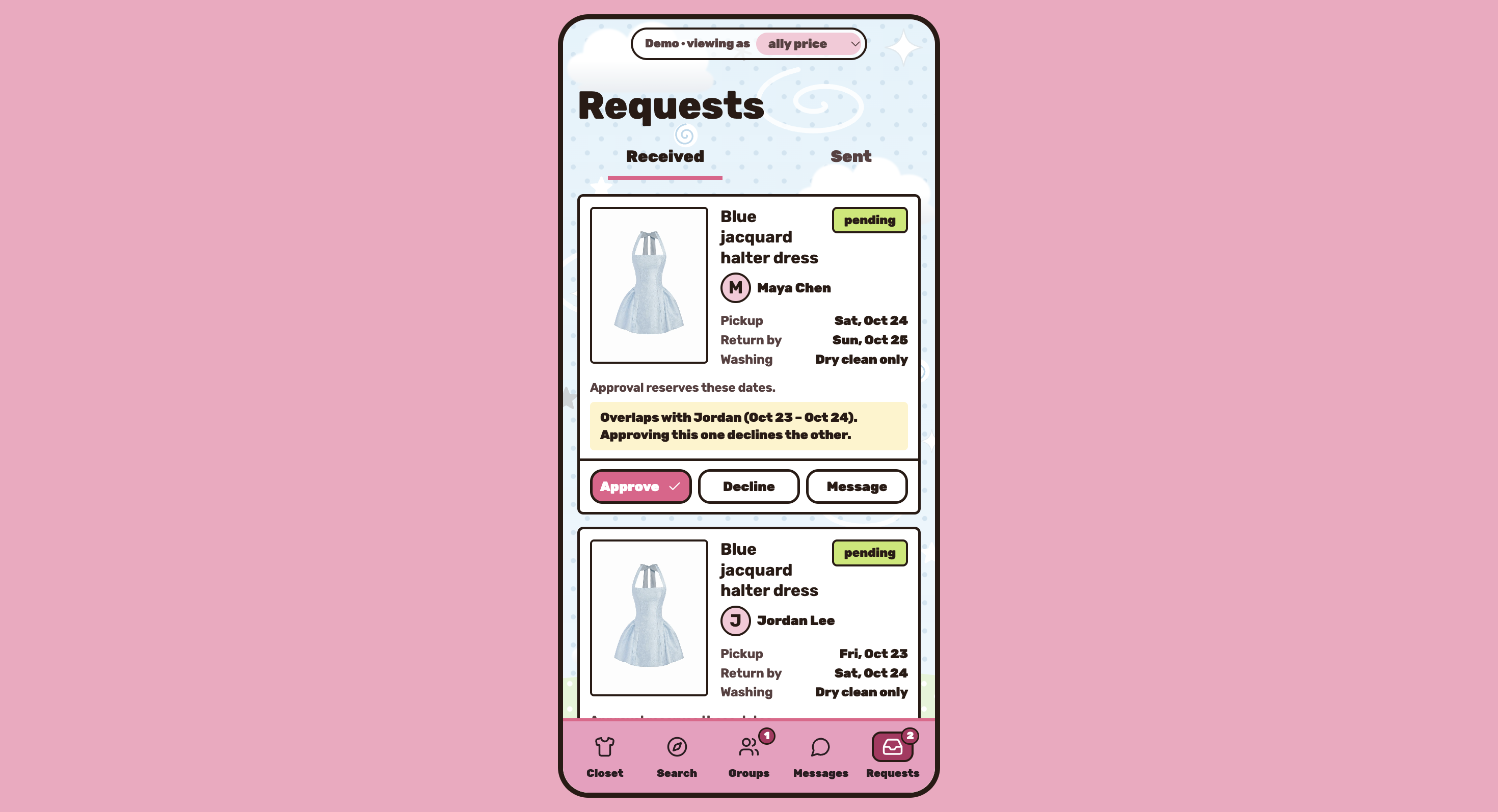
pending lending requests
Inspiration
As students at the University of Florida, our schedules are constantly filled with events. A formal on Tuesday, a career fair on Thursday, and a Gator game day on Saturday, while exciting, create a frustrating and expensive routine: buying brand-new outfits that end up sitting in the back of our closets after a single wear. The irony is that the exact outfit we need is often sitting untouched in a friend’s closet down the hall. While students already try to share clothes, doing so across endless group chats and direct texts creates social awkwardness, logistical chaos, and confusion over availability. We built WearShare to eliminate these barriers entirely, turning underutilized personal closets into a organized, shared community wardrobe.
What it does
WearShare is an AI-powered clothing-sharing social platform built exclusively for trusted college communities (roommates, dorm friends, and close circles). First, users are prompted to complete a secure account set-up. Next, users snap a photo of a garment, and the Groq API automatically generates descriptions and suggests attributes like brand, color, and style. These listings are then uploaded to a users profile for their friends to browse. Users will be shown a filterable feed of all of their friends items, which they can browse in order to select the item they would like to borrow. From there they can create a time-boxed request to borrow that item, made simple by a calendar that automatically blocks out dates where the item is already being borrowed. The item's owner may approve or deny requests, as well as contact the potential lender through in-app messaging.
How we built it
Design first: The Figma mockup defined every screen (Sign In, Closet, Search, Groups, Messages, and Requests) before we wrote any code, so the whole team agreed on what we were building. Frontend built from the design: We built the interface as a mobile-style web app using plain HTML, CSS, and JavaScript. It includes an offline demo mode with sample data, so the design work could keep moving without waiting on the server. Backend with a clear API: We built the server in Python with FastAPI, with endpoints for users, friends, closet items, groups, borrow requests, messages, and activity. The server, not the browser, decides who can see or change what. A database that enforces the rules: All data lives in Tiger Data (PostgreSQL with TimescaleDB). A database constraint makes it impossible to approve two overlapping bookings for the same item, and a TimescaleDB hypertable stores the activity feed that powers notifications. Secure sign-in with Auth0: Users sign in through Auth0, and our backend checks every request's access token (signature, issuer, audience, and expiration) against Auth0's public keys before trusting who is asking. Item photos are served through private, expiring links. AI that suggests, people decide: When a user uploads a photo, our backend sends it to a Groq vision model and returns a suggested title, description, color, and style. The user can edit everything before saving, and the API key stays on the server, never in the browser. If the AI is unavailable, the user simply fills in the details themselves. Connect, test, and repeat: We merged the frontend and backend on GitHub and connected them with a small live-mode script. We wrote backend tests with pytest, then tested the full borrowing flow with several demo accounts in different browsers: list an item, join a group by invite link, request dates, approve, and message.
Challenges we ran into
We had some difficulty in making our front end design unique and interesting while remaining user friendly. Additionally, while our application ran flawlessly in our local development environment, we encountered hurdles when trying to run and test it across different computers. Our hardcoded references to localhost and default server bindings (127.0.0.1) restricted traffic to the host machine.
Accomplishments that we're proud of
We are proud of building a working, polished platform that transforms the informal process of borrowing clothes from friends into a searchable, organized experience. Users can browse and search across their friends' closets through a creative interface designed with frontend. We especially like that we could keep a playful, whimsical vibe to the app with it still looking clean and organized. We're also proud of successfully integrating Groq AI into the upload process to automatically generate clothing descriptions and categorize items. Finally, we're proud that WearShare addresses a real problem with both financial and environmental impact. The platform not only extends the life of clothing but also helps students save money while encouraging more sustainable fashion habits.
What we learned
As first-timers, we learned a lot about teamwork, using GitHub, merging frontend and backend development, integrating APIs, and more, to create a cohesive product. We especially learned about the importance in brainstorming, and the time needed in refining a final idea before jumping straight into development. A significant part of our project included the research that backs up the real-world significance of our project. Finally, we also learned that AI agents, like Claude, are most useful when they are treated as collaborators. We used agents to further refine and shape what we wanted, rather than a final answer.
What's next for WearShare
We're excited about turning WearShare into something students would actually use every day and can have as an app on their phone. One of our biggest next steps is expanding from the University of Florida to across many campuses nationwide. Another idea we're excited for is personalized outfit recommendations powered by AI. Finally, we want to continue exploring how we can encourage more sustainable fashion habits. If we add features that help users see their impact, such as calculating the money they have saved or tracking the number of items they have borrowed, we hope to bring this mindset of acting sustainably beyond WearShare and into everyday life.
Built With
- auth0
- css
- html
- javascript
- tigerdata


Log in or sign up for Devpost to join the conversation.