-
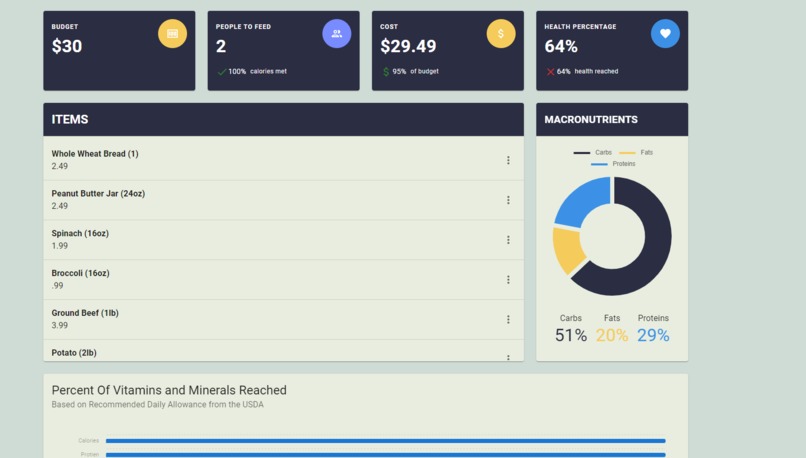
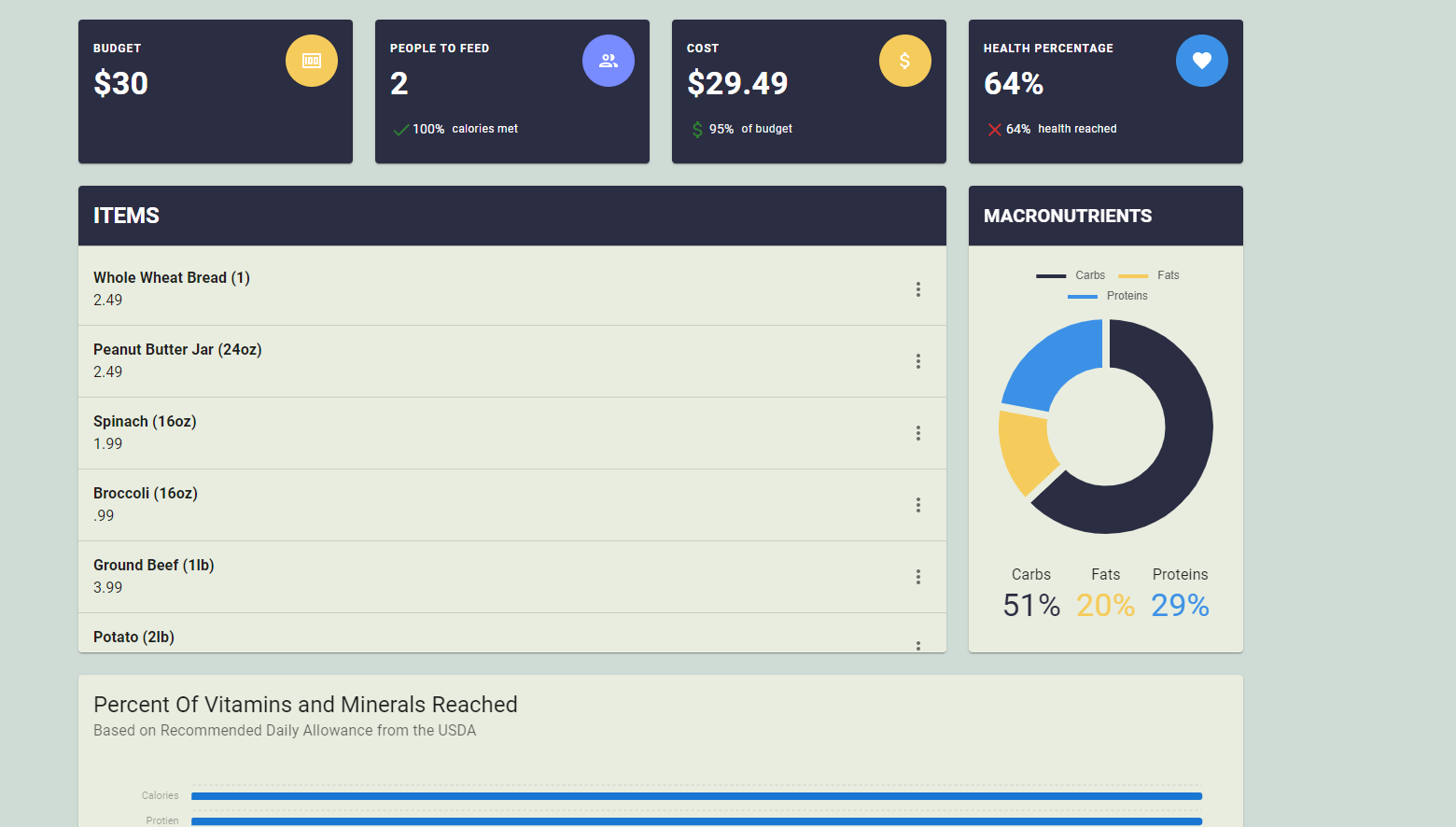
dashboard to show meal plan
-
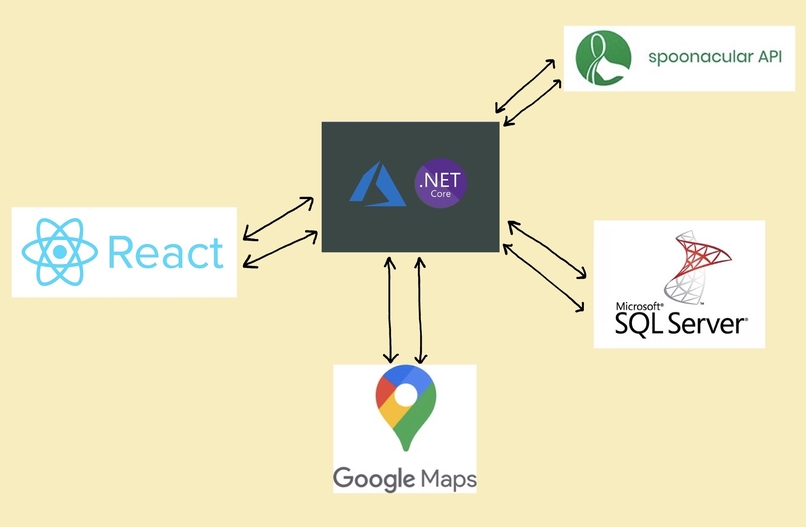
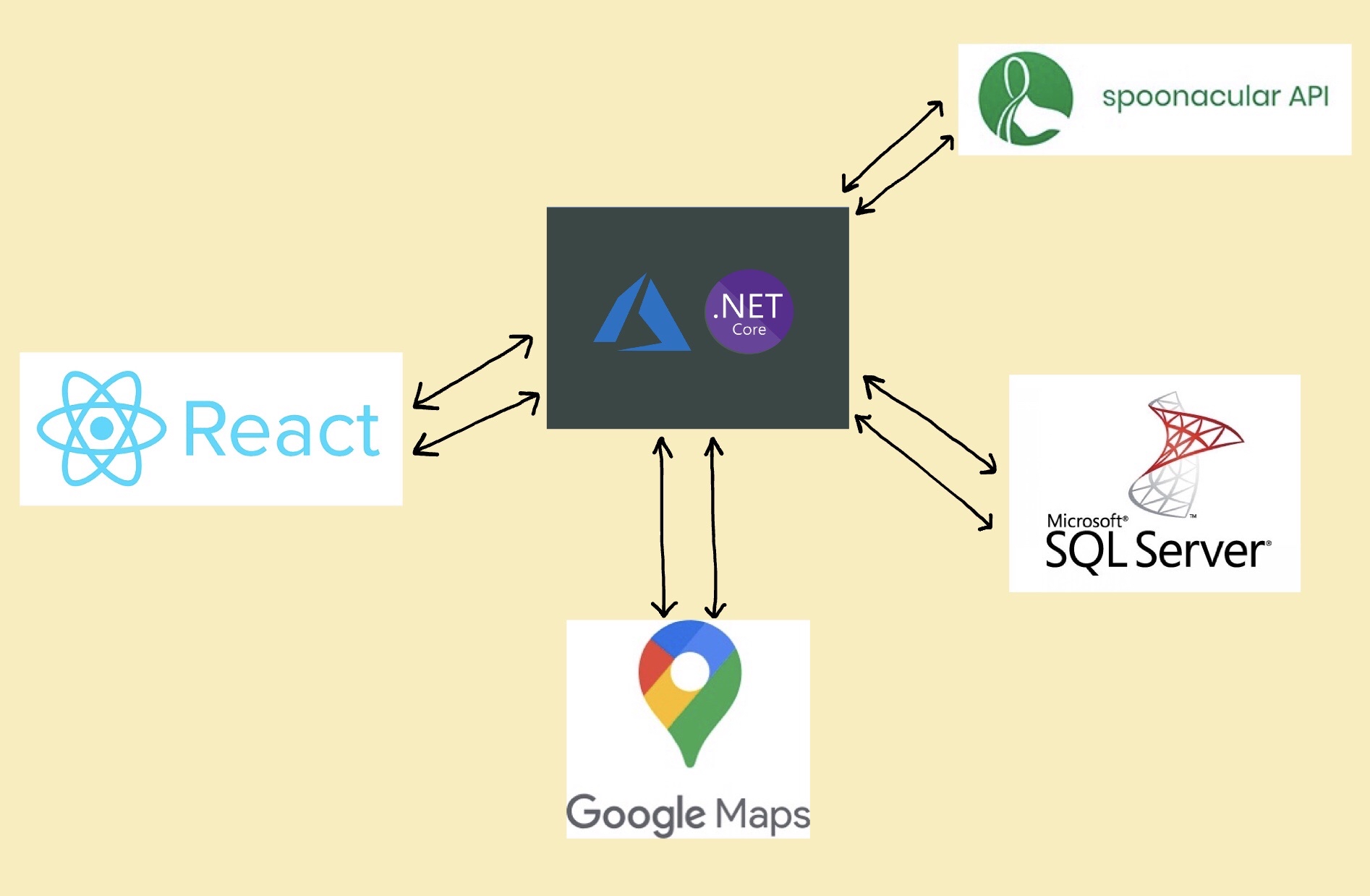
design document
-
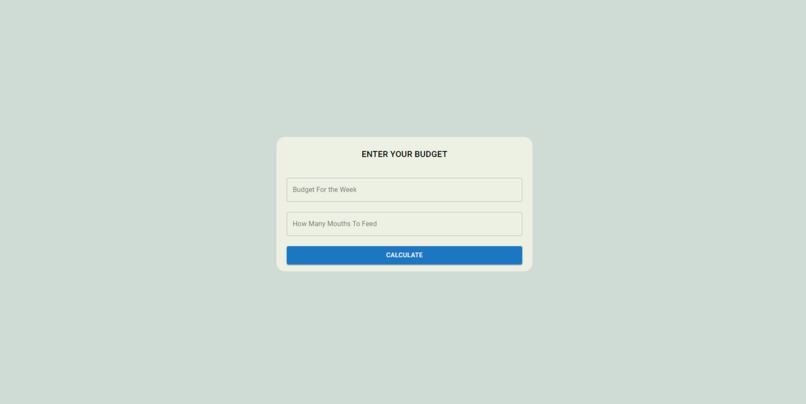
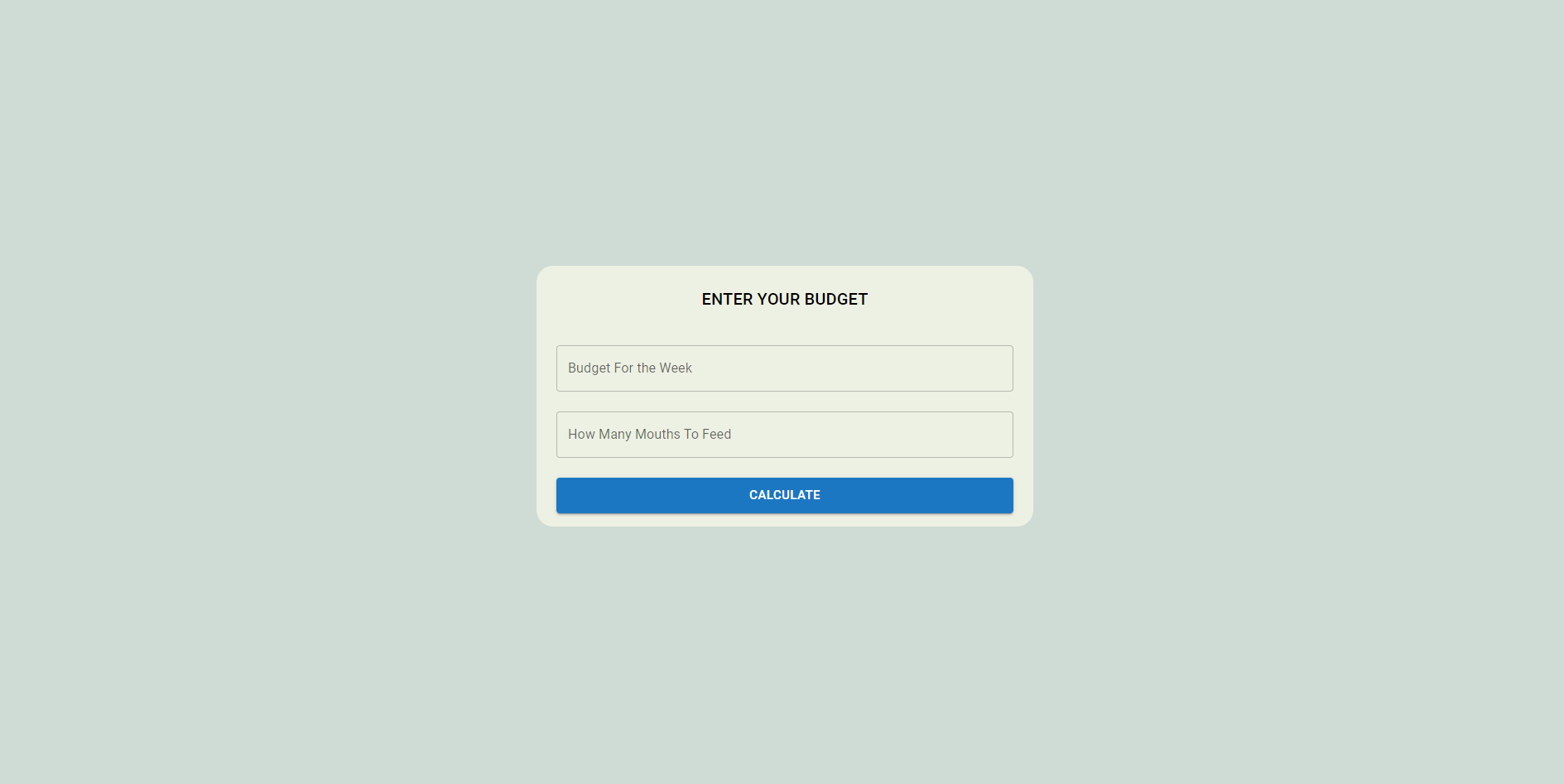
front page to enter budget details
-
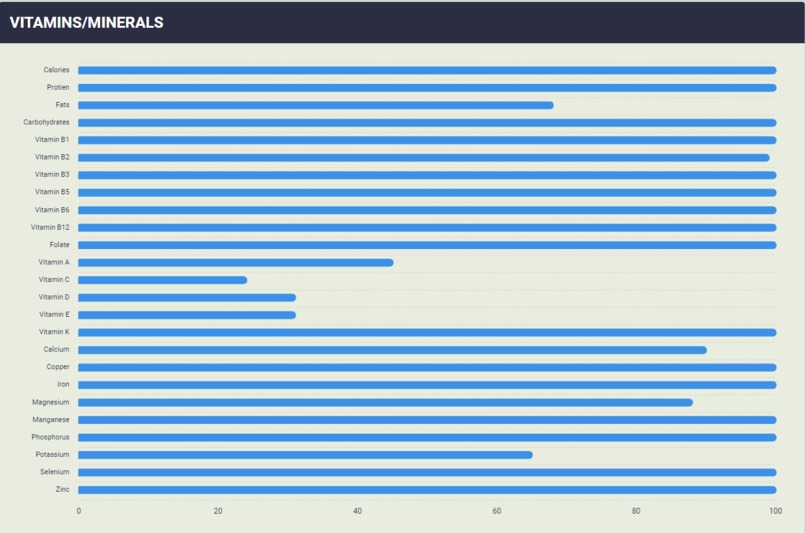
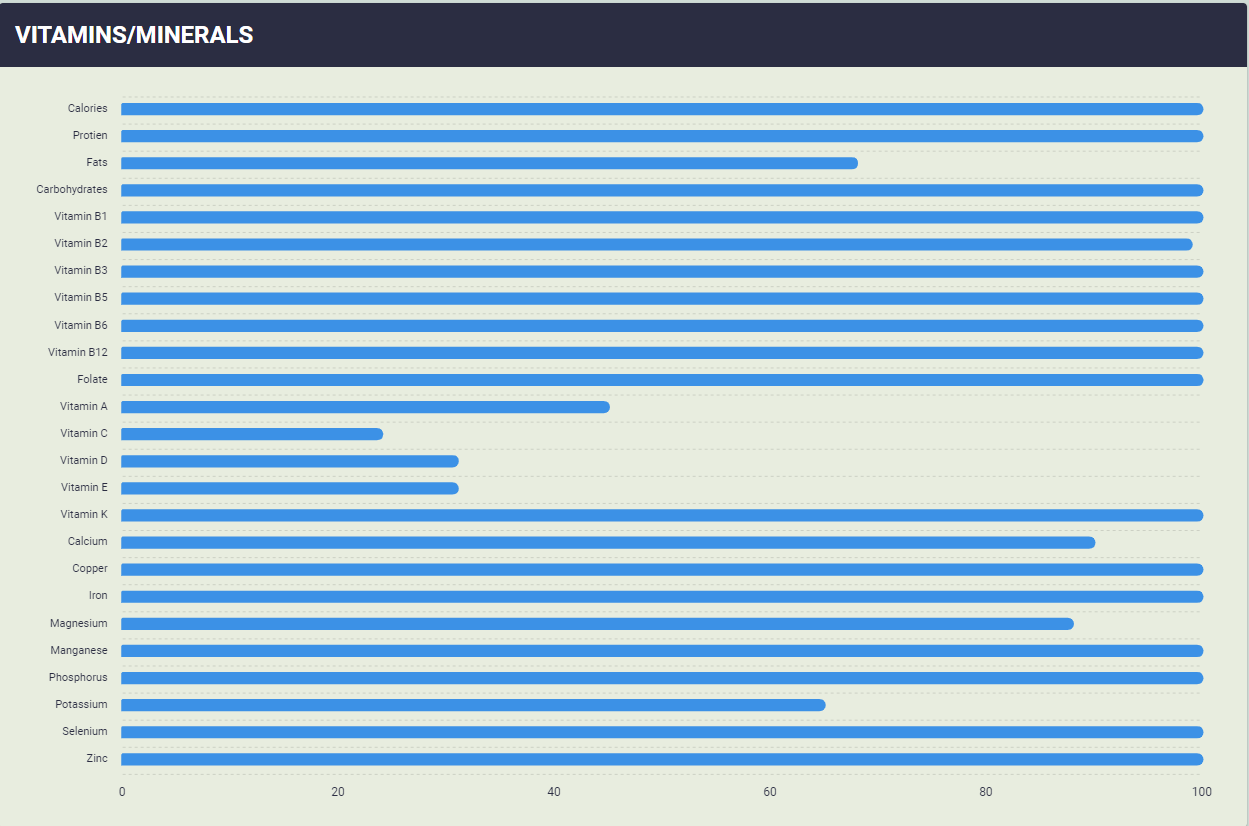
showing nutrition from their meal plan
Inspiration
Some of the world's major problems are poverty, child hunger, nutritional deficiencies, and obesity. In fact, 20% of children in Miami are hungry and nutrient deficient and 15% of Miami make under the poverty line. Most of these communities do not have the knowledge or the financial resources to obtain adequate nutrition from foods with their budget. Because of this, lower income communicates will have higher incidences of common nutritional deficiencies such as Vitamin D and Iron.
Imagine being a single mother of 3 kids and you only have $40 to feed them for the week. They work 3 jobs and are stressed out of your mind. Imagine the choices they would have to make under stress to try to not only feed their children but make sure they are receiving adequate nutrition. Nutritional deficiencies cause a whole host of problems such as an increase in diseases and decreases in the ability to learn. This story is so common in Miami as rent prices increase and food becomes more and more unaffordable.
In short, we want to create an application to help bridge the financial means of acquiring foods and acquiring foods that have adequate nutrition. We want to be able to help struggling families in Miami and around the world get adequate nutrition while also being fed.
What it does
The premise of the application involves calculating a nutritious weekly meal plan given a desired budget. It can also accommodate for how many mouths you plan on feeding given your budget.
With their current budget, our application would connect to the Google Maps API and various grocery store API’s and abstracts various nearby healthy options, aggregating foods from local stores nearby using the user's approximate location and then displaying a list of items that are cost efficient and fits with the daily recommended values and the RDA with the set user budget.
Essentially, given $20, it will maximize micronutrient and macronutrient intake for that $20.
After calculating, there’s a cost-benefit summary displayed to show the user’s health and well-being. Additionally, the API generates comprehensive charts to display daily nutrient needs based on the budget given. Included is a macronutrient chart that shows the nutritional benefits from the affordable item list. Furthermore, shown at the bottom is a bar graph of the overall micronutrient intake from vitamins and minerals from the item list. All calculations and displays are based on nutritional guidelines from the USDA, including a 2,000 calorie a day diet.
How we built it
Our original plan was to have a React front-end with a .NET middle end and a SQL Server backend and host this on Azure. The .NET middle end will grab the user location from the React front-end and communicate with Google Maps API to get nearby grocery stories and then communicate with Spoonacular API to get nutritional data and then store the data in SQL Server. Unfortunately, we were not able to fully implement this into our prototype but our prototype shows a proof of concept with all these technologies.
Challenges we ran into
Since we were using so many technologies and time constraints, we couldn't fully implement our design. We were able to have a full prototype that shows a proof of concept.
Accomplishments that we're proud of
Proof of concept finished in the hackathon.
Creating an application to help our local community and disparaged people around the world.
Everyone learning how to use various technologies ranging from React to .NET to SQL Server to Google Maps API.
What we learned
How to use react, how to use .NET, how to work as a team, how to integrate several technologies together into a fully functioning prototype
What's next for WealthforHealth
Finish a MVC with fully integrated technology as discussed in our design. More customizable options to fit every use case for people struggling.


Log in or sign up for Devpost to join the conversation.