Inspiration
The project began with a song — “We’re Here to Dance” — originally created a two months ago on Suno AI.
I loved its catchy, futuristic rhythm and decided to rebuild it as a musical short film.
The idea: What if alien invaders arrived on Earth not to fight, but to dance?
From there, the narrative evolved into a playful crossover between anime heroes and extraterrestrial dancers, mixing humor, rhythm, and cinematic tension.
The song’s style set the tone:
A catchy, mid-tempo alien rap song with a smooth, hypnotic groove and a futuristic cartoon vibe — playful vocals, funky basslines, cyberpunk synths, and spacey trap drums.
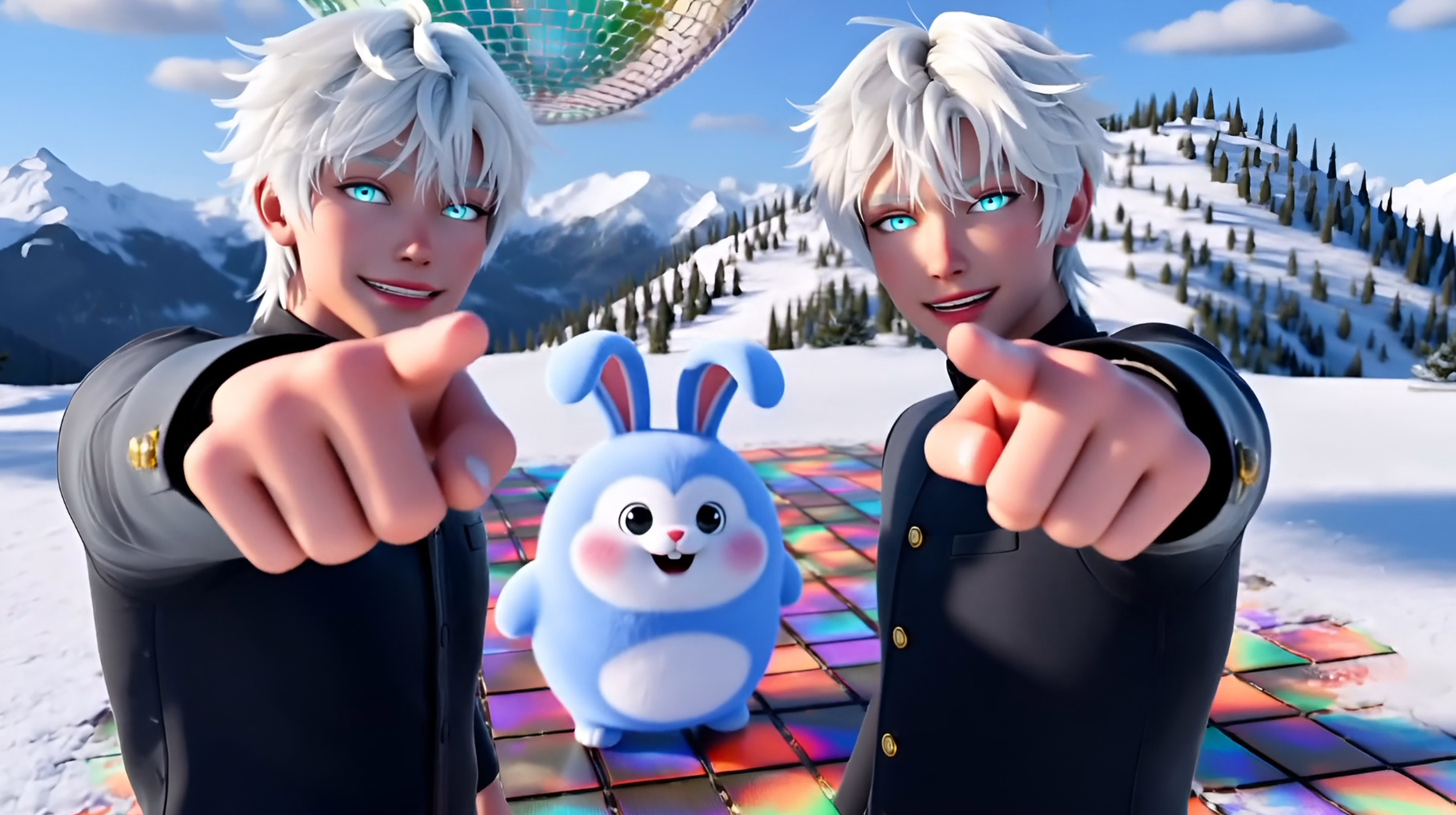
This sound inspired the visual direction: vibrant, semi-3D anime-style animation with glowing environments and expressive character movements.
Also, I was inspired by another anime project I’m developing, where I imagine Naruto, Goku, and Gojo in the same AI-animated universe. Using that inspiration, I decided to create this standalone musical comedy featuring these characters, reimagined in a playful, dancing scenario for the Chroma Awards.
What it does
The project combines music, animation, and storytelling to create a dynamic, immersive experience.
The song sets the rhythm, guiding character movements and transitions, while the visuals translate this energy into expressive, semi-3D anime-style animation.
Viewers experience:
- A dramatic cinematic intro with the spaceship’s arrival on Earth
- A playful twist as the aliens reveal they’re here to dance
- A dance competition, where each character showcases their unique moves and style
- Individual and ensemble dance performances, synchronized to the music’s beat
Overall, the project turns a typical battle narrative into a fun, musical spectacle, blending humor, rhythm, and visual creativity.
How I built it
Music & Lyrics:
- The original song was written by me and chatGPT and composed on Suno AI.
- I rewrote the lyrics to include both alien characters and anime heroes like Gojo, Goku, and Naruto, turning it into a sci-fi musical narrative.
- Then I recreate the current version using the first one as Persona.
- The original song was written by me and chatGPT and composed on Suno AI.
Visual Design:
- Created concept images with the Flux model on CGDream, giving each character a semi-3D anime-cartoon appearance.
- Focused on lighting, colors, and futuristic depth to match the sound’s “space-funk” energy.
- Created concept images with the Flux model on CGDream, giving each character a semi-3D anime-cartoon appearance.
Video Creation:
- Generated and animated sequences using VIDU combining different features (Image to video, image-to-image, and references to video:
- Working better prompts by adding camera motion and dynamics for a cohesive storytelling flow.
- Generated and animated sequences using VIDU combining different features (Image to video, image-to-image, and references to video:
Challenges we ran into
- Maintaining visual consistency between AI-generated concept images from CGDream and video sequences produced in VIDU.
- Synchronizing character movements with the music’s beat and ensuring smooth transitions between cinematic and dance scenes.
- Balancing humor and cinematic tension, especially during the switch from suspenseful alien arrival to playful dance competition.
- Directing multiple characters with unique personalities and movements while keeping the ensemble scenes coherent.
—
Accomplishments that we're proud of
- Successfully blending AI-generated music, visuals, and storytelling into a cohesive, entertaining short film.
- Creating expressive semi-3D anime-style characters that reflect each character’s personality and energy.
- Designing a musical narrative that transitions smoothly from cinematic tension to playful dance.
- Implementing a dance competition format, allowing each character to shine individually and as part of an ensemble.
- Experimenting with AI workflows across multiple platforms: Suno for music, CGDream (Flux) for concept images, and VIDU for video generation.
- Producing a project that is original, visually striking, and fun, while respecting the inspiration from anime heroes and pop culture.
(I HOPE!) ---
What I learned
Through this project, I learned to merge AI tools from different creative domains — music, image generation, and storytelling — into one coherent experience.
I experimented with rhythm synchronization, mood transitions, and how to make AI-driven visuals feel alive.
Using effects while generating videos with AI and controlling some dance movements, like in rap dancing.
- Post-production:
- Video editing on capcut
- Synchronized scenes with the music’s beat change — especially the transition moment:
> “WAIT! We’re not here to fight!”
Challenges
- Matching Suno’s audio dynamics with VIDU’s visual rhythm
- Keeping a consistent style, consistent characters
- Balancing the comedic and cinematic tones without breaking the immersion
After several iterations, the final result captured exactly what I wanted — a fun, spacey, anime-style musical short with heart and humor.
What's next for We're Here to Dance!
This project is a standalone musical short, and I am proud of what I accomplished alone and in a quick duration.
While I don’t plan any immediate sequels, the experience and creative techniques I developed here will feed directly into my main project, the AI anime mini-series "Echos of Eternity".
In that ongoing series, I will expand the universe, explore new characters, and push the boundaries of AI-driven storytelling.
Thank You
Thank you for taking the time to explore We're Here to Dance!
I hope you enjoy the playful world, music, and characters as much as I enjoyed creating them.
Note about the links:
- The first link directs you to the full project video.
- The other links are short clips used to promote the video and highlight key moments of the musical performance.
Built With
- capcut
- cgdream
- suno
- vidu


Log in or sign up for Devpost to join the conversation.