-
-
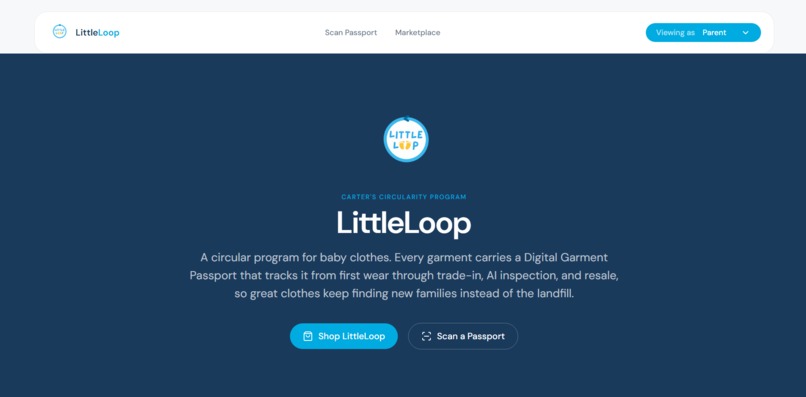
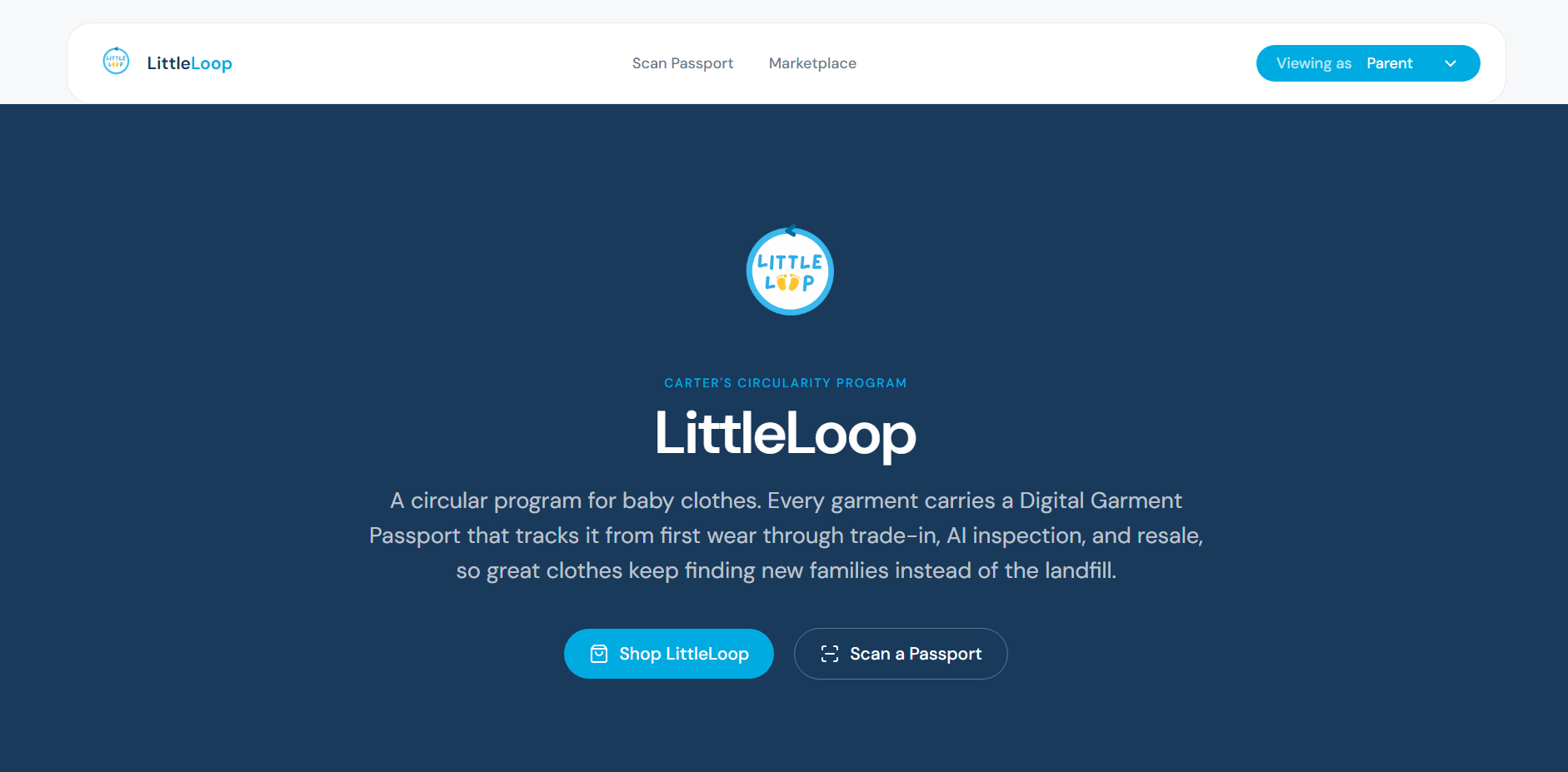
landing page
-
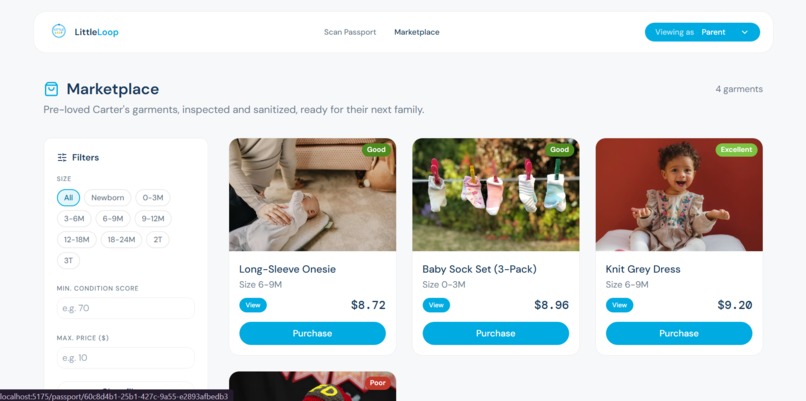
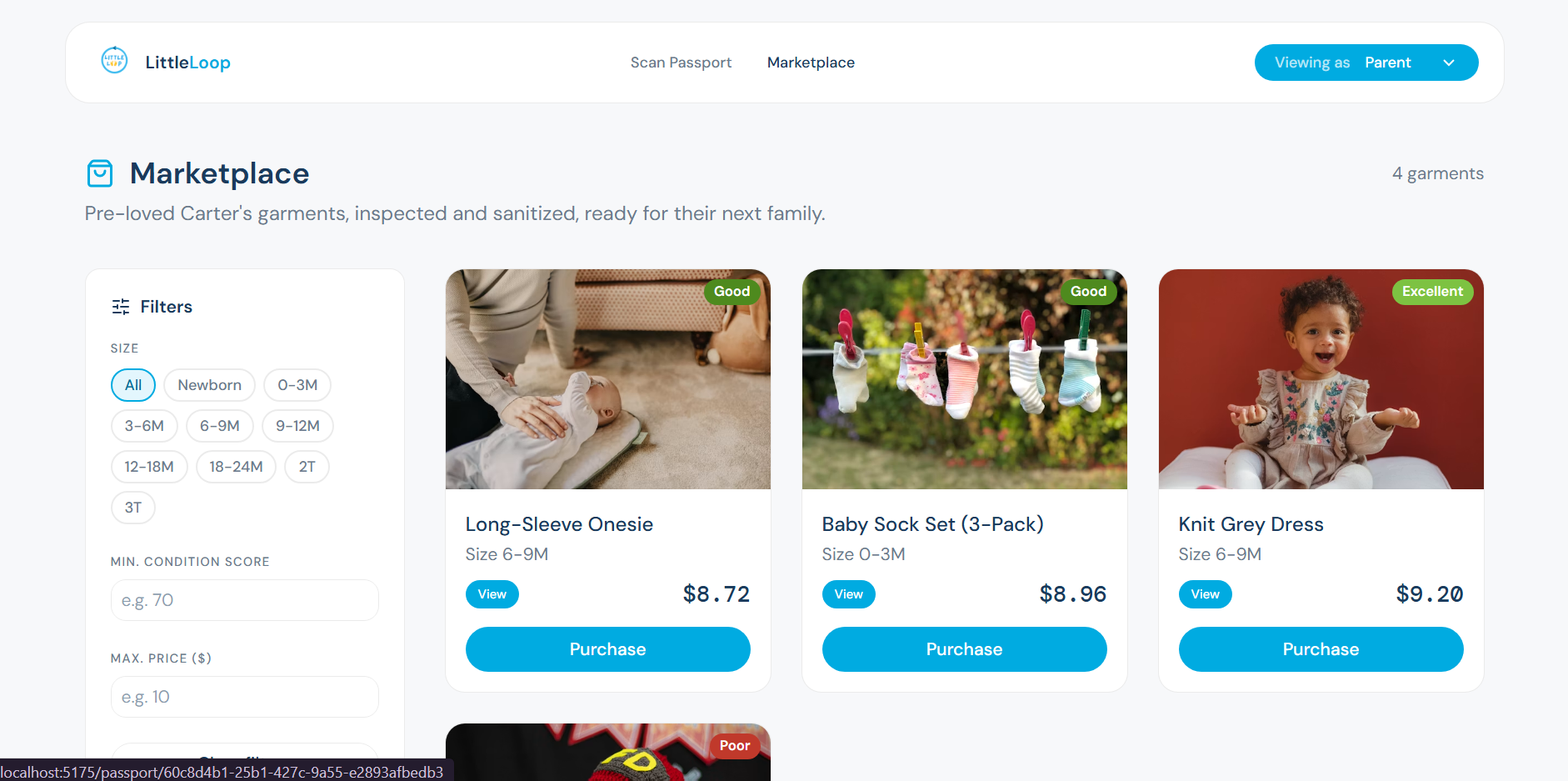
marketplace for reselling
-
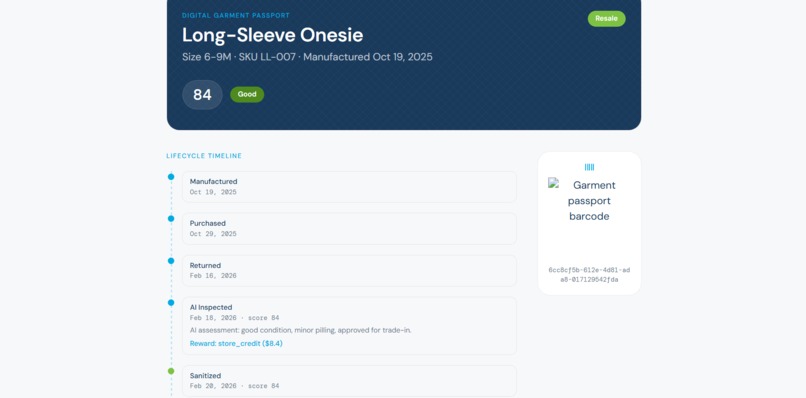
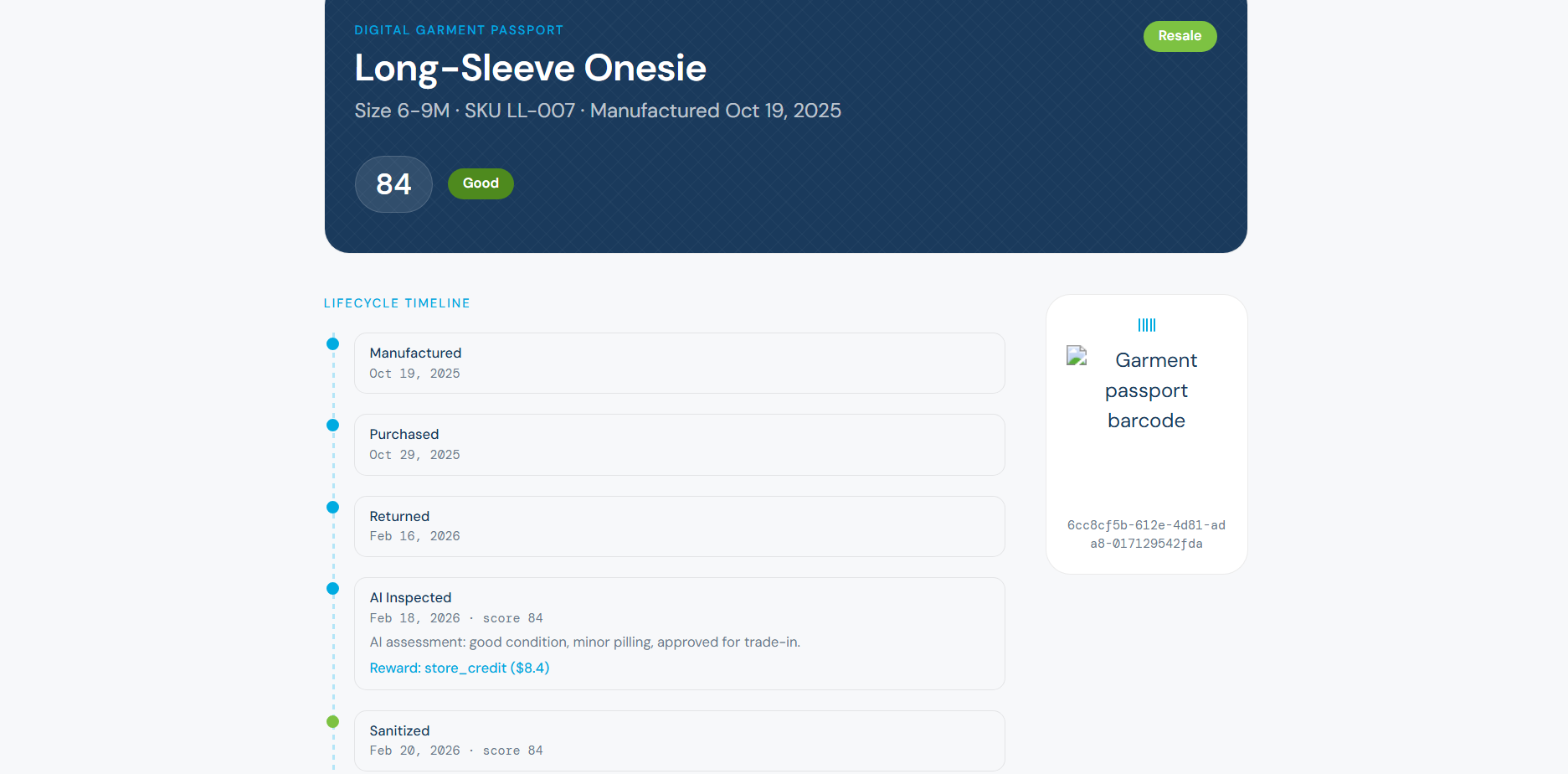
digital garment passport
-
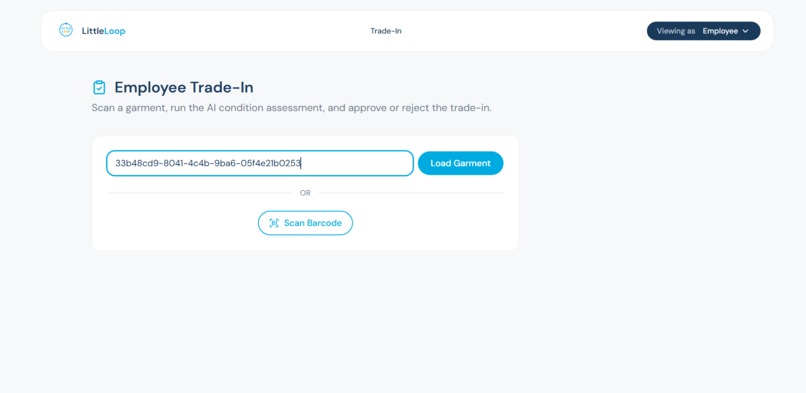
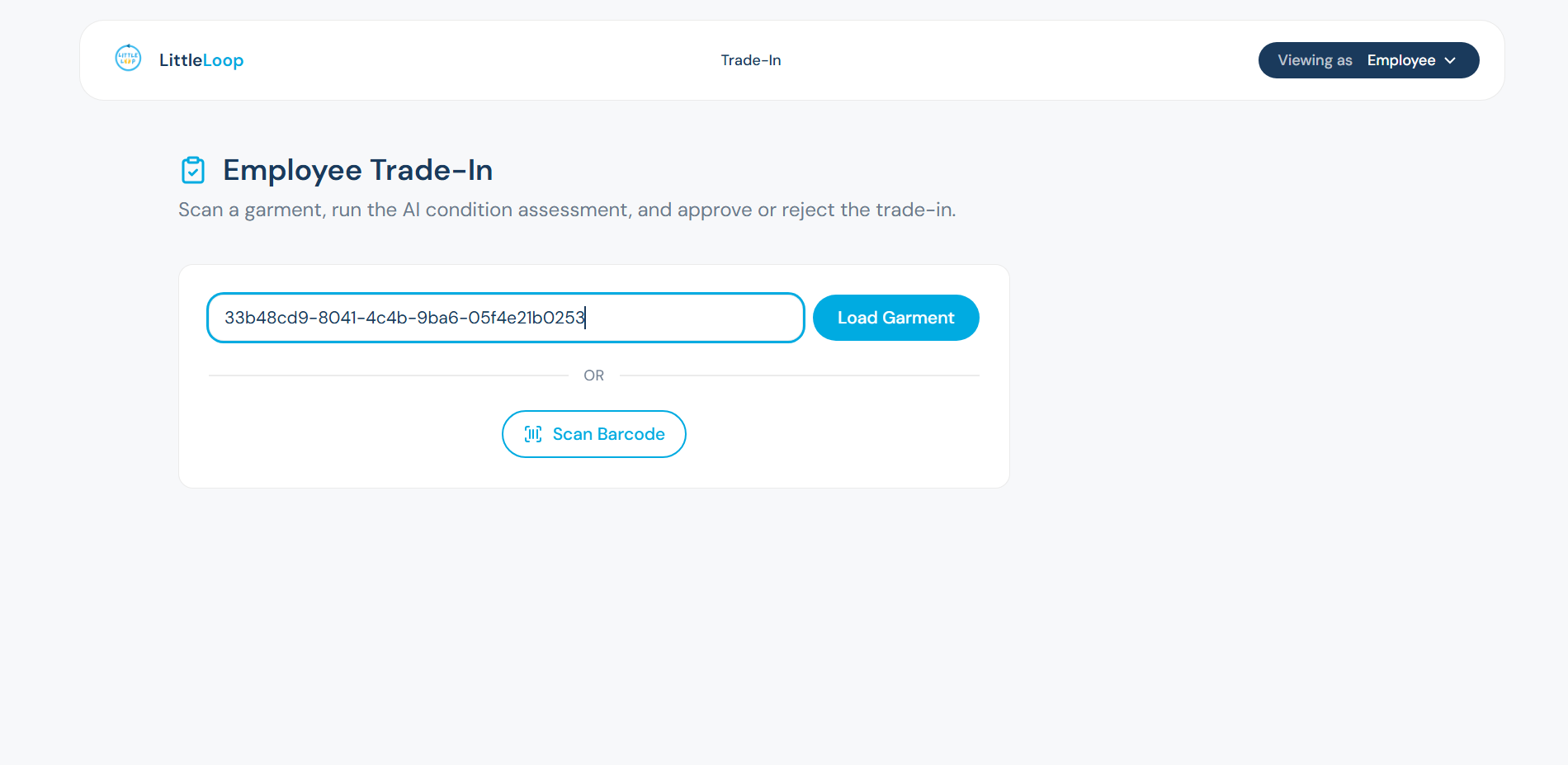
employee side trade in
-
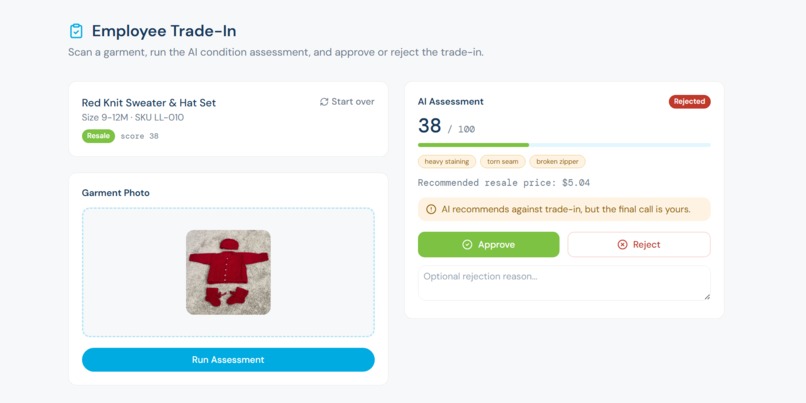
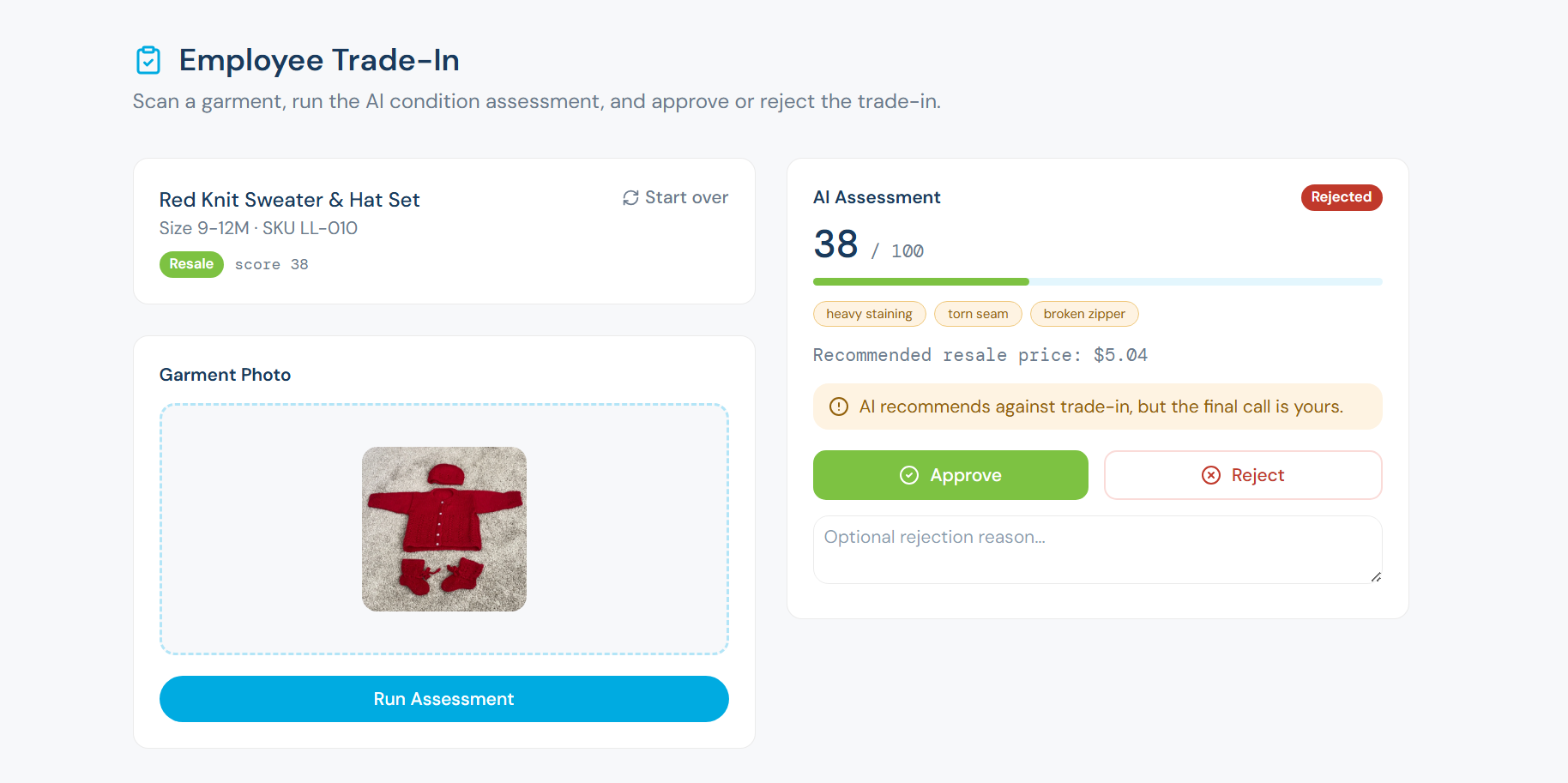
ai assessment
-
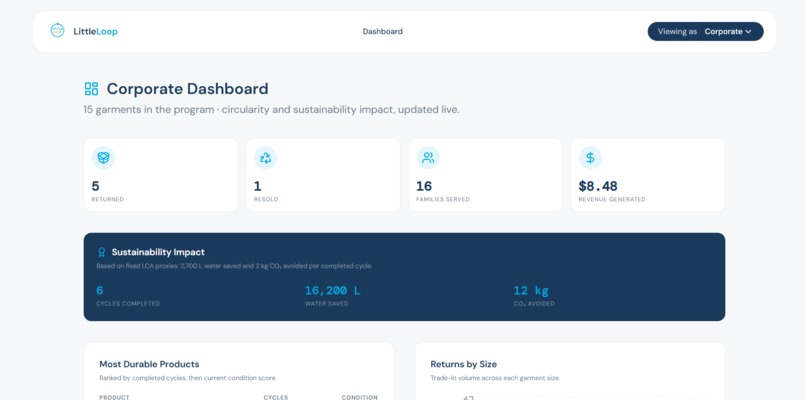
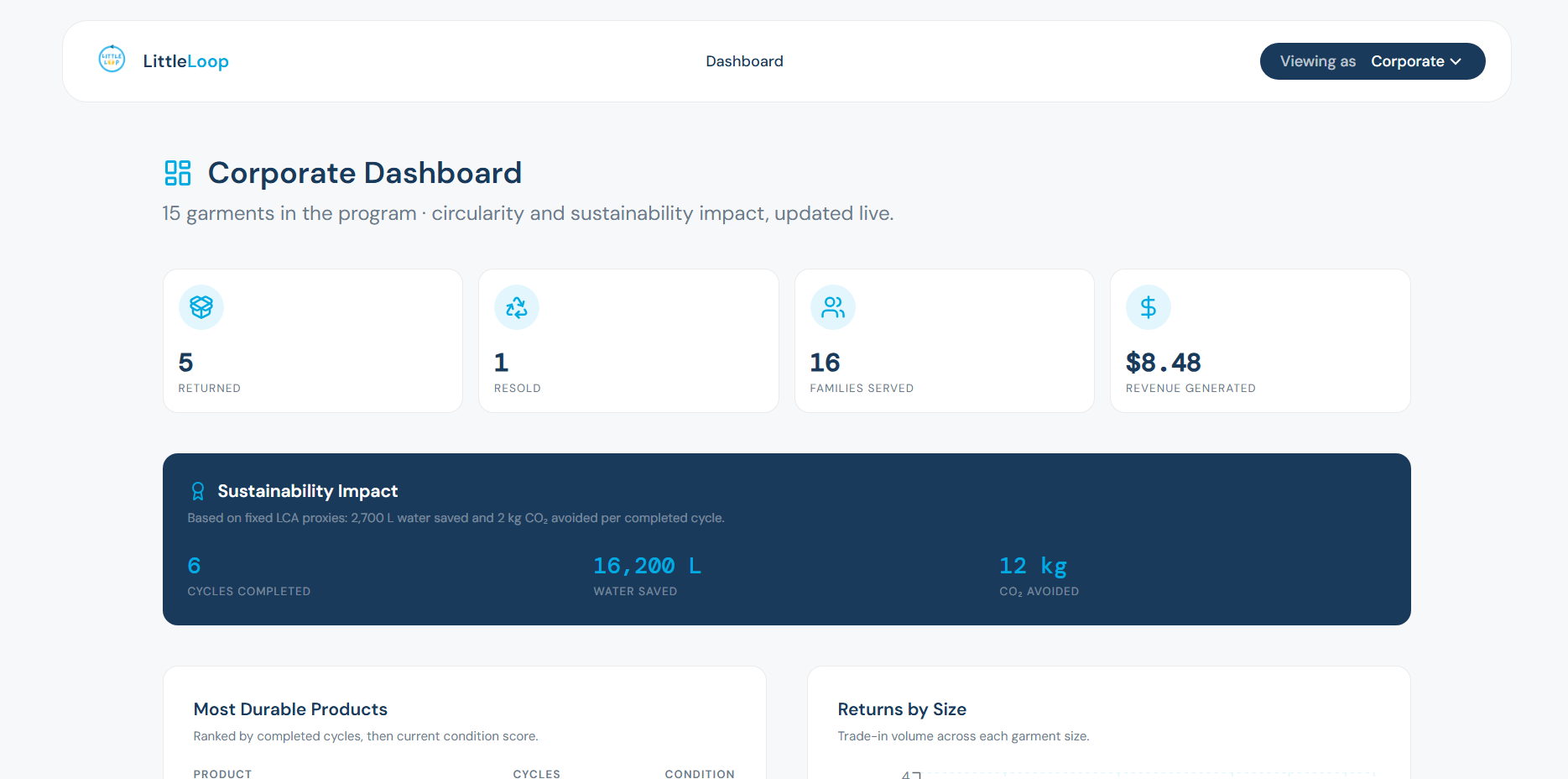
corporate side dashboard
Inspiration
Parents often purchase baby clothing that is only worn for a few months before being outgrown. At the same time, many of these garments remain in excellent condition but have no easy way to re-enter circulation. We were inspired by the idea of applying a digital identity to physical products, allowing each garment to have a persistent record of its lifecycle. By combining resale, traceability, and AI-assisted quality assessment, we envisioned a circular ecosystem where clothing can serve multiple families instead of being discarded after a single use, all while bringing customers back to Carter's .
What it does
LittleLoop is a circular resale platform for Carter's baby clothing. Each garment receives a Digital Garment Passport linked to a unique barcode. Families can scan a garment to view its history, condition, and sustainability impact. When a garment is outgrown, it can be traded in and evaluated through an AI-assisted assessment workflow. Approved garments are rewarded with store credit or Huckleberry Plus rewards, prepared for resale, and listed in the LittleLoop Marketplace. Carter's gains visibility into participation, product durability, and sustainability outcomes through a corporate analytics dashboard.
How we built it
We built the frontend using React, Vite, Tailwind CSS, and Recharts. The backend was developed with FastAPI, and SQLite. Each garment is represented by a unique UUID and tracked through an event-based lifecycle system that records purchases, inspections, sanitization events, and resales. We designed an AI assessment layer that analyzes garment images and returns condition scores, defect information, pricing recommendations, and trade-in eligibility. All features are connected through REST APIs and share a common Digital Garment Passport data model.
Challenges we ran into
We had to balance feature scope with the limited timeline of a hackathon, prioritizing the core circular economy workflow over secondary features such as authentication and payments. Additionally, it was at first hard to find data for a model that could accurately assess wear and tear on clothing, and we decided to also use a deterministic formula to calculate condition score after getting severity and damage details from the AI model.
Accomplishments that we're proud of
We are proud of creating a complete end-to-end circular economy experience rather than an isolated feature. Every garment has a persistent digital identity that powers scanning, resale, trade-ins, rewards, sustainability tracking, and analytics. We successfully connected multiple perspectives parents, employees, and corporate stakeholders, within a single platform. Most importantly, we transformed an abstract sustainability concept into a tangible, interactive product experience
What we learned
We gained experience designing systems that serve multiple stakeholder groups with different goals and workflows. We also learned how AI can be integrated as a decision-support tool that augments human judgment rather than replacing it.
What's next for Little Loops
Future versions of LittleLoop would replace disposable hang-tag barcodes with durable embedded identifiers such as NFC tags. We would integrate a production vision model for garment assessment, add customer accounts and reward wallets, and support direct in-store trade-in workflows. On the analytics side, we would provide deeper insights into garment durability and resale performance. Long term, LittleLoop could expand beyond baby clothing and become a scalable framework for circular retail across multiple product categories.


Log in or sign up for Devpost to join the conversation.