-
-
-
-
-
-
-
-
-
-
-
-
-
-
-
-
-
-
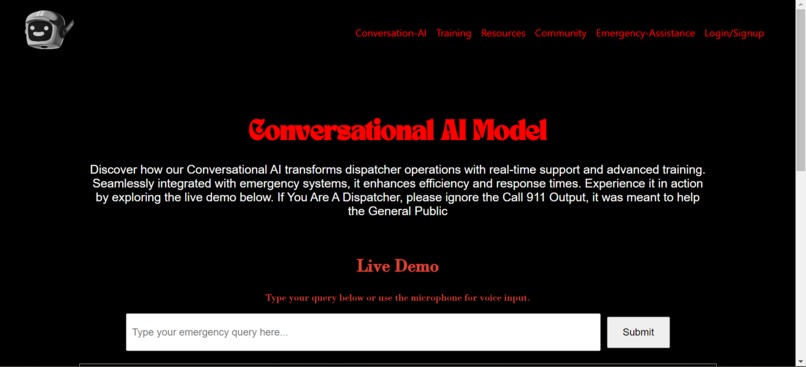
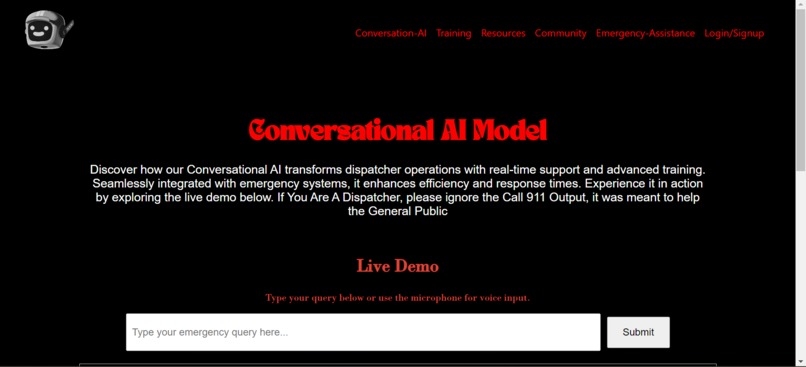
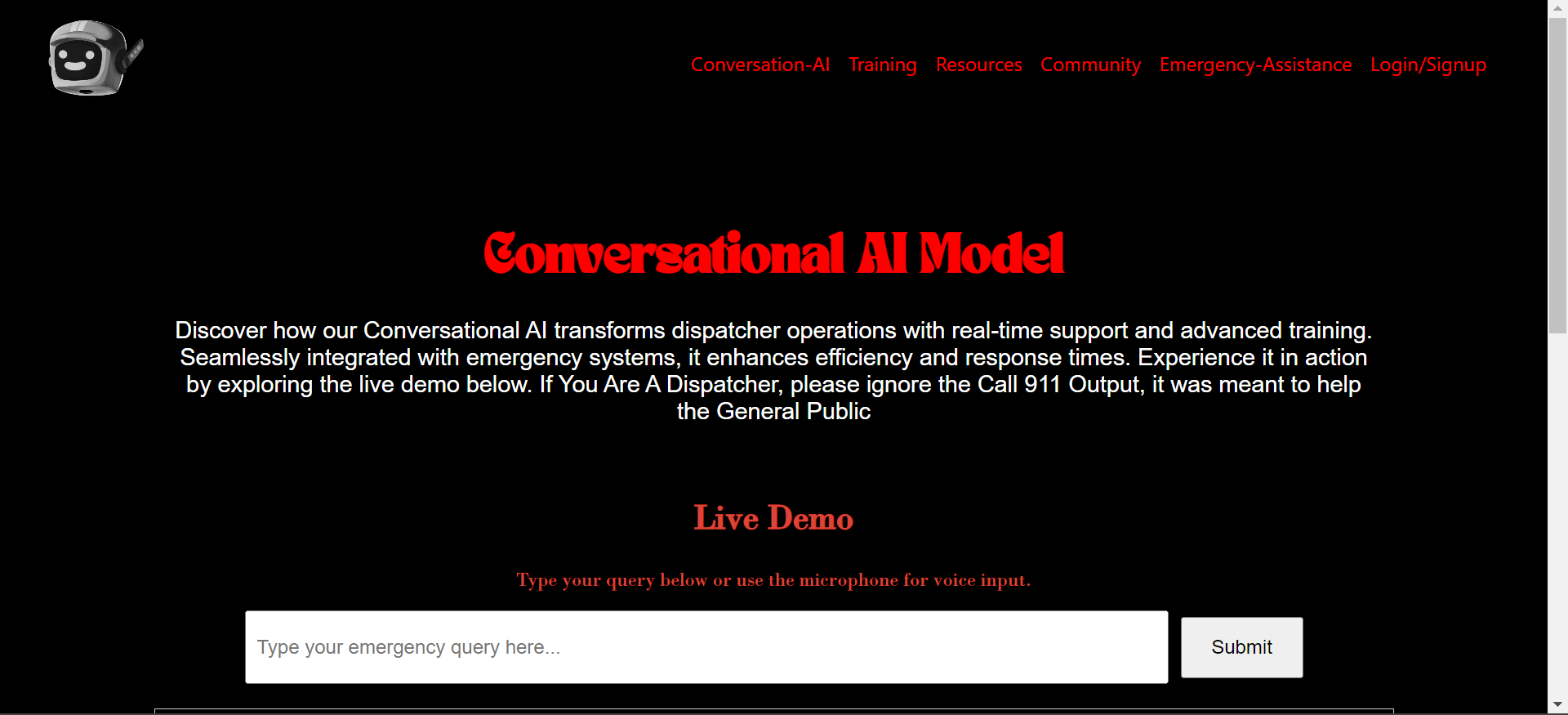
The important AI model Page
-
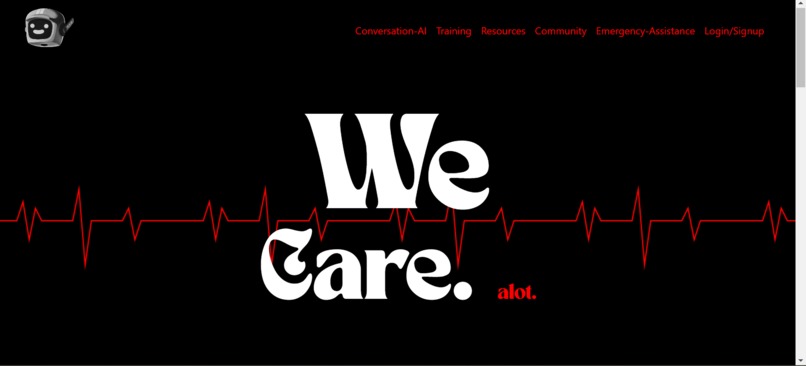
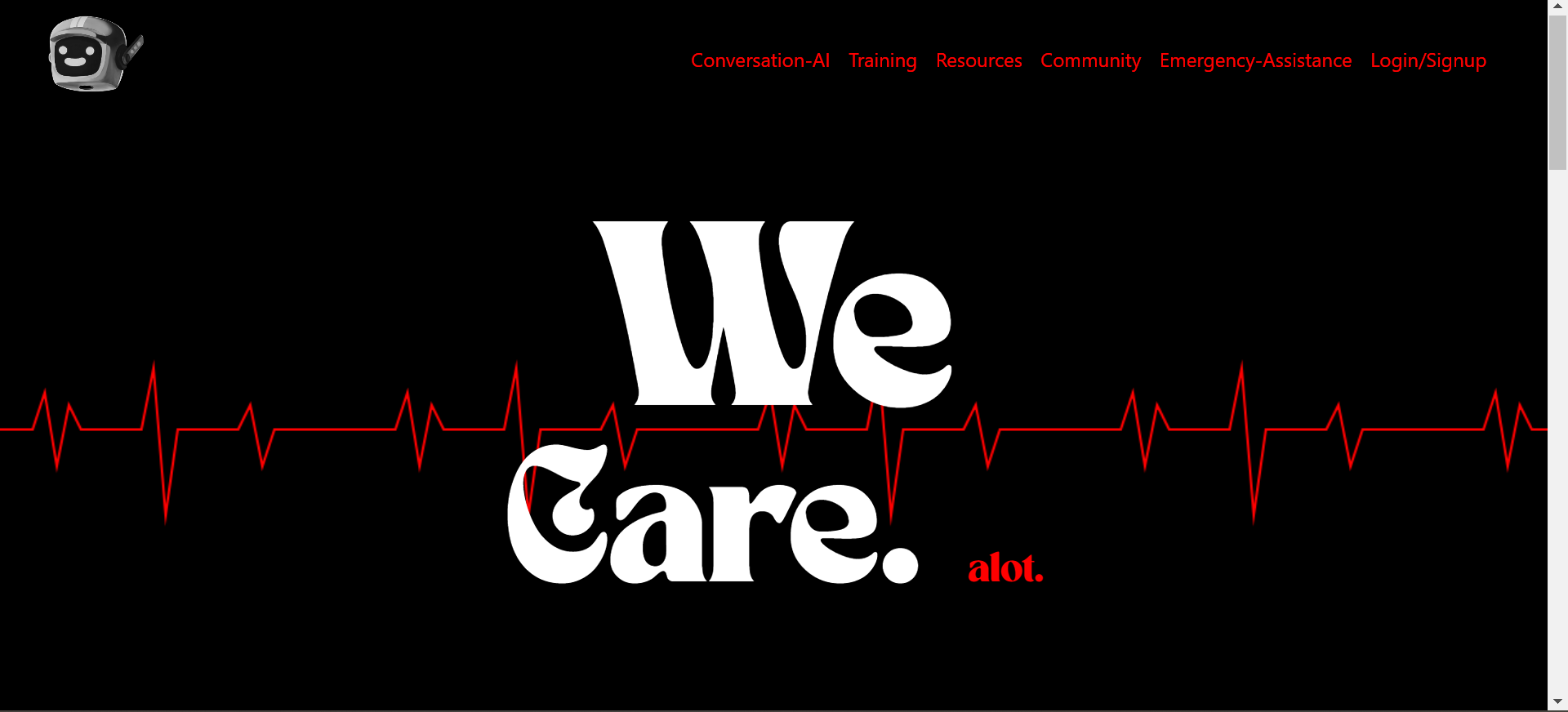
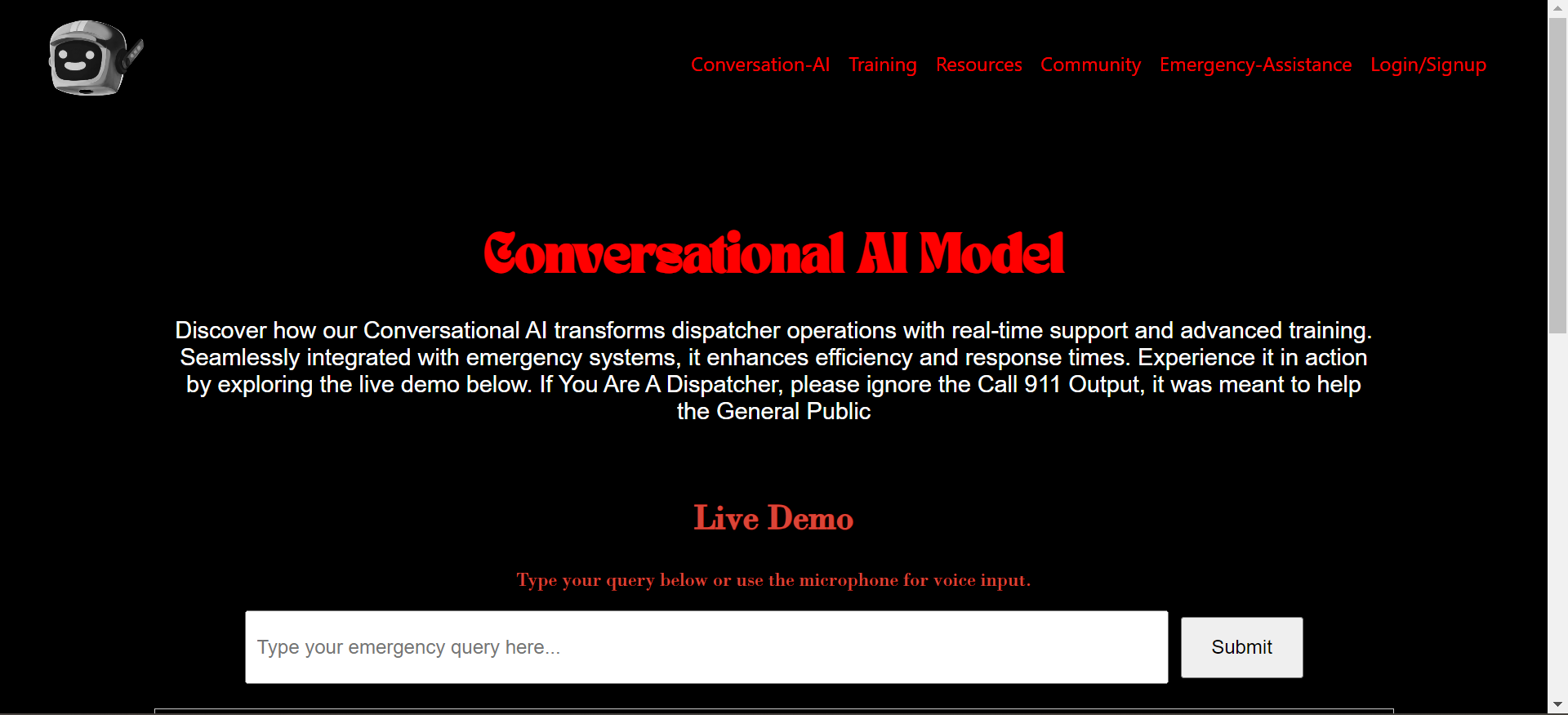
HOME PAGE, WITH HERO SECTION and javascript coded ECG line
-
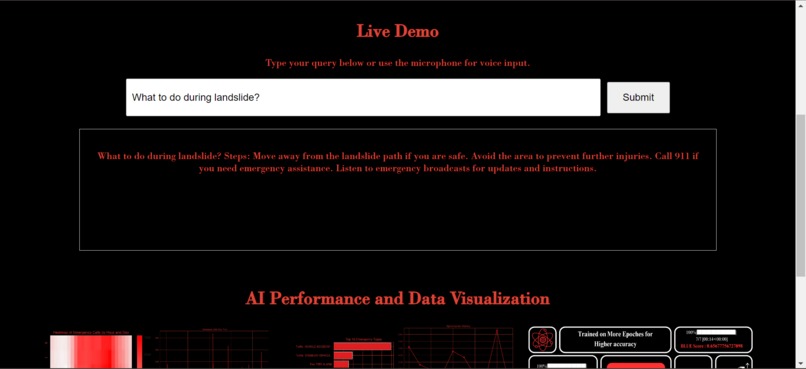
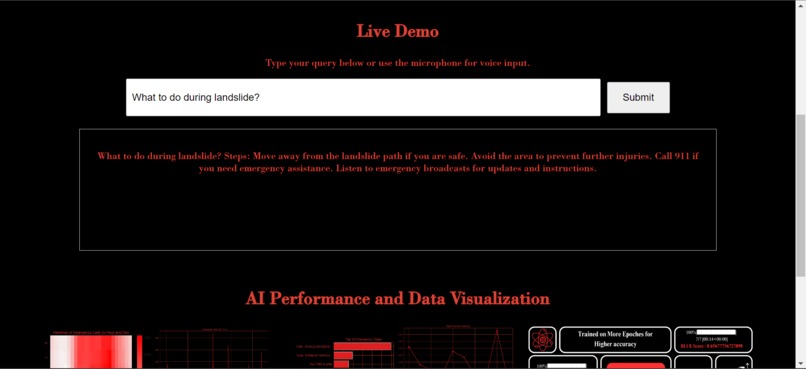
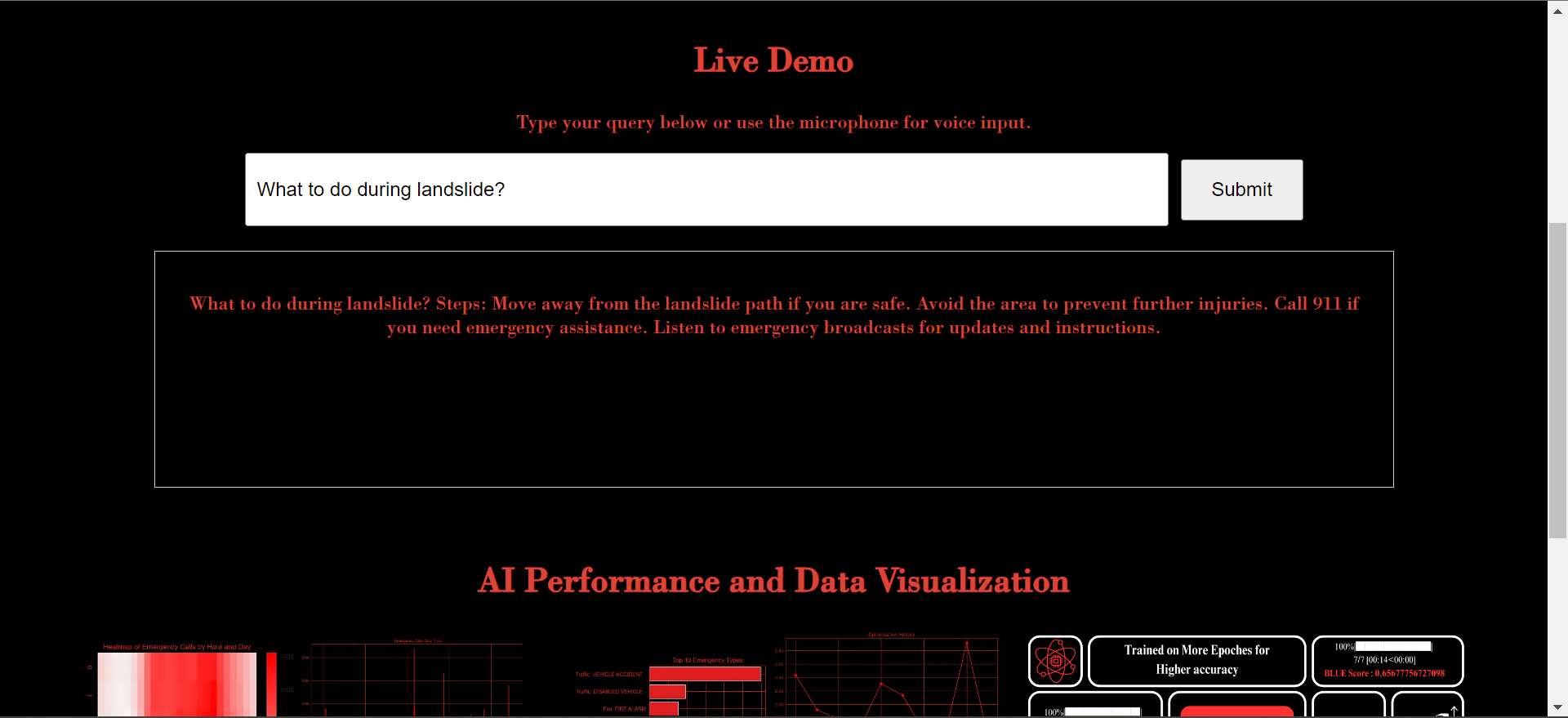
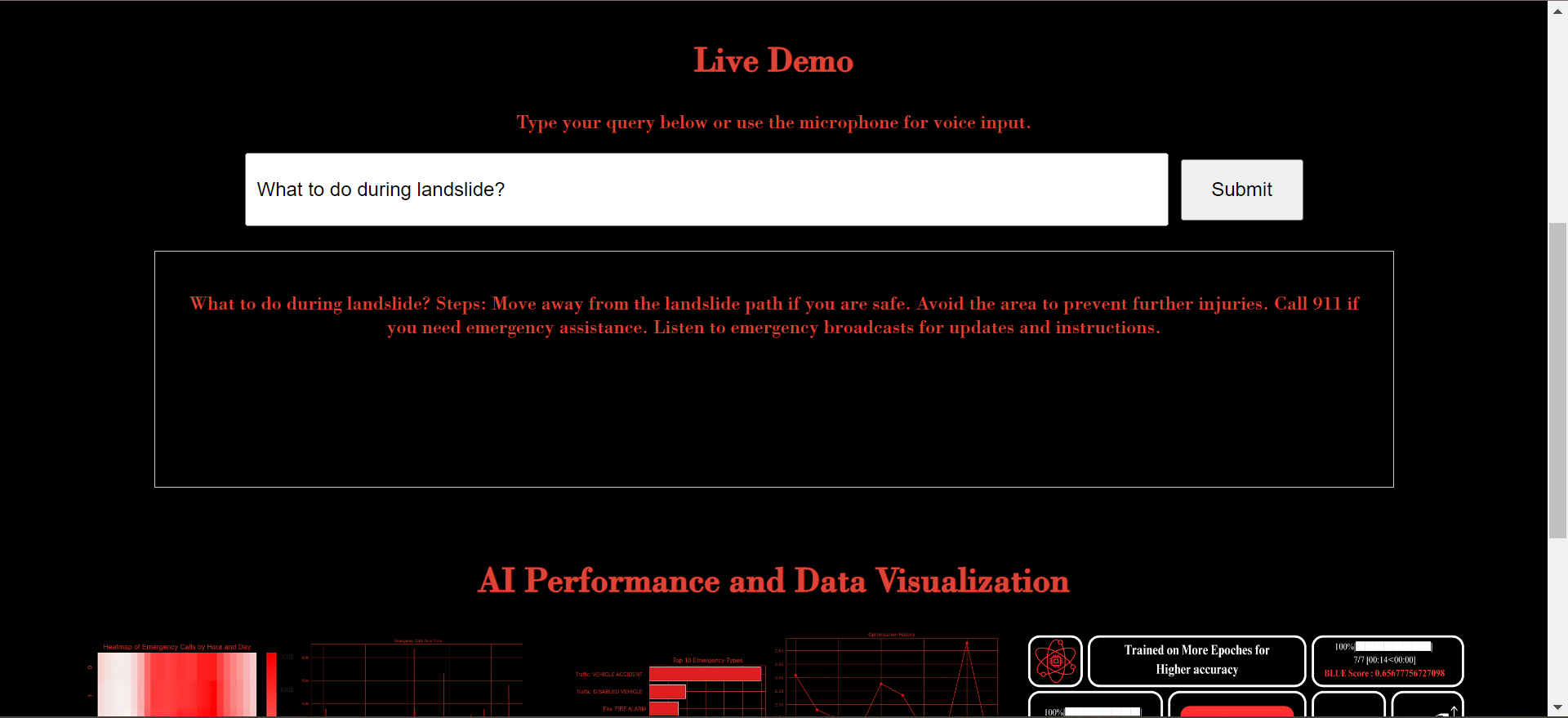
The Most Important Part of the Website, The AI model working and giving Output as Visible
-
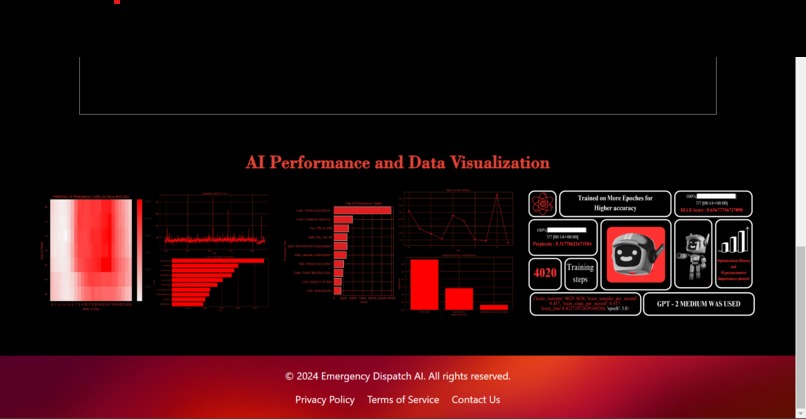
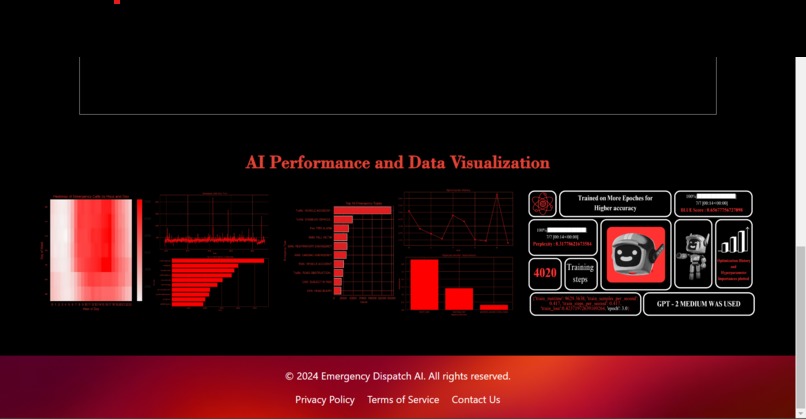
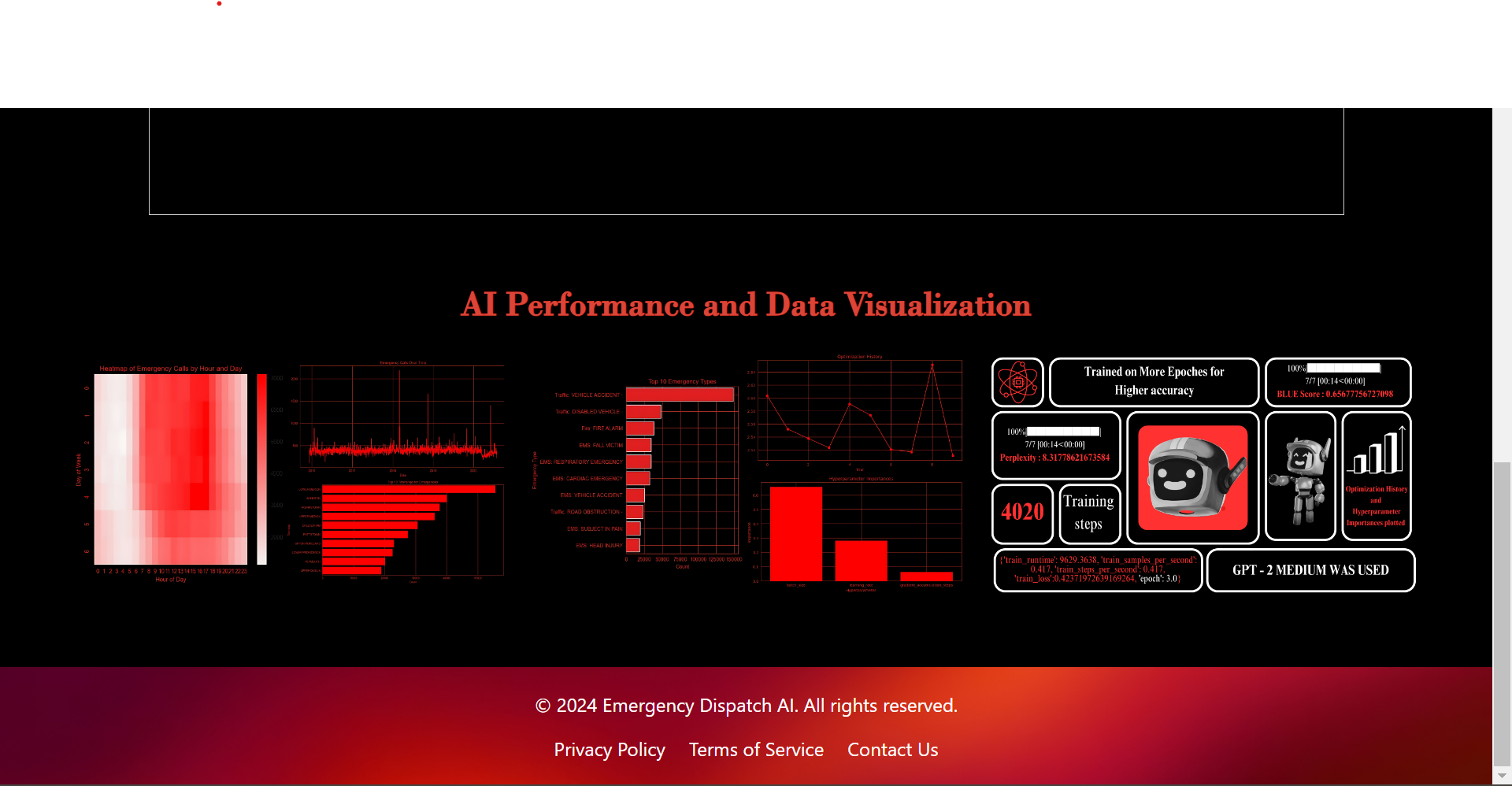
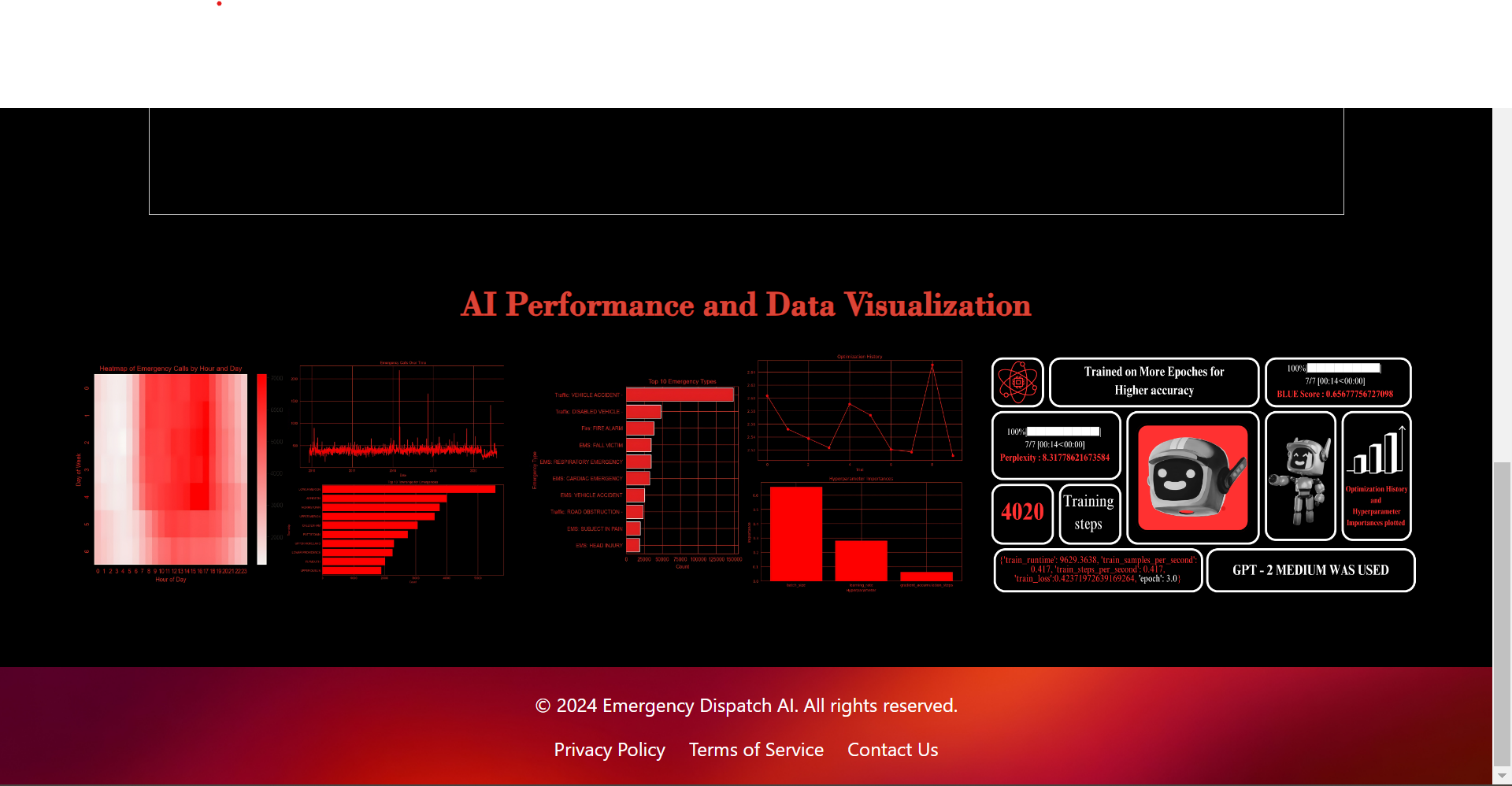
The AI model was really hard to make and this is the Visualization of the model's accuracy and dataset (including heat maps)
-
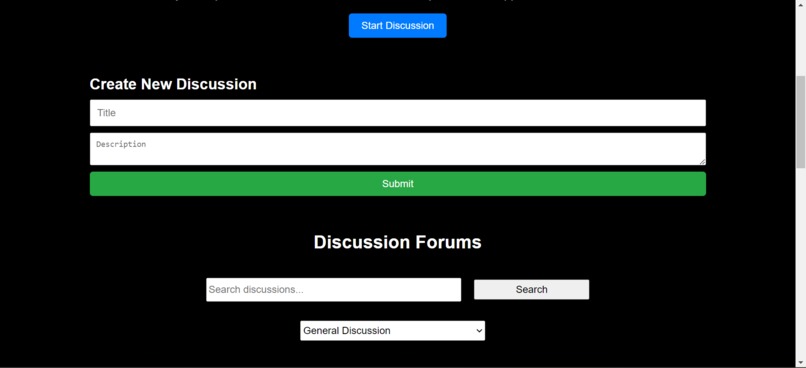
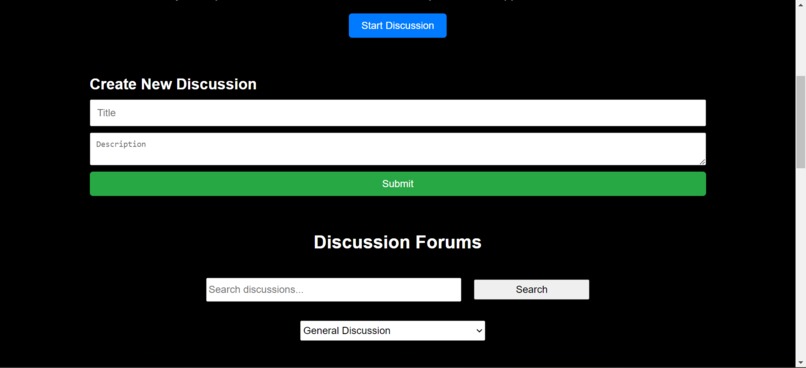
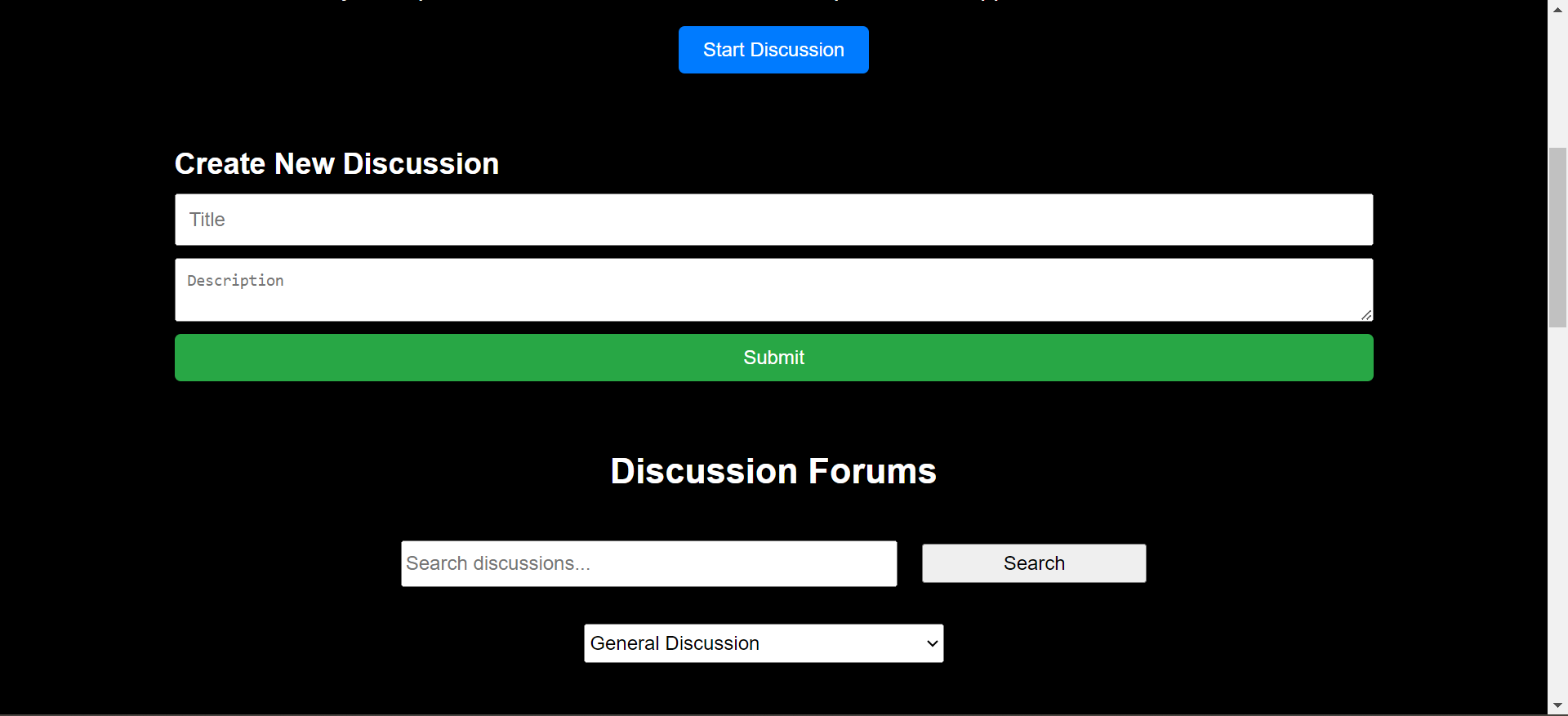
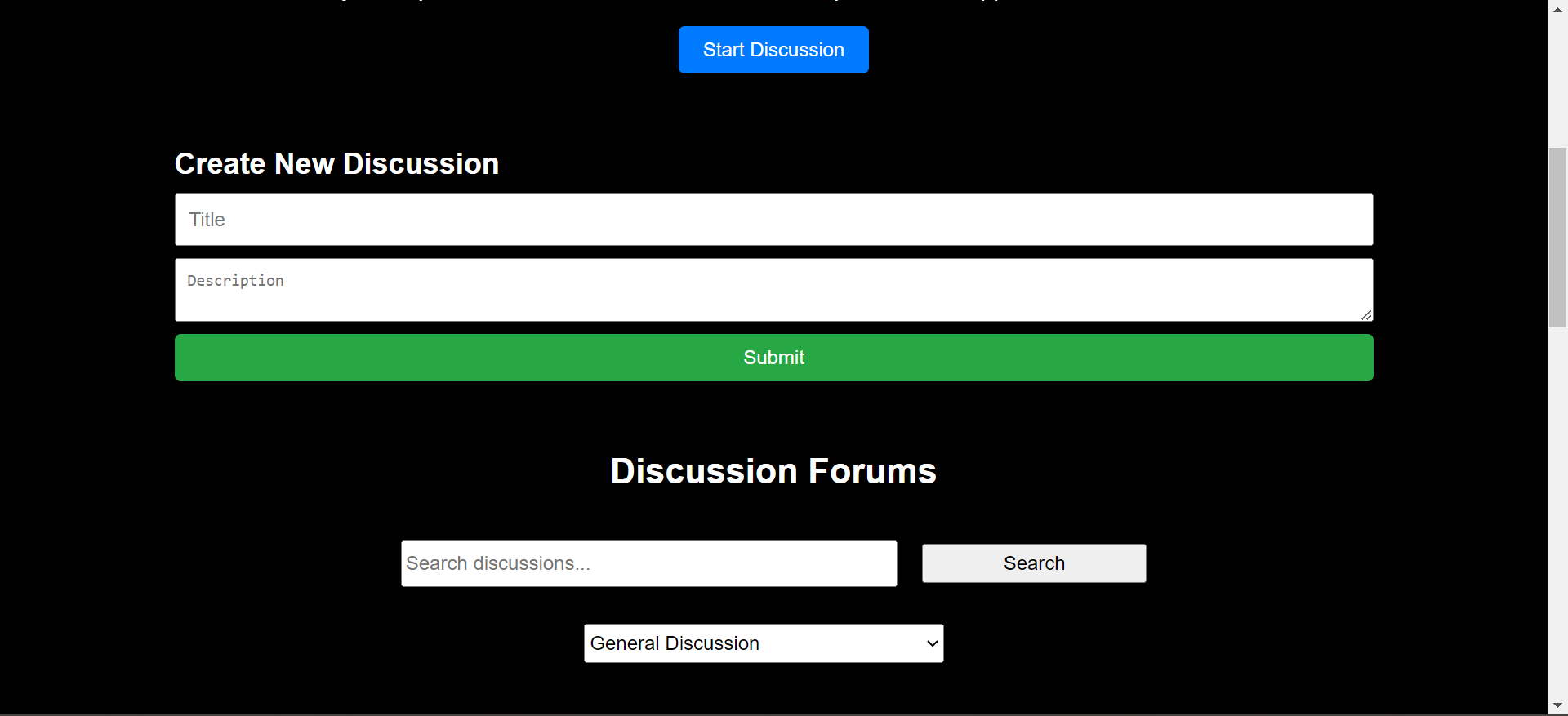
Upon clicking Community Hub's start discussion button, this box pops up allowing you to create Discussions
-
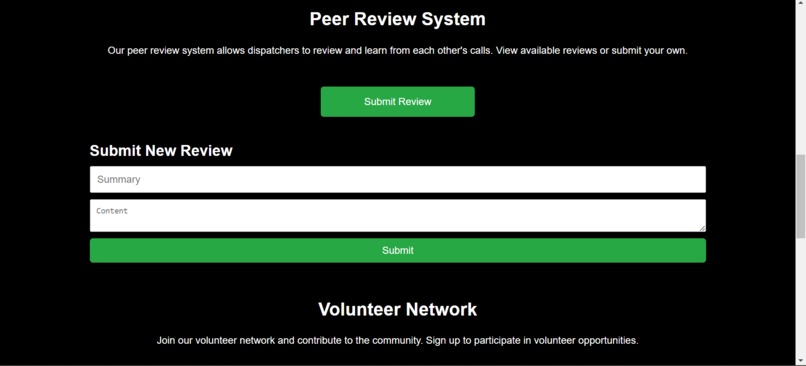
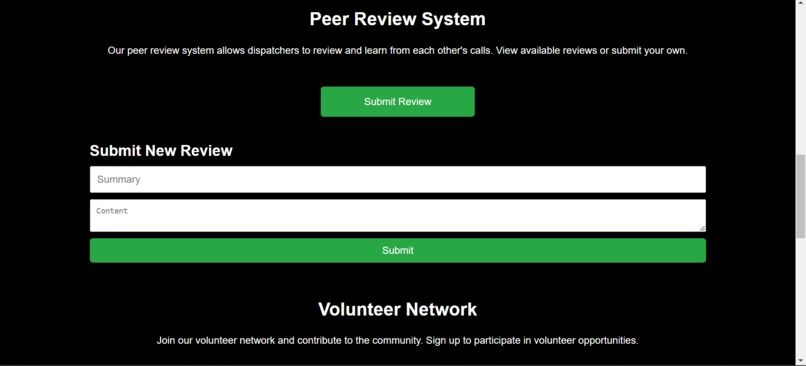
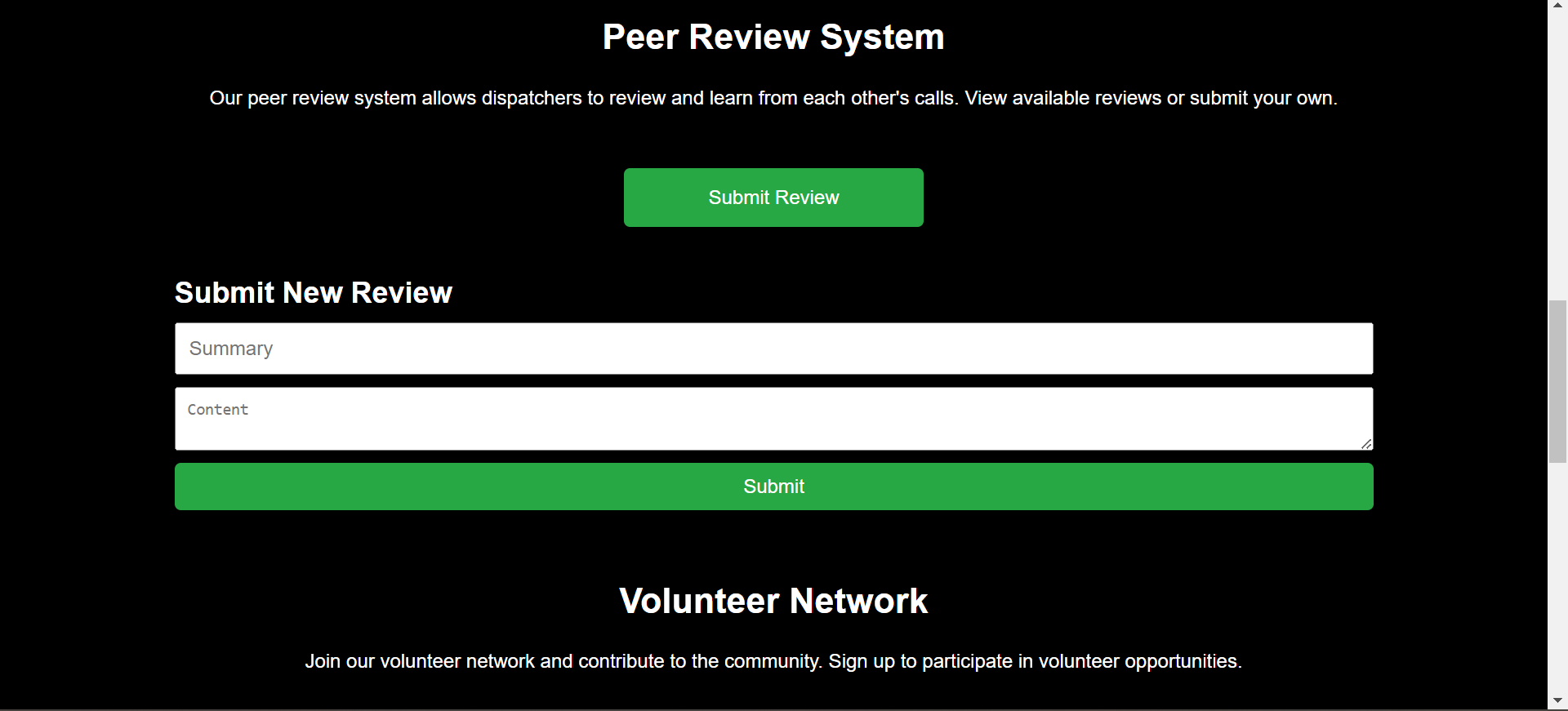
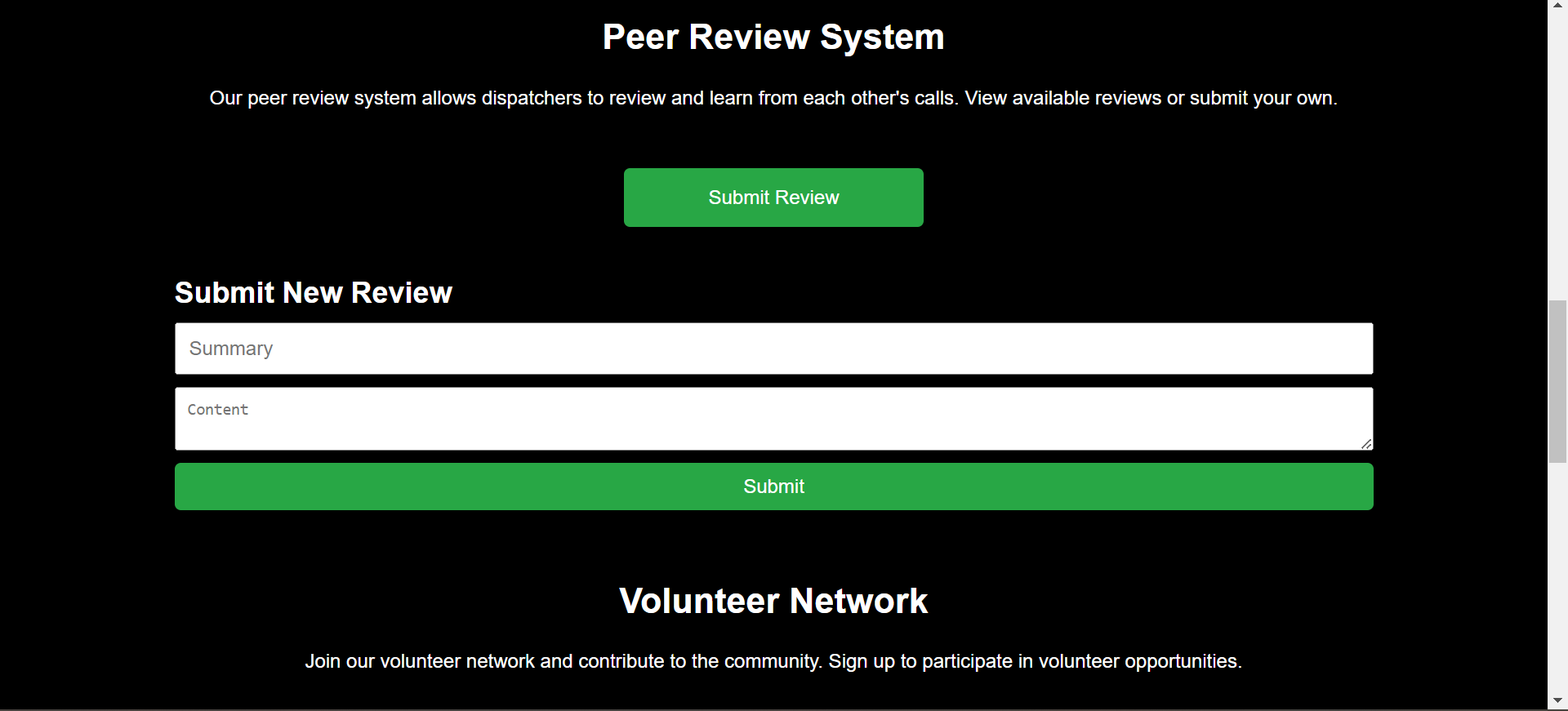
Upon clicking Community Hub's submit review button, this box pops up allowing a dispatcher to create review of calls and situation
-
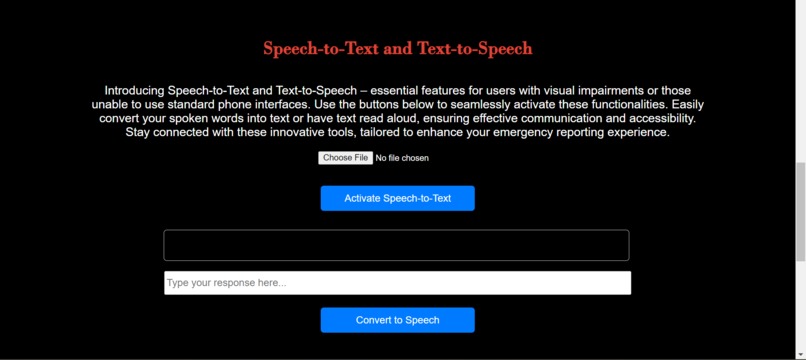
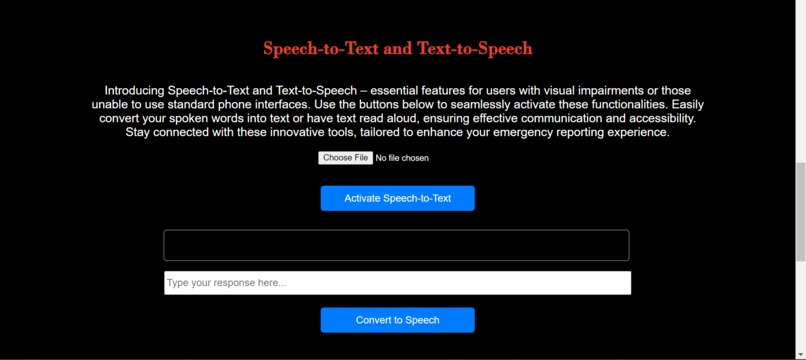
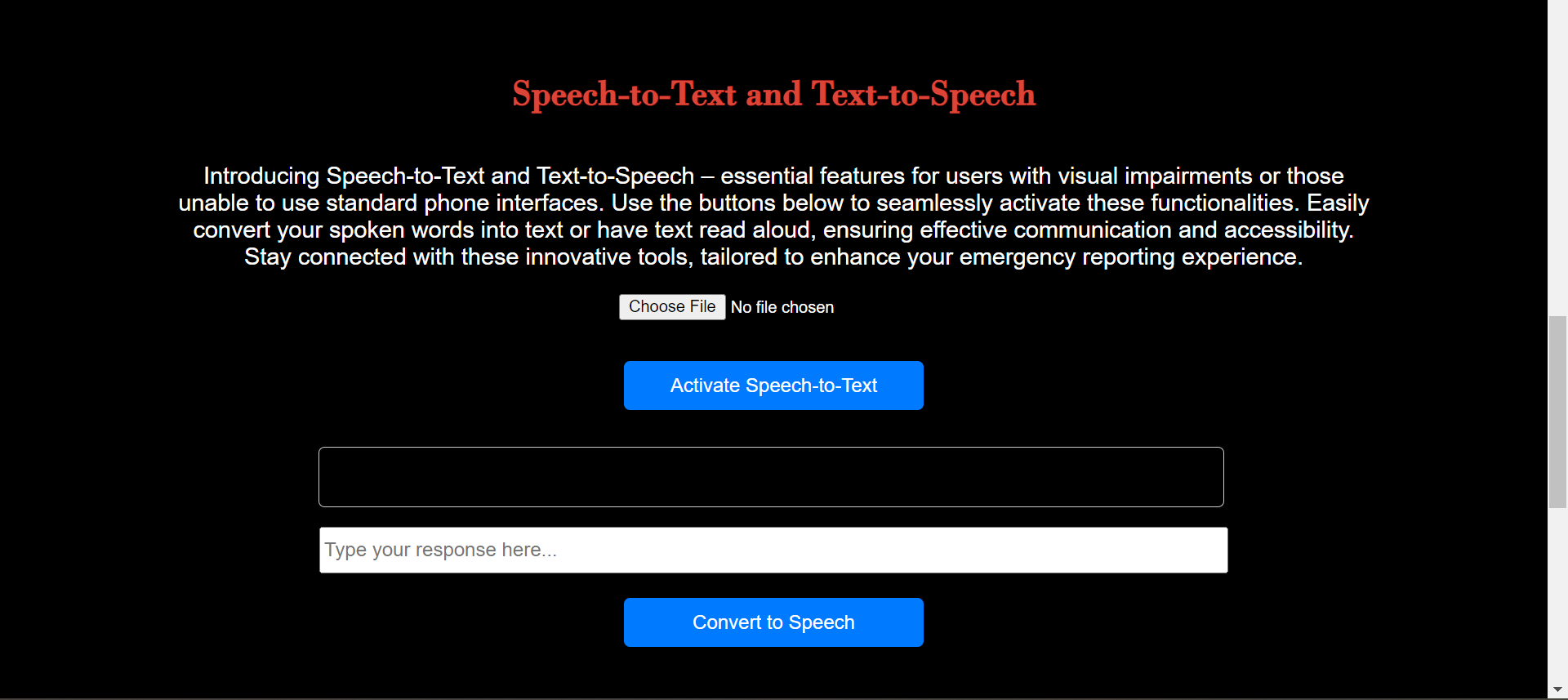
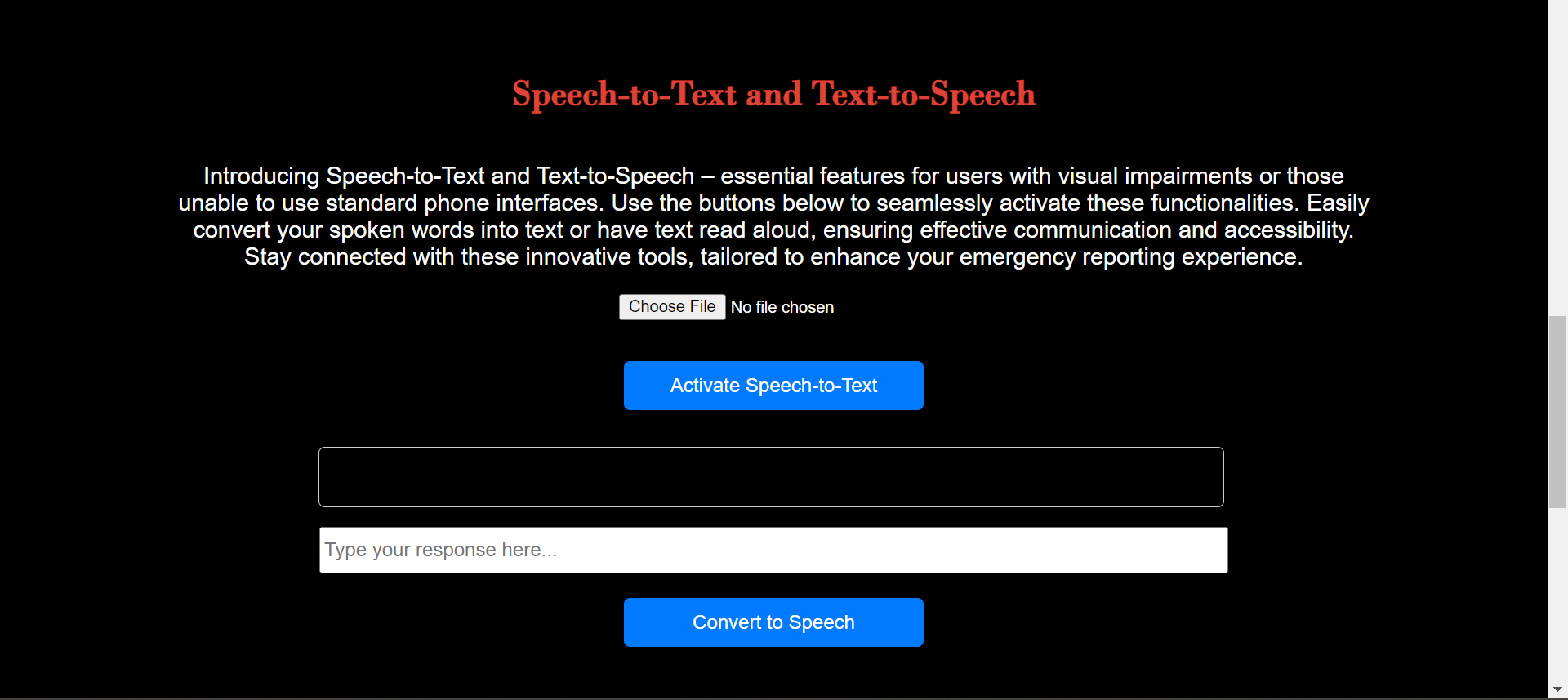
Speech-to-Text (using Festival Open source model) and Text-to-Speech (Using deepspeech Open source Model)
-
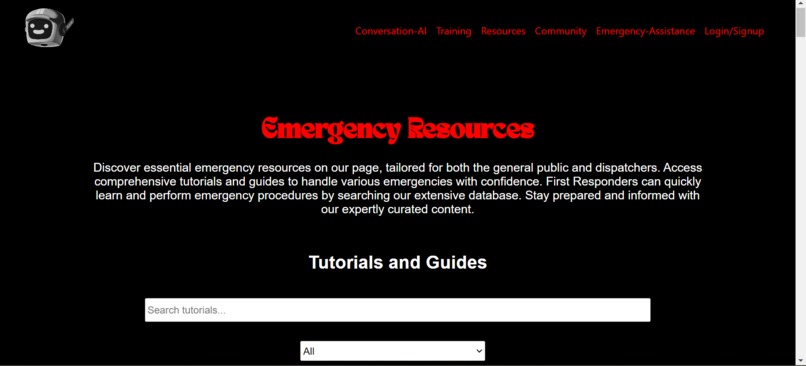
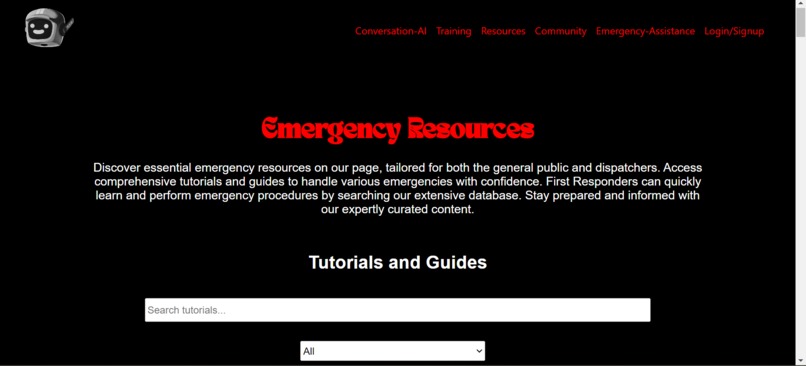
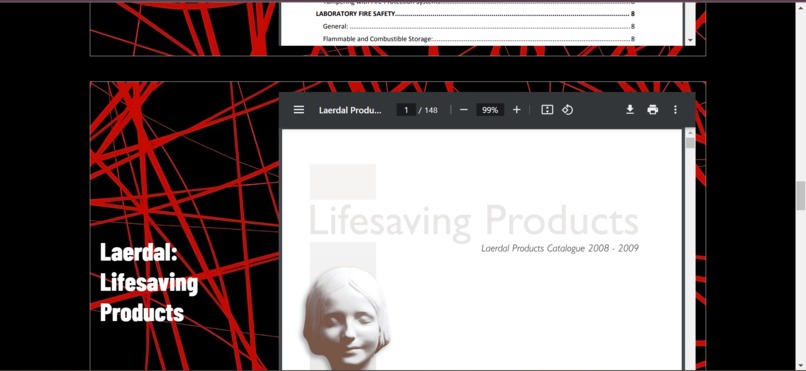
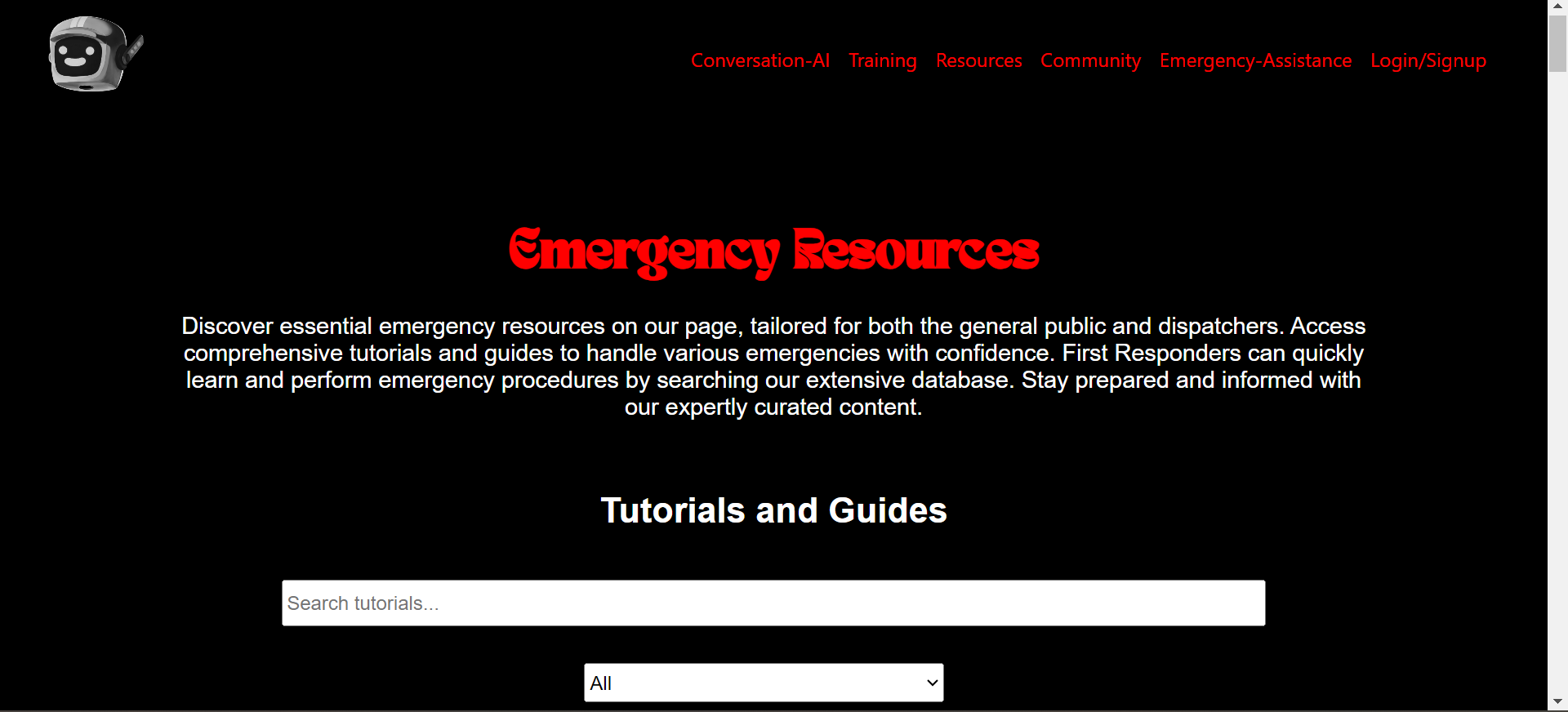
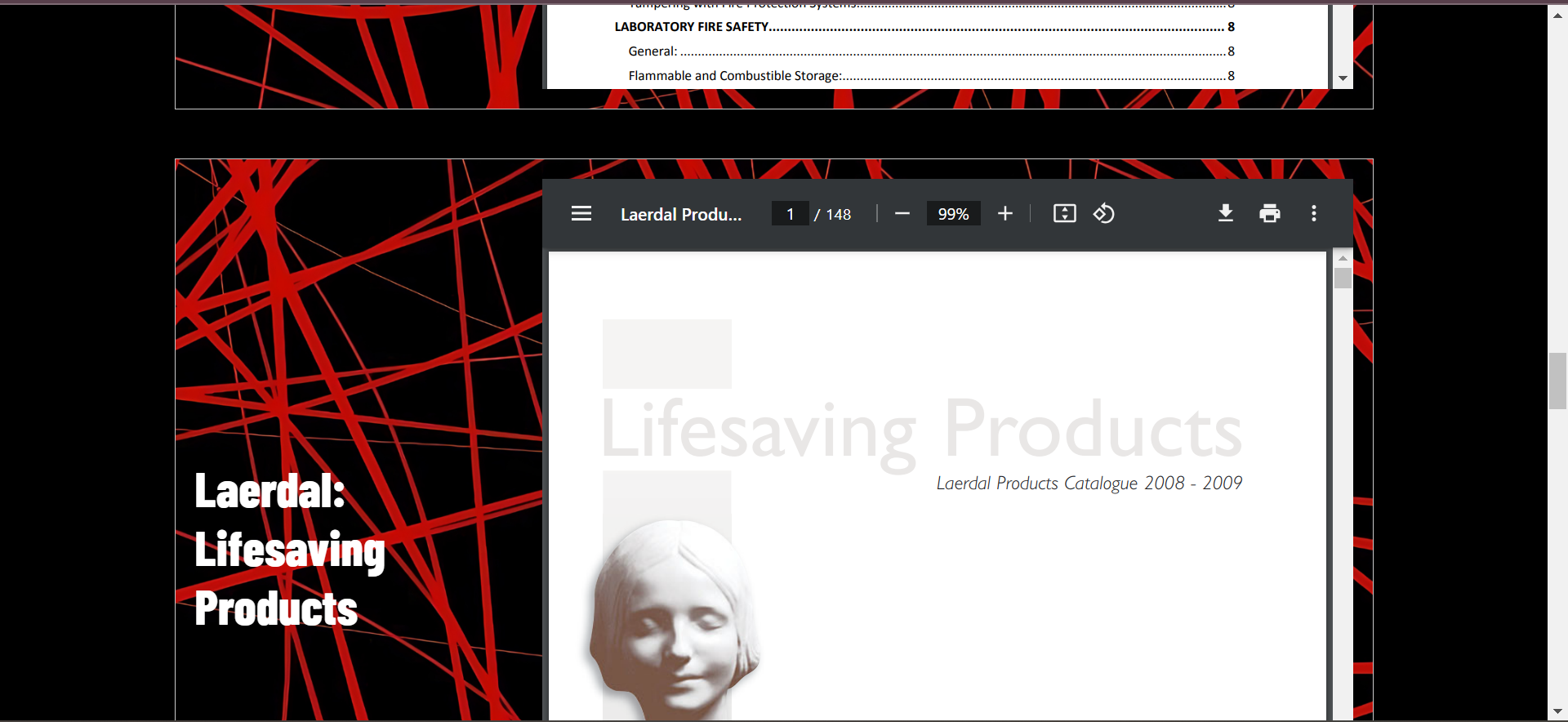
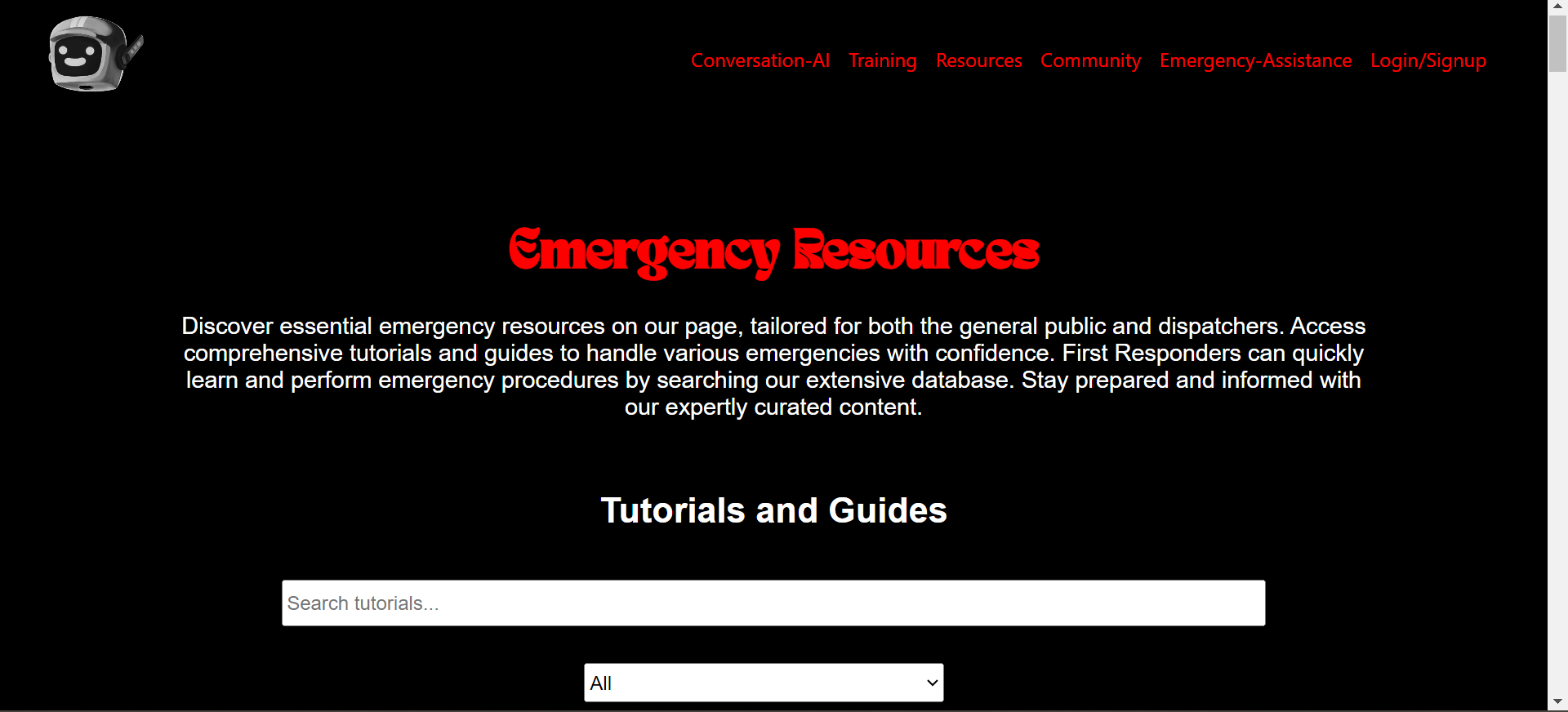
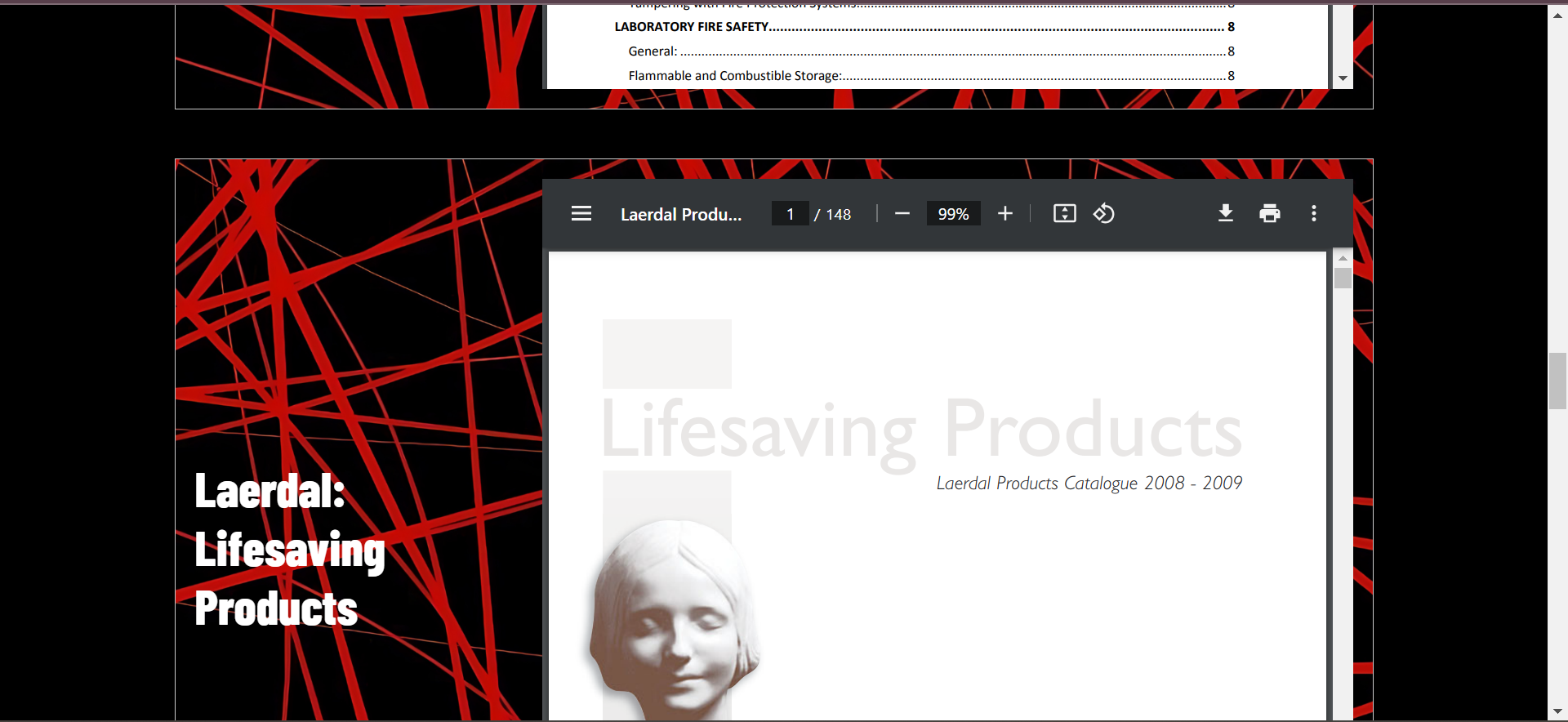
Emergency Resources Page where multiple Resources such as protocol pdf, videos and articles are there for people's help
-
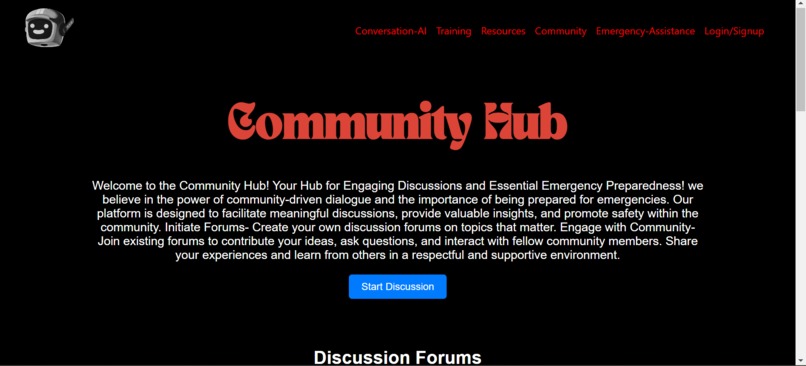
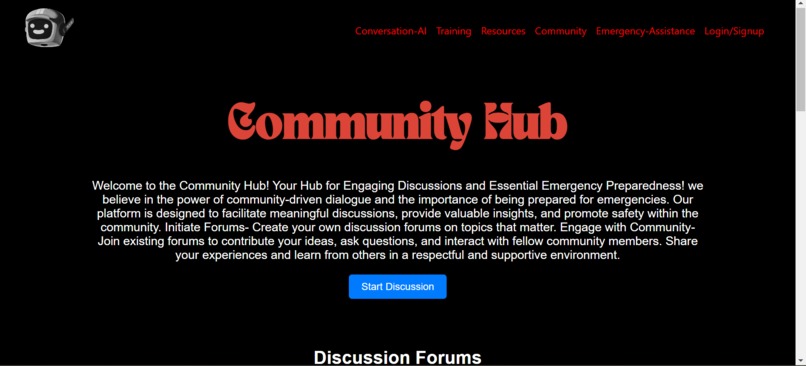
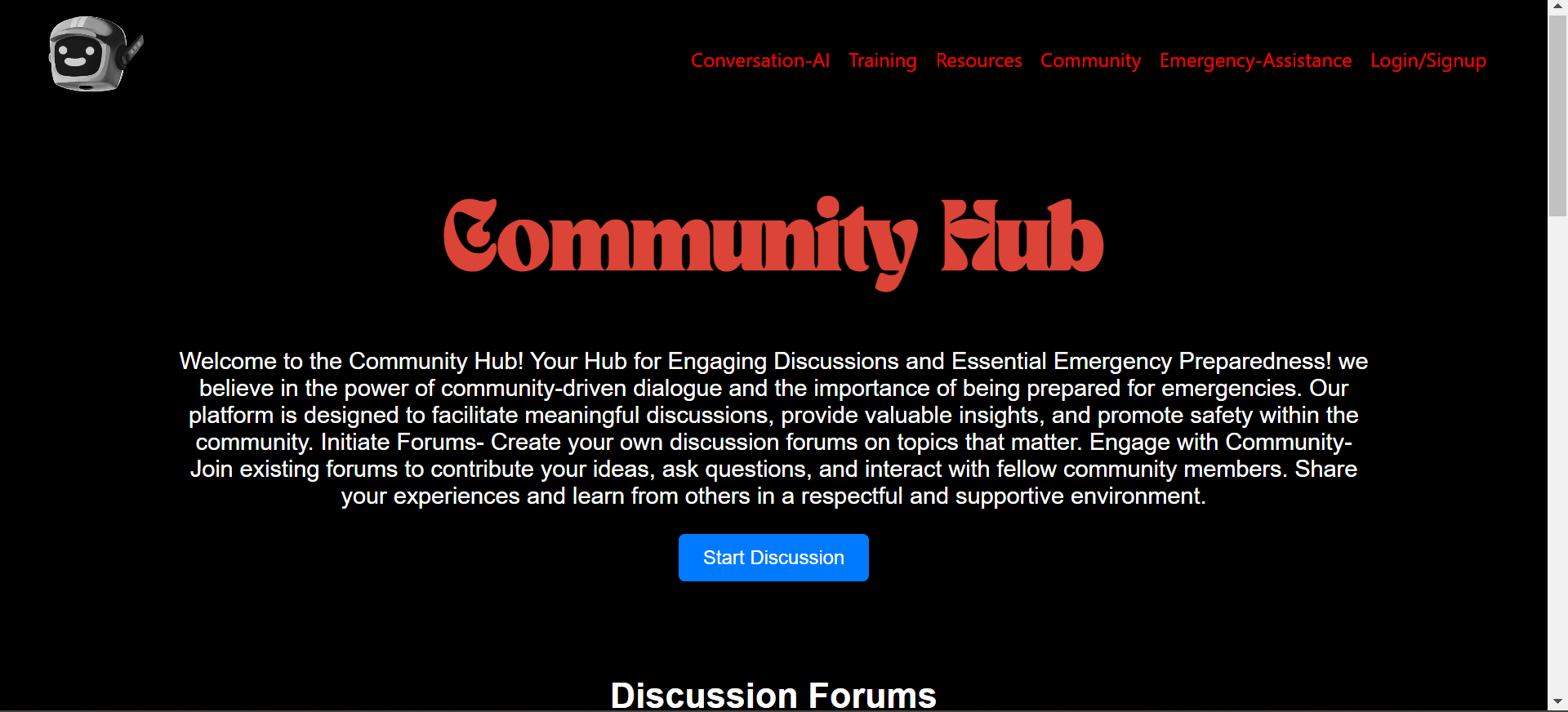
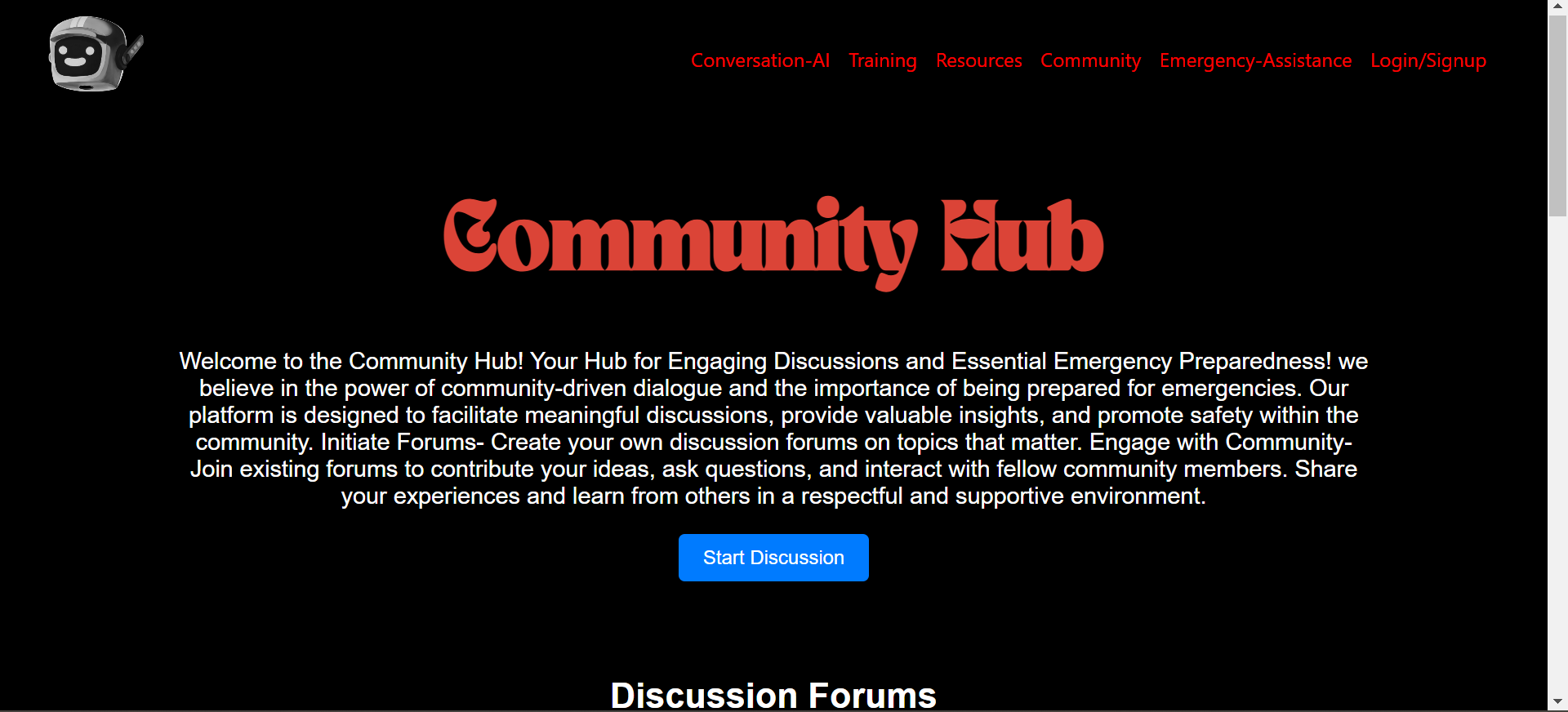
Community Hub page
-
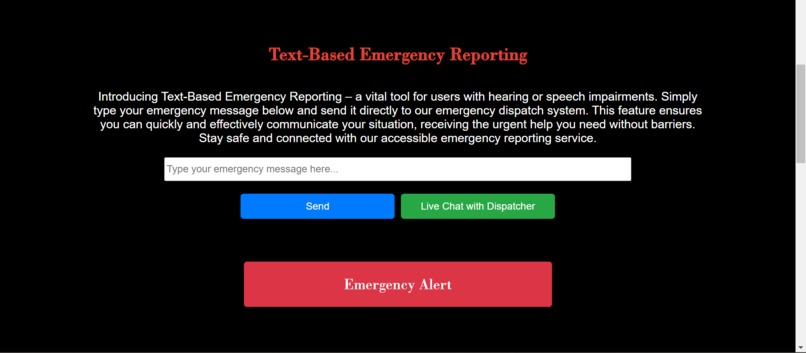
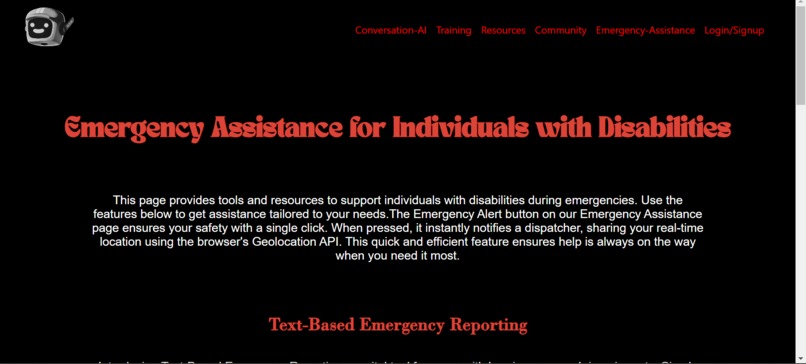
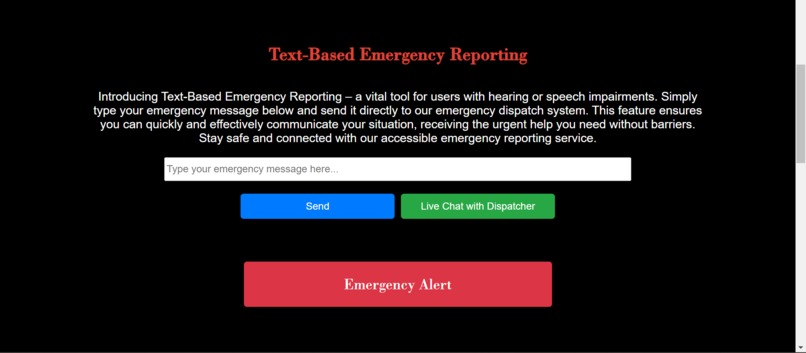
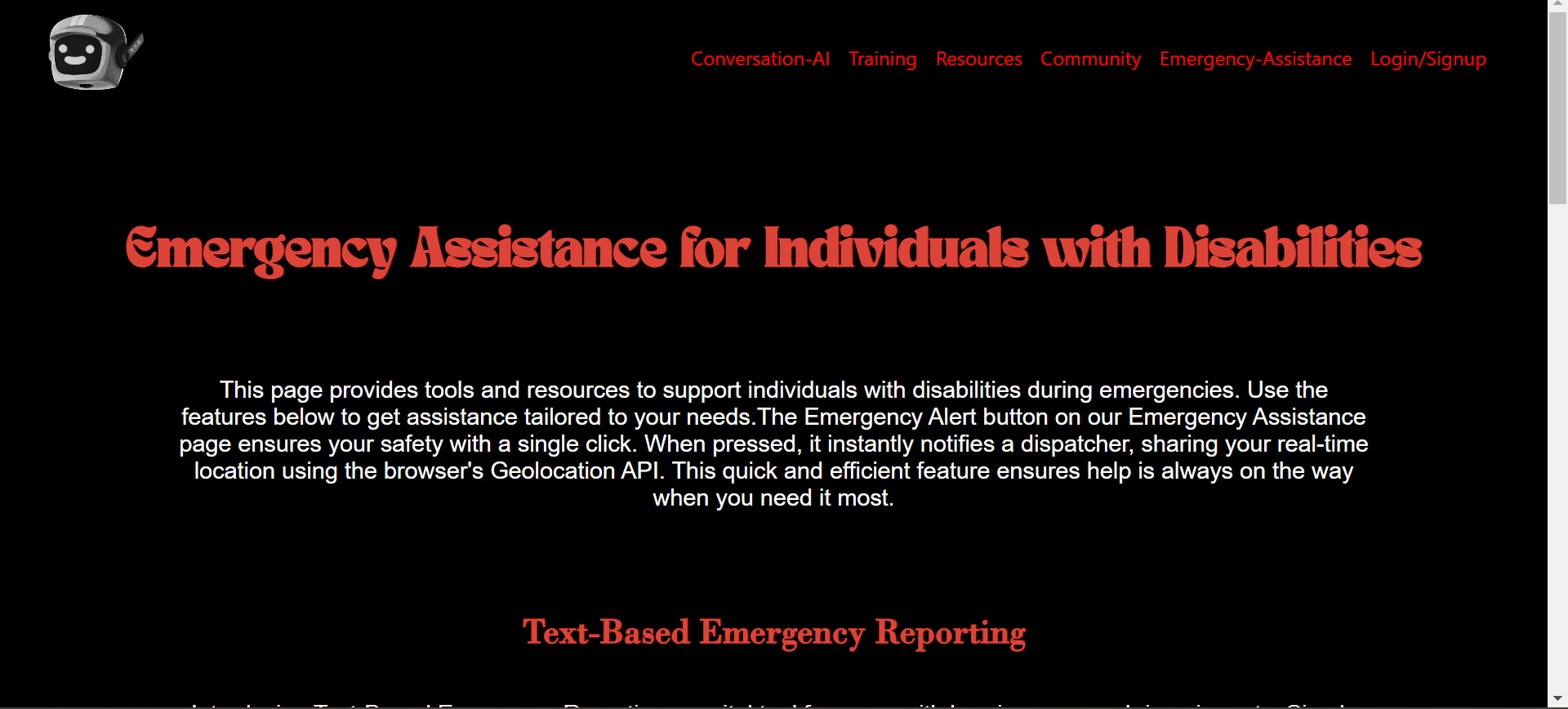
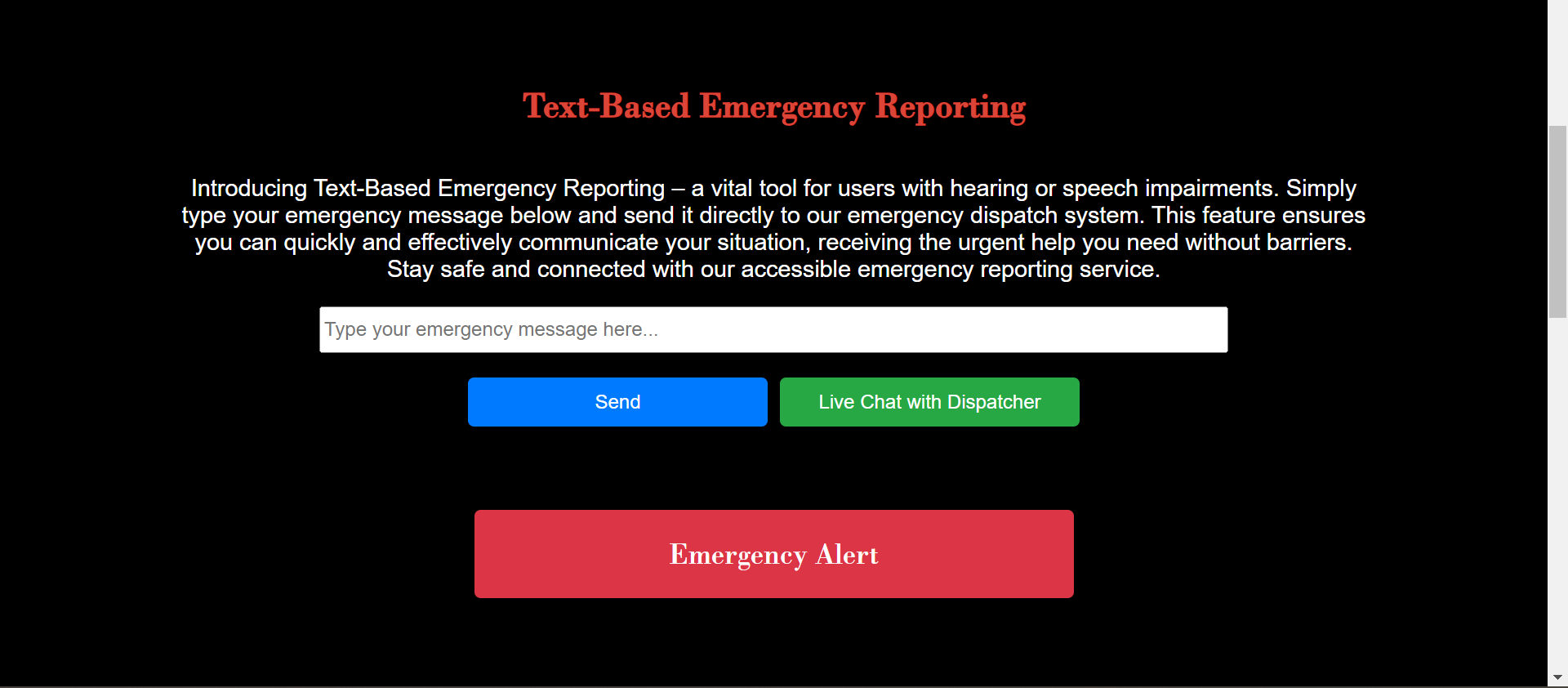
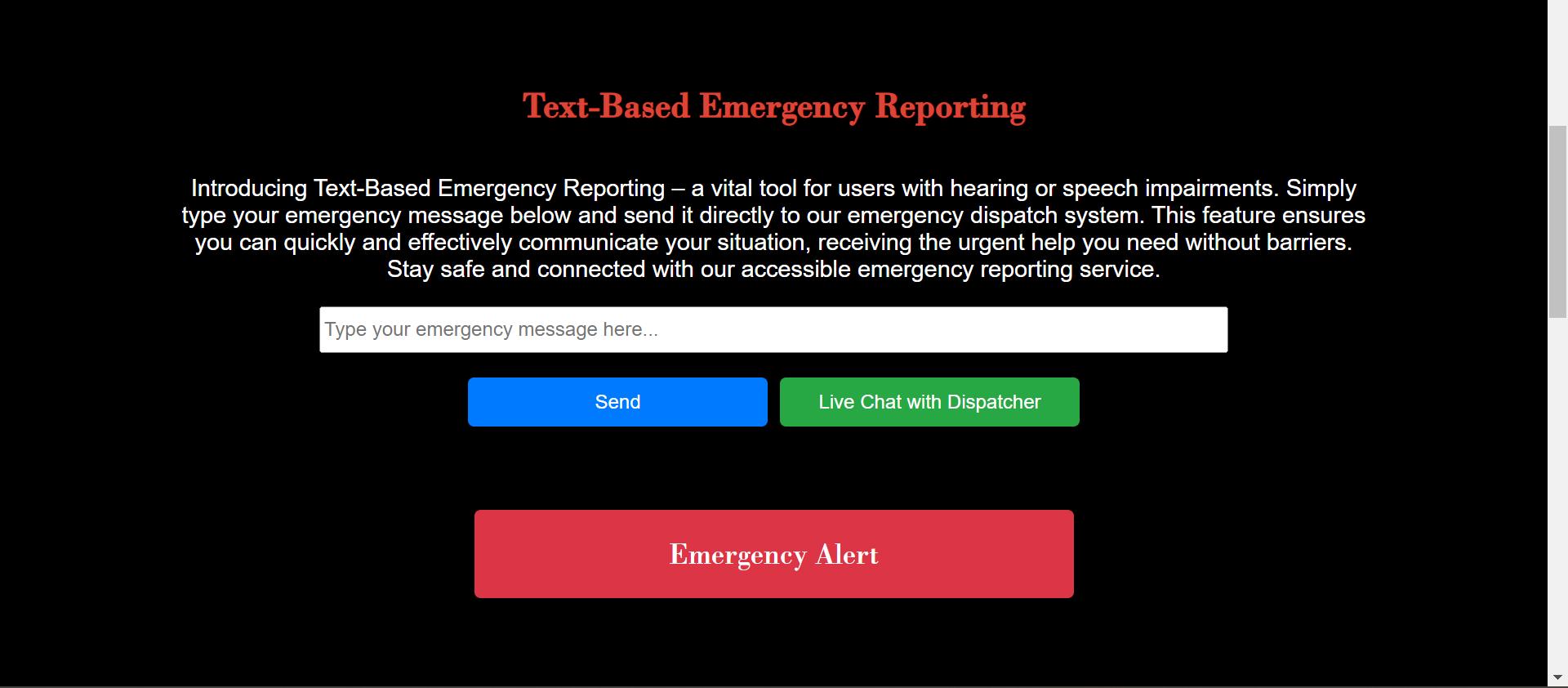
Text-Based Emergency Reporting Region, With the emergency button for one click Danger Message dispatcher and geolocation API used
-
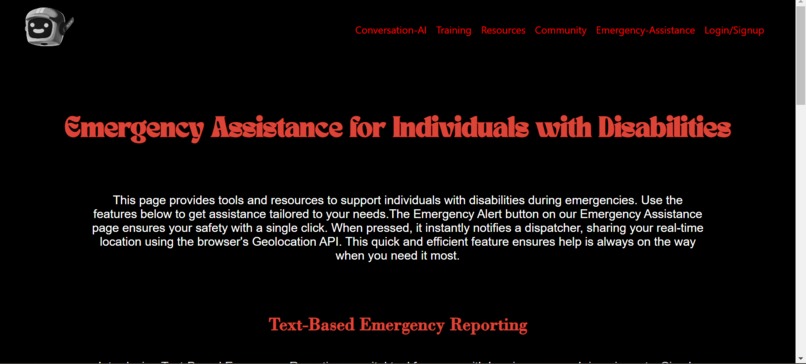
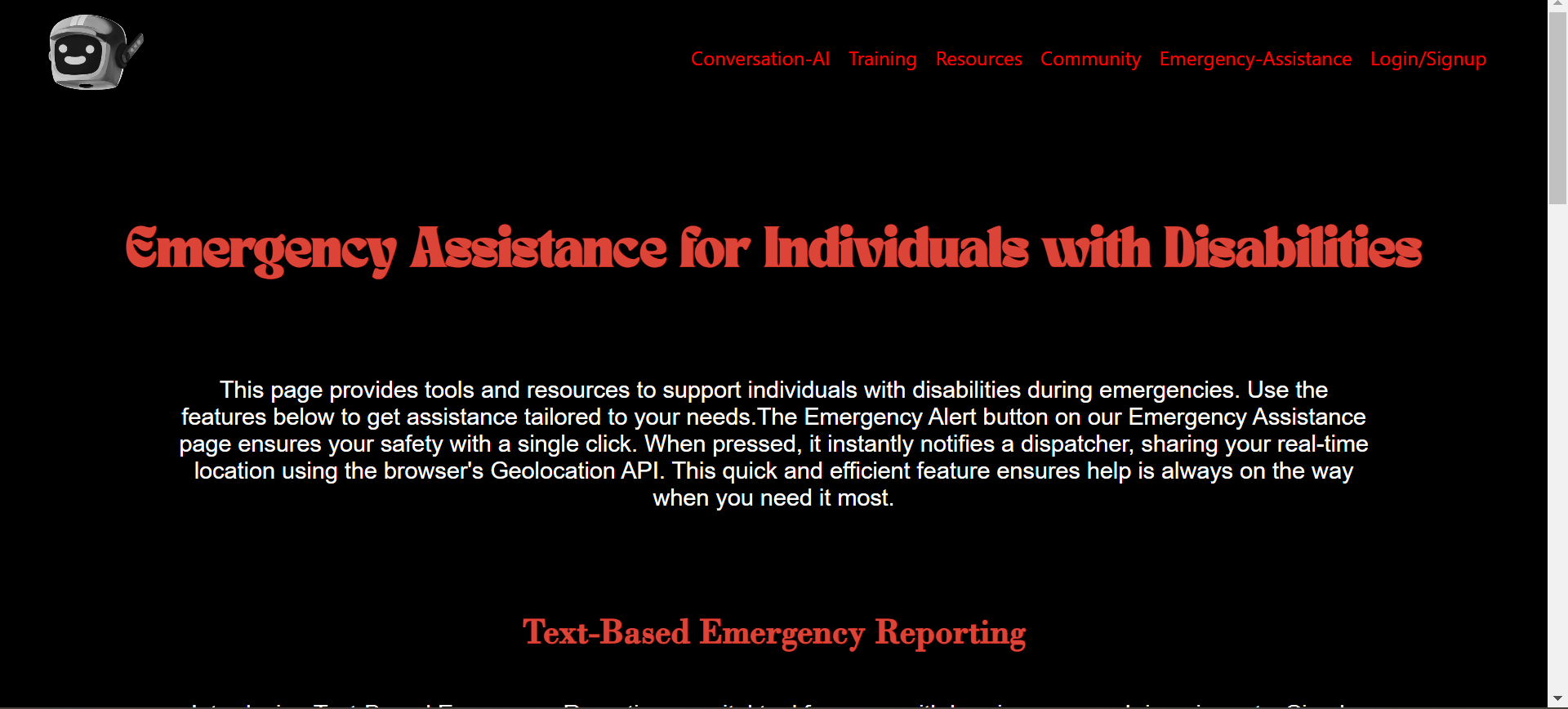
Emergency Assistance for Individuals with Disabilities PAGE (IMP)- To facilitate Help to those who are in NEED
-
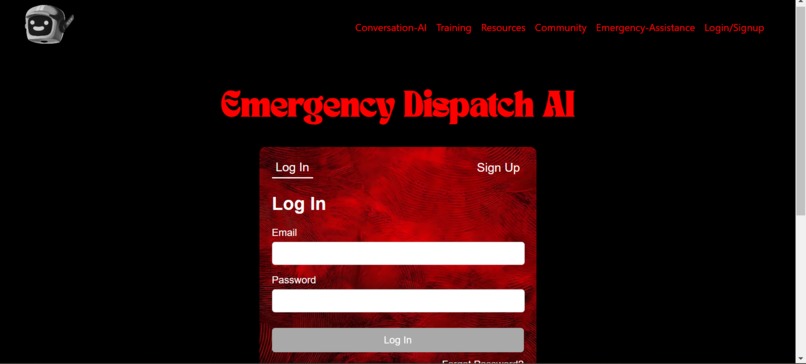
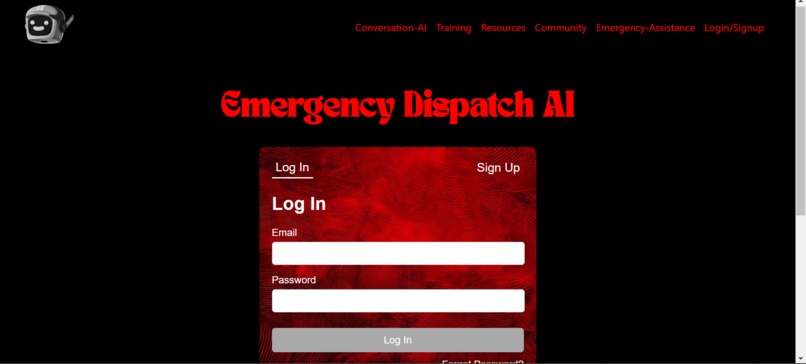
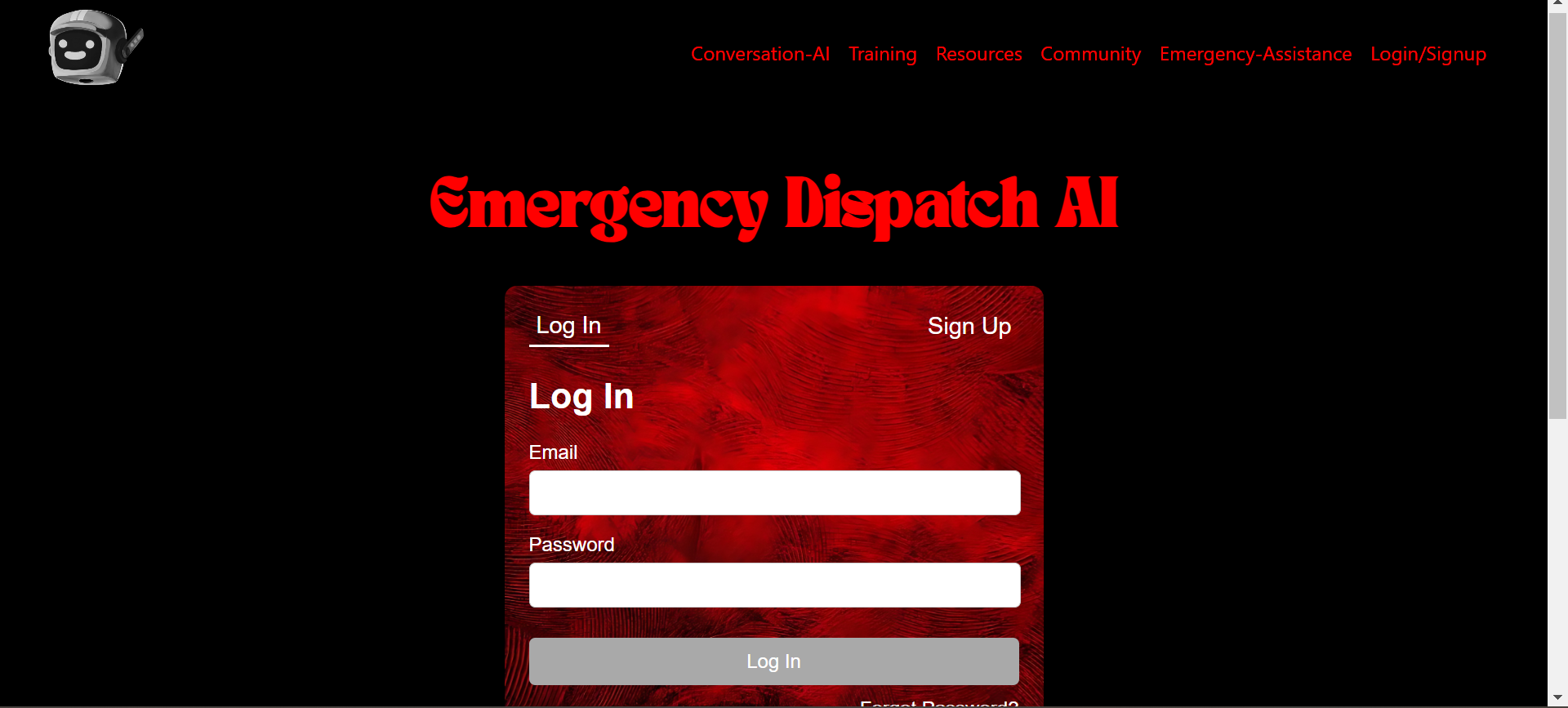
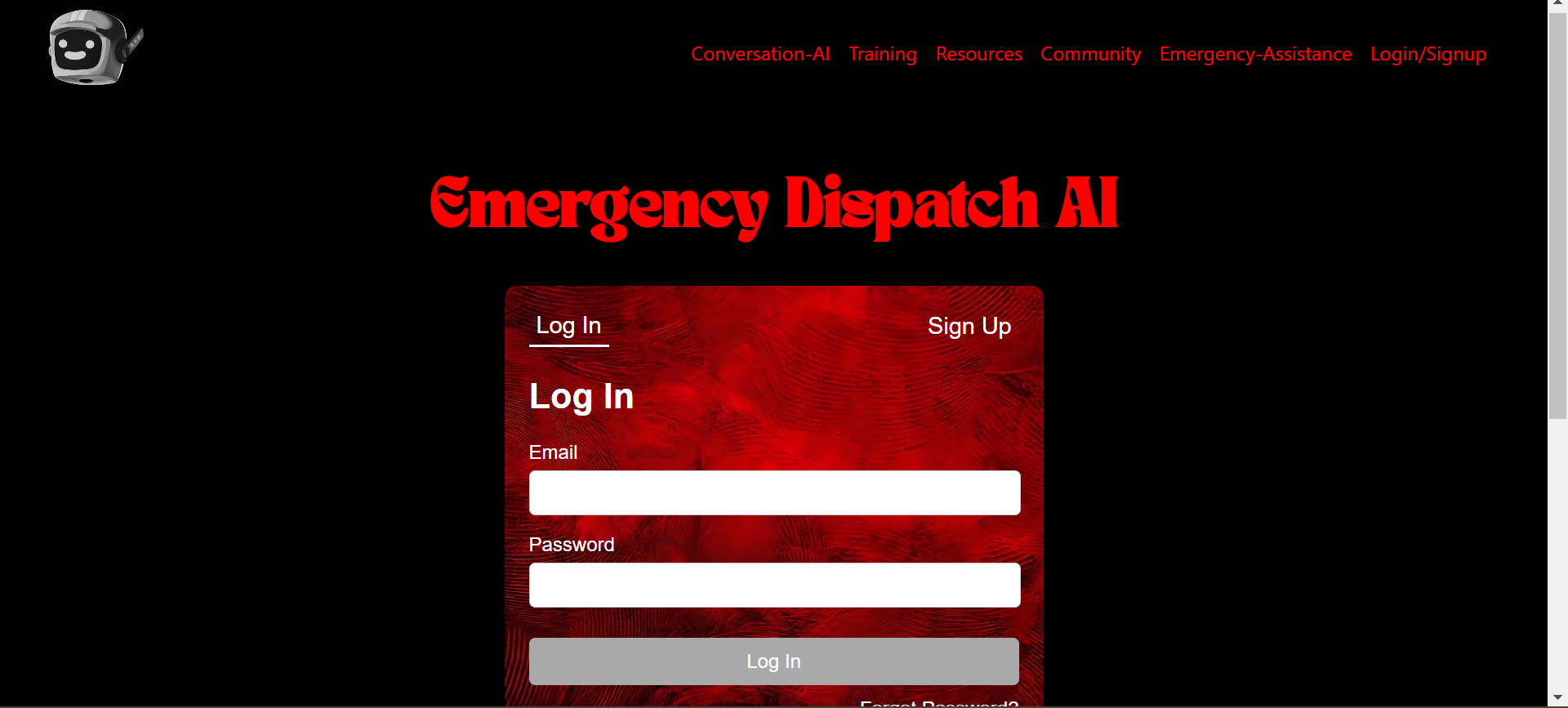
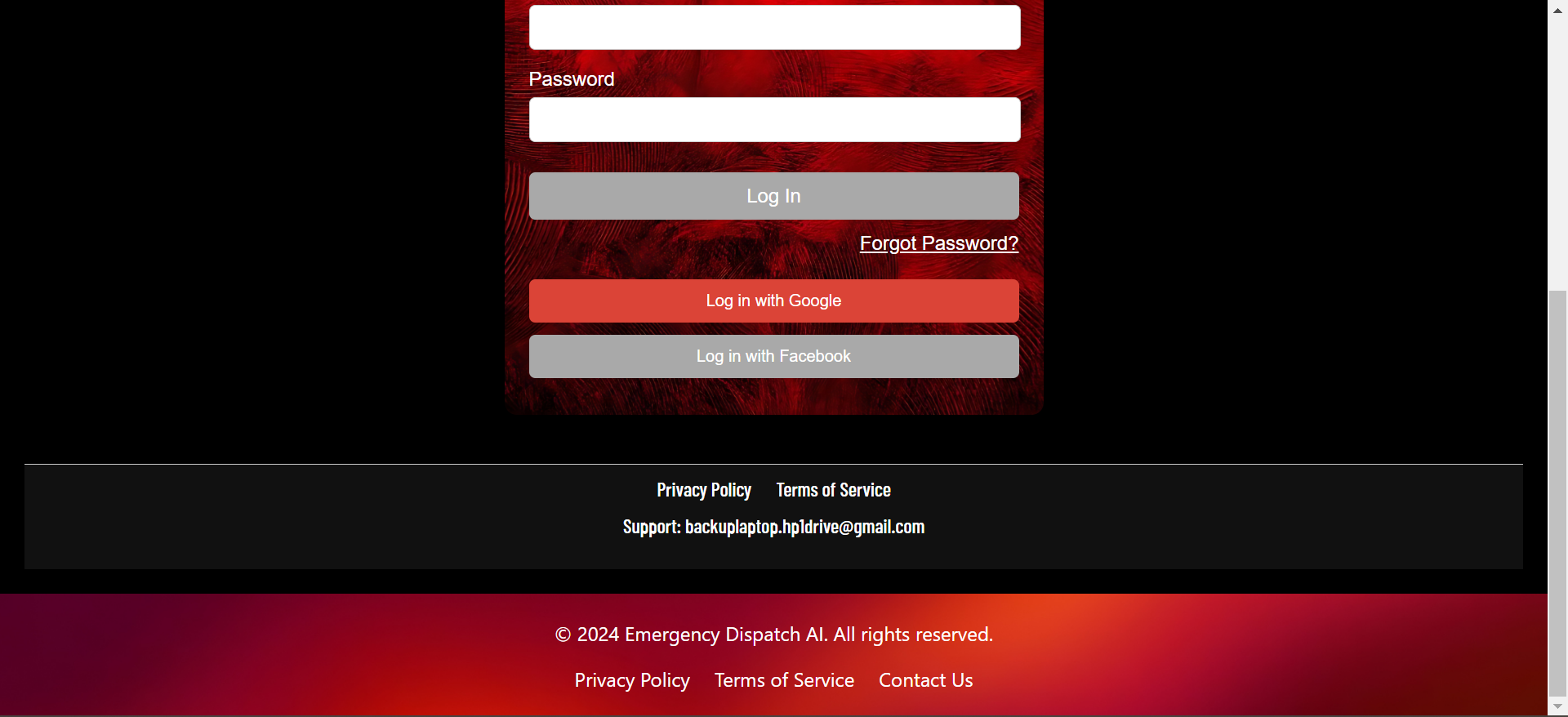
The login Page
-
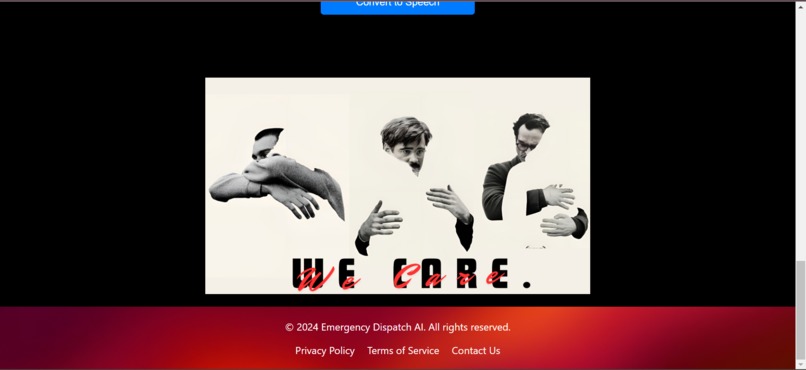
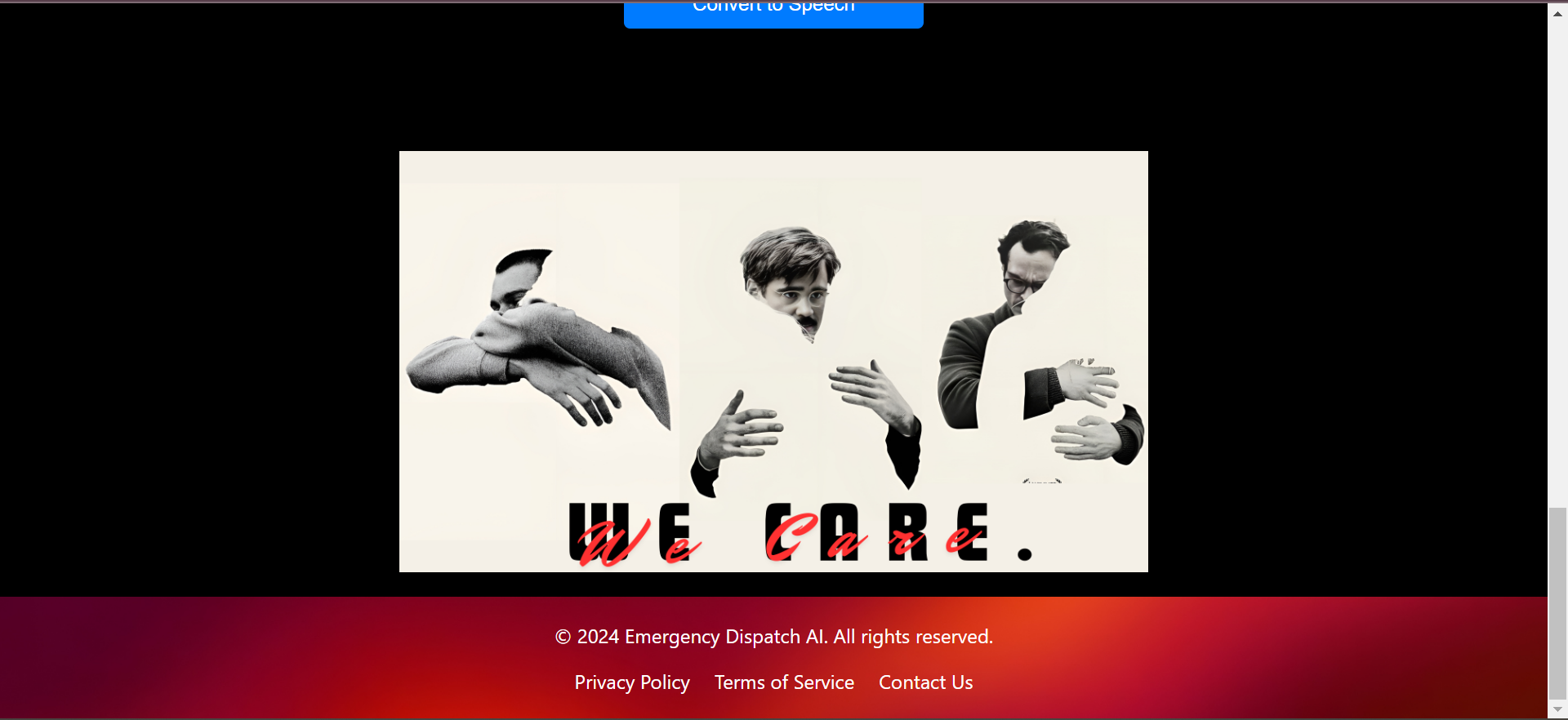
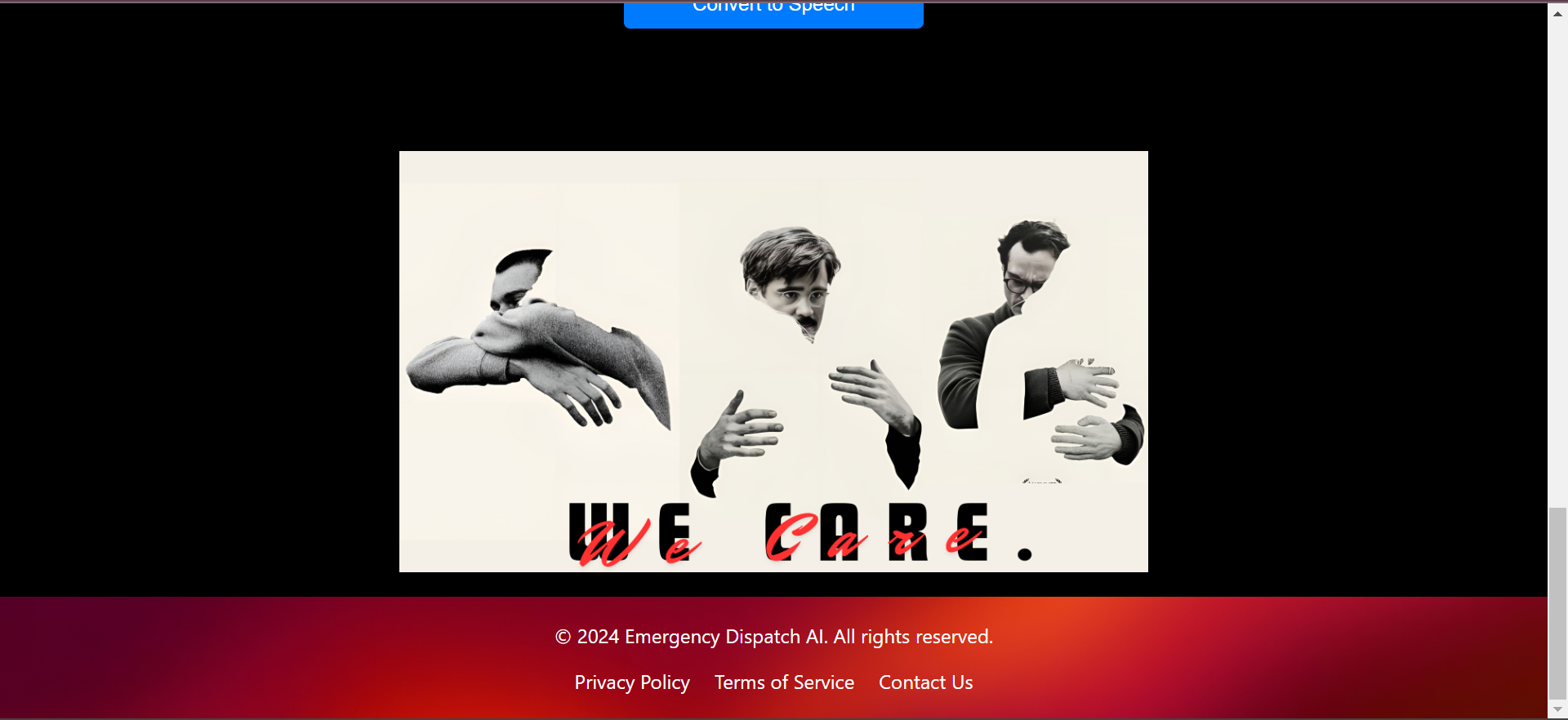
The end of Emergency Assistance for Individuals with Disabilities PAGE with comfort Graphics
-
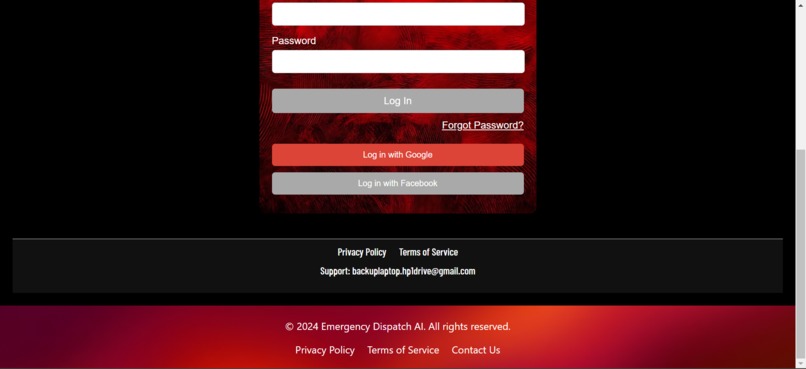
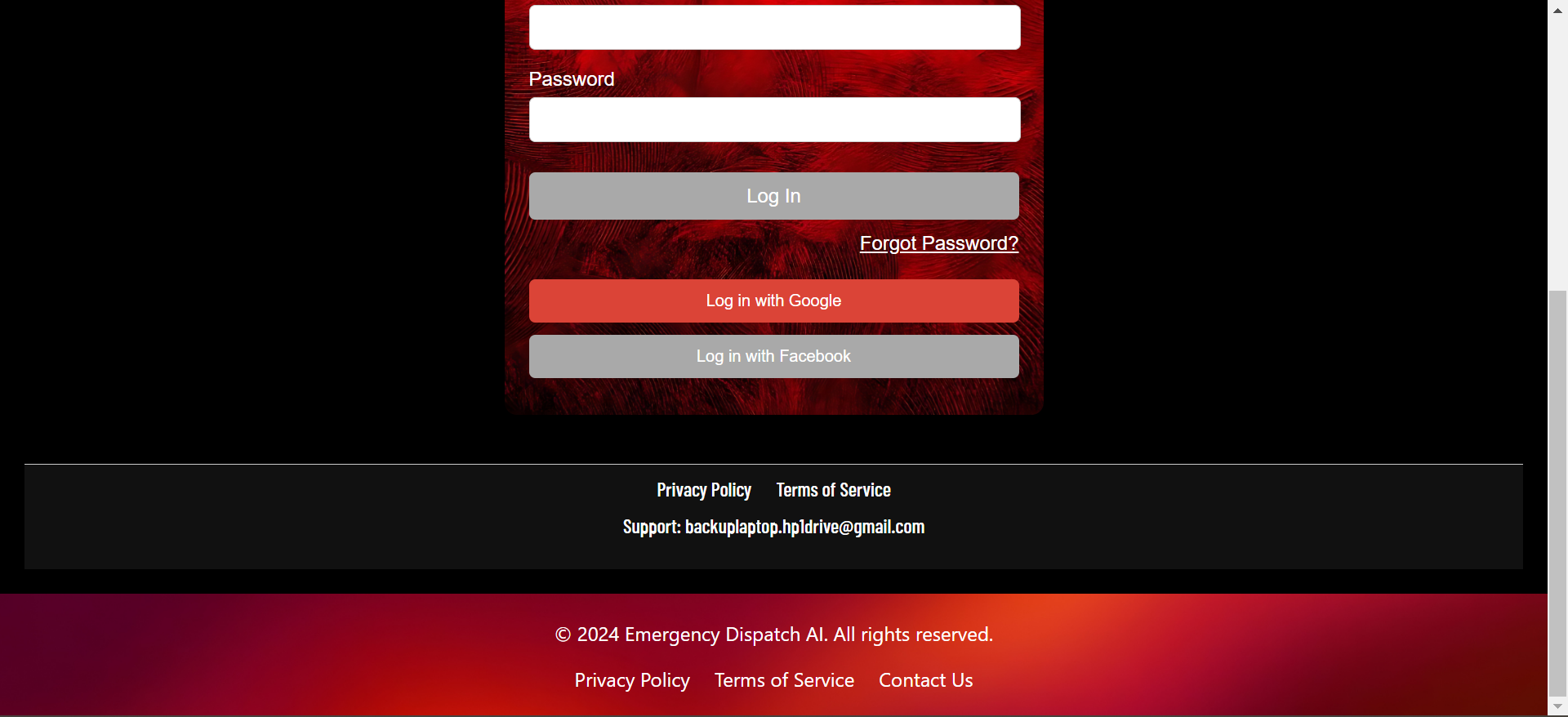
The FOOTER
-
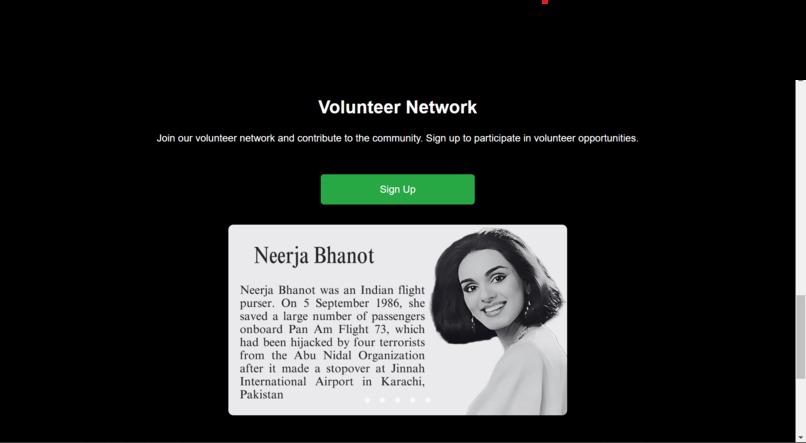
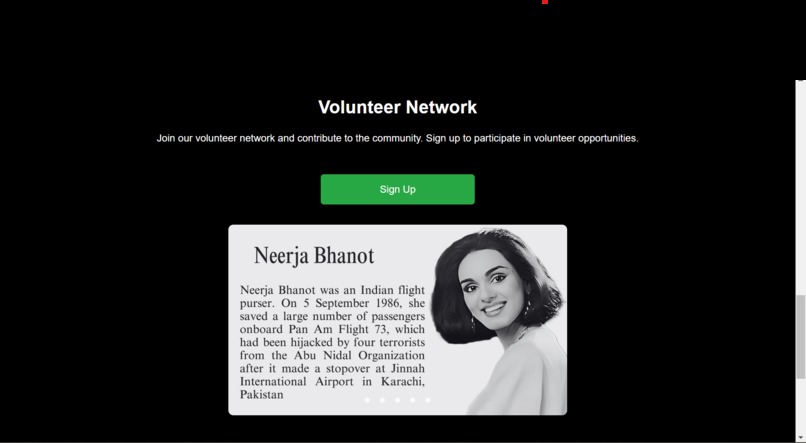
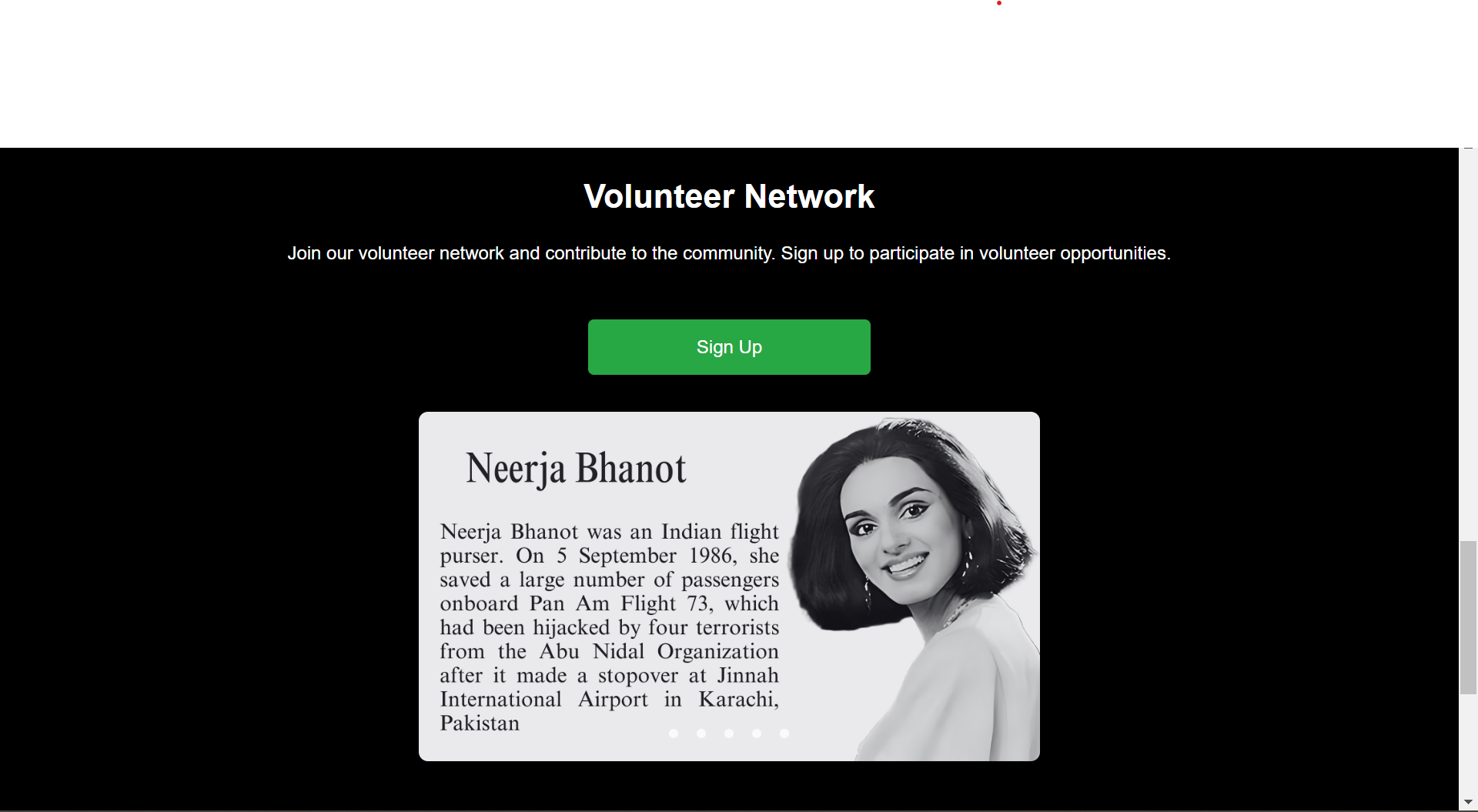
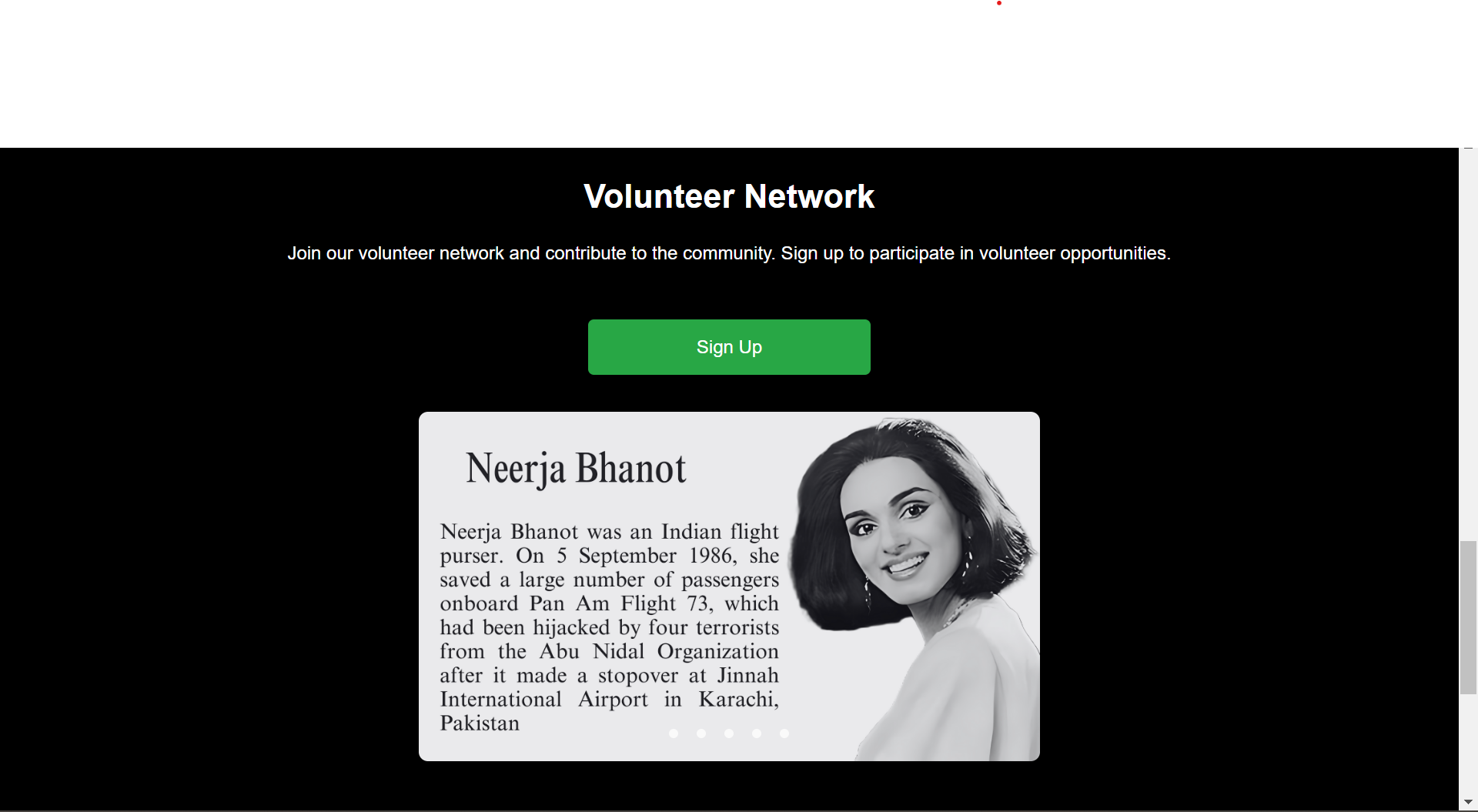
The End of Community hub page to provide motivation to first responders
-
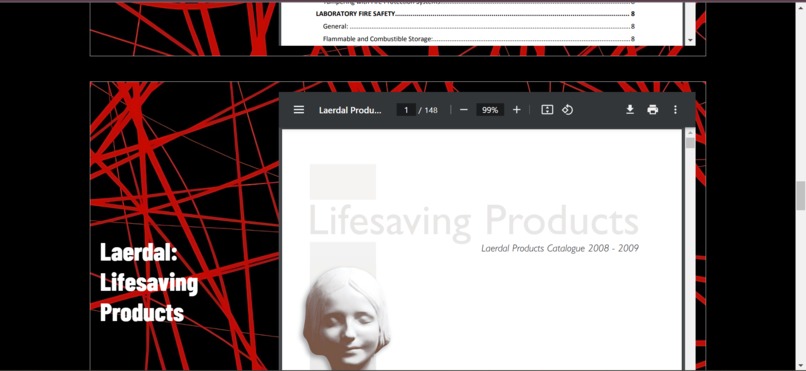
the resource page displaying the Embedded resources (pdf)

Inspiration
We started This Gracious hackathon on 7th of July by watching the Opening Ceremony where our attention was captured by Laerdal's Life Saving Intervention Challenge, especially the Theme of making an AI to support dispatchers in coping with their inexperience during critical times. However, it also left us pondering if the dispatcher was the only one facing troubles in such situations. While going through a simple online article that delved deep into the everyday struggles faced by disabled individuals, we realized about the challenges faced by the community, particularly in emergency situations where communication barriers can have dire consequences. An urgent need for action sparked within us. We realized that the existing support systems were insufficient, leaving many disabled individuals vulnerable and underserved.
Fueled by a profound sense of purpose, we embarked on a journey to bridge this gap. Our mission was clear: to develop an AI-driven platform that could assist emergency dispatchers in providing timely and effective help, particularly to disabled individuals. This wasn't just a project; it was a heartfelt endeavor aimed at making a real difference in people's lives.
The Vision and Development
From the outset, our vision was ambitious. We wished to create a web application that could accommodate the needs of our primary stakeholders - dispatchers, along with our critical stakeholders - disabled individuals, through an AI that supports both dispatchers and individuals. We envisioned an Emergency Assistance Page that catered to those who have difficulty speaking, hearing, or communicating due to movement impairment. We understood their specific needs and ensured that help could be dispatched efficiently.
Countless hours were poured into research and development. We worked on multiple components to create a platform that pushed ourselves to our limits and broadened our learning domain to ensure our platform would be truly inclusive for all. The AI had to be intuitive, reliable, and capable of handling a myriad of emergency scenarios. We had to custom create our own dataset for protocols as it was challenging to find a JSON dataset with all the ICP and EMD protocols.
Building the AI Platform
Utilizing advanced machine learning algorithms, we developed an AI system that could process user input and provide step-by-step guidance on handling emergencies, ranging from heart attacks to cyclones. Our platform integrated speech-to-text and text-to-speech technologies using only open-source models like Festival for text-to-speech and DeepSpeech for speech-to-text. We chose GPT-2 from FaceHugger due to its open-source nature. The frontend was developed using React, focusing on accessibility and ease of use for dispatchers. For the backend, we utilized Node.js, Express.js, and Flask in Python for AI integration. Connecting the pages and backend was a challenging task due to the multitude of directories and files that needed coding.
Challenges and Triumphs
The journey was not without its challenges. One significant hurdle was building the AI with our hardware limitations, facing at least 7-8 model failures. However, we persisted and finally achieved a worthwhile outcome. Additionally, integrating real-time data processing for emergency scenarios required robust backend support and extensive testing.
During the hackathon, our team encountered challenges related to communication and alignment, which occasionally made it difficult to stay on the same page. However, we successfully overcame these hurdles by implementing a well-organized approach that involved task delegation and strategic collaboration, enabling us to efficiently develop and deploy Embrace Autism.
Another obstacle we faced early in the hackathon was generating an idea that can help Everyone with Special Emphasis on dispatchers and Disabled Individuals. Nevertheless, through our collective efforts and determination, we were able to brainstorm and eventually present a Fully Equipped Website - Emergency Dispatch AI.
On the technical front, some team members encountered difficulties in using React to Code Backend Effectively and Creating and Worth it Machine learning Model. However, we demonstrated a strong sense of unity and mutual support, assisting one another and collectively devising effective online solutions to address these challenges.
Lessons Learned
Through this journey, we learned the importance of perseverance in overcoming technical and logistical hurdles. We also gained valuable insights into the specific needs of disabled individuals in emergency situations, reinforcing our commitment to creating inclusive technology solutions. Collaboration and communication emerged as critical factors in project success, allowing us to navigate complex challenges and deliver a robust AI-driven platform.
A Message from the Developers
Dear Friends and Supporters,
We, the dedicated developers behind the AI Dispatch for the Disabled, extend our heartfelt gratitude to you. This journey has been one of profound learning, collaboration, and unwavering commitment to making a positive impact.
Our platform is not just a project; it is a labor of love and a testament to what technology and humanity can achieve together. We invite you to join us in this mission, to explore our platform, and to be part of a global movement that champions inclusivity and support for all.
Thank you for believing in our vision and for your continued support. Together, we can create a world where every individual, regardless of their abilities, is understood, supported, and empowered.
With deepest appreciation, The Team of Emergency Dispatch AI PS- WE have uploaded Our Entire project with the Open source models (3gb) to Google Drive and shared the link

Log in or sign up for Devpost to join the conversation.