-
-
-
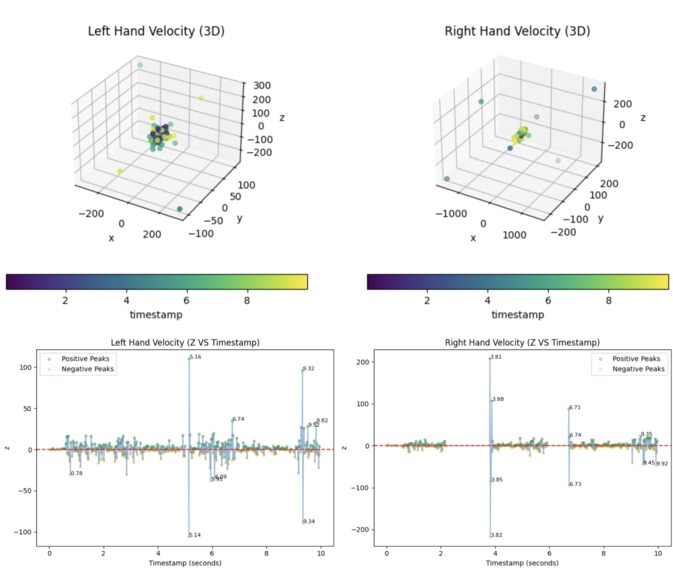
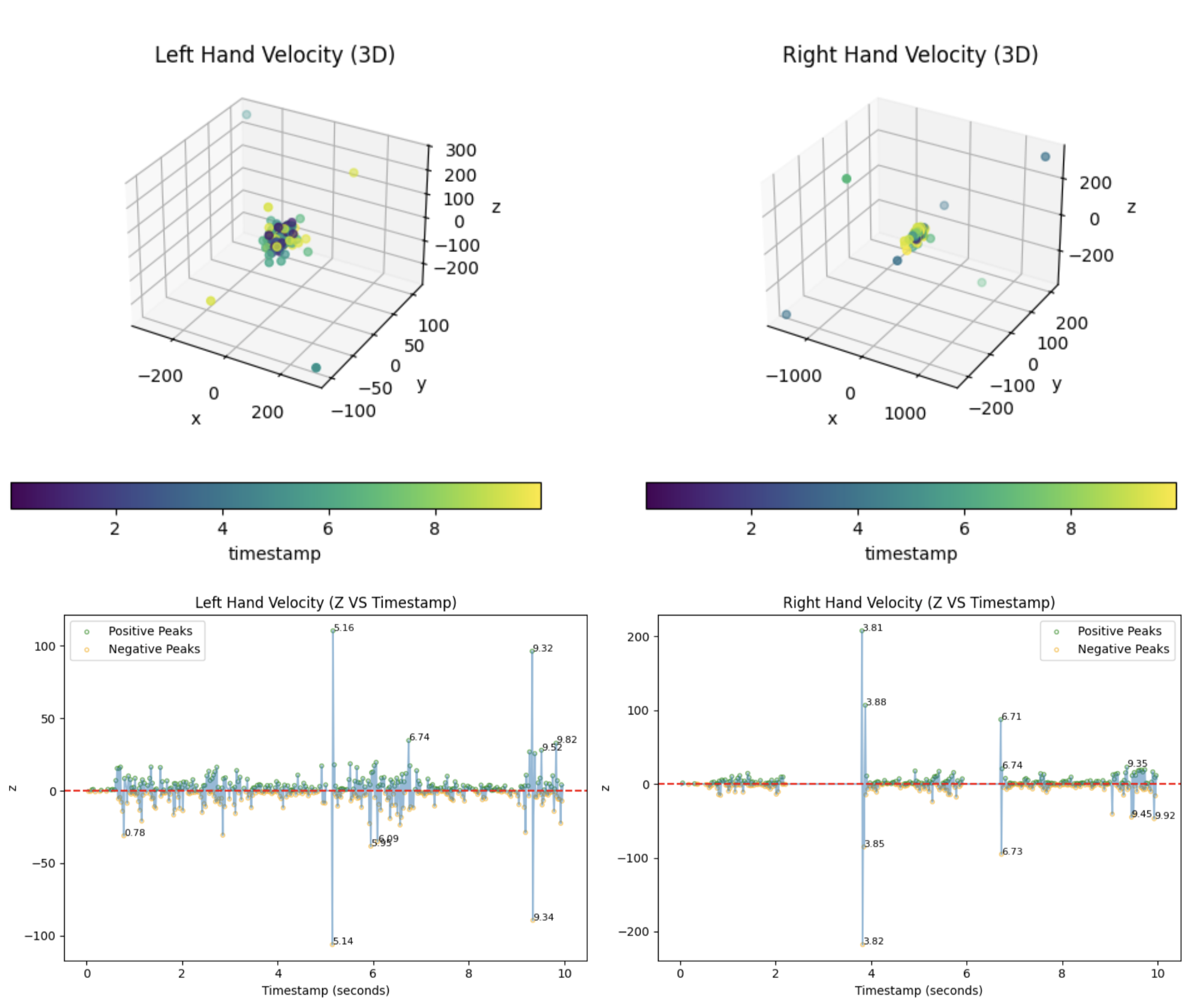
Sample Segment of the Patient's Profile Dataset
Inspiration
Physical activity plays a critical role in children’s health and development. In fact, according to the World Health Organization (WHO), people who are insufficiently active have a 20% to 30% increased risk of death.[1] Beyond that, physical activity contributes not only to physical health, but also to brain development: one study even found that it promotes early childhood neurological development through serotonin pathways.[2] However, not all children have equal access to these benefits. Many children with limited mobility, who can primarily engage in seated, upper-limb activity, face significant barriers to participating in sports and exercise. This includes children with conditions such as:
- Paraplegia
- Cerebral palsy
- Juvenile osteoporosis (under supervision)
- Osteogenesis imperfecta (OI) (under supervision) and more
For these children, research shows that physical rehabilitation programs coupled with real-time patient-physician feedback is essential to improve muscle strength and enable independent movement.[3]
Limitations
However, although physical therapy is essential, it leads to two critical limitations in current care: Its success is highly dependent on patient engagement and hindered by lack of frequent quantitative motion data. In fact, up to 80% of rehabilitation progress occurs outside the clinic, and lack of commitment to home exercise programs significantly reduces treatment effectiveness.[4] In addition, many metrics of measuring patient locomotion is qualitatively measured, and if not, they often require a time intensive appointment with multiple tracking sensors, leading to infrequent measurements of patient’s physiotherapy progress. So while these children need consistent training, they often struggle to stay engaged and physicians can only receive subjective assessments of progress on a daily basis.
Solution
This is where virtual reality offers a powerful opportunity. Studies show that VR-based rehabilitation increases participation and commitment, especially in children, by transforming therapy into an immersive and interactive experience. Games make treatment less intimidating, more engaging, and allow patients with limited mobility to perform guided exercises from home or in clinical settings.[5] VR also allows us to track various metrics related to the motion of the user, providing useful information to the clinic.
That is what inspired us in this project. We created a VR rehabilitation training game for children that transforms upper-body physiotherapy into a space adventure with personalized tracking and visualized data to support clinical assessment.
Our Game and what it does
Now for an overview of the game. Players enter a space-themed universe, where every movement directly corresponds to a therapeutic exercise. We start by calibrating the game based on the player’s reach to personalize the experience.
Their mission is simple: to collect as many stars as they can in order to charge up their star power to destroy the asteroids all around them.
So essentially, as they are reaching high up to grab stars, we are getting them to do an overhead reach exercise and practice their reach and arm mobility, then we will have a timer asking them to hold the star up to absorb their power, which helps them practice endurance and strengthen their arms. They will have to look around to locate the threats, which stretches their neck and thus improves neck mobility and flexibility.[6] When an asteroid is approaching they will shoot the stars by punching, training reaction and upper body strength. Finally, when a hoard of asteroids approaches, the children will use both arms to do a push exercise and unleash a charged effect.
Patient Profile Dataset
The most innovative aspect of our product is that it provides objective data quantifying the children’s ability and progress through tracking and creating a Patient Profile Dataset. As mentioned before, in appointments with physical therapists or other physicians, subjective assessments by the children or their parents would be more complete with quantifiable metrics offering objective information to the physician. The data we track would not only help with appointments, but it can keep track of the user’s progress between sessions providing continuous feedback not occasional information purely available through appointments.
So what are we actually tracking?
- We track the maximum heights they can reach to determine their arm’s active range of motion and maximum reach on each arm.
- We track position, velocity and acceleration of each arm to assess motor control and coordination. The acceleration track can identify increased unevenness in movement, which gives insight on impaired coordination that is commonly observed in neurological conditions such as stroke and movement disorders.[7]
- We also estimate the max applied force through the acceleration to approximate upper-limb strength. This metric can offer an objective way to detect improvement in strength over time.
With this information, we can help physicians to gain a more holistic view of a patient’s progress. Indeed we have attached a mock patients profile dataset using data received from one of us playing the game. As you can see this dataset contains a table representing the maximum reach of each arm, graphs of the position, velocity and acceleration analyzed to provide insight on the evenness or unevenness of movement, a comparison of the left arm versus the right arm’s symmetry, and the maximum force scaled by an estimated mass.
How we built it
We built Shooting Star using Unity. We also researched how to translate raw motion data into clinically meaningful metrics, ensuring the tracking system is relevant to healthcare professionals.
Challenges we ran into
One of our main challenges was ensuring that the system is safe for children with varying mobility levels, ensuring they do not push themselves beyond their ability and that the game does not create any negative emotions in them. We decided to proceed with a less is more approach when it comes to the difficulty of the game to make it more accessible. We also had to balance making the game fun without compromising clinical value. So making sure all expected actions in the game have an impact on muscle strengthening or stretching, and mostly have trackable metrics that result in relevant data to clinicians while creating a fun atmosphere.
What we learned
As a team, most of us were new to hackathons. Through this process, we learned rapid prototyping under time pressure, effective teamwork and communication, task delegation, and of course, how to build in Unity. We were also pushed to think outside of the box and discover the potential of VR in the field of healthcare and its efficiency at creating engaging and productive training games!
What's next for Shooting Star
When it comes to the future, we see strong potential to expand both the technical and clinical capabilities. First of all, given more time to develop our game, we would expand the data tracked to increase the game's efficiency in providing relevant information to physicians. We would do so by adding:
- Endurance tracking (how long can you hold on to the star up in space?)
- Accuracy and precision analysis (how accurately can you shoot the star at the asteroids?)
And when it comes to the gameplay, we plan to make the game have more challenging options with varying difficulties being available at the starting menu. The more difficult variations would include timed challenges, combos and asteroids approaching at varying speeds, and varying angles.
Business Model Potential
We also considered a commercial future for our product. Our primary stakeholders are pediatric patients with limited mobility while our secondary stakeholders are physiotherapists, rehab centers, hospitals, and parents. We also see the potential in partnering with physiotherapists to run pilot studies with patients and validate the metrics vs clinical assessments to analyze the accuracy of our estimations.
References
[1] “Physical activity.” Accessed: Mar. 21, 2026. [Online]. Available: https://www.who.int/news-room/fact-sheets/detail/physical-activity
[2] J.-Q. Jing, S.-J. Jia, and C.-J. Yang, “Physical activity promotes brain development through serotonin during early childhood,” Neuroscience, vol. 554, pp. 34–42, Aug. 2024, doi: 10.1016/j.neuroscience.2024.07.015.
[3] K. West et al., “Effects of sport and physical recreation on health-related outcomes among children and young people with physical disability: systematic review with meta-analysis,” BMJ Open Sport Exerc. Med., vol. 11, no. 2, p. e002350, Jun. 2025, doi: 10.1136/bmjsem-2024-002350.
[4] R. Argent, A. Daly, and B. Caulfield, “Patient Involvement With Home-Based Exercise Programs: Can Connected Health Interventions Influence Adherence?,” JMIR MHealth UHealth, vol. 6, no. 3, p. e47, Mar. 2018, doi: 10.2196/mhealth.8518.
[5] “Study: Virtual Reality for Rehabilitation - Pinnacle Vitality Rehab.” Accessed: Mar. 21, 2026. [Online]. Available: https://pinnaclevitality.ca/2025/04/04/study-virtual-reality-for-rehabilitation/
[6] “Sitting exercises,” nhs.uk. Accessed: Mar. 21, 2026. [Online]. Available: https://www.nhs.uk/live-well/exercise/sitting-exercises/
[7] A. Caronni et al., “Smoothness of movement in idiopathic cervical dystonia,” Sci. Rep., vol. 12, no. 1, p. 5090, Mar. 2022, doi: 10.1038/s41598-022-09149-1.




Log in or sign up for Devpost to join the conversation.