-
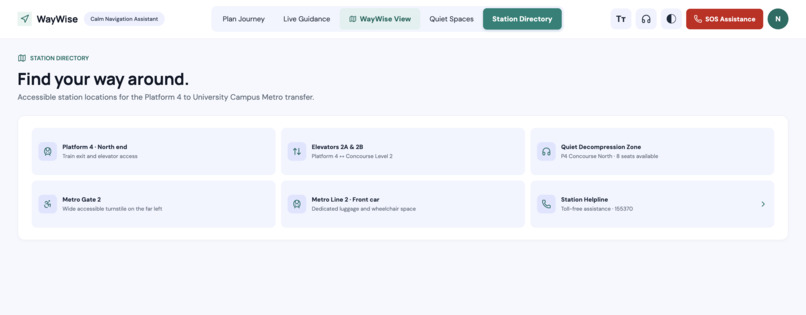
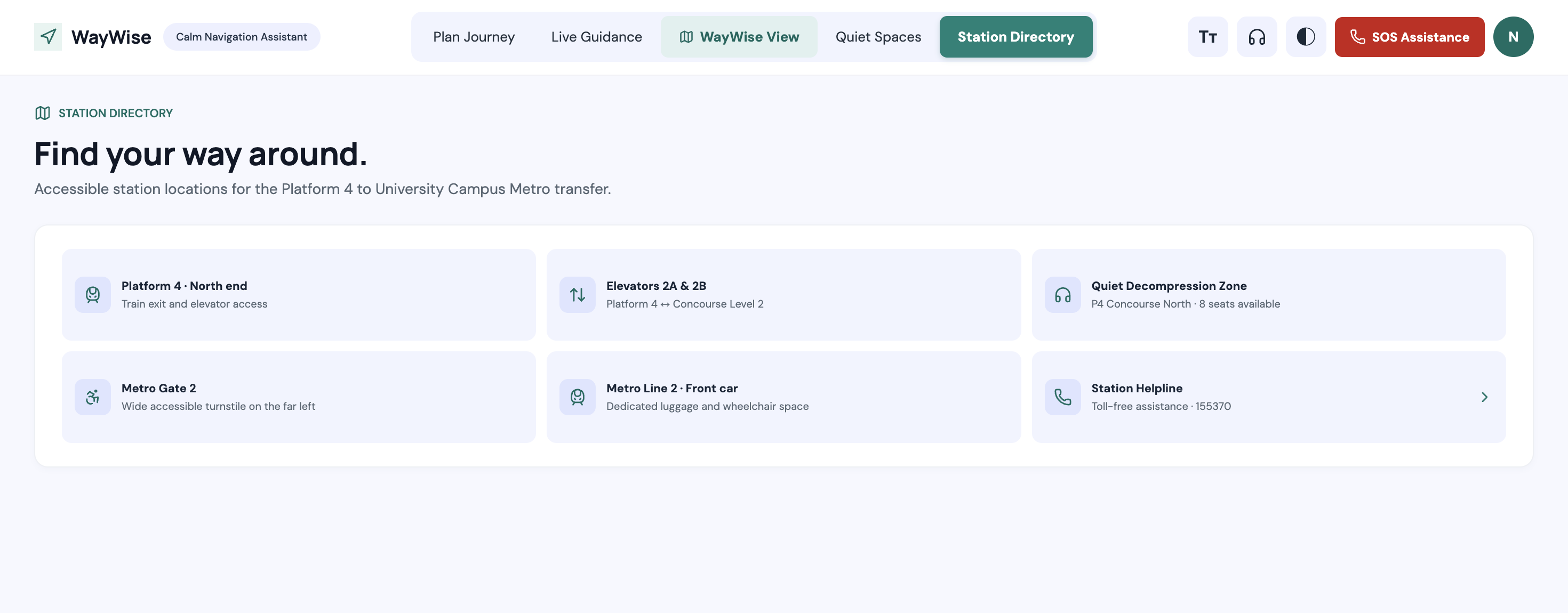
Full roadmap of the station
-
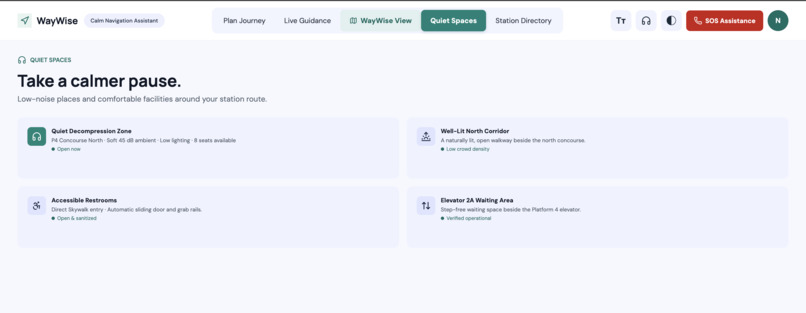
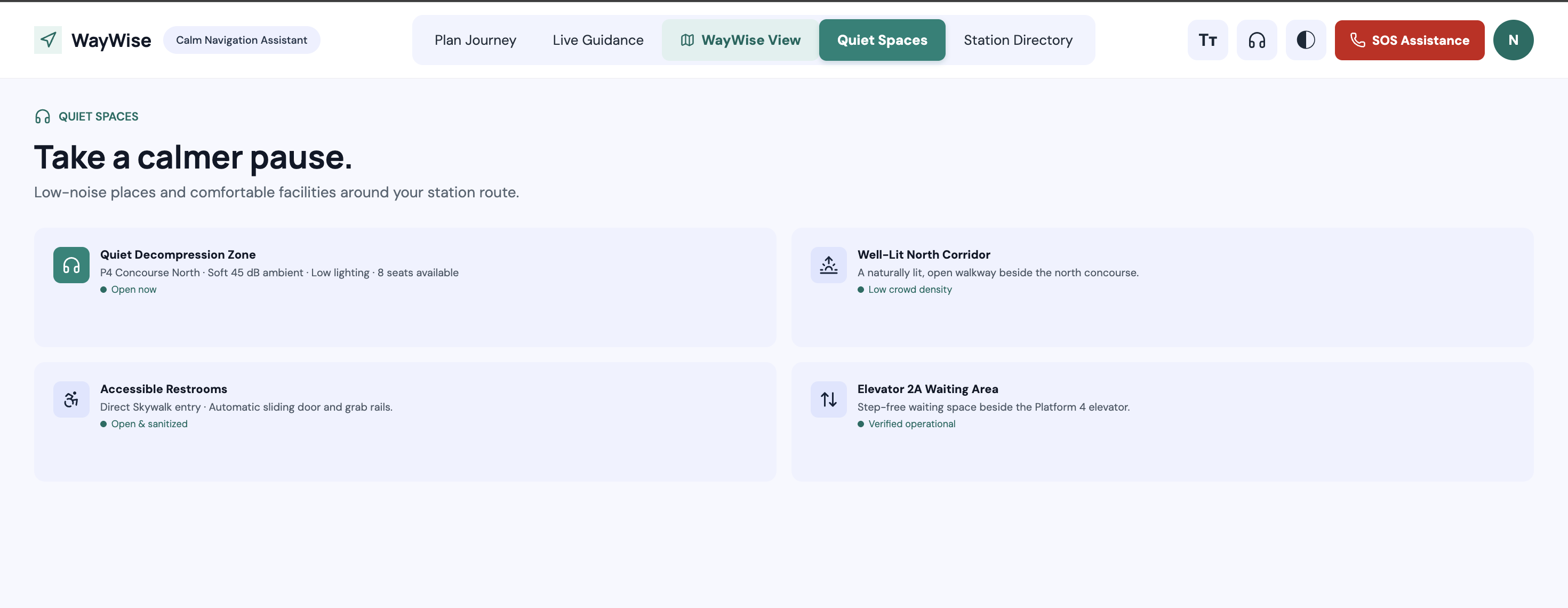
Quiet places in the metro station
-
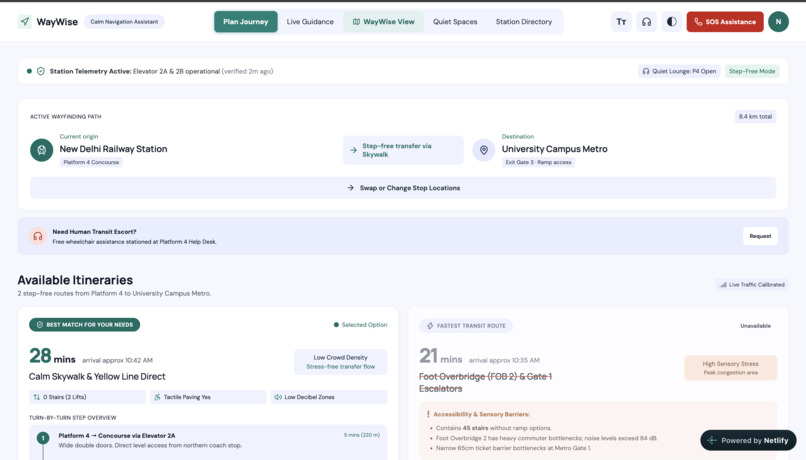
Main Page
-
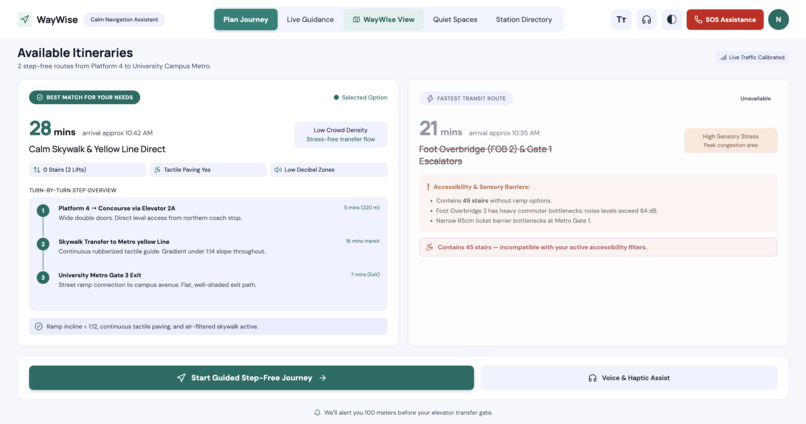
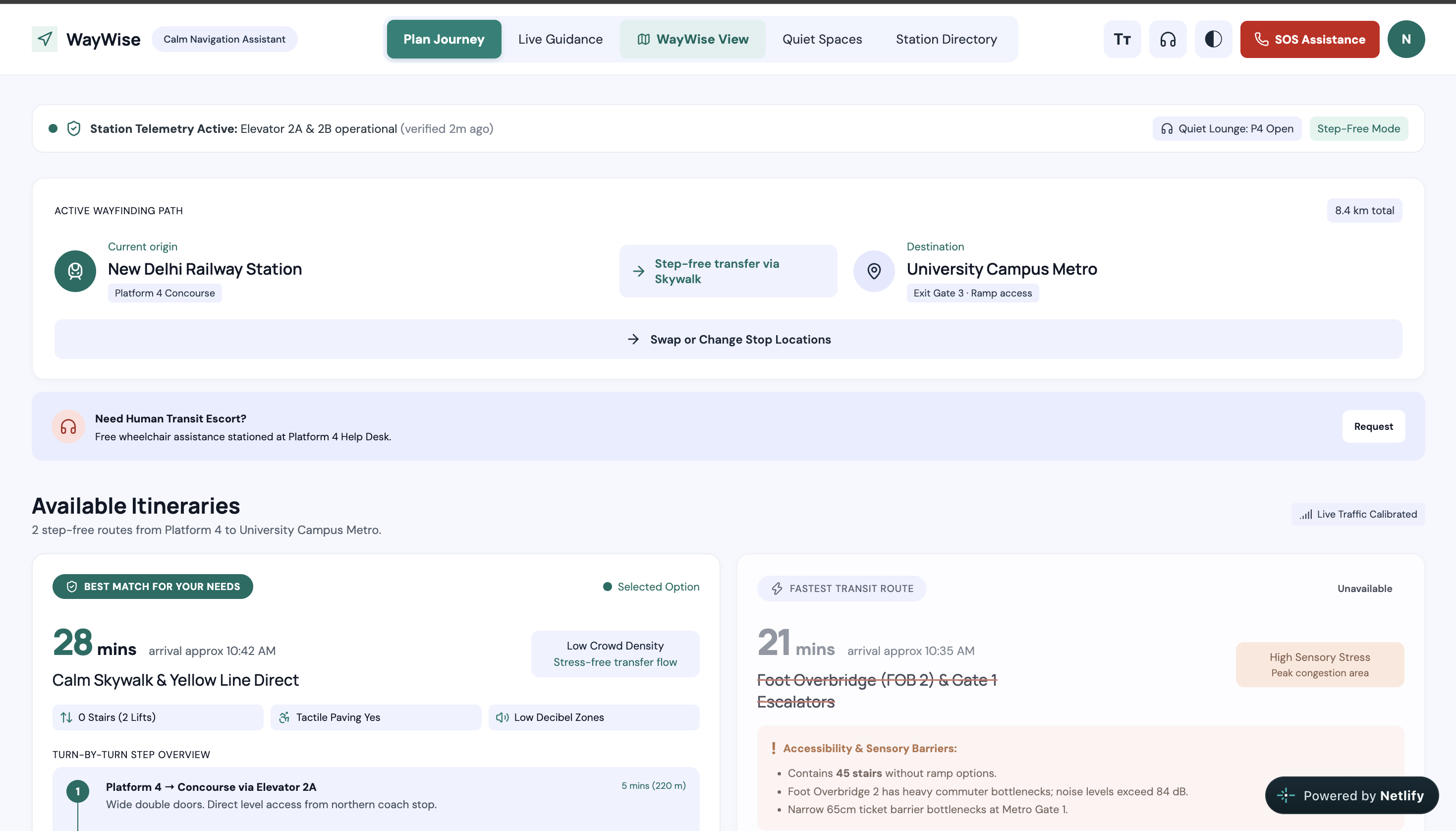
The destination overview
-
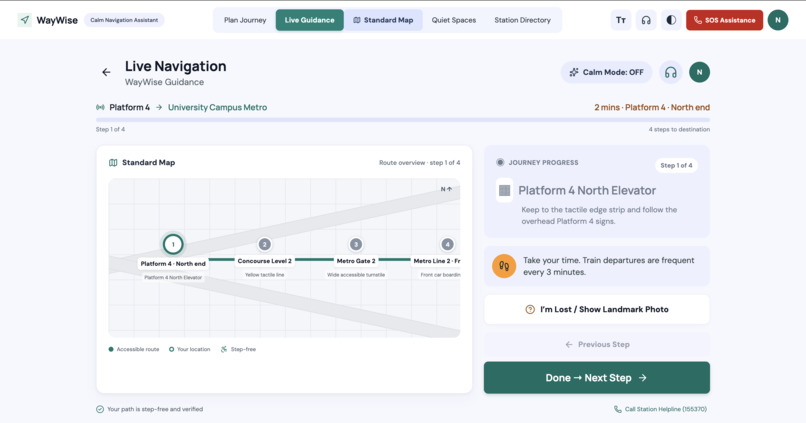
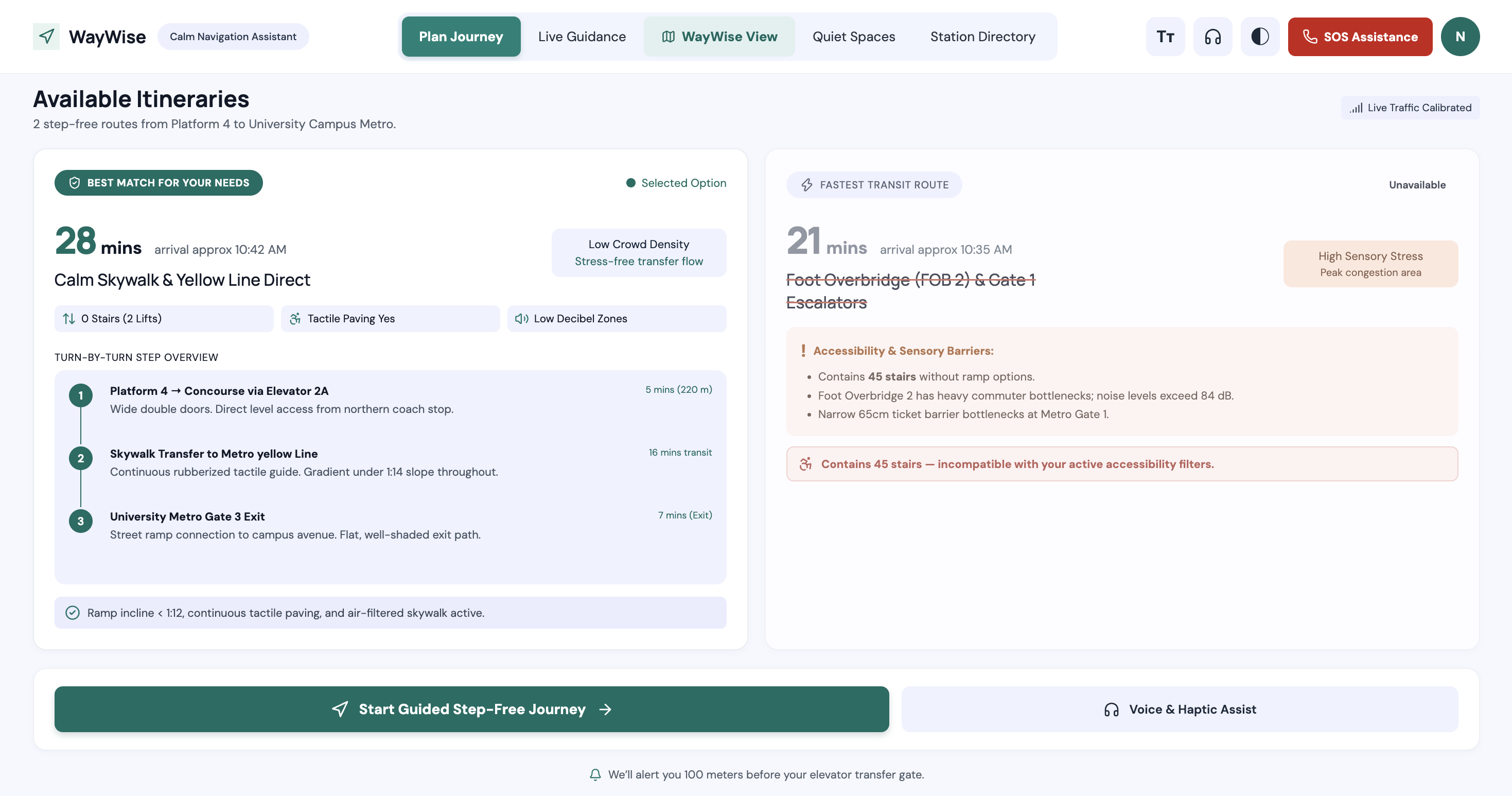
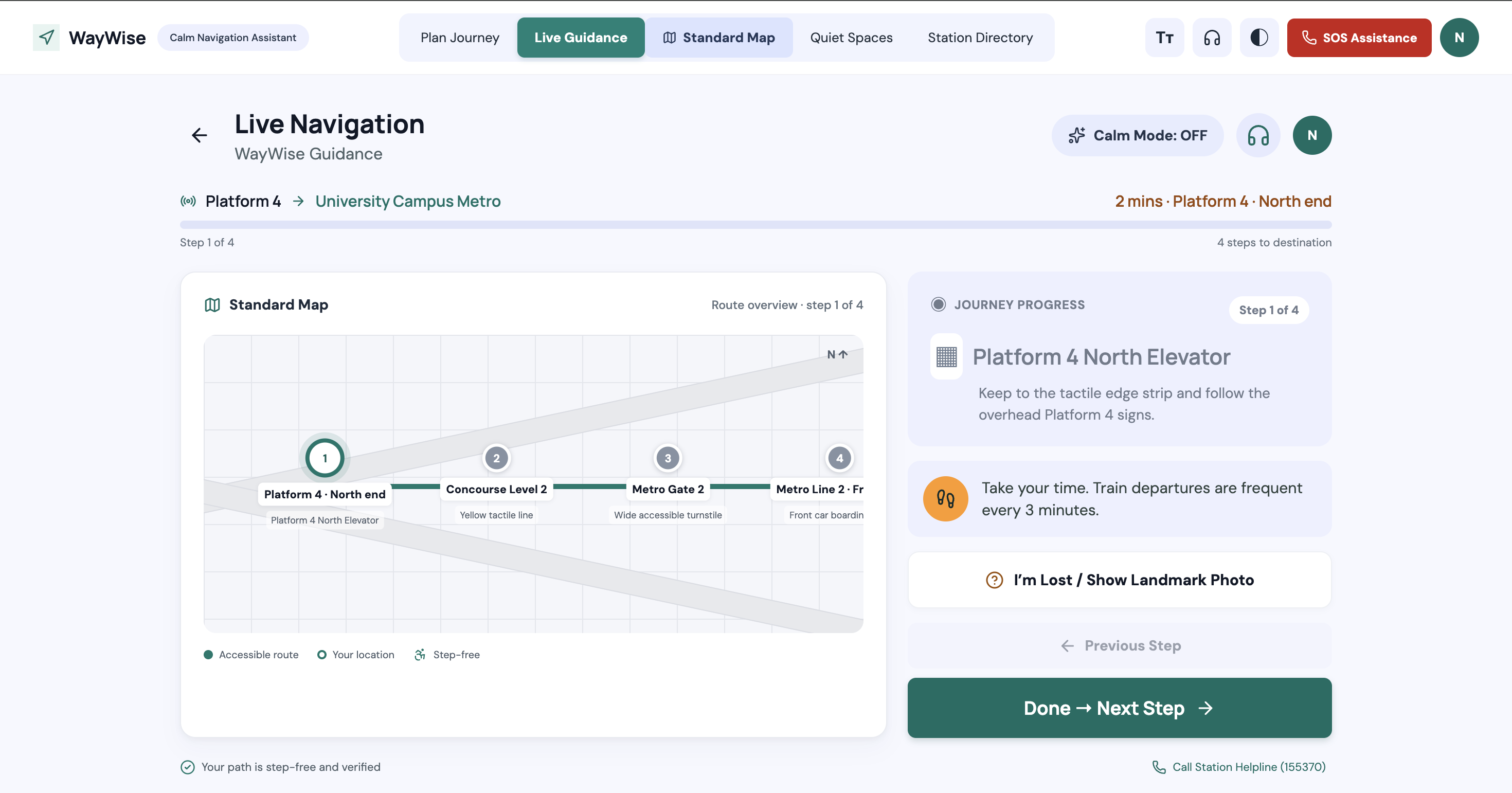
Waywise view for the steps
-
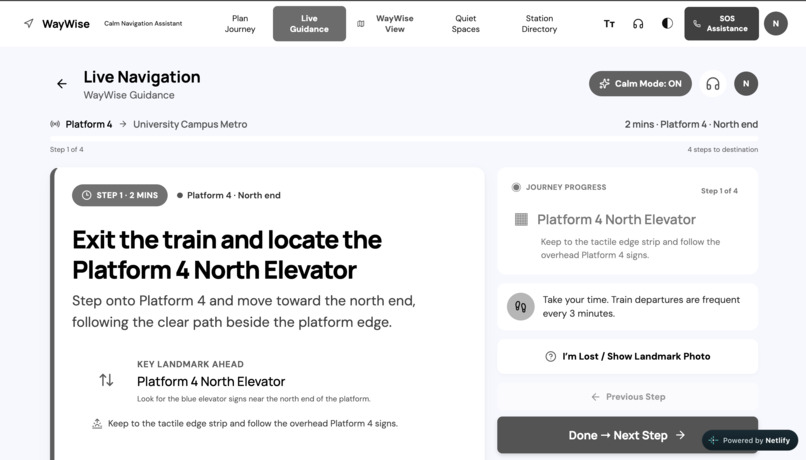
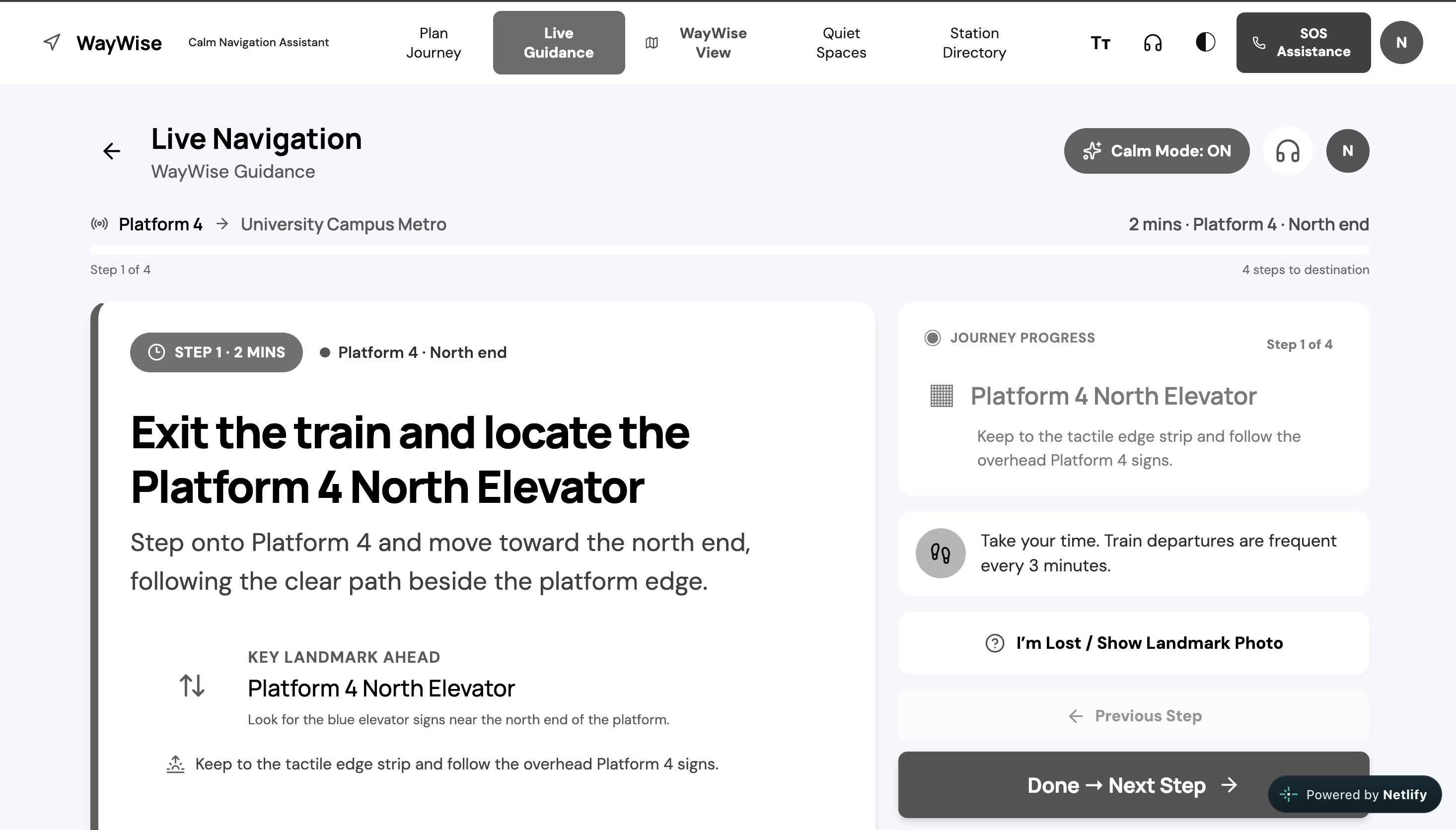
Calm Mode ON
-
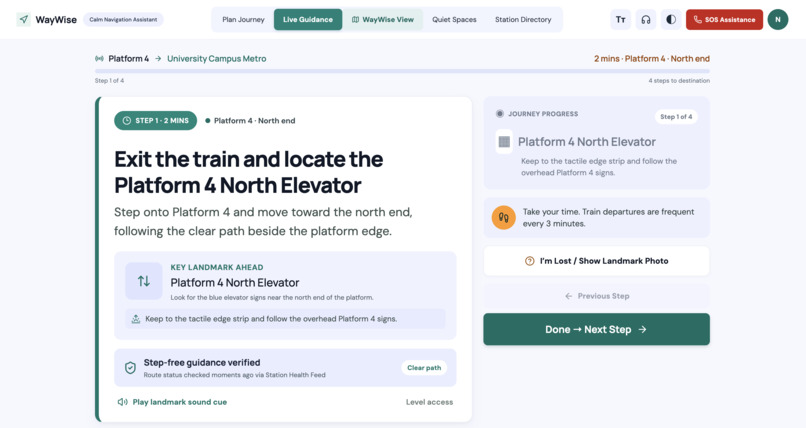
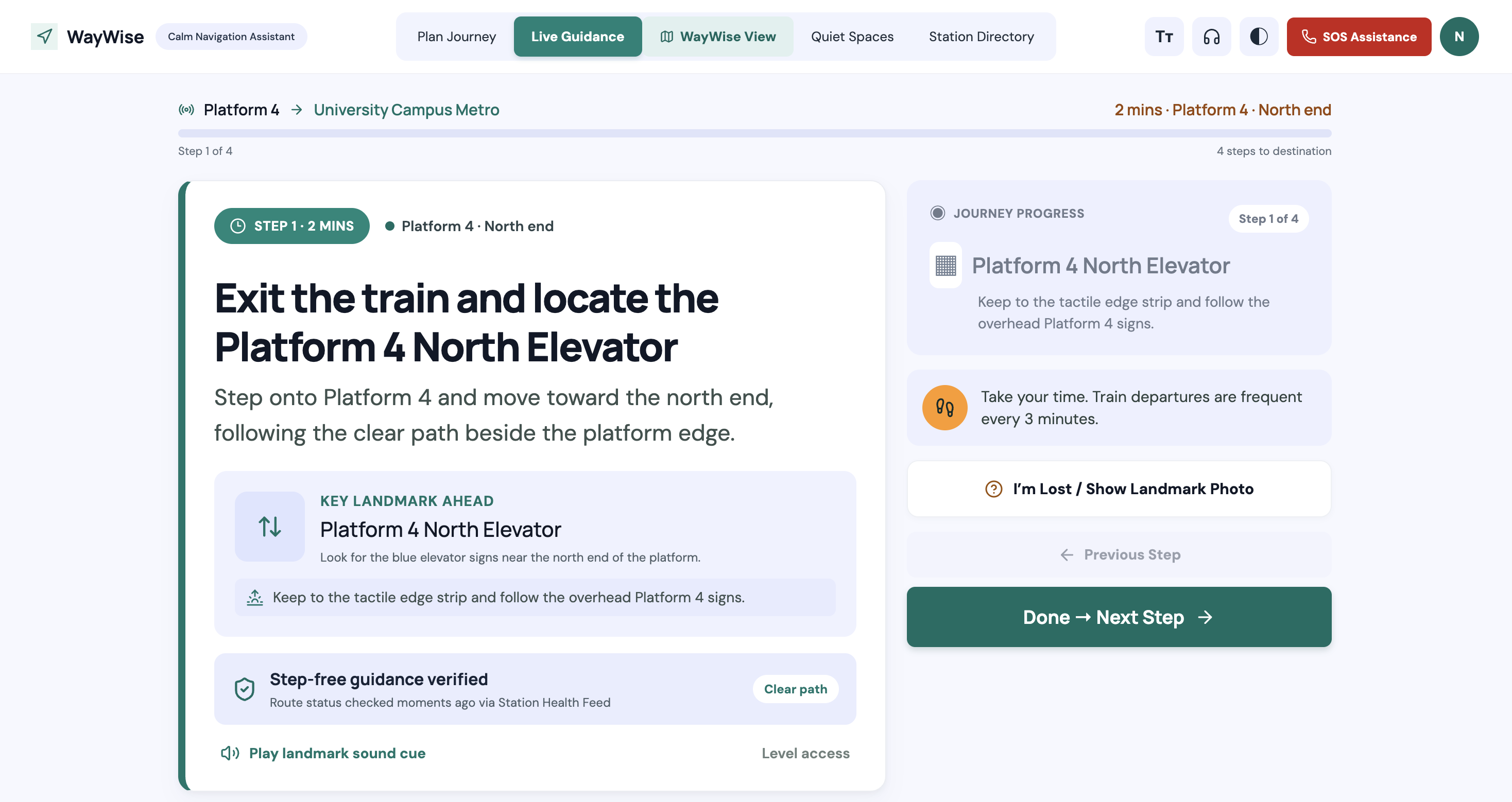
Normal view for the steps
-
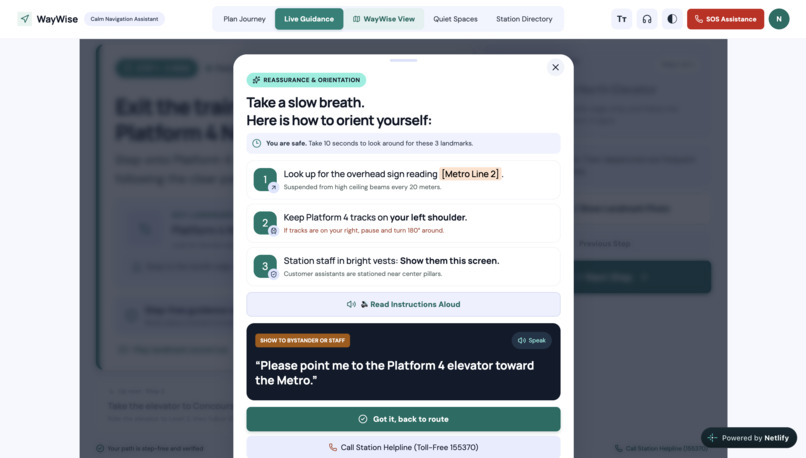
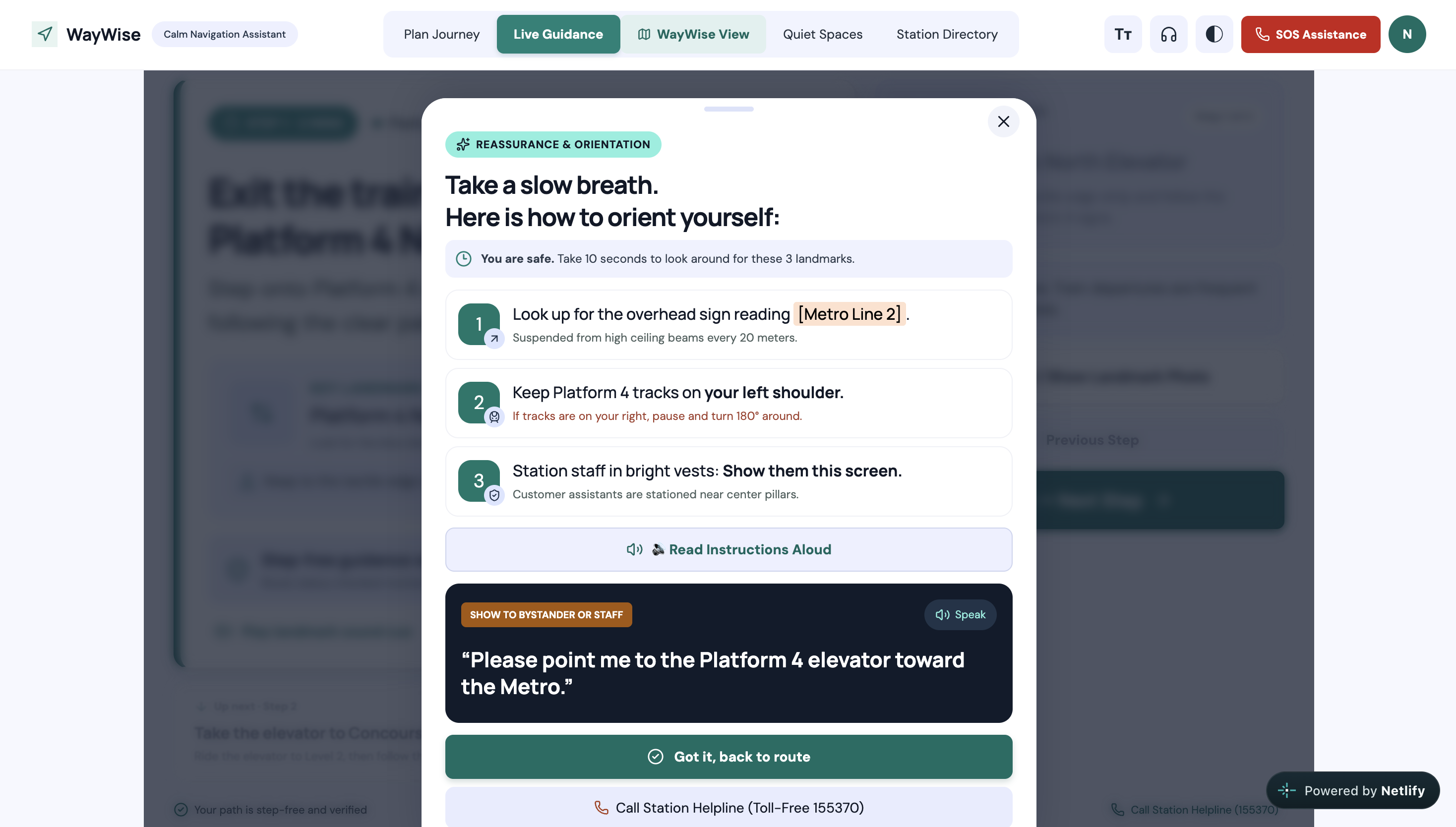
The page if you are lost (audio also available)
About WayWise
WayWise was inspired by a simple question: How can public transit feel more predictable and manageable for people who need step-free routes, carry heavy luggage, or prefer a quieter environment? A route that looks fastest on a map may involve stairs, crowded bottlenecks, or confusing transfers. WayWise puts those practical needs alongside travel time.
I built the project as a single-page React app with a responsive interface and no page reloads between the journey planner, live guidance, quiet spaces, and station directory. Travelers can explore route options, adjust accessibility preferences, and follow a guided journey from a railway platform to a metro train. The step-by-step view includes landmarks and a reorientation drawer for moments when someone feels lost. Browser speech synthesis can read the current instructions aloud.
One design lesson was that accessibility isn’t one setting that works for everyone. Calm Mode may help people who prefer fewer visual distractions, but grayscale isn’t automatically better for every traveler. Clear instructions, predictable layouts, readable contrast, and user choice matter too.
The main challenge was making the screens feel like one coherent experience while preserving the details that make each screen useful. I connected them through shared journey state, wired the navigation and step controls, and made the spoken instructions follow the selected step. I also refined the layout to use the available width more evenly and gave Quiet Spaces and Station Directory their own views.
WayWise is a prototype: its station conditions and route details demonstrate how accessible navigation could work, but live use would require accurate, up-to-date transit and facility data.# Inspiration
Built With
- css3
- javascript
- lucide-react
- react
- vite
- web-speech-api


Log in or sign up for Devpost to join the conversation.