-
-
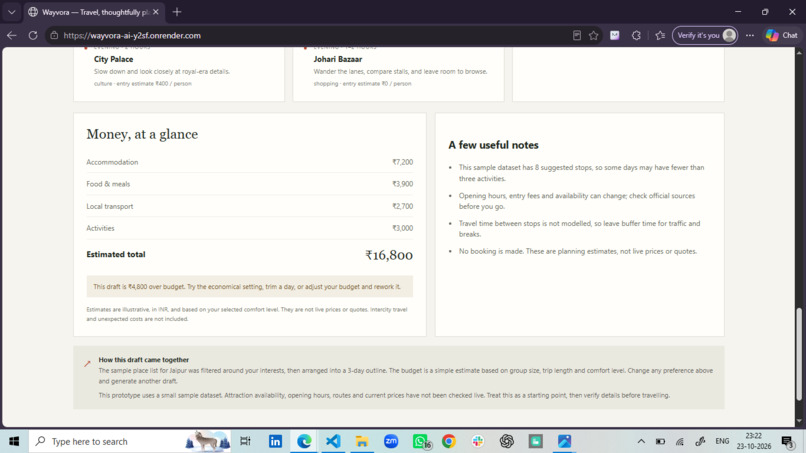
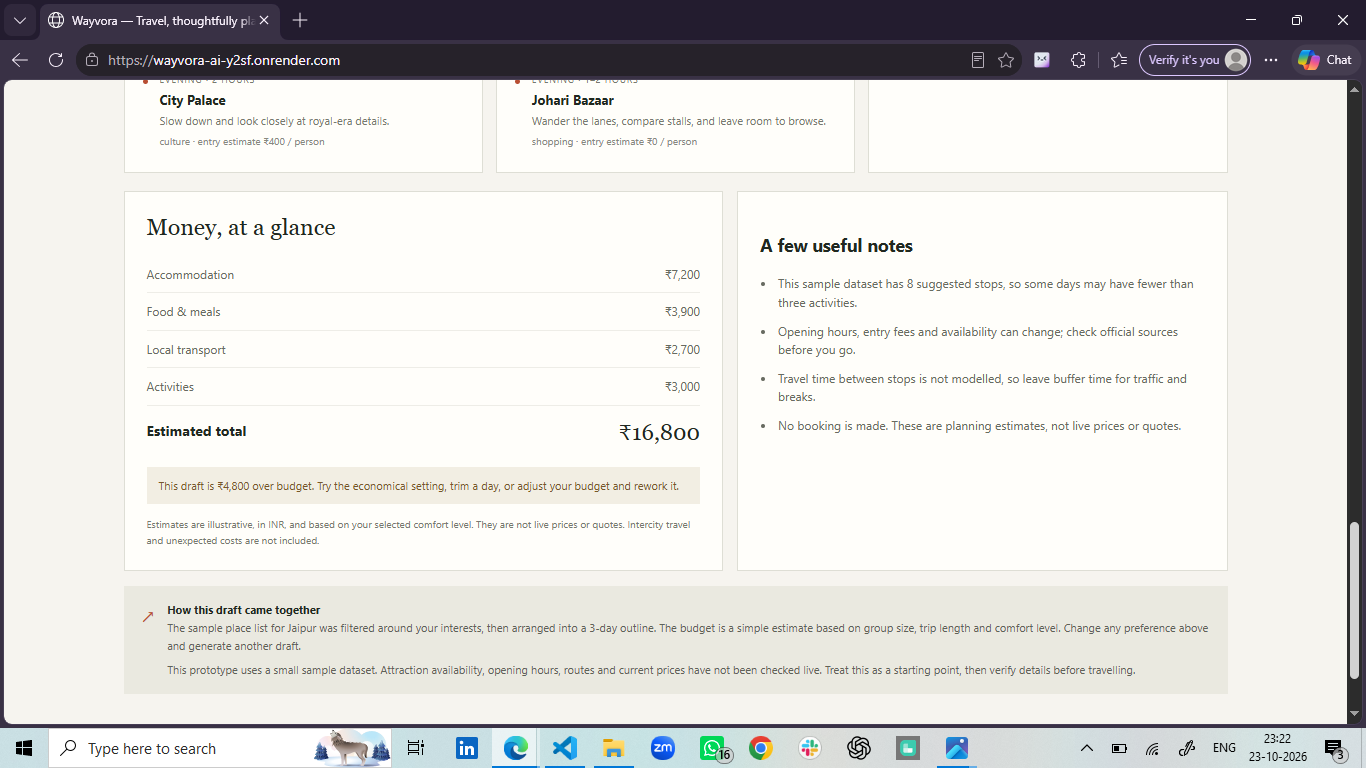
Overall Estimated Budget
-
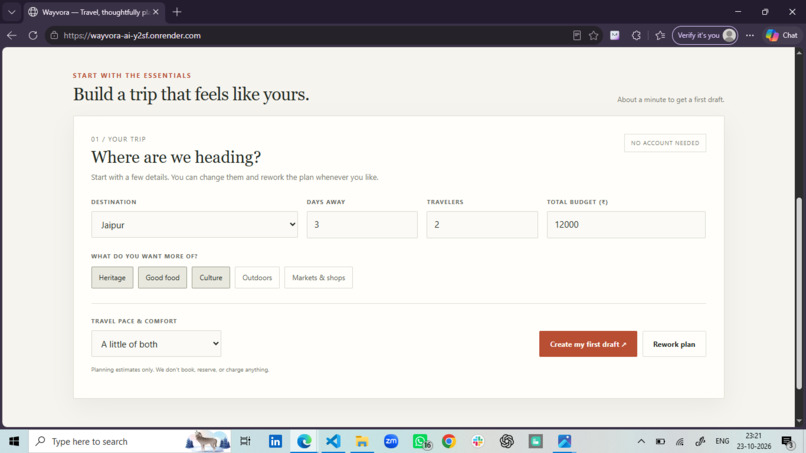
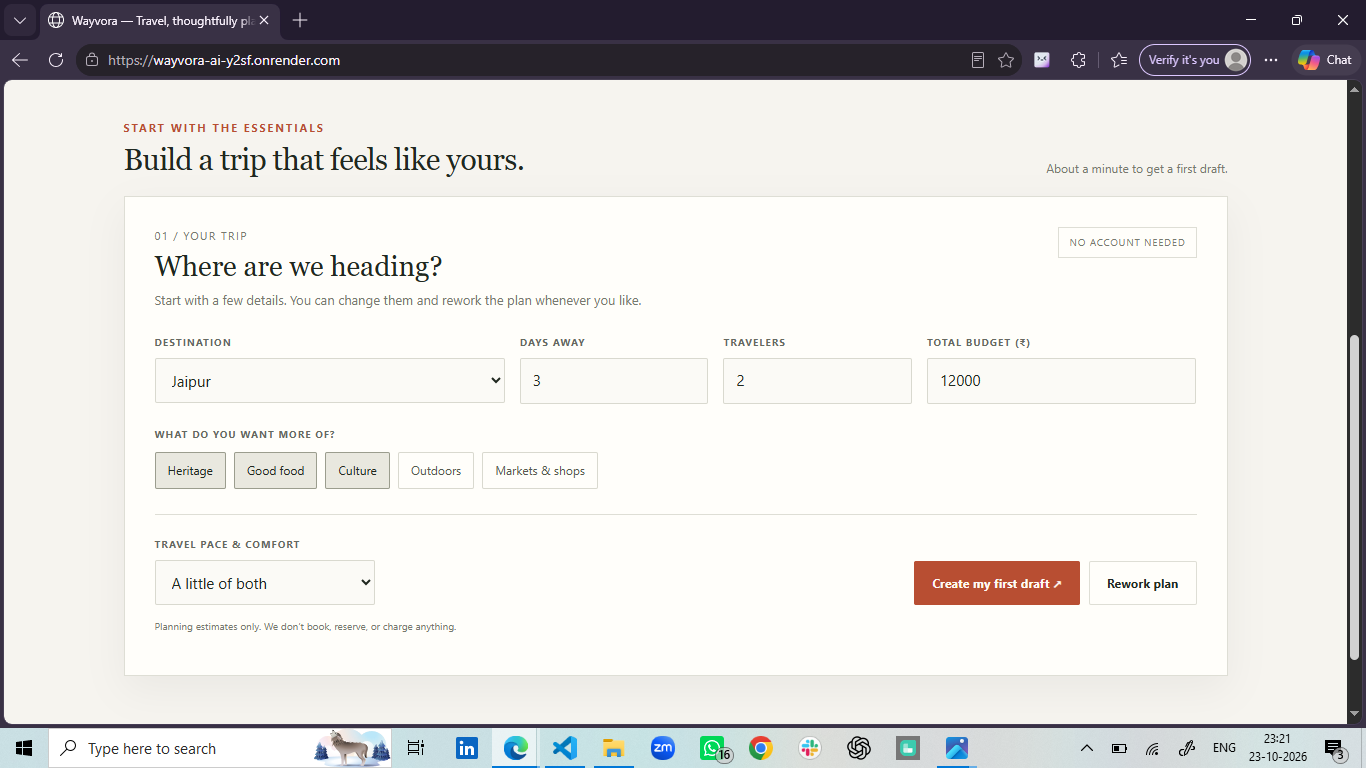
User Entries
-
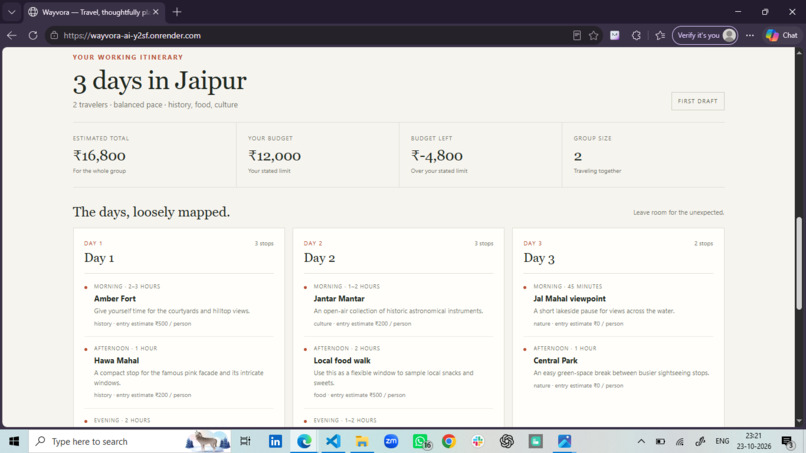
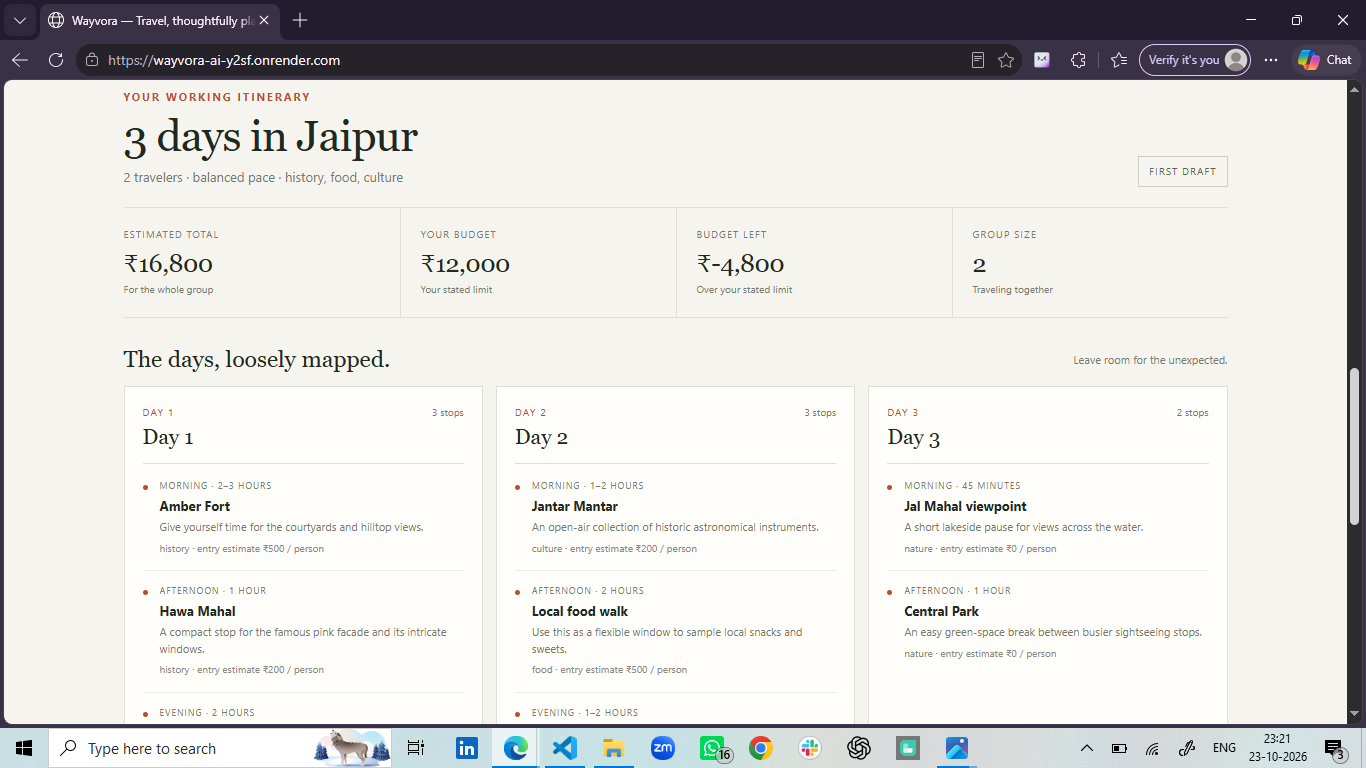
Day-wise Plan
-
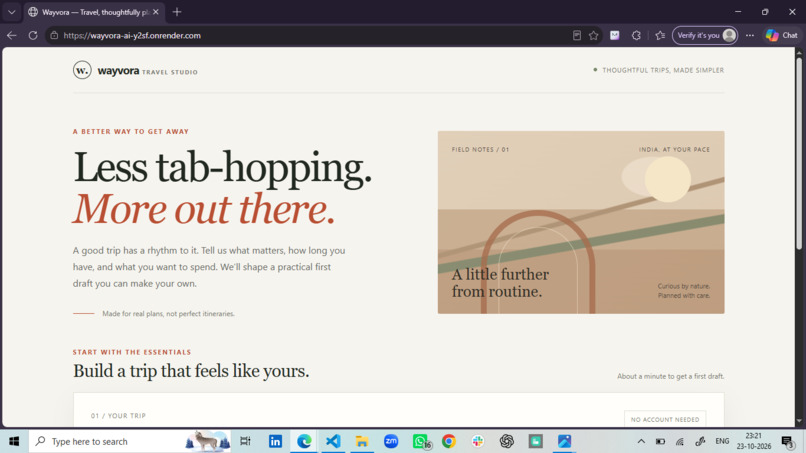
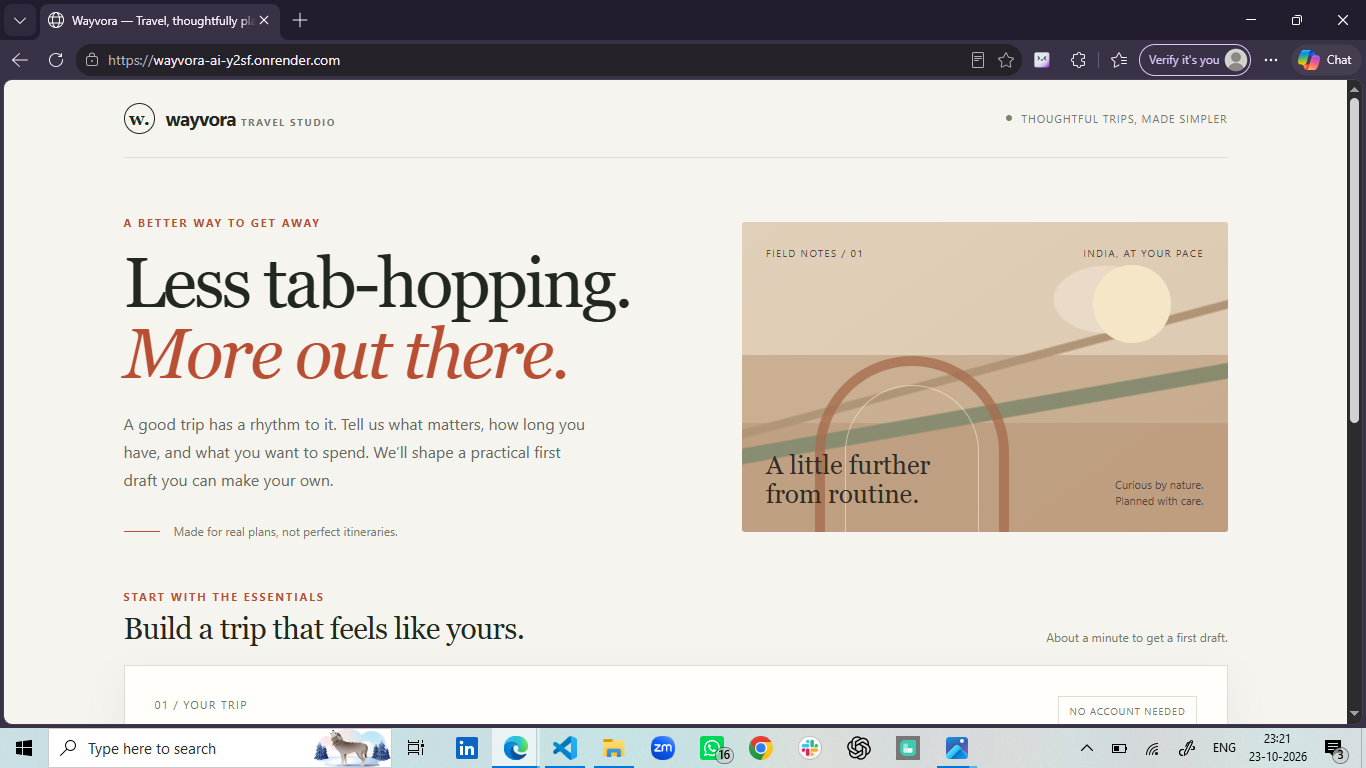
Landing Page
Inspiration
Travel should begin with excitement, not hours of searching through different websites and applications.
I noticed how fragmented travel planning can be. Discovering destinations, finding attractions, researching places, and organizing a trip often requires switching between multiple platforms.
I wanted to create something that brings these experiences together in one place. That idea became Wayvora AI, a project built around making travel discovery simpler, smarter, and more accessible.
My vision was to build more than just another travel website: I wanted to create the foundation for an intelligent travel companion.
What it does
Wayvora AI is a web-based travel discovery and planning platform that helps users explore destinations and discover attractions.
Its current features include:
- Destination Discovery: Explore a collection of travel destinations.
- Attraction Exploration: Discover attractions and places within selected destinations.
- Travel Tools: Use structured travel functionality to support destination exploration and planning.
- User-Friendly Interface: Navigate travel information through a clean and intuitive experience.
- Multiple Destinations: Supports 22 destinations and 136 sample attractions.
The goal is to bring important parts of travel discovery and planning into one accessible platform.
How we built it
Wayvora AI was developed using a modular architecture with Python and FastAPI powering the backend.
The main technologies and components include:
- Python: Core application logic and travel functionality.
- FastAPI: Backend API and application endpoints.
- MCP (Model Context Protocol): A separate MCP server and structured travel tools.
- HTML, CSS, and JavaScript: Frontend experience and user interactions.
- GitHub: Source code management and version control.
- Render: Cloud hosting and deployment.
We organized travel functionality into a dedicated travel_tools.py module and developed a separate mcp_server.py to support the tool-based architecture.
We also expanded the destination dataset to cover 22 destinations with 136 sample attractions and improved the interface to provide a more polished experience.
The application was deployed publicly through Render.
Challenges we ran into
One of the biggest challenges was designing a system that could support multiple destinations without relying on a limited set of hardcoded locations.
We improved the destination data structure and expanded the sample dataset to support broader exploration.
Other challenges included:
- Organizing backend functionality into reusable modules.
- Connecting frontend interactions with backend API endpoints.
- Designing an interface that balances simplicity with useful functionality.
- Understanding and implementing an MCP-based tool architecture.
- Configuring Git, GitHub, dependencies, and cloud deployment.
- Moving from a locally running application to a publicly accessible product.
Each challenge helped us understand the practical work involved in turning an idea into a working application.
Accomplishments that we're proud of
We are proud to have transformed an initial idea into a publicly deployed working application.
Some key accomplishments include:
- Building a functional travel discovery and planning application.
- Supporting 22 destinations and 136 sample attractions.
- Implementing a modular FastAPI backend.
- Developing dedicated travel tools and a separate MCP server.
- Improving the interface with a cleaner, more polished design.
- Successfully publishing the source code on GitHub.
- Deploying Wayvora AI on Render with a public URL.
Most importantly, we have established a foundation that can be expanded into a more intelligent and personalized travel platform.
What we learned
Building Wayvora AI taught us that creating a useful product involves much more than writing code.
We gained practical experience with Python, FastAPI, API integration, modular application design, MCP-based tool architecture, frontend development, Git, GitHub, and cloud deployment.
We also learned how important data organization, usability, and testing are when building applications that people may actually use.
Perhaps our biggest lesson was that even a simple idea can become a real product through experimentation, persistence, and continuous improvement.
What's next for Wayvora AI
The current version is the foundation. Our next goal is to make Wayvora AI genuinely intelligent and increasingly personalized.
Our roadmap includes:
- AI-Powered Itinerary Generation: Generate personalized travel itineraries based on user preferences, budgets, and trip duration.
- Conversational Travel Assistant: Allow users to describe their travel plans in natural language.
- Smarter Recommendations: Recommend destinations and attractions based on individual interests.
- Live Travel Information: Integrate reliable external sources for updated information about attractions, weather, and transportation.
- Budget-Aware Planning: Help travelers plan trips around their budgets.
- Expanded Destination Coverage: Add more destinations and richer travel information.
- Improved MCP Integration: Expand the tool architecture to support more intelligent and contextual travel workflows.
Our long-term vision is to make Wayvora AI a trusted digital travel companion that helps people spend less time planning and more time experiencing the world.
Wayvora AI: Beyond Destinations. Into Experiences.

Log in or sign up for Devpost to join the conversation.