-
-
Login Page
-
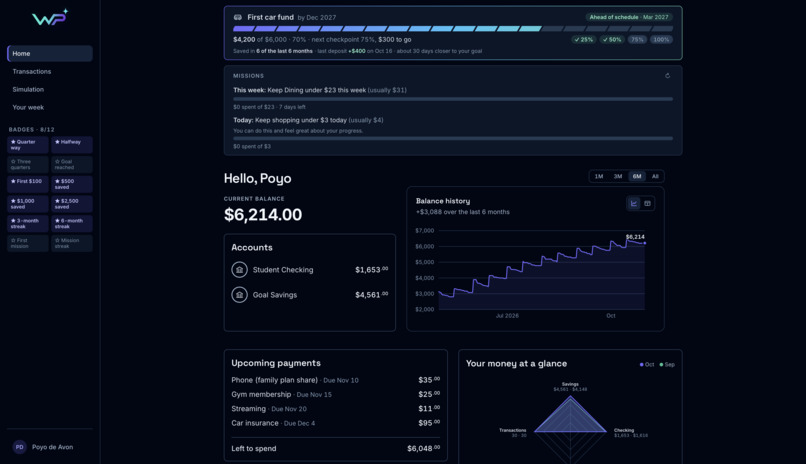
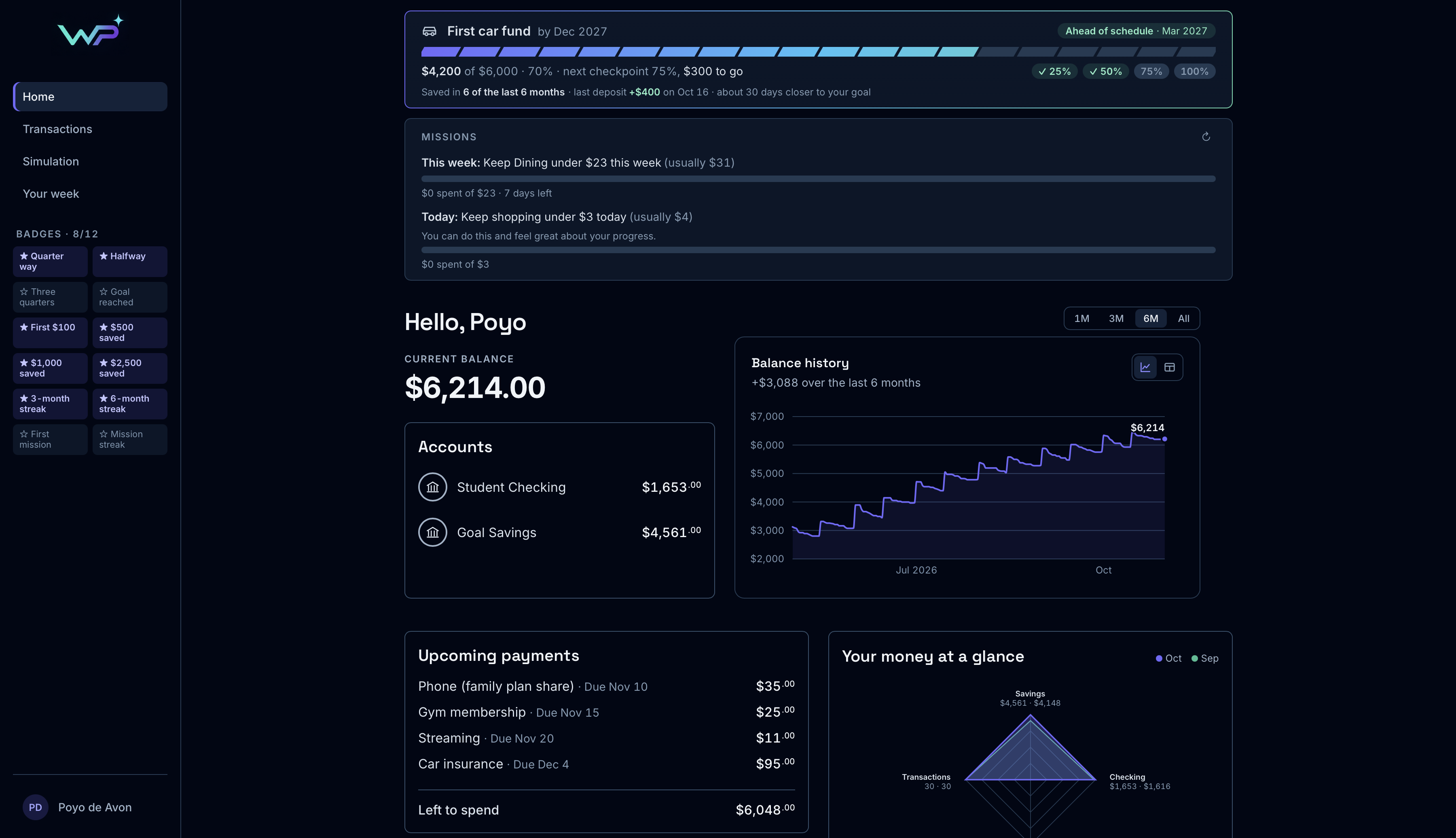
Landing Dashboard
-
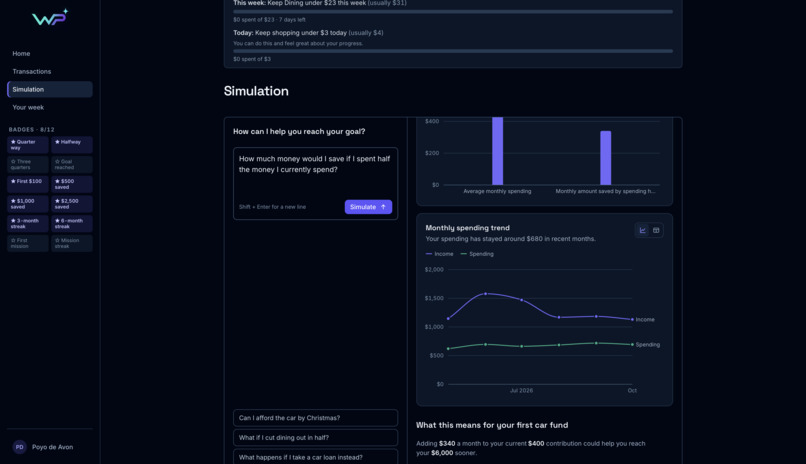
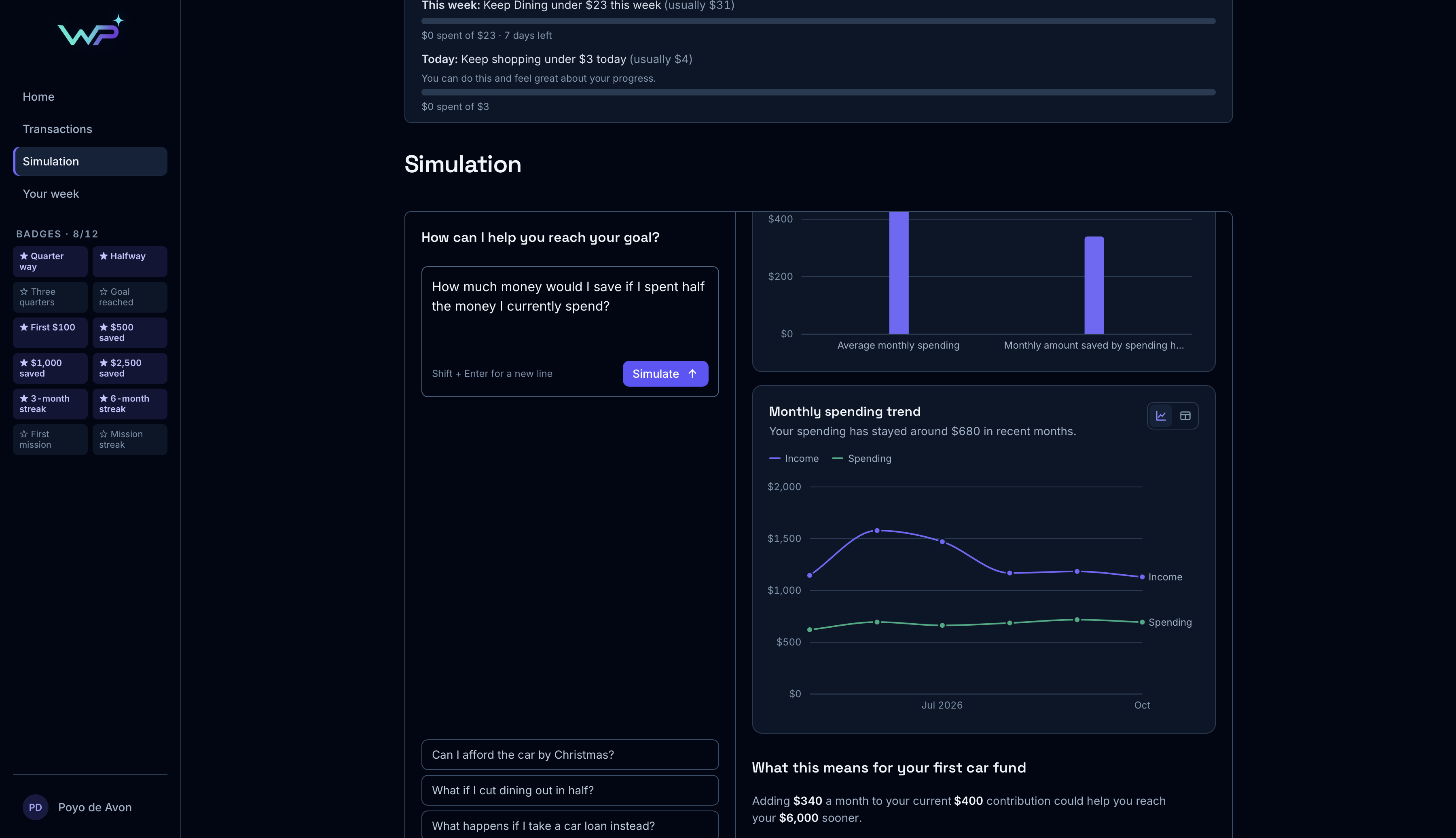
Simulation Page
Inspiration
Managing money as a college student can feel overwhelming. We built Waypoint to help students understand their spending and turn financial goals into small, achievable steps.
What it does
Waypoint brings accounts, transactions, and savings goals into one place. Students can ask questions like “Can I afford a car by Christmas?” and get personalized answers with charts. Daily challenges, weekly missions, and badges help students build better money habits.
How we built it
We built the frontend with React, TypeScript, and Tailwind CSS, and the backend with Python and FastAPI. MongoDB stores profiles and progress. We used the PNC Financial Wellness toolkit to generate synthetic student profiles and Capital One’s Nessie API for demo banking data. NVIDIA Nemotron and LangGraph power the AI assistant.
Challenges we faced
One challenge was connecting different financial data formats into a consistent student profile. Another was keeping AI answers accurate. Our approach separates explanations from calculations: AI explains the results, while code calculates and checks the numbers.
What we learned
We learned how to connect banking APIs, build an AI workflow, and turn financial data into useful guidance. We also learned that clear explanations and reliable calculations are just as important as the interface.
What we're proud of
We connected financial questions to practical actions. Students can explore a goal, turn it into a mission, and track progress using their demo transactions.
What's next
We want to expand beyond demo profiles, improve financial wellness insights, and test Waypoint with students to make the experience more useful.
Built With
- fastapi
- langgraph
- mongodb
- nemotron
- python
- react
- tailwindcss
- typescript
