-
-
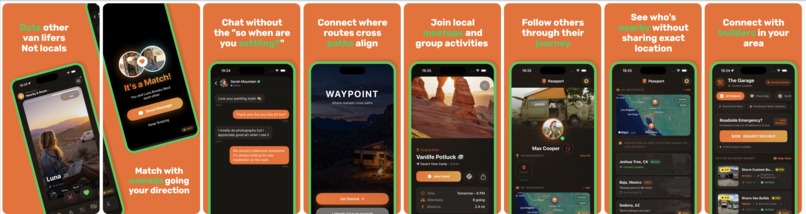
App store preview images of Waypoint
-
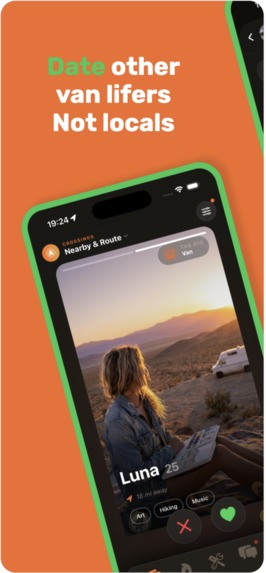
Date other van lifers not locals
-
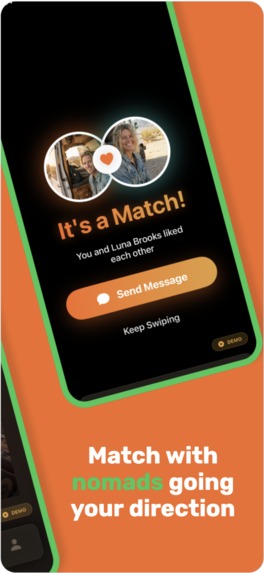
Match with nomads going your direction
-
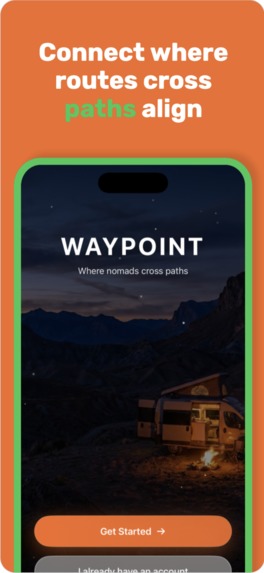
Connect where routes cross and paths align
-
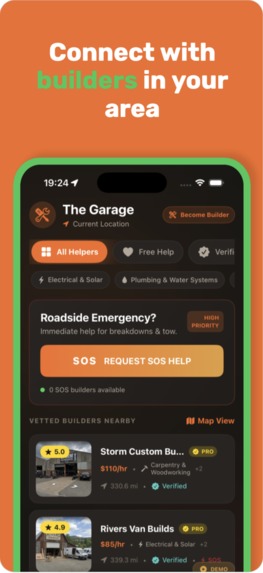
Connect with builders in your area
-
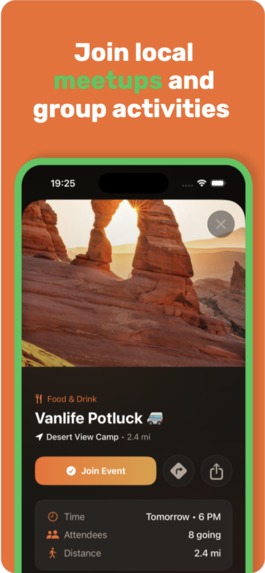
Join local meetups and group activities
-
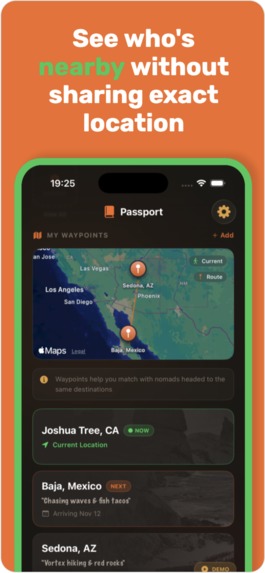
See who's nearby without sharing exact location
-
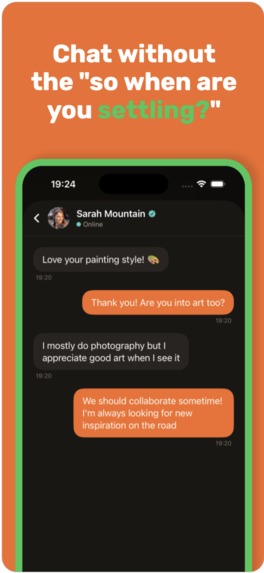
Chat without the "so when are you settling?"
-
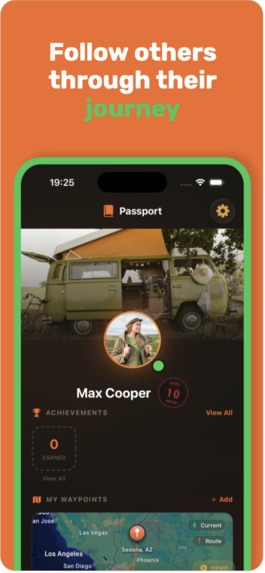
Follow others through their journey


Inspiration
I came across Quin Gable talking about how hard dating is as a solo woman van lifer, and it instantly clicked.
Every time she meets someone in a new city, it dies because she’s leaving and they’re staying. Dating apps assume you live somewhere. Nomads don’t.
The nomad community is growing fast, but there’s no real product built for how they actually move. Dating apps are location-based. Meetup apps assume you’re local. Most van lifers are just hoping to randomly run into the right people at the right campsite.
That felt broken.
So I built Waypoint.
What it does
Waypoint is built specifically for nomads. Not people pretending to travel. Nomads to nomads.
Route-Based Matching You don’t just match based on where you are. You match based on where you’re going. If I’m heading to Utah next month, I can match with people who will be there too. You can adjust your route, your timeline, and actually coordinate something real. It’s not “5 miles from you.” It’s “2 weeks from now, same place.” That’s the core idea.
Community Campfires Nomads don’t just date. They build community. You can create and discover local “campfires” — climbing trips, beach meetups, van build workshops, whatever. When you roll into a new town, you shouldn’t start from zero.
Invite-Only + Privacy First The nomad community is small and protective, especially for solo women. Waypoint is invite-only by default. For Shipyard I implemented a pass system, but long term it stays curated. Location is fuzzy by default. You control who sees where you are. Chat is built-in and real-time, so once you match, you can actually plan something instead of bouncing to Instagram immediately.
How I built it
I built Waypoint in about 2–3 weeks.
Stack: • SwiftUI for the UI • SwiftData for local persistence • Supabase for auth, database, real-time • MapKit for route visualization • RevenueCat Paywalls v2 for monetization • Cursor + Claude to move fast on architecture and iteration • Xcode as IDE
Architecture is feature-based MVVM so it doesn’t collapse once this scales.
Design-wise I went for a modern nomad feel. Clean, premium, subtle motion, good haptics. It needed to feel intentional, not like another dating clone.
Challenges I ran into
The matching logic was way more complicated than I expected. Building a system that knows when two users are a match, who liked who, who passed on who, and making sure it all syncs in real-time across devices? That was a beast. I had to design a state machine that tracks every possible swipe combination, handles edge cases (like when someone unmatches), and does it all without creating race conditions in the database. It took several iterations to get right, but I'm really proud of how smooth it feels now.
Accomplishments that I'm proud of
The waypoint matching system. That's the killer feature. Most dating apps are stuck in the "5 miles from you" mindset. Waypoint understands that nomads aren't just where they are, they're where they're going. Being able to match with someone you'll meet in two weeks? That changes everything.
What I learned
I learned that building for a niche community requires deep empathy. Every feature decision had to pass the "would this make Quin feel safer?" test. I also learned a ton about real-time data sync, complex matching algorithms, and how to build privacy-first location features. Oh, and I learned that Cursor + Claude is an absolute cheat code for building fast.
What's next for Waypoint: Nomad Dating App
If I win this (fingers crossed), I want to: Put a lot of time and effort into getting users to the app to gather feedback and reviews Maybe try to partner with apps or platforms in the same niche (like AllTrails) to have community hosted events (campfires) Build Android support
The nomadic community deserves an app that actually gets them. Waypoint is that app.

Log in or sign up for Devpost to join the conversation.