-
-
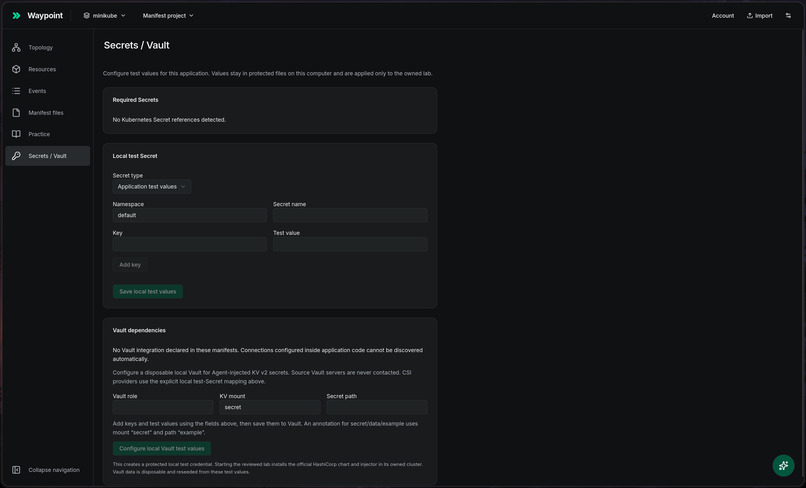
Secrets
-
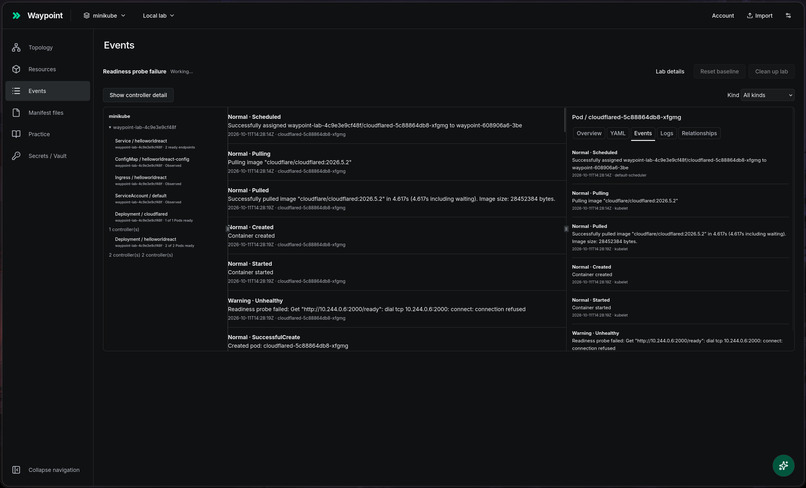
Events
-
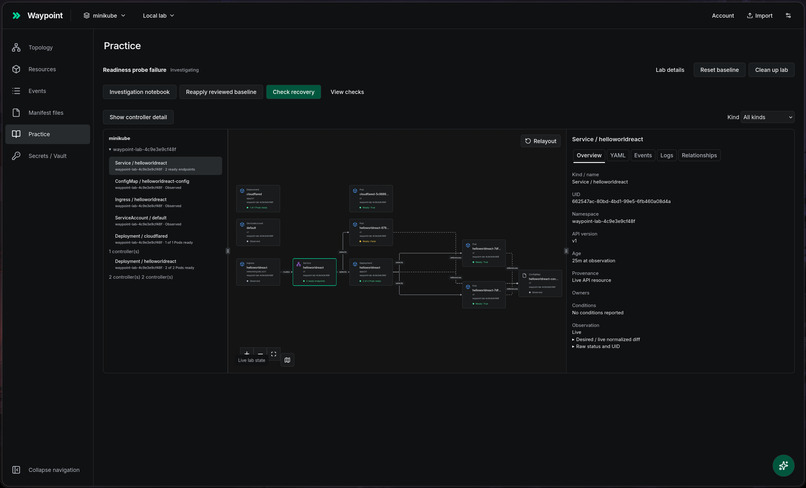
Practice
-
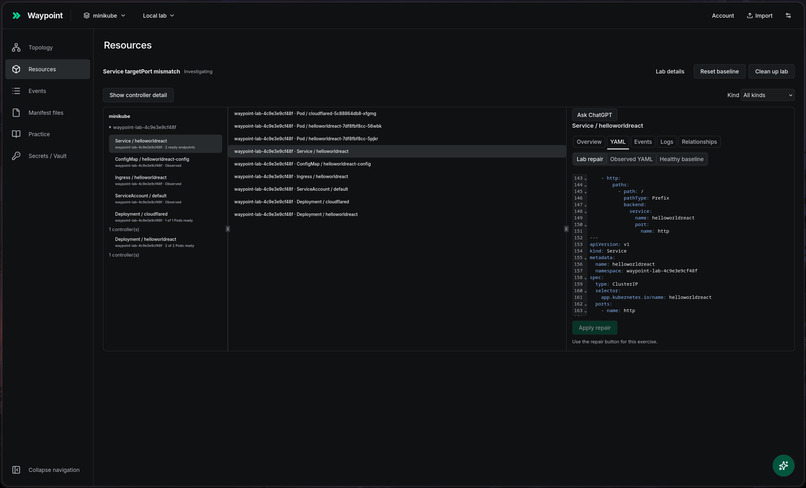
Resources
-
Topology
Inspiration
Working with Kubernetes, I noticed that the hardest part for people getting started is understanding how everything connects. You can read a configuration file and still have no clear picture of where an application runs, how traffic reaches it, or where to look when something breaks. I’ve seen this with coworkers, and as a visual learner, I wanted a better way to explain it. That became Waypoint: a place to explore infrastructure visually and learn by working through problems yourself.
What it does
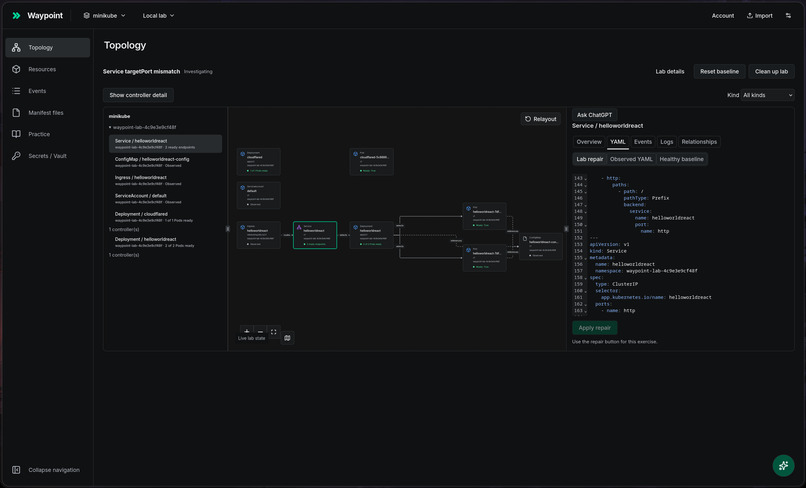
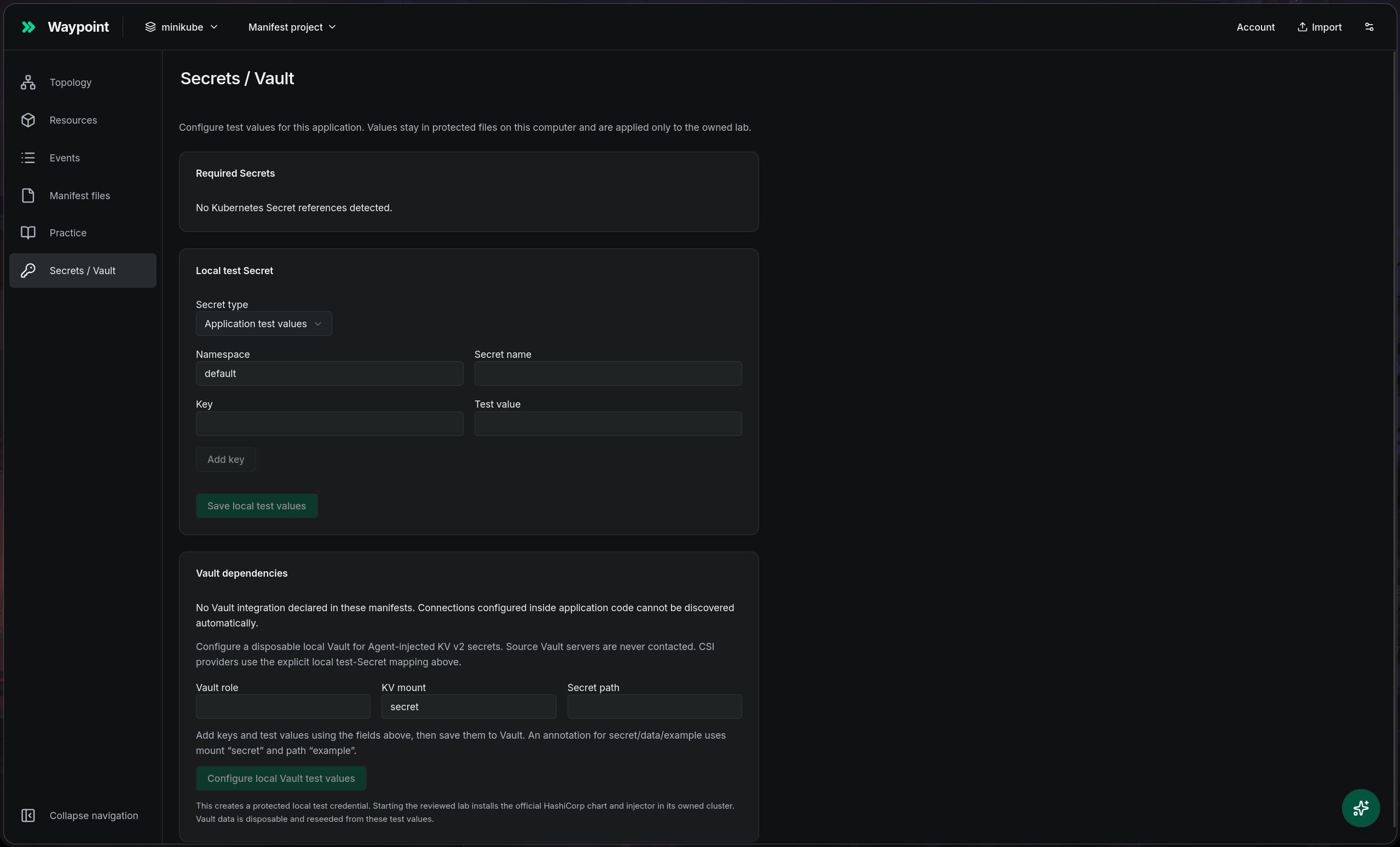
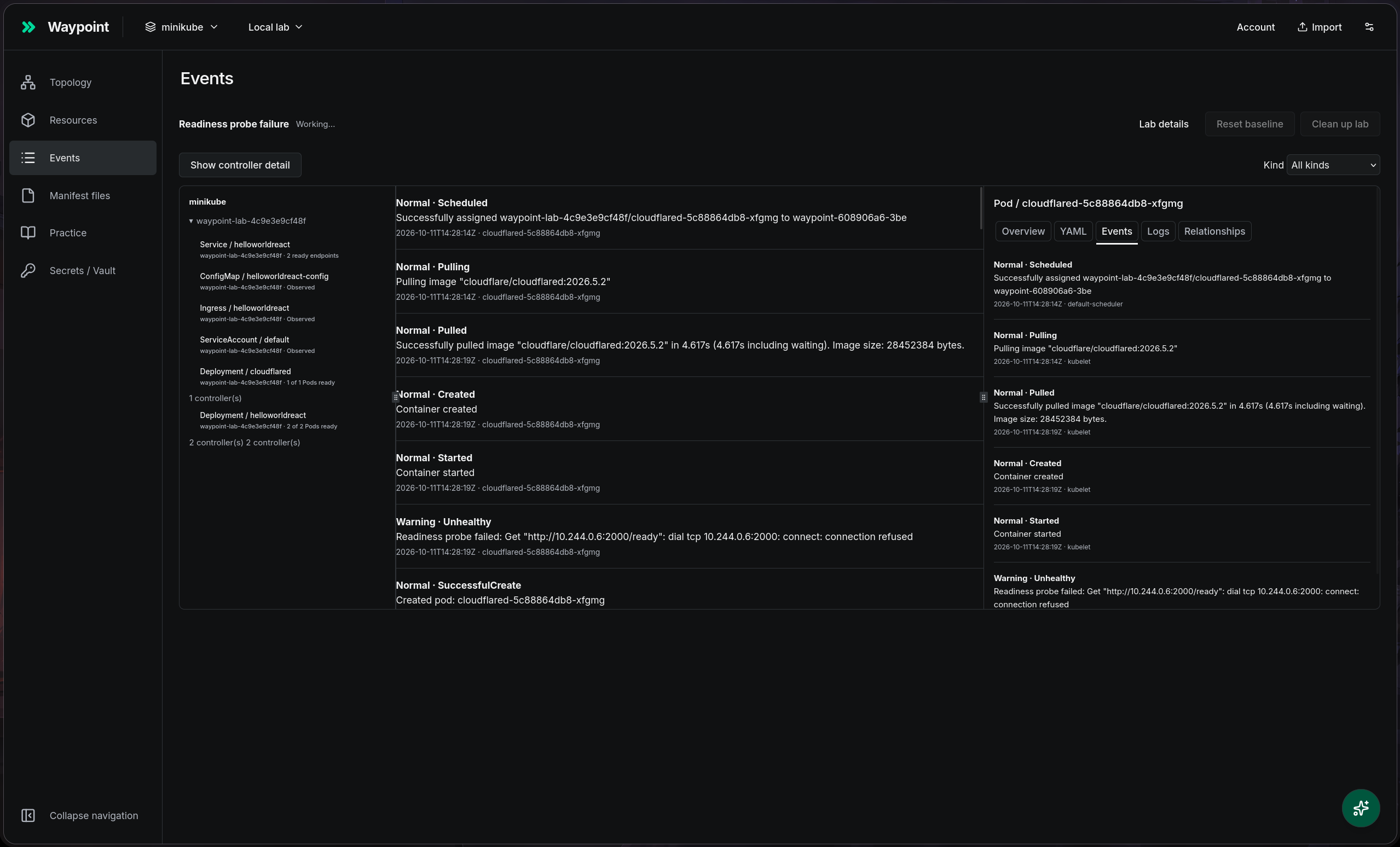
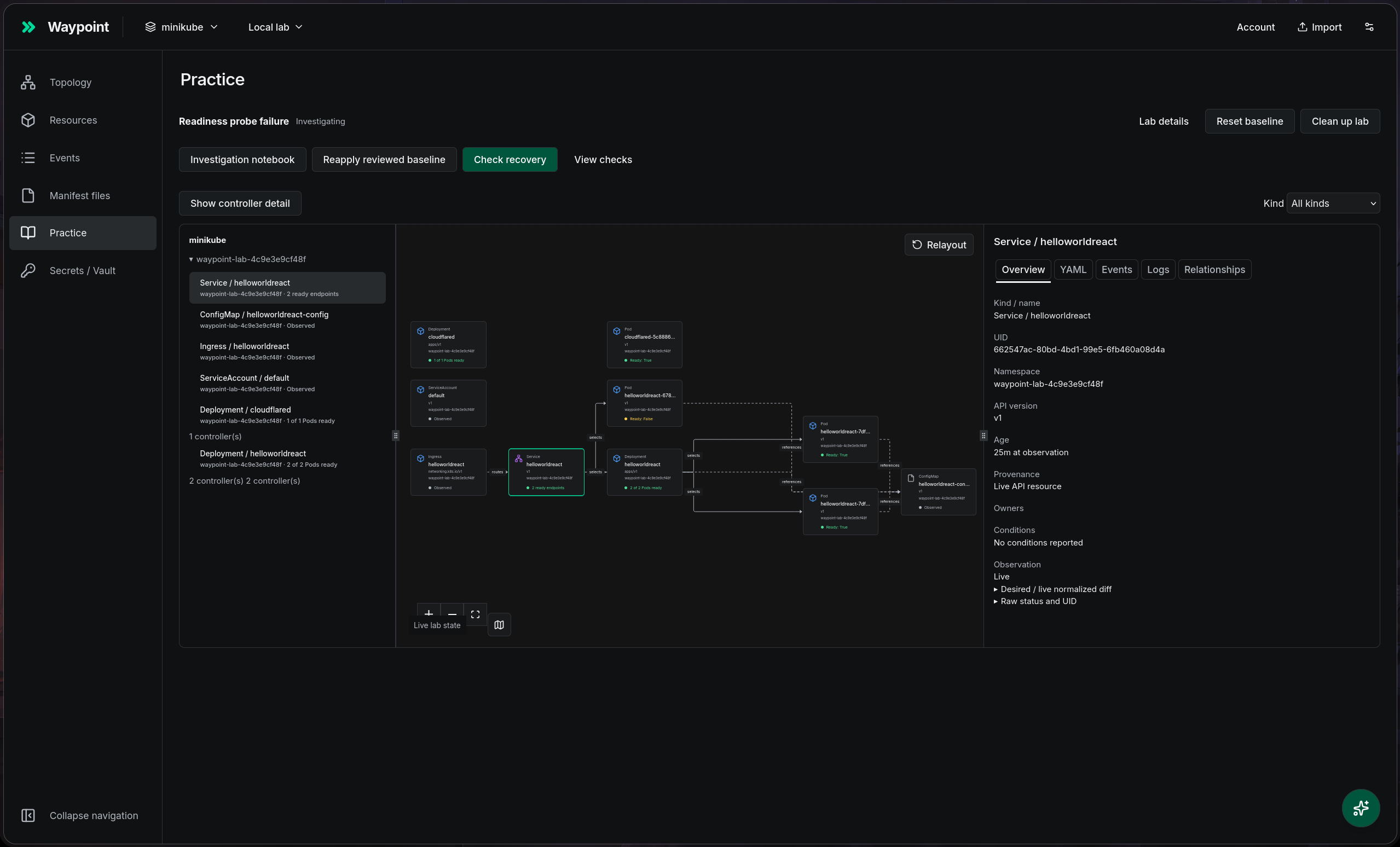
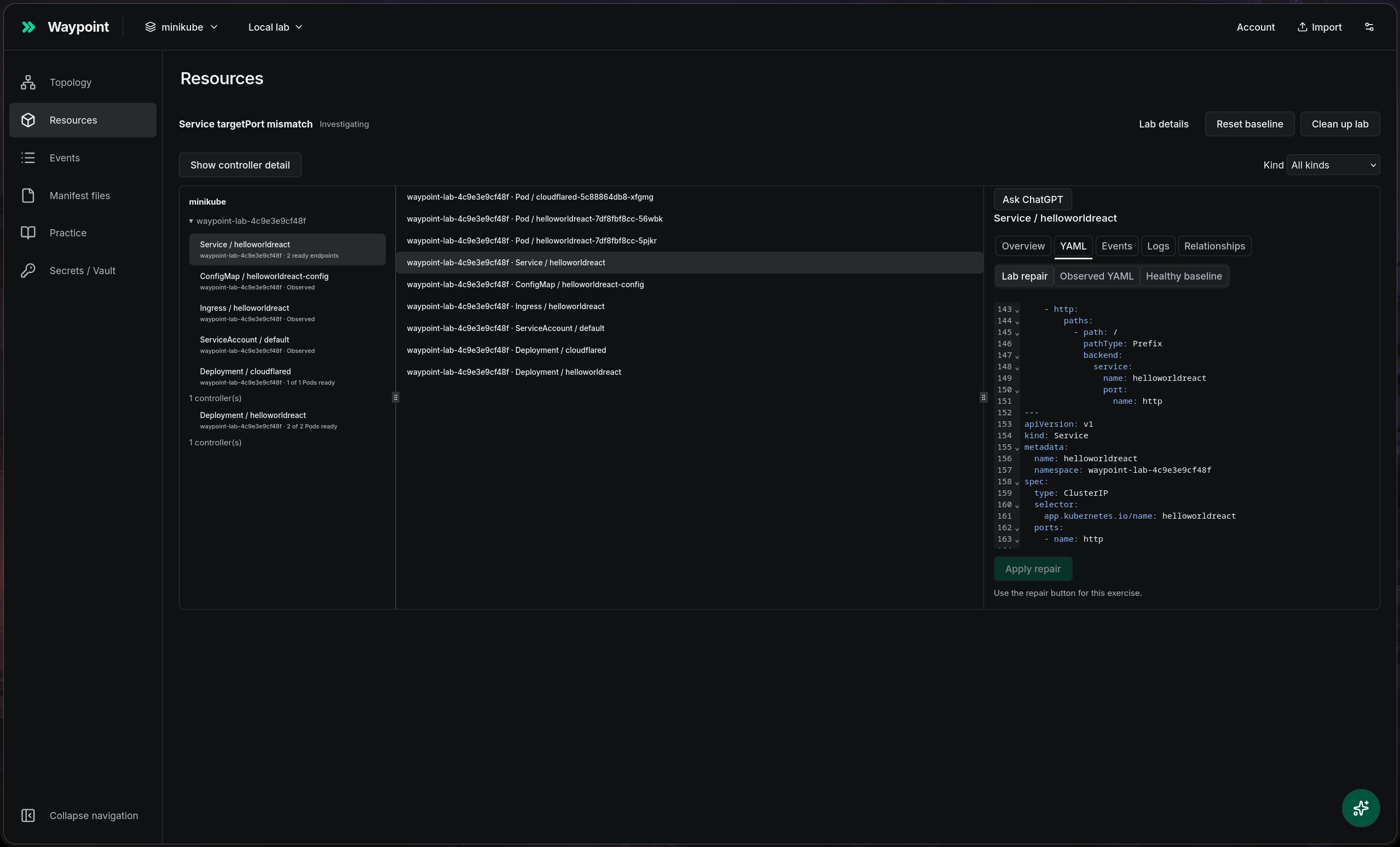
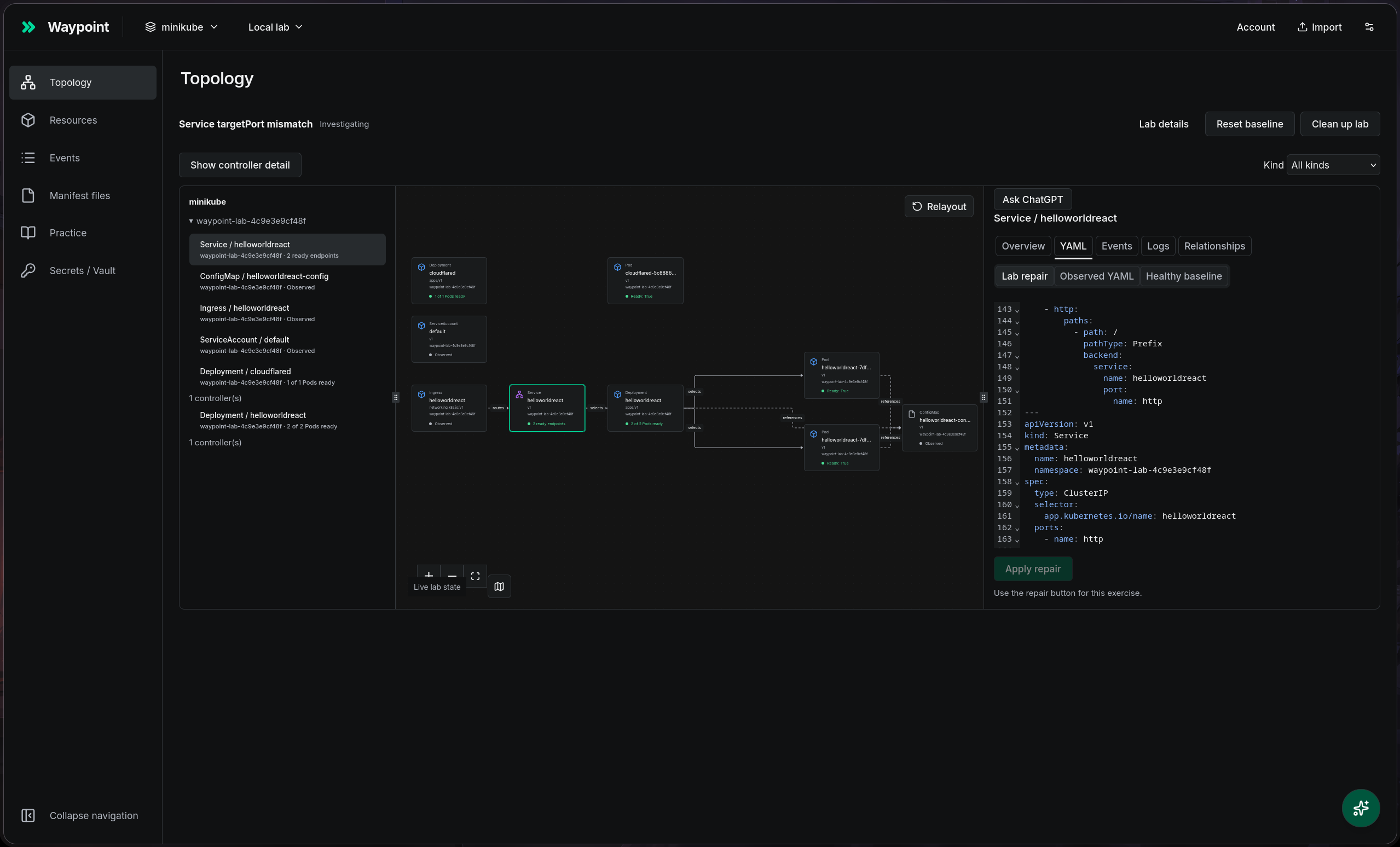
Kubernetes manages the containers that run applications. Waypoint helps you understand that system by connecting its configuration, resources, and debugging tools in one visual workspace. You can explore application relationships, inspect manifests, and follow logs and events. Practice guides walk you through investigating failures, forming a hypothesis, making a repair, and understanding why it worked. Exercises run in a dedicated local practice environment. The incident catalog covers readiness and liveness probes, broken service connections, unavailable images, missing configuration, and stale market data. ChatGPT provides explanations and hints, and can tailor scenarios to supported failure types in your infrastructure. For the financial-infrastructure use case, a synthetic market-data producer and consumer provide a concrete example: what happens when a service is running, but its data stops updating? The exercise connects infrastructure debugging to the freshness of information an application depends on.
How we built it
Waypoint combines a TypeScript CLI with a Next.js and React interface. The CLI connects the local environment to the browser workspace, while Kubernetes supplies real resources and debugging evidence. The importer supports YAML manifests, Helm, and Kustomize. A relationship graph helps users navigate the resources those configurations describe. Guided practice builds on that foundation with learning steps, progressive hints, repair actions, and recovery checks. AI-generated scenarios use supported, validated incident types so the learning experience stays connected to what the practice environment can actually reproduce.
Challenges we ran into
A diagram needs to explain more than which objects exist. It needs to show relationships that help someone investigate a problem, while keeping configuration and observed health distinct. Another challenge was keeping practice separate from the infrastructure being explored. Kubernetes resources also change during an exercise, so tracking the correct resource and checking recovery are important parts of the implementation.
Accomplishments that I'm proud of
Waypoint brings visual exploration and guided troubleshooting into the same workflow. Learners can move from “What is this resource?” to “Why is this application failing?” without losing the context of how the application fits together.
What I learned
Building Waypoint made the connection between configuration, resource relationships, and runtime events much clearer. A useful learning tool has to help someone reason through a failure, not simply show them the command that fixes it. It also reinforced the importance of testing the full workflow: importing an application, investigating a fault, applying a repair, and observing recovery.
What's next for Waypoint
More guided incidents, better explanations of complex resource relationships, and broader testing across different manifest repositories and Kubernetes setups. I also want to develop the practice guides further so beginners can build confidence before investigating unfamiliar infrastructure.
Built With
- chatgpt
- helm
- kubernetes
- kustomize
- minikube
- next.js
- node.js
- react
- typescript


Log in or sign up for Devpost to join the conversation.