-
-
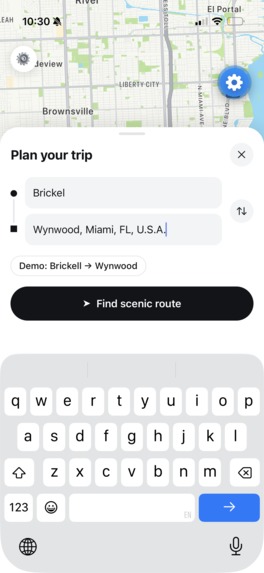
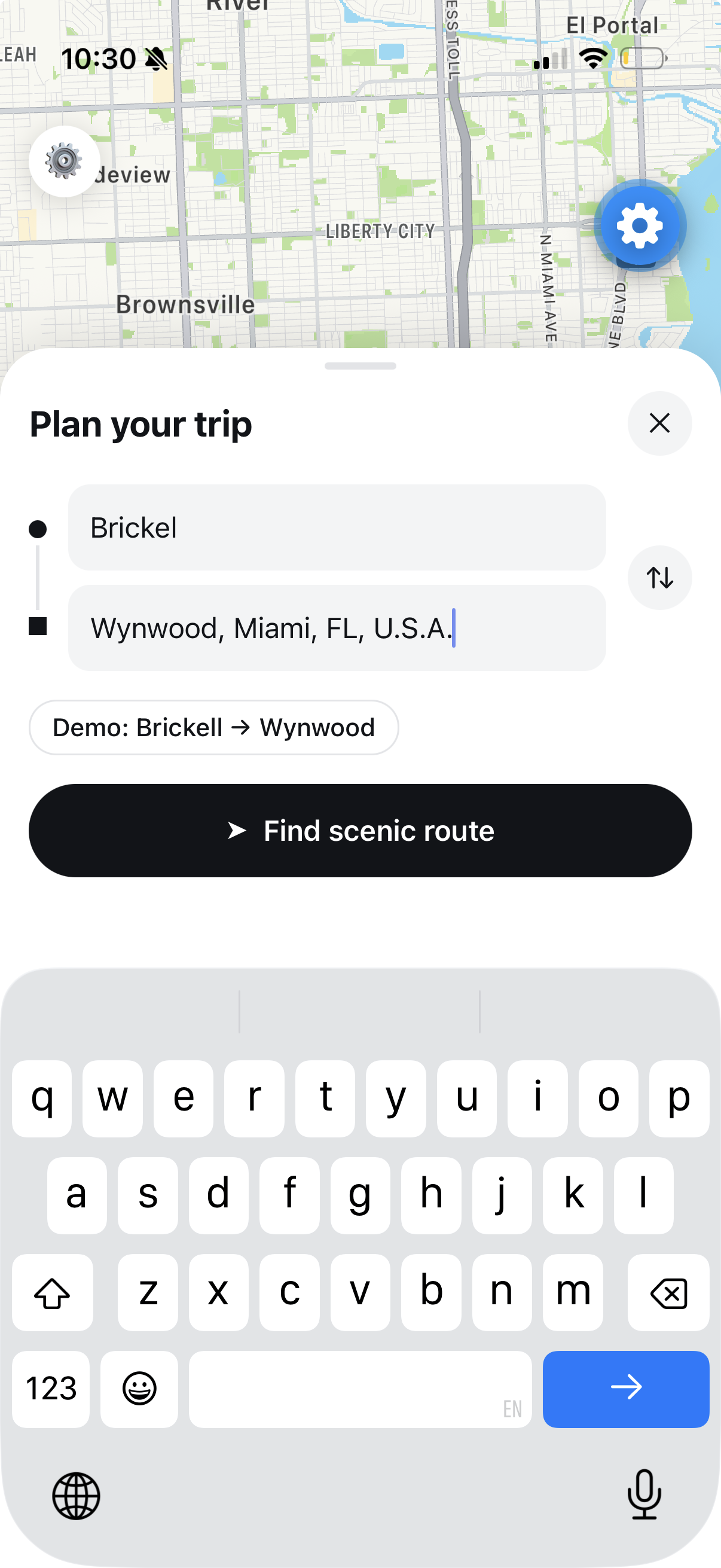
Type a start and a destination or tap the demo chip for Brickell → Wynwood.
-
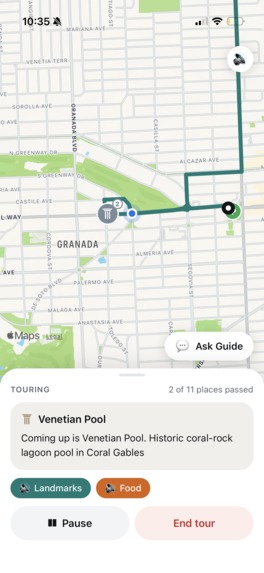
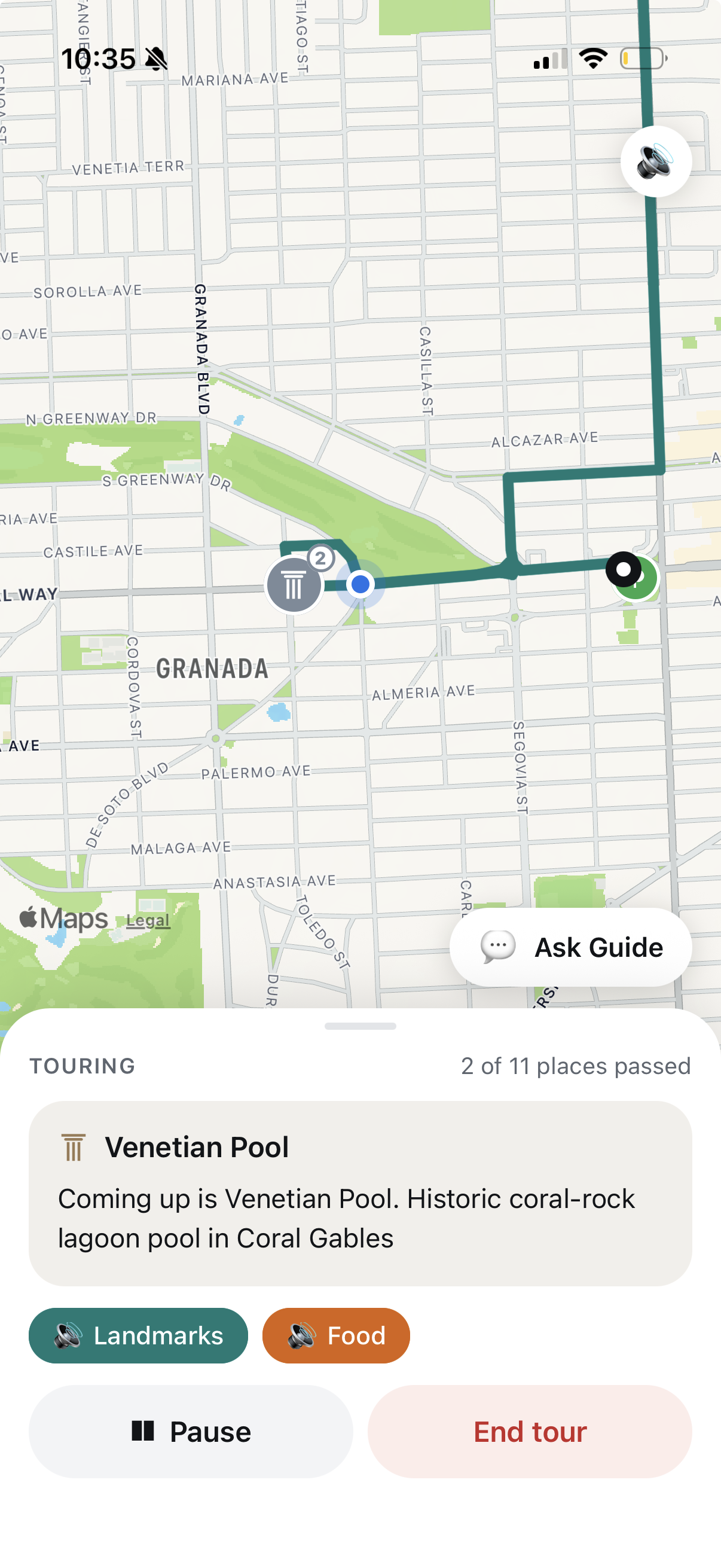
Touring counts the places passed, shows the line being spoken right now, and gives you a pause button and separate mute chips for landmarks
-
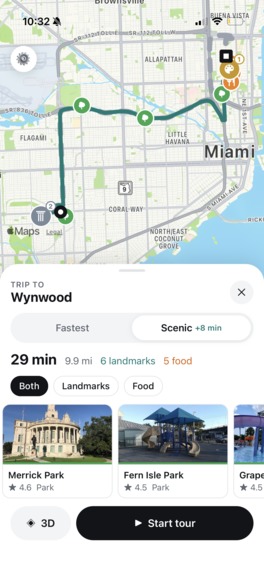
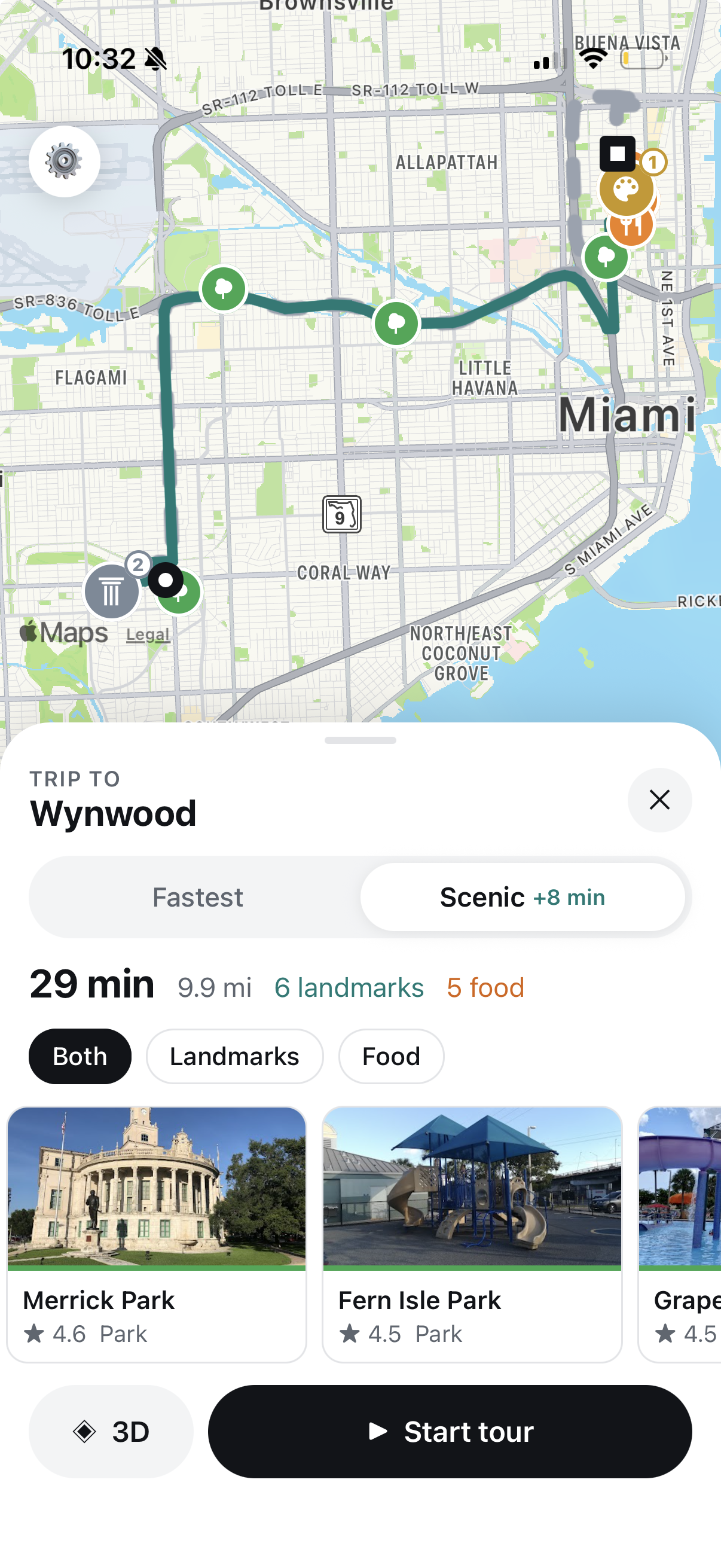
Compare. Fastest vs. Scenic with the honest cost of the detour. Switching redraws the map from data already in hand
-
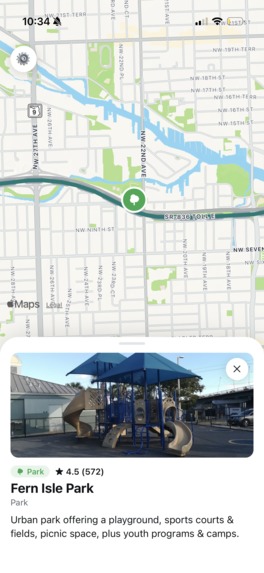
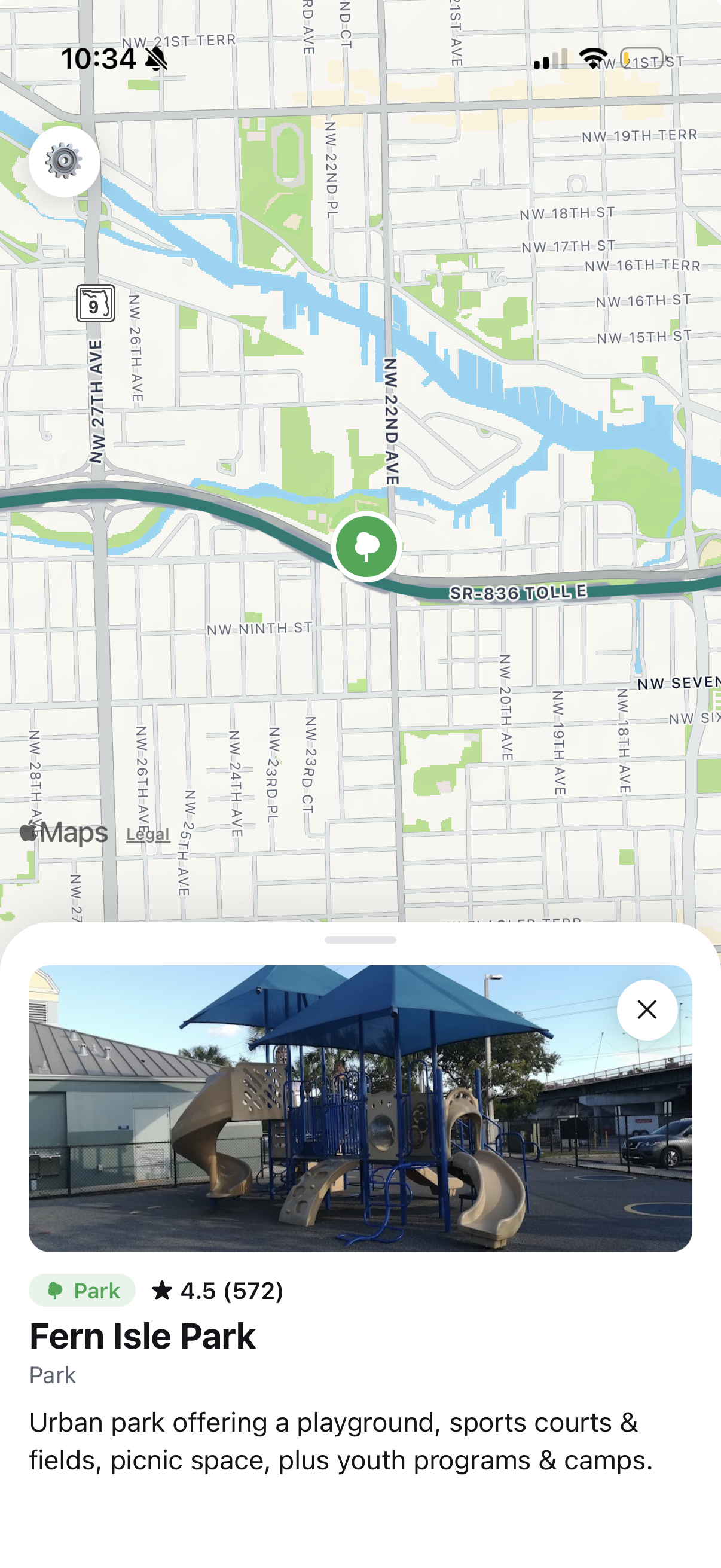
Browse views. Tap a pin or a card for the photo, the rating and review count and the description: cuisine and price level for restaurants
Inspiration
The idea for WayMore came from a friend of mine who is always driving down from Gainesville. On one of his trips, he hit really bad traffic on the way down and decided if he is going to wait he would rather wait by the beach instead and took a scenic detour
Even though the detour added extra time to the trip, he said he actually felt way better and enjoyed the ride a lot more. That really stuck with me.
When I brought the idea to the team it resonated with all of us because we could all think of similar experiences where the journey ended up being just as important as getting to the destination. We wanted to find a way to give people that same experience intentionally.
What We Learned
We learned a lot throughout the process especially about the Google Maps API and how routing actually works. We had to learn how routing algorithms evaluate different paths and how we could stitch different routes and waypoints together to create a scenic route instead of just finding the fastest one.
We also learned a lot about connecting different parts of an application together from the mobile app and backend to routing, landmarks, narration, and the AI guide.
How We Built It
The main idea behind WayMore was to enhance the passenger experience in autonomous vehicles.
With autonomous driving becoming more common we wanted to look at the experience from the passenger's perspective. If the car is already doing the driving, why should the passenger only care about getting there as fast as possible?
WayMore lets users enter a destination, choose what they want to see, and decide how much extra time they are willing to spend. We then use routing and landmark data to find scenic detours that fit their preferences.
The app also turns the route into more of an experience by showing landmarks along the way, providing narrated information, and allowing the passenger to interact with an AI guide.
Challenges
One of our biggest challenges was that we were mostly all first-time mobile developers. Getting our mobile testing environment set up and finding a reliable way to test changes and troubleshoot problems with live feedback took a lot more work than we expected.
Another challenge was figuring out what we actually needed to prioritize. There were a lot of ideas and features we wanted to add, but we had a limited amount of time. We had to figure out what was important to the core experience and make sure all of our different pieces actually worked together.
In the end, an idea that started from a friend's frustrating drive turned into WayMore a way to make the ride itself more enjoyable, not just the destination.


Log in or sign up for Devpost to join the conversation.