-
-
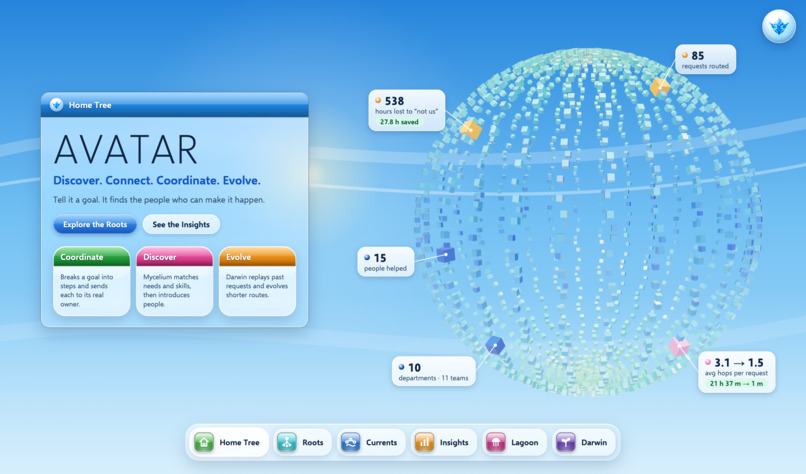
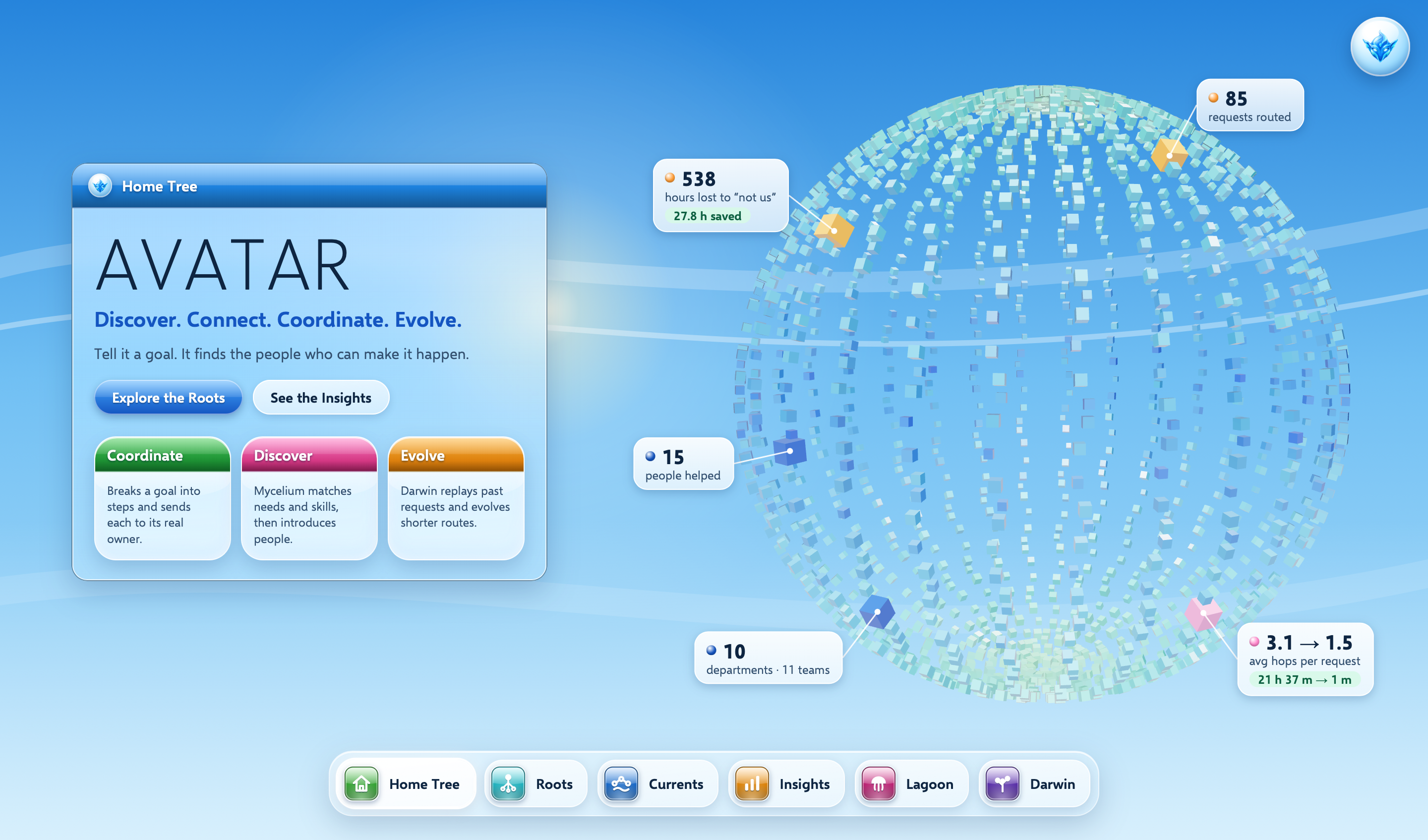
Tell Avatar a goal. It finds the people who can make it happen.
-
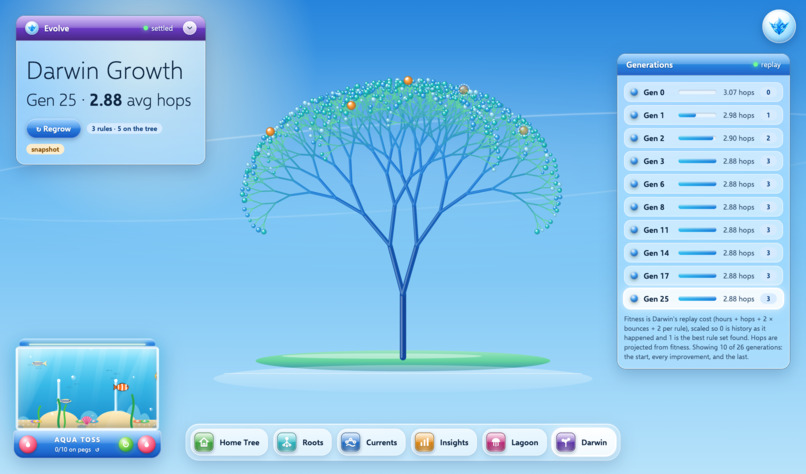
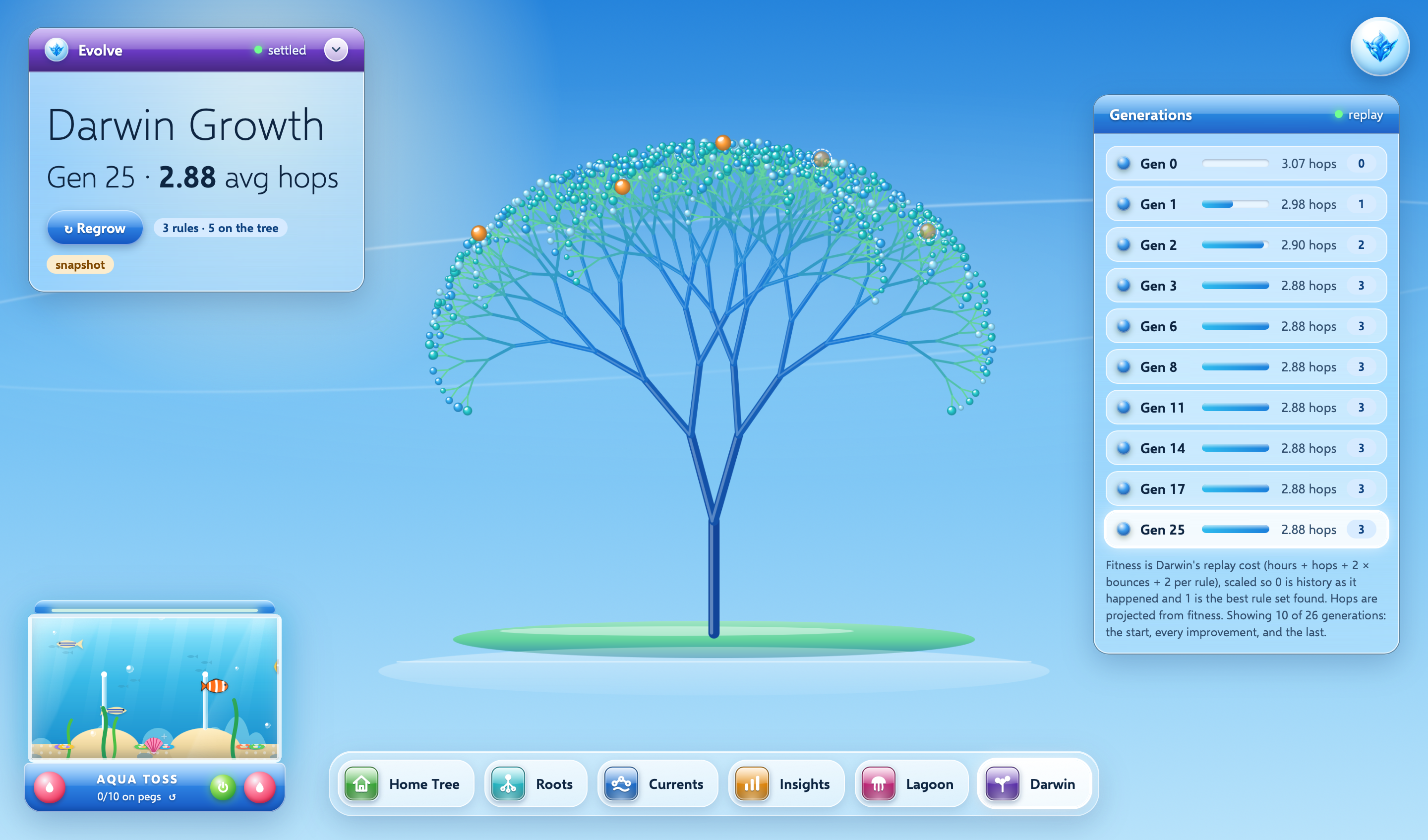
Darwin replays past requests and evolves shorter routes. It found 3 rules that cut the average hops per request.
-
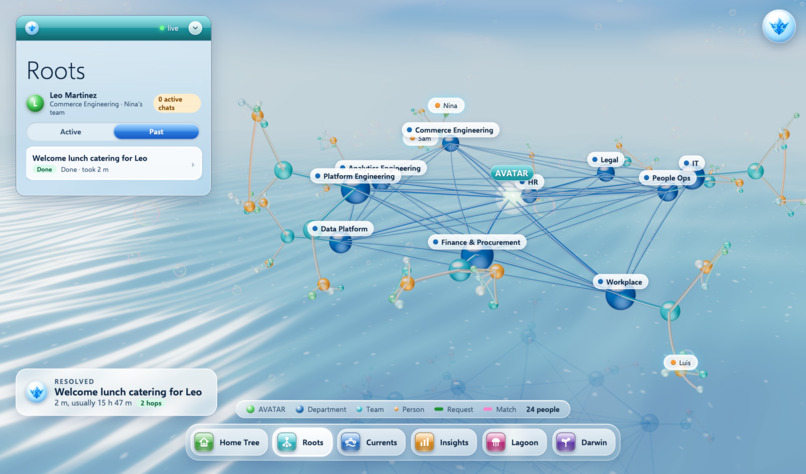
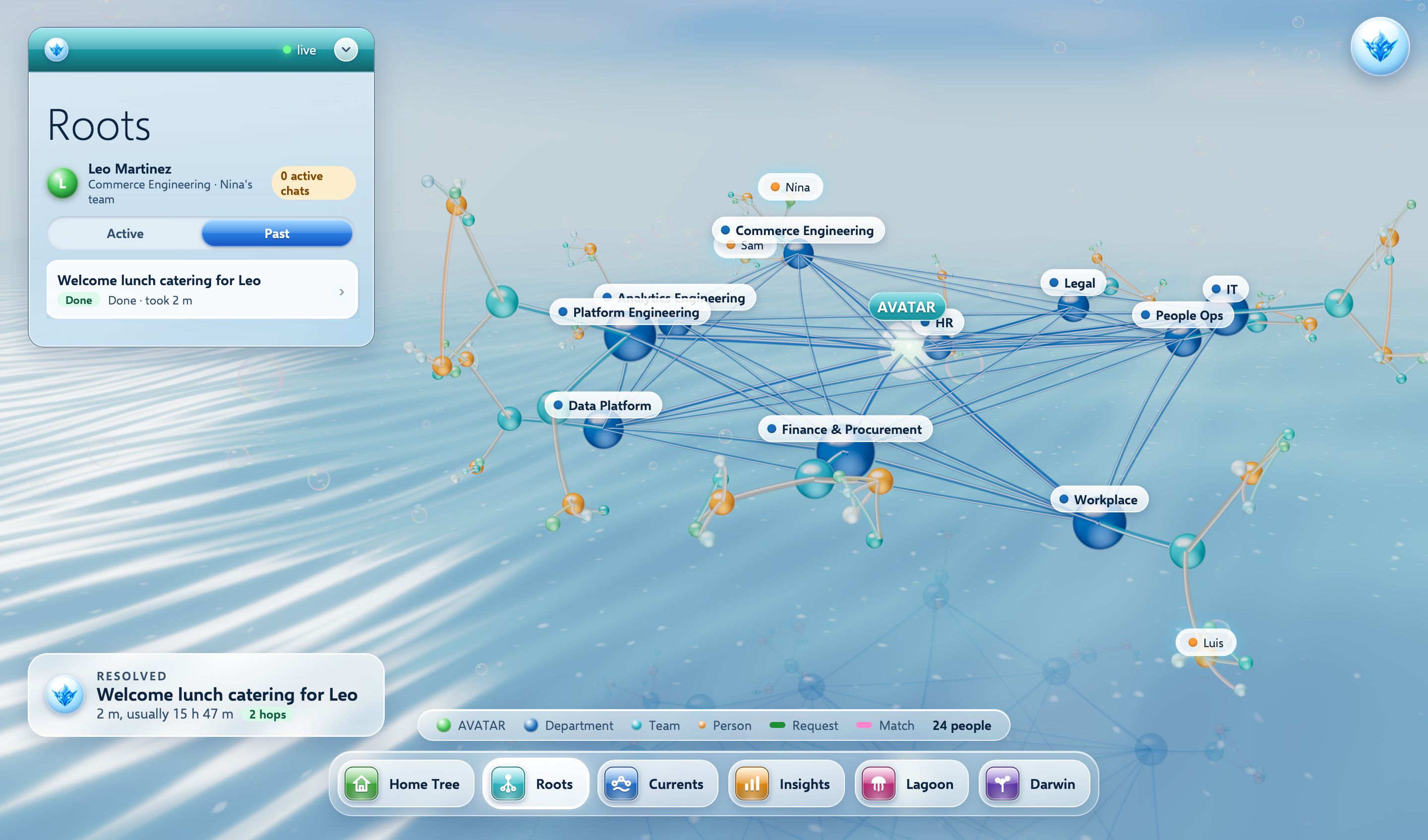
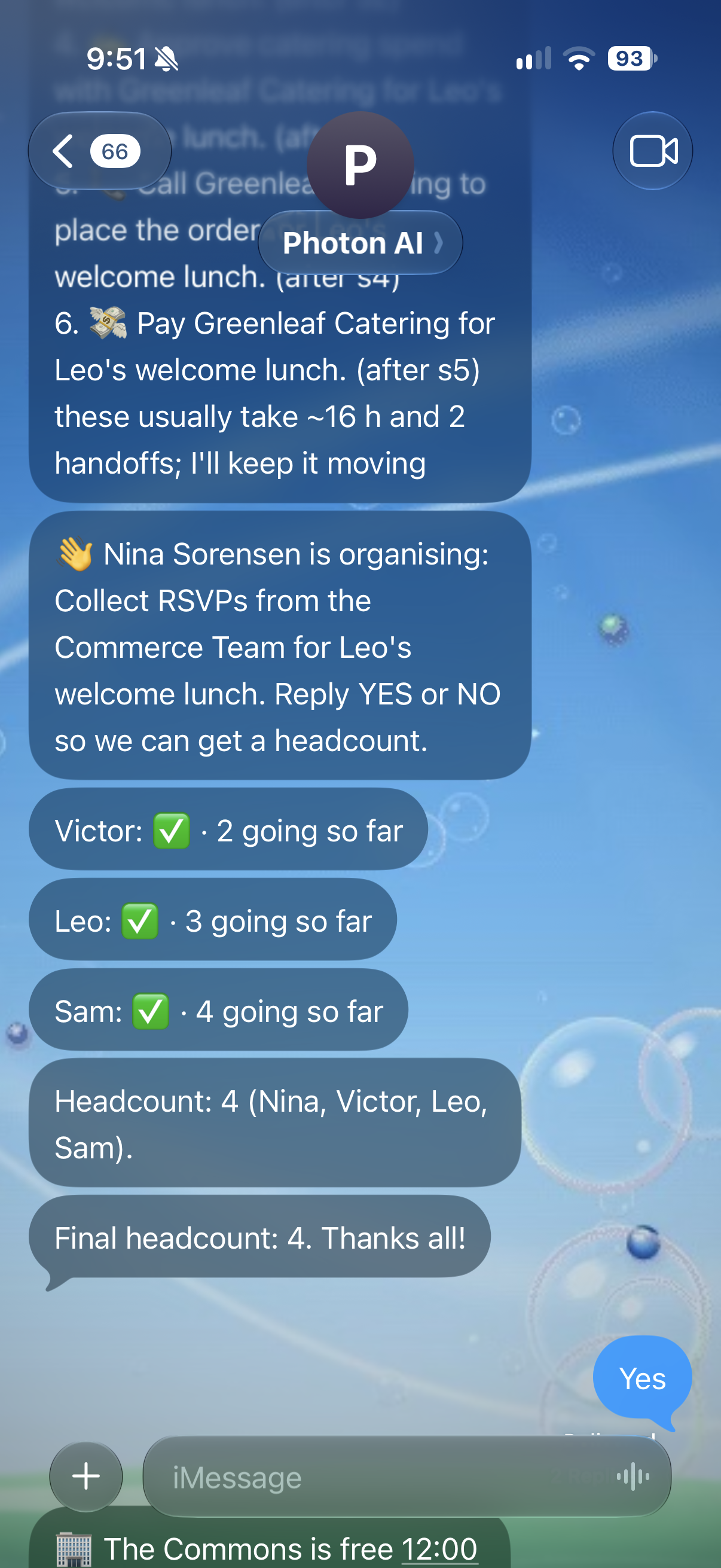
The live org map. Leo's welcome lunch took 2 minutes and 2 hops, down from the usual 15 hours.
-
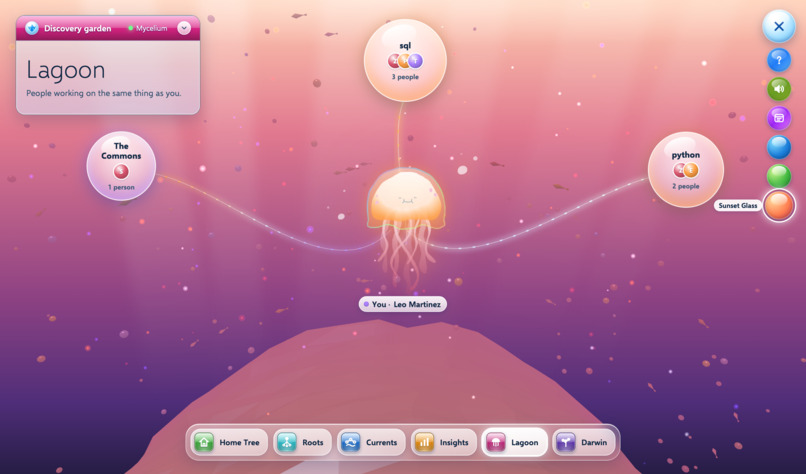
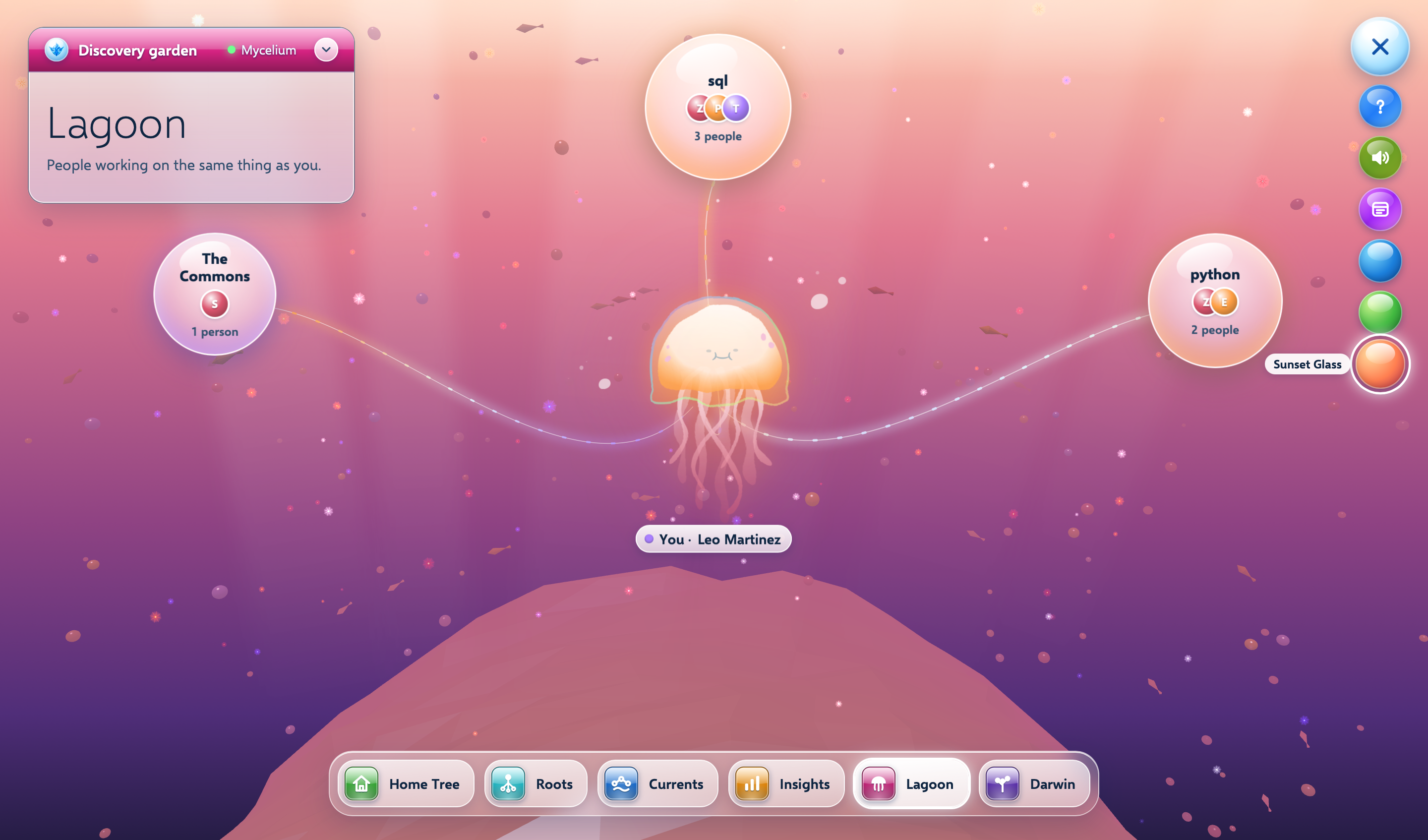
Avatar finds people working on the same thing as you and offers to introduce you.
-
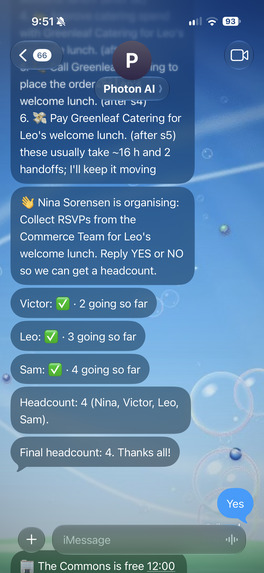
Photon resolves query
Inspiration
At work, the hard part is often not the task. It is finding who owns it. You ask one team, they say "not us," and you start over. New hires feel this most. In our simulated company, the last 10 new hires took an average of 4.01 days and 6.00 hops to get set up.
Tools like Glean connect people to information. We wanted a tool that connects people to people.
What it does
You text Avatar in iMessage. It breaks your request into steps and sends each step to the person or team that owns it.
- Learns the org map from replies. When someone writes "not us, try Procurement," Avatar reroutes the step. It lowers the old route's confidence score and saves the new route. When someone writes "Priya's out, ask Tom," it saves a delegate until Priya is back.
- Handles approvals by text. It applies the spend policy to find who must sign off, then texts them. They reply APPROVE or DENY. If they go quiet, it nudges them, then goes to their manager.
- Pays for approved requests. It pays the vendor or moves budget between teams, up to the approved amount and no more.
- Shows its work. A live dashboard shows the org map, the path of each request, and the teams where requests sit longest.
- Gets better over time. Darwin replays past requests and suggests routing rules. An admin approves them on the Darwin page, and Avatar routes by them.
- Connects people with shared work. The Lagoon page shows people who ask about the same topics. Tap Introduce and it texts both of them.
How we built it
- Agent: A TypeScript server. Photon Spectrum (
spectrum-ts) links it to iMessage and a terminal chat. Gemini reads each text, plans the steps, and writes the asks. It sorts each reply as done, redirect, delegate, deny, or question. LangGraph runs one thread per request and one agent per step. There are six kinds of step agent: task, approval, payment, call, RSVP, and room. Threads save to SQLite and survive restarts. - Web: Next.js 14 with three.js, d3, GSAP, and Recharts. Six pages show the org map, each request's path, where time goes, shared topics, and Darwin's rules. The agent pushes each change to the browser over server-sent events (SSE).
- Data: A made-up company called Photon, stored as JSON. It has 10 departments and 24 people. It has 6 rooms, 6 vendors, 8 budget lines, and 11 policies. It starts with 35 map edges and holds 84 requests with 256 hops.
- Snowflake: Holds the staff list, budgets, vendors, policies, rooms, and past requests. Six roles set what each person can see: employee, manager, finance, HR, HR head, and VP. A masking policy hides HR text. Each question runs under the role of the person who asked. When the VP asks why new hires take so long, Snowflake gives the numbers. When a new hire asks, Snowflake says no.
- Tiger Data: Postgres with TimescaleDB holds the live side. Each agent action is a row in an
eventshypertable. A trigger turns events into requests and hops. SQL views answer the Insights questions: where work gets stuck, which handoffs are slow, and how many hours we save. The org map and its change log live here too. - Darwin: A Python FastAPI service. It replays past requests under new rule sets. A genetic algorithm looks for the best set of up to 3 rules. Before each route, the agent asks Darwin for a hint. Only approved rules count.
- Payments: The Capital One Nessie sandbox holds the money. Each team has its own account. Invoice and card vendors get bills, and budget moves are transfers. Vendors that take Solana get paid on devnet, with a memo that ties the payment to the request.
- Voice: ElevenLabs turns summaries and daily briefs into voice notes. Its Conversational AI can call a vendor on the phone.
What Darwin found
Darwin proposed 3 rules:
- Page Platform Engineering first for checkout incidents.
- Send dashboard requests to Analytics Engineering first.
- For onboarding, skip People Ops and go to Workplace.
Together they save 217.2 hours (7.3%), 16 hops, and 12 bounces in replay. A brute-force check of all 28 possible rule sets picked the same 3. For checkout incidents, rule 1 cuts the average time to close from 169.2 minutes to 71.7 in replay.
Challenges we ran into
- No Snowflake Cortex. We planned to use Cortex for policy questions, but our trial account did not have it. So Gemini answers from data the agent pulls from Snowflake.
- One token, many roles. The agent's Snowflake token is locked to its own role, and that lock wins over the default role. So the agent names a role on every SQL statement.
- Paused graphs run twice. LangGraph runs a paused step again when it resumes. To keep from sending a text twice, our wait steps pause and do nothing else.
- Devnet quirks. Solana devnet turned down our v1 transfers, so we send v0.
- One agent per Photon project. Photon sends each text to every agent on the project. When two of us ran the agent at the same time, each request ran twice.
- Data that tells a true story. The fake history needed real bounce chains, and every demo number had to come from it.
Accomplishments that we're proud of
- One agent runs the whole loop over iMessage: request, route, "not us" reroutes, approvals, payment, and receipt.
- The database guards access. Snowflake, not our app code, turns away a new hire who asks for VP data.
- Every demo number comes from queries on past requests.
- Two kinds of learning that don't clash. The agent learns from single replies. Darwin learns from all past requests.
- Limits on money. The payment agent's cap is set before the model runs, and each step can pay once.
What's next
- Ask both people before an intro.
- Run Darwin again as live requests come in.
- Back the approval check with Snowflake roles.
- Add a local ledger fallback for Solana, like the one for Nessie.
- Use real group threads for RSVPs and intros.
Note on data
Photon is a simulated company. Its people, vendors, budgets, and past requests are made up. Avatar touches no real systems and moves no real money. Nessie is a sandbox, and Solana runs on devnet.
Tools and credits
- We used Claude Code and ChatGPT Codex as AI coding assistants.
- Parts of the UI design took inspiration from CodePen.
- Built with Photon Spectrum, Gemini, ElevenLabs, Capital One Nessie, Solana, Snowflake, and Tiger Data.
- Libraries: LangGraph, Next.js, three.js, d3, GSAP, Recharts, FastAPI, and node-postgres.
Built With
- capital-one-nessie
- claude
- codex
- d3.js
- elevenlabs
- fastapi
- gemini
- gsap
- imessage
- langgraph
- next.js
- node.js
- photon
- postgresql
- python
- recharts
- snowflake
- solana
- sqlite
- three.js
- tiger-data
- timescaledb
- typescript


Log in or sign up for Devpost to join the conversation.