Inspiration
Travel can become stressful in seconds. A cancelled train, an unexpected weather change, a local disruption, or an unfamiliar emergency can leave travellers searching across multiple websites, struggling to understand which information is current and what to do next.
For international travellers, the problem is even harder. Information may be scattered across local transport operators, weather services, and official public resources, often presented in unfamiliar languages or formats.
We built WAYFINDER around one simple question: when something unexpected happens, how can people quickly understand their situation and find their next step?
What is WAYFINDER?
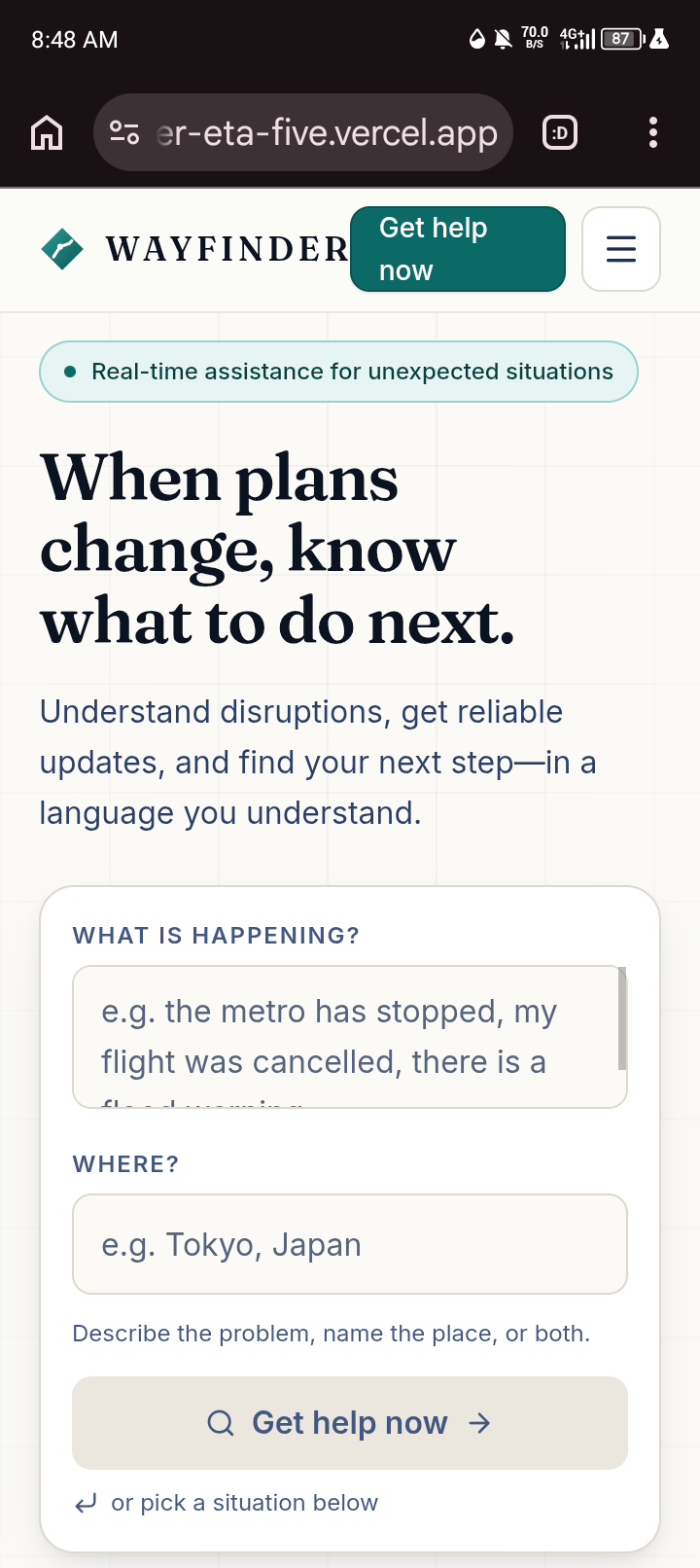
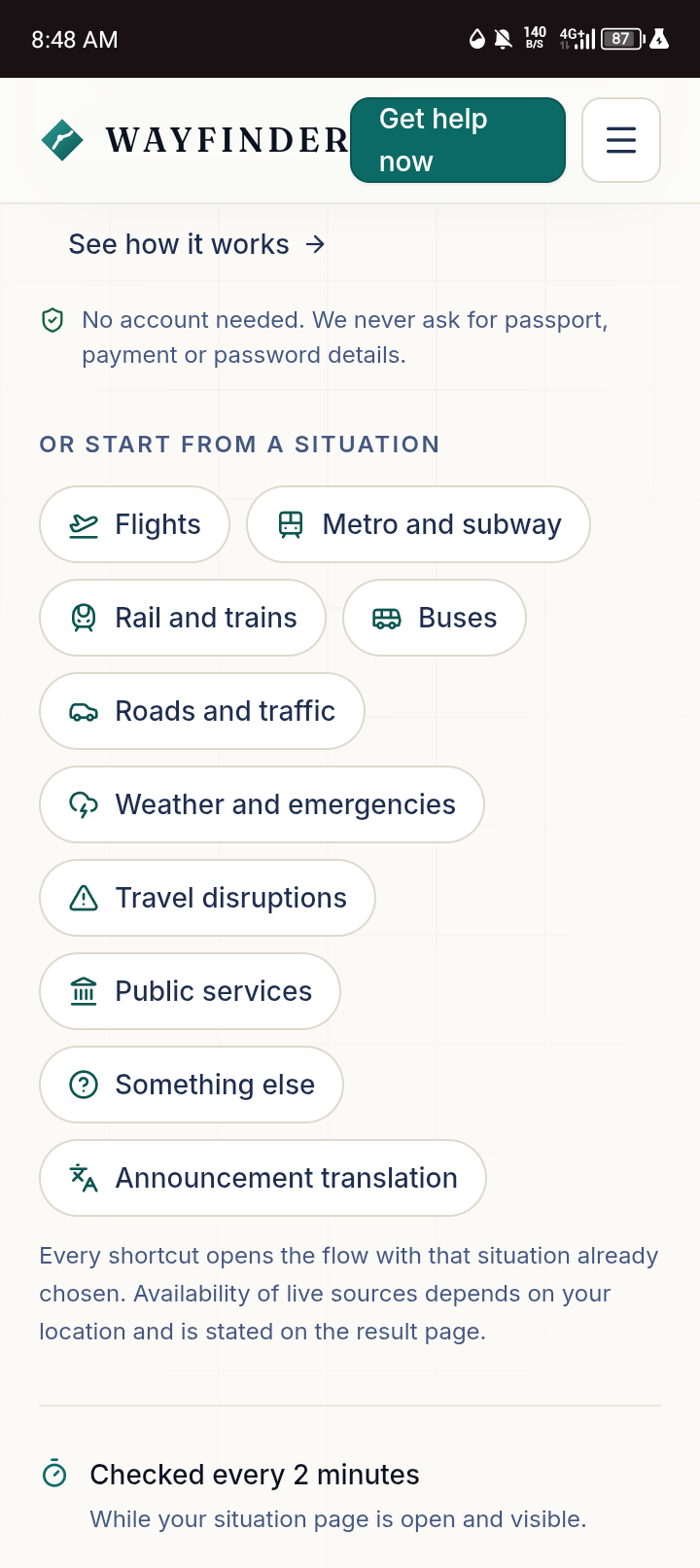
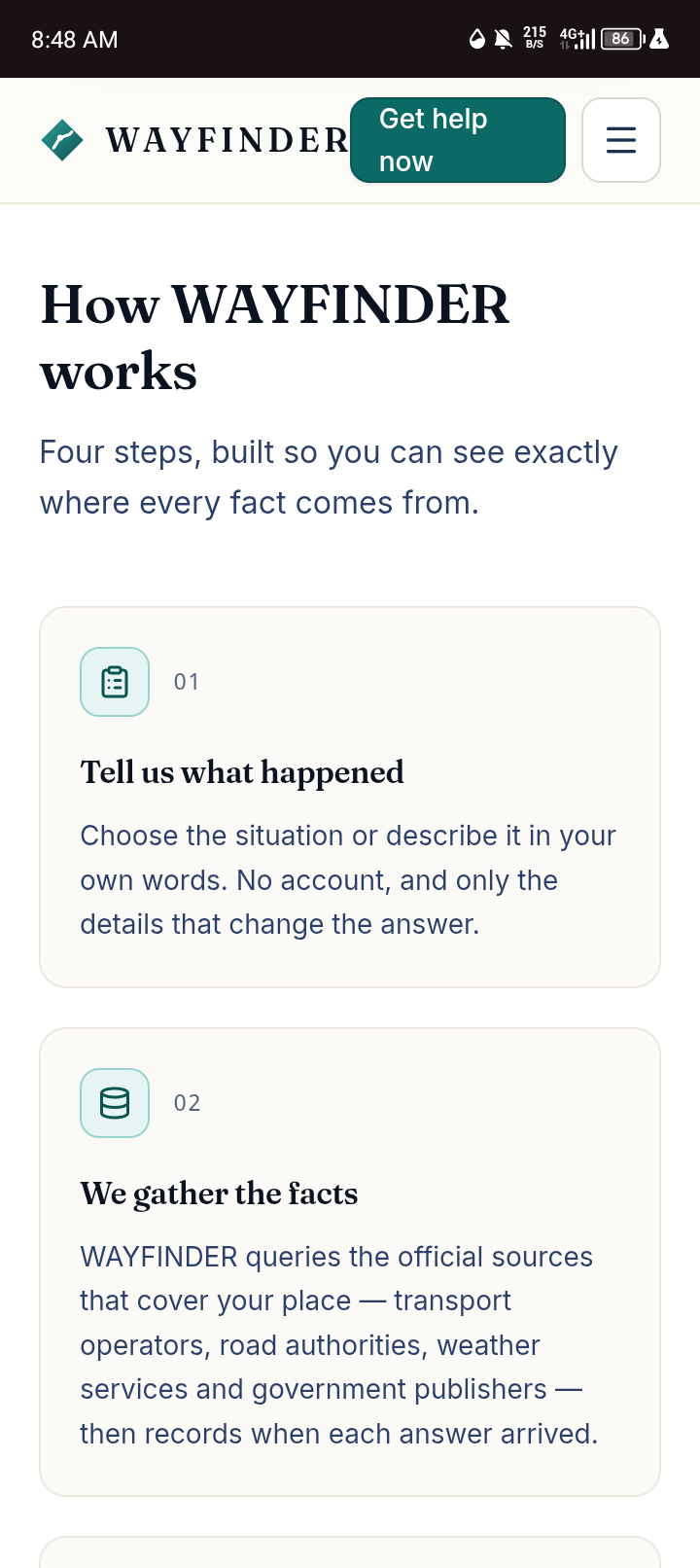
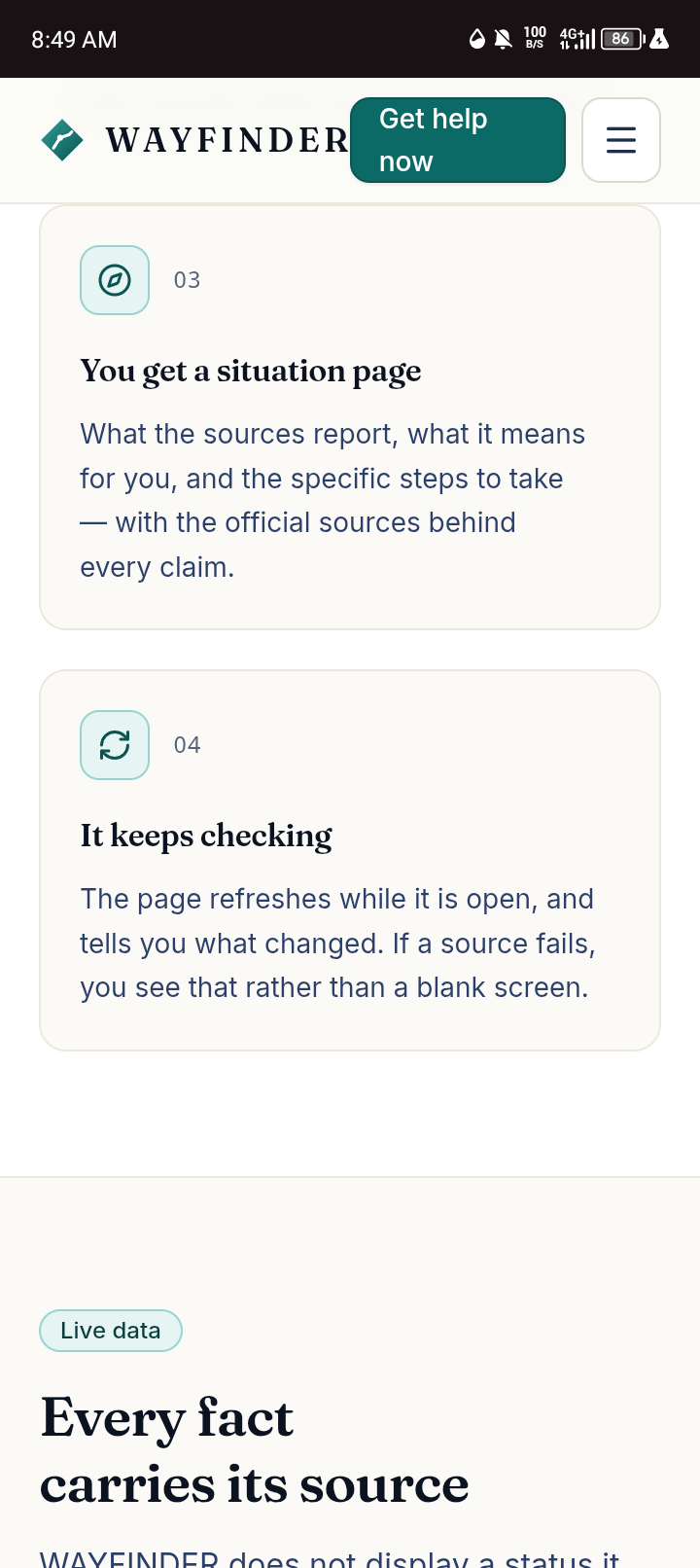
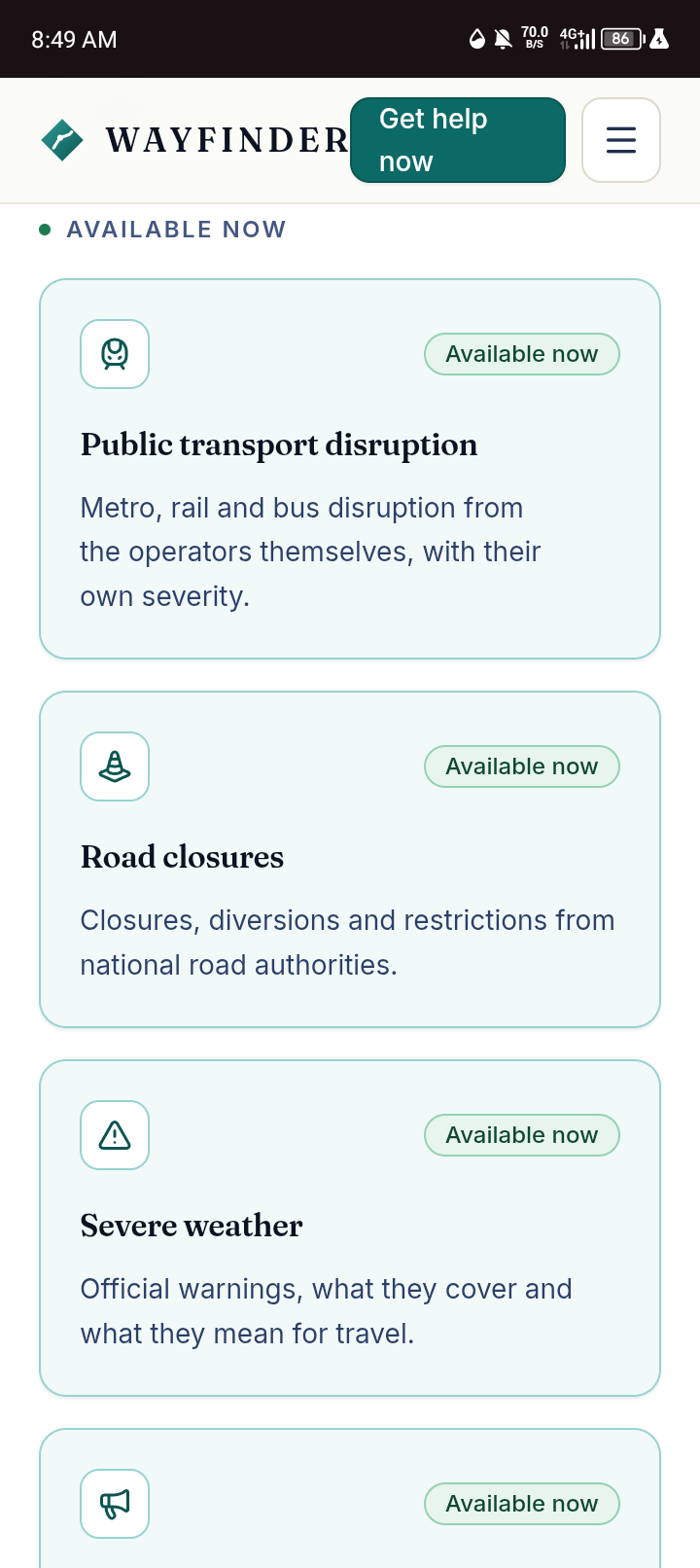
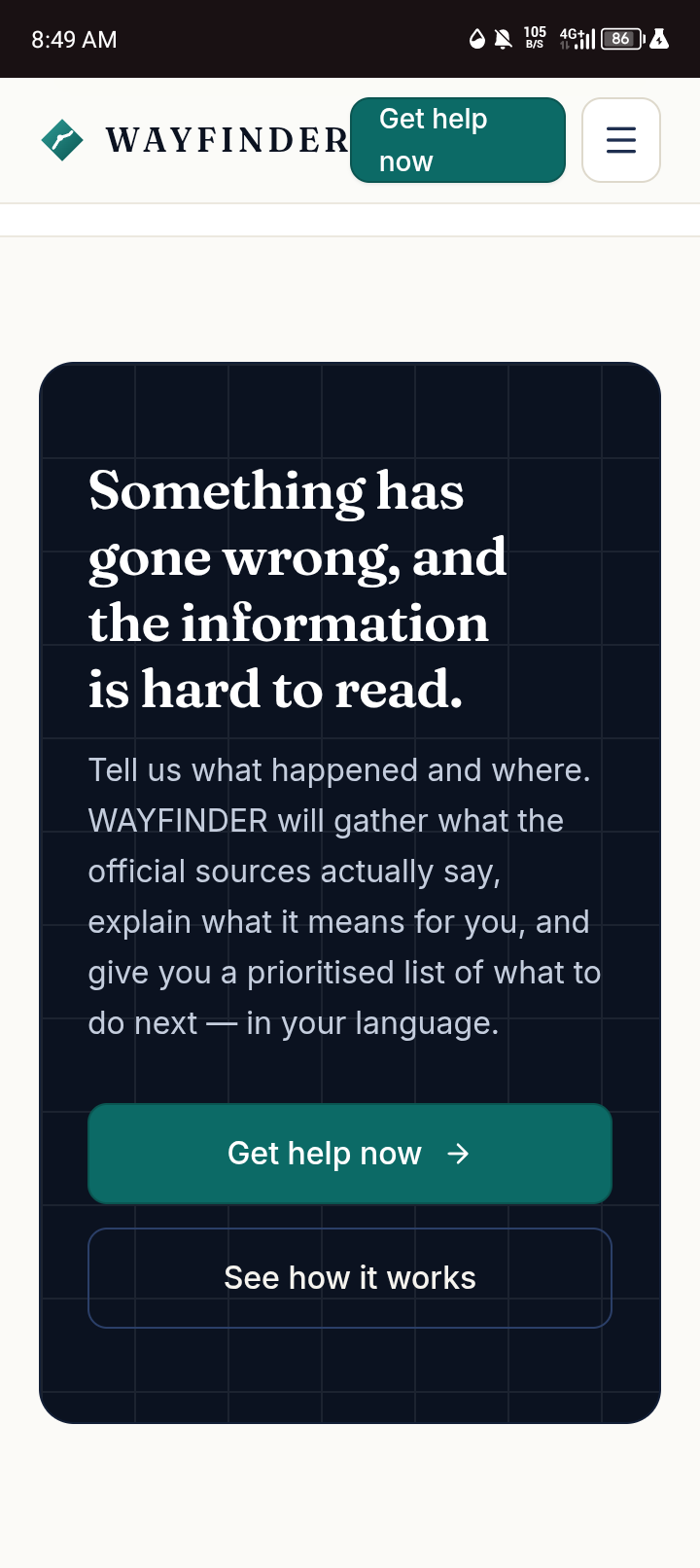
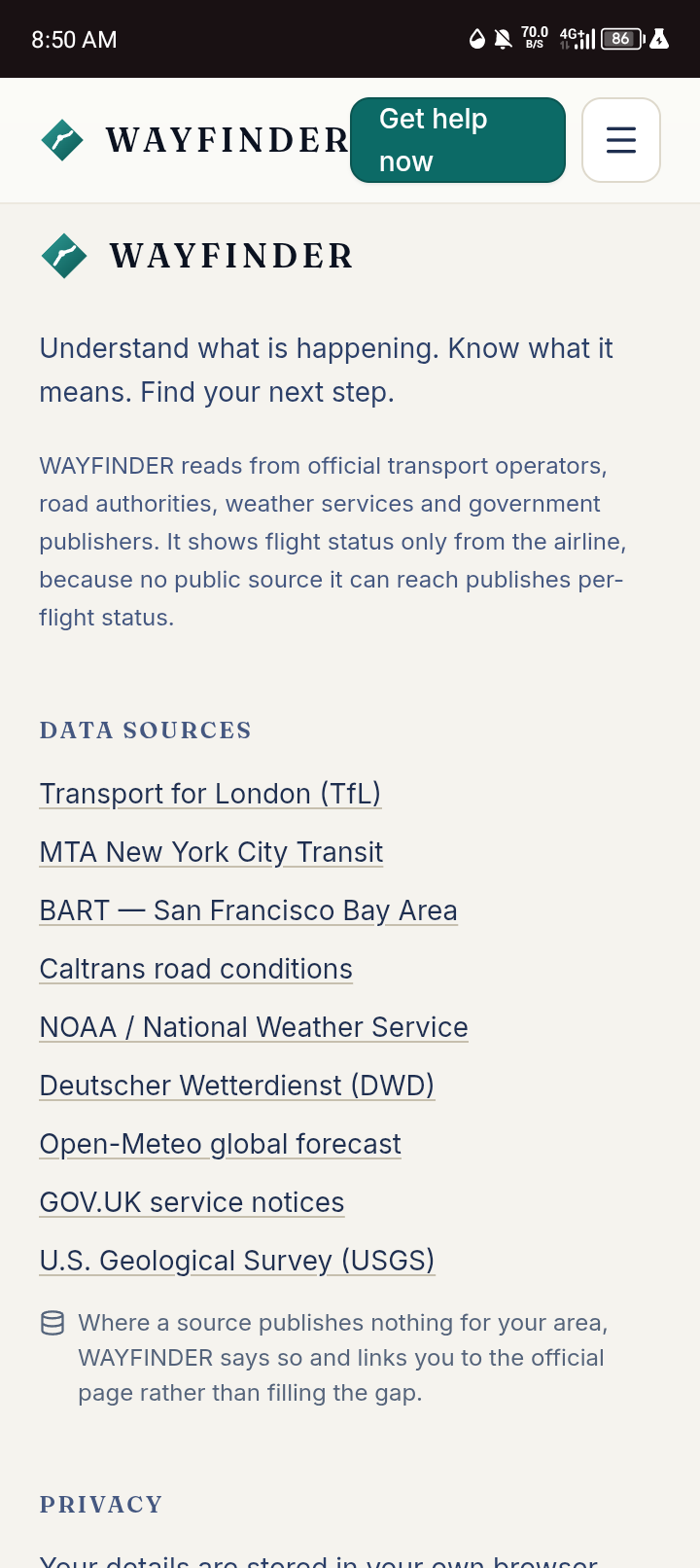
WAYFINDER is a travel assistance platform designed for international travellers navigating unexpected situations. It brings together relevant conditions, information from available sources, and practical next steps in one accessible experience.
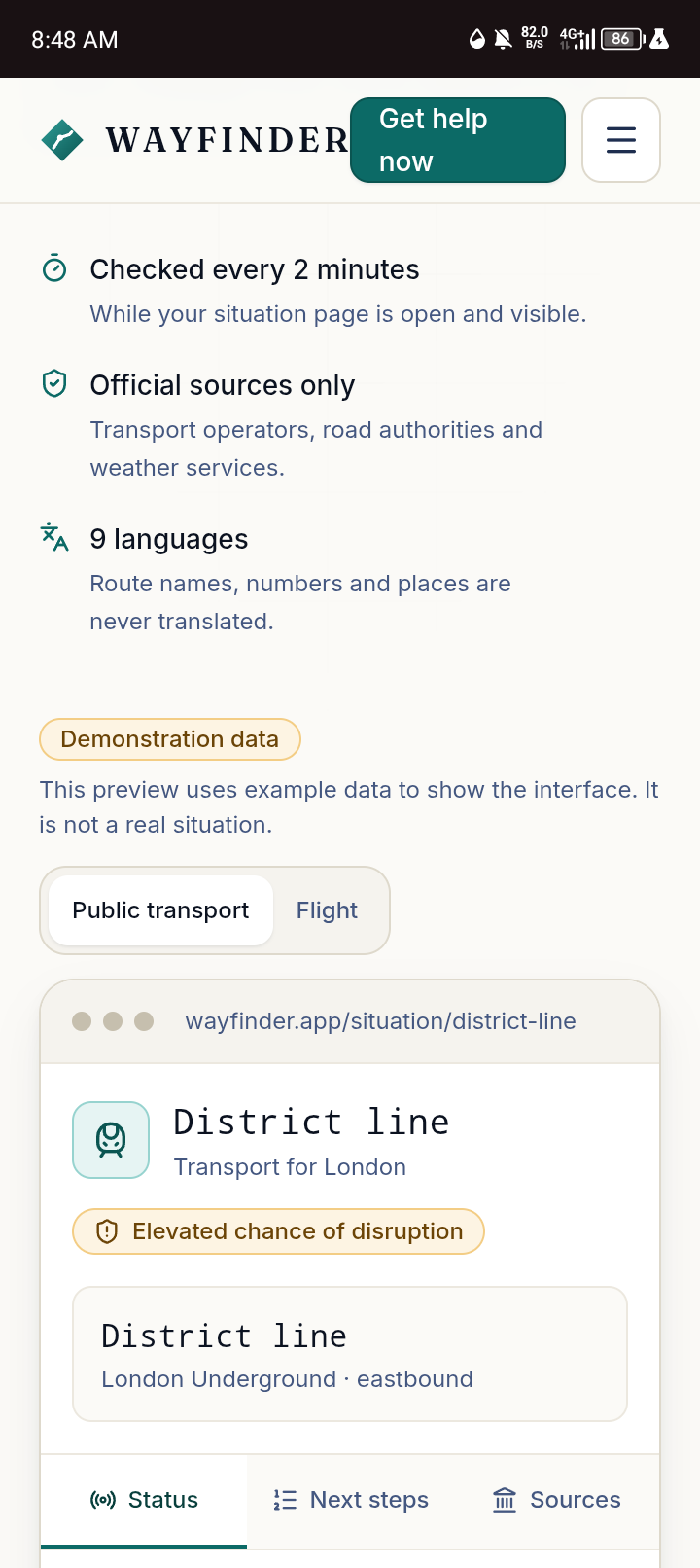
Instead of making travellers piece together information from multiple websites, WAYFINDER helps them explore a situation, understand what the available evidence says, and find the official sources behind the information.
The goal is not to replace local authorities or transport operators. It is to make their information easier to discover, understand, and act on.
How We Built It
WAYFINDER is built with Next.js, React, and TypeScript and deployed on Vercel. Its assistance experience connects users with relevant information from available data providers and official sources.
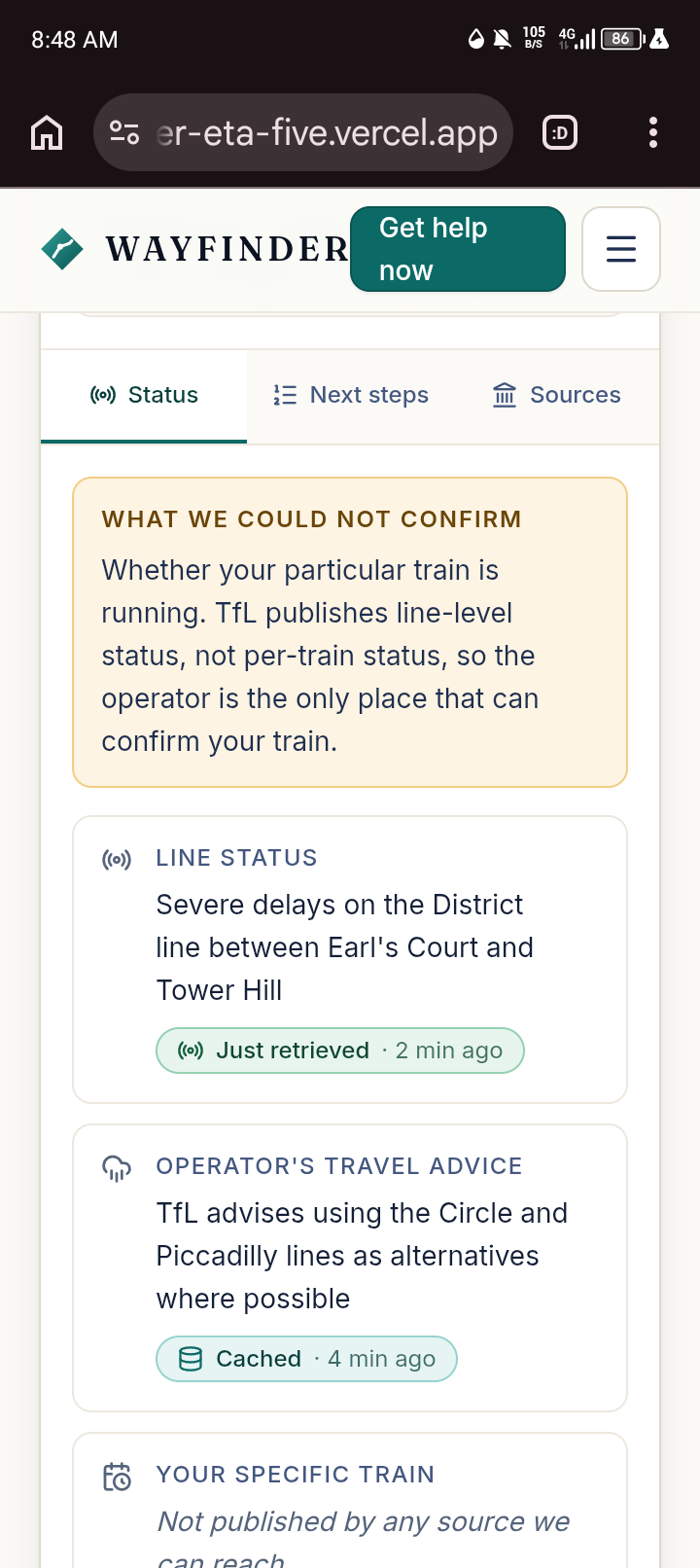
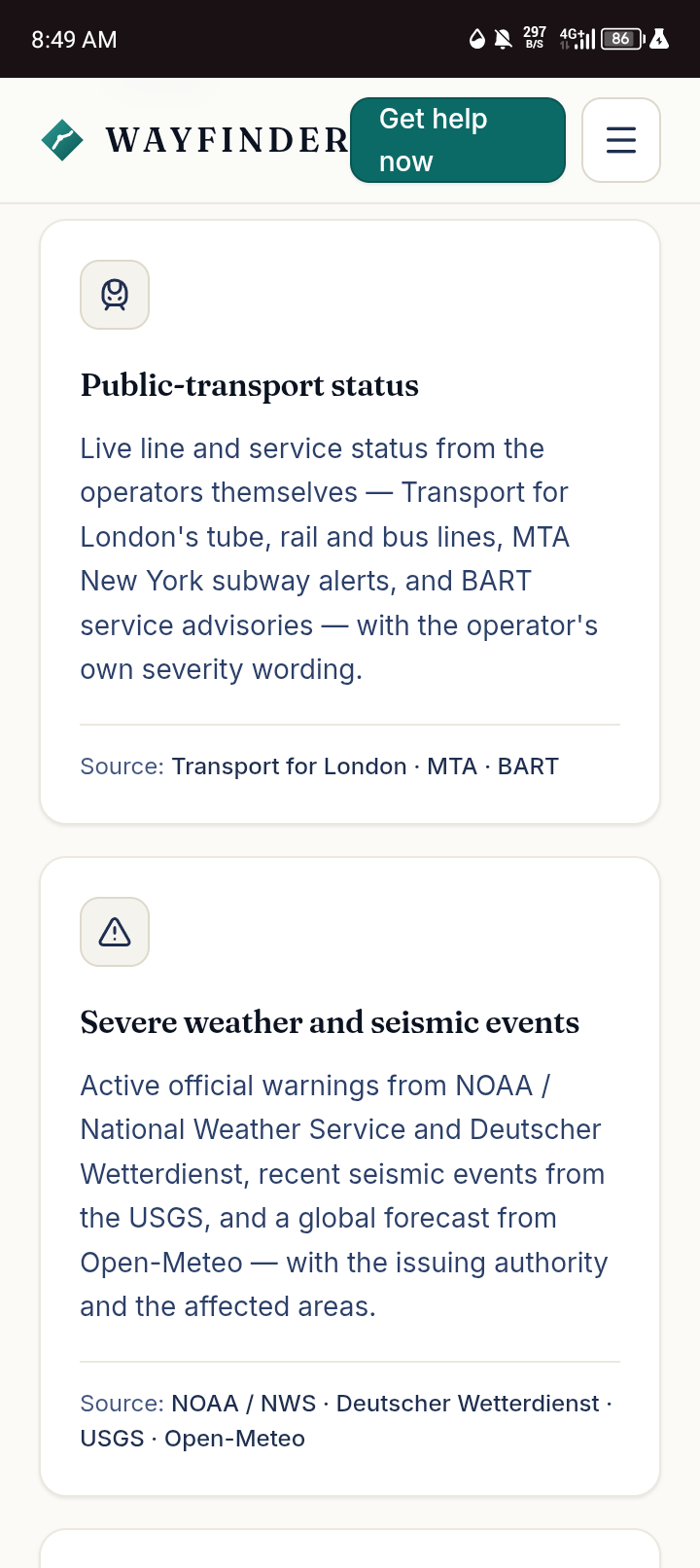
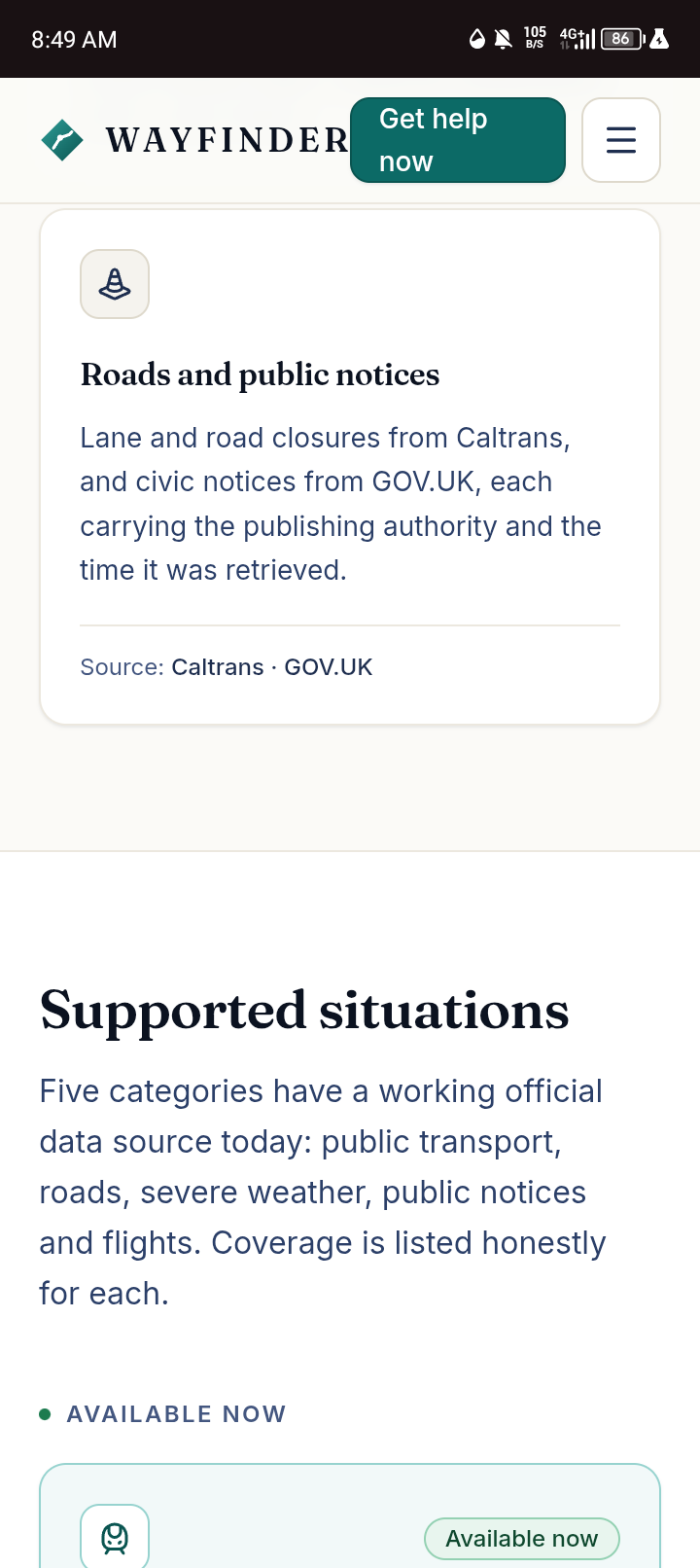
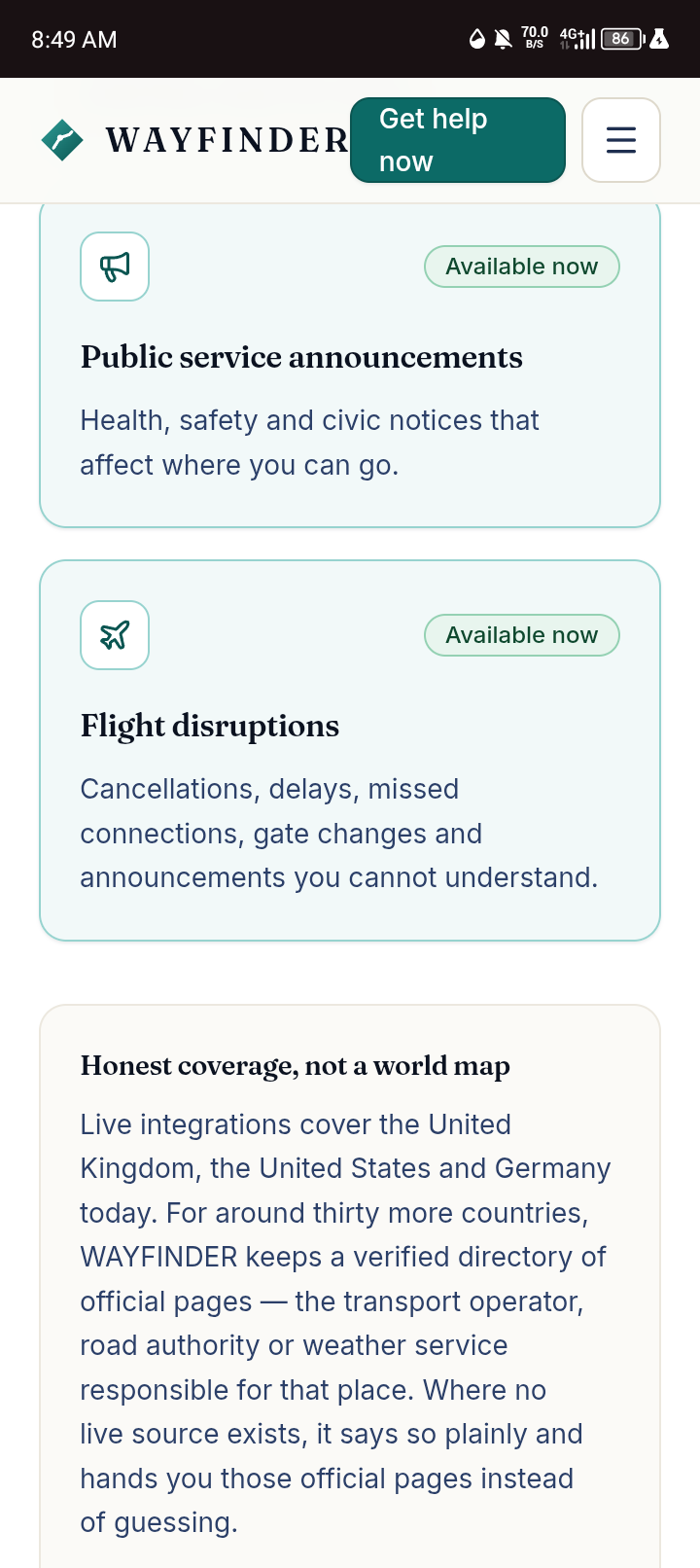
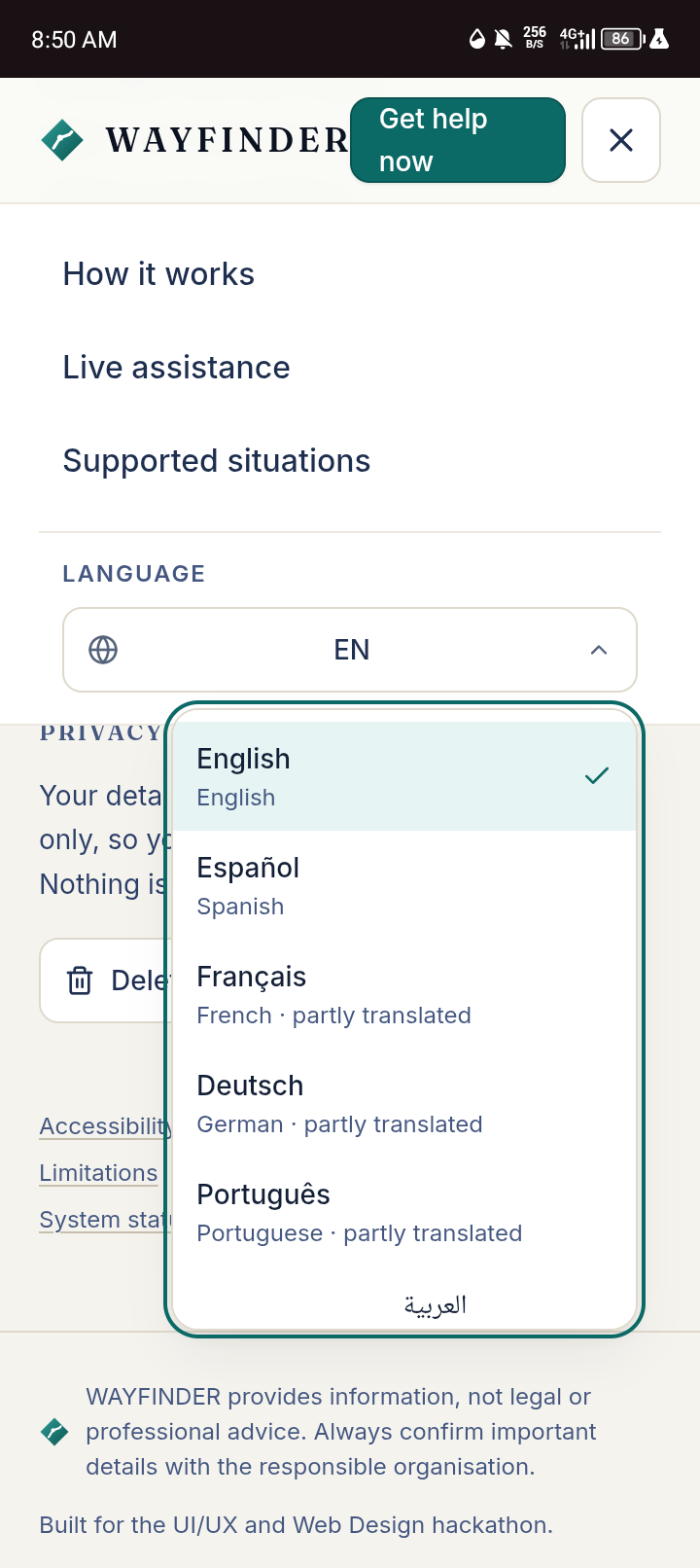
The platform incorporates transport disruption information, weather forecasts, source attribution, location-aware assistance, and multilingual interface support. Its source-handling logic distinguishes between an actual reported disruption, an unavailable provider, a location without suitable source coverage, and a forecast that should not be presented as a live warning.
We also focused on the experience when a request is ambiguous. For example, entering a country may not provide enough geographical detail for every available source. WAYFINDER can ask the traveller for a more specific location while preserving nationwide results when a provider genuinely supports them.
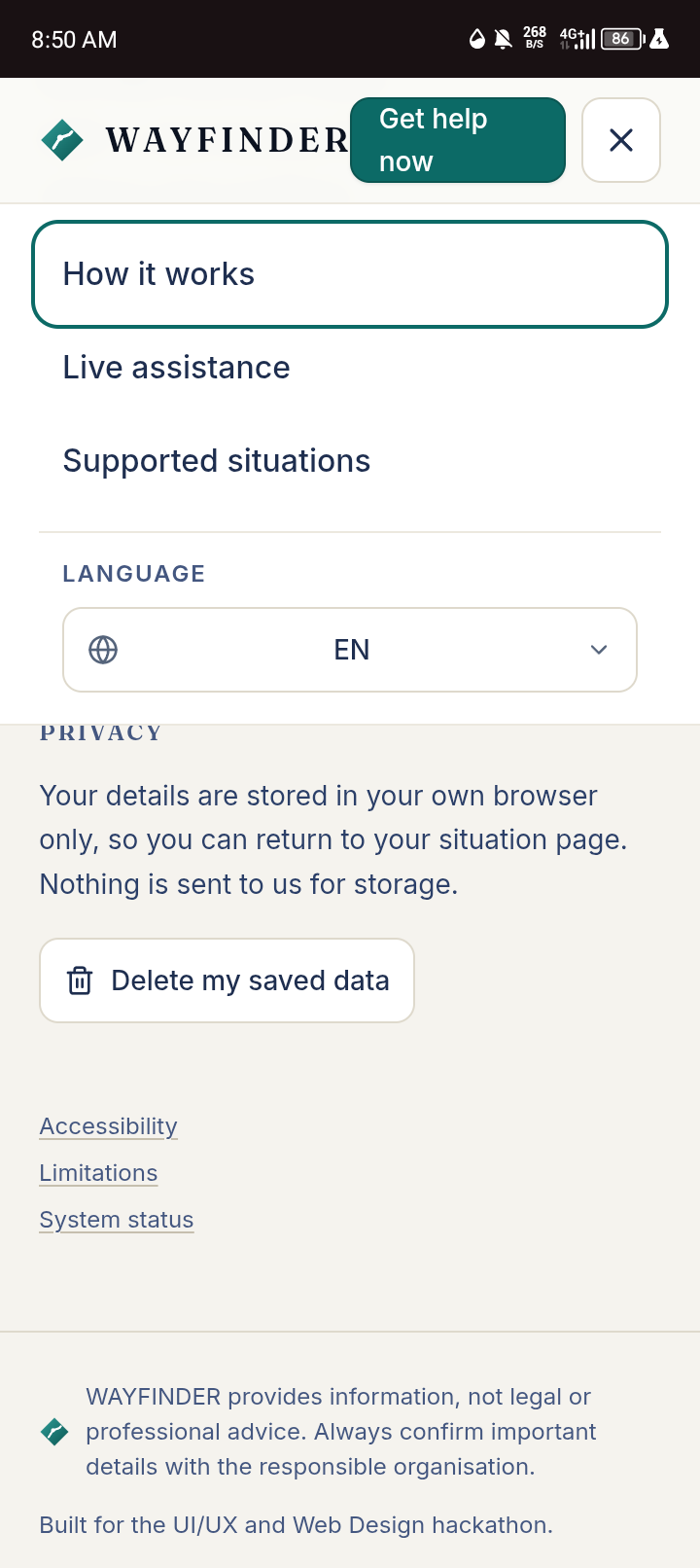
The application is designed to remain useful on mobile devices, with keyboard-accessible interactions and direct access to supporting sources.
Challenges We Faced
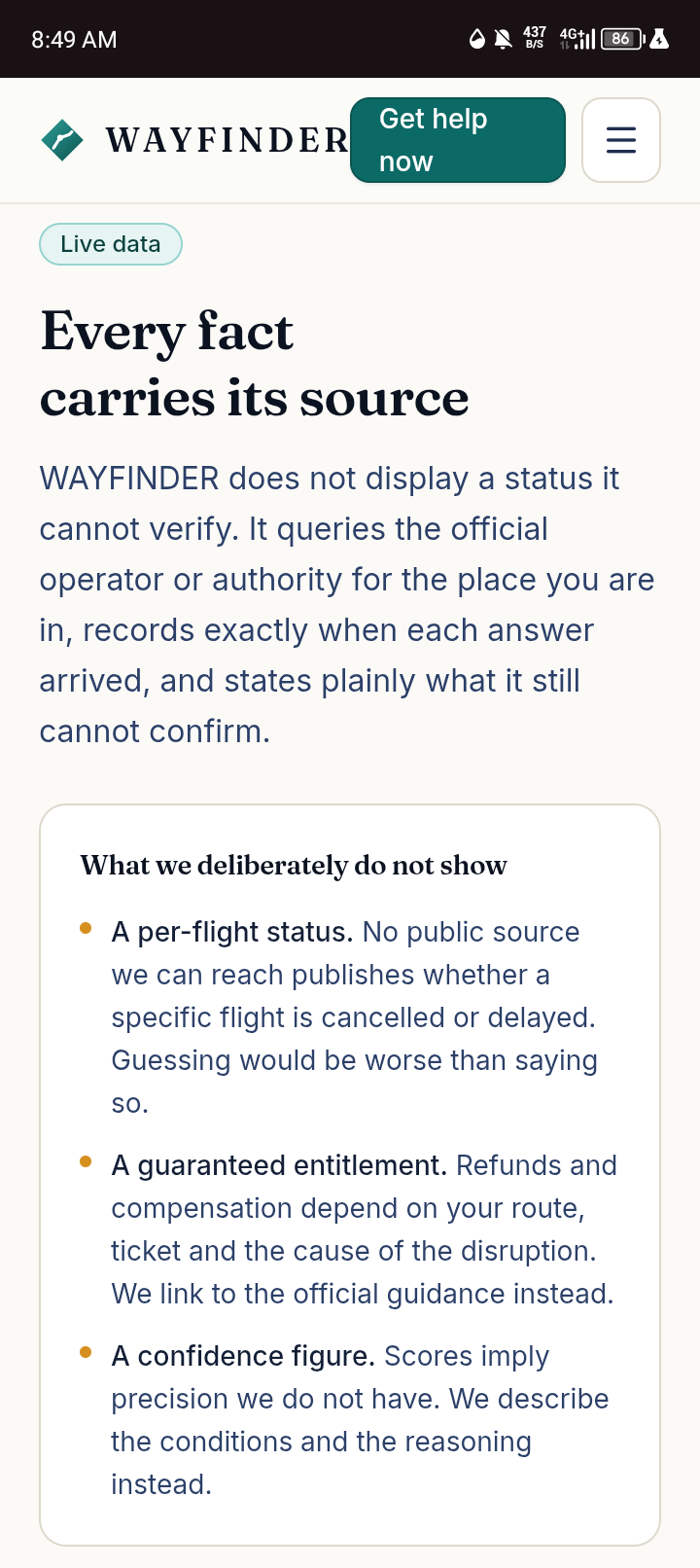
One of our biggest challenges was making the information trustworthy.
A missing result does not necessarily mean that nothing is happening. A provider may be unavailable, a location may not be covered, or the available information may simply be insufficient. Treating these situations as equivalent could mislead someone who is relying on the application while travelling.
We addressed this by improving source coverage handling, separating forecasts from live warnings, preserving meaningful disruption severity, and testing how the application responds when information is missing or ambiguous.
We also discovered a subtle keyboard-navigation issue: pressing Enter in a location field could activate a Back button instead of submitting the intended form. We corrected the behaviour and added permanent browser regression tests.
Another challenge was balancing speed with accuracy. We improved the country-only interaction so that the application can request a more specific location without an unnecessary server round trip, while preserving legitimate nationwide results.
These challenges reinforced an important principle: a useful assistance platform must communicate uncertainty honestly rather than inventing certainty.
What We Learned
Building WAYFINDER taught us that real-world assistance requires more than collecting data and displaying it on a dashboard.
Information must be relevant to the user's location, its limitations must be clear, and the interface must help people understand what to do next. Performance, accessibility, source transparency, and accurate handling of missing information are fundamental to the product rather than optional refinements.
We also learned the importance of testing complete user journeys, not just individual components. A page can build successfully while a real user interaction still fails.
What's Next
We want to continue improving WAYFINDER's source coverage, multilingual experience, accessibility, and ability to guide travellers through unexpected situations.
Our longer-term vision is to make reliable, location-aware assistance easier to access across borders, languages, and everyday travel disruptions.
WAYFINDER helps travellers understand what's happening, find trustworthy information, and move forward with greater confidence.
Built With
- accessibility
- artificial
- development
- intelligence
- internationalization
- javascript
- next.js
- public
- react
- travel
- typescript
- vercel
- weather
- web


Log in or sign up for Devpost to join the conversation.