
Inspiration
With a plan to move to Thailand soon, keeping track of changing visa rules and regulations became stressful. I wanted something I could trust to keep watch for me and let me know when anything changed that might affect me.
That idea became the birth of Wayfinder.
But it quickly became clear that the same idea could apply to almost anything. A visa rule, a game you follow, developments in AI, a place you want to visit, a subject you want to learn, or even a daily trivia challenge. The possibilities started to open up massively once I put some thought into it.
What it does
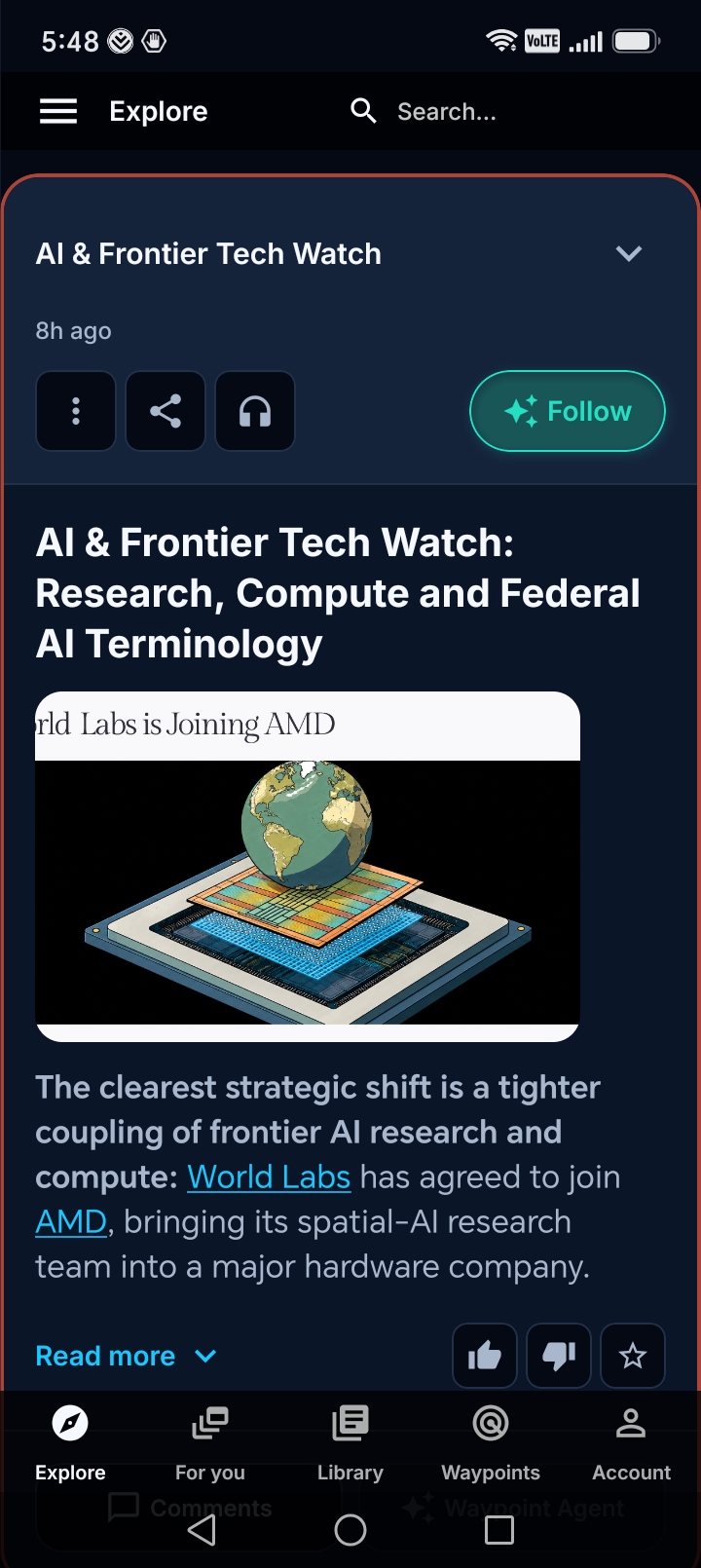
Wayfinder is a personalized AI-powered intelligence feed built around Waypoints.
A Waypoint is something you want Wayfinder to continuously research, teach, track, or explore for you. You describe what you want in natural language and choose how often you want it to run. Wayfinder then does the work in the background and delivers new findings as they become relevant.
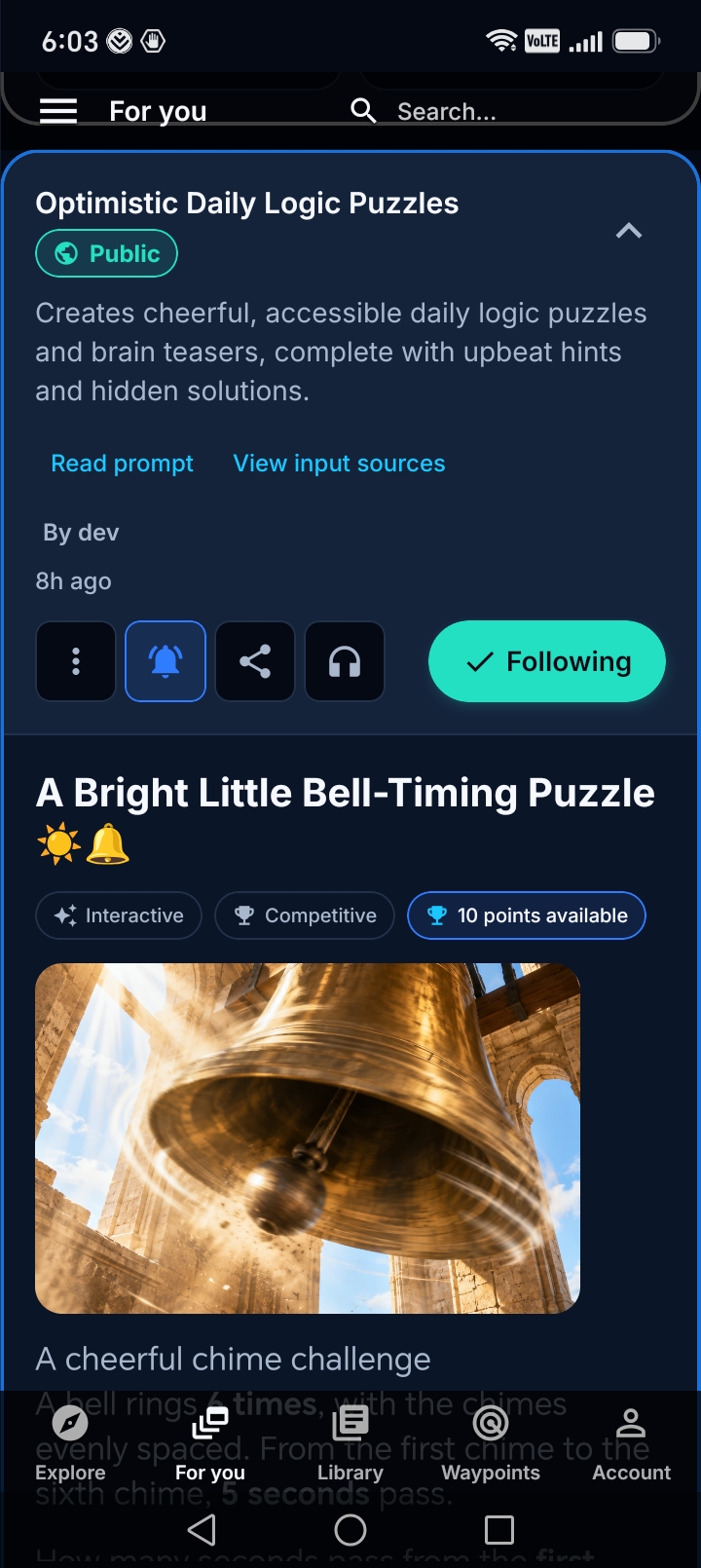
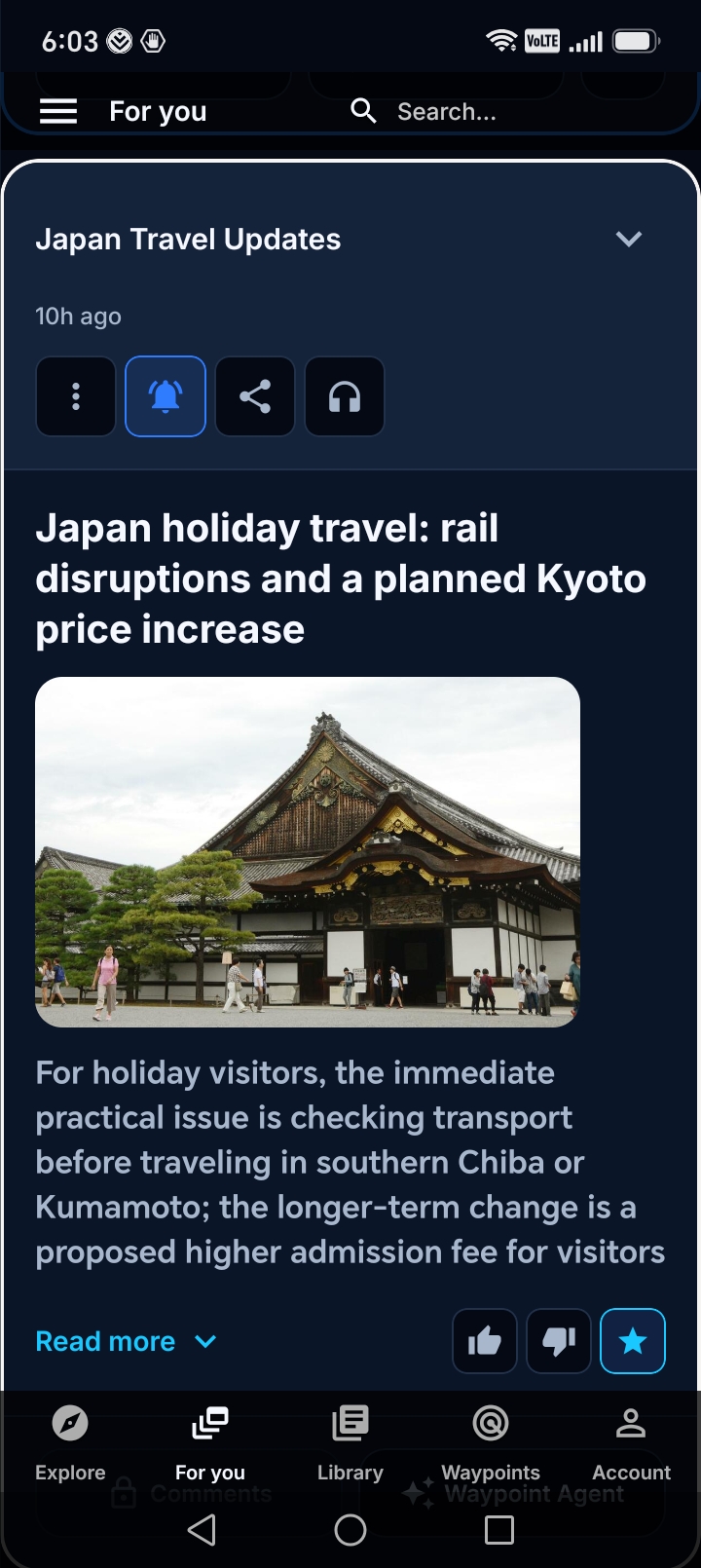
Waypoints can be practical, like monitoring travel regulations or developments in technology. They can teach you something new every day, such as learning to speak Thai. They can also be interactive, turning almost any interest into trivia, challenges, quizzes, or other experiences.
Users can explore and follow public Waypoints created by the community, save interesting findings to their library, listen to findings with AI narration, and create their own personalized Waypoints. The goal is simple: instead of constantly going looking for information, tell Wayfinder what matters to you and let it come to you.
How we built it
Wayfinder combines a mobile application with a cloud-based AI research and generation system. The mobile app is built with React Native and TypeScript, with Supabase providing much of the backend infrastructure. Waypoints run through an AI-powered pipeline that researches their configured subjects, evaluates what it finds, and turns relevant information into structured findings that can be delivered to users.
OneSignal became a key part of making this feel like a living product rather than a feed users have to remember to check. New findings can reach users through push notifications, while contextual in-app messages teach users about capabilities as they naturally encounter them.
For example, rather than presenting a large onboarding tutorial, Wayfinder can introduce AI narration when a user's behaviour suggests that feature has become relevant. Similar education journeys introduce saving findings, interactive experiences, and other capabilities over time.
RevenueCat is used for mobile monetization and rewarded advertising. Free users can explore Wayfinder without spending AI credits, while certain AI-powered features consume credits. If a user doesn't have enough credits for an optional feature such as AI narration, rewarded advertising can provide a way to continue without requiring a purchase or subscription.
Challenges we ran into
One of the biggest challenges was actually Wayfinder's flexibility.
When a Waypoint can monitor visa regulations, teach a language, follow a technology, generate trivia, or become an interactive experience, traditional onboarding becomes difficult. Showing every feature upfront would overwhelm new users, while showing too little risks users never discovering what the platform can do.
That led us toward contextual education with OneSignal: teach features when they become relevant rather than trying to explain the entire product on first launch.
Building a mobile product also introduced all of the less glamorous challenges that come with shipping a real application: authentication, notifications, app signing, subscriptions, credit accounting, deep linking, store requirements, testing across devices, and coordinating several external services reliably.
And, of course, getting everything through the app-store release process before the hackathon deadline became one final mega challenge of its own!
Accomplishments that we're proud of
The thing we're most proud of is that Wayfinder became much more than the original monitoring tool. What started as a way to watch for changes to Thai visa regulations evolved into a platform where the same underlying concept can power research, learning, discovery, entertainment, and interactive experiences.
We're particularly proud of how naturally the different systems work together. A Waypoint can discover something important, OneSignal can bring it to the user's attention, an in-app education journey can reveal a new capability, and the user can immediately experience that capability without leaving the flow of the app.
Built With
- codex
- lovable
- openai
- reactnative
- supabase

Log in or sign up for Devpost to join the conversation.