-
-
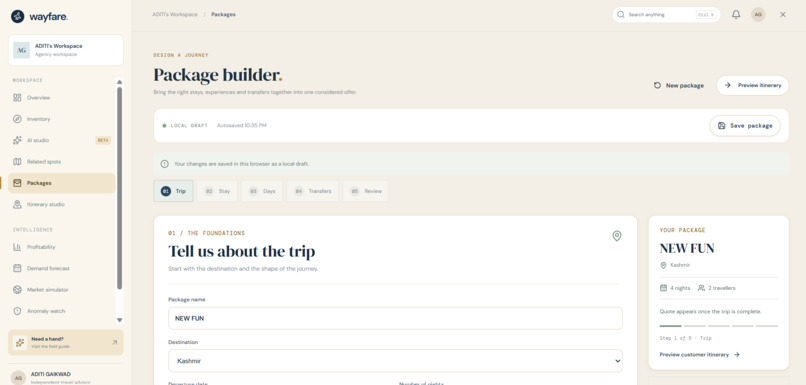
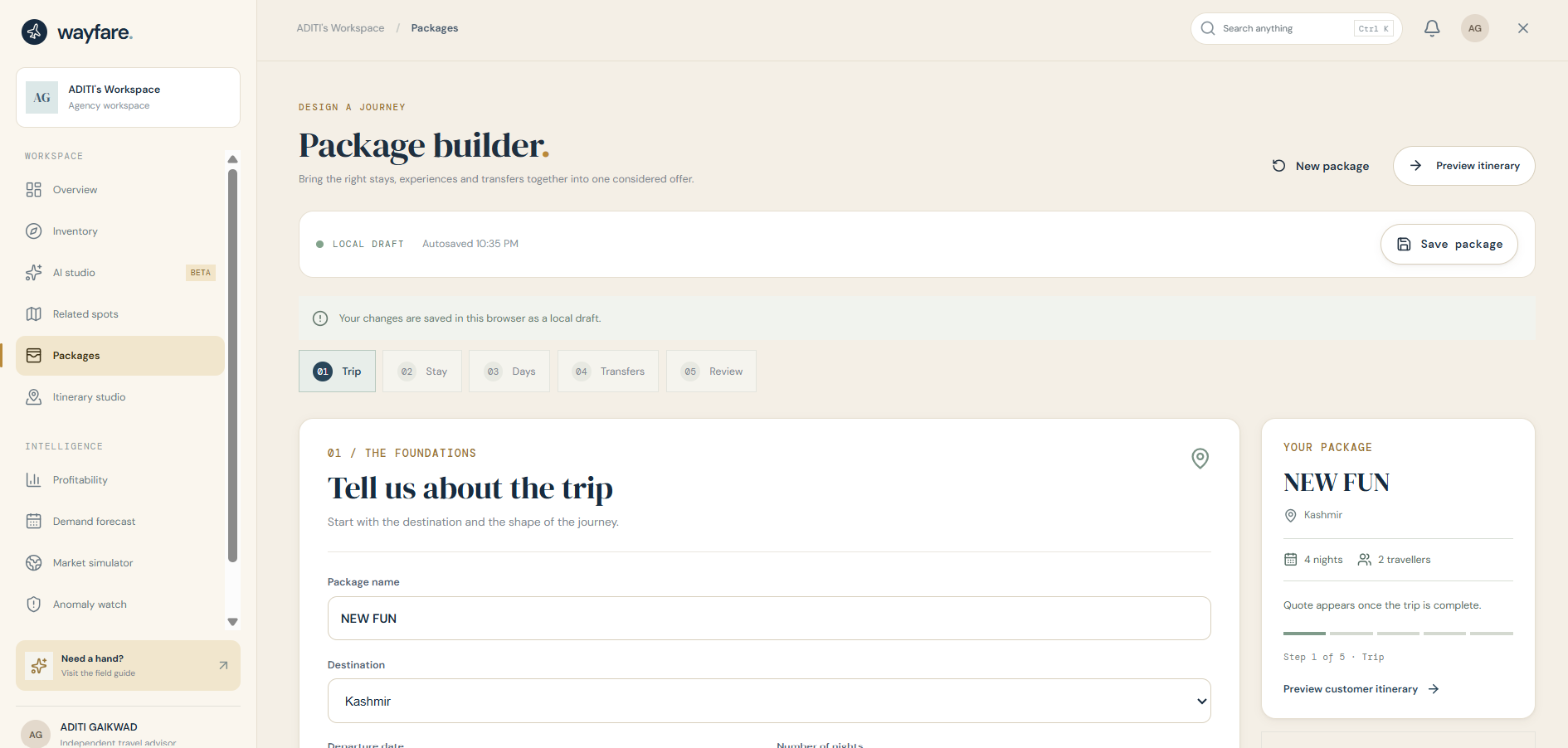
Image showing feature of Package Builder , where agent can create custom Packages and sell to users
-
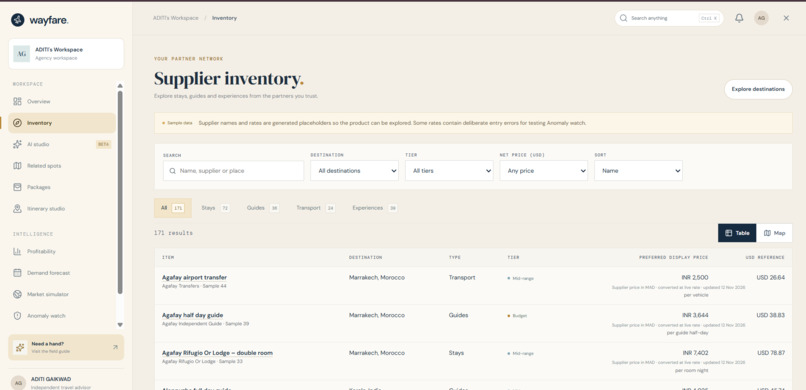
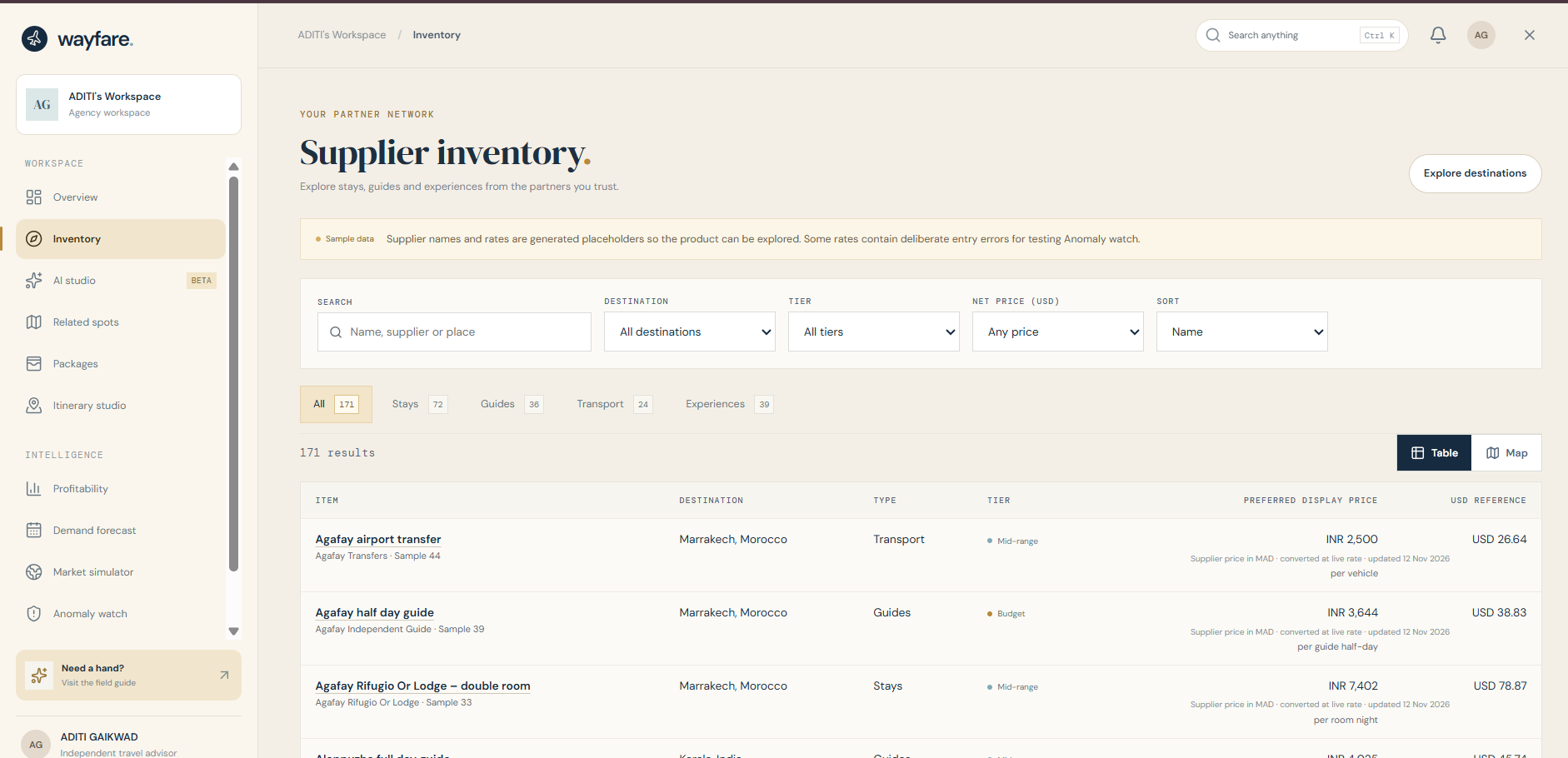
Image showing destinations that are frequently/Highly Visited by the users, helping agent create packages
-

Image showing the generated pdf of the custom and visually engaging itinerary created by the agent
-
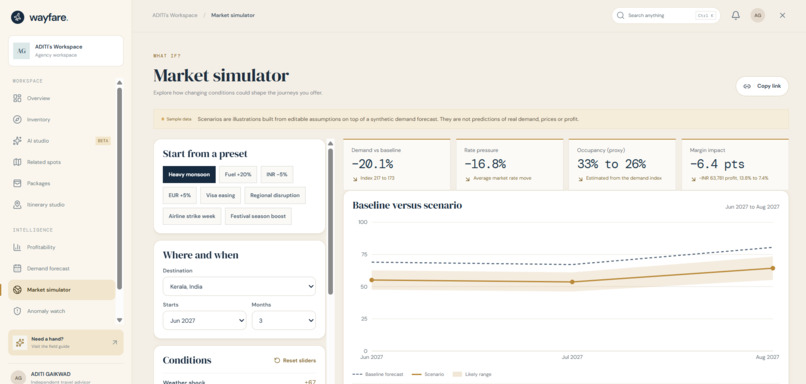
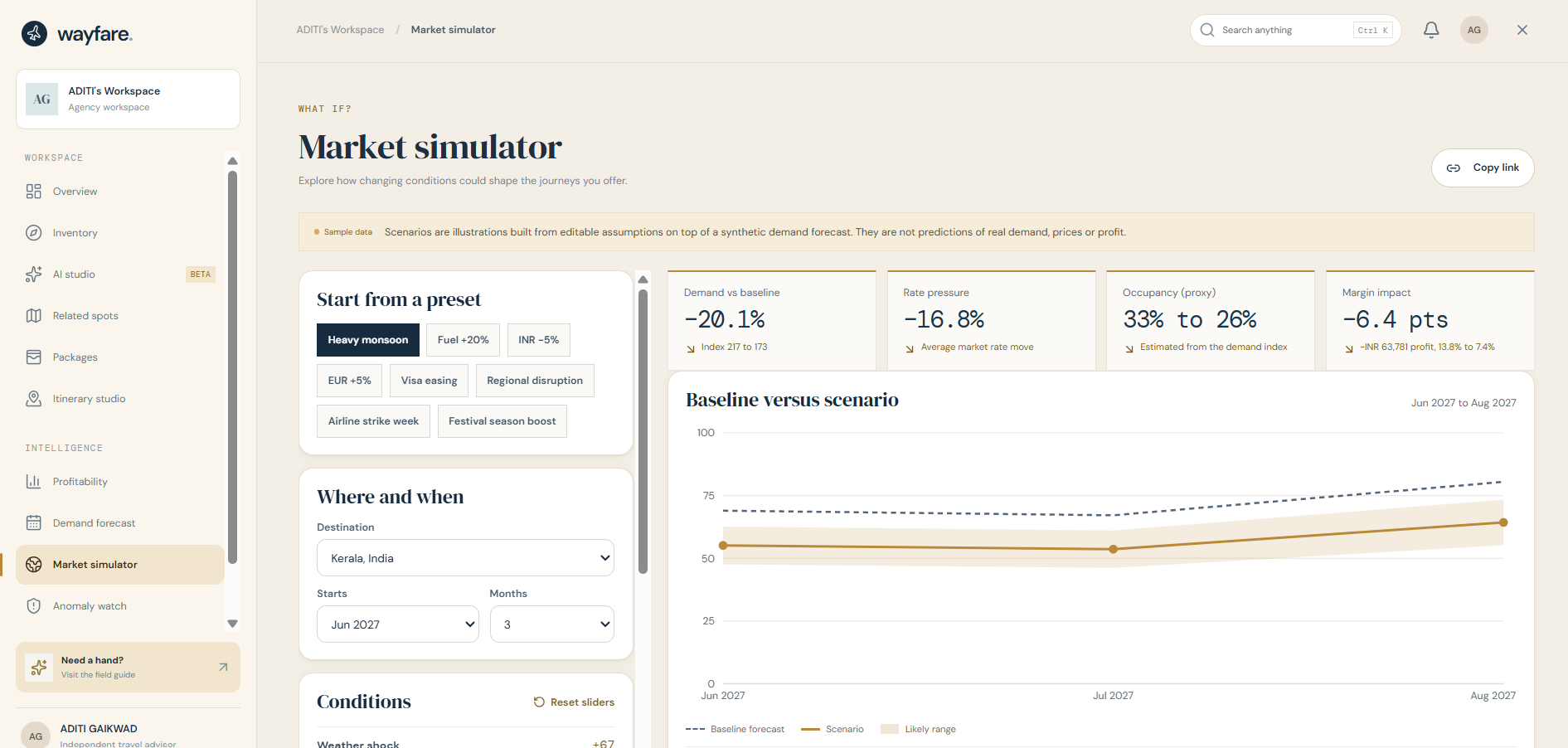
Image showing MarketSimulator which can help agent simulate current/future conditions of the market and generate packages accordingly
-

Image showing destinations that are frequently/Highly Visited by the users, helping agent create packages
-
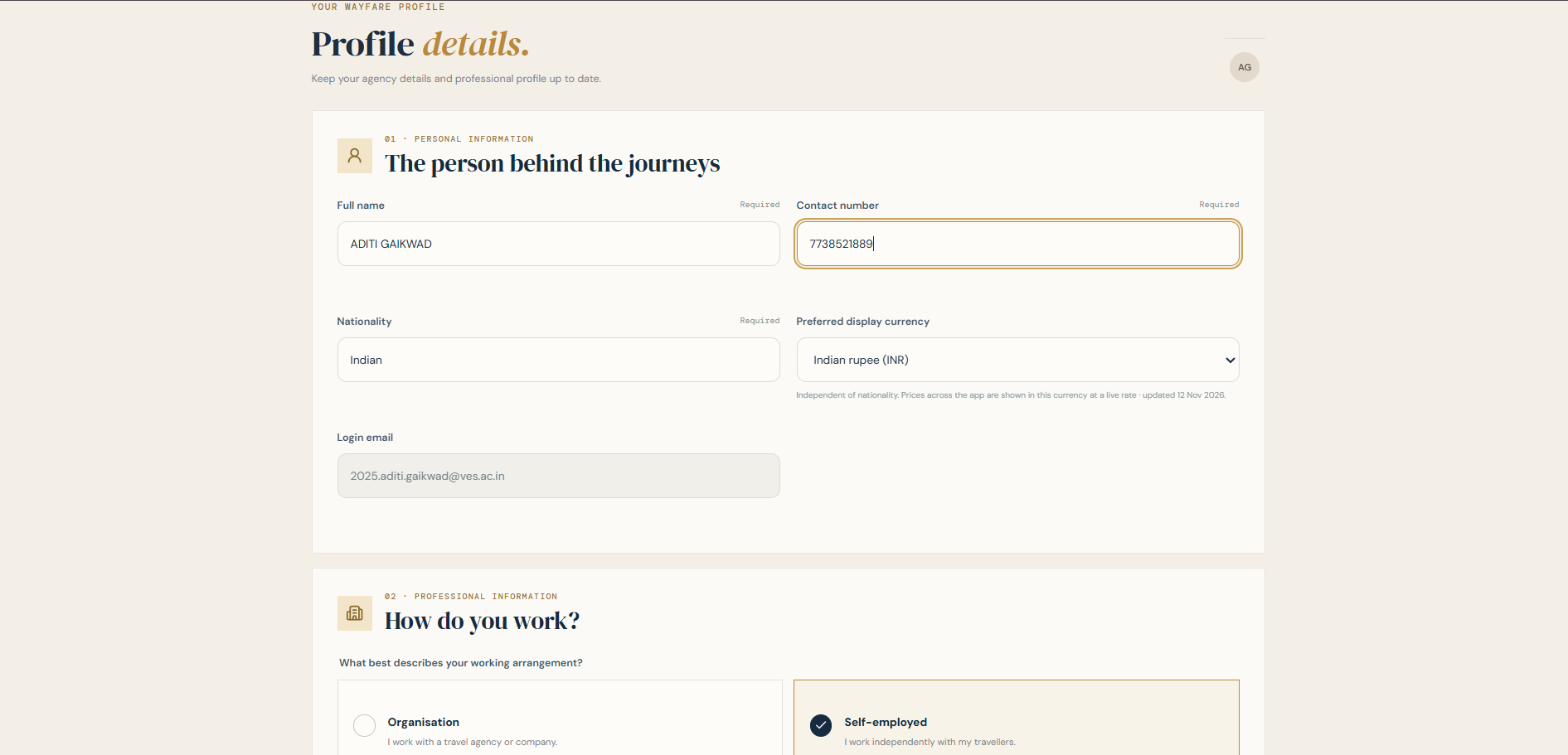
Adding Custom User Profile details
-
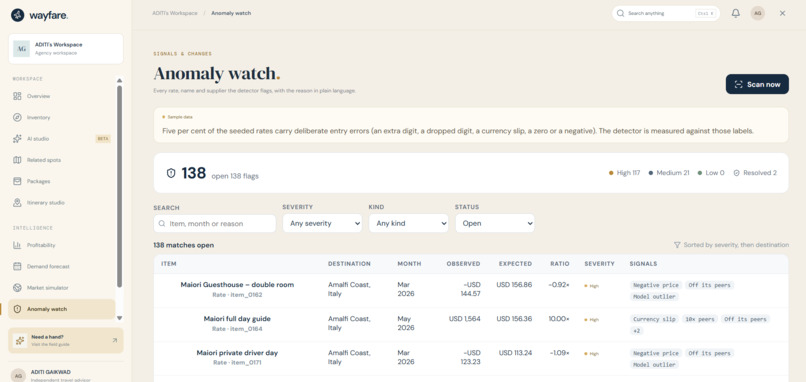
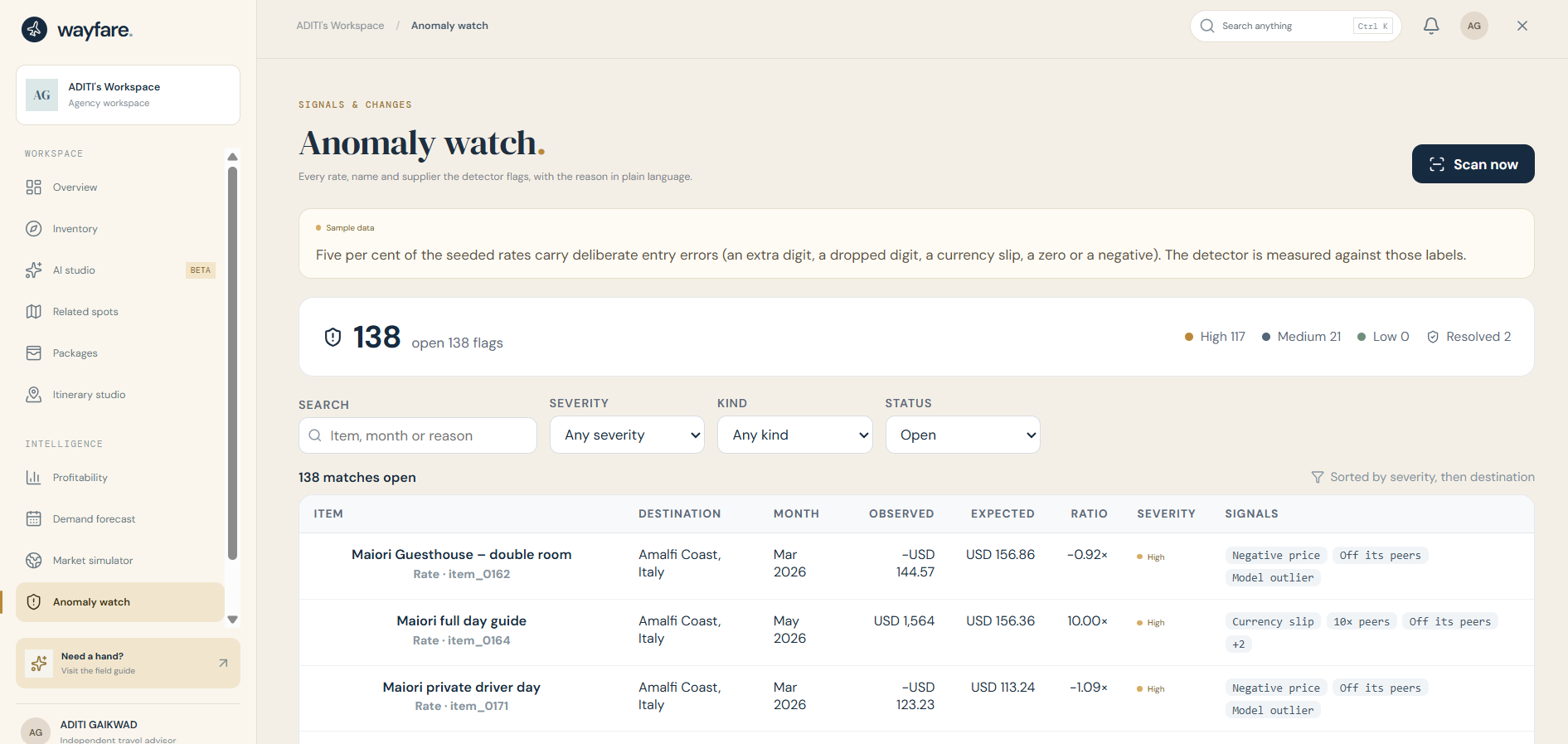
Image showing feature of Anomaly Watch, which can catch unusual activity in prices of various services and flag them.
-
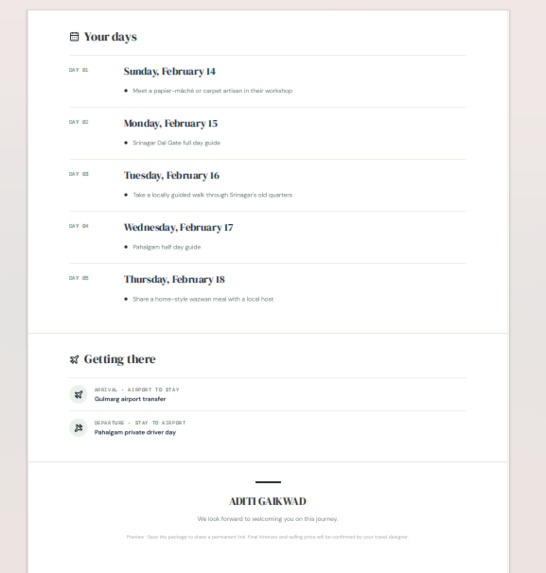
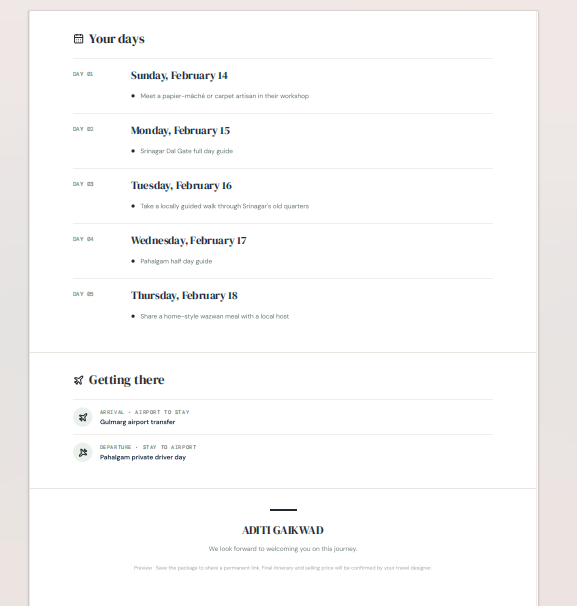
The Second page of the itinerary builder pdf that was generated
-
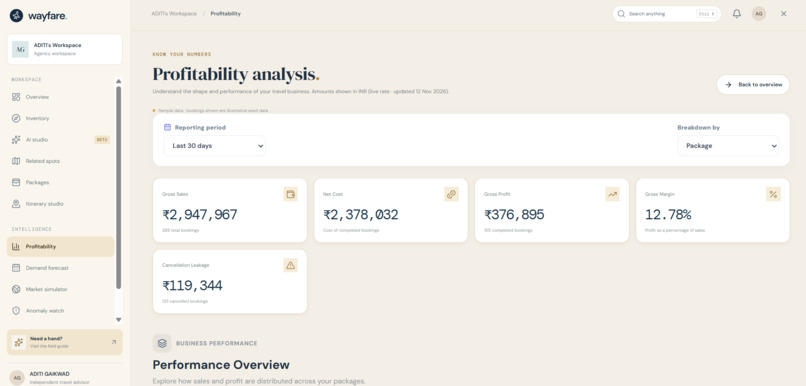
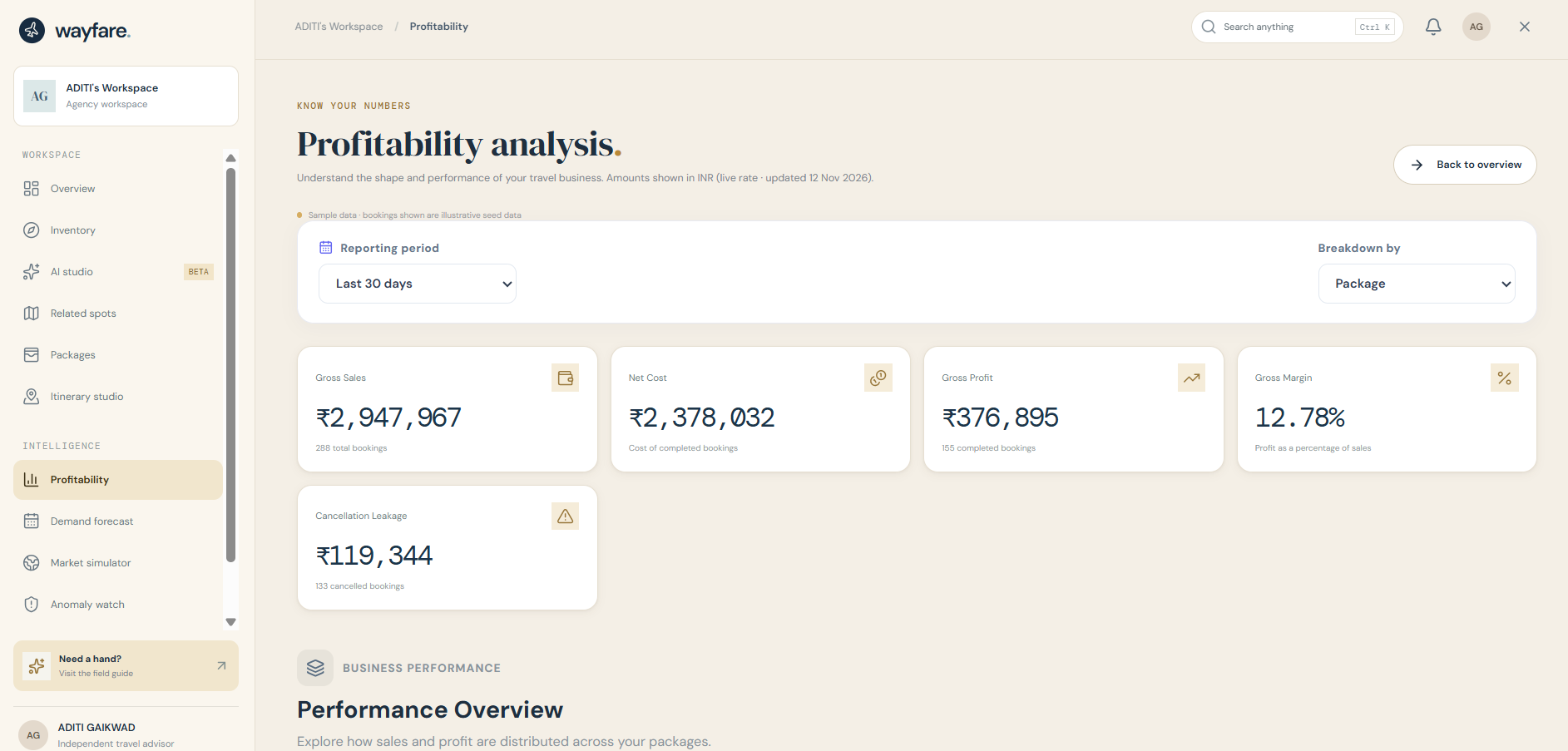
Helps estimate profits with various graphs
-
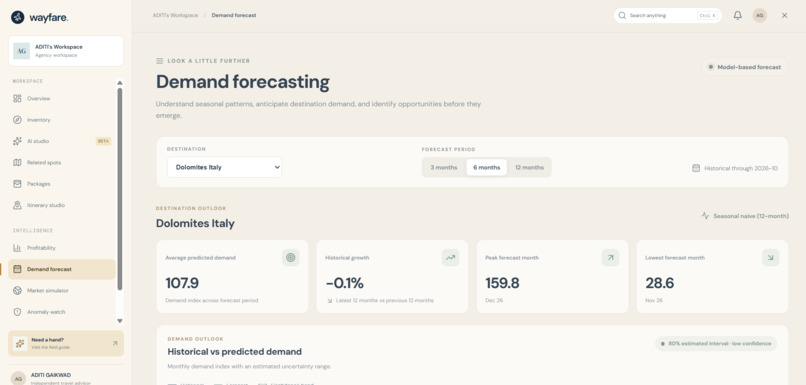
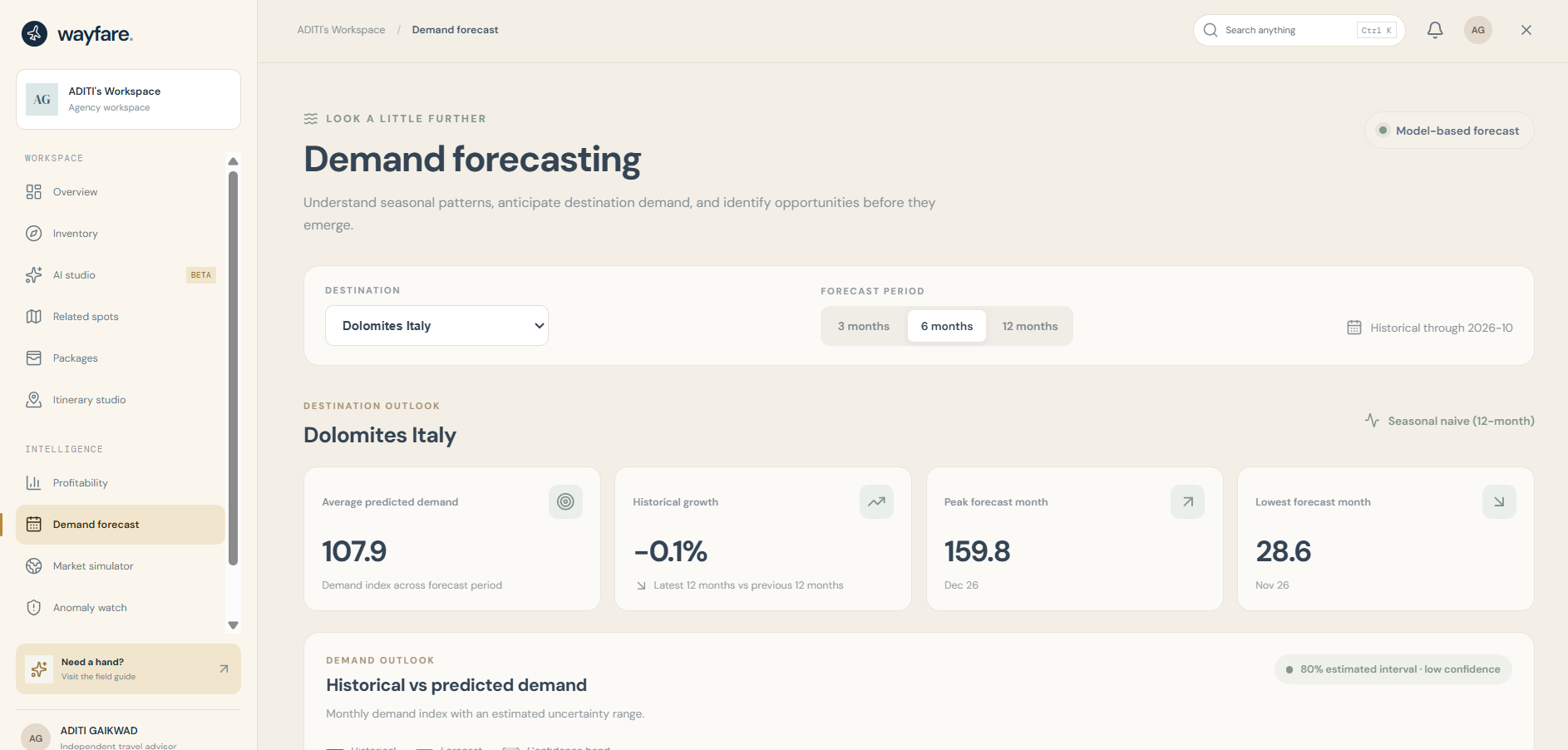
Image showing feature of Demand Forecasting, where customer demands can be predicted according to different metrics
-
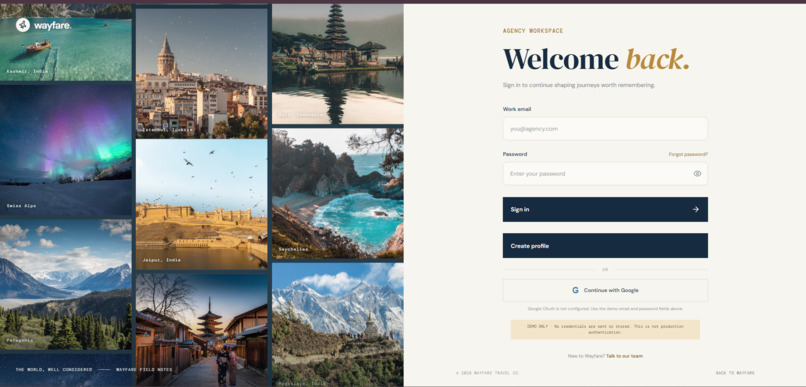
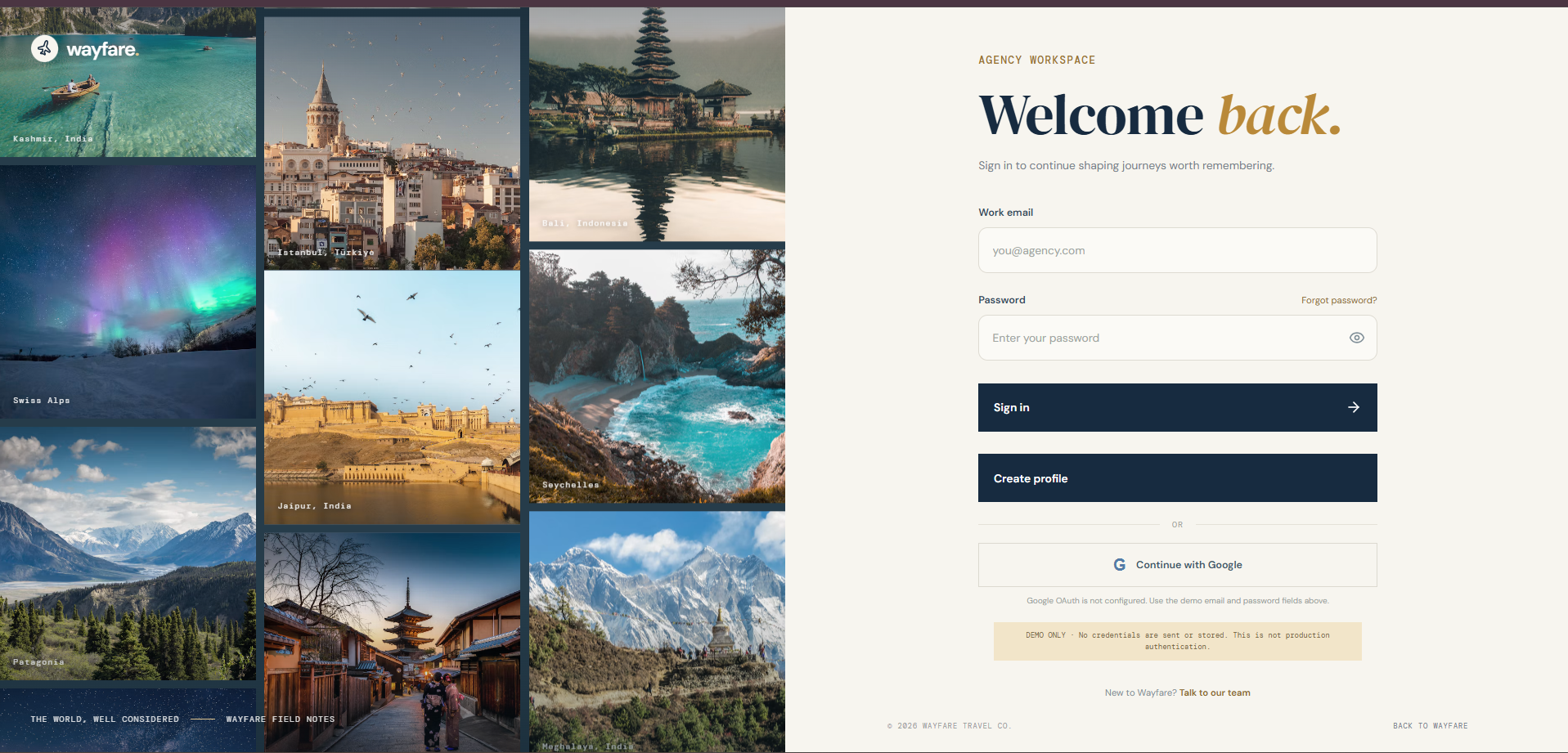
Login page of WayFare where user can login using either email-password or by Google Authentication
-
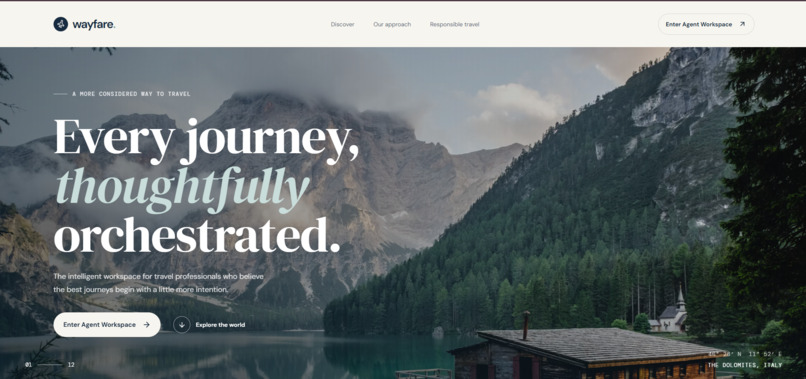
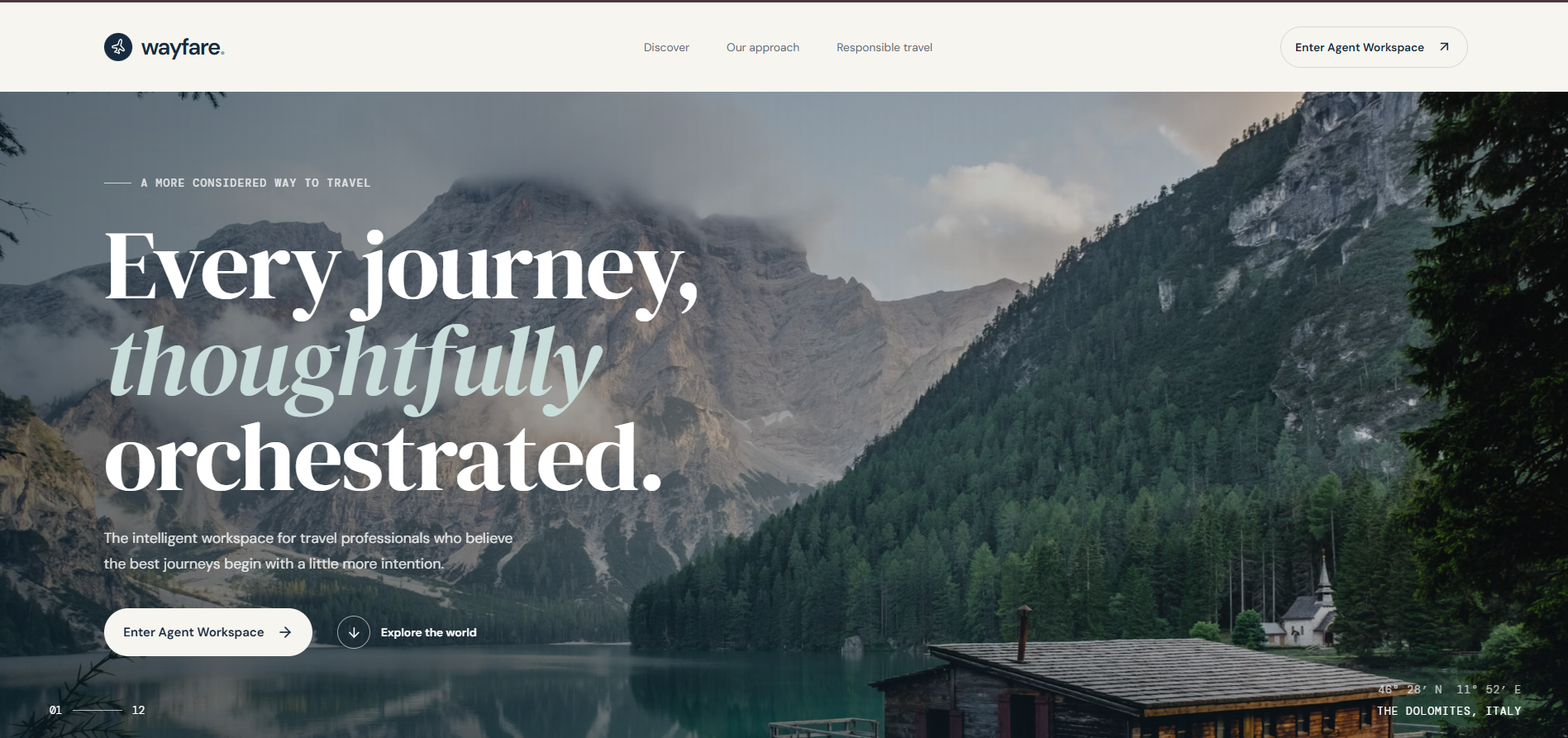
Front page of Wayfare
-
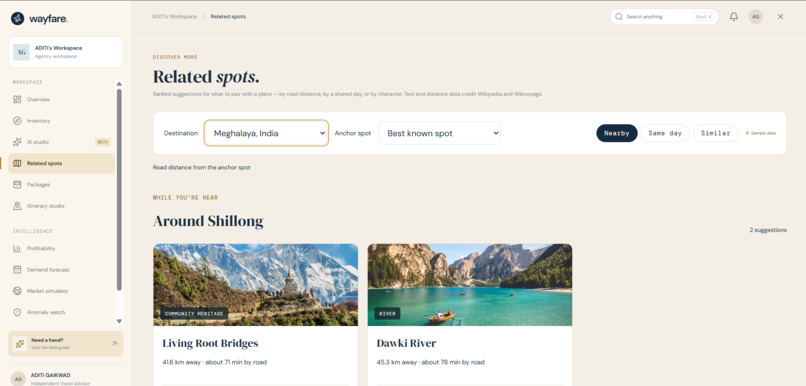
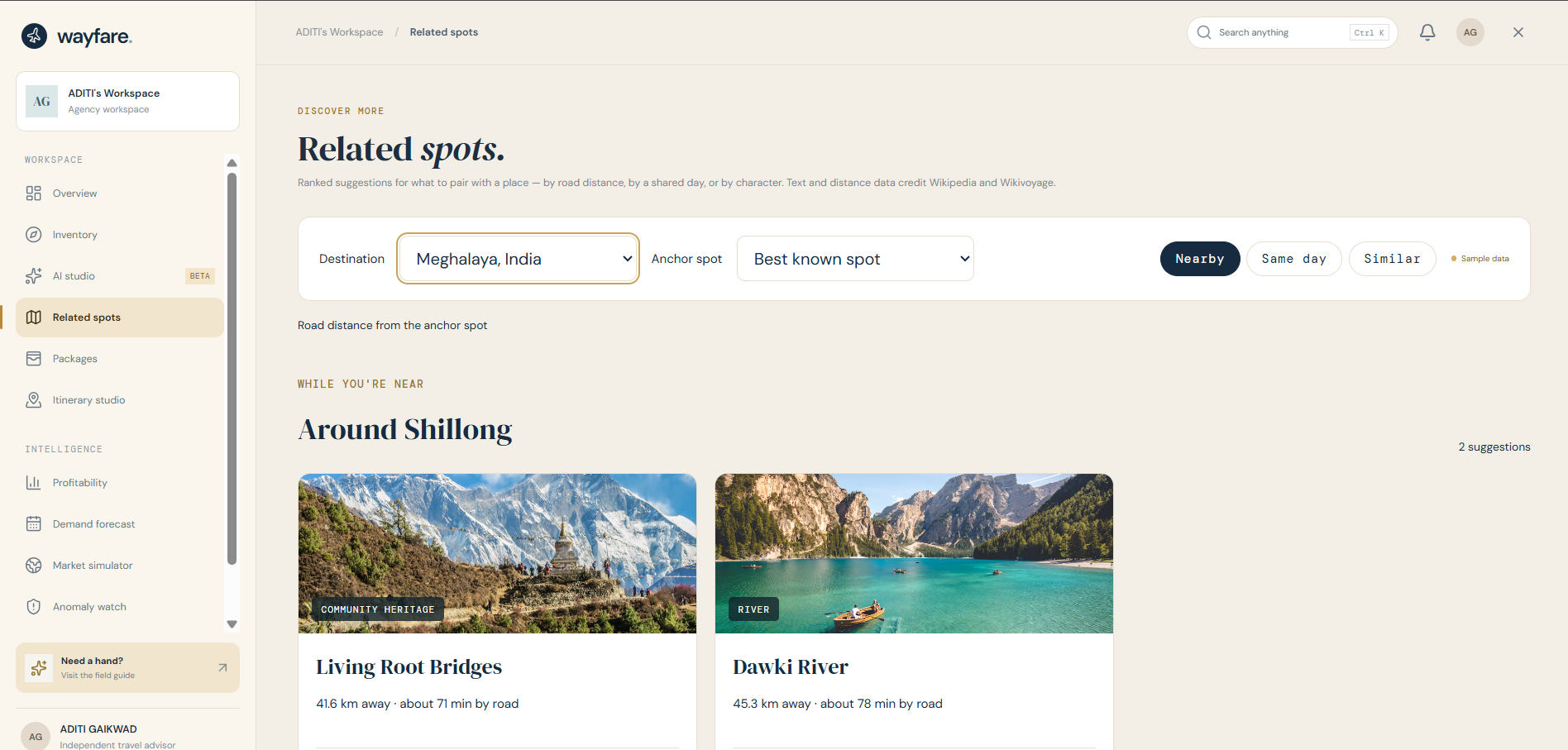
Shows related places to a specific destination which can be added to the plan
-
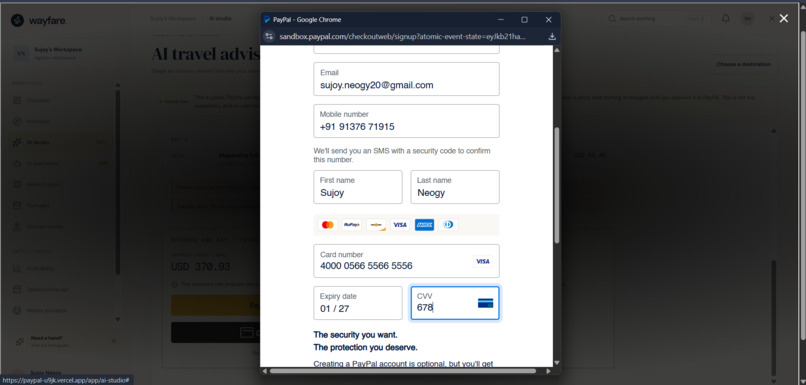
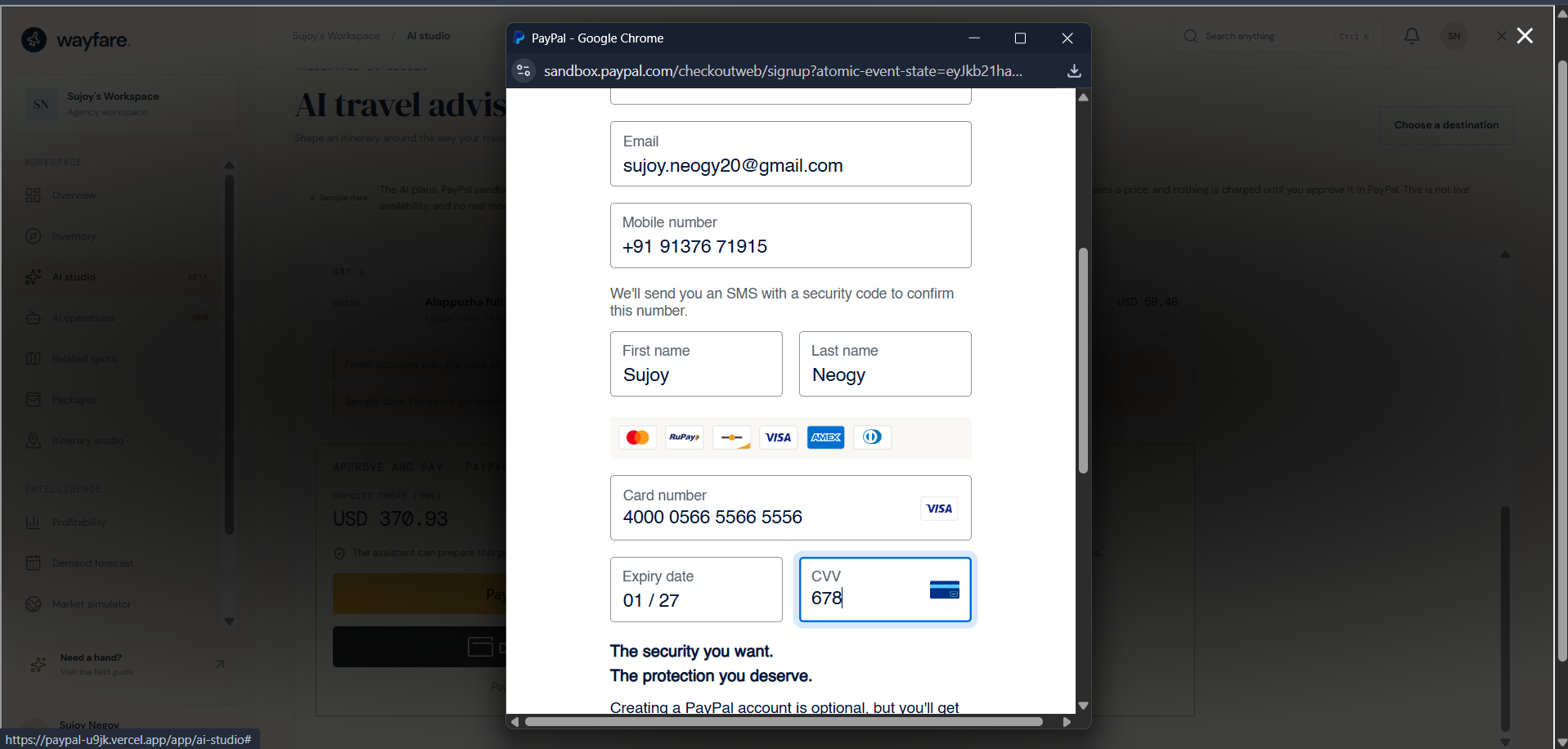
Paypal Gateway for payment
-
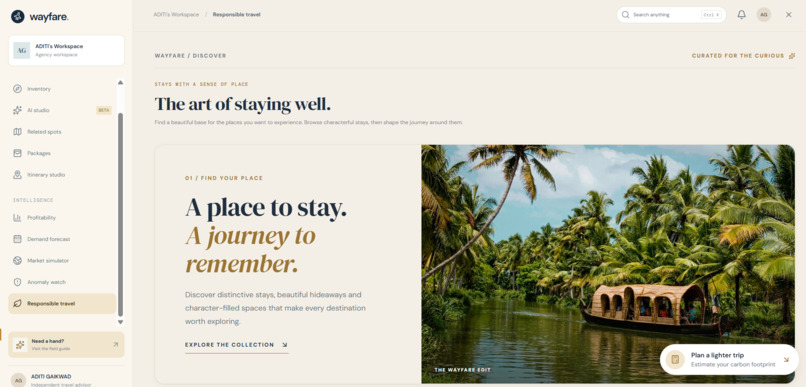
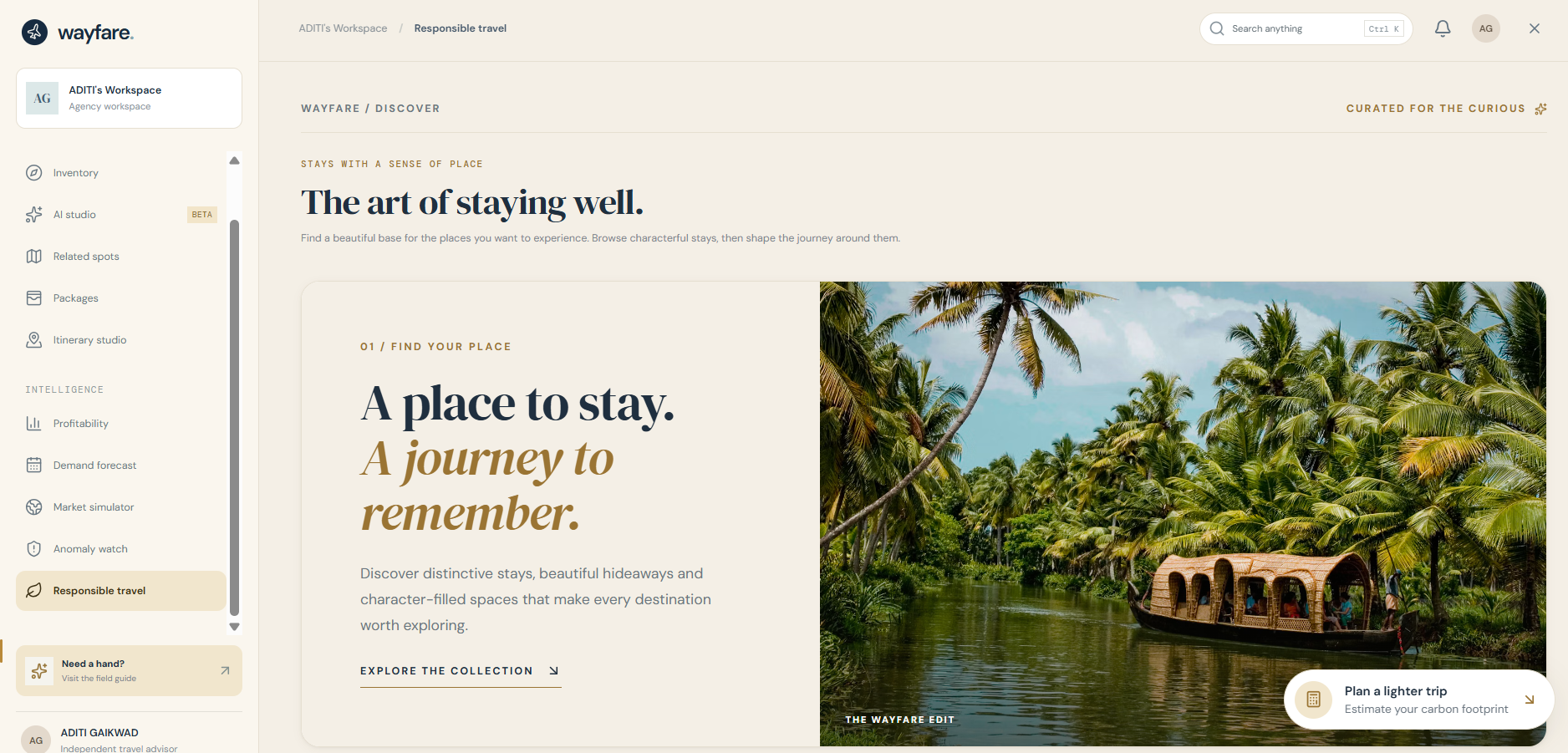
Responsible Travels feature with a carbon footprint estimator, includes homestays, supports locals


Inspiration
Travel planning involves more than choosing destinations. Travel businesses must coordinate accommodation, experiences, transportation, suppliers, budgets, pricing, itineraries and payments. Managing these operations across different systems can become complicated and time-consuming. We wanted to build a platform that simplifies these processes by bringing intelligent travel planning and business operations together. This inspired us to create WayFare, an AI-powered travel planning and management platform.
What it does
WayFare provides an integrated environment for creating, managing and evaluating travel packages. Its major capabilities include: Intelligent Package Generation: Creates structured travel proposals using destination requirements, traveller count, duration, budget, travel preferences and available inventory. Inventory & Supplier Management: Organises accommodation, experiences, guides and transportation inventory with pricing and supplier information. Profitability Analysis: Evaluates selling prices, costs and margins to support better package decisions. AI-Powered Travel Assistant: Uses Google Gemini to understand natural-language requests and assist with travel planning and agency operations. Related Spots Discovery: Uses structured destination and location relationship data to help discover relevant nearby and connected attractions. Demand Forecasting & Analytics: Provides analytical insights to support travel business decisions. Supplier Anomaly Detection: Helps identify unusual supplier rates and pricing patterns. Responsible Travel: Incorporates sustainability-related information and carbon-related factors into travel planning. PayPal Sandbox Checkout: Allows users to initiate a deposit payment, approve it through PayPal and complete the payment through a verified server-side capture workflow.
How we built it
We developed WayFare using React and Vite for the frontend and Python FastAPI for the backend. The frontend communicates with backend REST APIs to retrieve inventory, generate proposals, manage application data and initiate payments. Our backend contains dedicated services for itinerary planning, inventory processing, profitability calculations, analytics, supplier anomaly detection and payment management. We integrated Google Gemini to support natural-language interaction, extract travel requirements and generate proposal summaries. The system combines AI assistance with deterministic application logic so that important pricing and inventory calculations are handled by the backend rather than relying on generated responses. For payments, we integrated the PayPal Developer Platform using its Sandbox environment and Orders API v2. The backend creates payment orders using server-calculated deposit amounts and captures payments only after buyer approval.
Challenges we ran into
One of our biggest challenges was bringing multiple travel-planning features together into one unified platform while keeping the information consistent and reliable. We faced challenges in handling travel constraints such as budgets, distances, stays and activities while generating suitable packages. Developing the Related Spots feature also required us to structure location data and establish meaningful relationships between different places. Another challenge was integrating Gemini AI with the actual application data so that the assistant could help users with travel planning and operations without relying on unsupported information. Integrating PayPal's payment workflow was another important learning experience, particularly implementing the order creation and capture process through the PayPal Sandbox environment.
Accomplishments that we're proud of
We are proud to have developed WayFare, a unified travel planning and management platform that brings several important travel operations together. Some of our key accomplishments include: Building a travel package generation system that considers budgets, distances, stays and activities. Developing multi-day itinerary planning to organise complete travel experiences. Implementing a Related Spots feature to help users discover connected and nearby attractions. Integrating a Gemini-powered AI assistant for conversational travel planning and operational assistance. Integrating PayPal Sandbox checkout using the PayPal Orders API. Developing a dashboard to manage packages and view relevant travel information. Most importantly, we brought these features together into one platform rather than treating them as separate tools.
What we learned
Throughout the development of WayFare, we gained practical experience in full-stack development using React, Vite and Python FastAPI. We learned how to design and connect REST APIs, structure application data, integrate Gemini AI into an application and work with third-party payment services such as PayPal. We also understood the importance of combining AI-generated assistance with reliable backend logic. AI can make interactions more natural, but important operations such as pricing, budget validation and payment verification need to be handled carefully by the backend. This project helped us understand how different technologies work together to solve a real-world problem and gave us valuable experience in building an end-to-end application.
What's next for WayFare
We see WayFare as a platform that can grow beyond basic travel planning into a more complete travel management solution. Our future plans include: Expanding our destination and supplier database to cover more locations. Improving itinerary recommendations based on user preferences, budgets and travel requirements. Enhancing the AI assistant to provide more contextual and personalised travel assistance. Improving supplier comparison and package optimisation. Expanding payment options and moving from sandbox testing towards a production-ready payment workflow. Refining the user experience and making the platform more scalable and reliable. Our long-term goal is to make travel planning simpler, smarter and more accessible through one connected platform.
Built With
- aiagents
- dataanalytics
- fastapi
- gemini
- genai
- javascript
- joblib
- leaflet.js
- machine-learning
- numpy
- pandas
- paypal
- paypalsandbox
- postgresql
- python
- react
- recharts
- restapi
- scikit-learn
- sqlite
- traveltechnology
- vite
