-
-
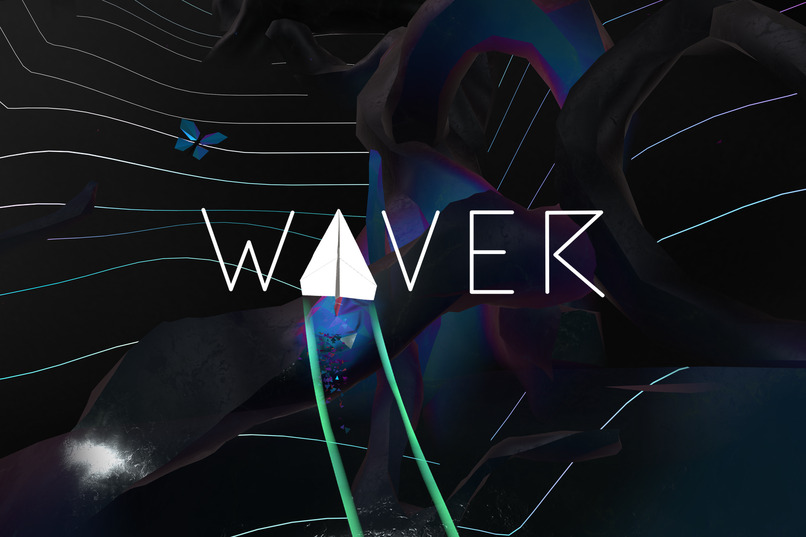
Keyvisual of Waver for Meta Quest and Meta Glasses
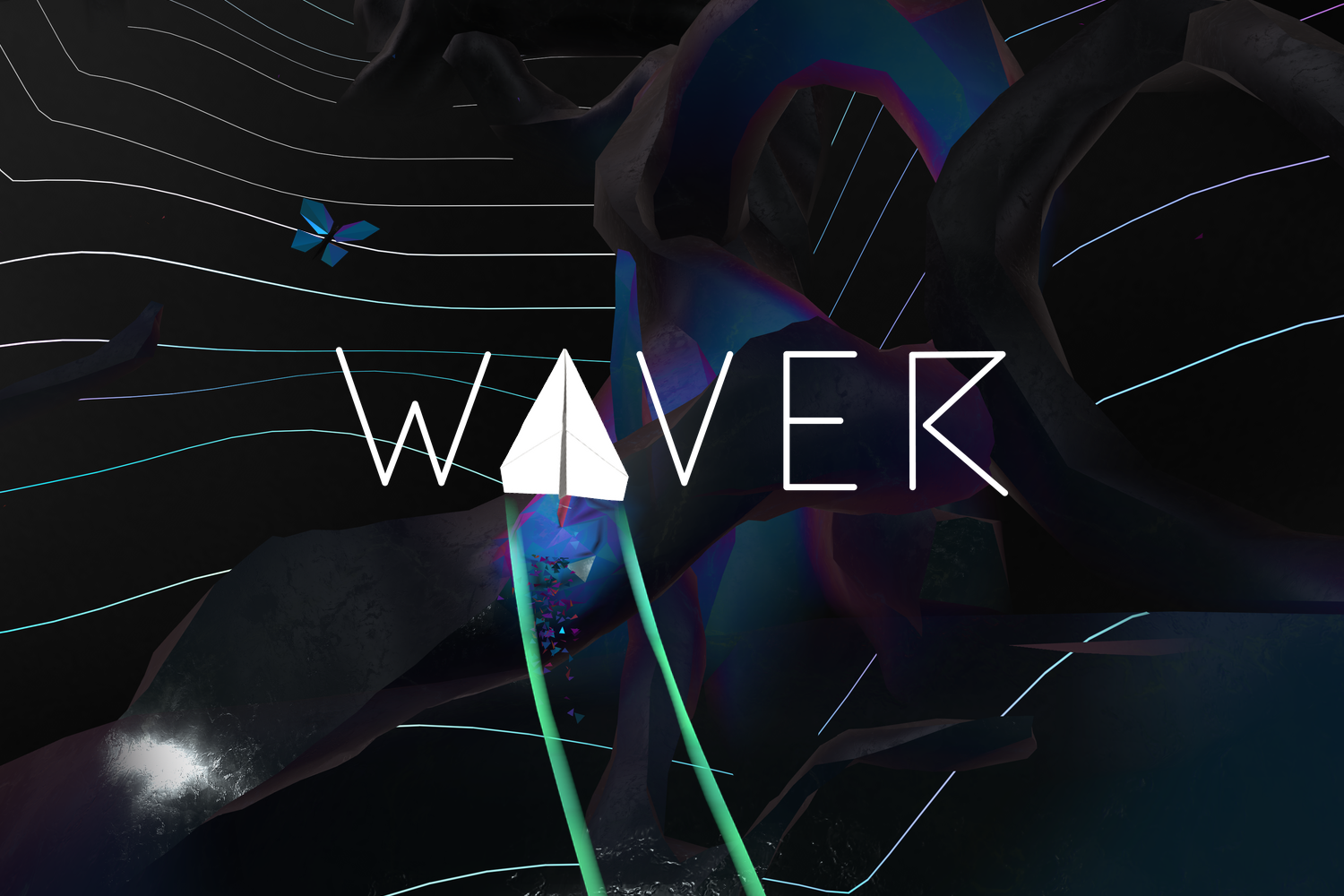
Inspiration
What it does
How we built it
Challenges we ran into
Inspiration
Remember holding your hand out of a car window as a kid, letting it ride the wind? Waver turns that feeling into a game. It is built around one idea, which our trailer puts in a single line: the fun starts where your comfort zone ends. The closer you dare to fly, the more beautiful the world becomes.
I grew up with games and films about racing through corridors at full speed: the trench run in Star Wars and its vector-line arcade cabinet, Star Fox, and Red Alarm on the Virtual Boy. Superflight inspired the idea of scoring by flying close to things. And Rez, Flower and Thumper showed me that a game can be fast and intense and still feel like a trance.
Waver started out as a shooter in the spirit of Star Fox. But once we flew the plane with a bare hand, the flight alone was so meditative that shooting would only break the flow. So we went the other way, towards minimalism: no weapons, no power-ups, nothing extra. Just your hand, the plane, and how close you dare to go.
What it does
A paper plane floats in front of you in your real room. Grab it, throw it, and the room opens into a dark, unknown canyon. From then on your hand is the plane: hold it relaxed, as if resting on the wind, and tilt to steer and dive. No controllers, no buttons.
The closer you pass the floating rock shapes, the more you score, and the more the grey world turns to colour: ripples run across the obsidian, your contrail shimmers, and cashing in a combo sends a wave of light through the world. Touch anything and you crash back into reality: the plane drops onto your real floor. Pick it up and throw it again.
From day one Waver was meant to be played in passthrough, semi-immersive, in your own room. At first that was the whole concept. In playtests, though, many people preferred full immersion, so now you choose: the canyon over your greyscale room, or a dark fog that hides the room completely. Try passthrough at least once. Flying through your own living room is a lot of fun.
How we built it
We make no secret of it: Waver is vibe-coded. Almost all of the code was written by AI (Claude Code, driving the Unity editor through the Unity MCP) on Unity 6, OpenXR and the Meta XR SDK. The exception is the flight model: I took it from Lucid Trips, my own VR game from more than ten years ago, and brought it back to life here.
What we are proud of: most of the assets are hand-made, not AI-generated, and almost every decision, from the art direction to the last tuning value, was made by us in the headset. The AI gave us something rare in a short competition: time. We spent it on polish, on hours of tuning speeds, damping and thresholds until the flight felt right. Without AI tools, this level of detail would not have fit into the schedule.
One of those decisions: the plane lags slightly behind your hand, on purpose. That bit of inertia makes it feel like a real object with weight and momentum, not a cursor. Climbing costs speed, diving builds it.
Comfort was a goal from the start. Our work on Lucid Trips in 2016 taught us a lot about motion sickness, so Waver deliberately avoids too many stimuli. The background never rushes past you: it is either a dark fog without details or your own room, standing still in passthrough. Both give your eyes a calm, stable reference while the canyon moves. We tested with people who get sick in almost every VR experience, and they had no problems.
Under the hood: hand tracking through XR Hands with a relaxed "neutral" pose, a world generated as you fly, custom HLSL shaders for everything you see, greyscale passthrough with colour flashes, and procedural sound with beat-synced lights.
Challenges
The frame rate. I wanted lots of effects, everything as beautiful as I had it in my head, and Waver is now very close to that vision. But holding 72 Hz on Quest 3 was a fight again and again. We wrote our own on-device benchmark and cut GPU work by more than half until even the densest spots run smoothly. On newer hardware this will be easy; on Quest 3, every effect had to earn its place.
Hands are not joysticks. Finding a resting pose that feels neutral, and steering that is precise without being tiring, took many iterations.
What we learned
Close is where it gets beautiful. Rewarding risk, not just survival, changes how people play: they start to flow. And AI does not replace a vision, it buys you the time to get it right.
What's next
Online leaderboards with the Meta Platform SDK, more canyon biomes, more music, and tuning for Meta VR Glasses. Target launch: spring 2027 on the Meta Horizon Store.

