-
-
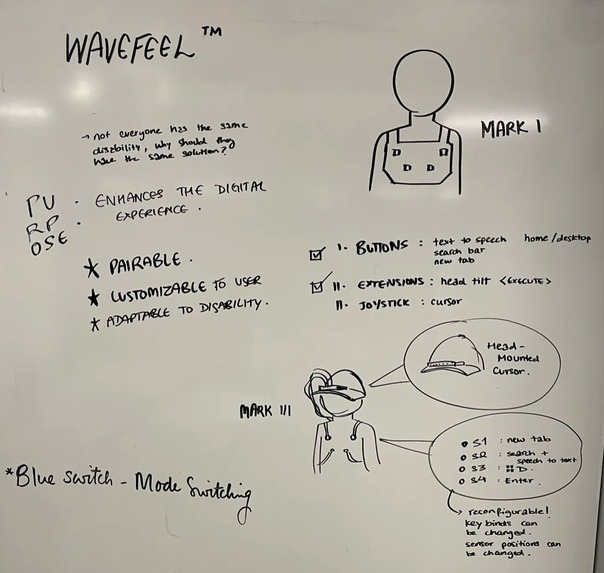
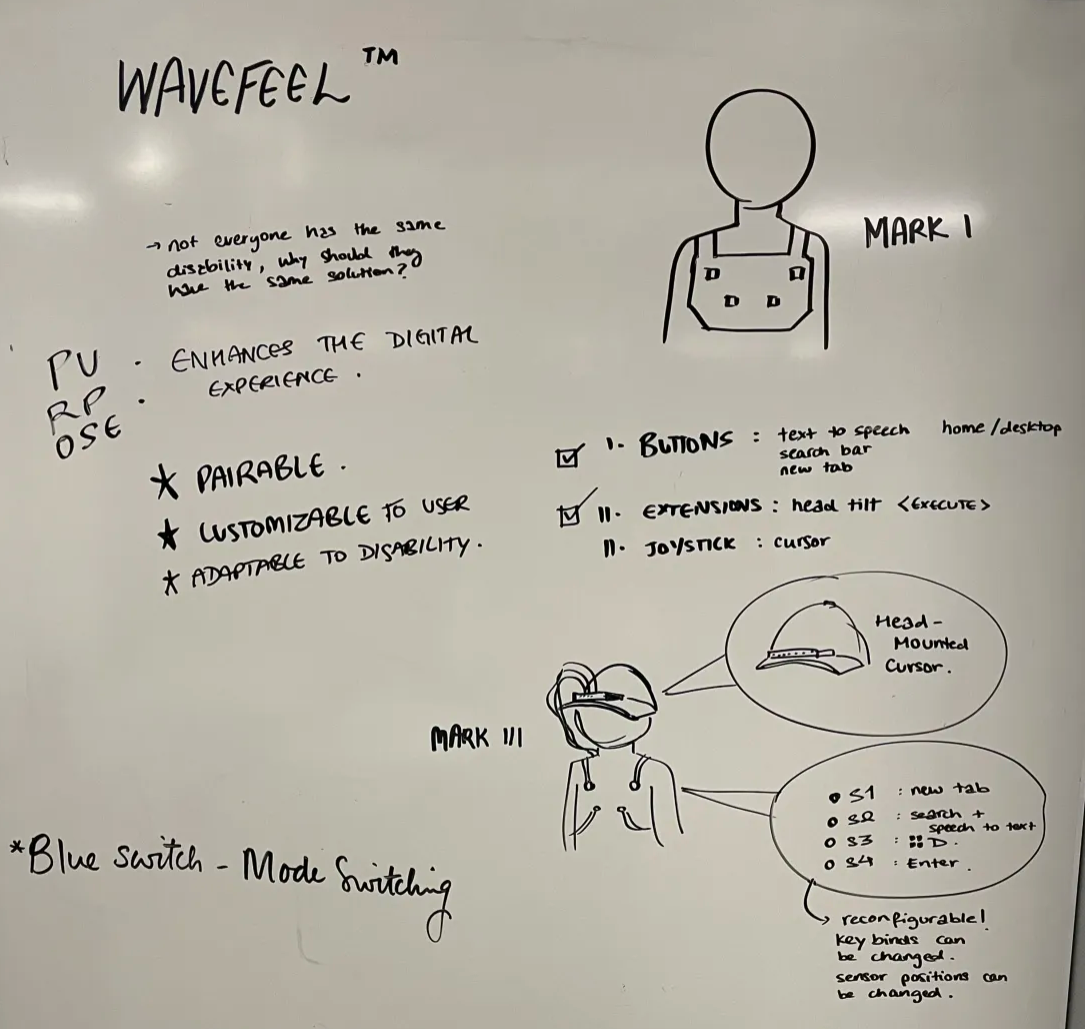
brainstorming WaveFeel
-
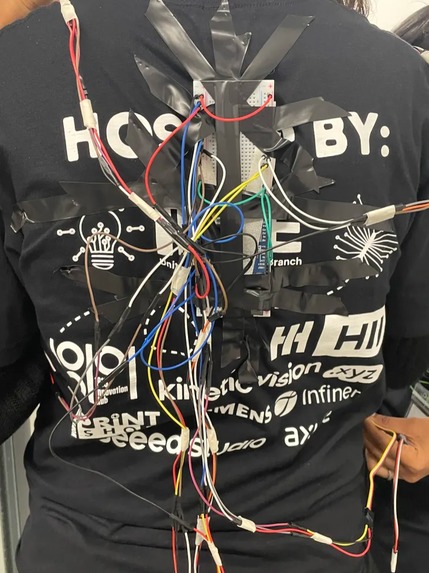
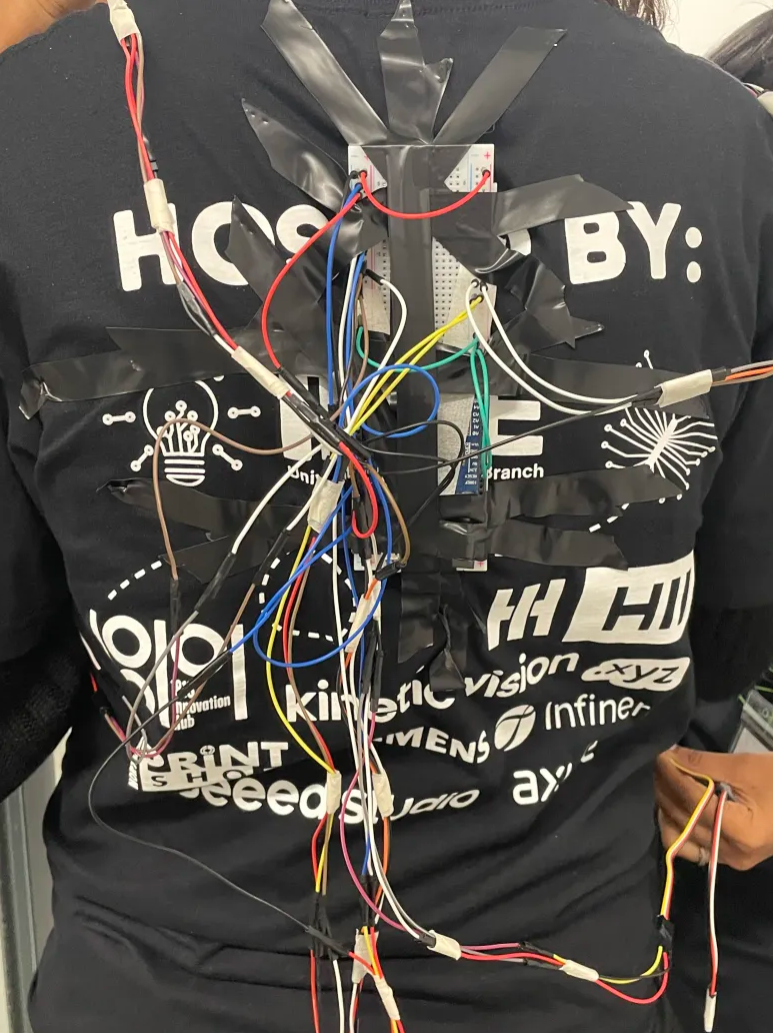
hooking up WaveFeel to a MakeUC shirt!
Inspiration
The modern web browsing experience relies heavily on the use of keyboards and a mouse. For individuals that are physically unable to (or would not want to) rely on peripherals to be able to browse the web, there are a limited number of solutions available.
What it does
Our product uses haptic sensors and gyroscope maneuverability to create a new way to experience the web: by using touch sensors and a gyrosensor, we have replicated the core functionalities of a keyboard and mouse in a much more compact and user-accessible format.
How we built it
WaveFeel relies on an Arduino circuit to run it's core hardware, along with Arduino's IDE that runs the main software program to process computer interaction based on touch sensor/button/gyrosensor inputs.
Challenges we ran into
The Arduino boards we were using were quite buggy and uncooperative with our systems, mainly because of the R4 WiFi's relatively new launch and functionalities. We ended up using older Arduino boards (Arduino Leonardo) to provide a more robust module to act as our core microprocessor.
During the final hours of our project, we were faced with two major challenges. The first, a need to extend our wiring and change our touch sensors to buttons because of voltage issues. Secondly, our Arduino board's digital read pins were fried and could not read digital data, which resulted in us having to migrate our circuit to a new Arduino board.
Furthermore, this being our first experience with Arduino and hardware in general, we had a massive learning curve while learning how to assemble circuits and code in Arduino's IDE.
Accomplishments that we're proud of
We were successfully able to navigate the button functionalities to create a working prototype that opens a browser, navigates to the search bar, automatically enables speech-to-text search, enters, and closes our windows. Furthermore, our 'cursor cap' was able to successfully replicate the movements of a mouse using only head gestures and tilts.
We are proud that we were able to counter our challenges within the given 24 hours and provide a working final prototype towards the end!
What we learned
We now know how to:
- assemble Arduino circuits
- code in Arduino's IDE
- use Arduino's in-built libraries
- use HTML and CSS to create a working website hosted on a local server
Furthermore, we now know how to allocate our time when working on a project within a 24 hour hackathon, and how much time should be dedicated to each step.
What's next for WaveFeel
Our product shows incredible potential to expand into the web browsing market. Not only can our sensors be reconfigured almost entirely to a user's needs, they can also be physically relocated on a 'vest' or 'arm band' to adapt to an individual's disability/limitations. With more R&D on this project, we can even evolve our sensors to be more robust and specific, enabling movements as minute as finger bends and gestures to be able to surf the web. The possibilities are, truly, endless!


Log in or sign up for Devpost to join the conversation.