Inspiration
Glioblastoma remains one of the deadliest cancers, with poor survival rates and limited treatment progress. Current lab models fail to replicate real tumour behaviour, motivating a more accurate, physics-driven approach.
What it does
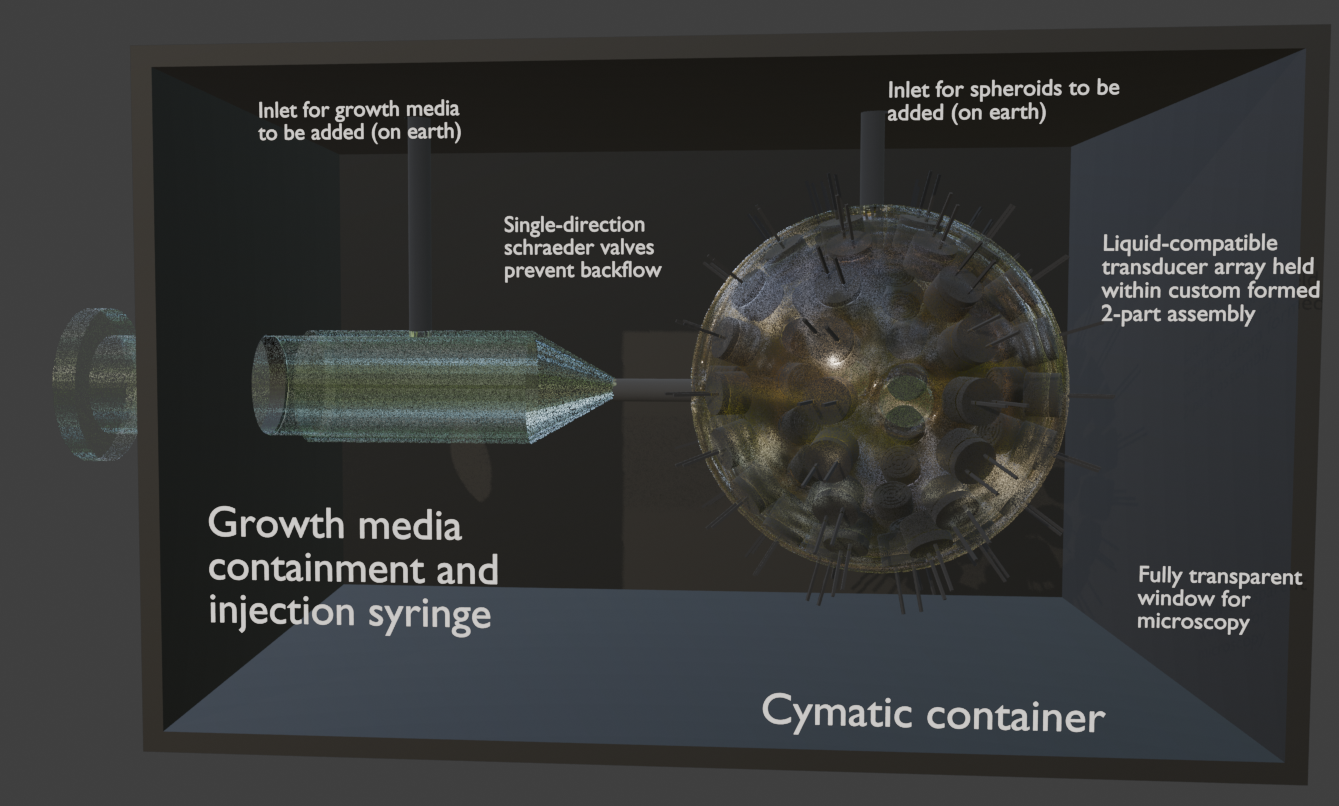
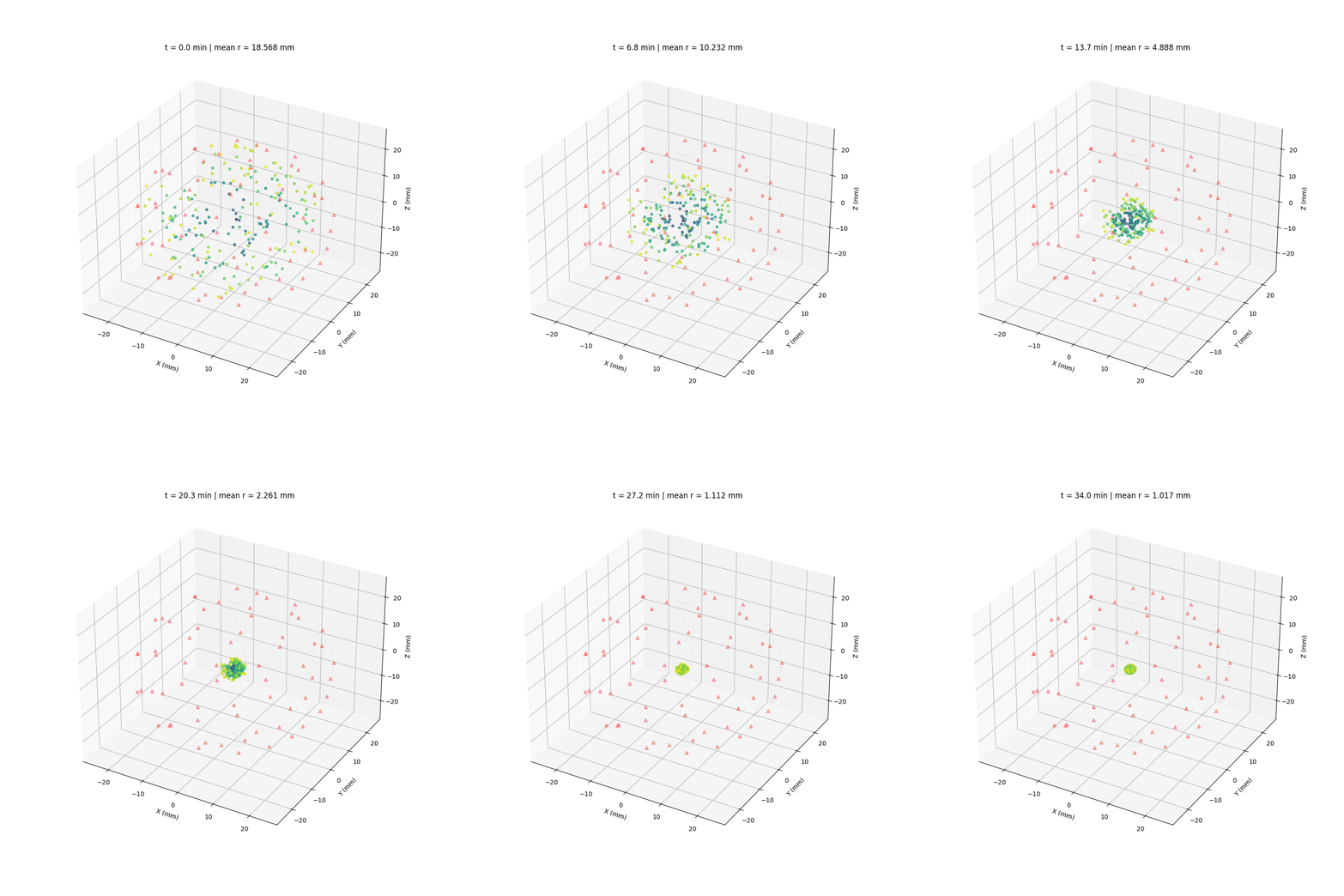
Wav.io simulates and enables the controlled assembly of glioblastoma spheroids in microgravity using cymatics. By generating precise pressure fields from a spherical transducer array, it guides dispersed spheroids (~400 µm) to converge and aggregate into a stable, biologically representative tumouroid (~2 cm).
The system also provides visual and quantitative outputs. This includes pressure field maps, convergence animation, and snapshots of 3D simulations at key time points, to track and optimise tumour formation for drug testing.
How we built it
- Modelled a spherical test rig with 64 transducers to generate controlled pressure fields
- Simulated pressure gradients to guide spheroid aggregation
- Plan is to integrated hydrogel-based tumour delivery and release system
Challenges we ran into
- Controlling spheroid movement in a fluid-like microgravity environment
- Designing stable and precise acoustic field configurations
- Ensuring sterility and sealed injection systems
- Simulating realistic physical constraints accurately
What's next for Wav.io
- Prototype development and lab-scale validation
- Partnering with research institutions for testing
- Refining ML optimisation for real-time control
- Exploring broader applications in organoid and drug discovery systems
Built With
- matplotlib
- python

Log in or sign up for Devpost to join the conversation.