-
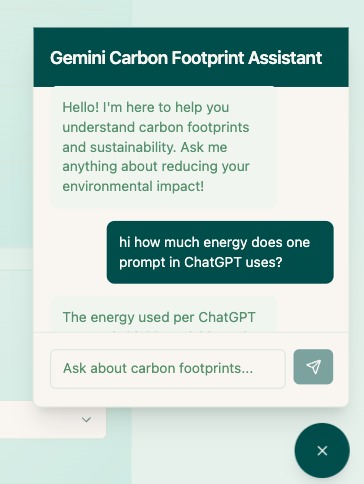
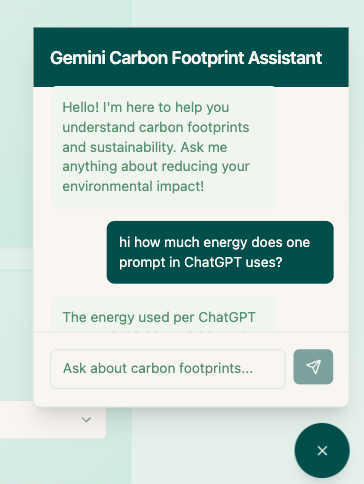
Gemini Carbon Assistant - Functioning ChatBot that educates users on carbon AI footprint
-
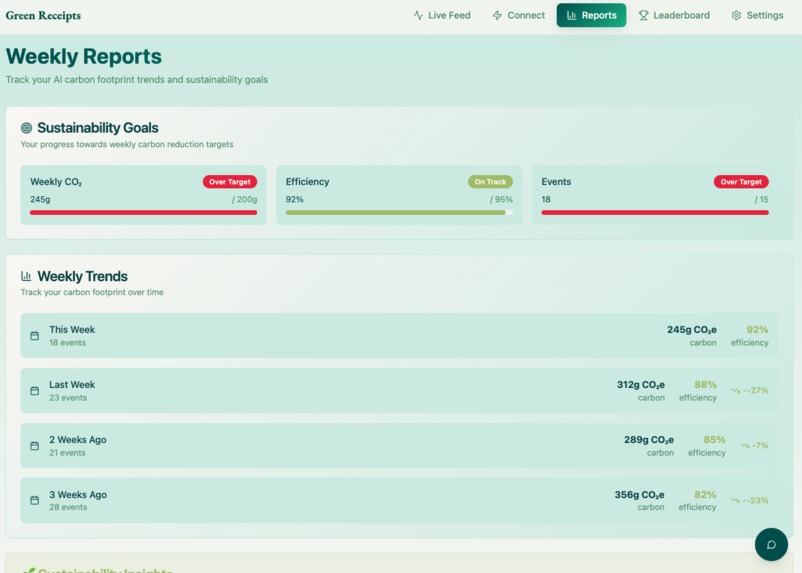
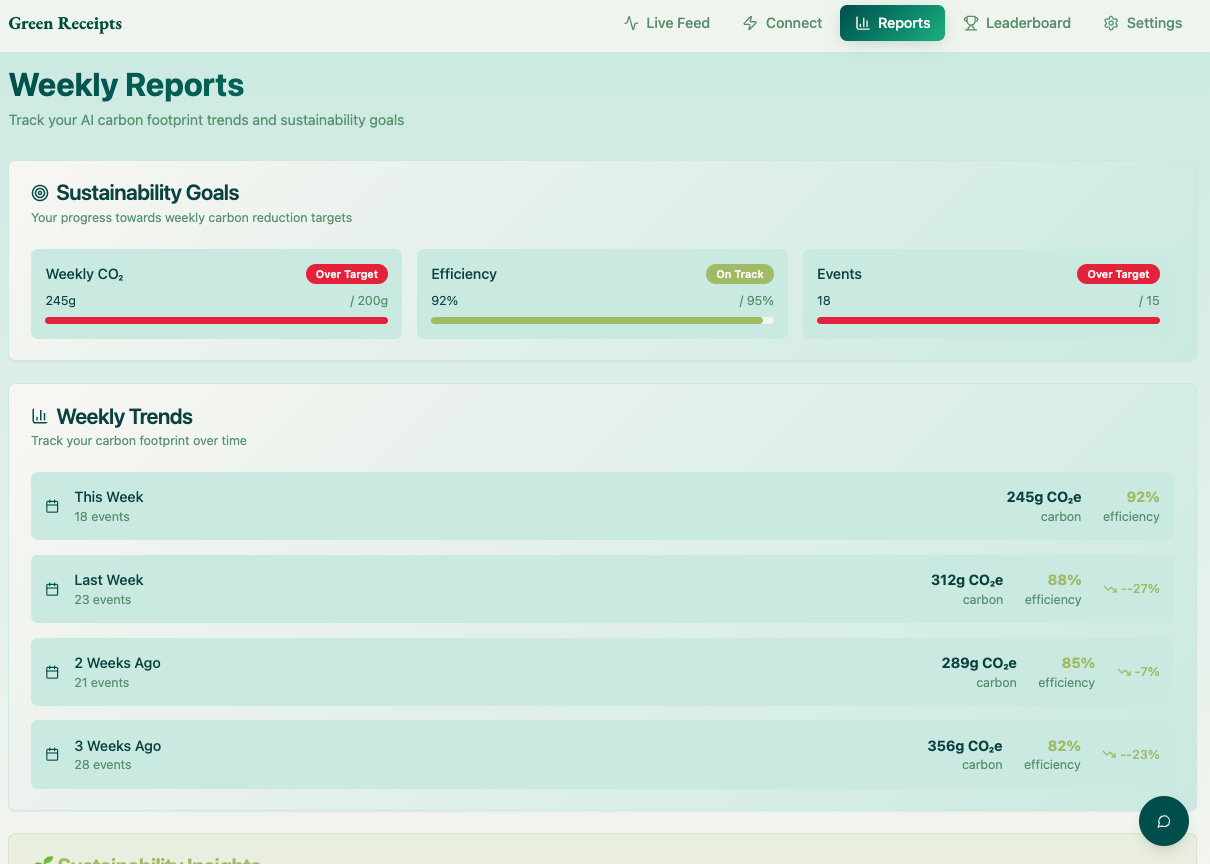
Reports - Summarizes weekly carbon footprint
-
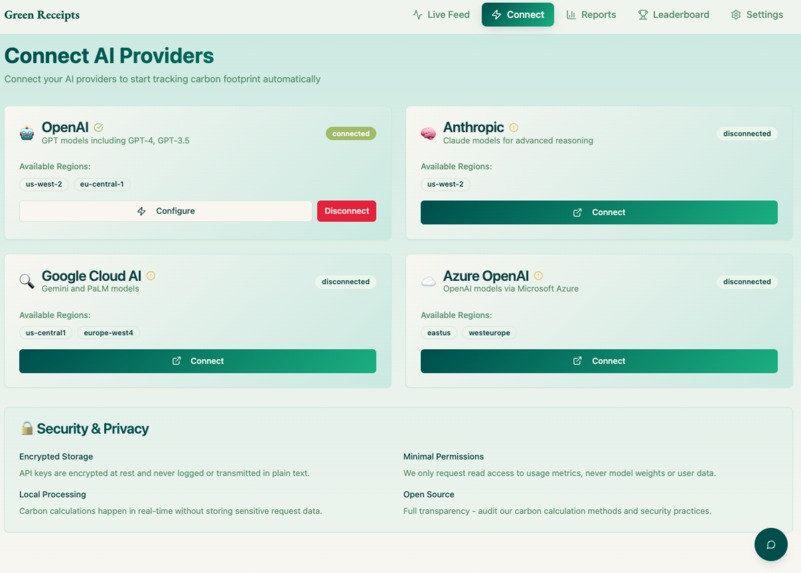
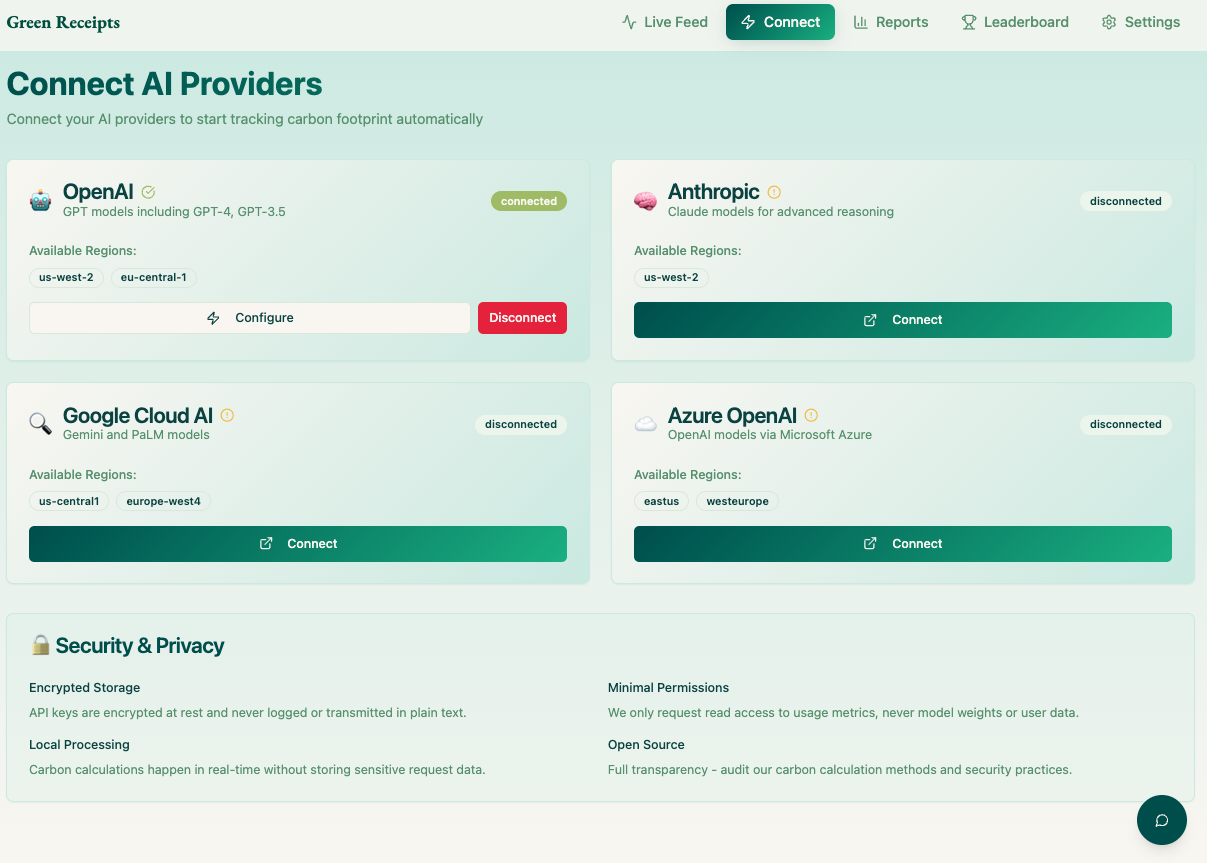
Connect - allows users to connect to different LLM platforms that they are using
-
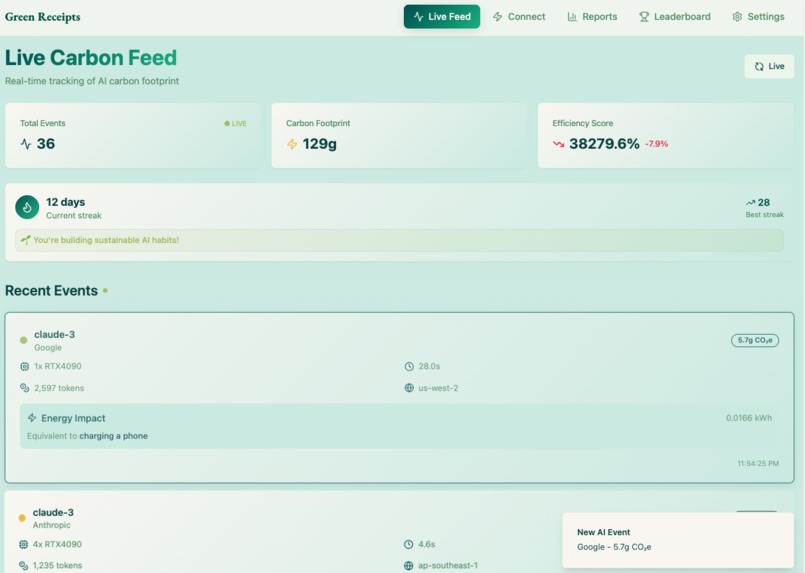
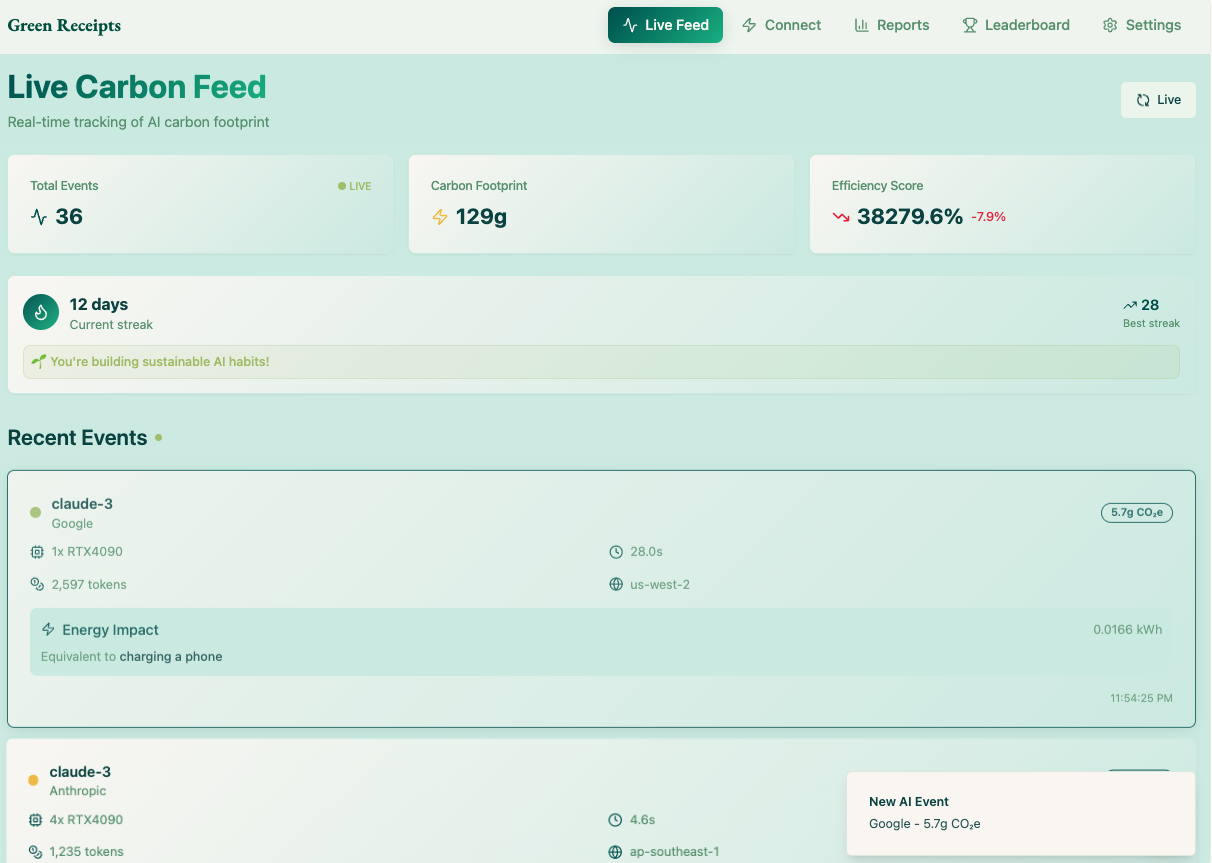
Live Feed - shows how much energy was used in each session
-
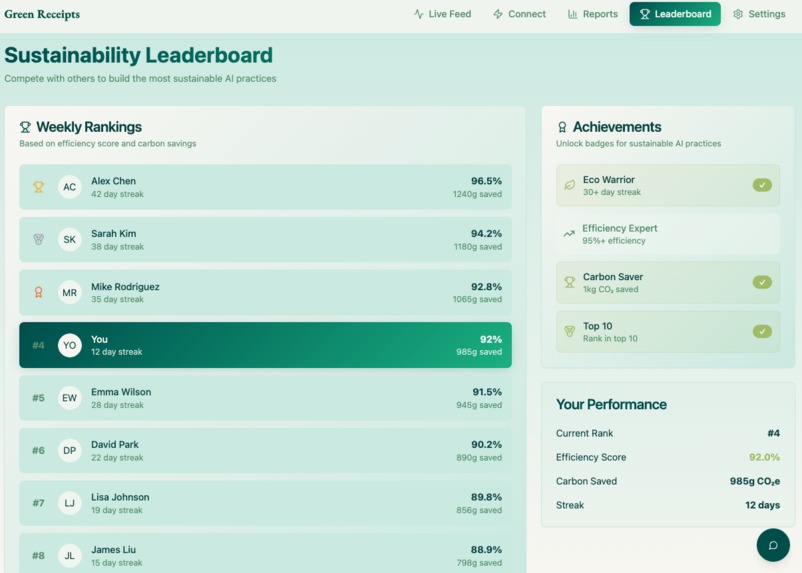
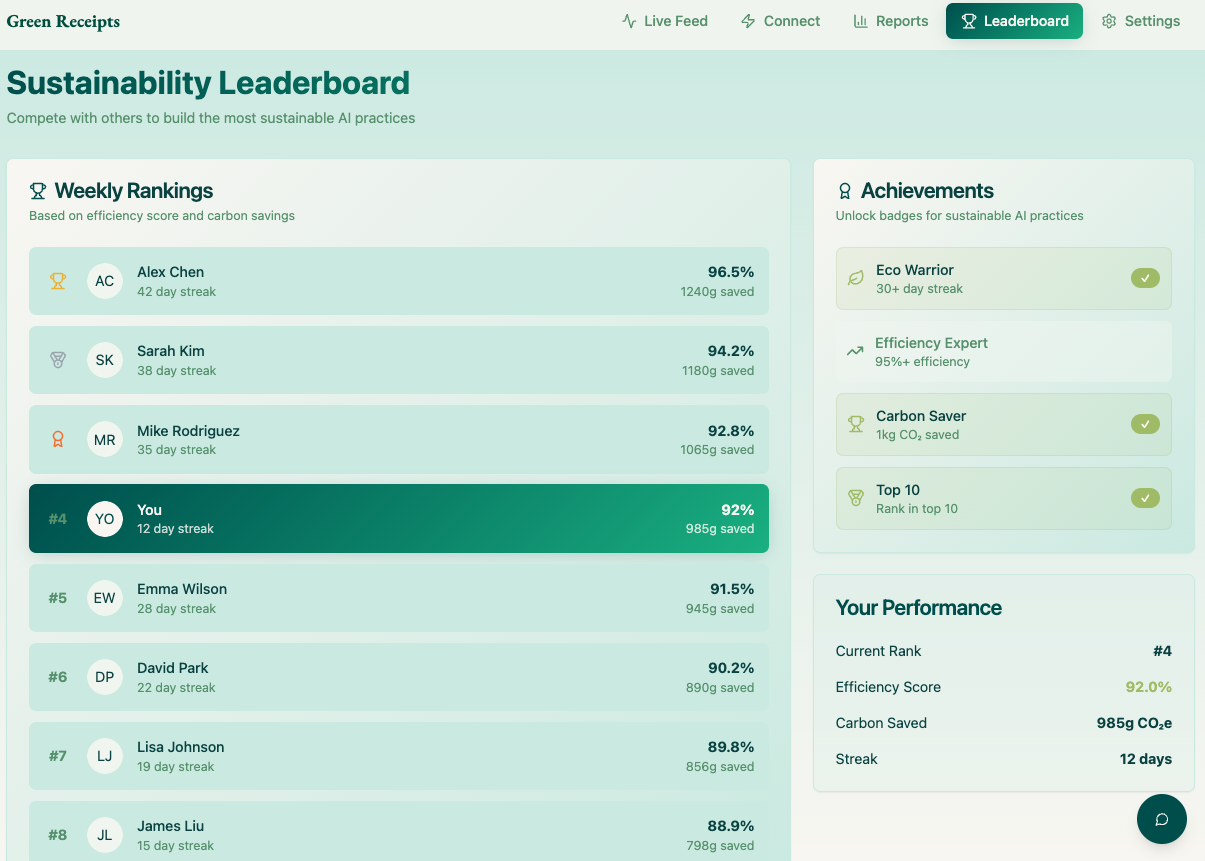
Leaderboard - allows users to compare carbon usage to other users
-

Settings - personal account settings page

Inspiration
We were inspired by the invisible but growing carbon footprint of artificial intelligence. As tools like ChatGPT, Gemini, and others become part of daily workflows, few users understand the environmental cost of their usage. According to BloombergNEF, U.S. data‑center power demand (driven largely by AI) is projected to more than double by 2035—from ~35 gigawatts (GW) in 2024 to about 78 GW, raising data centers’ share of total U.S. electricity use from ~3.5% today toward 8.6% by 2035. Meanwhile, studies show that some advanced AI model training runs emit hundreds to thousands of tons of CO₂–equivalent, with new models emitting over 250 times more carbon during training than the average person emits in a year. Yet, while Bloomberg and similar organizations offer powerful ESG tools for companies, there’s no solution that helps individuals or small teams take responsibility for their AI footprint. We built Green Receipts to bridge that gap and empower everyday users to make more sustainable, data-driven decisions.
What it does
Green Receipts syncs with users' AI tool accounts (like OpenAI and Gemini) to track usage and estimate the associated carbon footprint. It translates technical metrics (token counts, compute time, model size) into relatable equivalents, such as the energy used to charge a phone 1,000 times or run a dishwasher for a week.
Each user gets a weekly "Green Receipt"—a personal summary of their AI-related emissions—along with tips to reduce their footprint. We added a gamification layer: leaderboards, achievements, and challenges to encourage low-impact behavior.
How we built it
AI integration: We used the Gemini API to create a chatbot to educated users on sustainability insights. Carbon estimation engine: Based on open-source data from the energy usage stats from cloud providers (OpenAI, Google Cloud, etc.), we estimated translate usage into estimated emissions and real-world equivalents. Gamification system: Tracked via a points model tied to usage efficiency and reductions over time.
Challenges we ran into
The main challenge we faced was the lack of direct access to carbon data. Most AI APIs don’t expose detailed energy or emissions metrics. We had to build our own estimator from multiple indirect signals (token usage, model size, cloud location, etc.)
Accomplishments that we're proud of
We believe that our app provides a unique way to make the climate impacts of AI feel personal and relatable.
What we learned
We learned how invisible impact/hard-to-visualize data can be made visible through thoughtful UX and storytelling. Through the development of our app, we deepen our understanding of cloud energy use, carbon estimation models, and the complexity of AI infrastructure. We are also excited about how gamification can help users turn what they learned from organized data into actionable items. Most importantly, with the growing use of AI, we learned how important it is to align technical innovation with ethical responsibility.
What's next for Green Receipts
Our next steps include:
- Adding more integrations (Anthropic, AWS Bedrock, Meta AI, etc.)
- Refining the carbon estimation engine using more precise model energy profiles and data from GPU benchmarks.
- Launching a "Green Receipts for Teams" feature so organizations can track collective AI usage and embed Green Receipts in ESG workflows.
- Partnering with carbon offset platforms to let users neutralize their footprint.
- Exploring how to integrate Green Receipts with Bloomberg’s ESG suite or similar enterprise platforms.
We believe Green Receipts can become the Strava for sustainable AI use—empowering people to track, reduce, and take pride in their digital climate impact.
Built With
- css
- gemini
- lucide
- radix
- react
- react-native
- tailwind
- tanstack
- vite


Log in or sign up for Devpost to join the conversation.