-
-
WattShare AI Logo
-
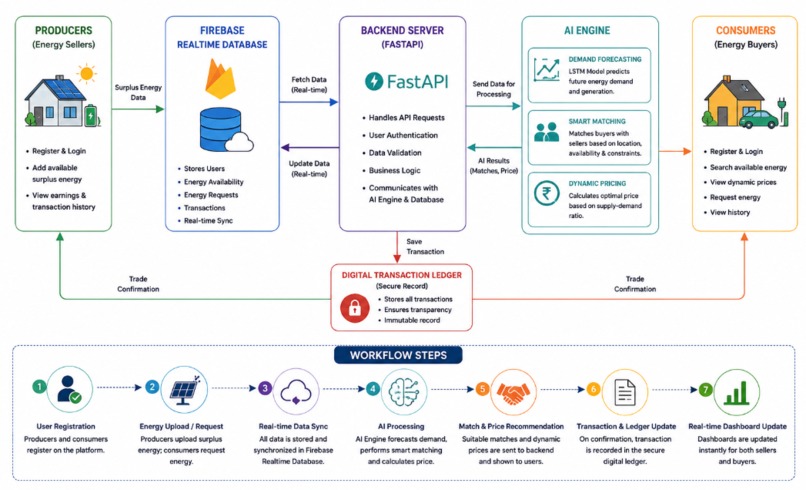
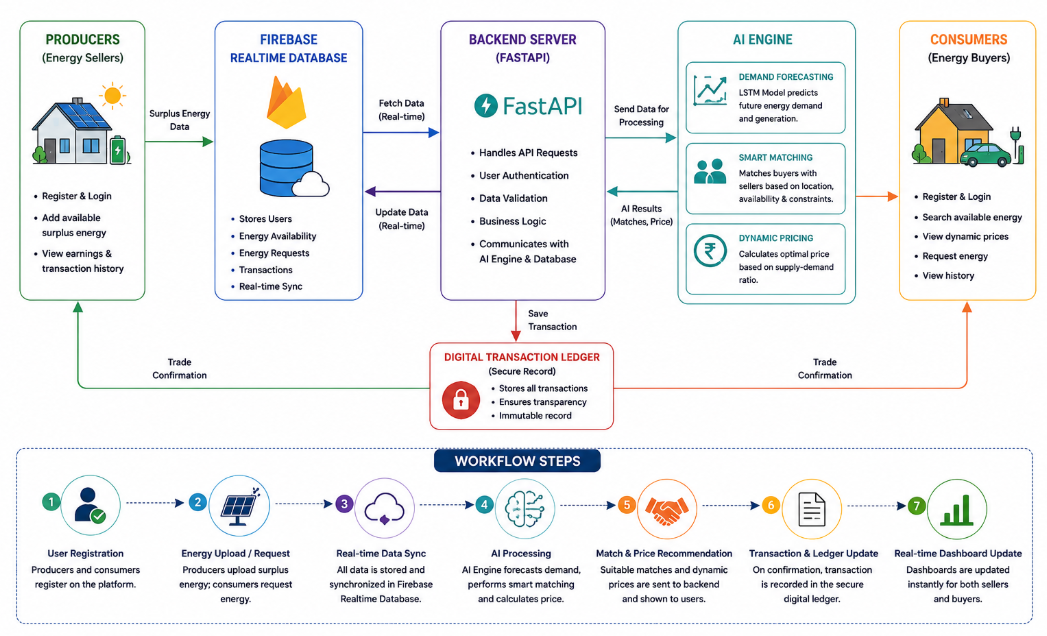
System Architecture Diagram
-
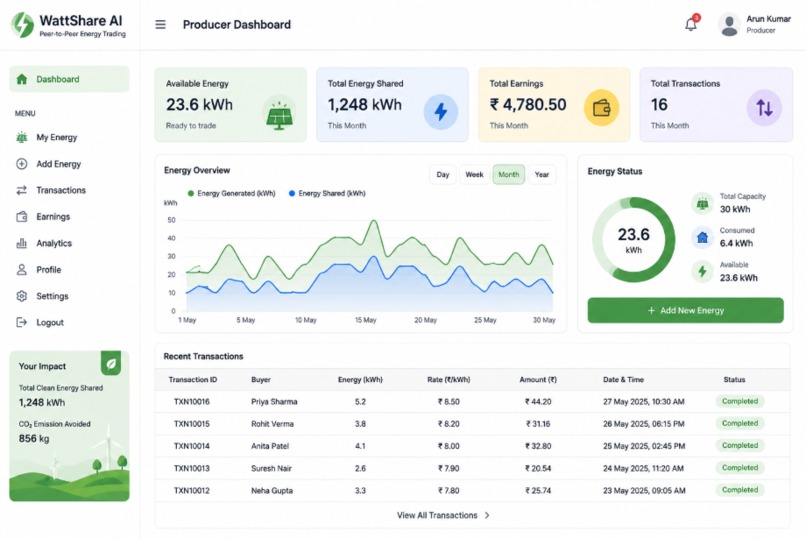
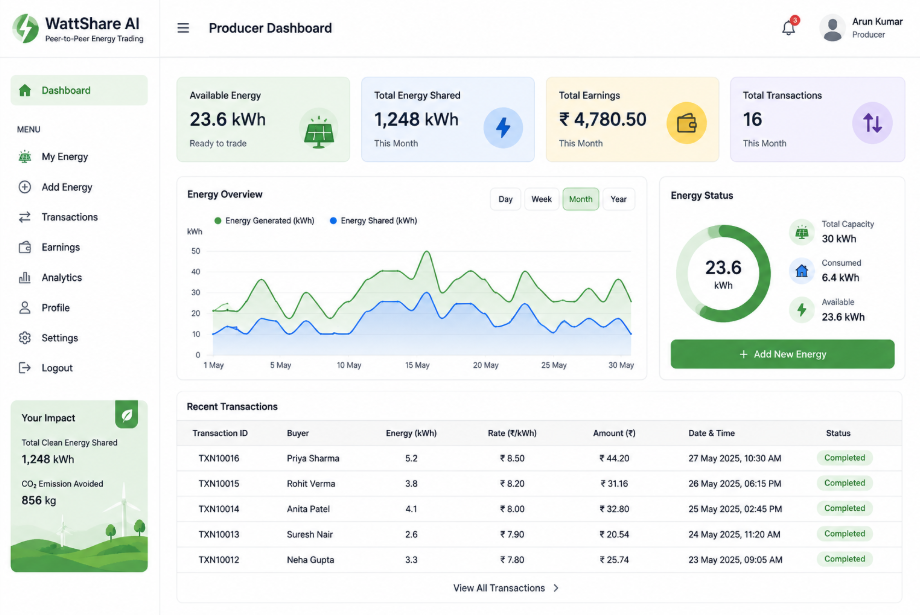
Producer Dashboard
-
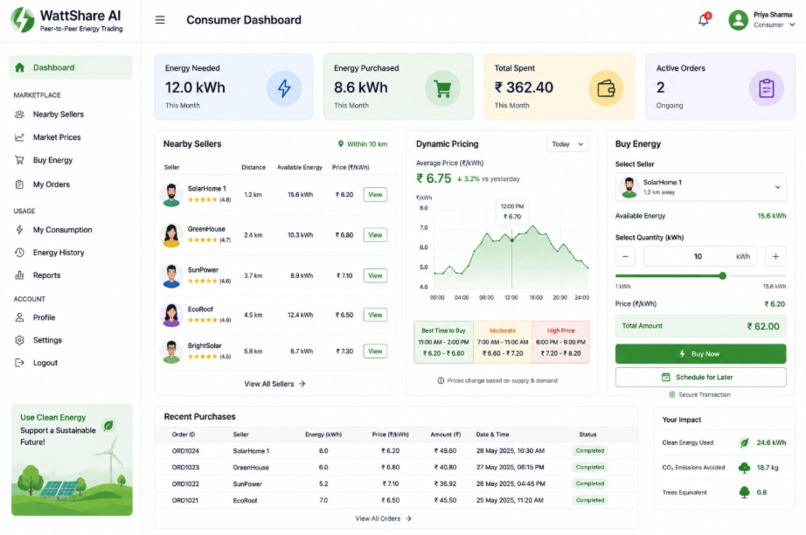
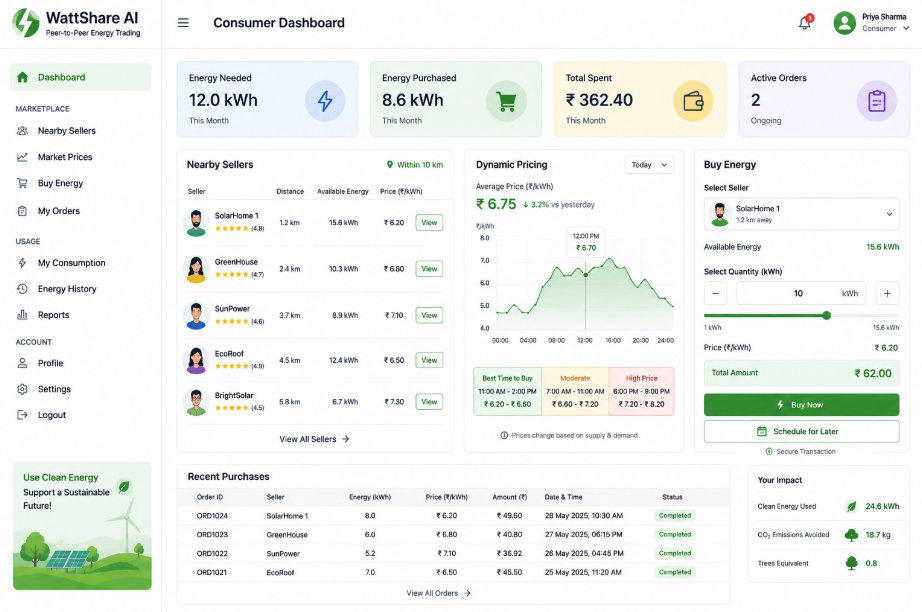
Consumer Dashboard
-
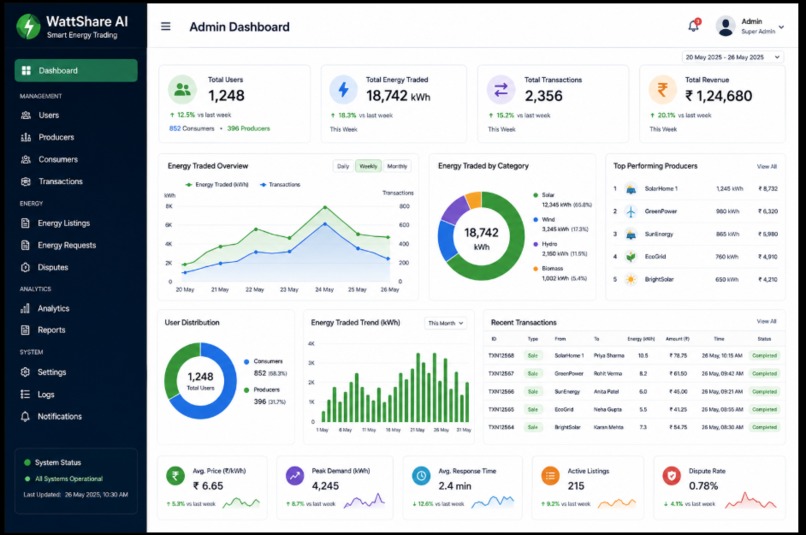
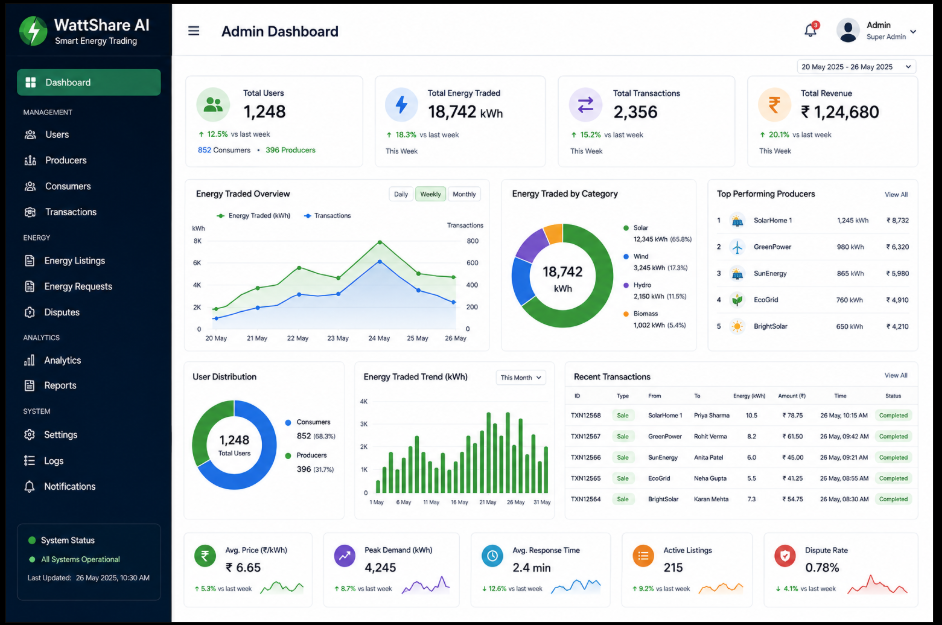
Admin Dashboard
-
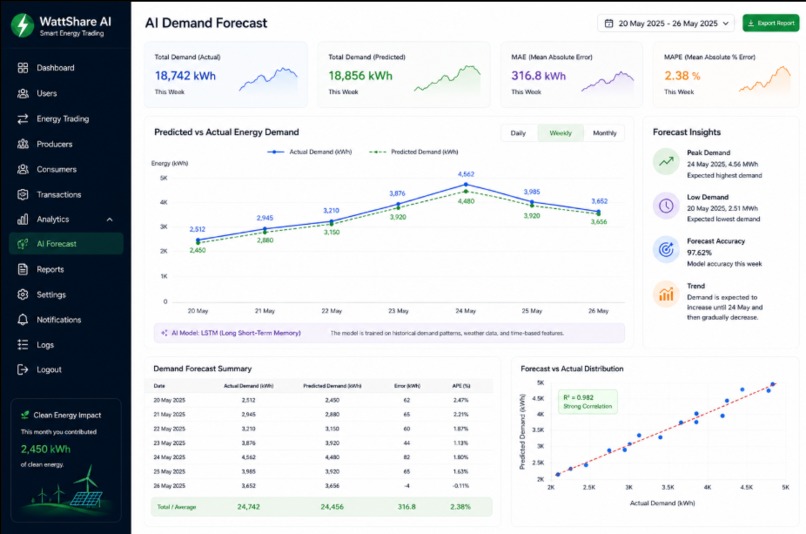
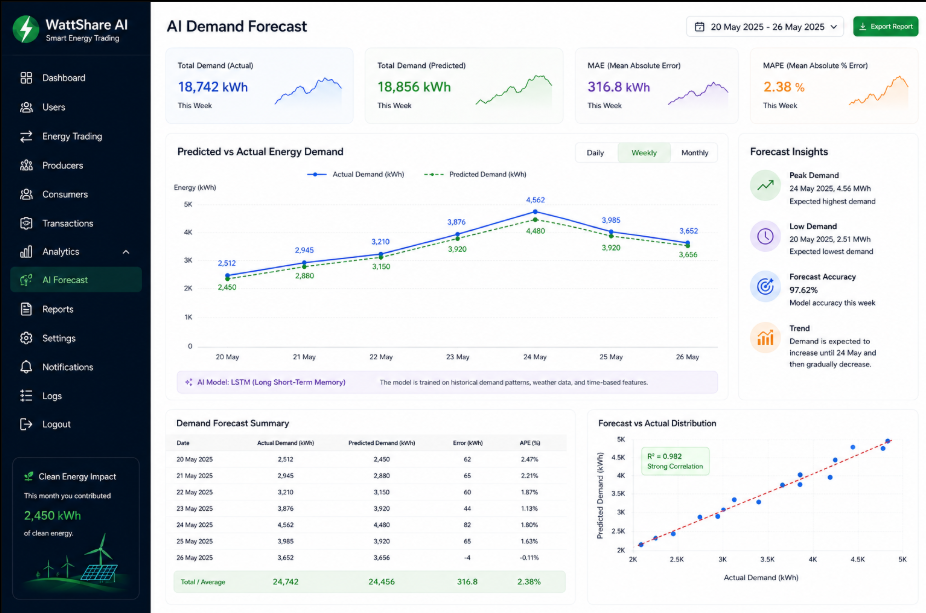
AI Demand Forecast Graph - Predicted vs Actual Energy Demand
-
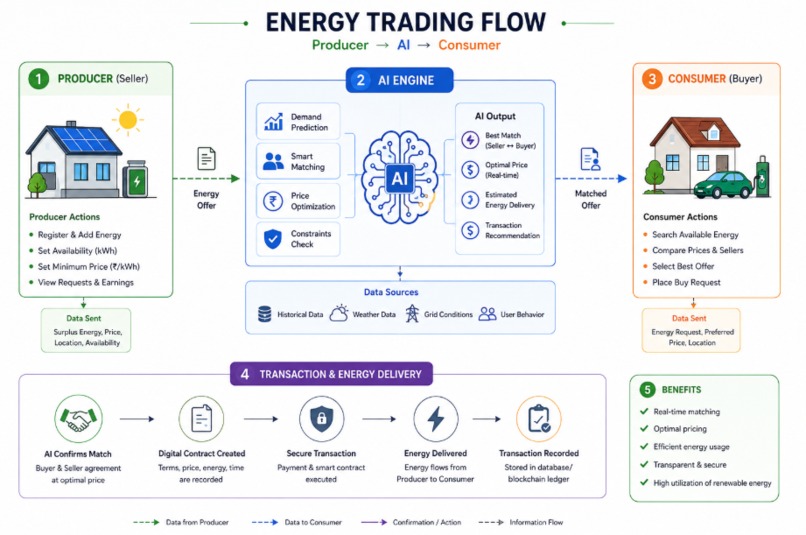
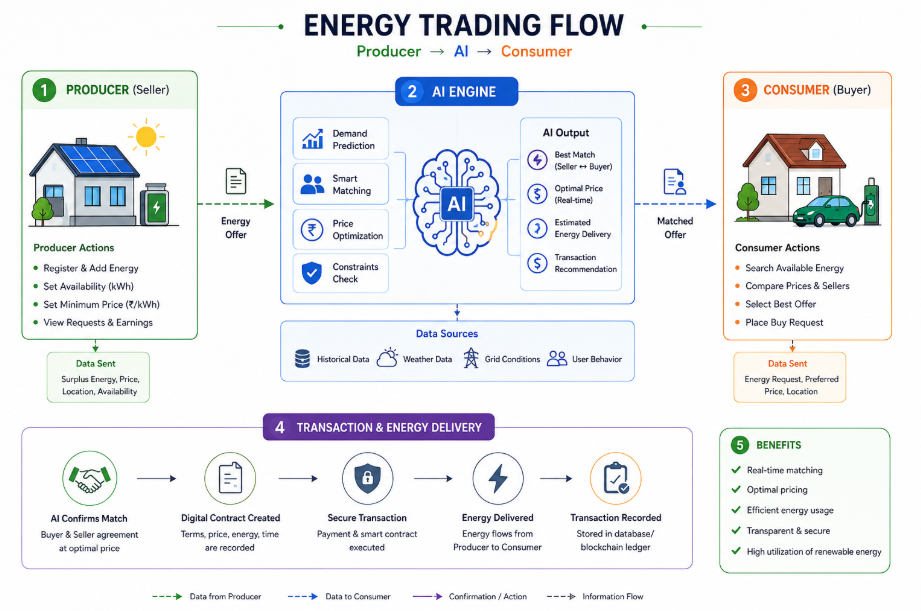
Energy Trading Flow Diagram - Producer → AI → Consumer
-
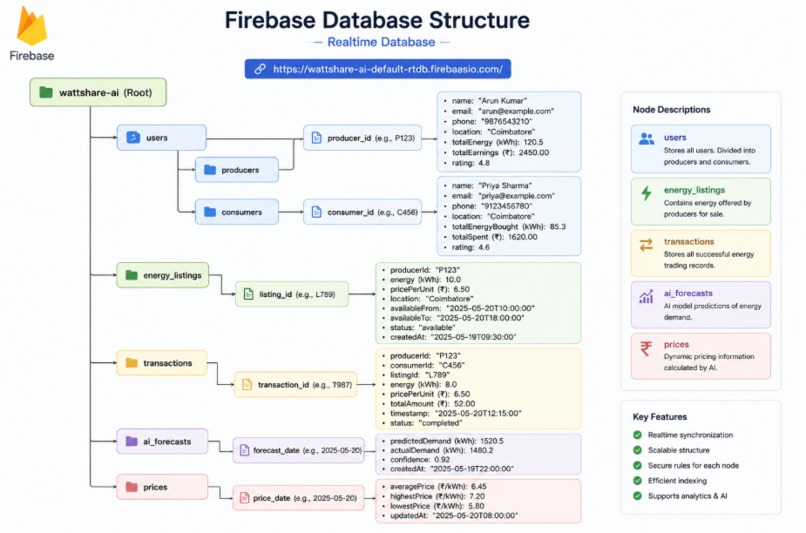
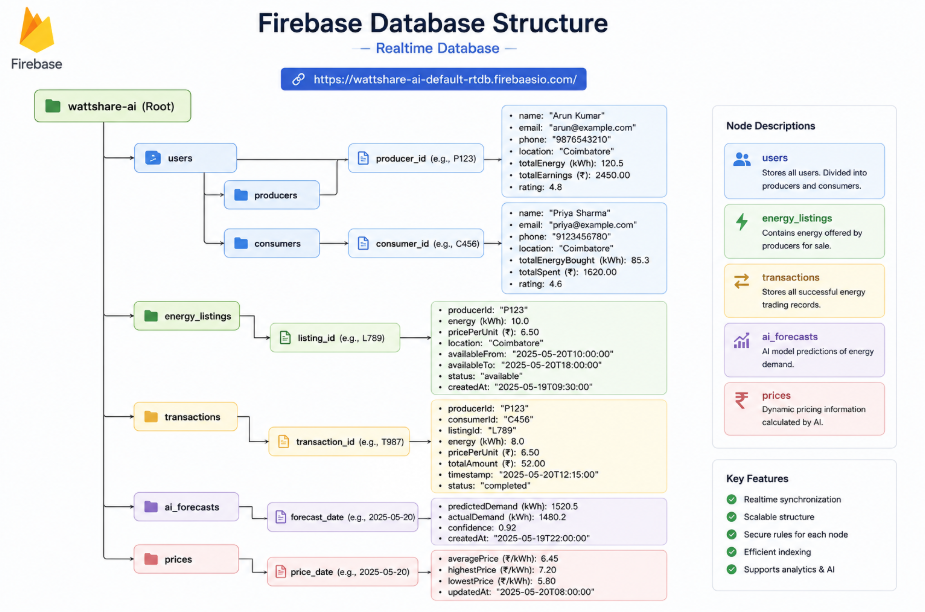
Firebase Database Structure
-
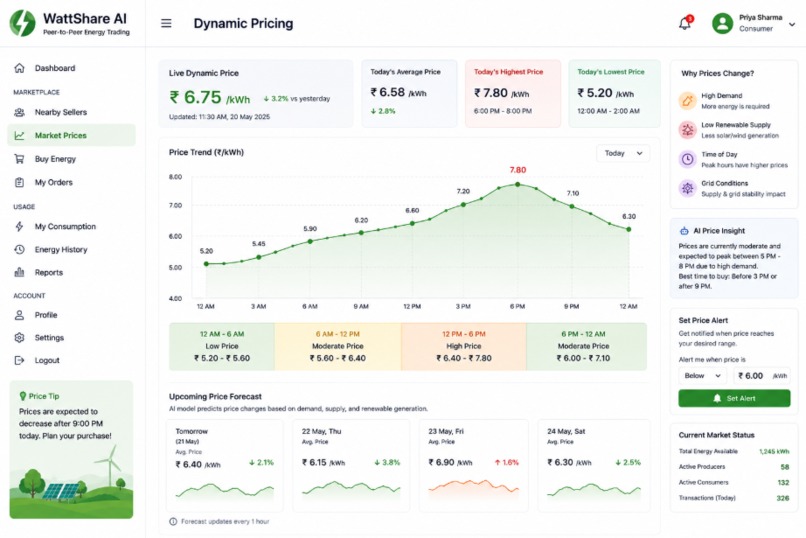
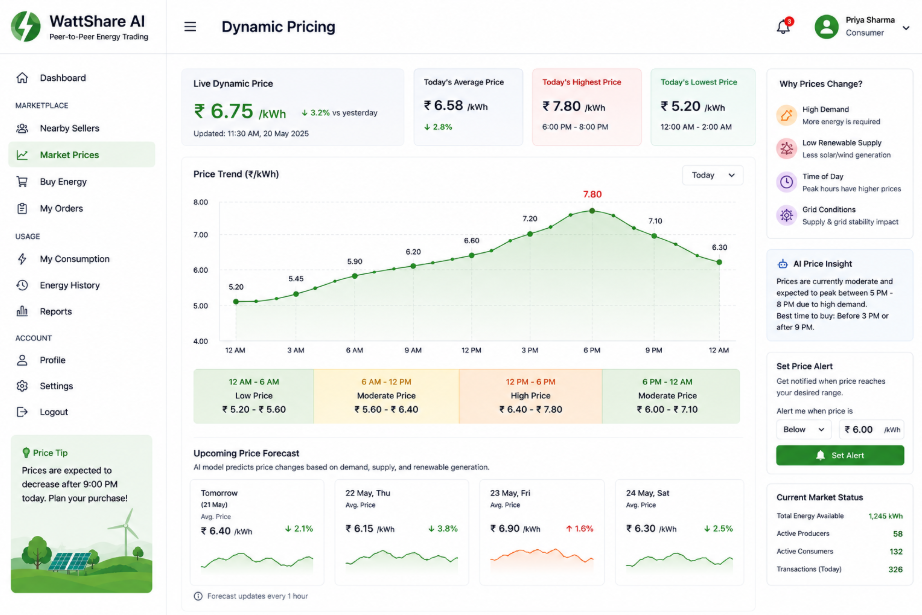
Dynamic Pricing Screen
-
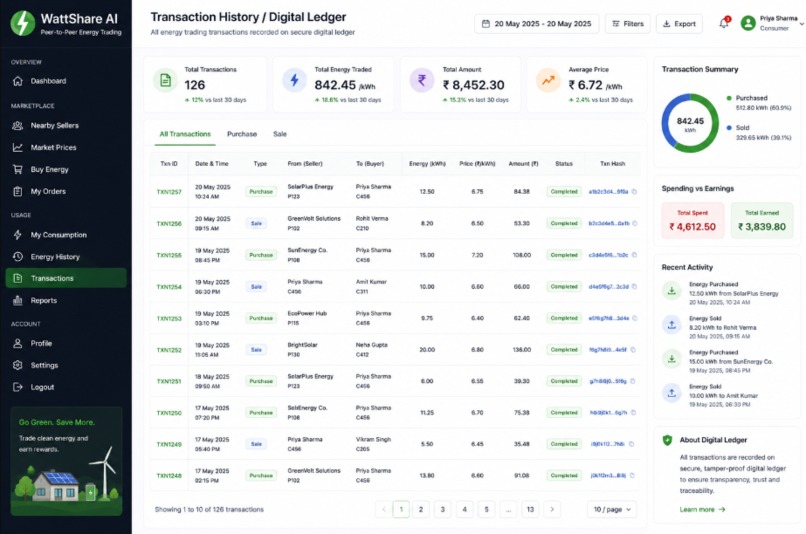
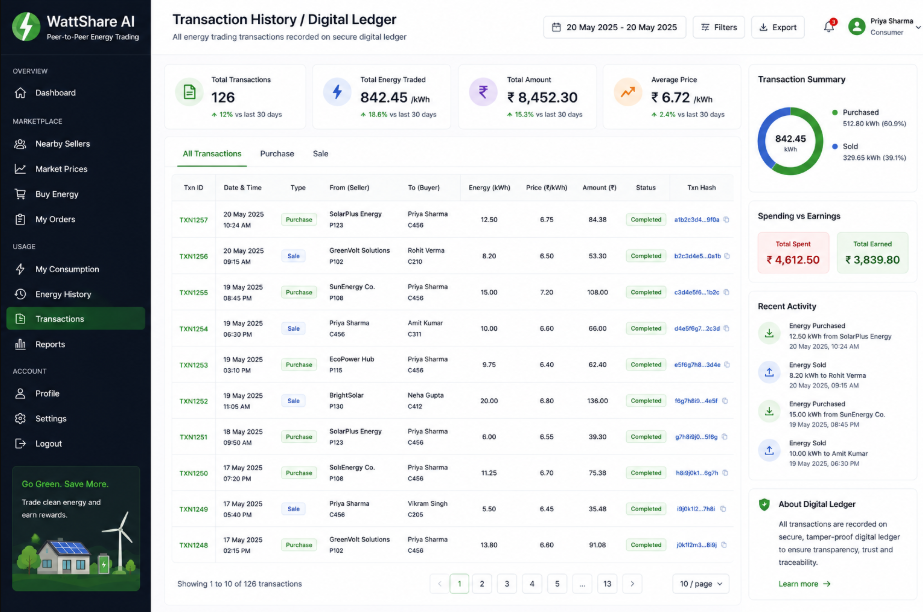
Transaction History / Digital Ledger
Inspiration
Densely populated smart cities face severe grid instability during peak electric vehicle (EV) charging hours, while excess rooftop solar generated by citizens goes wasted. Currently, there is no localized, direct real-time mechanism for these green energy producers to trade their surplus power with nearby consumers. This lack of a decentralized local energy marketplace prevents smart cities from achieving grid self-sufficiency, delays ROI for green-energy adopters, and increases dependence on carbon-heavy centralized power plants. We built WattShare AI to act as a virtual bridge between solar producers and energy buyers.
What it does
WattShare AI is a software-defined, peer-to-peer (P2P) smart grid energy trading platform. It acts as a virtual digital broker that dynamically matches local solar panel owners (sellers) who have surplus power with nearby consumers (like EV owners/buyers) in real-time, completely bypassing expensive physical hardware changes.
The platform guarantees a win-win financial model:
- Sellers earn up to 150% more than standard government feedback tariffs by selling directly to neighbors.
- Buyers save up to 25% on their electricity bills compared to grid peak rates.
How we built it
We designed a lightweight, serverless cloud architecture tailored for rapid sub-second grid data sync:
- Predictive AI Matching (LSTM): We integrated a Long Short-Term Memory (LSTM) neural network that predicts localized energy generation and demand spikes 3 hours in advance using historical consumption and weather forecasts to proactively balance the local microgrid.
- Dynamic Pricing Engine (Reinforcement Learning): A custom RL algorithm dynamically calculates real-time pricing based on active demand-supply indexes to optimize savings and profits.
- Virtual Grid Sync: We built a high-speed data layer using Firebase Realtime Database to track smart-meter APIs, simulating safe virtual routing across existing grid infrastructures.
Challenges we ran into
Integrating multiple asynchronous smart-meter simulation APIs to mimic real-time power flow without causing database latency was a major hurdle. Managing simultaneous fast-paced transactions during localized peak charging surges threatened to overload our Firebase synchronization loops. We overcame this by designing optimized, lightweight data payload sizes and implementing localized state caching on the client side.
Accomplishments that we're proud of
- Fully Software-Defined Architecture: Successfully designing a working P2P energy trading flow that operates purely on software and standard smart meter APIs without requiring users to purchase expensive, specialized local microgrid hardware.
- High-Accuracy Demand Forecasts: Building and fine-tuning an LSTM model that accurately flags localized consumption spikes, allowing proactive grid stabilization.
- Interactive Dashboard: Creating a seamless, real-time UI that makes trading clean energy as simple and satisfying as using a modern ride-sharing app.
What we learned
We gained deep insights into grid synchronization protocols, localized power dispatch architectures, and decentralized transaction ledgers. We also learned how critical sub-second data synchronization is when balancing heavy, unpredictable electrical loads (like rapid EV chargers) in simulated smart-city microgrids.
What's next for WattShare AI
- Web3 Integration & Smart Contracts: Moving the transaction ledger onto a secure, decentralized blockchain network to automate instantaneous escrow and trustless payouts via smart contracts.
- Hardware API Integrations: Transitioning from simulated meter APIs to direct hardware integrations with commercial smart meters, Tesla Powerwalls, and home solar inverter systems.
- Carbon Credit Tokenization: Implementing a feature that automatically calculates and rewards carbon offset tokens to active green energy sellers, which can be traded or redeemed for EV charging discounts.
Built With
- ai
- cleantech
- css3
- fastapi
- firebase
- firebase-realtime-database
- html5
- javascript
- lstm
- machine-learning
- node.js
- p2p-trading
- python
- react
- restapi
- scikit-learn
- smart-grid
- tensorflow

Log in or sign up for Devpost to join the conversation.