-
-

PITCH DECK 1
-
#2
-
-
#3

Inspiration
When we first started brainstorming environmental problems, our first instinct was trash and waste. But we quickly realized that waste management is already a very common direction for environmental projects. We wanted to explore something that felt less obvious, yet was still deeply connected to our everyday lives. That's when we looked at something we often take for granted: electricity. Electricity is everywhere. We use it when we turn on the lights, charge our phones, use air conditioning, watch TV, or simply sit in a room. Yet unlike trash or air pollution, we can't actually see electricity being consumed. It made us wonder how can we make people more aware of how electricity consumption can impact us and our surroundings. We were inspired by the stylized, atmospheric visual direction of Arcane, especially its dramatic lighting, glowing energy, strong color contrasts, and illustrated environments. We adapted that inspiration into our own visual identity rather than trying to replicate the show itself. Most importantly, we chose electricity because it doesn't require users to go somewhere special or wait for a specific moment to make an impact.
What it does
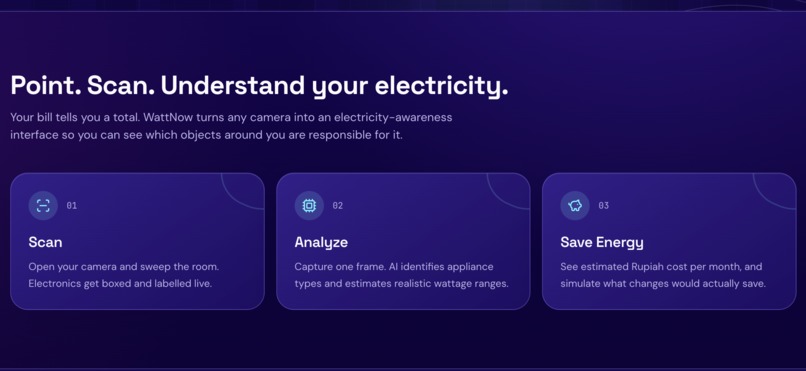
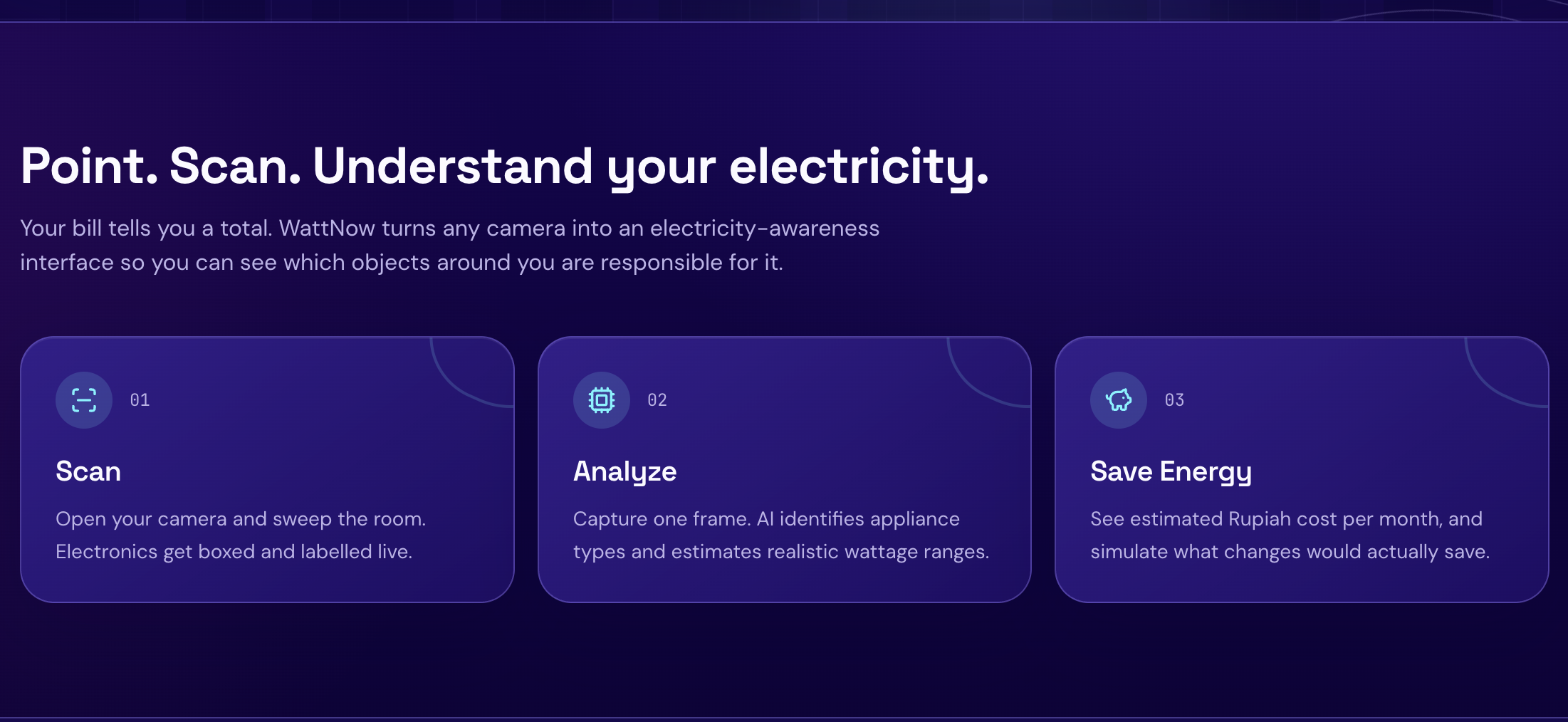
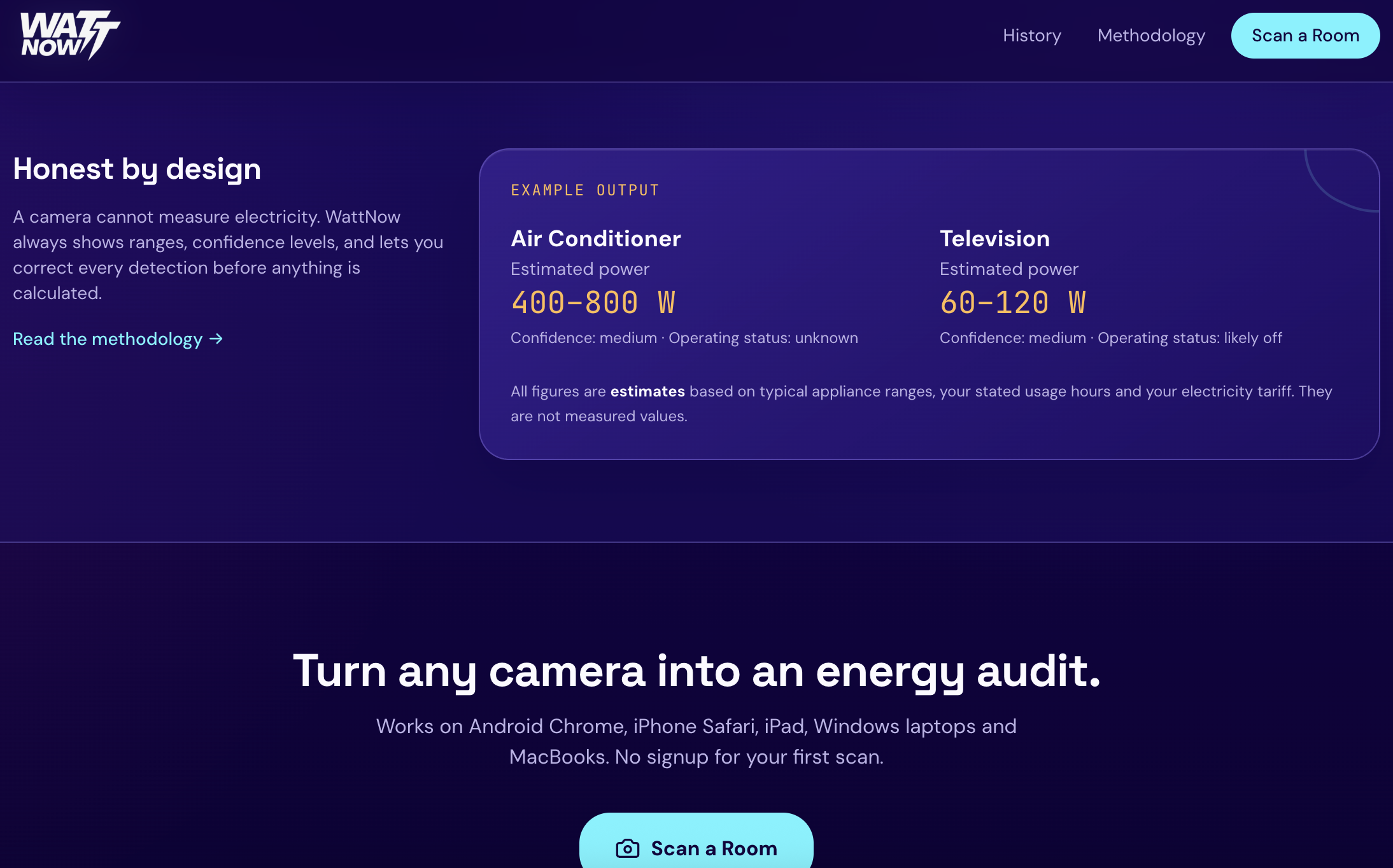
WATTNOW is a camera-based energy awareness tool that allows users to scan their surroundings and understand the electricity consumption of the appliances around them. The experience follows a simple process: Scan → Measure → Cost → Impact → Act. Users scan a room with their camera, and AI identifies appliances in the scene. The system then estimates realistic wattage ranges and combines them with usage information to estimate electricity consumption and monthly cost. Instead of giving users a complicated electricity number, WATTNOW translates that information into something easier to understand estimated electricity usage, monthly electricity cost, environmental impact, and personalized actions to reduce unnecessary consumption. The goal is to show people where their electricity is going and what they can actually do about it.
How we built it
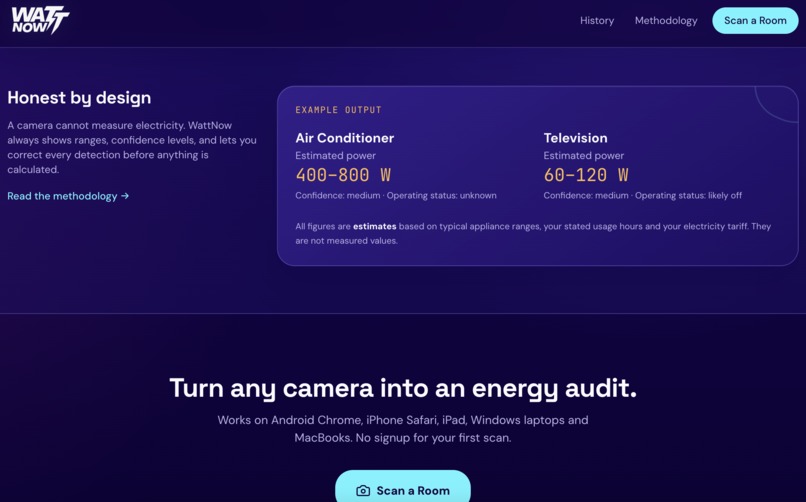
We designed WATTNOW as a browser-based experience so users can interact with it directly through their device camera without requiring additional hardware or an app download. The core interaction starts with a camera scan. The AI identifies appliances such as air conditioners and televisions, then provides estimated power ranges for the detected objects. Users can also provide their expected usage hours and electricity tariff so the system can estimate their monthly cost. For example, an identified air conditioner may be represented as an estimated 400–800 W range rather than a single exact number. This information can then be translated into an estimated monthly electricity cost based on the user's usage.
Challenges we ran into
One of our biggest challenges was getting the website and AI features to work reliably. While building WATTNOW, there were moments when the AI suddenly stopped working, even though it had worked before. This became especially challenging because our core feature depends on AI being able to identify appliances through the camera. We also faced issues where the camera could not properly detect or recognize the appliances in the environment. This meant that our main scan = understand experience did not always work as expected. Since we were building the project within a limited hackathon timeframe, we had to constantly test, troubleshoot, and adjust our approach instead of simply assuming the technology would work perfectly.
Accomplishments that we're proud of
We are proud that we were able to turn our initial idea into a working prototype within the limited hackathon timeframe. We successfully created an interactive website that combines camera-based appliance detection with electricity consumption estimates, cost calculations, environmental impact, and personalized energy-saving recommendations. We are also proud of how we developed a clear visual identity for WATTNOW and turned our idea of making invisible electricity visible into an experience that users can actually interact with. Most importantly, we were able to keep improving our project even when our AI and camera features stopped working at different points during development, rather than giving up on the concept.
What we learned
This taught us that building an AI-powered product is not just about having a good idea, but reliability matters just as much as the concept itself. We learned to continuously test our AI features, design around technical limitations, and consider what happens when the AI does not recognize something. Most importantly, we learned that a working prototype is built through iteration, not perfection.
What's next for WATTNOW
WATTNOW is only the beginning. Our current prototype focuses on helping users understand the appliances around them. In the future, we want to make the experience more personalized and continuous, allowing users to track their habits, compare changes over time, and turn energy-saving actions into everyday behavior. Because ultimately, our goal is not to make people think about electricity once. It is to make them notice it every day.
Built With
- canva
- chatgpt
- claude
- figma
- framer
- gemini
- googlegemini
- lovable
- luicdereact
- node.js
- npm
- react
- sonner-development:-vs-code
- spline
- stitch
- tanstackrouter
- tensorflow.js
- typescript
- vite
- vscode
- zod


Log in or sign up for Devpost to join the conversation.