-
-
ICON
-
-
-
-
-
-
-
-
-
-
-
-
-
-
-
Inspiration
AI went from generating pixelated videos of Will Smith eating pasta to proving unsolved math problems. There is no doubt that AI is a reflection of humanity’s continuous growth; however, it shows how too fast/rapid innovation has flaws. For example, data centers, trying to keep up with AI, destroy ecosystems. We recognized that focusing on the foundation of all development- electricity, gas, water, all utilities in general- would allow humanity to pioneer safely. For the secure process of innovation, we created WATTCH.
What it does
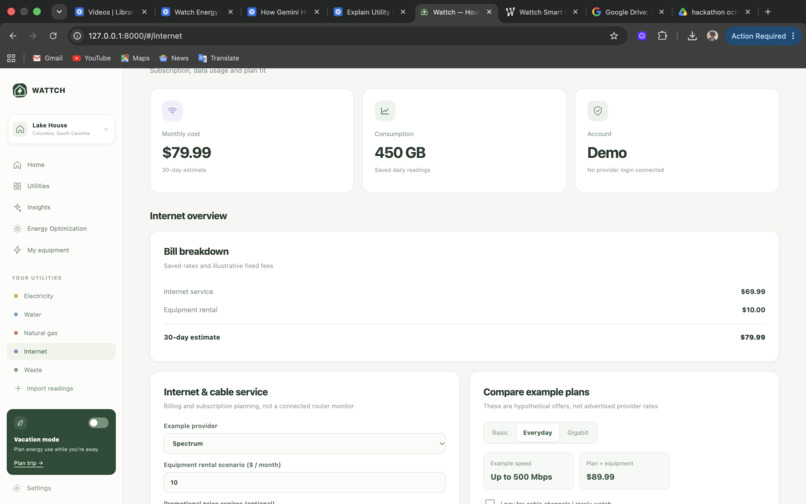
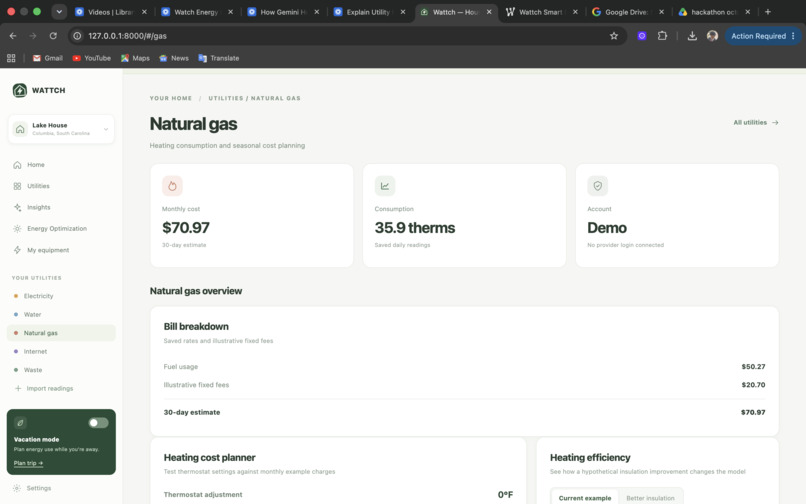
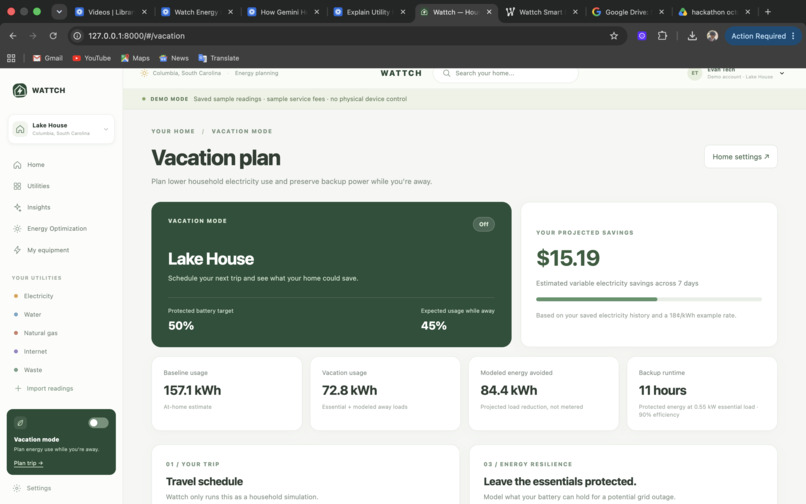
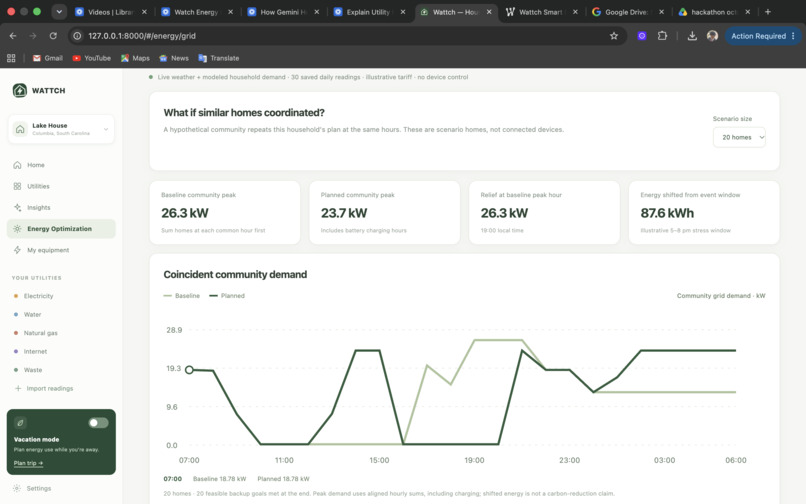
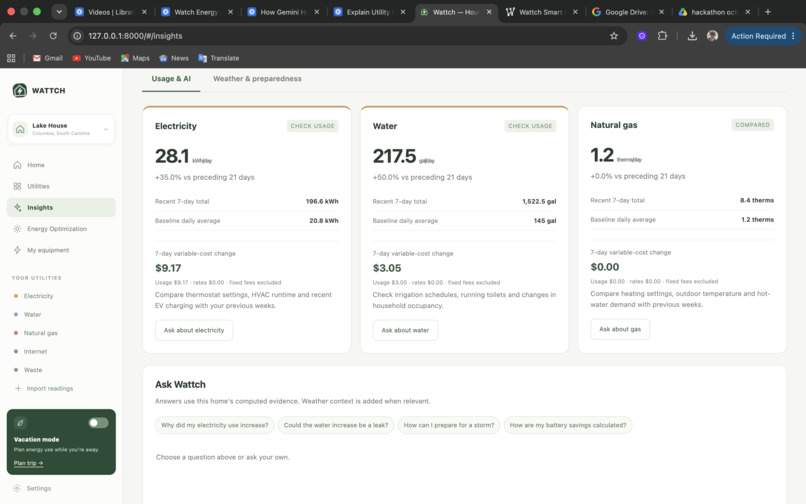
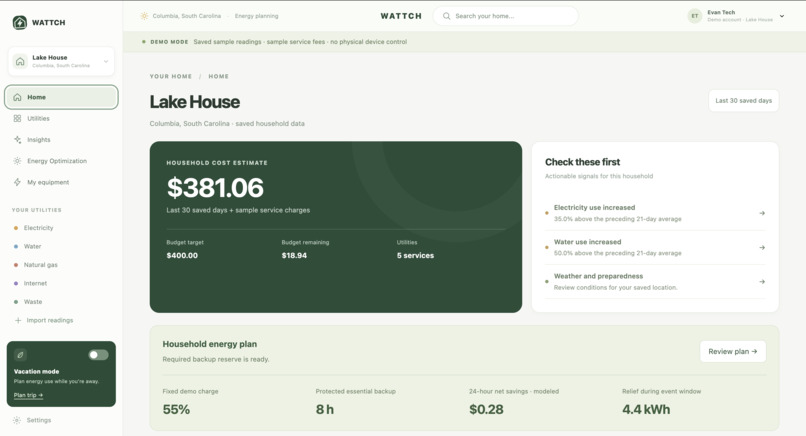
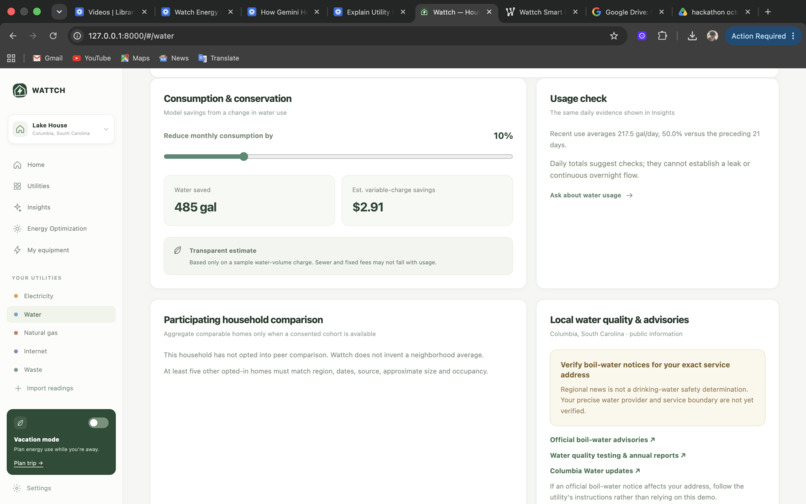
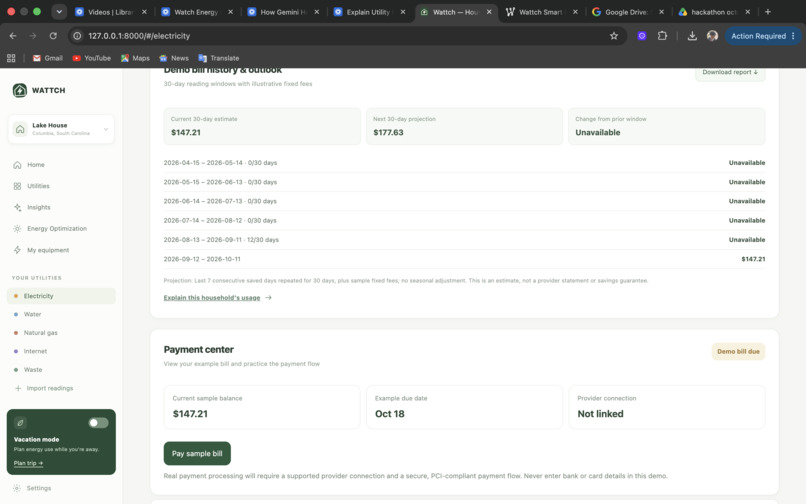
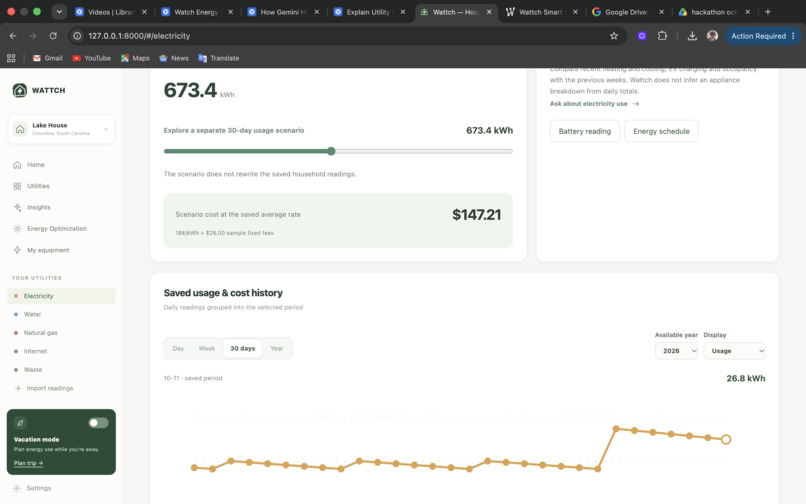
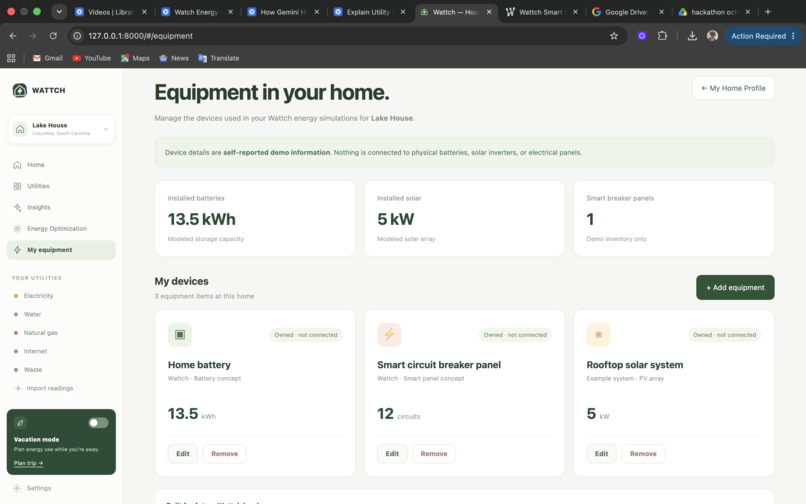
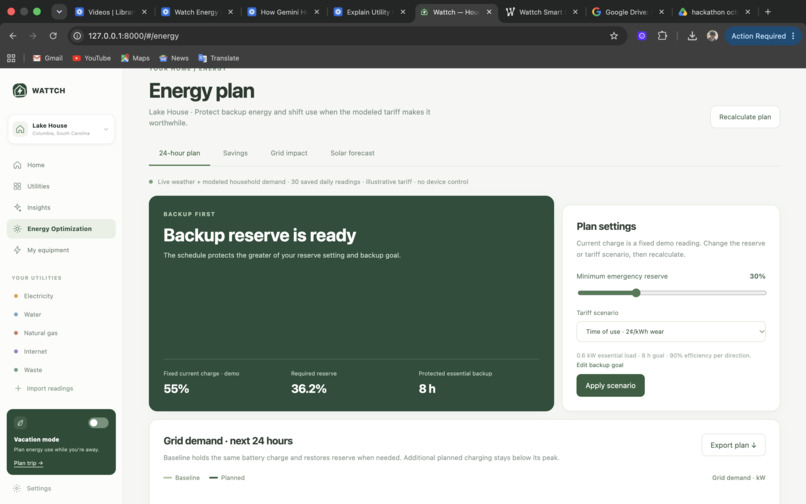
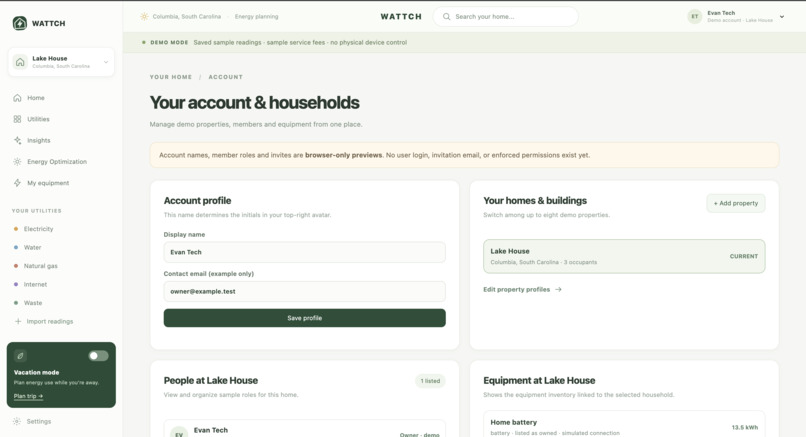
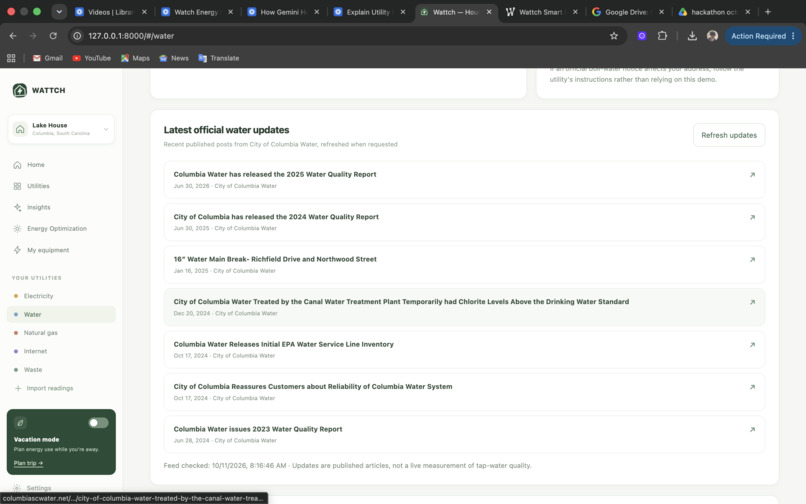
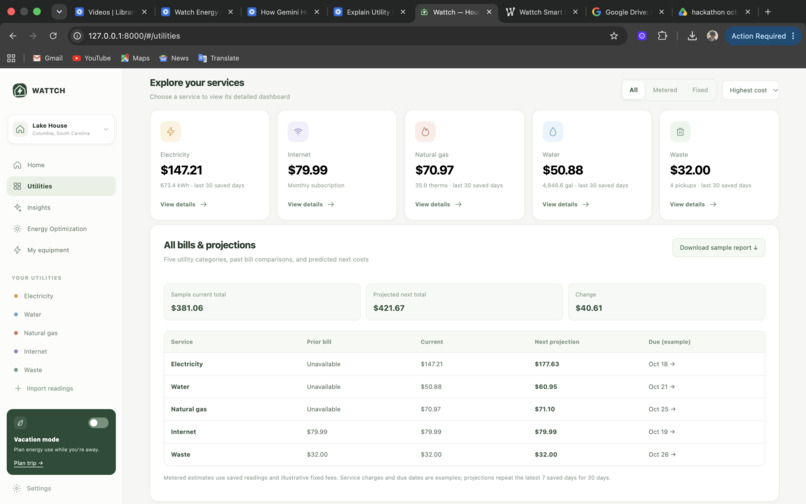
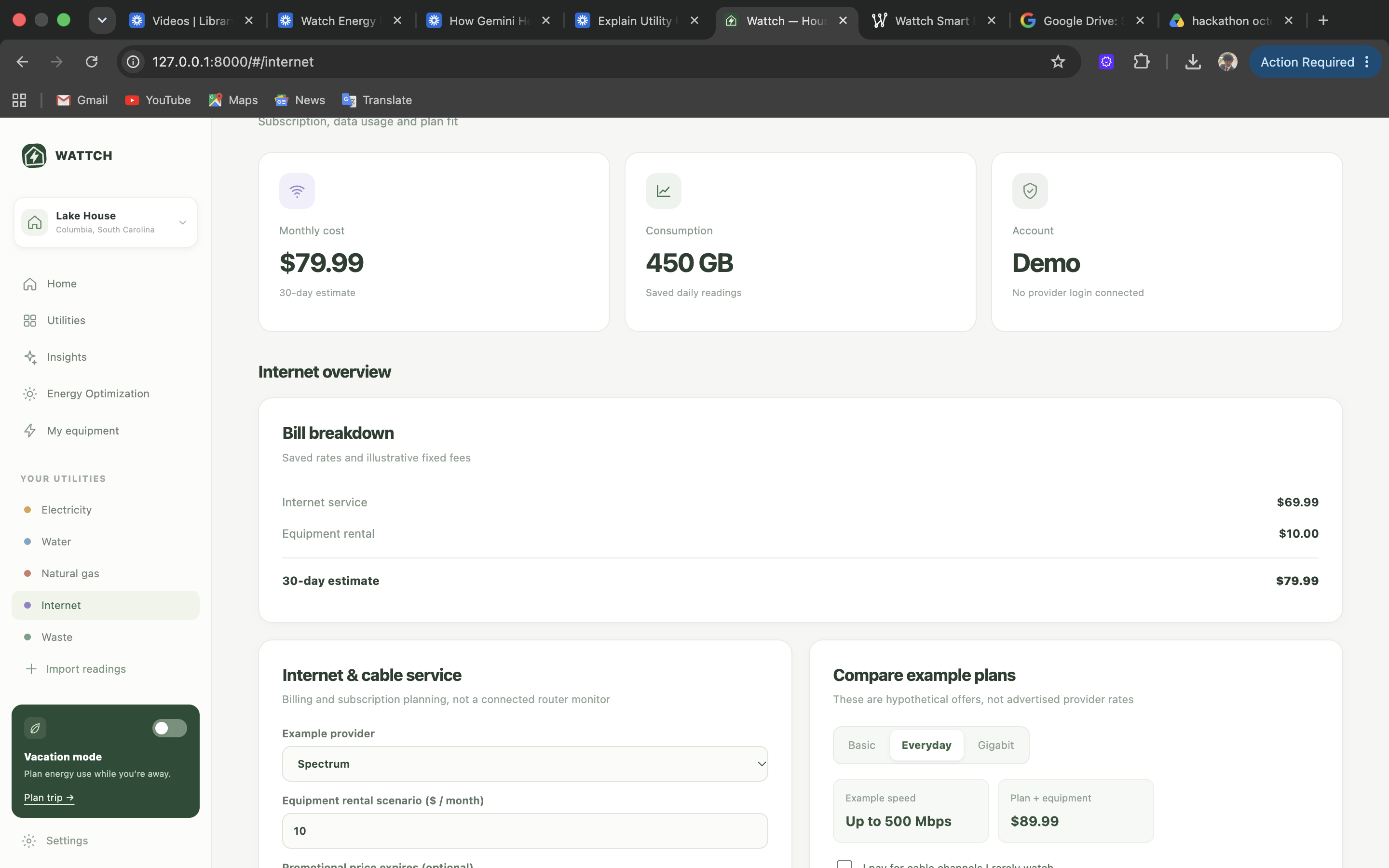
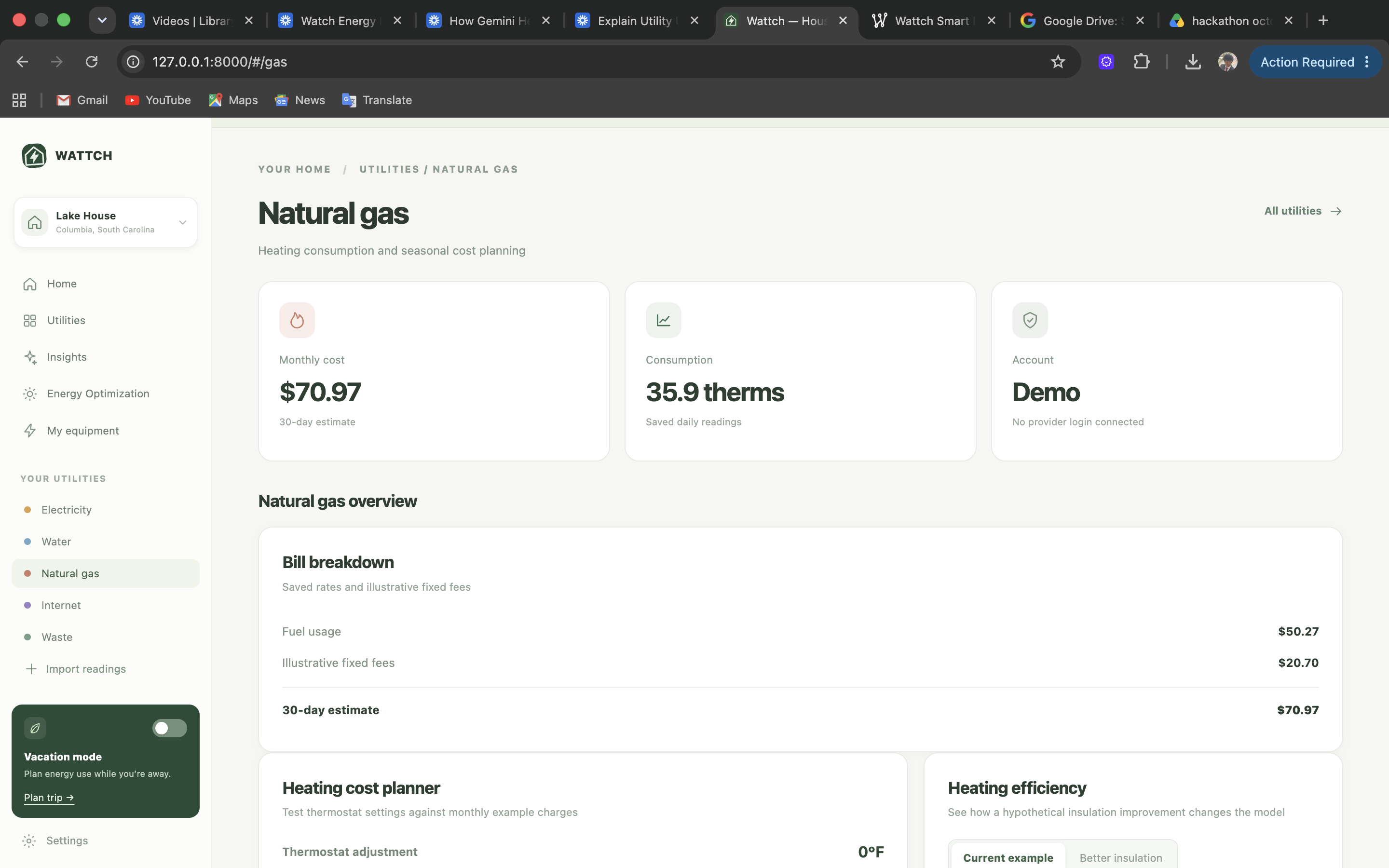
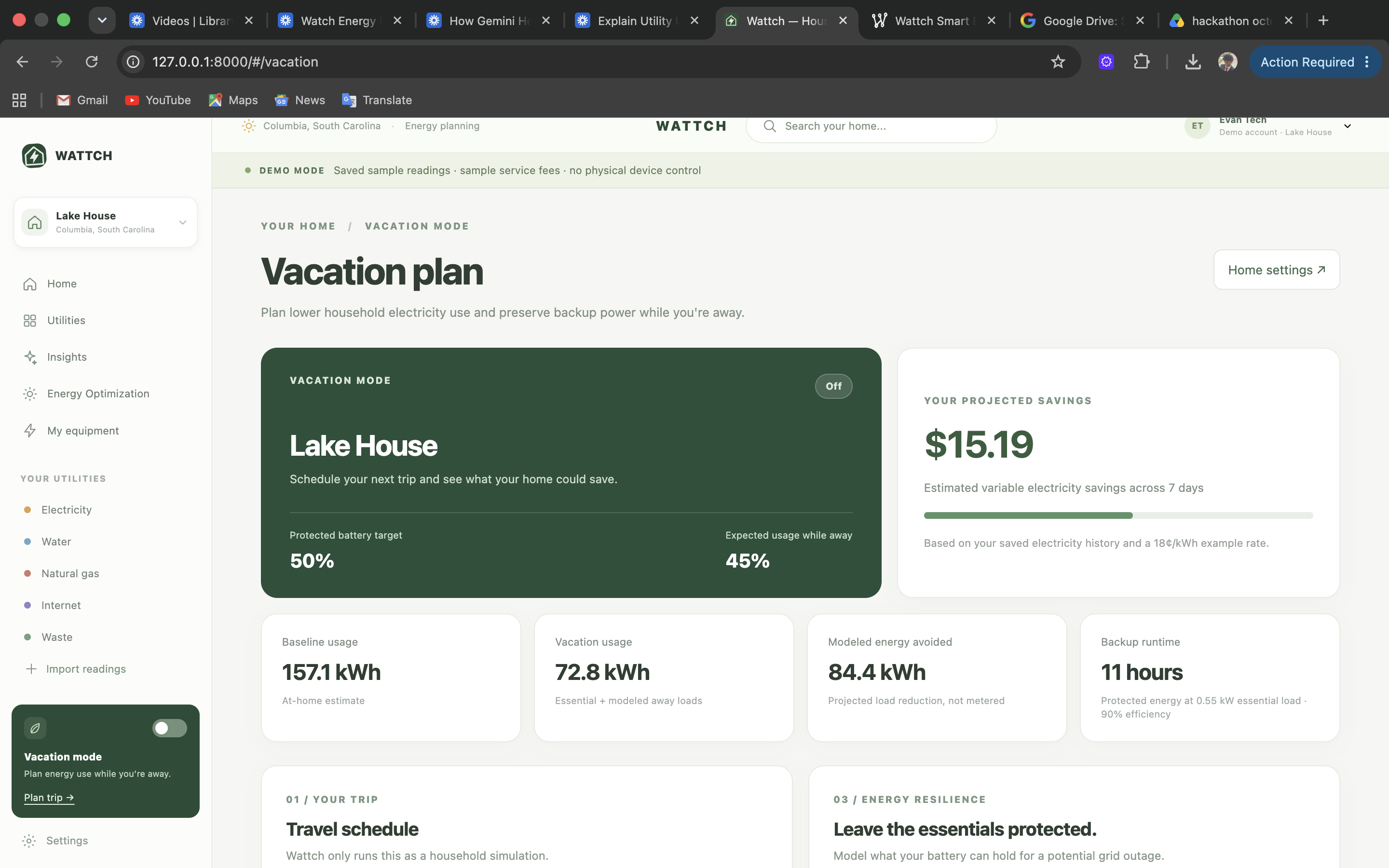
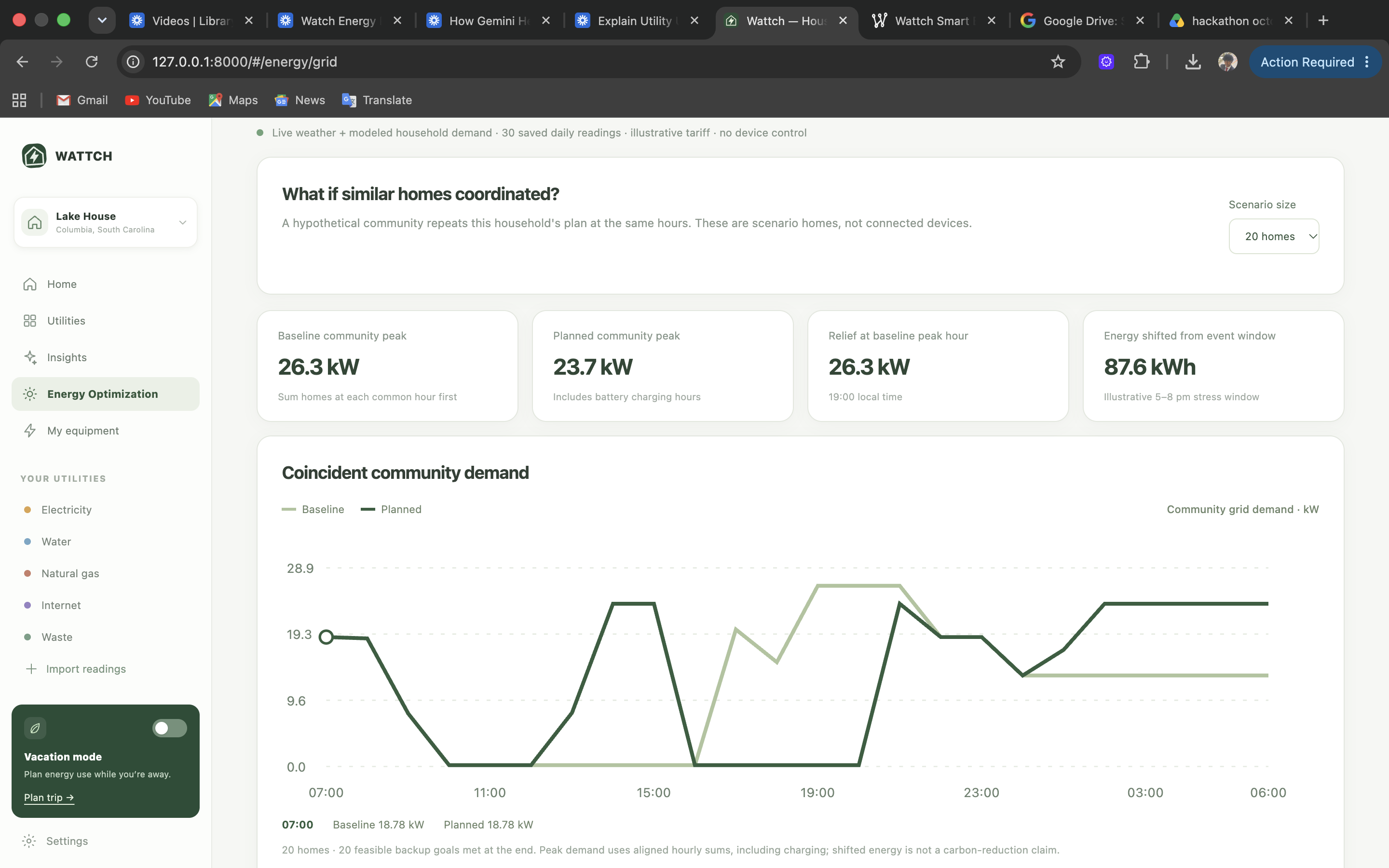
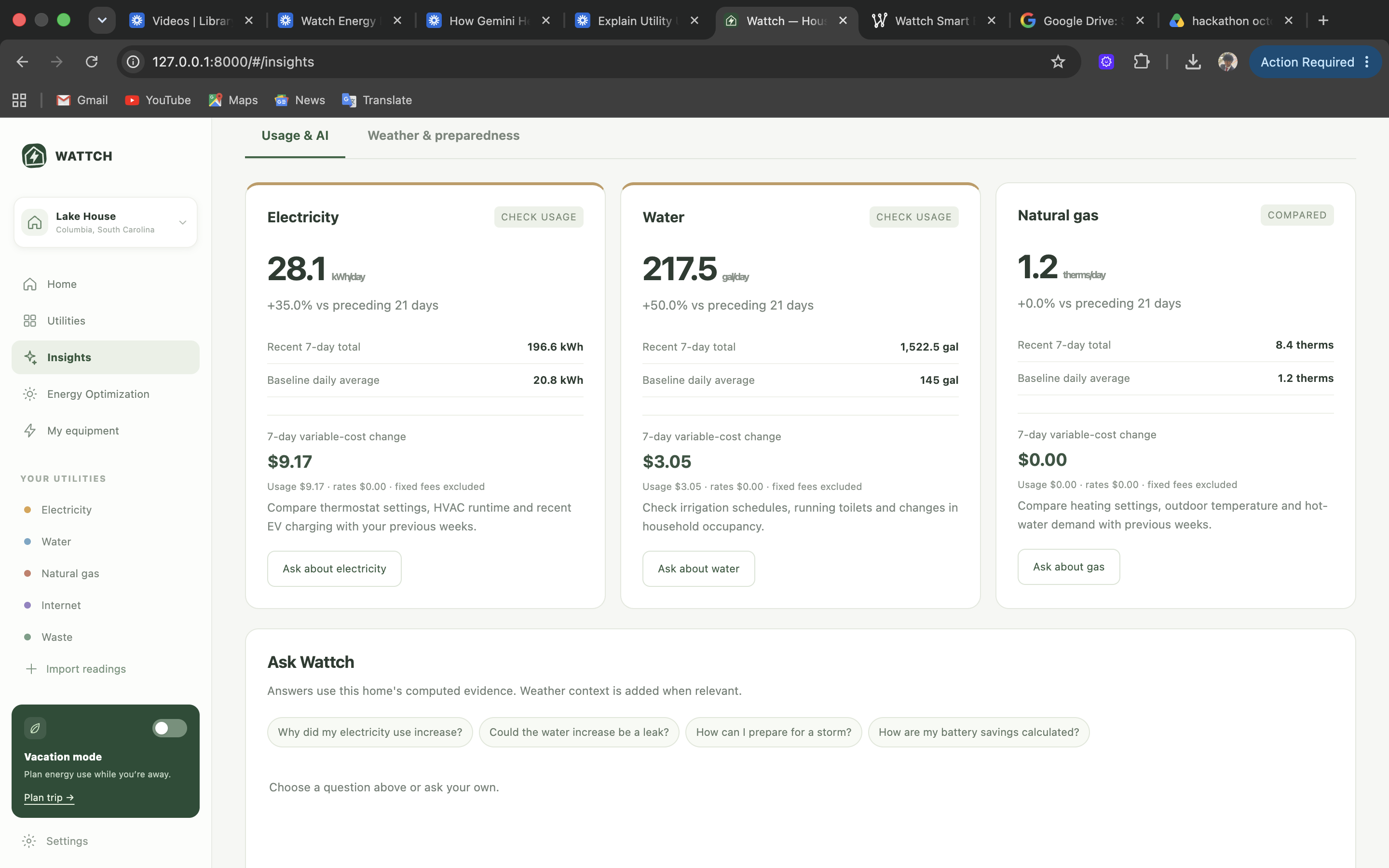
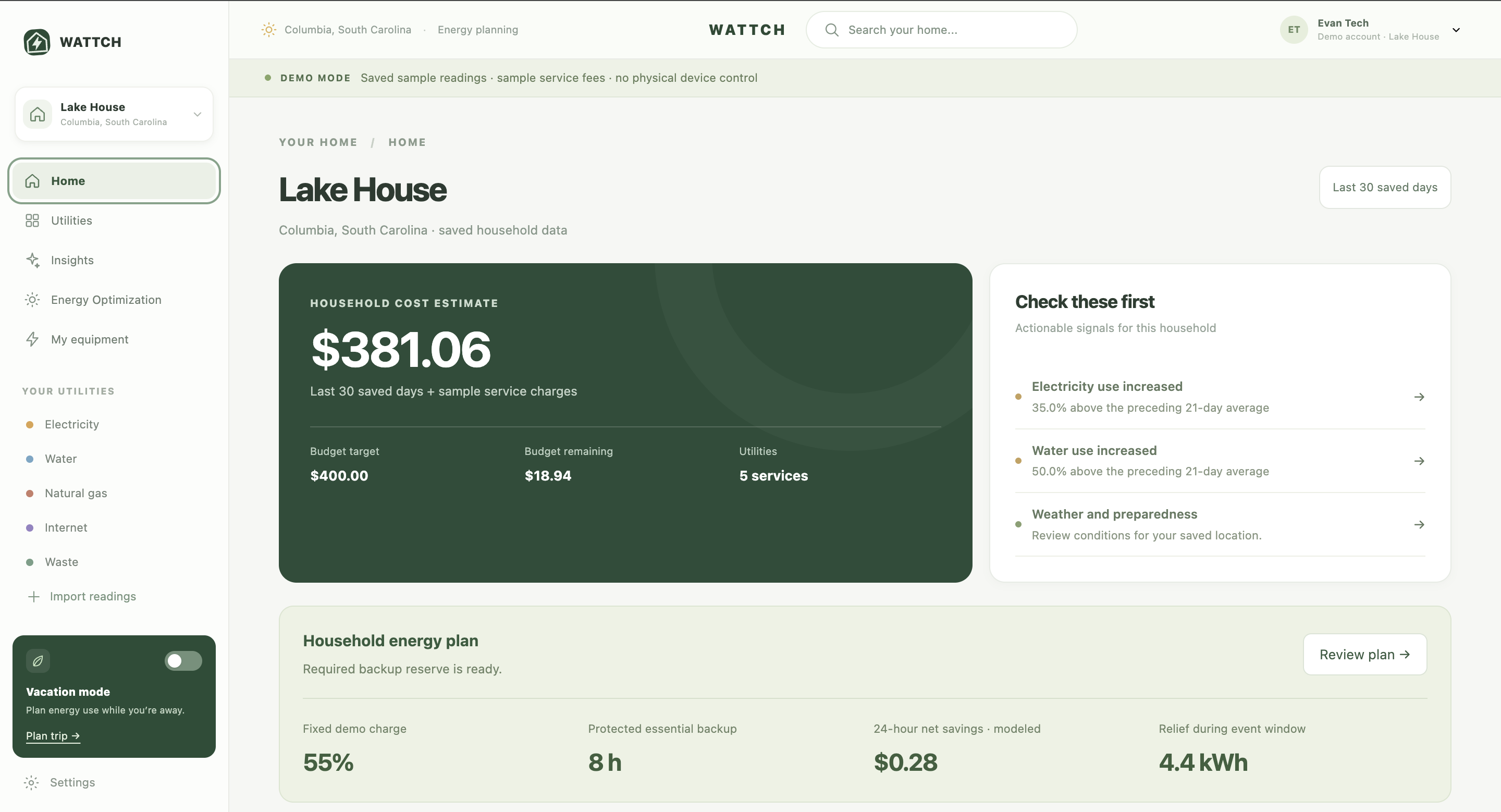
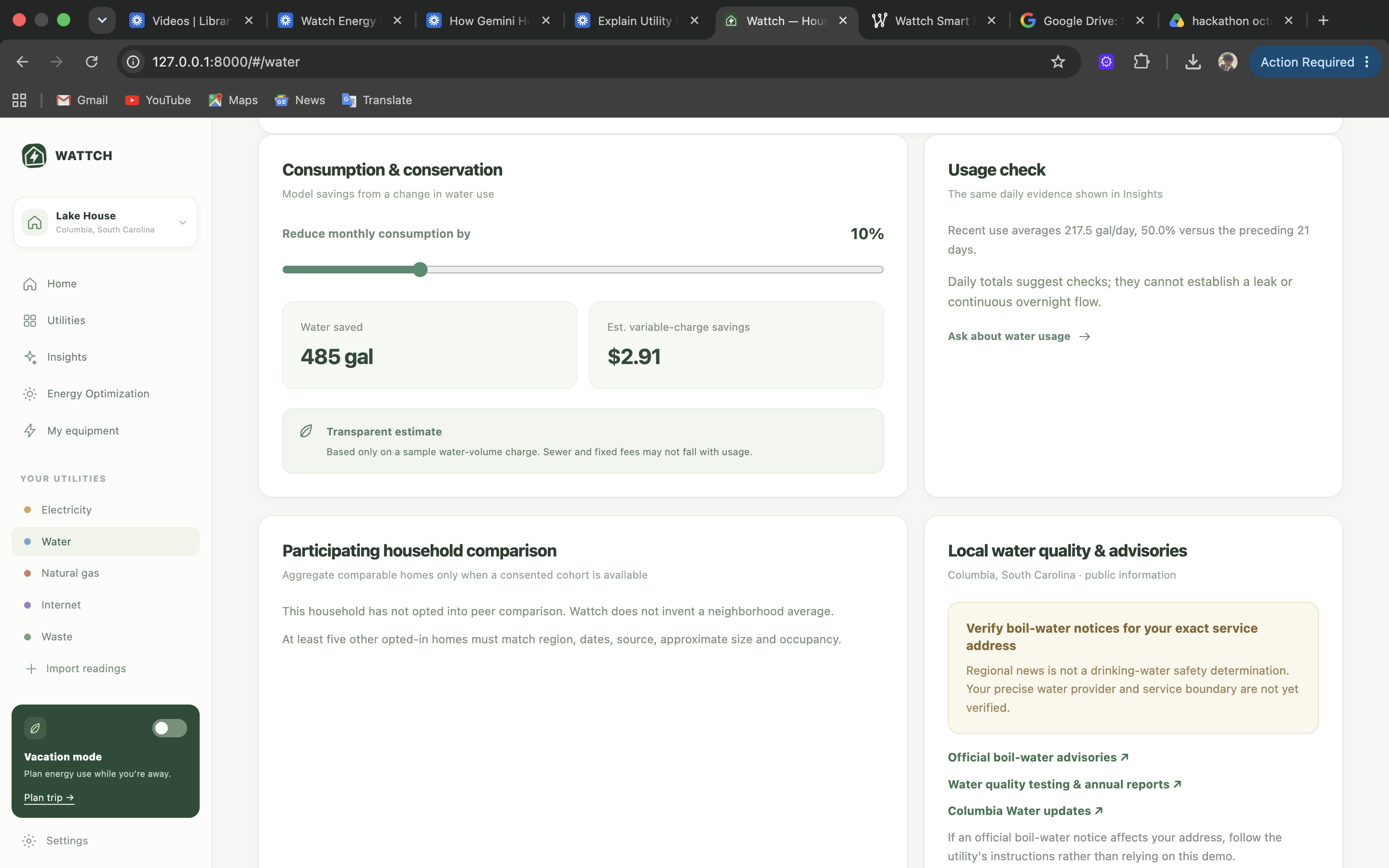
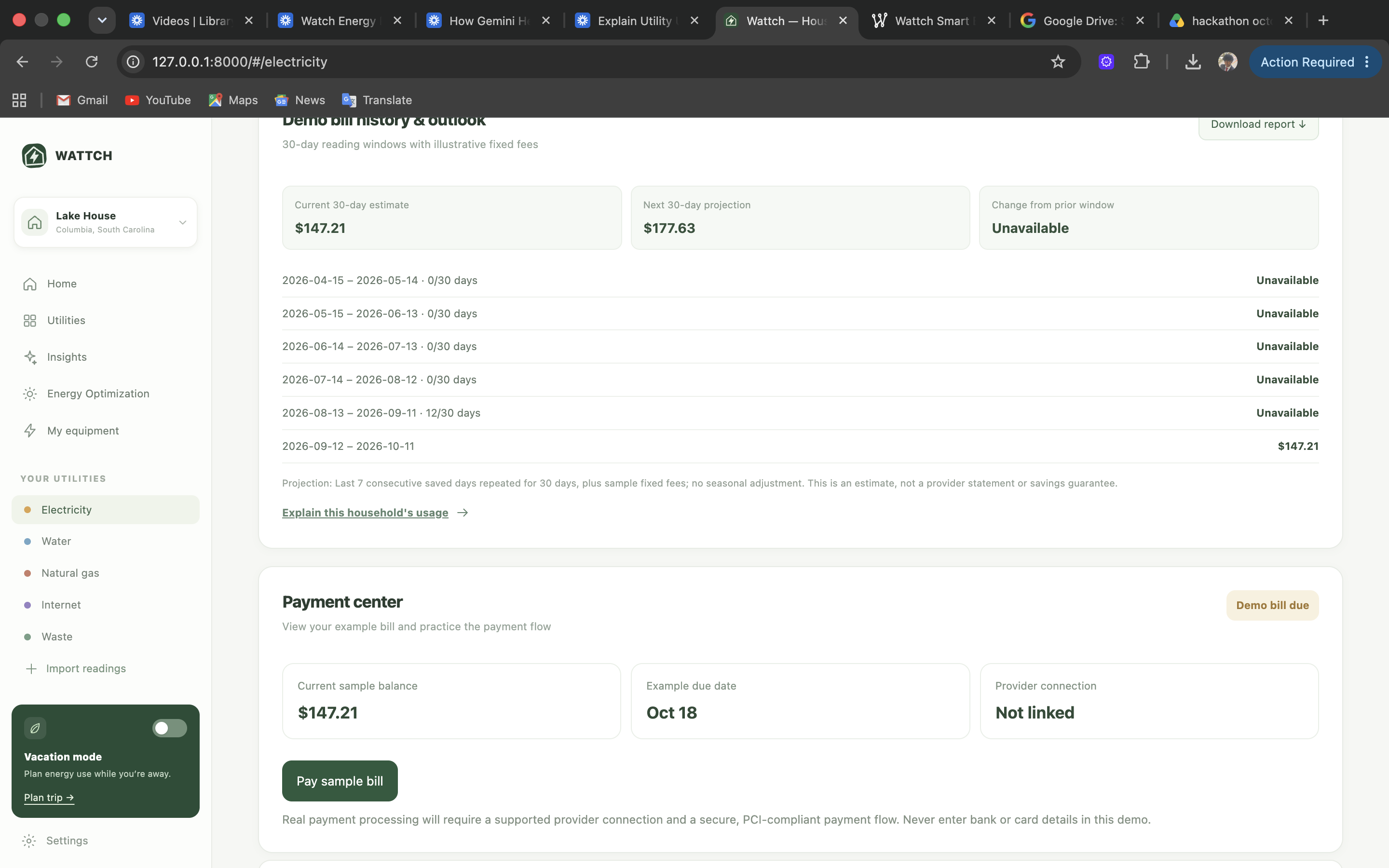
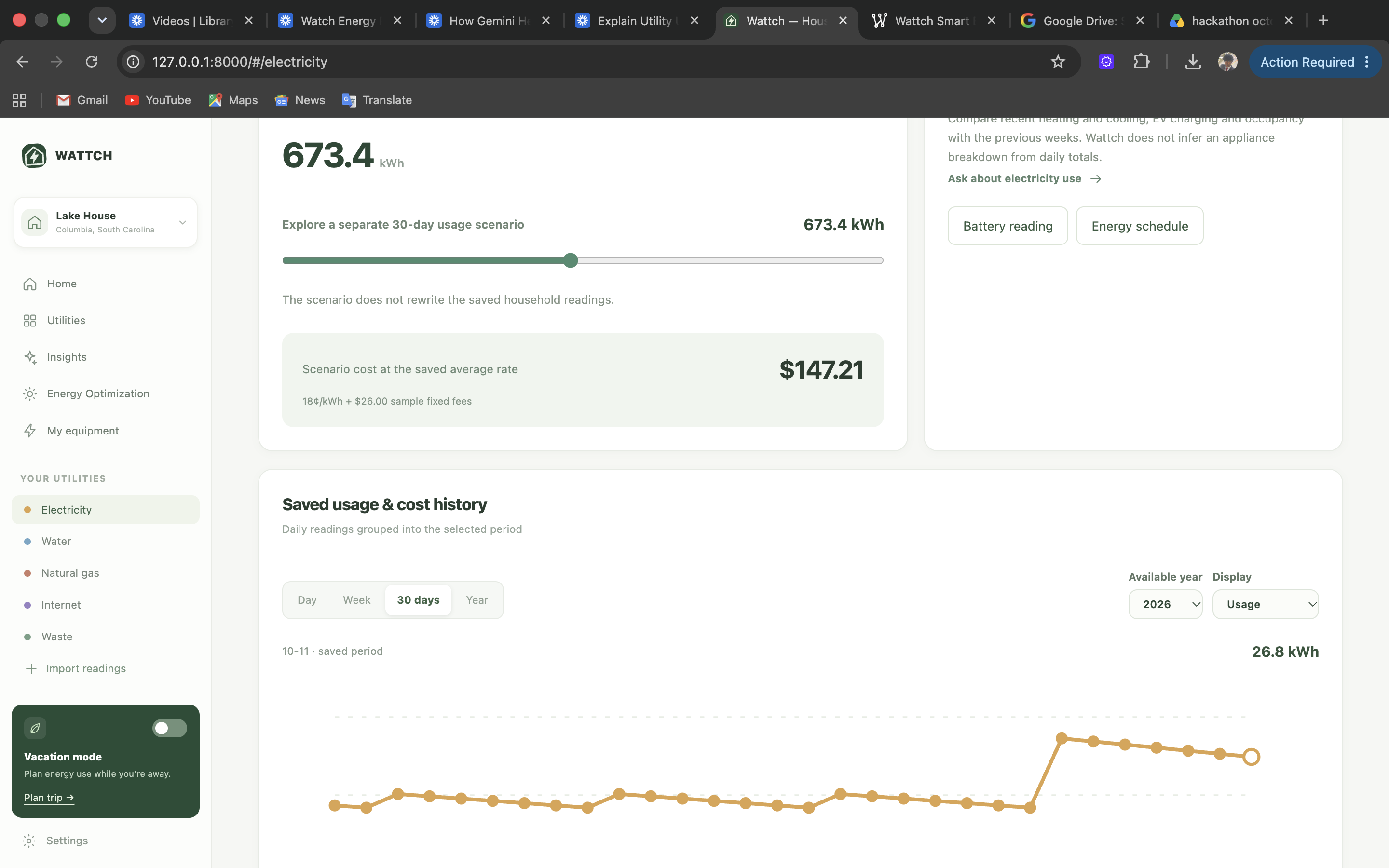
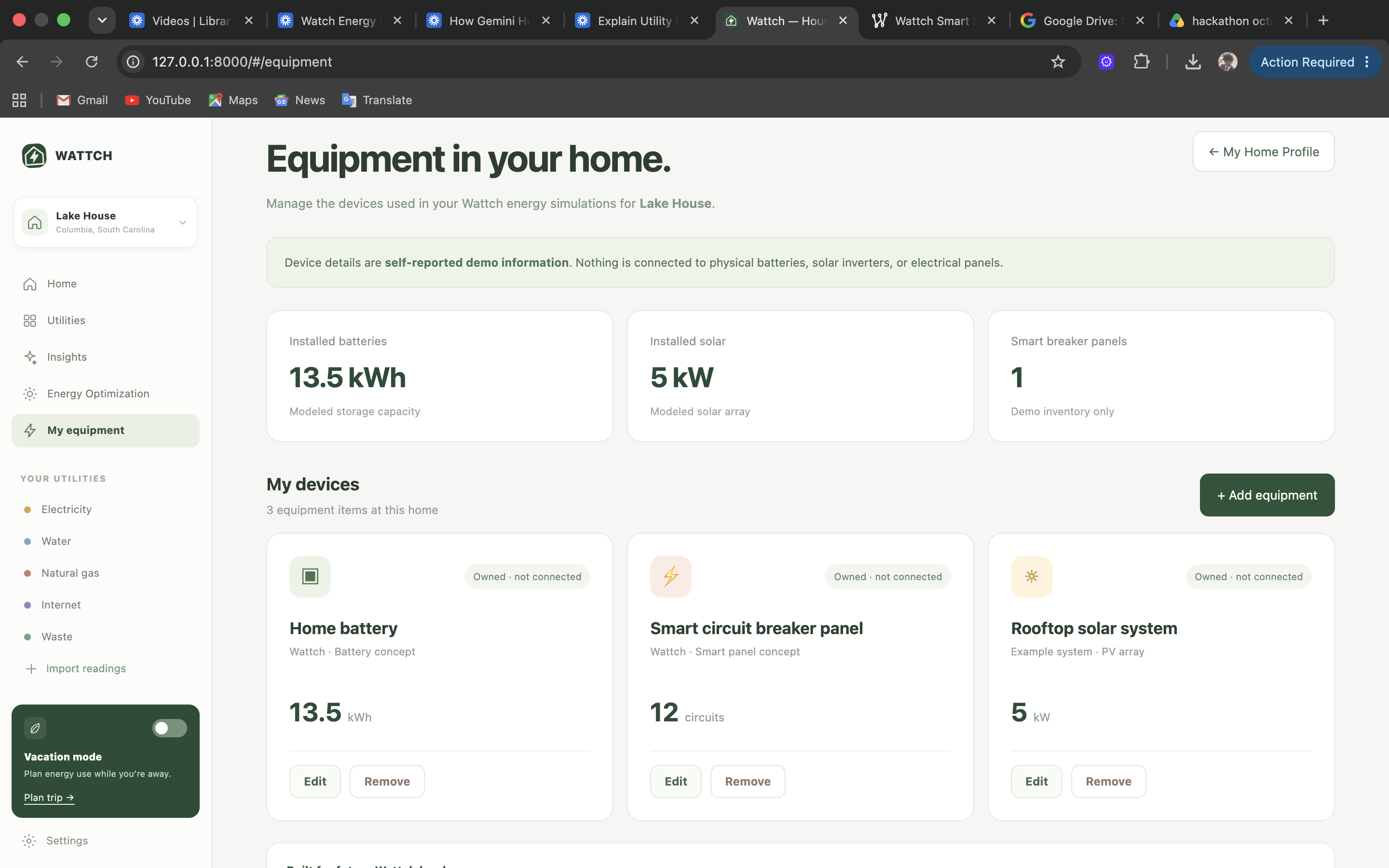
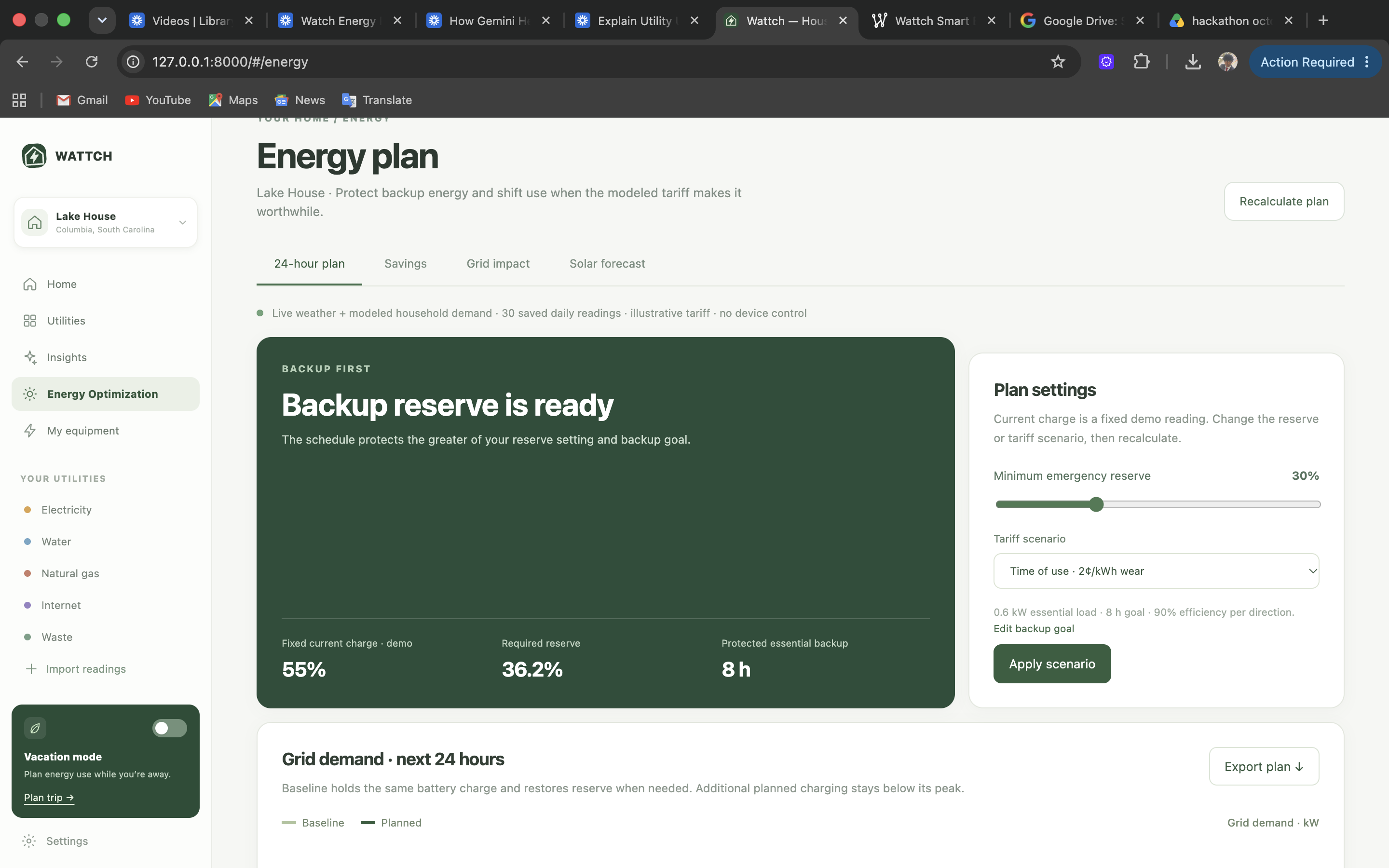
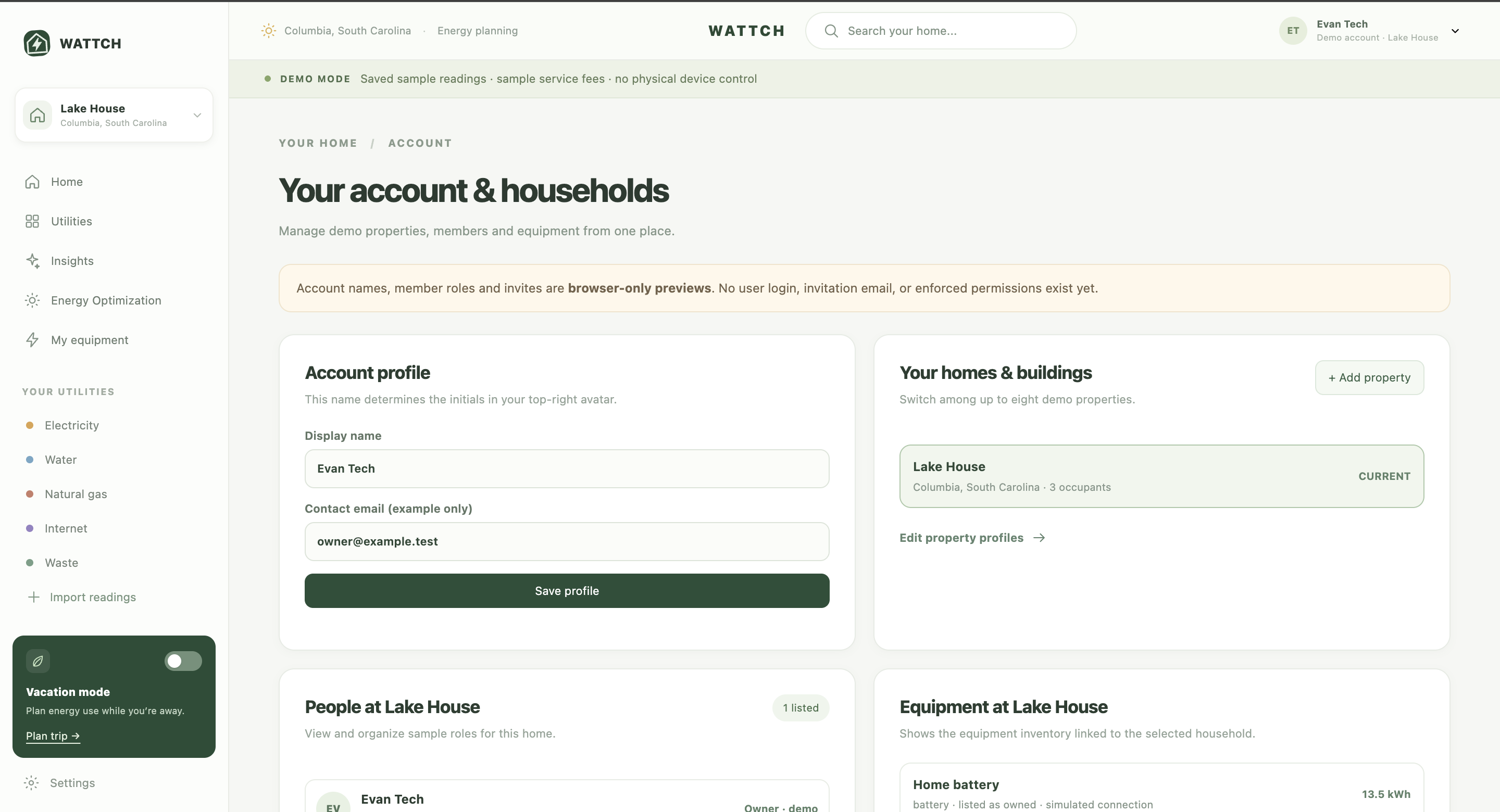
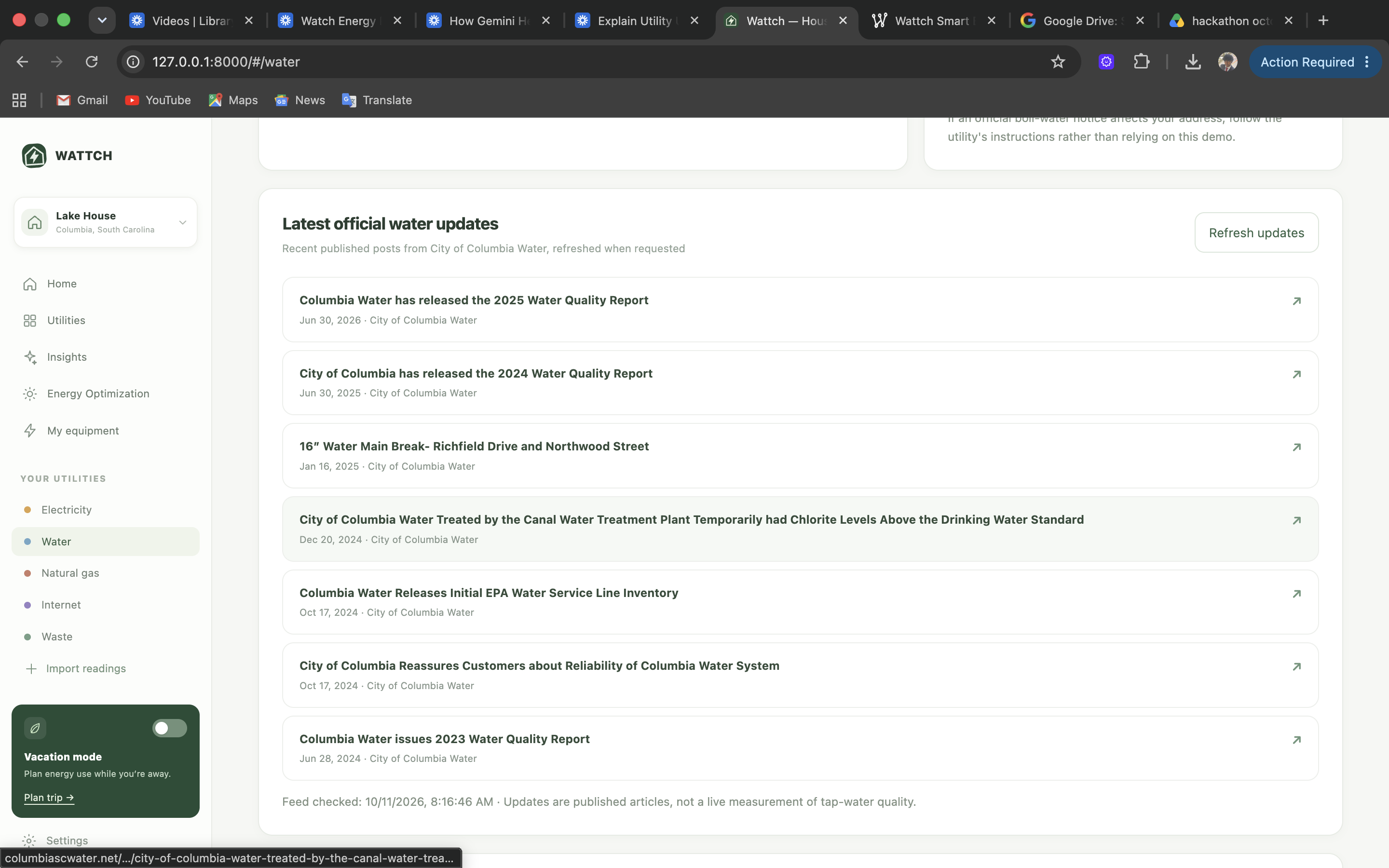
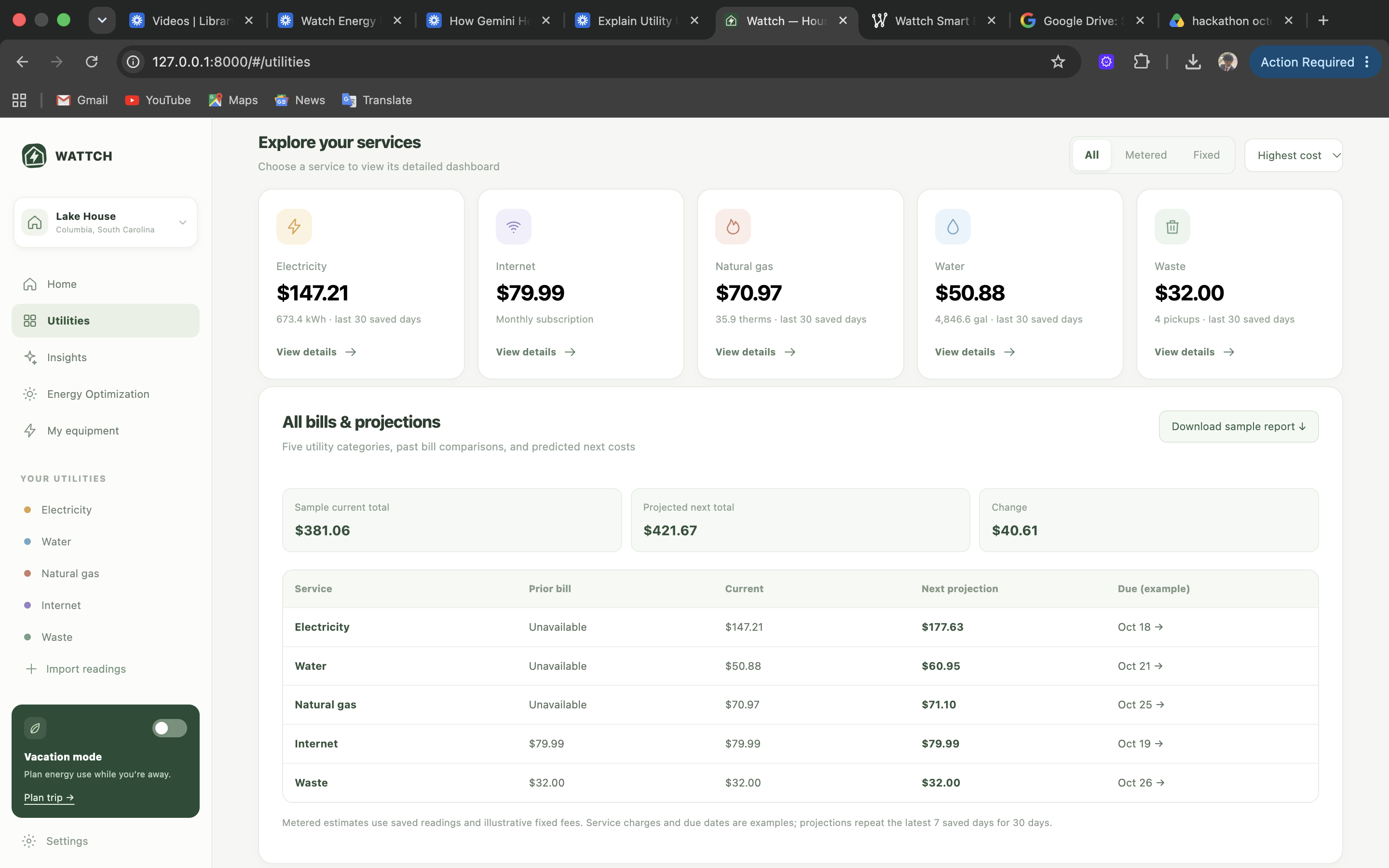
WATTCH is a home utility intelligence software that puts all the user's utilities into one convenient dashboard. In this software, users are able to access specific information and data about each utility. In addition to the software, WATTCH manufactures smart circuit boxes and home batteries. With the implementation of AI, the user's home is able to communicate. AI analyzes trends and informs the user about habits and tips. Also, WATTCH can acknowledge fluctuations in usage, specifically water, and recognize water leaks. Since it is also connected to teh weather, it can inform the user about possible outages and requests to charge the home battery. On top of these are multiple other features. WATTCH ensures that the user efficiently and safely manages their utilities.
How we built it
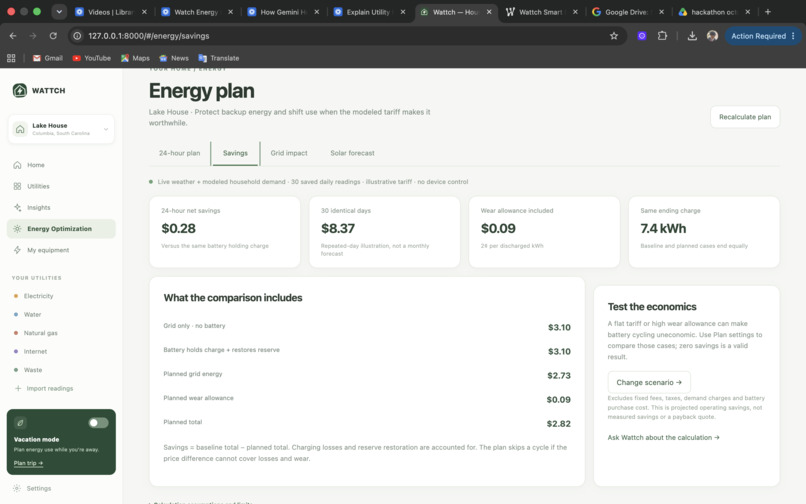
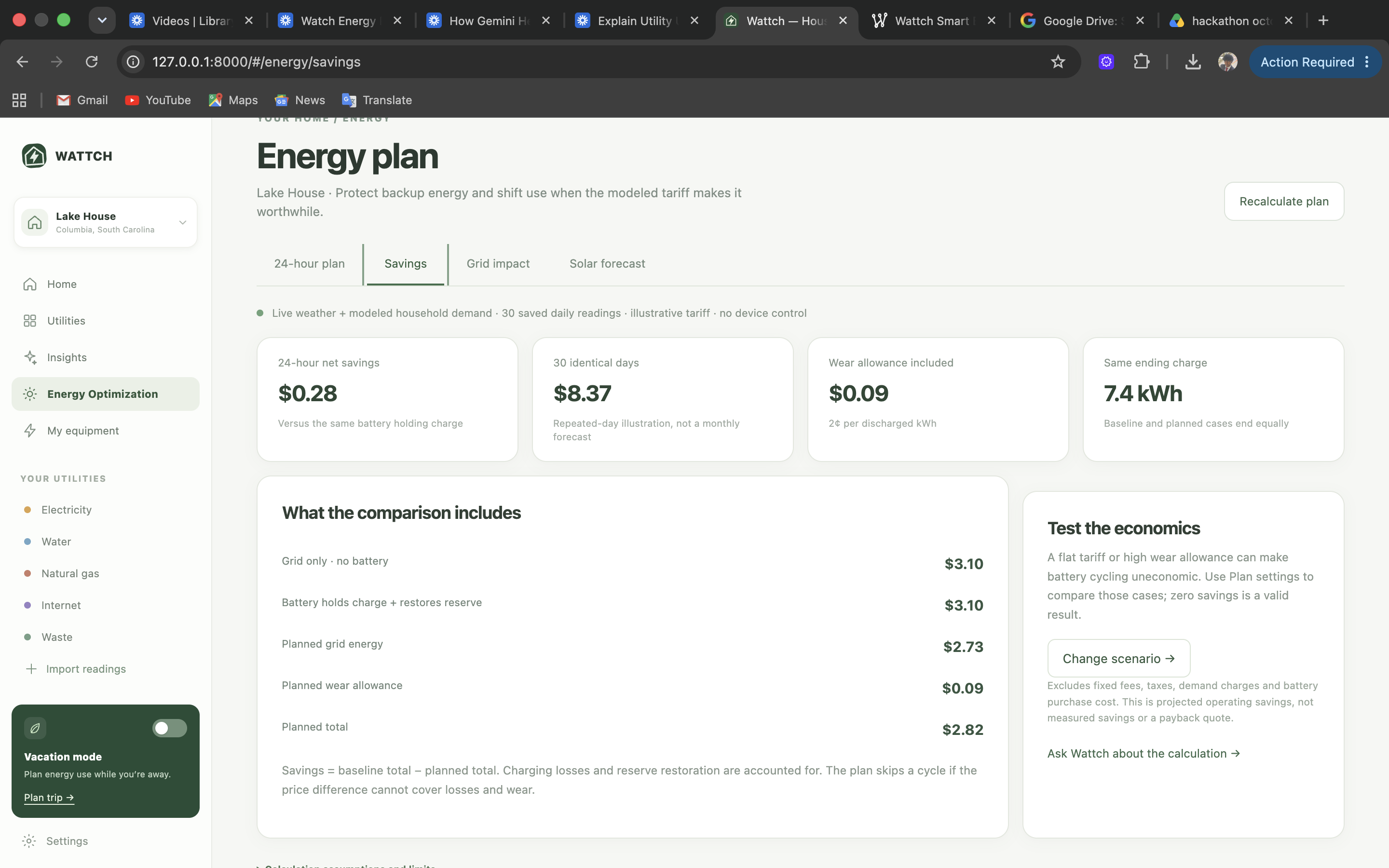
We built WATTCH using React, JavaScript, CSS, and Vite for the frontend, with Python handling our backend. We started by creating a dashboard that brings electricity, water, gas, internet, and waste into one place. From there, we added usage tracking, bill predictions, and energy optimization features. We integrated Open-Meteo and National Weather Service APIs to use real weather data alongside simulated energy consumption, solar production, and battery storage. We also developed AI Insights using Gemini APi and Tiger Data to help users understand unusual usage and make smarter decisions. Using GitHub Codespaces, we worked on different features simultaneously. Combining everything came with challenges, especially merge conflicts and connecting our backend systems. Overall, we learned a lot about teamwork, debugging, and turning a simple idea into a platform that could genuinely make managing household utilities easier.
Challenges we ran into
The first challenge we faced was one of our hardest challenges as well; the first challenge we faced was choosing a topic that would allow us to be as creative as we could be and following the chosen oath simultaneously. Another challenge we faced came later on, which was the time constraint. Given the limited amount of time, it pressured us to not sleep as much as we would’ve liked since we had to work on our project.
Accomplishments that we're proud of
We're proud that we were able to turn a simple idea into a platform that tackles real problems homeowners face. In just one hackathon, we built a dashboard that brings multiple utilities together, integrated live weather data, and developed energy forecasting, battery simulations, and AI-powered insights. One of our biggest accomplishments was combining everyone's work into one project, especially after dealing with merge conflicts and technical challenges. We're also proud that WATTCH has potential beyond the hackathon, from helping homeowners save money to eventually integrating our own smart hardware. Most importantly, we built something we genuinely believe could make people's lives easier.
What we learned
Coming into this project, our group had never been in a hackathon. This Hackathon really challenged us and forced us to get out of our comfort zone and brainstorm like we never have before. Through the development of our project, we learned how to use GitHub in a team workspace setting and how to split tasks evenly amongst our group. This hackathon strengthened our ability to use generative AI in a productive manner to help speed up code processes that would have taken hours with manual human code.
What's next for WATTCH
Next, WATTCH plans to expand into large commercial and industrial sectors. We will partner with AI data centers and build specialized tools to help them track compute systems, cooling equipment, and fan usage. Because data centers use large amounts of electricity, their energy costs can be extremely high. WATTCH could provide larger battery systems that store energy during off-peak hours and use it during more expensive peak-demand periods. Finally, we plan to improve our home system by addressing the limitations of traditional utility meters, such as water and gas meters that may only update daily. Smart meters and connected sensors could provide live data, improving AI insights and enabling more real-time features.

Log in or sign up for Devpost to join the conversation.