-
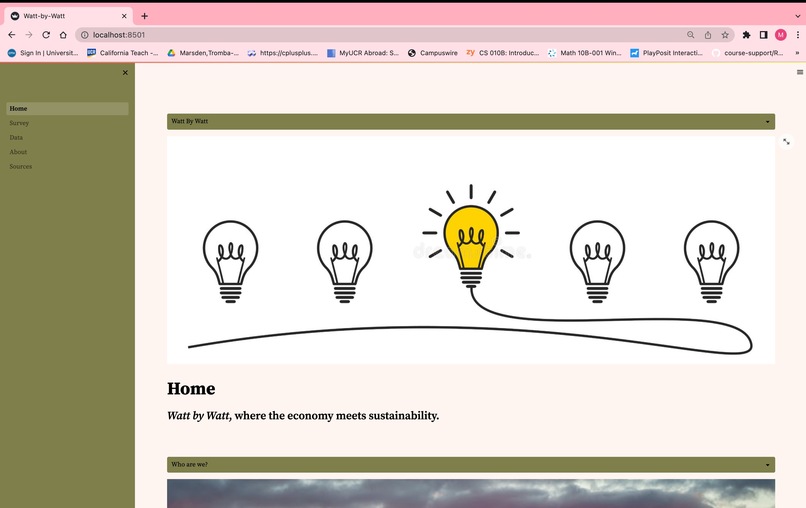
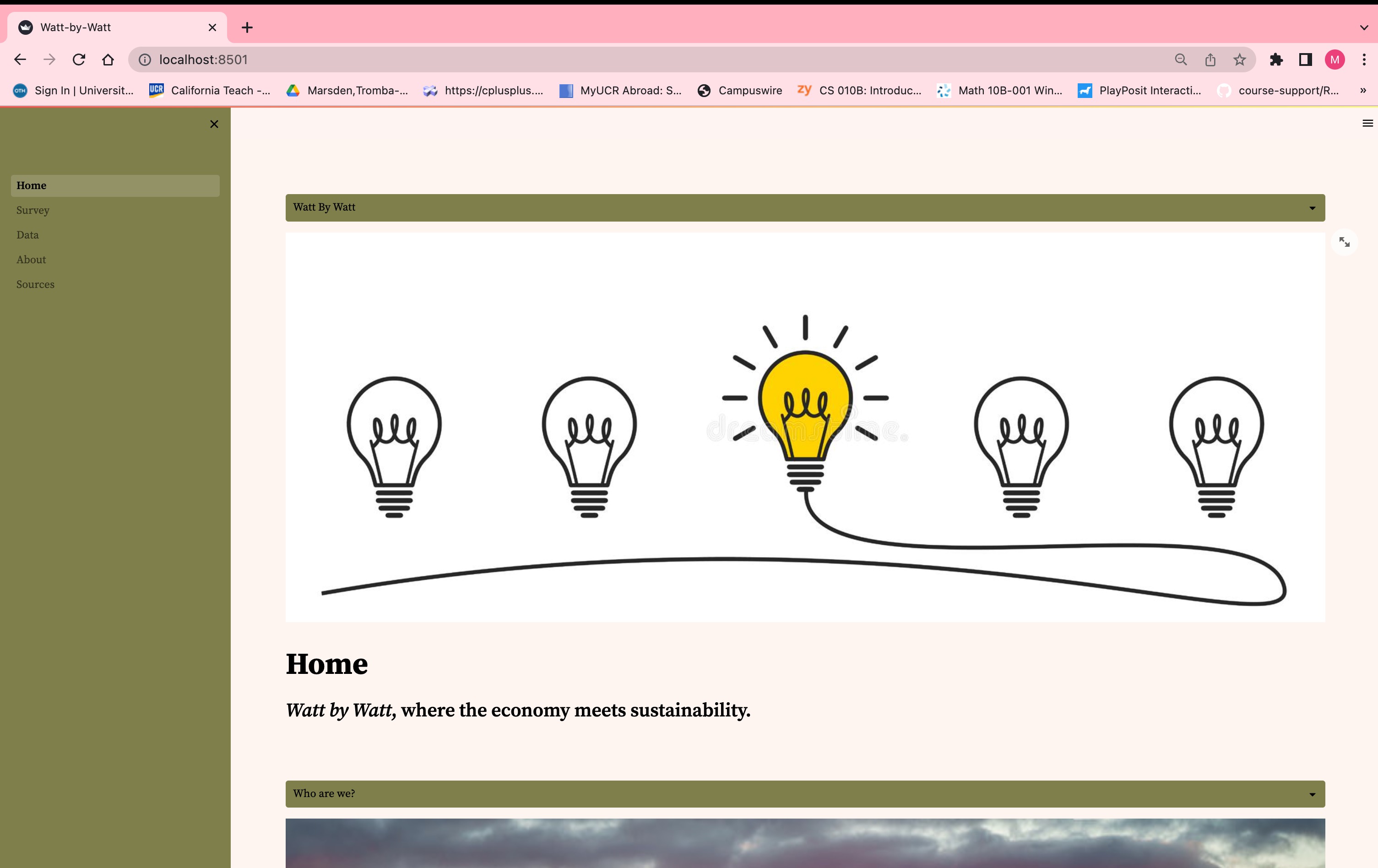
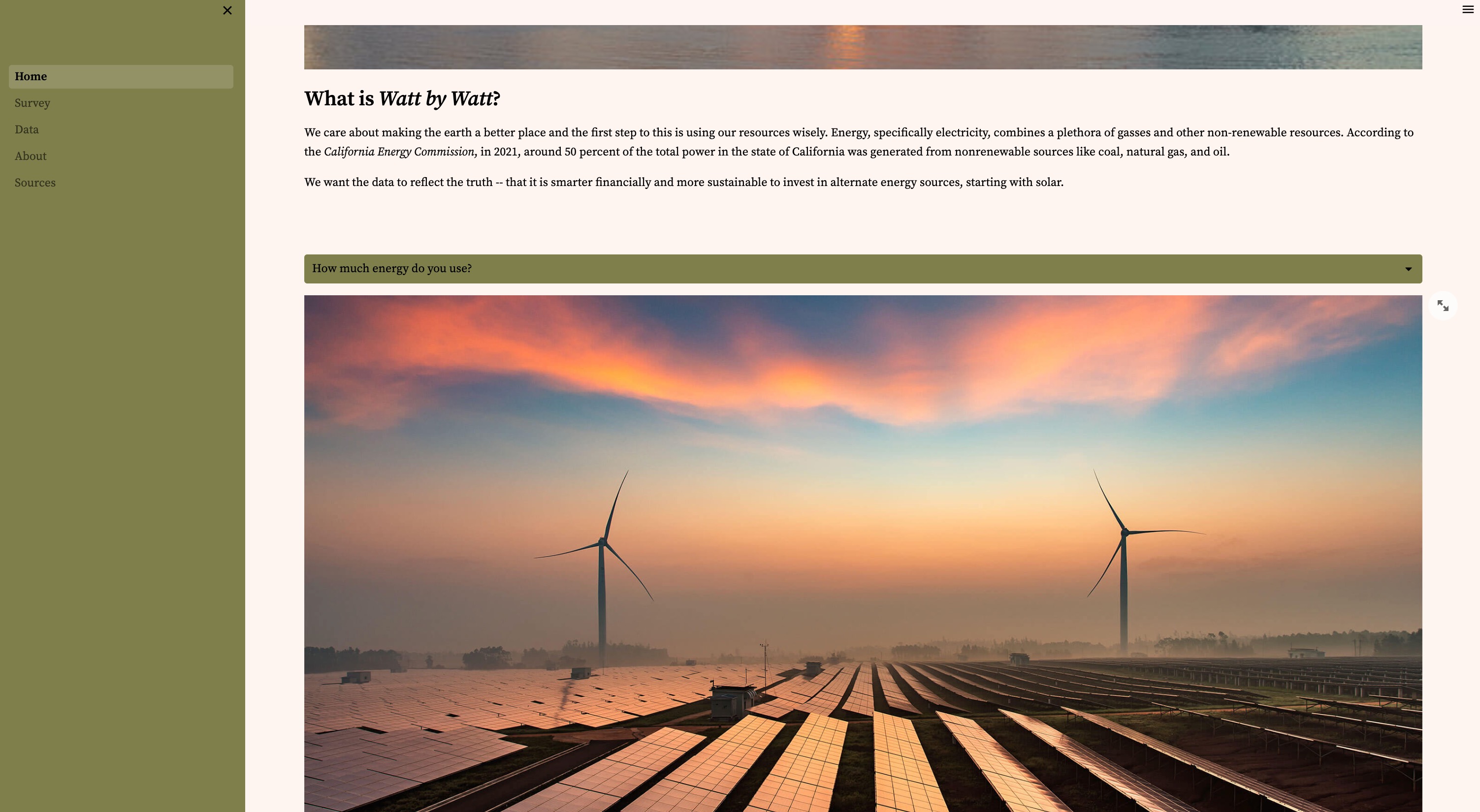
home page
-
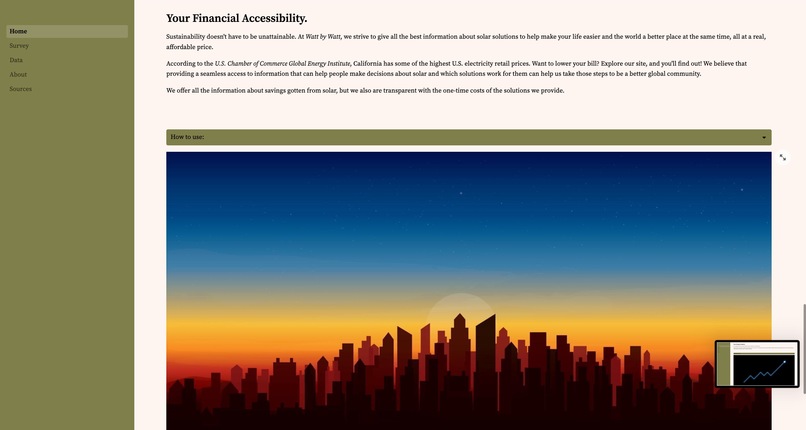
home page
-
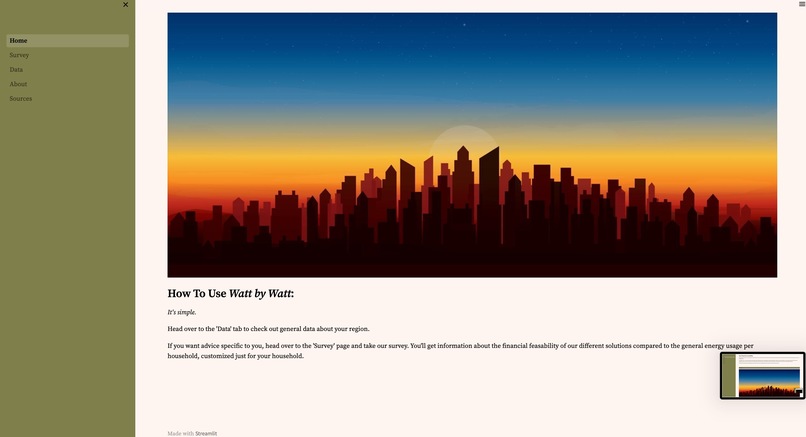
home page
-
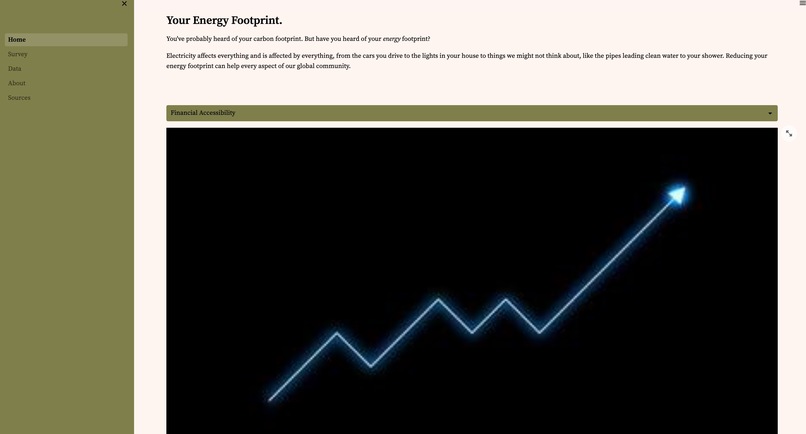
home page
-
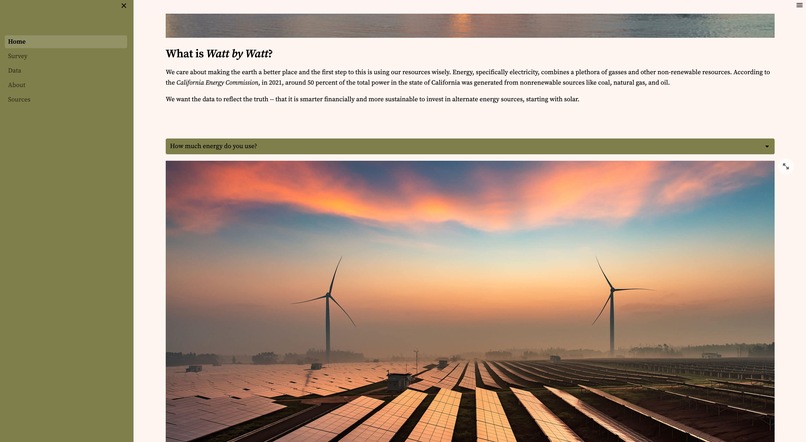
home page
-
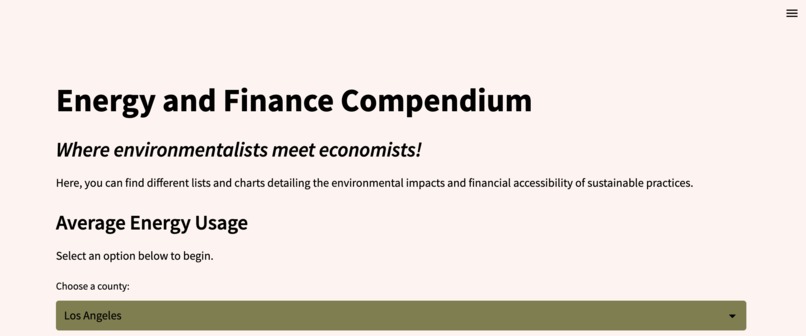
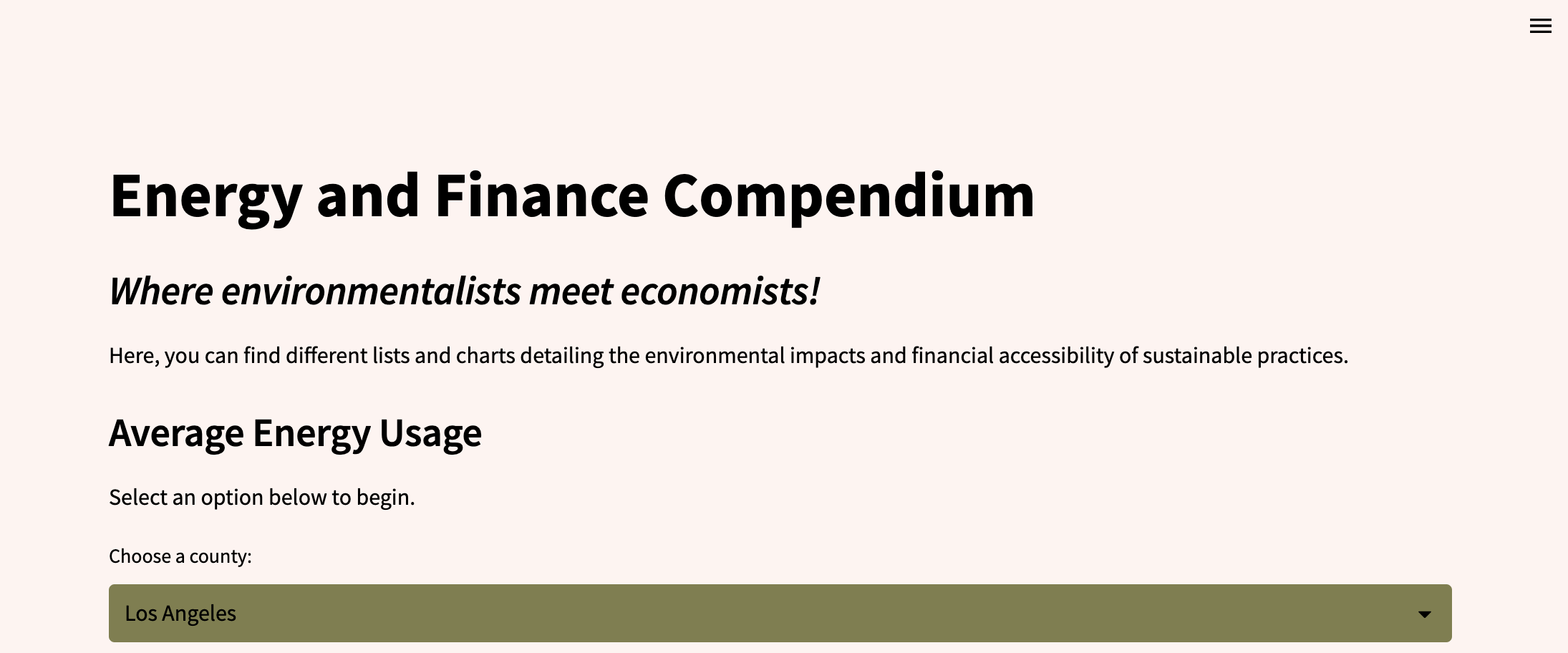
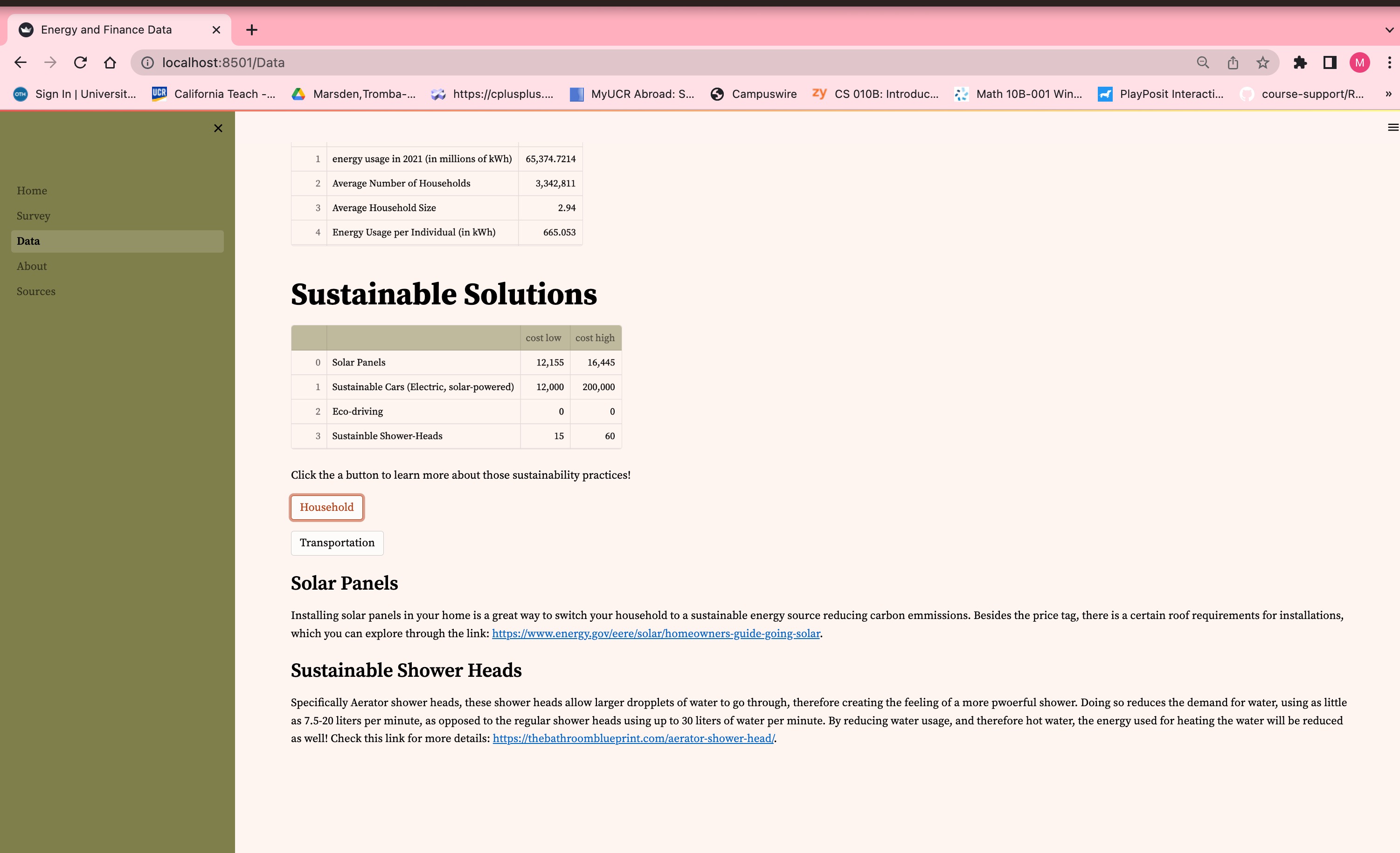
The general data page
-
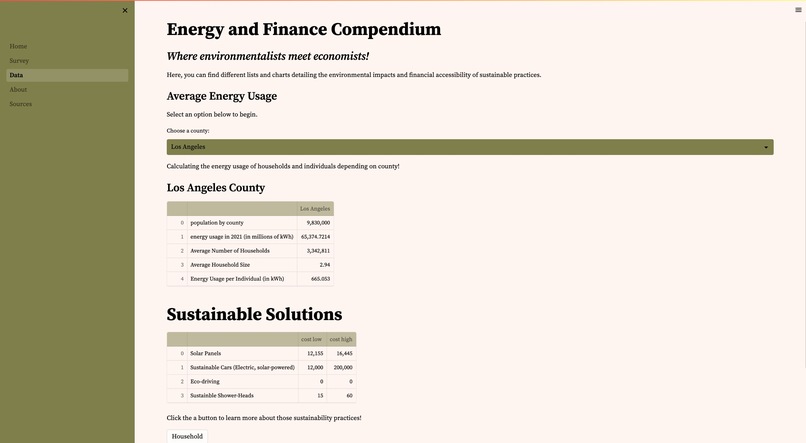
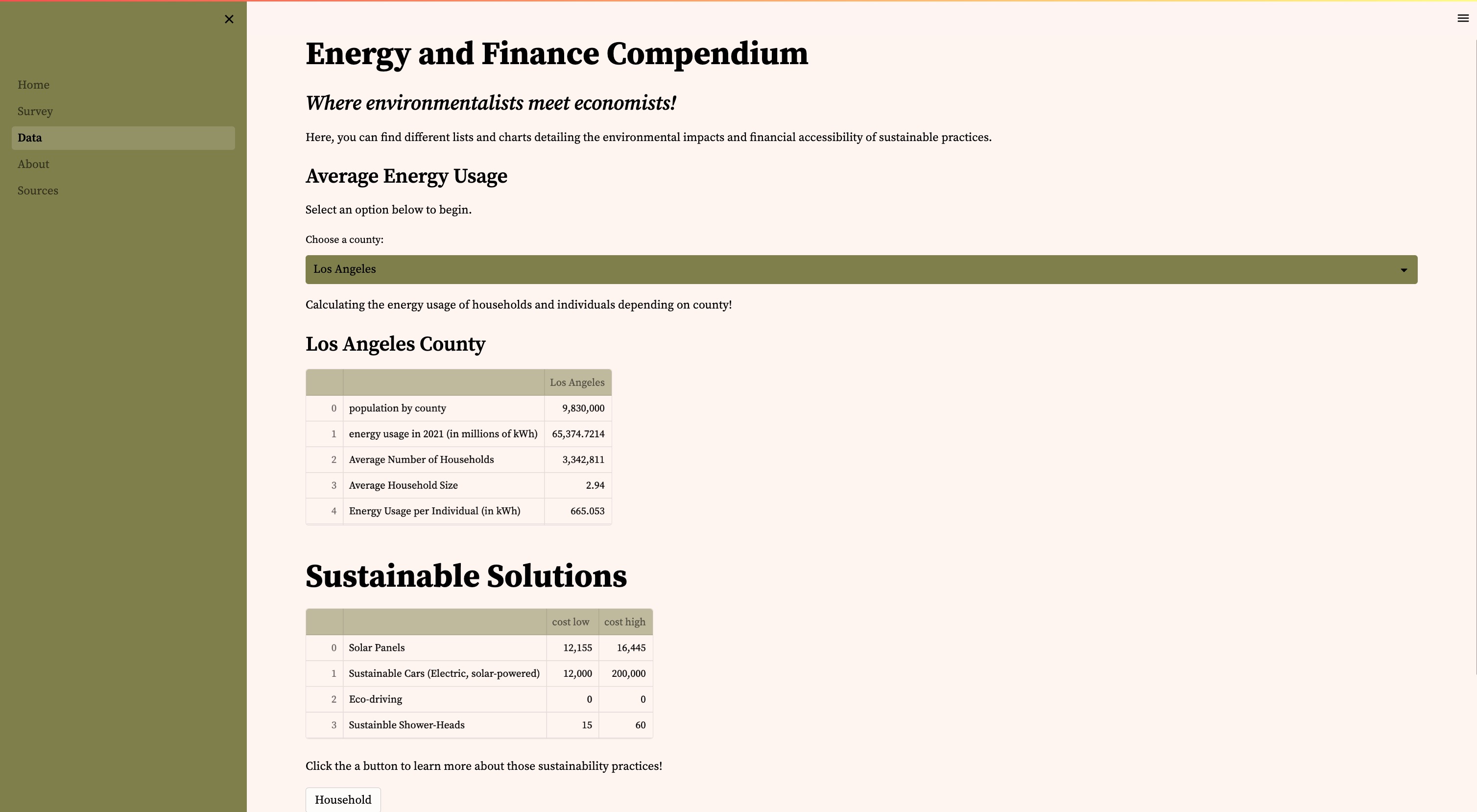
The results of the general data page by county
-
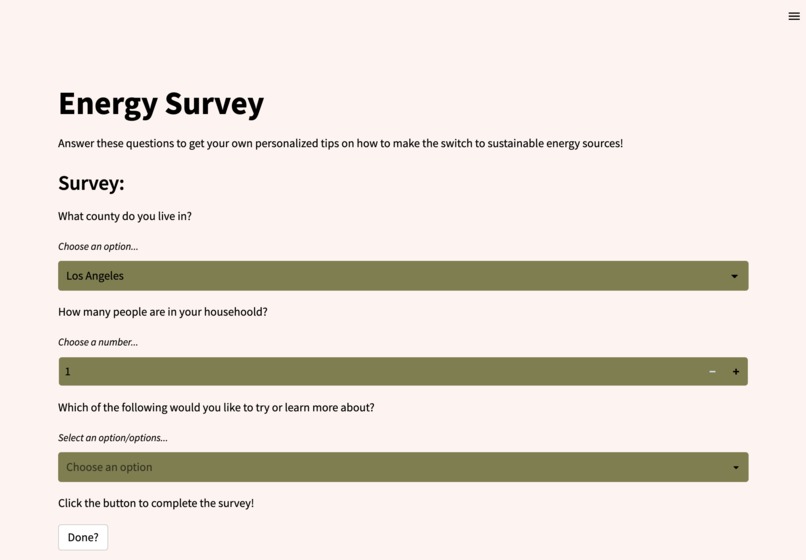
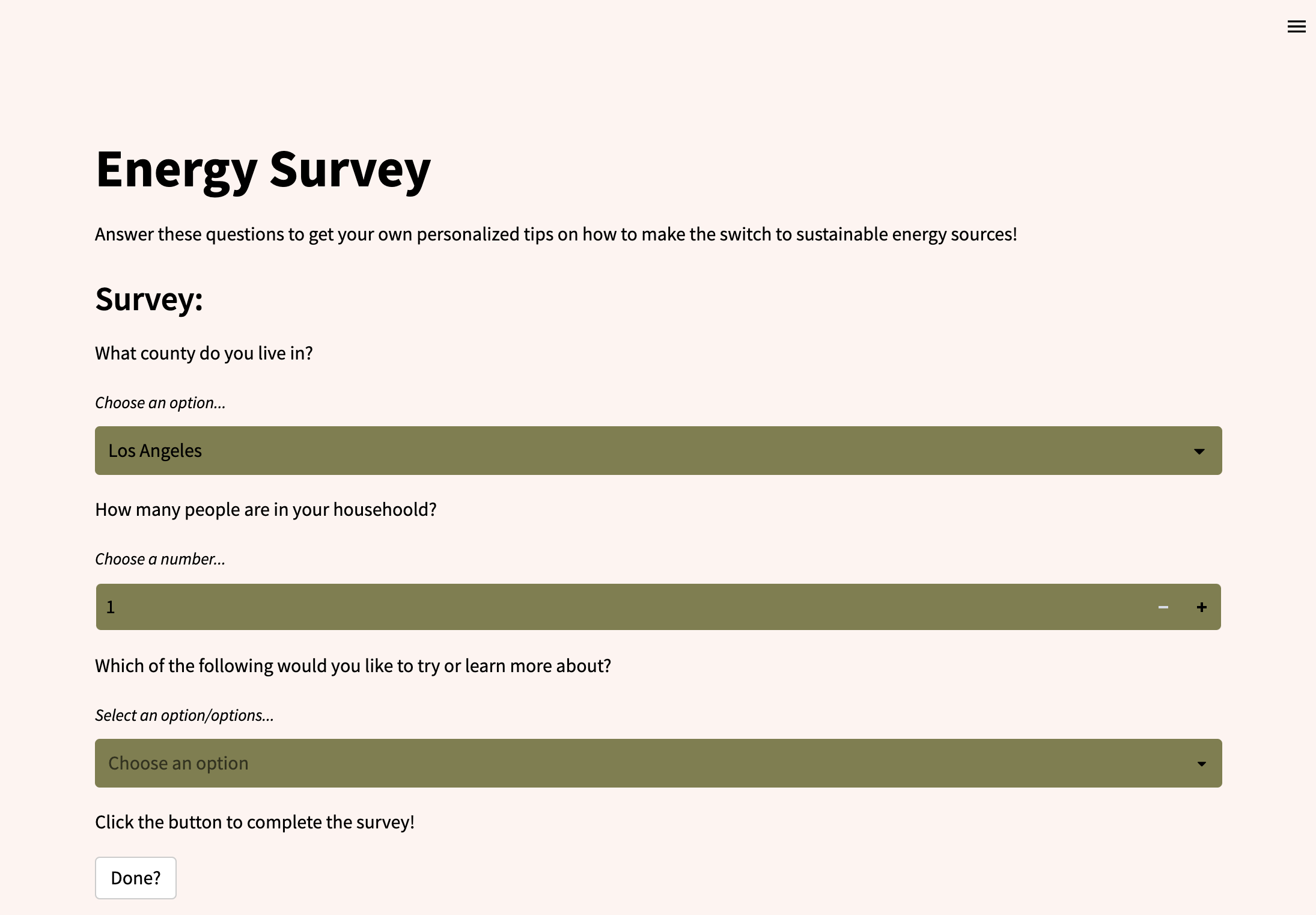
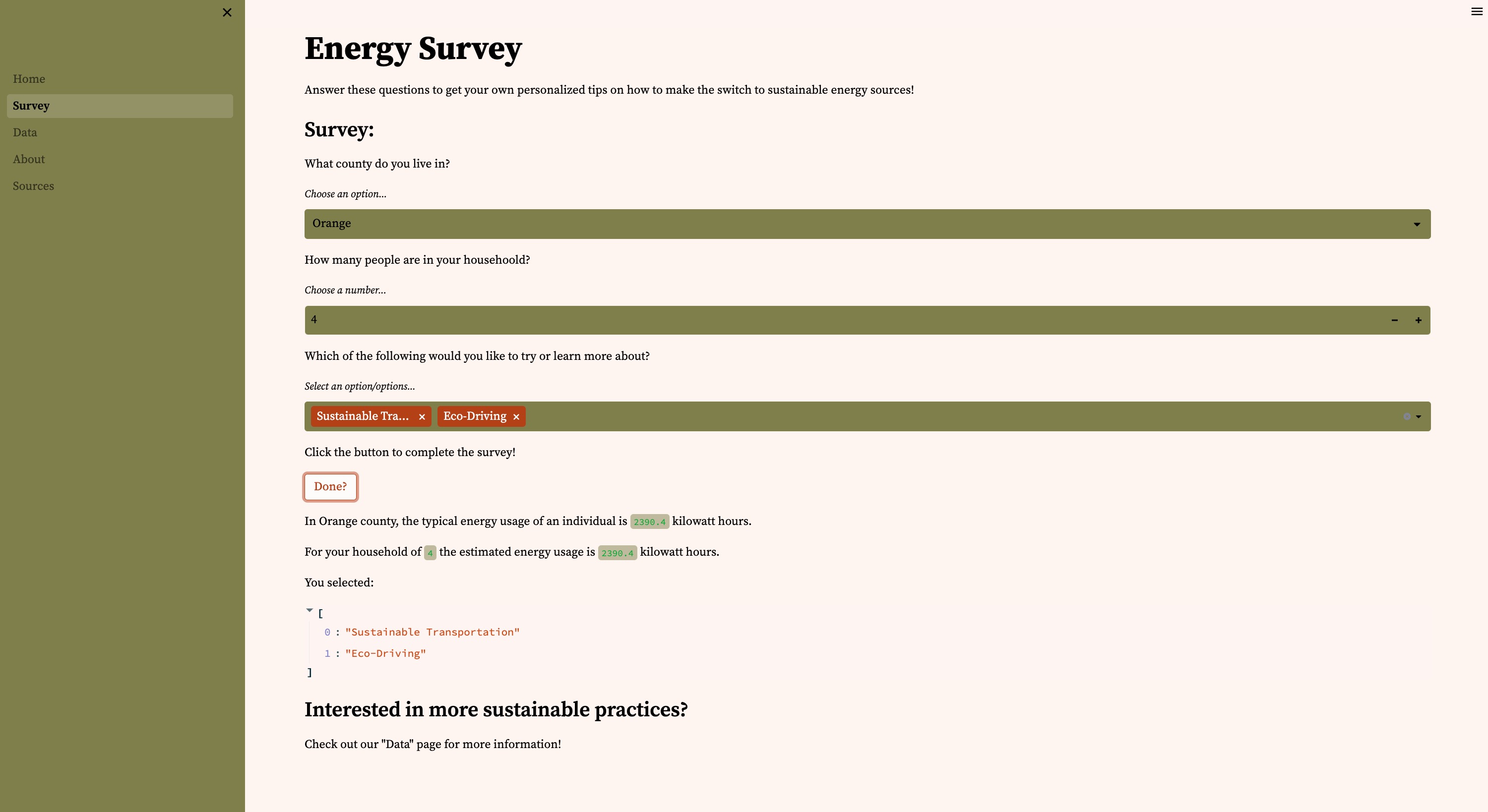
The personalized survey page
-
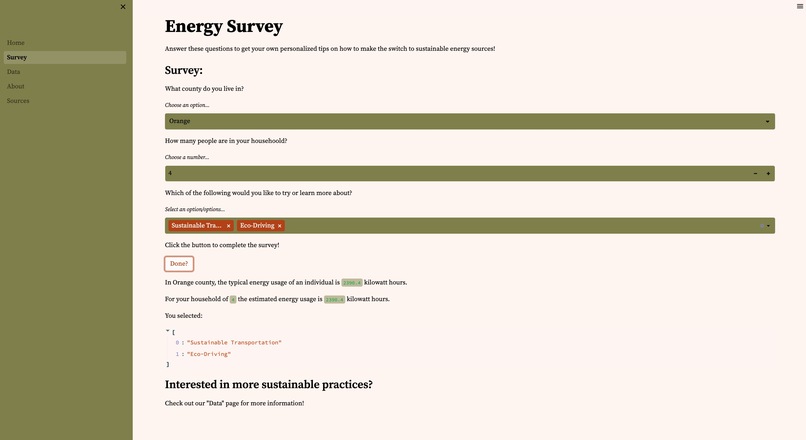
The results of the personalized survey page
-
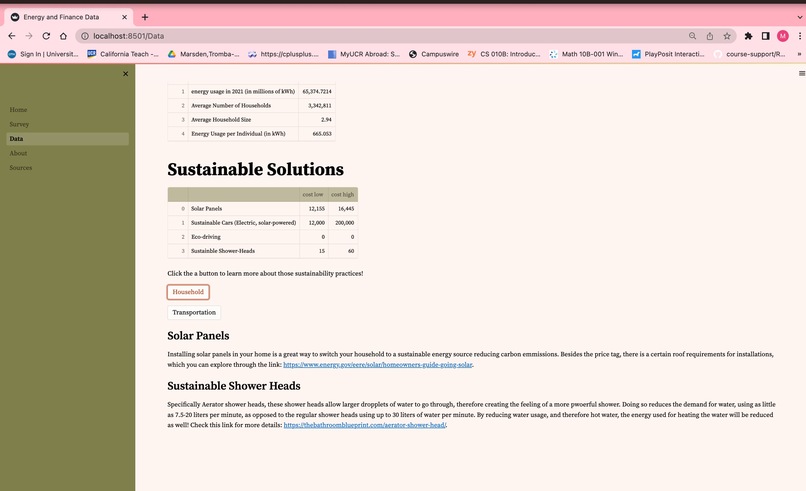
The solutions results of the personalized survey page
-
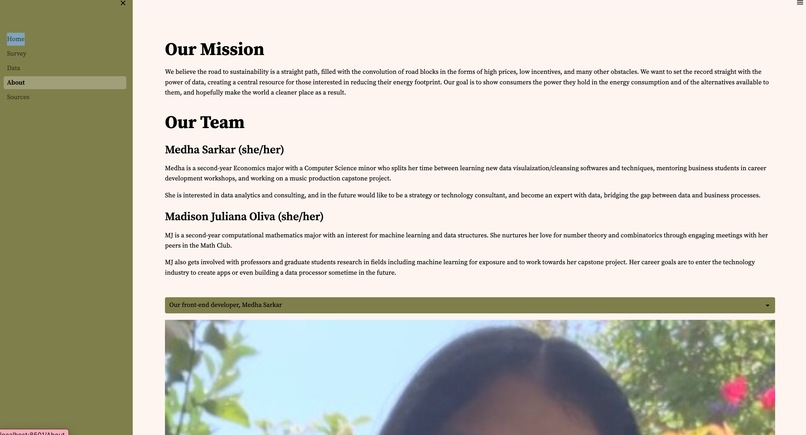
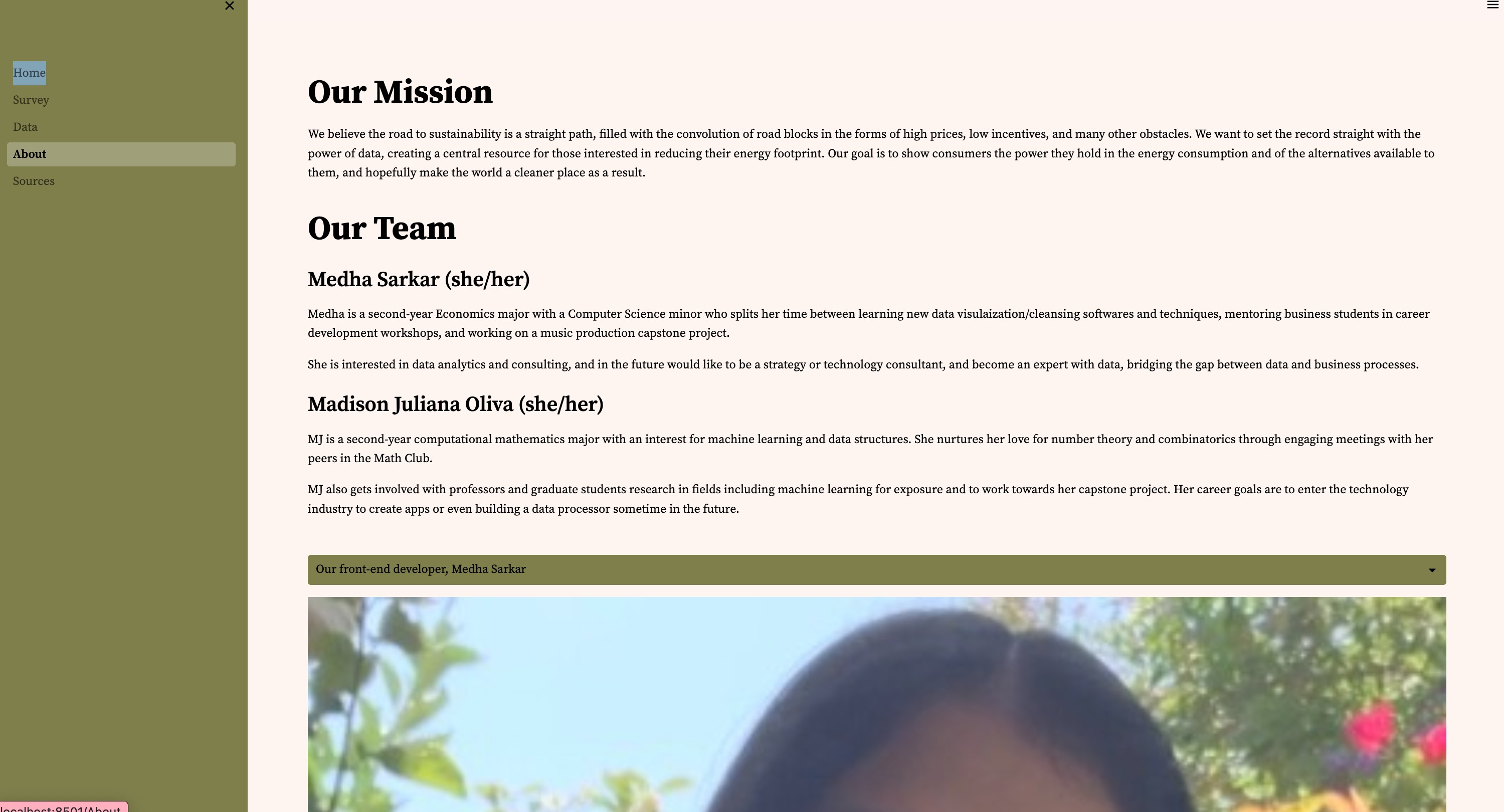
about us page
-
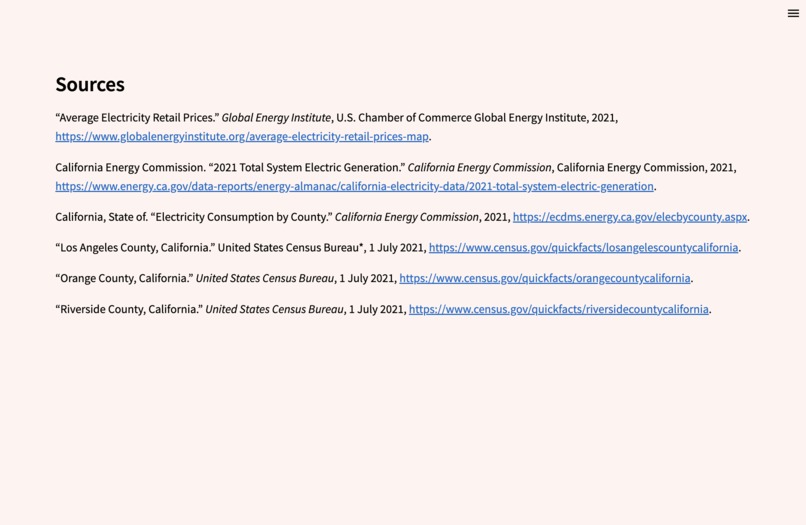
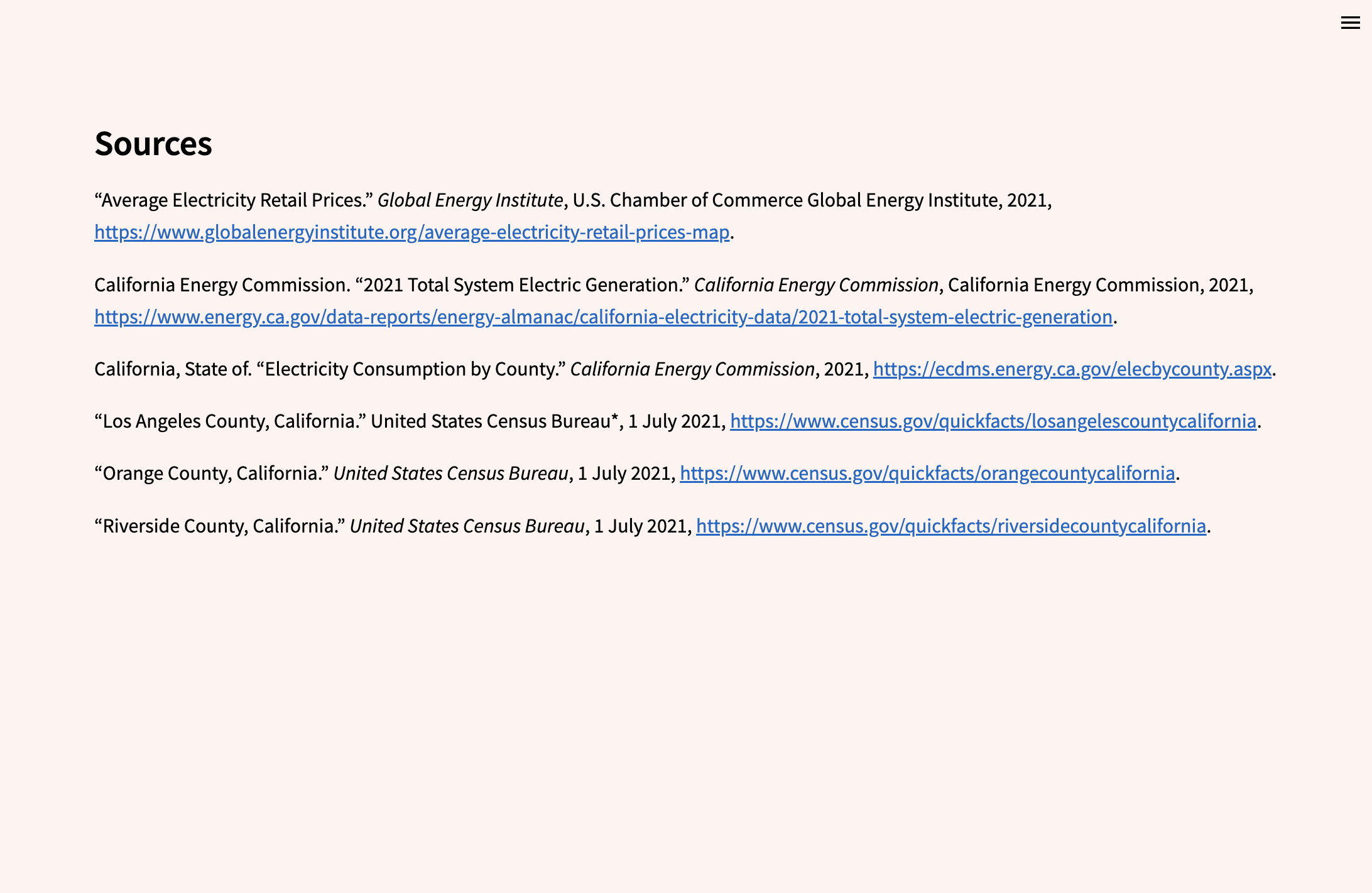
The Works Cited
Inspiration
Just yesterday we experienced a blackout, around the same time we heard about a new legislation that was about to be passed in California, one that would require solar cars / electric cars by 2035. It scared us. How can a system that is already so overwhelmed keep up with the demand of around 40 million assorted electric cars? We realized that people needed to start making educated switches to start using less energy--starting small or going big, whichever suits where they are at in life, and wanted to expedite the process they used to getting there.
What it does
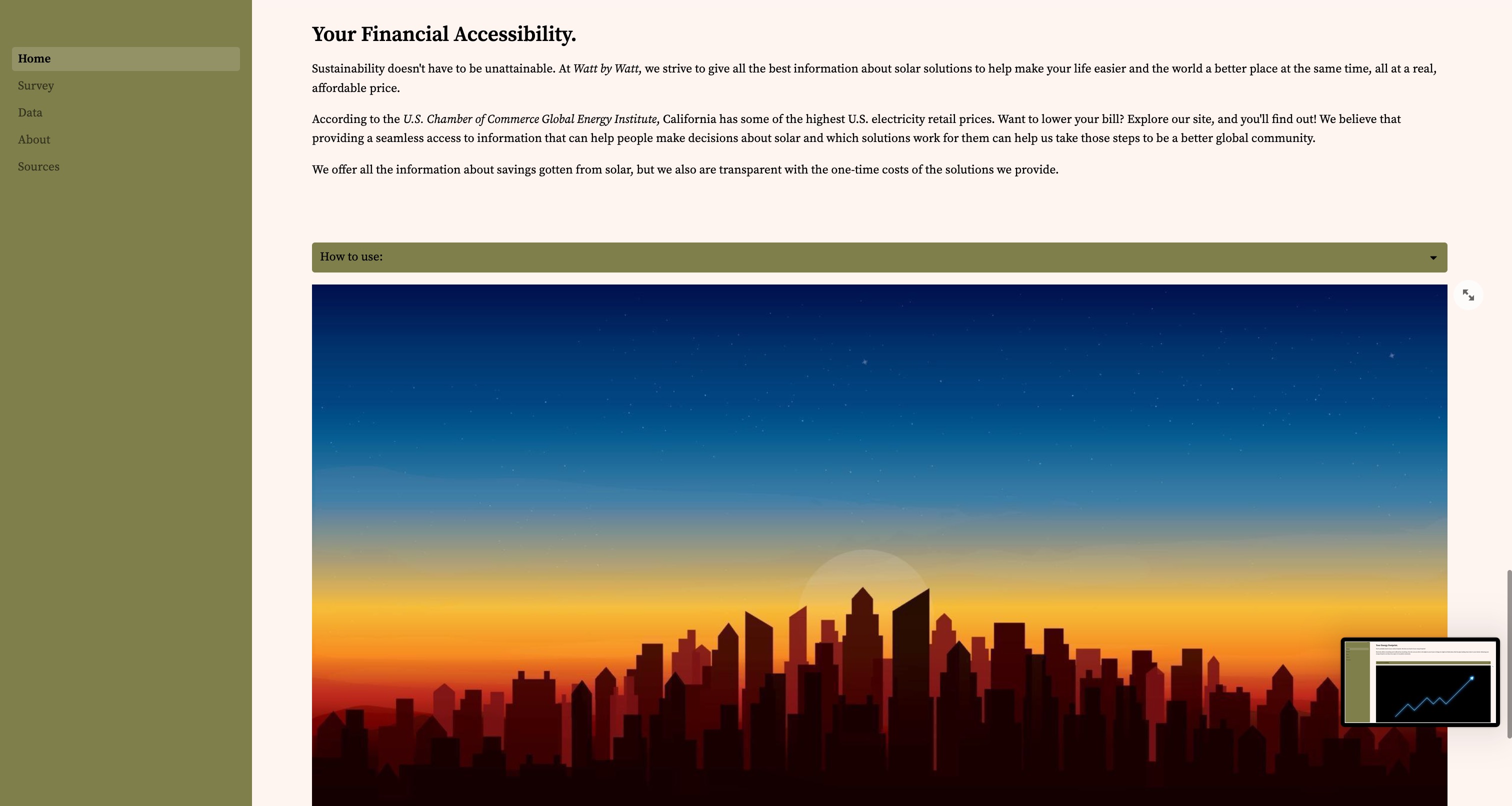
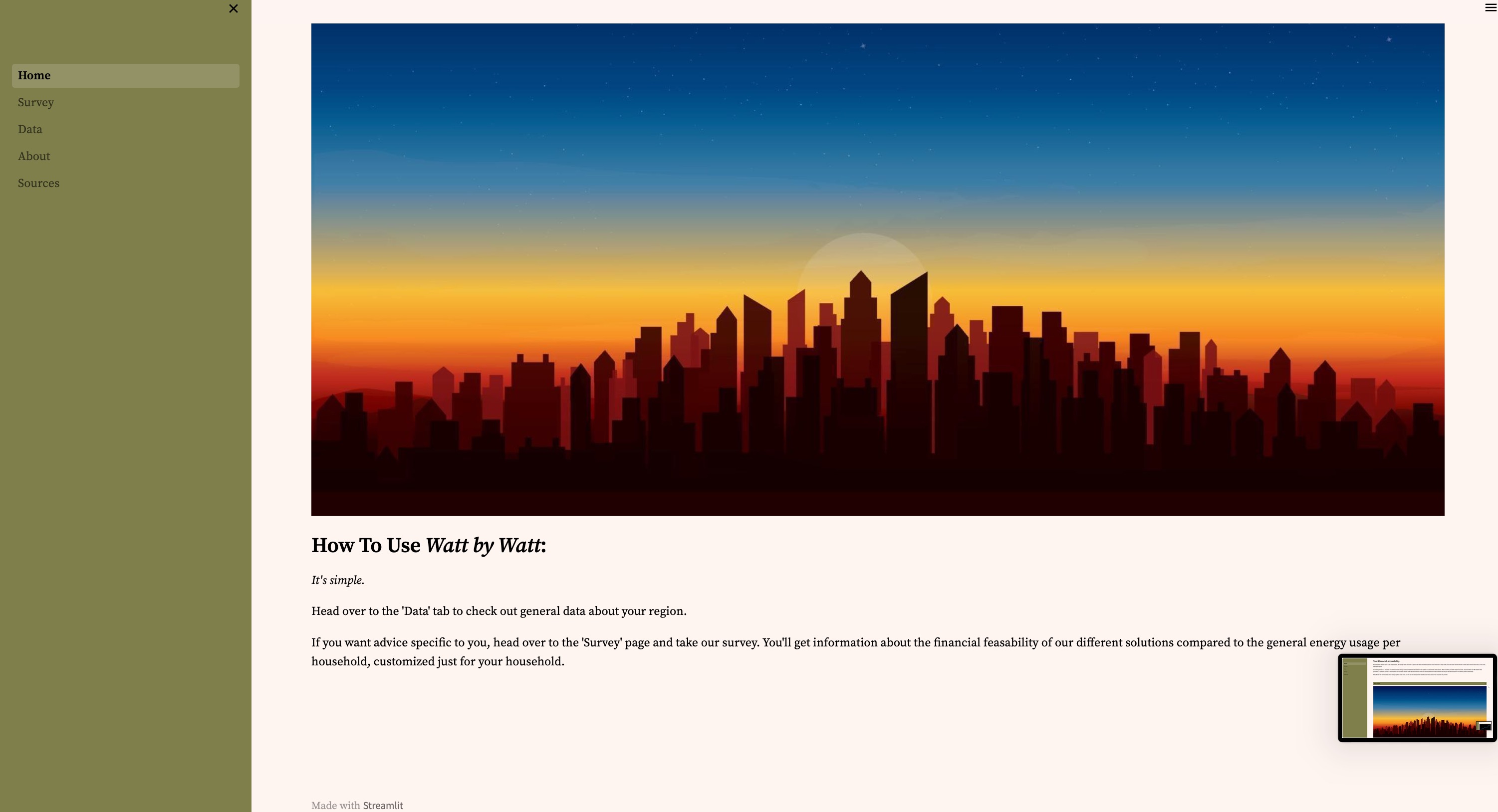
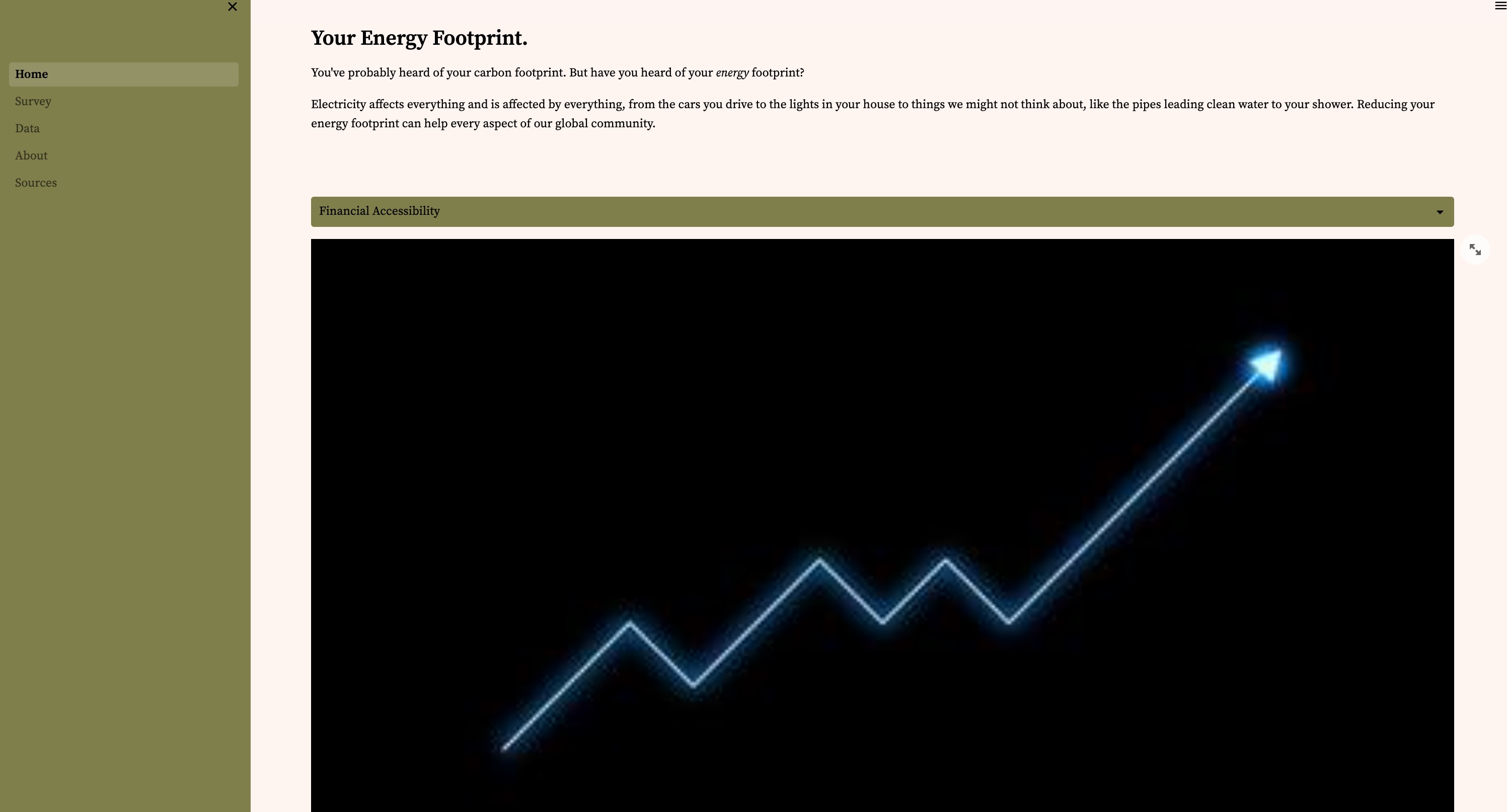
Watt by Watt is a web app that allows users to see the financial and census data for their county with relation to energy usage, as well as showing them actionable solutions that they can use to become more energy conscious.
How we built it
This web app was built using Python on Streamlit. We also used Google Sheets for the data sets, and used Google API to connect the Google Sheets to VSCode, where we coded with Python's Streamlit. To parse through the data and create user-relevant data to display, we used the numpy and pandas libraries within Python.
Challenges we ran into
One of our biggest challenges was getting set up with Python, GitHub, VSCode, and Google API. The installation process was almost as rigorous as the connection process between the three, but using the troubleshooting techniques that our amazing AthenaHacks mentors tooled us with.
We also had trouble with our Macs and the fact that we couldn't access some of the total file paths. The files would be in the program folder, but the program would not be able to pick it up unless we put the complete file path, starting from the User folder. We weren't able to completely resolve this issue, but found a workaround using drop down menus and open-access pictures.
Accomplishments that we're proud of
This is the first hackathon that we were able to create a fully finished, working product that we're proud of. Our troubleshooting techniques along with our "if it doesn't work, spend ten minutes, then consult and move on" mindset, which kept us running through the 24 hours.
What we learned
We learned how to connect Python and Pip to VSCode and how to create a virtual machine in VSCode to code in. We also linked our GitHub repository and each team member worked within their own branche. We also learned how to download libraries from pip3, Streamlit, and python3, and how to connect Google Cloud to VSCode and Streamlit.
What's next for Watt By Watt
We want to expand from just energy into all types of renewable solutions to nonrenewable energy sources. We started with electricity, on which a lot of infrastructure is built upon.
Built With
- google-cloud
- google-sheets
- python
- streamlit


Log in or sign up for Devpost to join the conversation.