-
-
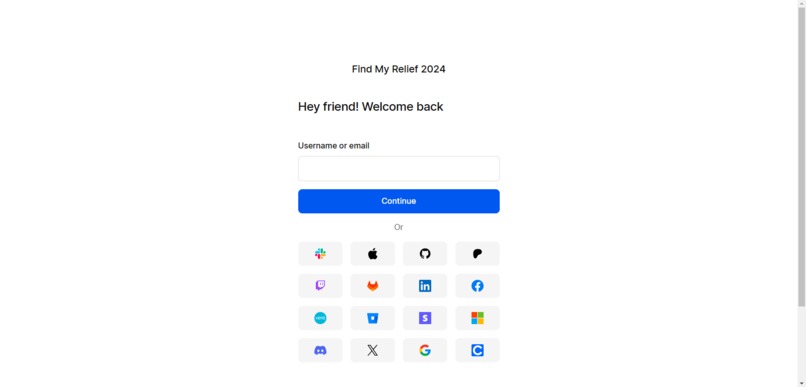
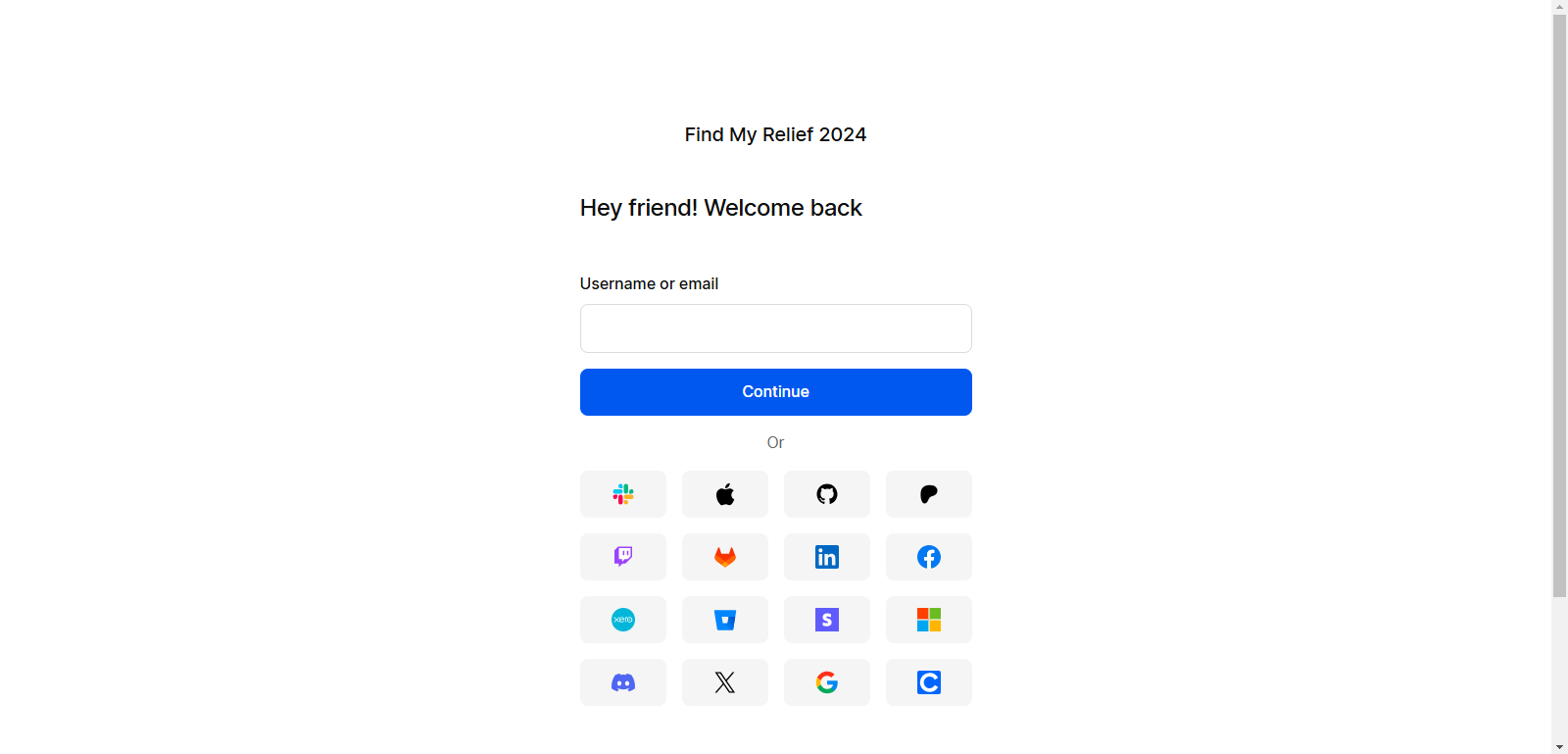
Login page
-
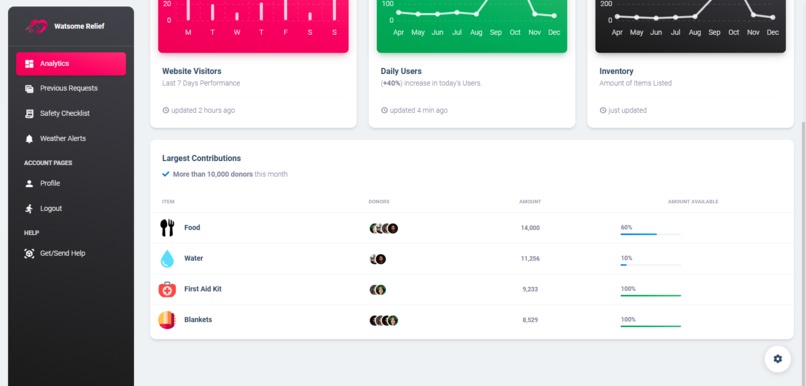
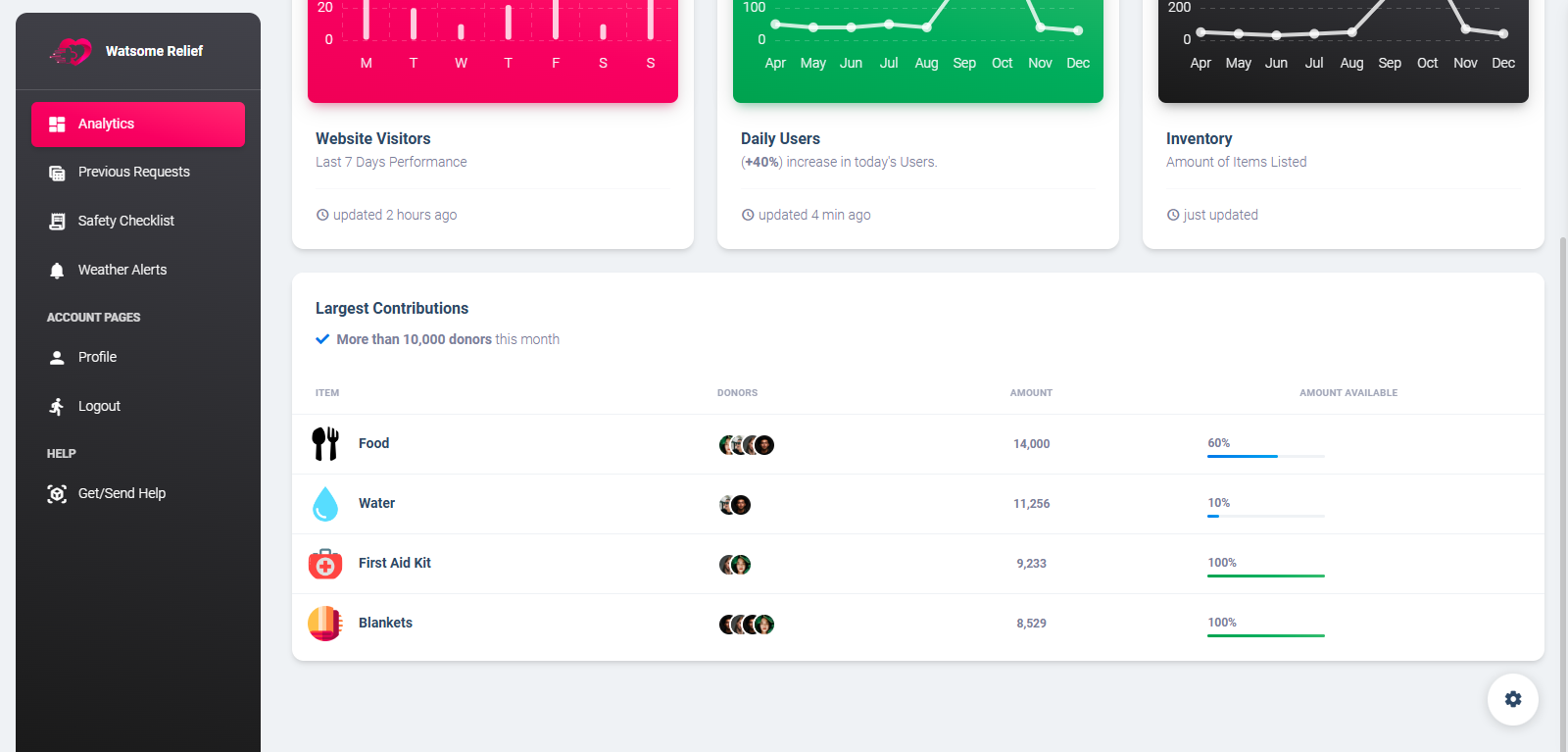
Analytics
-
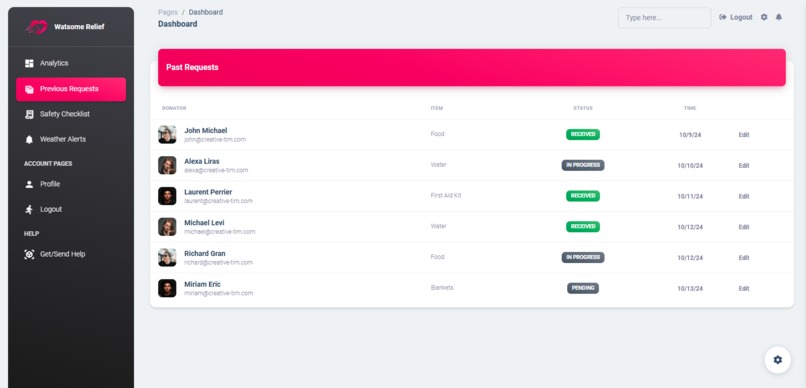
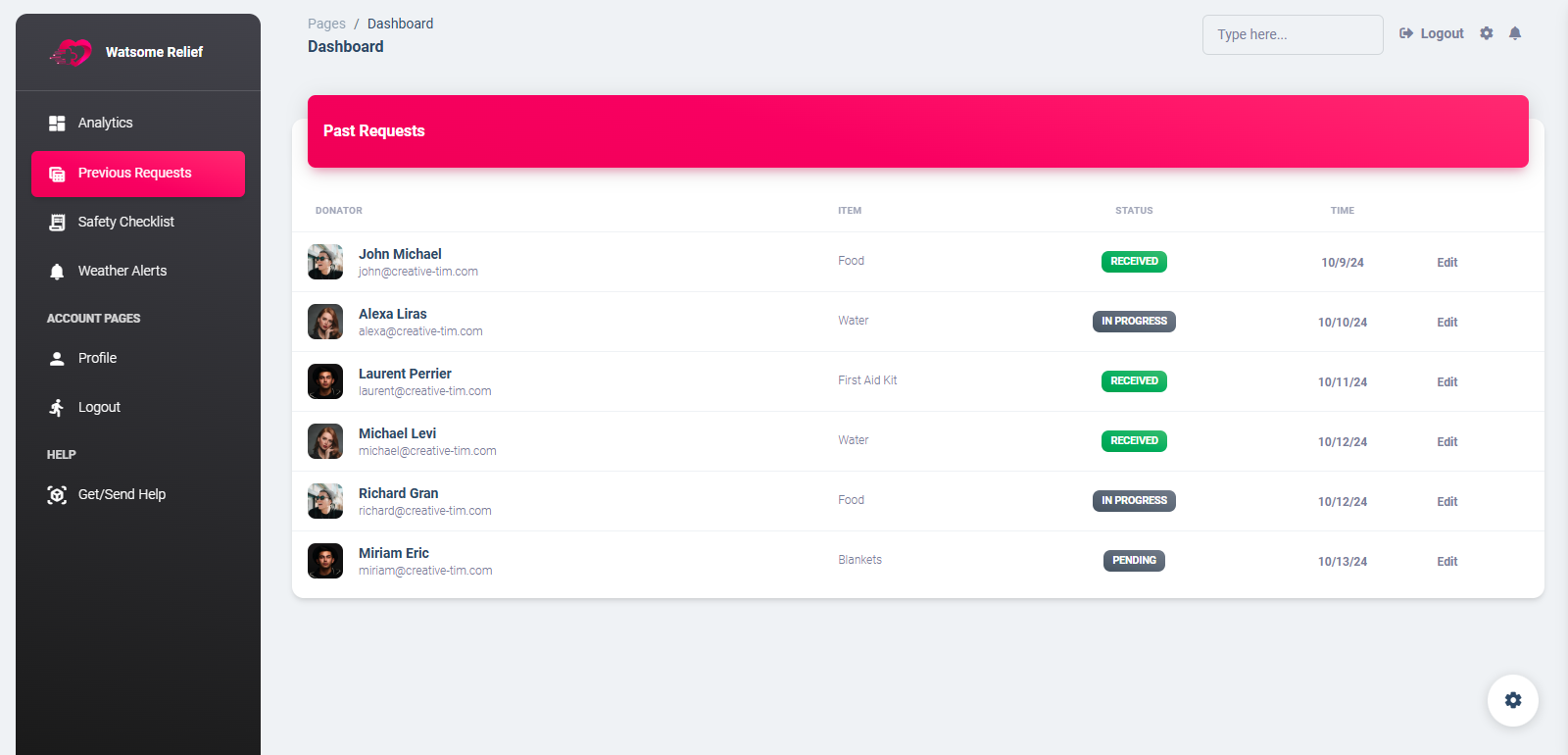
Previous requests
-
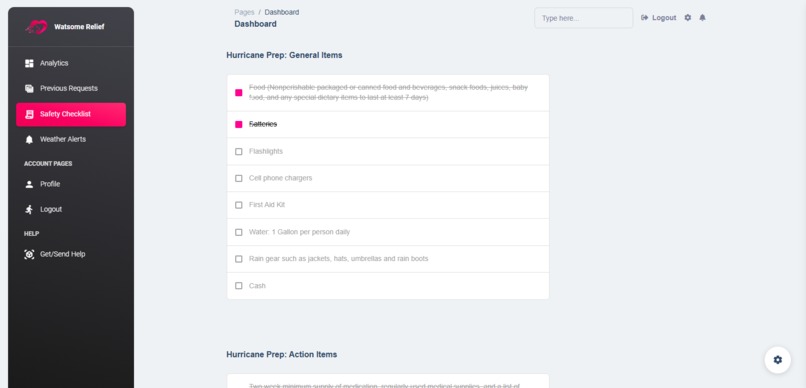
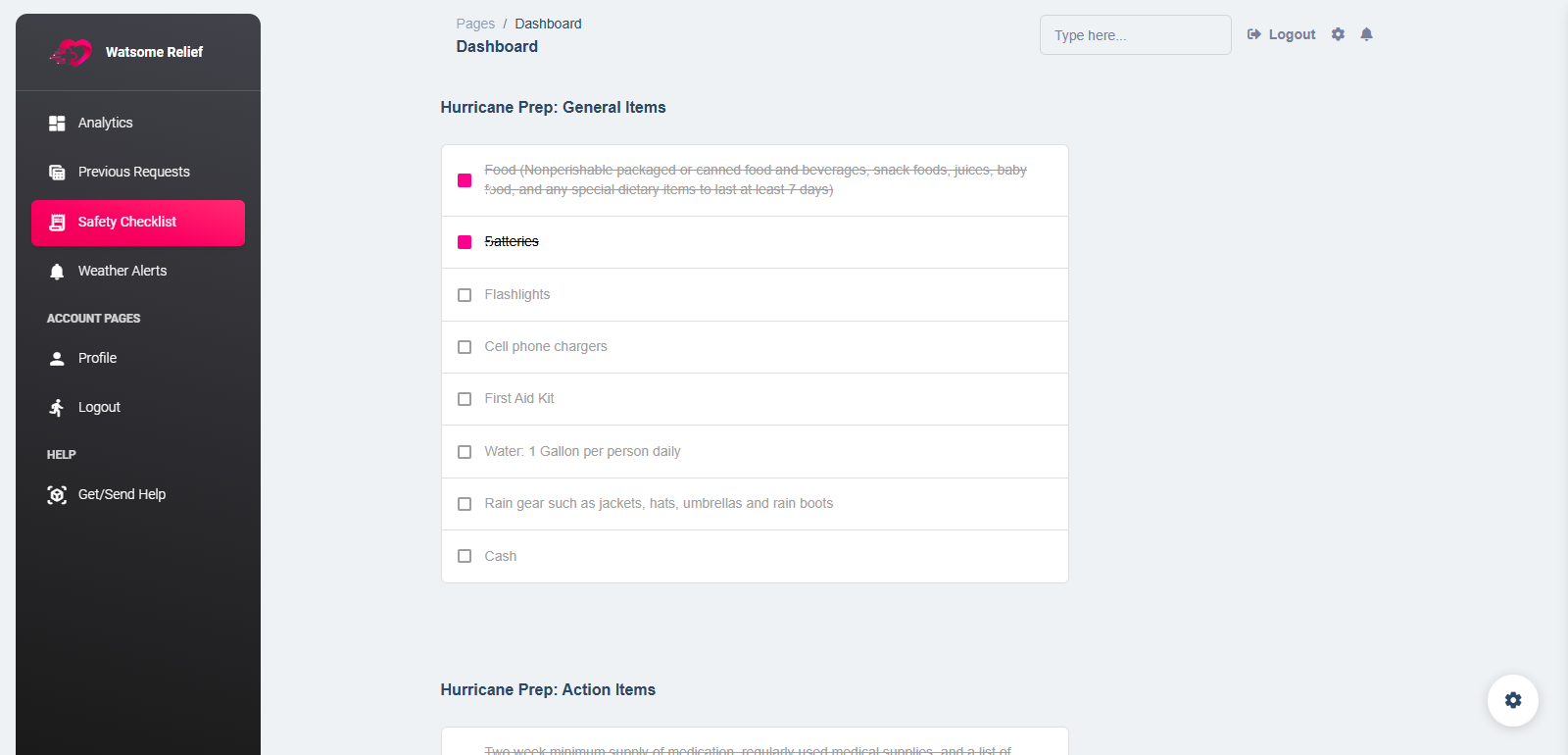
Safety checklist
-
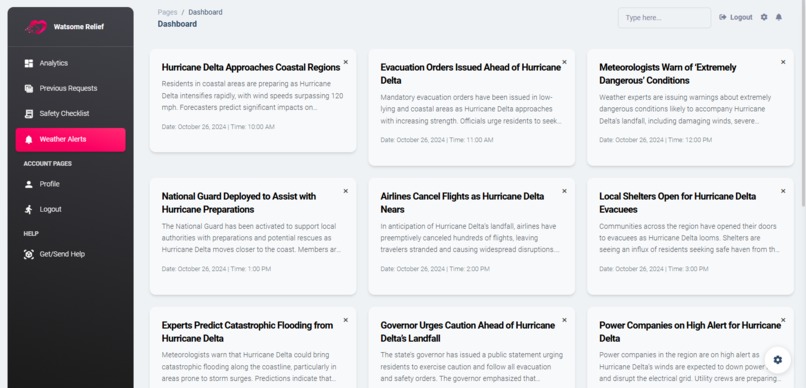
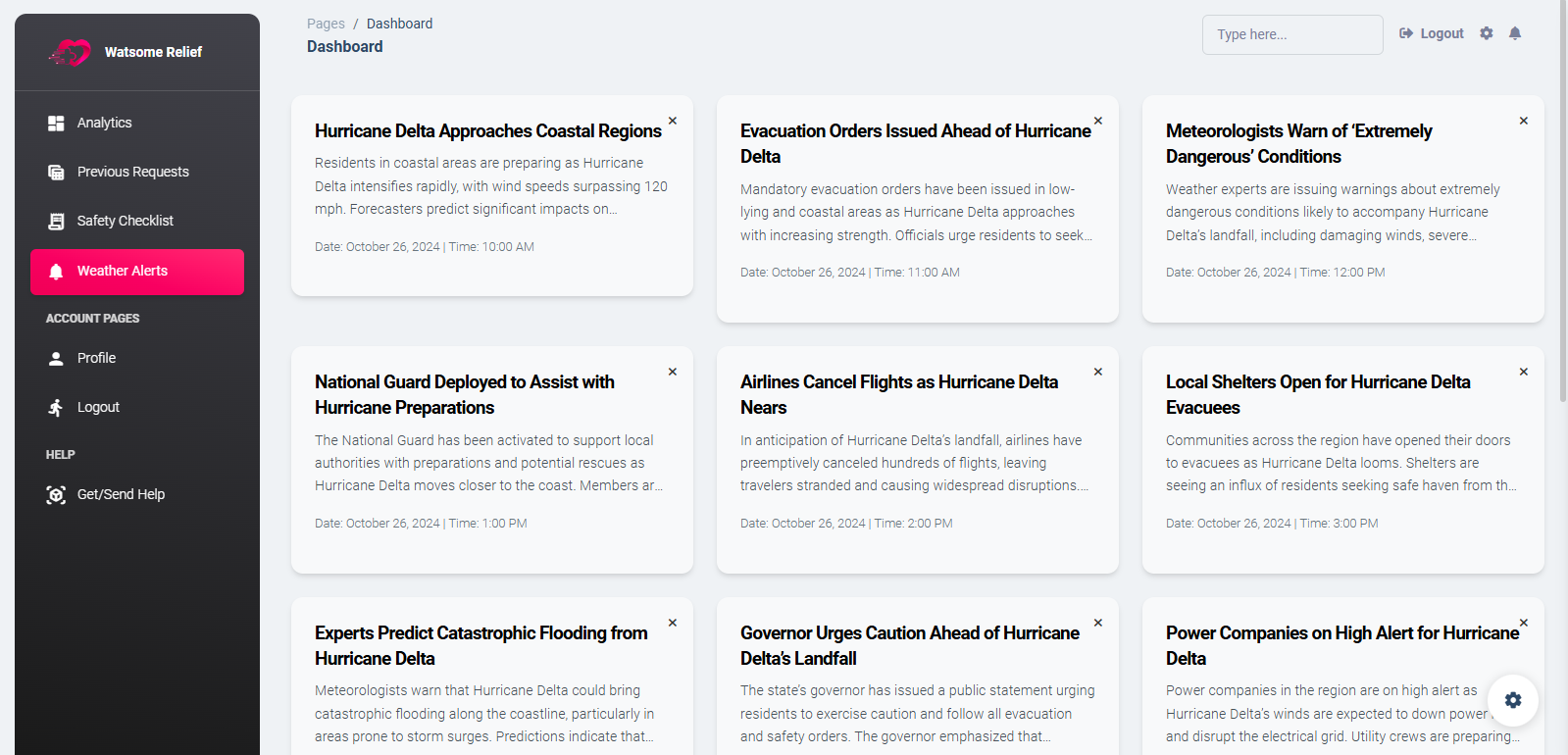
Weather alerts
-
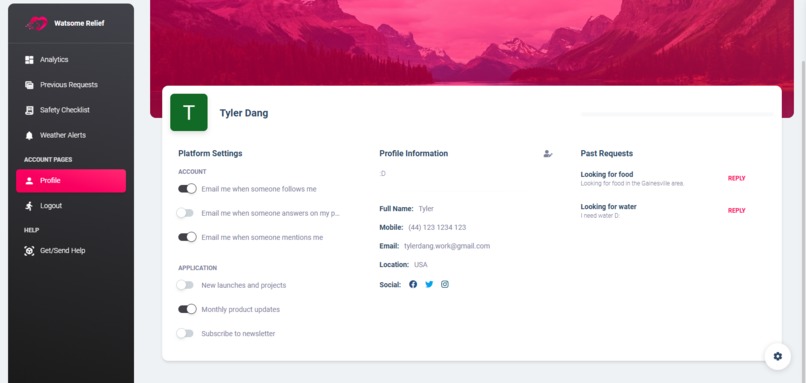
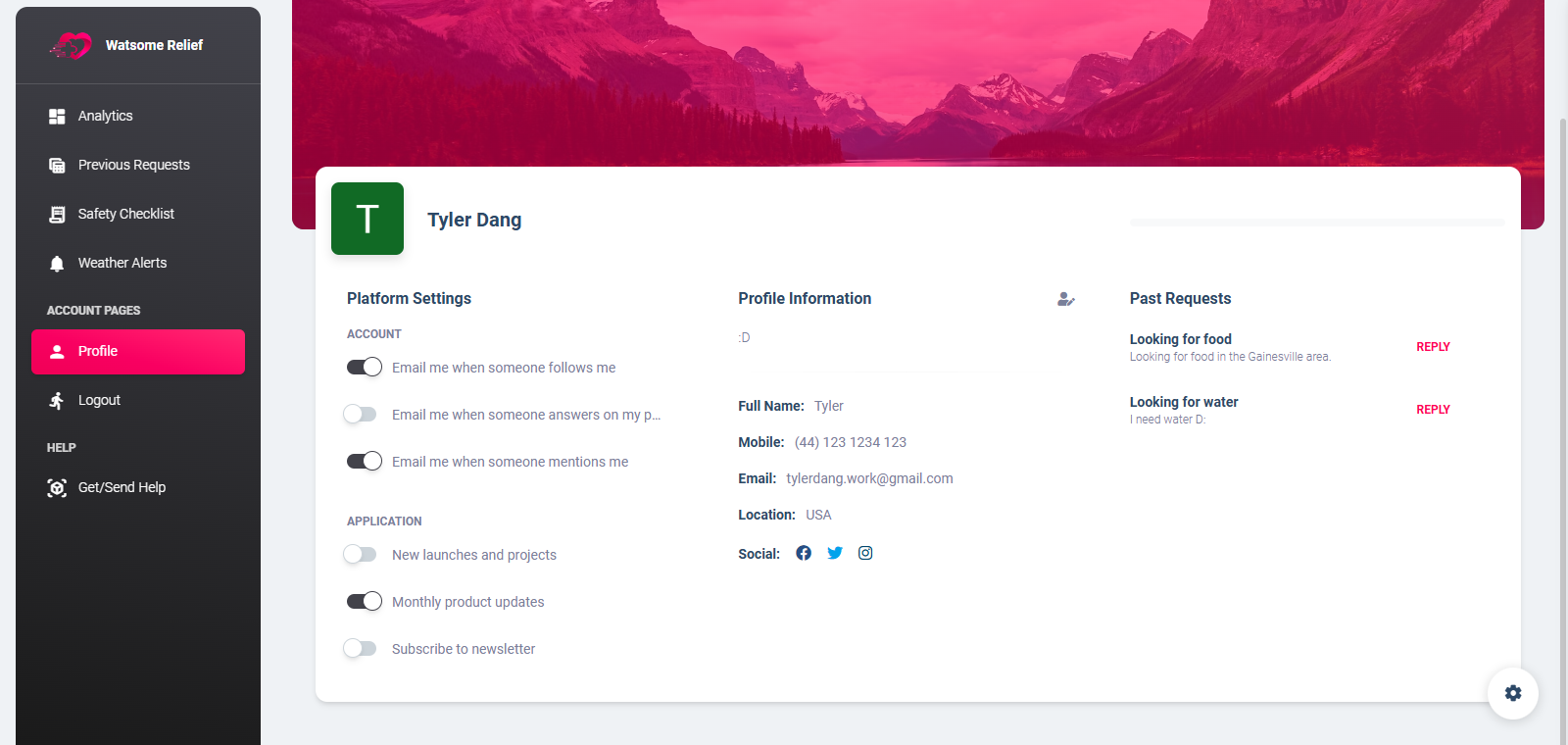
Profile page
-
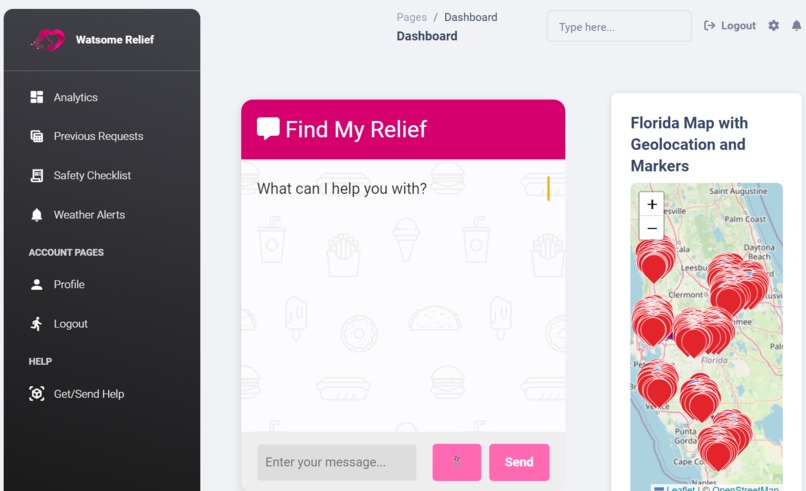
Help page
-
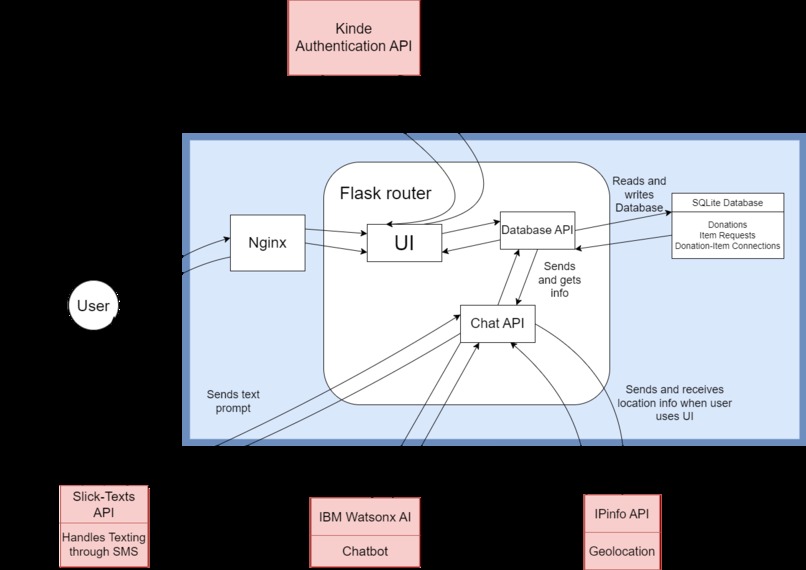
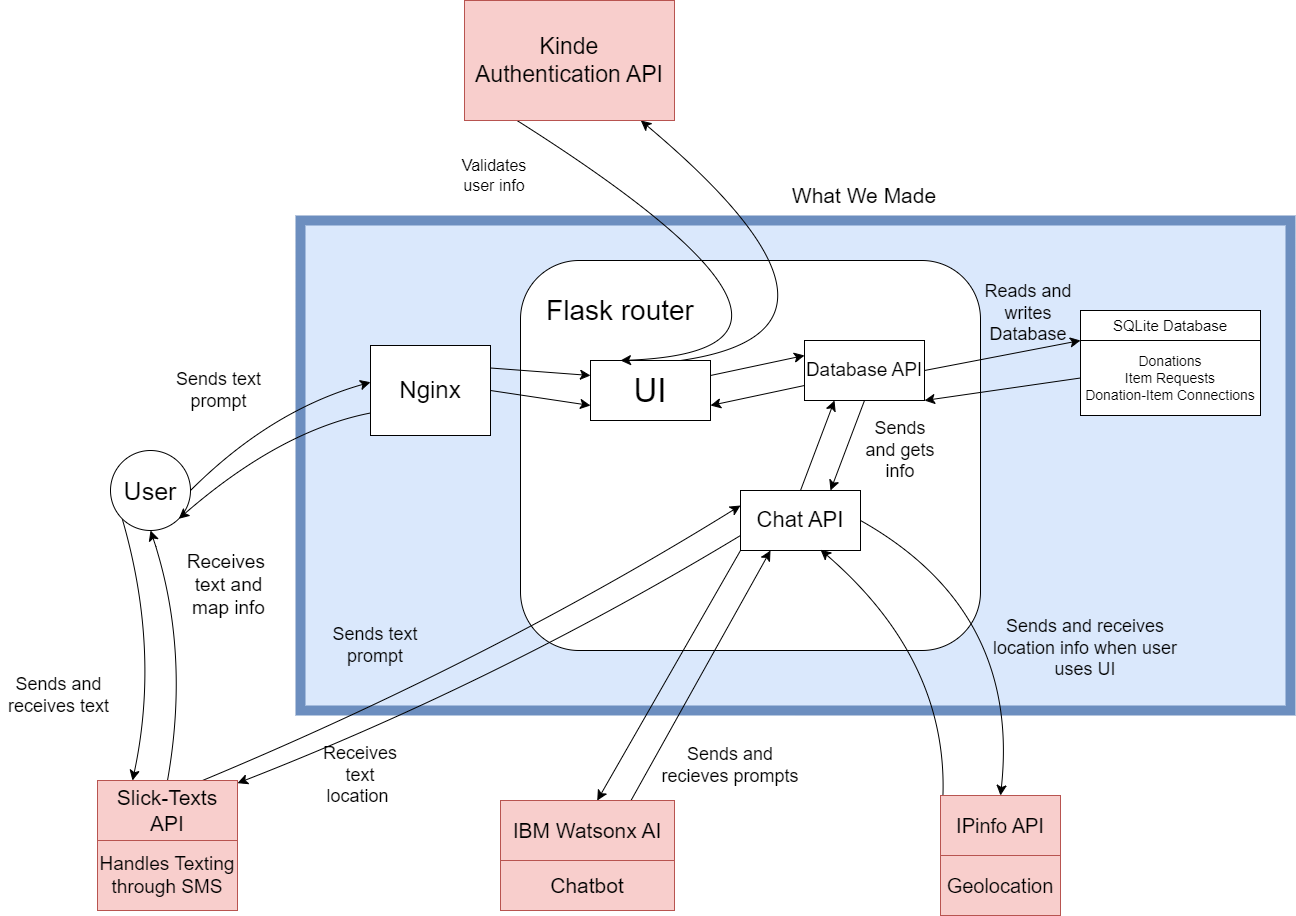
API diagram
Issue
Every year, before a hurricane arrives at a coast in Florida, we experience a rush to prepare and shelter ourselves from the danger. Days before landfall, water bottles are bought out at every store, grocery shelves are not restocked and resources become limited. Whilst being overprepared is not a bad thing, hoarding food, water, and emergency supplies can mean others more severely affected are deprived of necessary supplies. Since hurricanes and flooding are unpredictable, we see that a large number of resources can end up with people who might not be affected by the storm. So we end up with a distribution problem when resources can be better utilized.
Inspiration
A few weeks ago, hurricane Milton was predicted to ravage Tampa prompting people to purchase an abundance of water, food, and generators. Shelves became empty, which meant a lot of people did not have a generator when the hurricane hit and 2.8 million people were out of power. It took more than a week for some areas to restore power as emergency responders were busy with the recovery.
As Florida residents who deal with hurricanes annually, we understand the anxiety that comes with the threat of natural disasters. The potential lack of support from family members, local shops being closed, and emergency responders being overwhelmed can leave communities feeling isolated. This shared experience motivated us to create a solution that connects neighbors and facilitates resource sharing during emergencies.
What if we could connect people who have an abundance of resources to people in their neighborhoods who have a lack of supplies? Each house would not buy a generator if they could borrow from their neighbors. The day after landfall can also enable people to donate their extra water if they are not affected. Since first responders would be busy and roads might be blocked, sharing resources inside a neighborhood can help a lot.
What it does
Watsome Relief is a neighbor coordination website designed to assist individuals in need during natural disasters, particularly hurricanes. If there is no power or cell service, users can send SMS messages to request help or inquire about available resources nearby without the need to log in as emergency SMS can be sent through satellites with modern smartphones. Our platform infers user needs, coordinates responses, and keeps users updated on nearby supplies and neighbors in need, making it easier for communities to support one another.
How we built it
We implemented the website using Flask for the routing, combined with Bootswatch, HTML, CSS, and JavaScript for the front end. We utilized SMS and IP info APIs to enhance functionality, allowing users to interact with the platform through text messages and visualize nearby resources.
Challenges we ran into
One of our significant challenges was ensuring the chatbot provided accurate responses. Initial attempts yielded incorrect outputs, but through effective prompt engineering, we developed a chatbot that can infer user actions based on their messages. This required extensive testing and adjustments to improve its accuracy.
Accomplishments that we're proud of
We are particularly proud of a few key accomplishments:
- Successfully integrating an SMS API (SlickText) that allows users to communicate their needs without logging in, making it ideal for emergency situations. Users receive immediate responses regarding nearby supplies, and if none are available, their requests are stored for future updates.
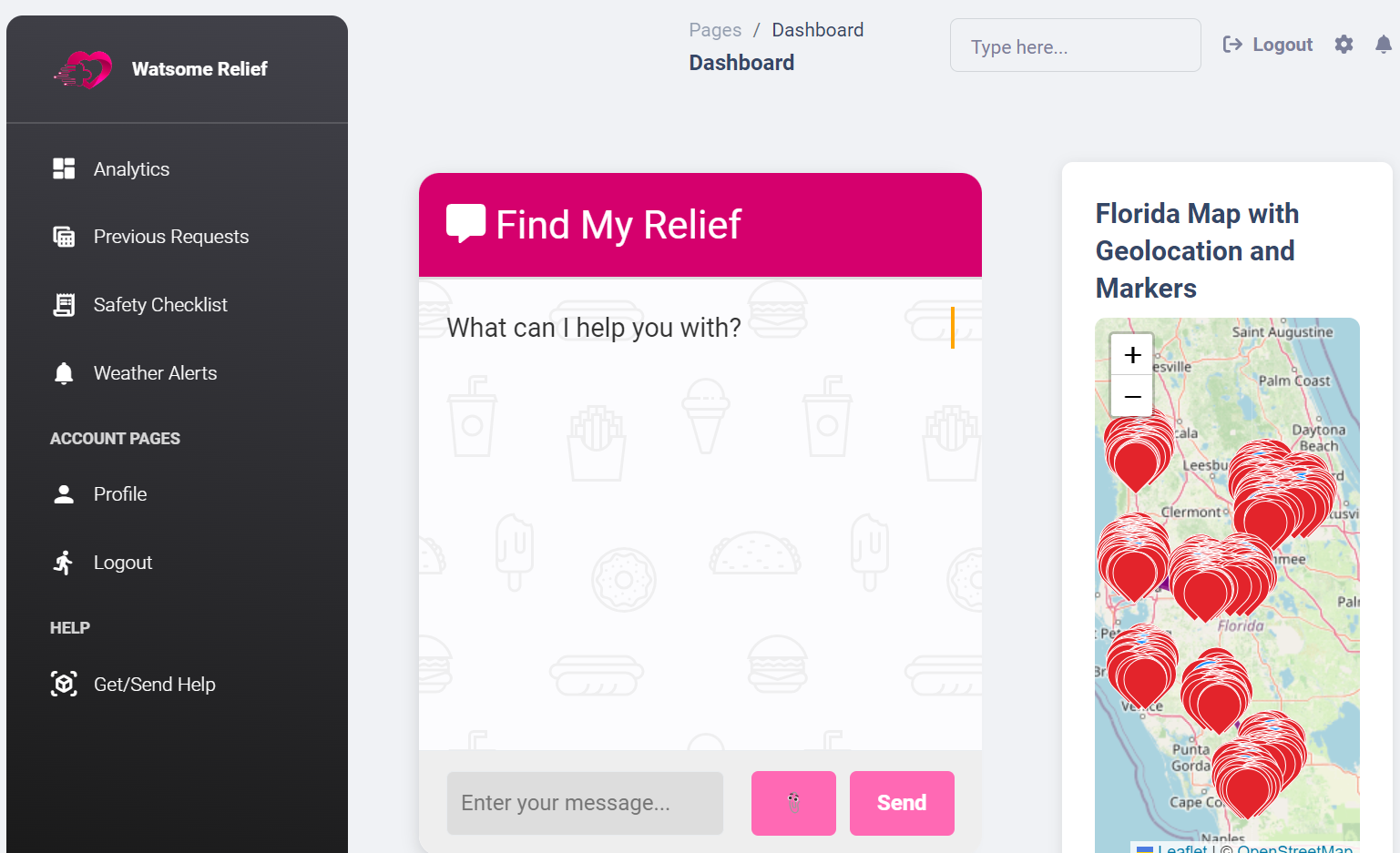
- Implementing a map feature (Leaflet API) that visually displays nearby resources, helping users easily identify where assistance is available. This enhances our platform's usability and effectiveness in emergency situations.
These innovative features significantly enhance user accessibility and responsiveness during crises.
Collaboration Statement
Our team consisted of a Linguistics major (Michael), a CS major (Tyler), a CS major with a minor in Digital Arts (Matthew), and a Computer Engineering major (Abdullah). Each member contributed to allow this project to happen. Michael envisioned the project, set up essential APIs, and worked on important components as necessary. Matthew and Michael worked on video editing, prompt engineering, backend development, and the map API. Abdullah researched generative AI and SMS APIs. Tyler worked on the front-end development, with Abdullah, working with HTML, CSS, and JavaScript.
What we learned
Throughout this project, we gained valuable experience in various areas:
- Tyler deepened his understanding of frontend development through hands-on work with HTML, CSS, and JavaScript, as well as collaboration on GitHub.
- Abdullah researched generative AI and SMS APIs, transitioning to the frontend to enhance his skills.
- Matthew focused on prompt engineering and backend development, learning how to implement map APIs effectively.
- Michael honed his leadership skills by managing the project, setting up essential APIs, and ensuring all components functioned smoothly, working on important aspects of the project as necessary.
What's next for Watsome Relief
While Watsome Relief currently focuses on supporting communities during hurricanes, we have plans to expand its capabilities to assist during all types of natural disasters. Our goal is to create a comprehensive resource for communities, ensuring that no one feels alone during a crisis. We aim to continuously improve our platform based on user feedback and emerging technologies. Whilst people can share out of the goodness of their hearts, having an incentive structure can also help a lot.
Built With
- bootstrap
- css
- flask
- html
- ipinfo
- javascript
- kinde
- leaflet.js
- nginx
- python
- slicktext
- sqlite
- watsonx.ai


Log in or sign up for Devpost to join the conversation.