-
-
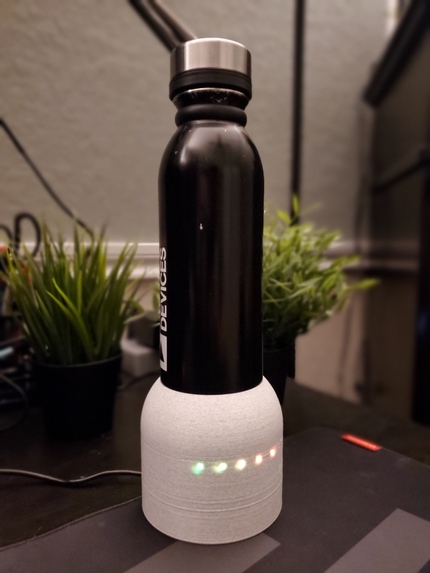
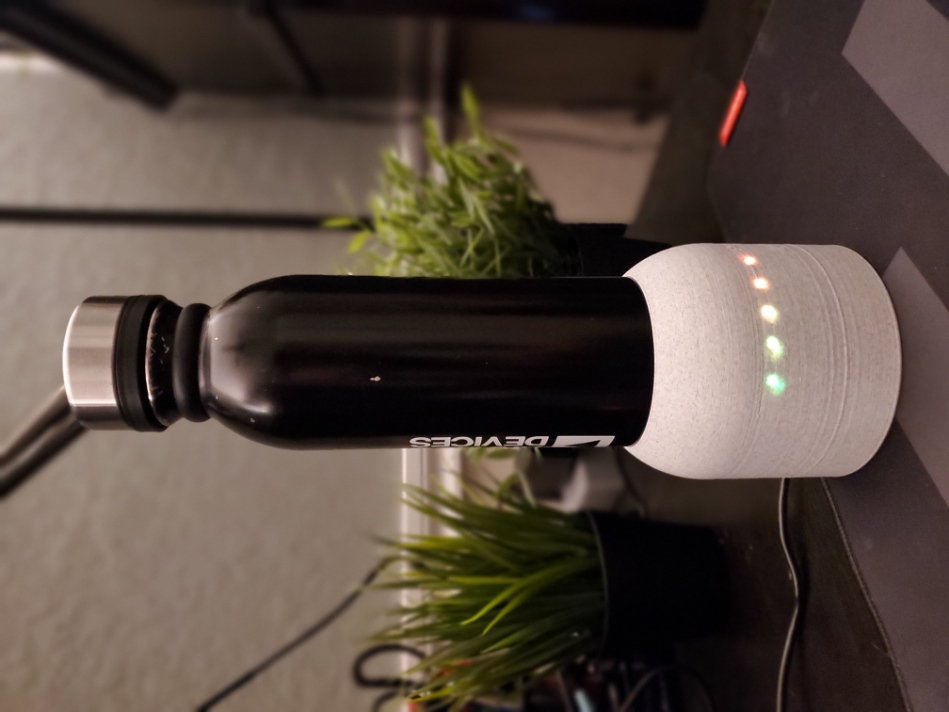
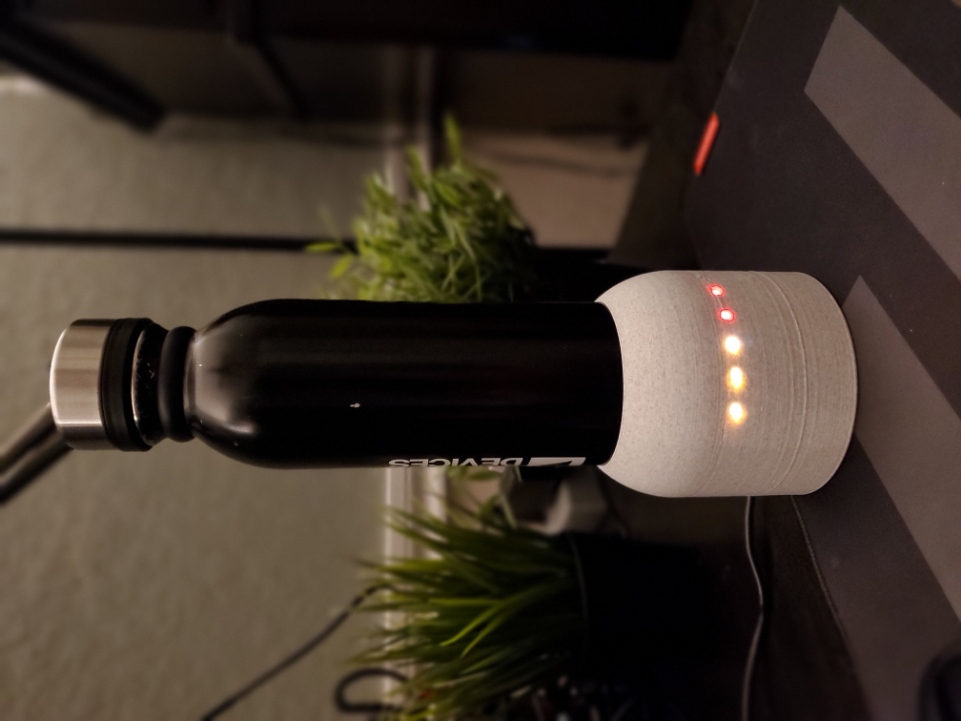
Rainbow "busy" animation
-
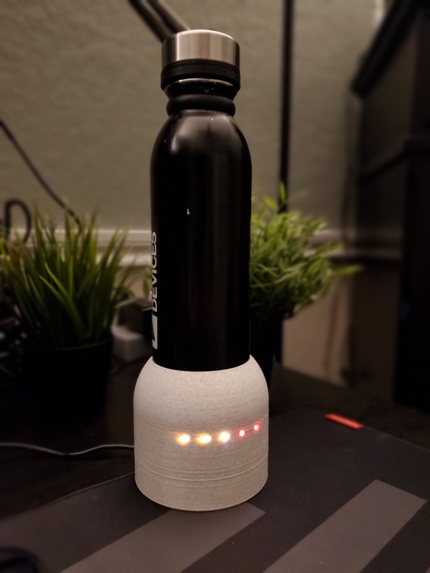
Water remaining display
-
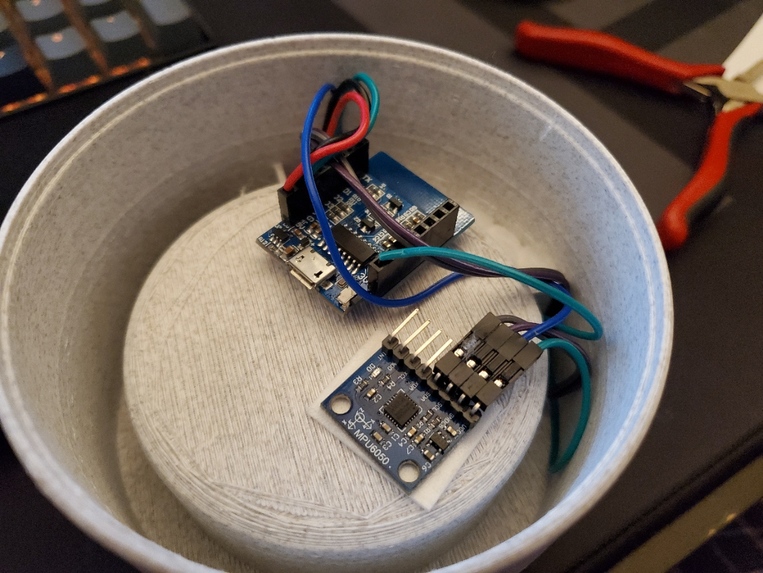
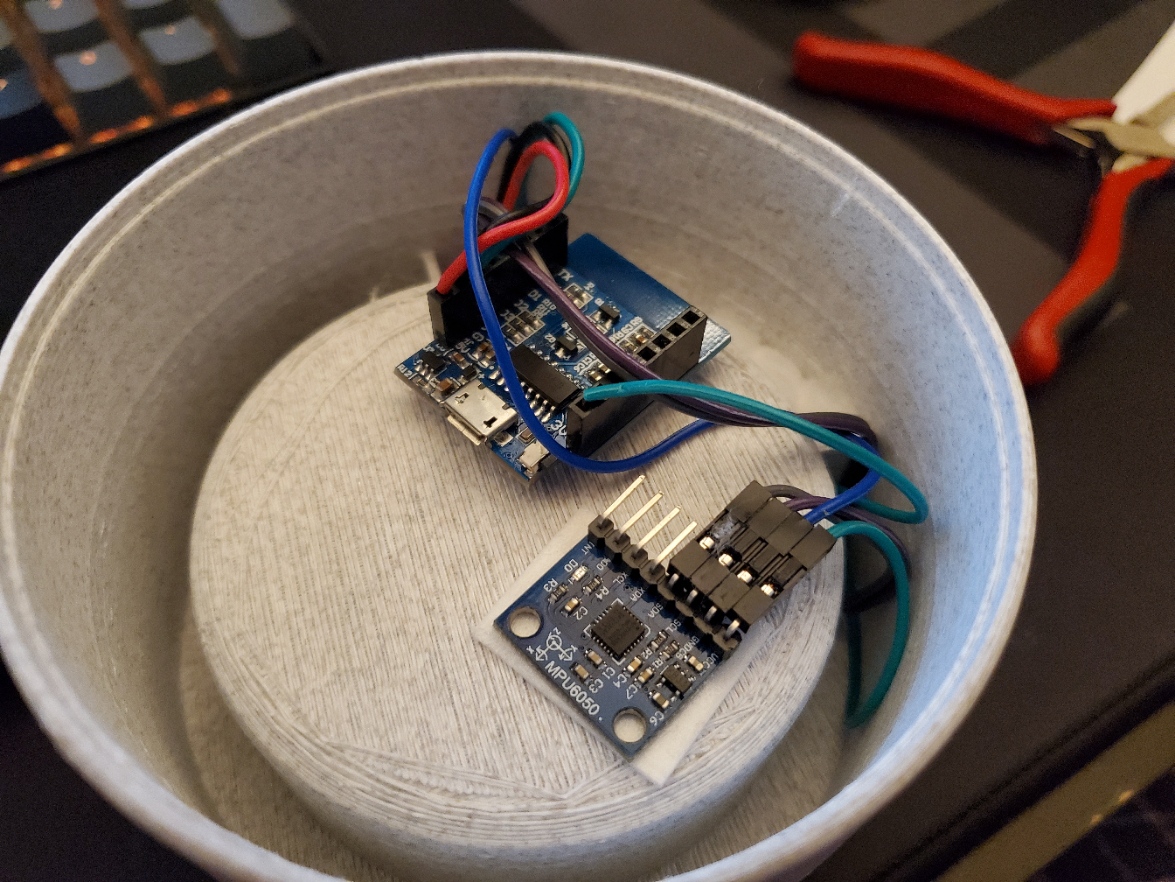
Roomy Interior forfuture battery + weight sensor
-
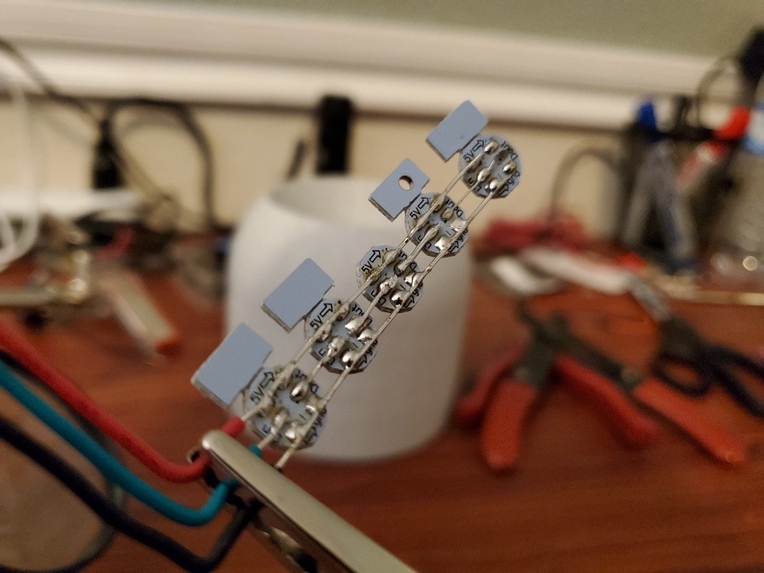
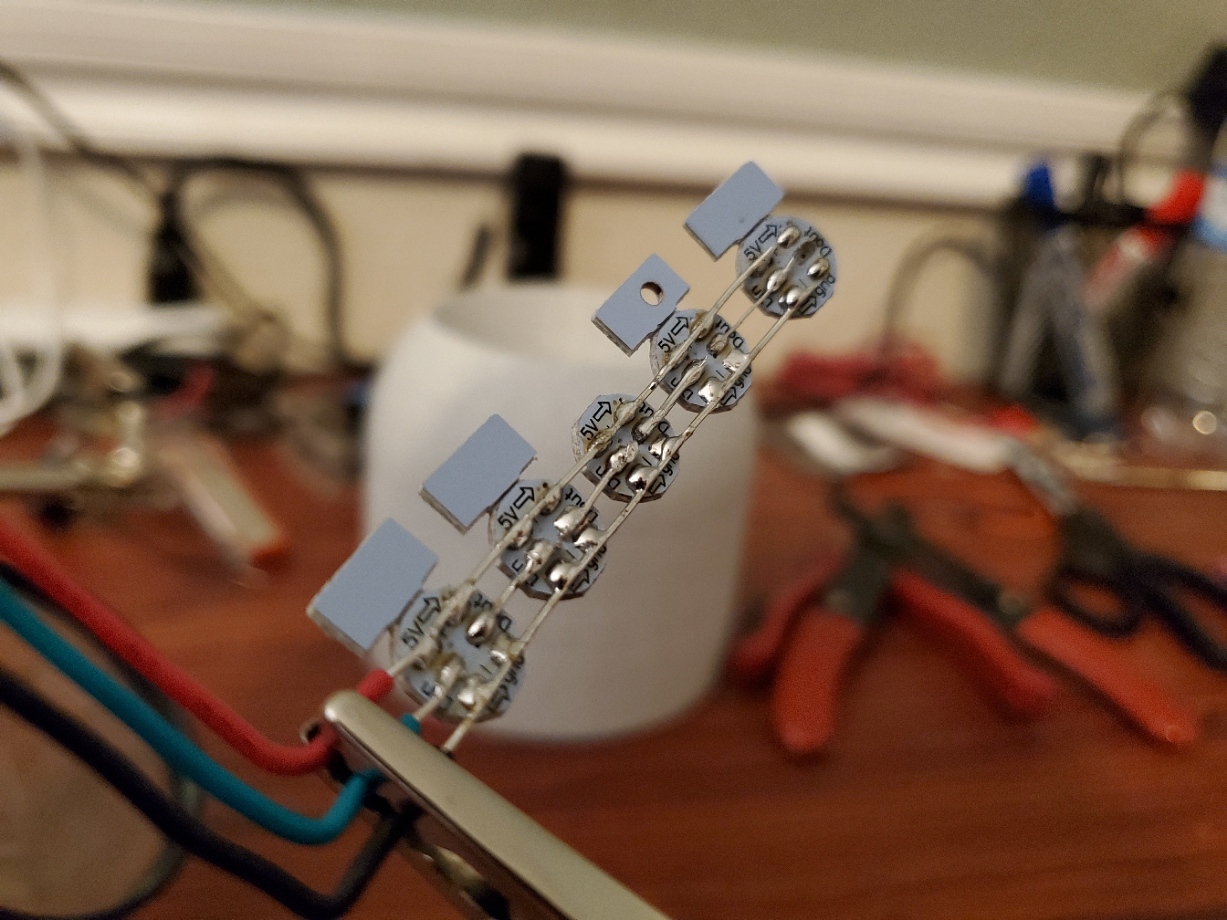
5x SK6812 RGBW leds for the status display
-
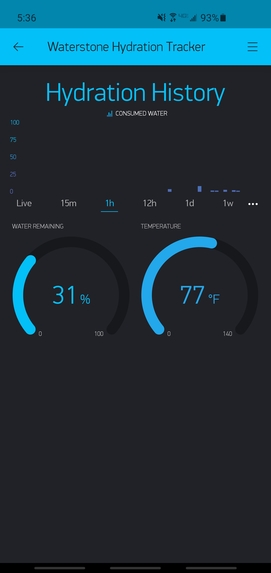
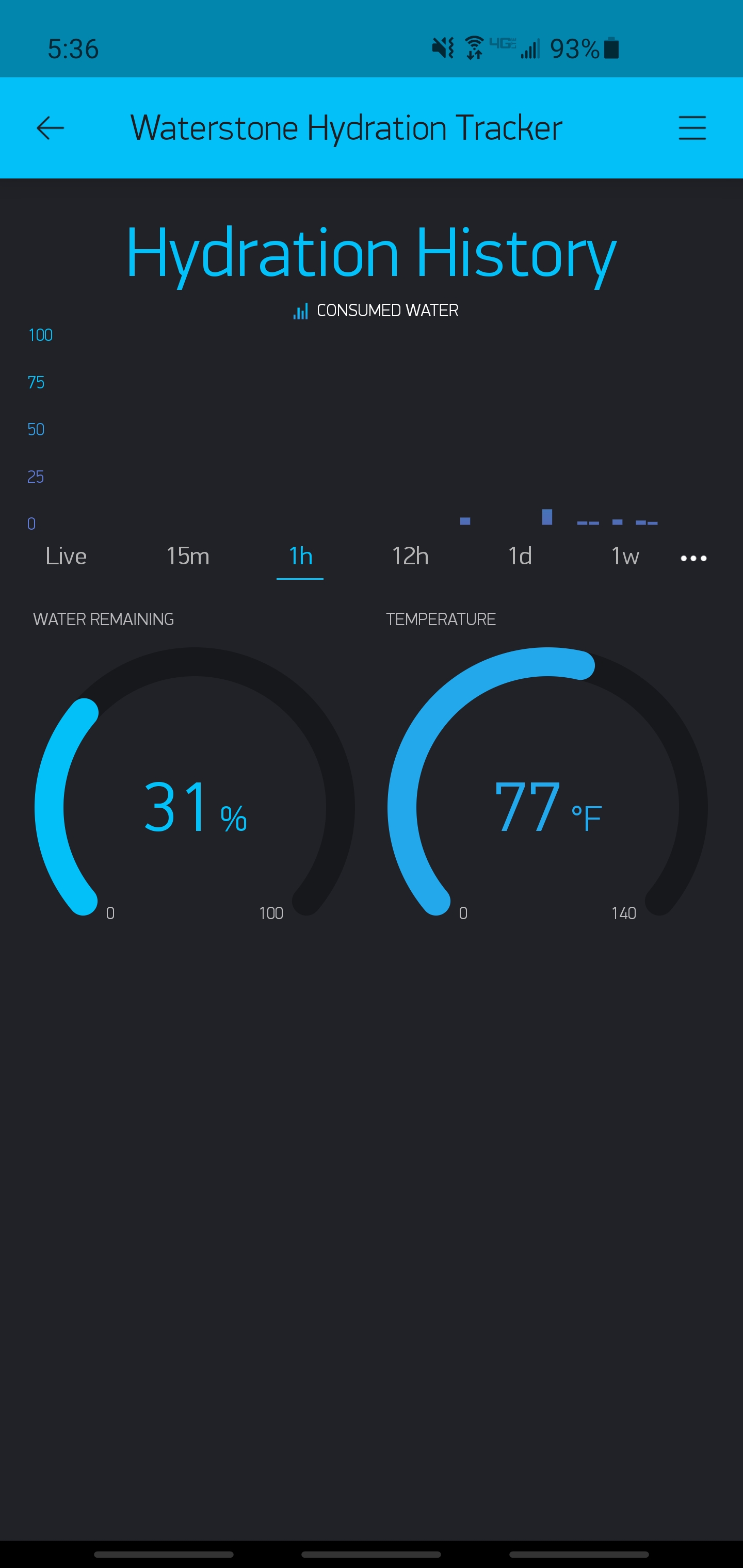
Waterstone app home screen
Inspiration
Staying hydrated is a daily struggle. In this modern world it's easy to ignore a feeling of thirst until it's practically painful. By this point every cell in your body is suffering the consequences of dehydration. Wouldn't it be great if there was a simple device that allowed you to track and improve your hydration habits?
What it does
Enter the Waterstone Hydration Tracker! Gone are the days of manually logging every sip of water in popular fitness apps, this sleek and pebble inspired tracker slides onto the bottom of a 24oz water bottle and connects to the Waterstone app to keep you updated on how well you've been staying hydrated. A real time display on the app and on the device shows you how much water you have left in your bottle so you're never caught off guard picking up an empty bottle, and an onboard temperature sensor ends the tragedy of accidentally sipping hot water!
How we built it
The structure of the Waterstone Hydration Tracker was designed in Autodesk Inventor and 3D-Printed using Amolen Granite PLA. The brains are taken care of by an ESP8266 which handles the SK6812 LED display and MPU6050 measurements. A weight sensor mounted at the bottom of the device would be responsible for calculating the amount of water in the bottle, but unfortunately it was not possible to acquire said sensor in time. As such the device is programmed to emulate the consumption of a random amount of water every time it detects that the bottle is no longer upright (ie. tilted as if to drink from the bottle). When the amount of water reaches or drops below 0, the water quantity is reset to 100 allowing the process to continue. This enables testing of the other functions more or less realistically.
The app was created using Blynk to sync information from the ESP8266. It displays current water remaining in the bottle as a percentage, temperature in degrees Fahrenheit, and a rolling history of how much water has been consumed.
Challenges we ran into
Not being able to obtain a pressure sensor to mount on the bottom of the tracker was a real disappointment.
Being unable to get an RTOS to run reliably on the ESP8266 from the Arduino IDE means that dynamic LED animations are blocking actions which prevent us from doing other things concurrently. This is time that a weight sensor could be gathering reading, but as is it would need to play the "calibrating" animation and then proceed to actually calibrate.
Additionally I didn't have any kind of compact battery + PSU available so USB cable needed to be routed out to a larger battery bank.
Accomplishments that we're proud of
The code worked on the first try and the LED's look really nice :)
What we learned
It is actually really easy to become dehydrated, especially in dryer weather where water losses through breathing alone can exceed 20ml/hr. While working on this project I became acutely aware of how thirsty I was feeling all the time and now you will too.
What's next for Waterstone - Hydration Tracker
1.Find an appropriate weight sensing and battery power solution
2.Integrate components onto a PCB
3.????
4.Profit
Built With
- 3dprinting
- arduino
- blynk
- c
- c++
- cad
- coffee
- inventor
- iot


Log in or sign up for Devpost to join the conversation.