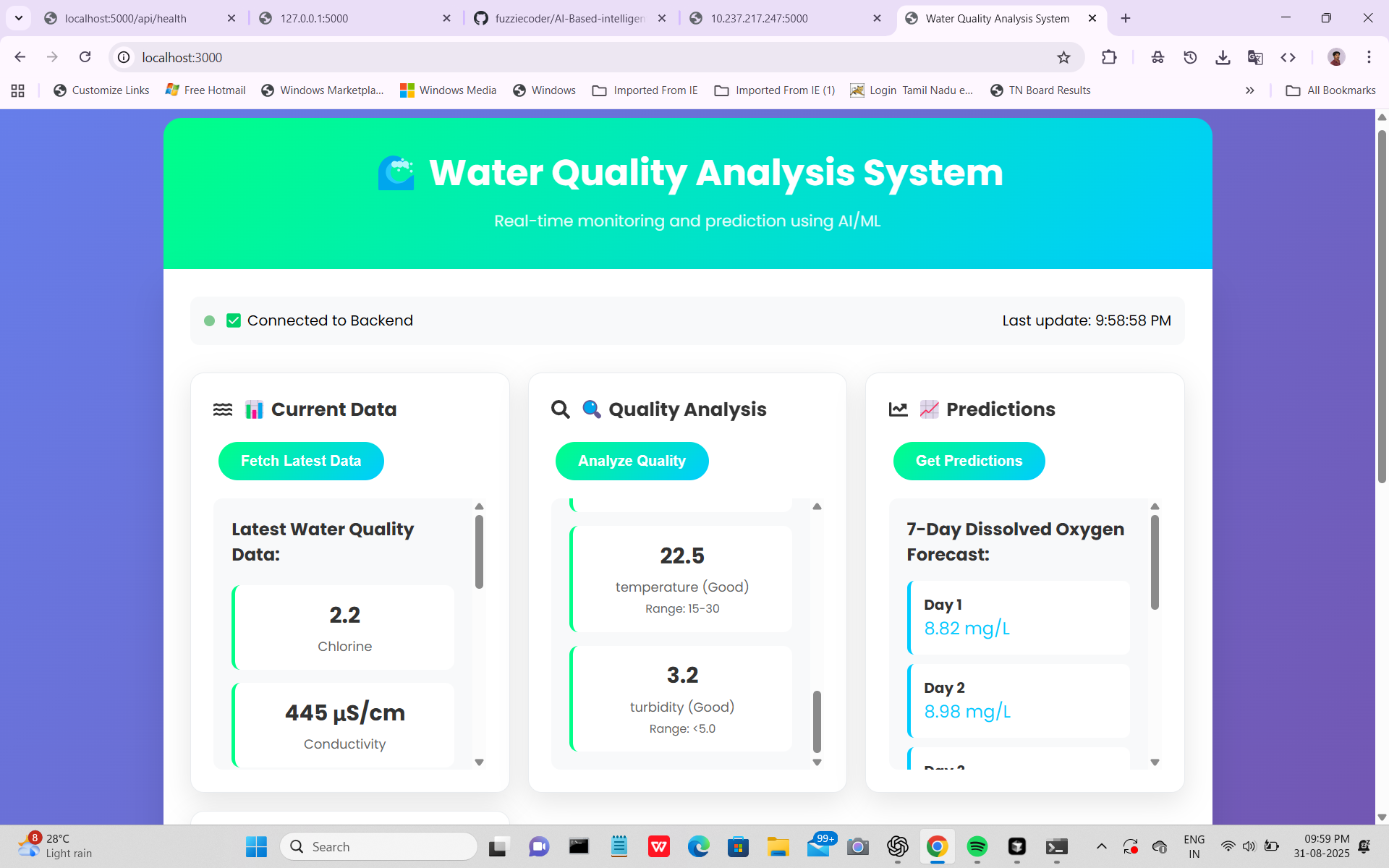
What it does
The Water Quality Analysis System using AI & ML monitors and analyzes water parameters such as pH, temperature, turbidity, and dissolved oxygen. It uses AI models to detect anomalies, classify water quality, and give real-time insights through a web and mobile interface. The system helps predict unsafe conditions and visualize data trends for better decision-making.
How we built it
- Backend: Python (Flask/Django) for API handling and machine learning model integration
- Frontend: Flutter for mobile app + HTML/CSS/JS for web interface
- Machine Learning: Autoencoder-based anomaly detection and supervised ML models for classification
- Database: Stores water quality readings and predictions for trend analysis
- Deployment: Integrated with GitHub for version control and cloud-ready architecture for deployment
Challenges we ran into
- Handling large, noisy sensor datasets and cleaning them for ML model training
- Choosing the right ML algorithms for anomaly detection and classification
- Integrating backend APIs with both web and mobile interfaces
- Managing real-time visualization of sensor data smoothly
- Configuring deployment without bloating the repo (ignoring node_modules, etc.)
Accomplishments that we're proud of
- Successfully implemented an AI-powered water quality monitoring system
- Built a cross-platform solution (web + mobile) for accessibility
- Automated real-time analysis and anomaly detection
- Designed a user-friendly dashboard with clear visualization using charts and color-coded indicators
- Ensured the system is scalable and ready for future IoT sensor integration
What we learned
- Practical experience in data preprocessing, feature engineering, and ML model training
- How to integrate AI models with real-time applications
- Efficient use of version control (Git & GitHub) for collaboration and clean code management
- Importance of UI/UX in making technical solutions understandable for end-users
- Hands-on learning in deployment workflows for AI-based applications
What's next for Water Quality Analysis System using AI & ML
- Adding IoT-based real-time sensor integration
- Expanding to more water quality parameters (e.g., heavy metals, toxins)
- Improving ML models with larger datasets for higher accuracy
- Deploying on cloud platforms (AWS/GCP/Azure) for scalability
- Creating an alert/notification system to warn users of unsafe water conditions


Log in or sign up for Devpost to join the conversation.