Inspiration
The Californian water crisis really forced us to think along the lines of water conservation.
What it does
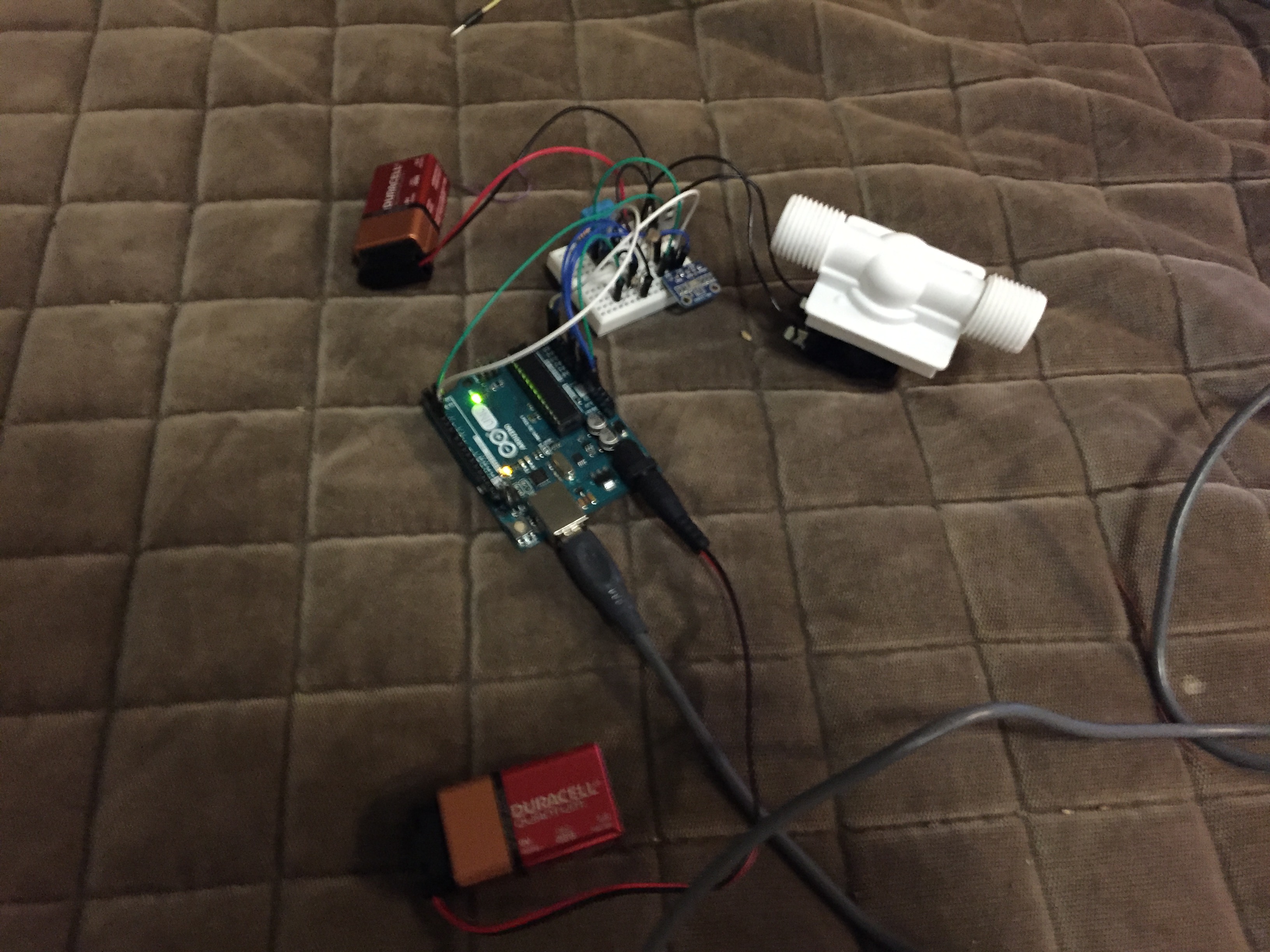
Based on readings from sensors on-board, it actuates a solenoid valve for differing intervals of time in order to scale water needs based on the environment. This, in turn, will lead to savings in water consumption.
How I built it
We used an Arduino Uno, along with three sensors: one for barometric pressure and temperature, one for humidity, and a light detective resistor (LDR). After configuring the sensors to the Arduino on my breadboard, which included a little soldering with the temperature and barometric pressure sensor. We used a 1 kilo-ohm as well as a 10 kilo-ohm resistor (for regulation purposes). After soldering wires on the 12 V solenoid valve, we had to figure out how to interface the valve with the Arduino. We used a diode and MOSFET to allow digital output from a pin on the Arduino to actuate the valve. Finally, we wrote code that gathered the sensor date, came up with an effective metric, and then opened the valve for differing amounts of time based on this value. We also wrote code to allow the Arduino to go into a low power consumption hibernating status while the valve is open, in order to decrease power consumption, since valves can be open for extended durations of time.
Challenges I ran into
Getting all of the sensors to work in harmony was an initial challenge. A later challenge was figuring out how to actuate the solenoid valve from the Arduino when the current settings of both devices were so different (1 A for the valve, and a 40 mA limit on the Arduino).
Accomplishments that I'm proud of
We are extremely proud of creating a device that can benefit all agriculturalists, from farmers to homeowners.This device underscores the heightened need for better approaches to water wastage: perhaps one of the forefront issues facing the state of California. In addition, this device has the potentially will markedly reduce water bills.
What I learned
We learned how to work with Arduinos, one of the most versatile embedded systems platforms today. Perhaps more notable is our ability to harness the Arduino's capability by linking powerful sensors to the Arduino. We used the knowledge we had cultivated in our microcircuits class to interface the Arduino with a valve. This involved marrying two devices with totally different power consumption boundaries. We also understand device power usage better, We are now aware of the fact that the power consumption of any device should be markedly less when the device is in an inactive state.
What's next for WATER
We would like to create or use a soil moisture sensor to gauge whether or not a plant is receiving its adequate intake of water based on the climate. This information would then be transmitted to any agriculturalist's smartphone through a bluetooth shield on the Arduino. The user can then decide whether to force watering times, continue with the smart irrigation system implemented by your system, or impose a mixture of both.


Log in or sign up for Devpost to join the conversation.