-
-
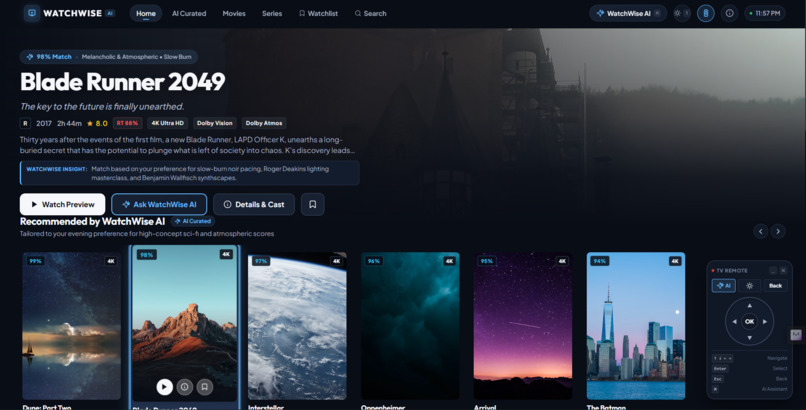
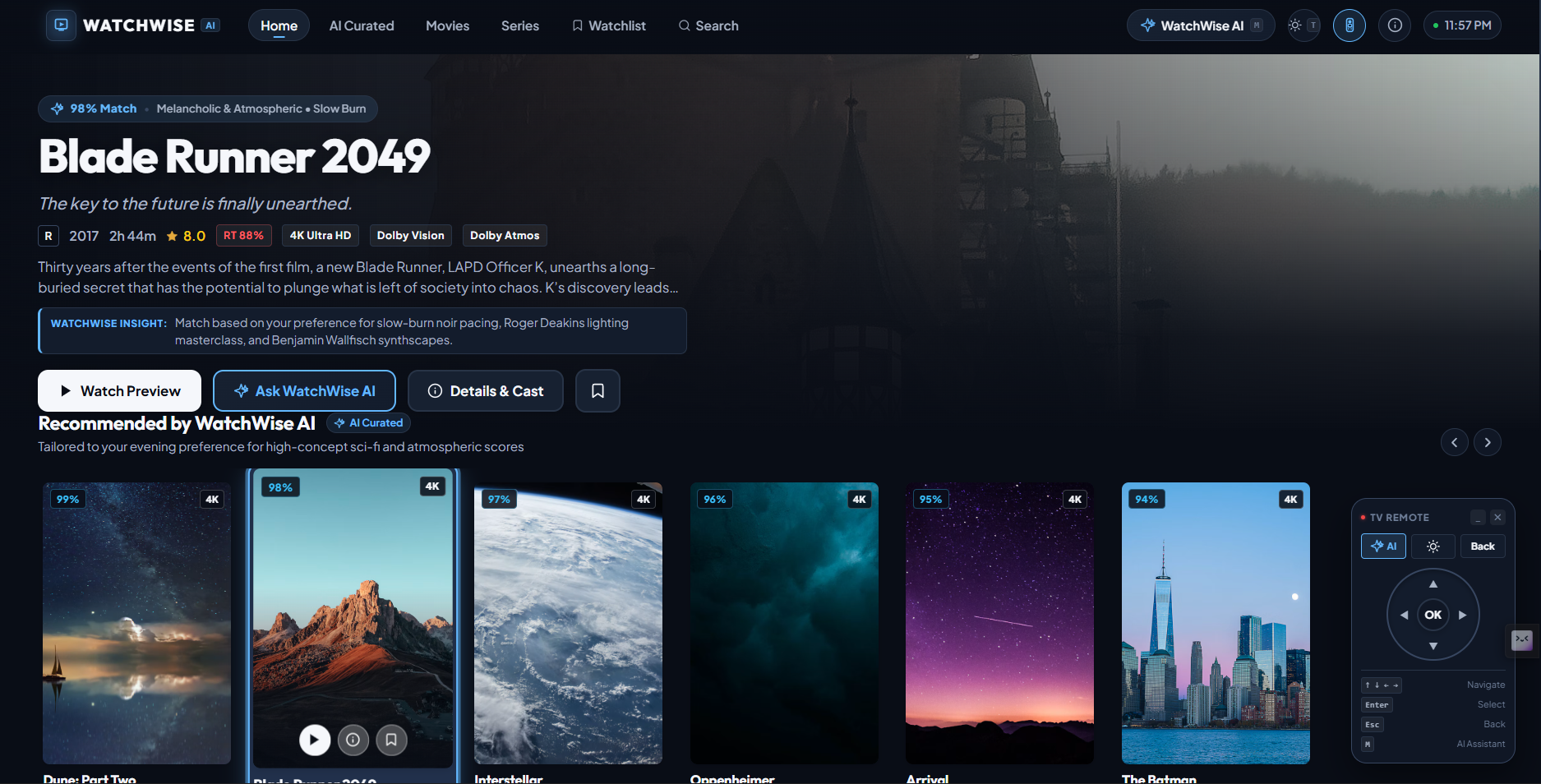
A cinematic home for smarter entertainment discovery. Less scrolling, more discovering! #WatchWiseAI
-
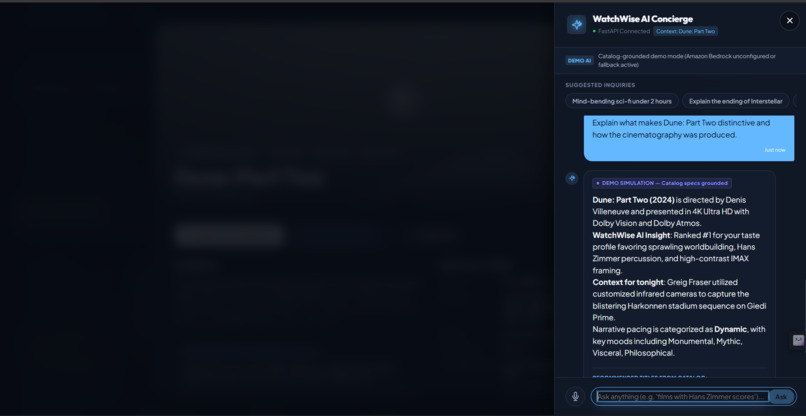
Meet WatchWise AI Concierge—explore movies, uncover insights, and discover smarter entertainment. #WatchWiseAI
-
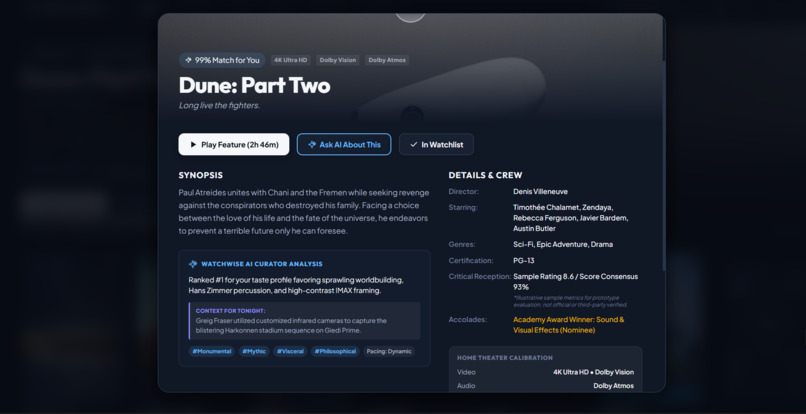
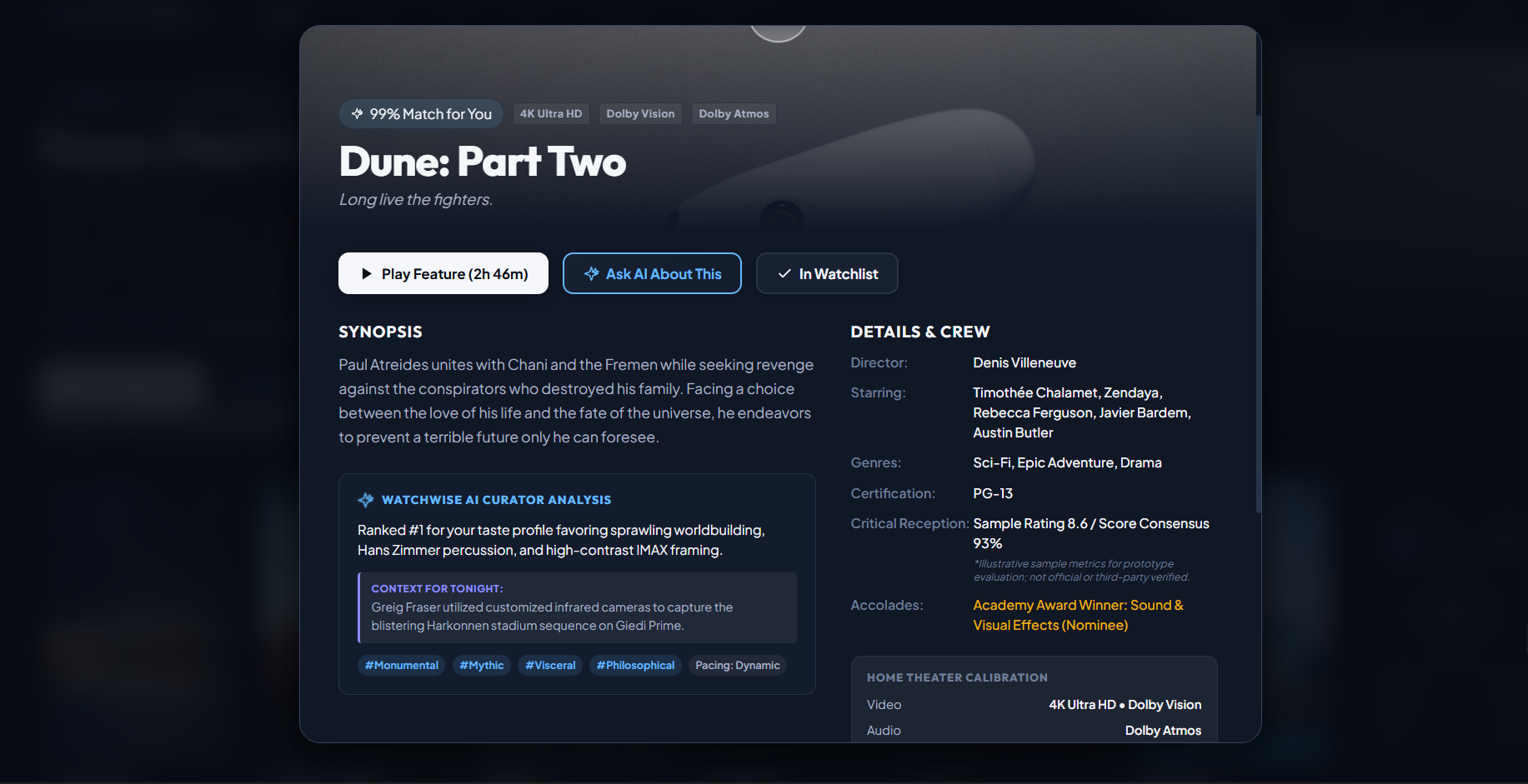
Explore movie details, discover the cast, and save favourites with WatchWise AI. #MovieDiscovery
-
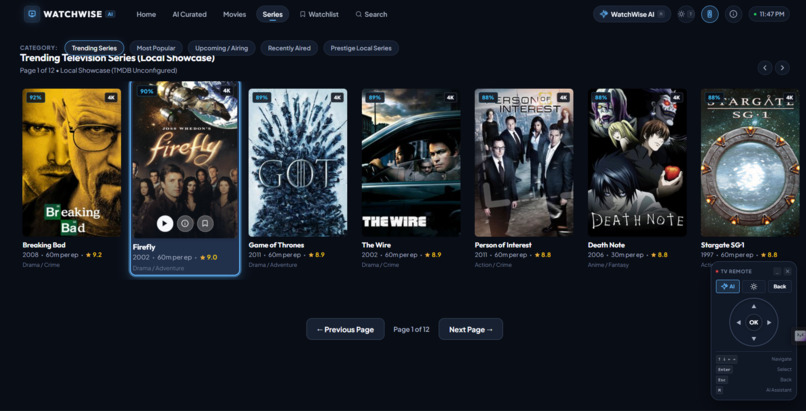
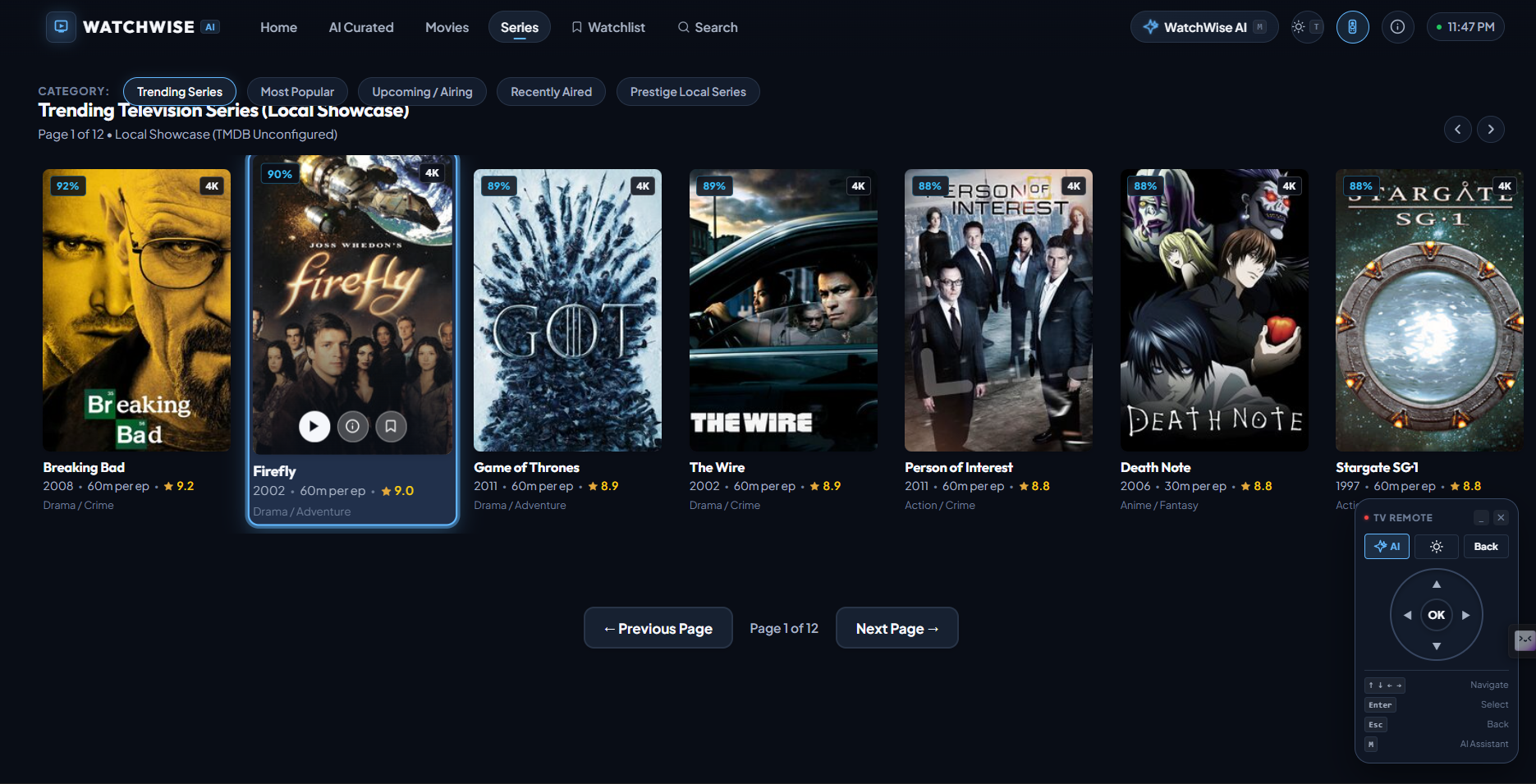
Discover trending series and timeless favourites with WatchWise AI's TV-first browsing experience.
-
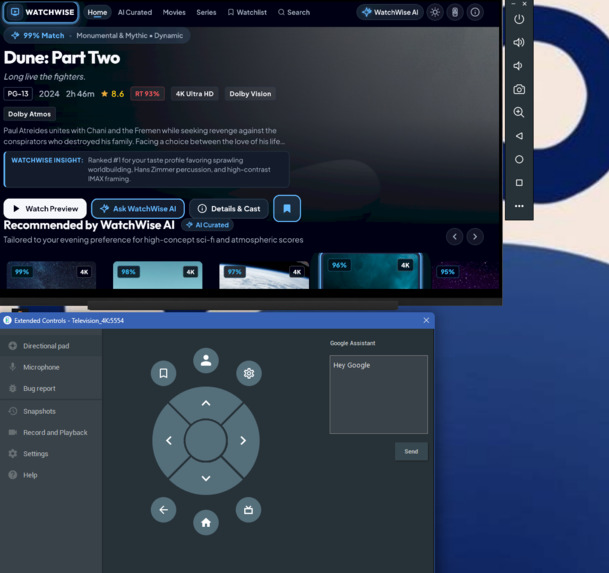
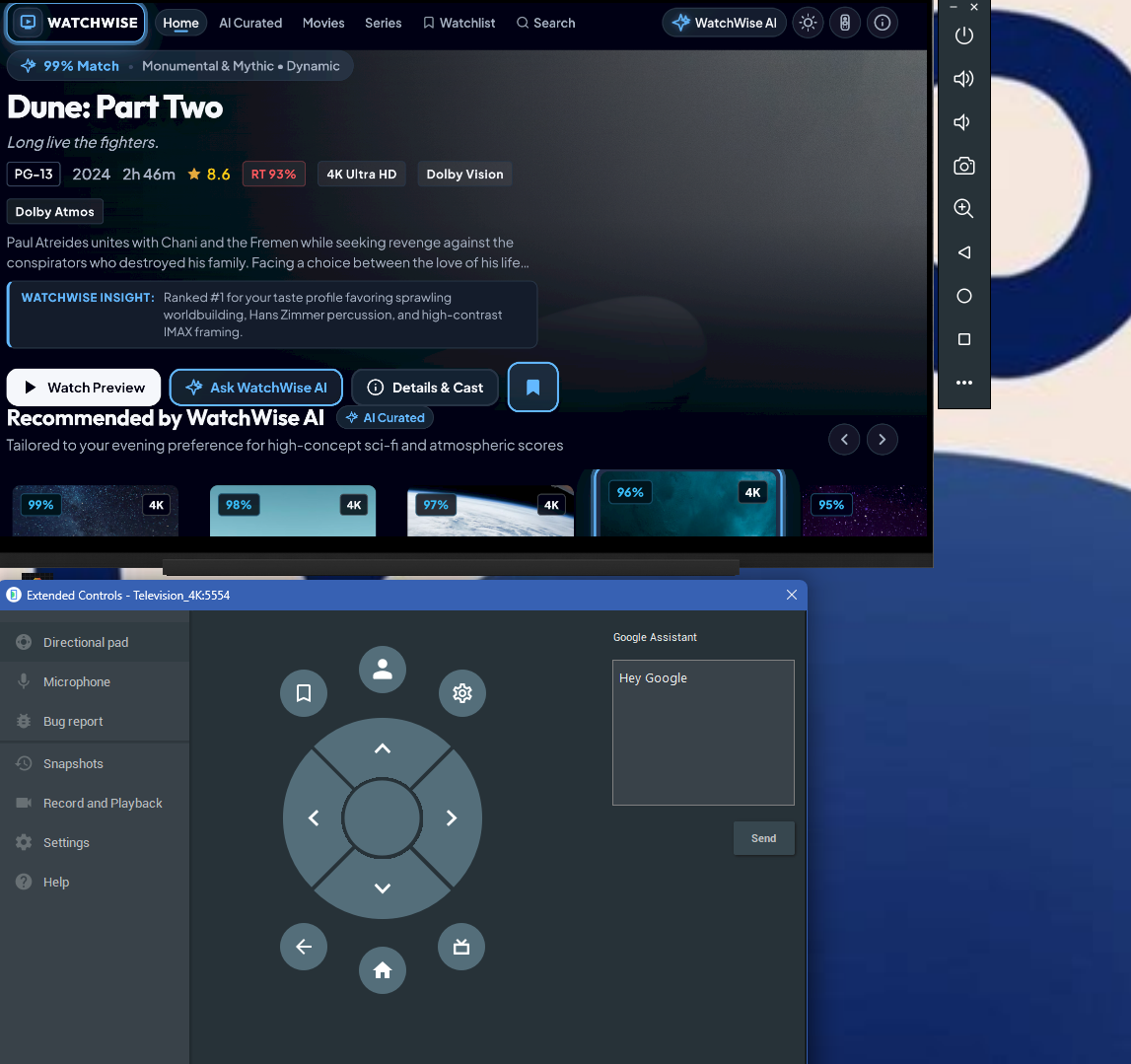
Built for the big screen, designed for remote navigation. Experience WatchWise AI on Android TV!
-
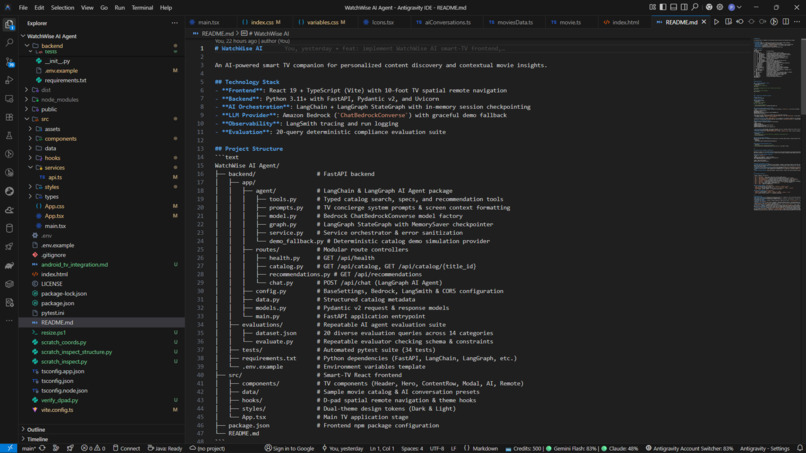
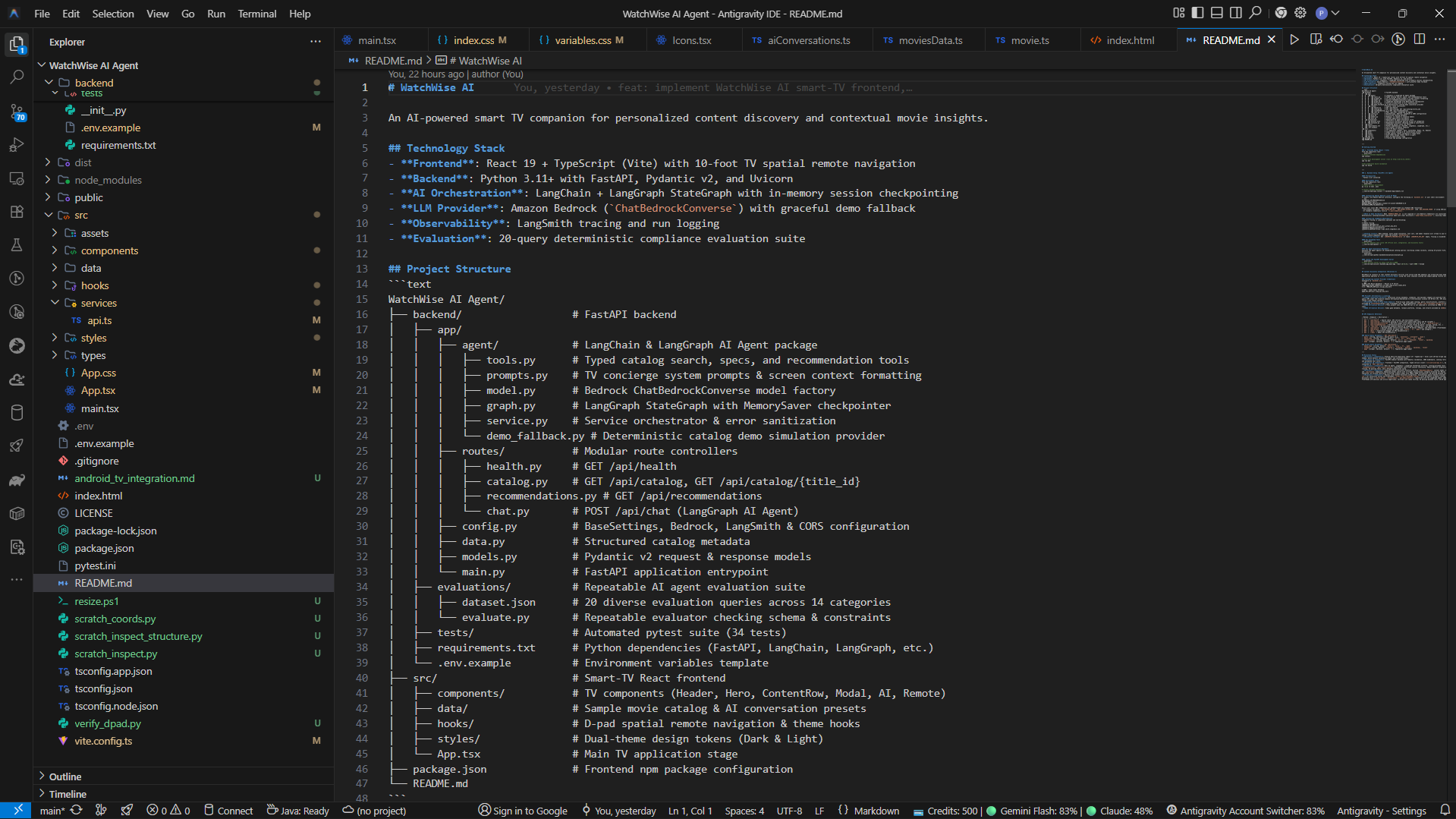
Behind WatchWise AI: React, TypeScript, FastAPI, and LangGraph powering smarter content discovery.
-
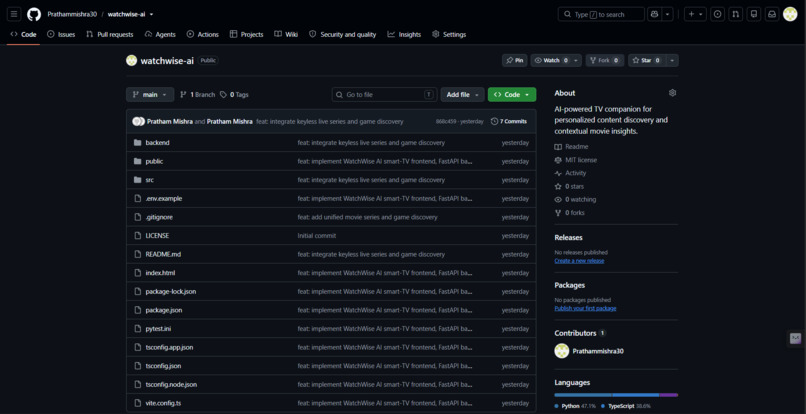
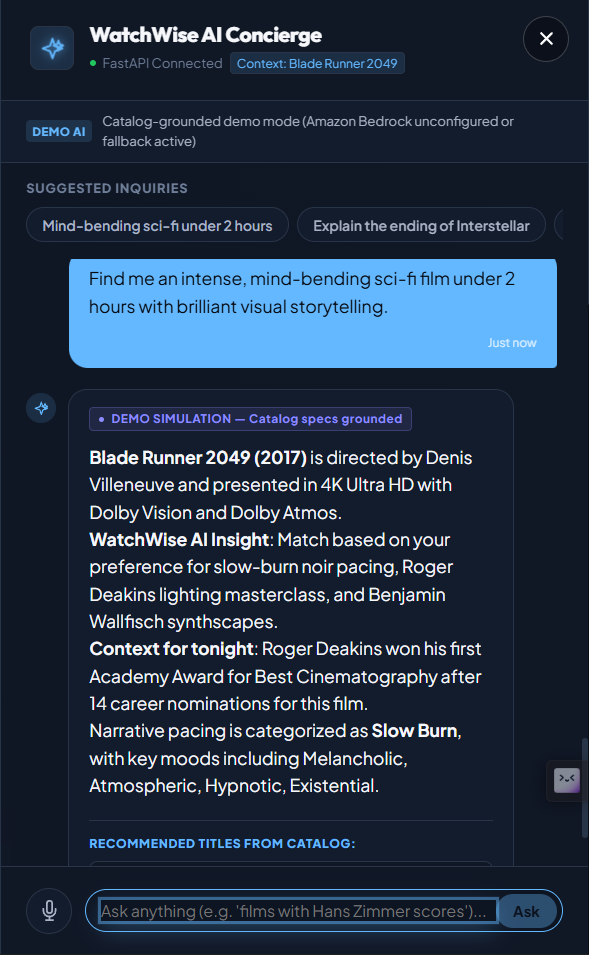
AI-powered movie insights and personalized discovery. #WatchWiseAI
-
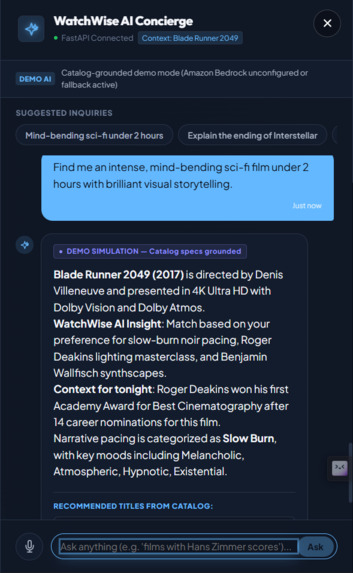
AI-powered movie insights and personalized discovery. #WatchWiseAI

Inspiration
Choosing something to watch should be effortless, yet viewers often spend more time scrolling through recommendations than enjoying content. Traditional streaming interfaces display endless rows of movies but rarely understand what viewers actually want or help them explore content through natural conversation.
We envisioned a smarter experience: a television that understands viewing intent, provides relevant recommendations, and helps viewers explore content through an intelligent AI
What it does
WatchWise AI is an AI-powered viewing companion designed to transform television discovery into a personalized, conversational experience.
Its core features include:
Intelligent Content Discovery: Find relevant titles based on genre, mood, viewing time, and content preferences.
Context-Aware Movie Insights: Ask questions about a selected title and receive explanations grounded in available content information.
Conversational Interaction: Refine recommendations through follow-up questions instead of repeatedly searching from scratch.
TV-First Experience: Present recommendations and answers through a readable interface designed for large screens and remote-control navigation.
Responsible Recommendations: Apply explicit filters, use verified catalog metadata, and avoid presenting unsupported information as fact.
Our goal is simple: less scrolling, more watching, and smarter entertainment.
How we built it
WatchWise AI follows a modular architecture that separates the television interface, backend API, AI orchestration, and content data.
TV Frontend: A Fire TV/Vega OS-compatible interface designed around large-screen layouts and remote navigation.
Backend: Python and FastAPI provide REST endpoints for discovery requests, title information, and AI-generated responses.
AI Integration: LangChain connects the language model with structured prompts and tools for catalog retrieval and title lookup.
Agent Orchestration: LangGraph organizes the workflow into explicit stages, including intent classification, content retrieval, ranking, evidence checks, and response generation.
Observability and Evaluation: LangSmith helps trace agent executions, inspect errors, evaluate responses, and identify opportunities for improvement.
Content Data: A structured catalog provides the metadata needed to filter titles and ground recommendations. Amazon Bedrock can provide model inference when configured and integrated.
This architecture allows individual components to evolve independently while keeping the viewing experience responsive and the AI workflow easier to test.
Challenges we ran into
One of our main challenges is adapting a conversational AI experience to television. Unlike desktop users, TV viewers typically navigate from a distance using a remote, so content must remain readable and interactions must require minimal effort.
Another challenge is maintaining factual accuracy. Language models can generate unsupported details, so the system needs to retrieve relevant content information, respect explicit filters, and handle missing data gracefully.
We also need to manage API failures, maintain relevant conversation context, and evaluate recommendation quality without making the application unnecessarily complex.
Accomplishments that we're proud of
We are proud of the product direction and modular architecture behind WatchWise AI. Rather than treating AI as a standalone chatbot, we are designing it as an intelligence layer that supports discovery, content understanding, and conversational follow-ups.
The separation between the frontend, FastAPI services, agent workflow, and evaluation layer also provides a clear foundation for testing and future expansion.
Our primary milestone is to bring these components together in a working TV application and demonstrate the complete experience on the intended platform.
What we learned
This project highlights that useful AI experiences require more than a language model. Good context, dependable tools, controlled workflows, meaningful evaluation, and thoughtful interface design are equally important.
We also learned to treat television constraints as a core engineering requirement. Remote navigation, screen readability, response length, and predictable interactions should shape the architecture from the beginning.
LangChain, LangGraph, and LangSmith serve distinct purposes in this design: connecting models and tools, orchestrating agent behavior, and inspecting and evaluating the resulting workflows.
What's next for WatchWise AI
Our next steps are to complete the working TV application, connect the discovery interface to the AI backend, and validate contextual follow-up questions against a structured content catalog.
We also aim to improve recommendation evaluation, introduce consent-based viewing preferences, expand accessibility and multilingual support, and explore integrations with authorized content providers.
Our long-term vision is to make television more intuitive and personal through an AI companion that understands what viewers want to watch and helps them discover it with less effort.
Built With
- amazon-bedrok
- amazon-builder-tools
- fastapi
- langchain
- langgraph
- python
- react-native
- restapi
- sqlite
- typescript

Log in or sign up for Devpost to join the conversation.