
Inspiration
Today, almost every application runs online, and users expect systems to be available all the time. But in reality, systems fail, crash, and often require manual intervention to fix.
While exploring how companies like Netflix and Amazon maintain such high reliability, I started thinking — instead of reacting to failures, why not build systems that can predict failures before they happen and fix themselves automatically?
This idea led to the creation of WatchTower AI — a system that continuously monitors itself, detects problems, and automatically recovers without human involvement.
What it does
WatchTower AI is a self-healing infrastructure system that monitors applications in real time and handles failures automatically.
The system:
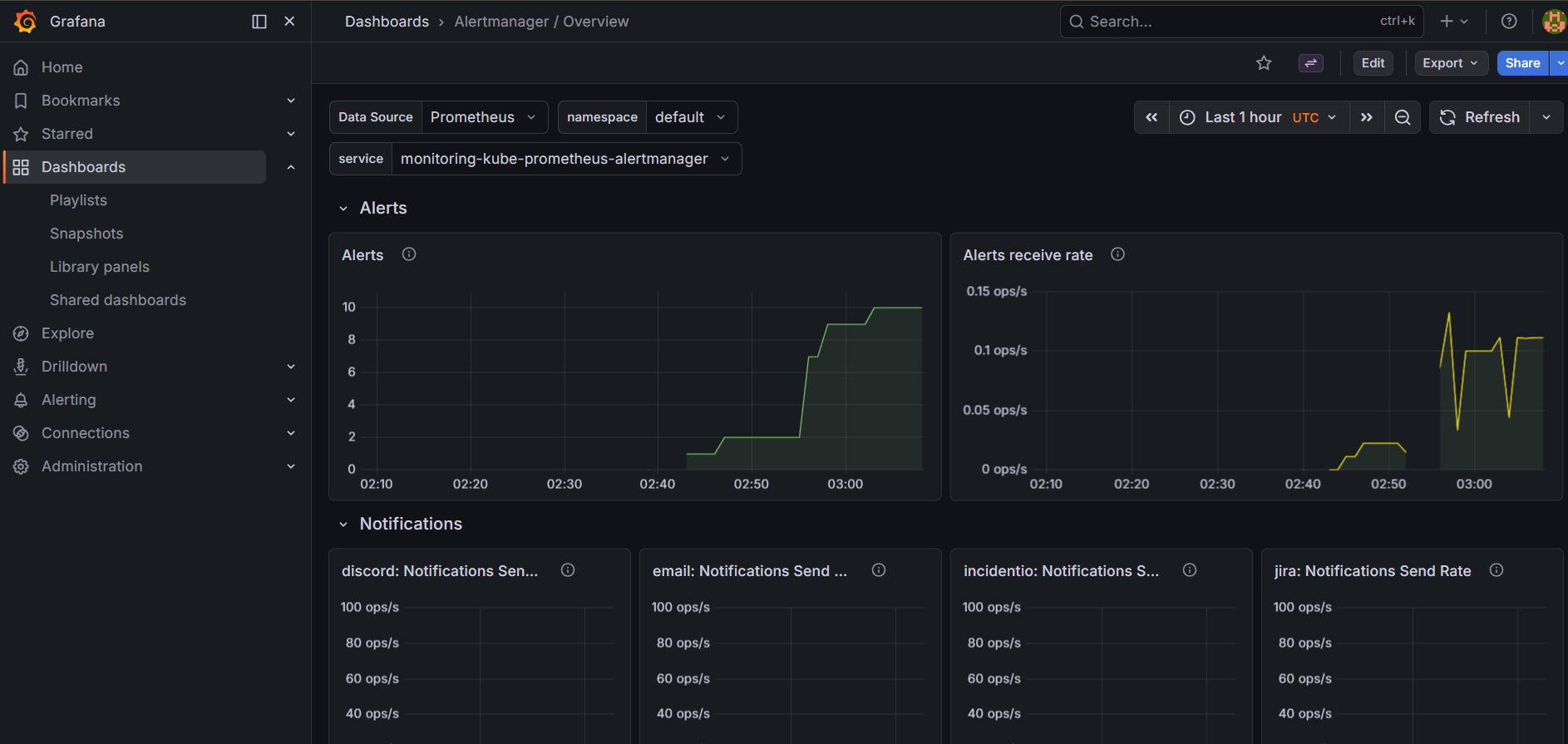
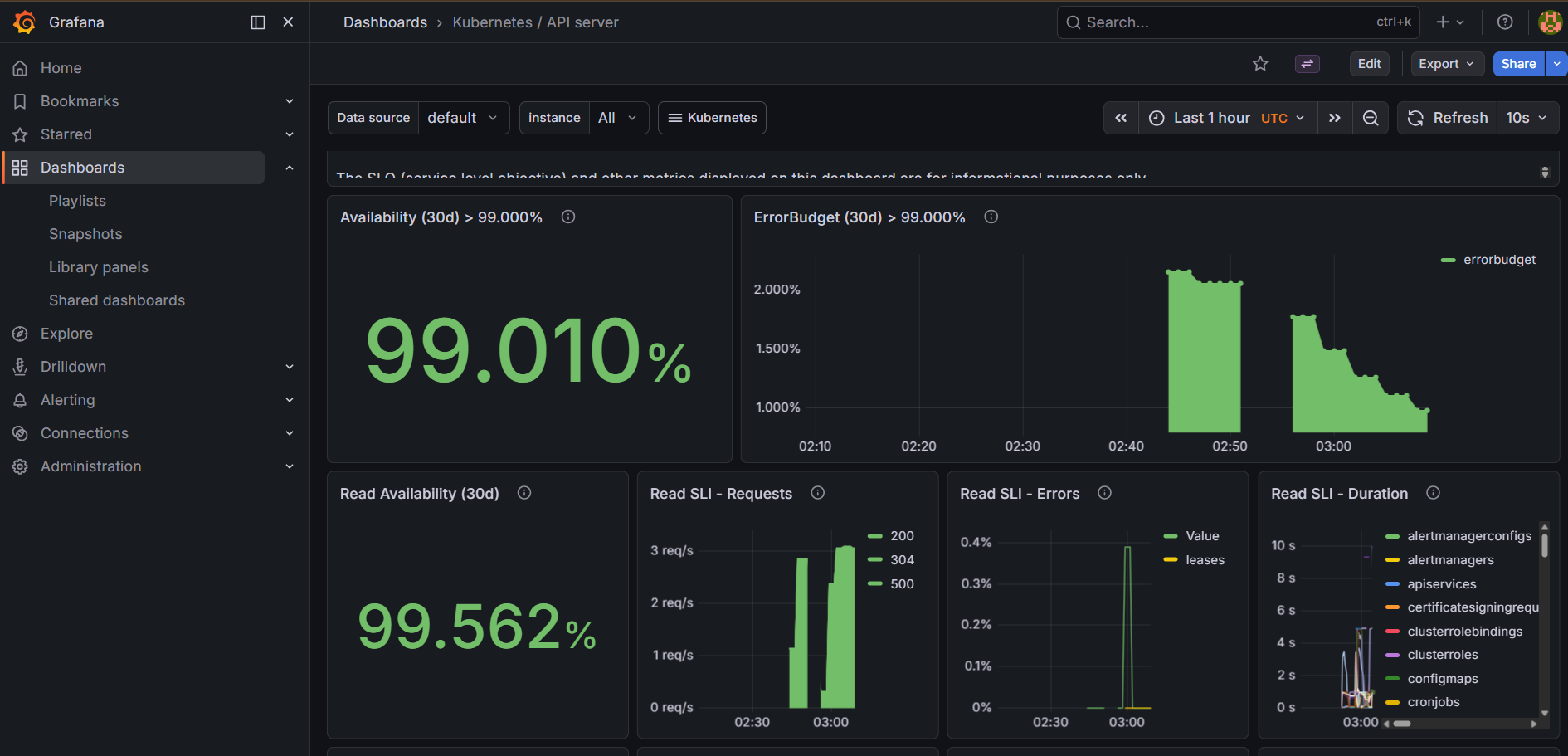
Collects real-time metrics using Prometheus Visualizes system health using Grafana dashboards Uses a machine learning model to detect abnormal behavior Automatically triggers recovery actions using Kubernetes
In simple terms, the system monitors itself, detects issues, and fixes them on its own.
How we built it
We built the project step by step.
First, we created a simple Flask-based application that acts as the core service.
Then, we containerized the application using Docker so it could run consistently across different environments.
After that, we deployed the application on Kubernetes to manage multiple instances and enable automatic recovery if any instance fails.
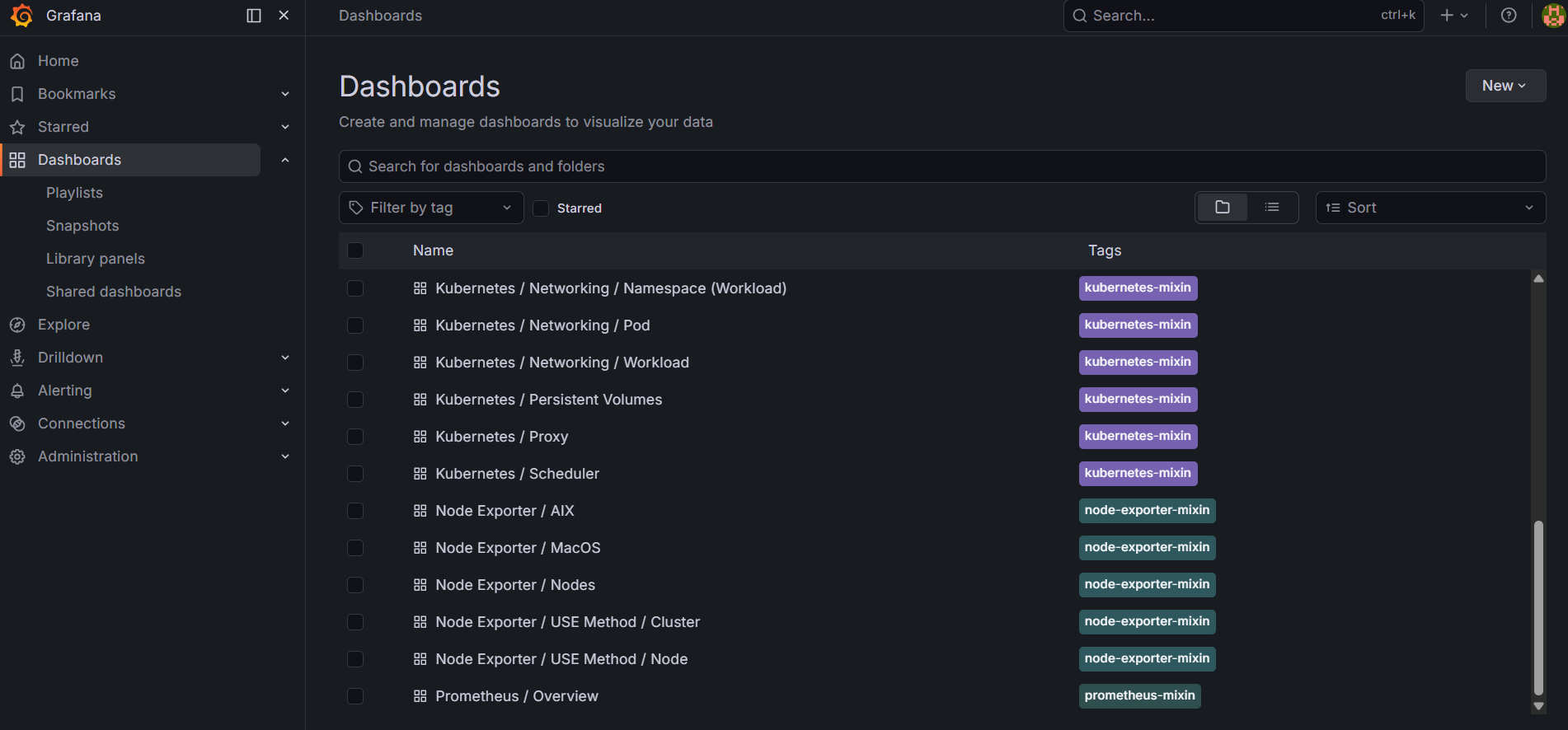
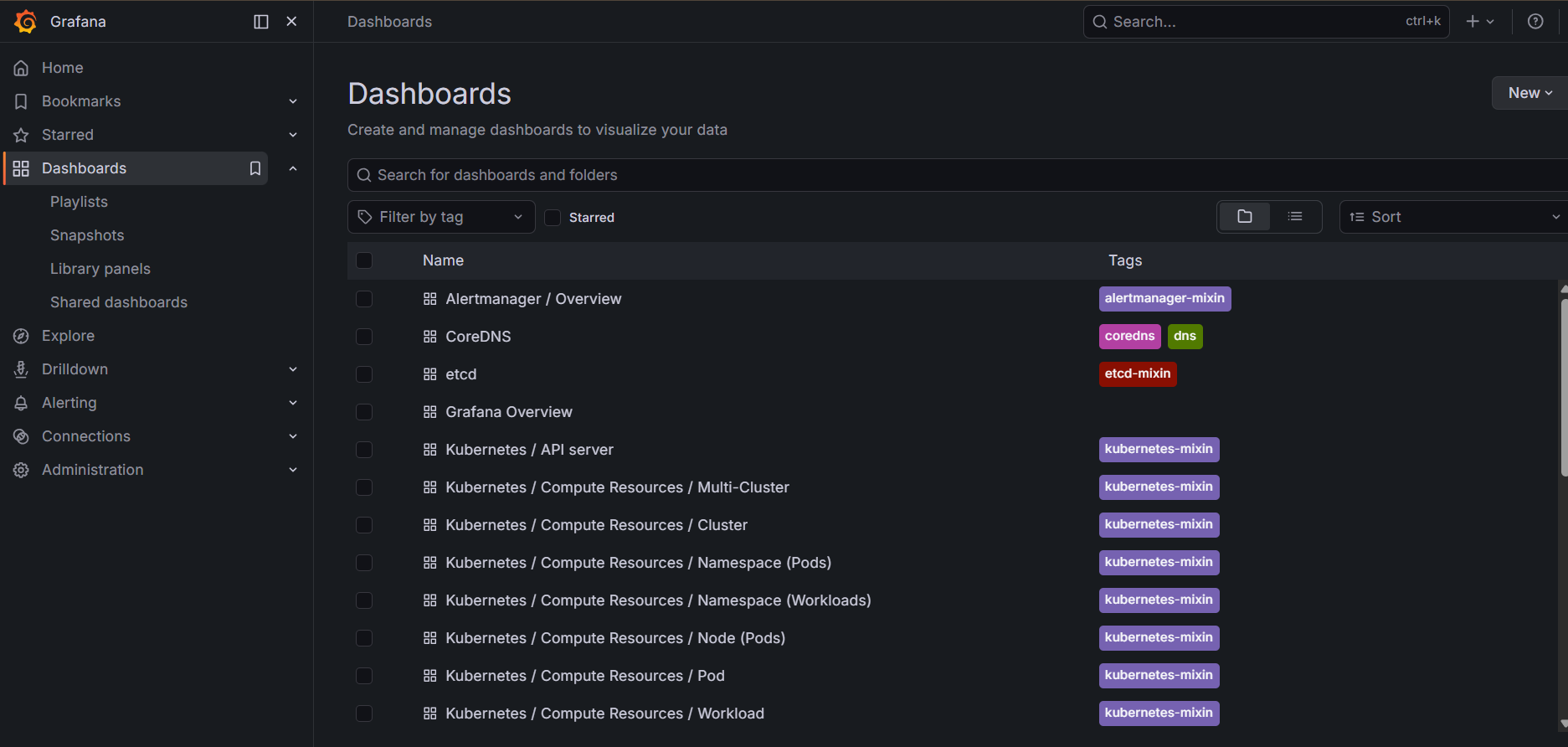
For monitoring, we set up Prometheus and Grafana to collect and visualize real-time system metrics like CPU usage and request activity.
For the AI part, we implemented an anomaly detection model that analyzes system behavior and identifies unusual patterns.
Finally, we added automation so that when an anomaly is detected, the system automatically triggers Kubernetes actions like restarting the deployment.
Challenges we ran into
Setting up Kubernetes on a Windows environment was one of the biggest challenges, especially configuring Docker and enabling Kubernetes correctly.
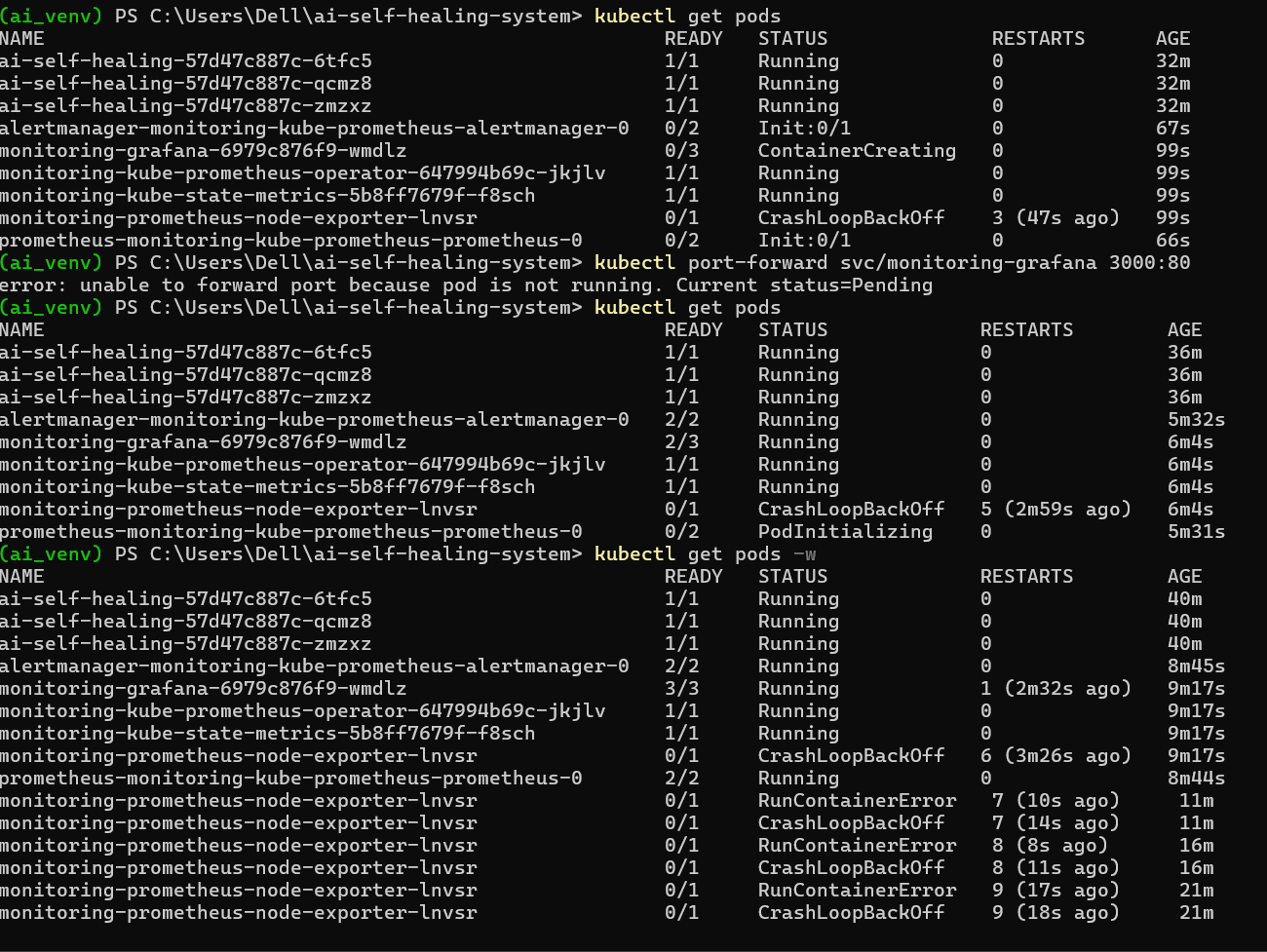
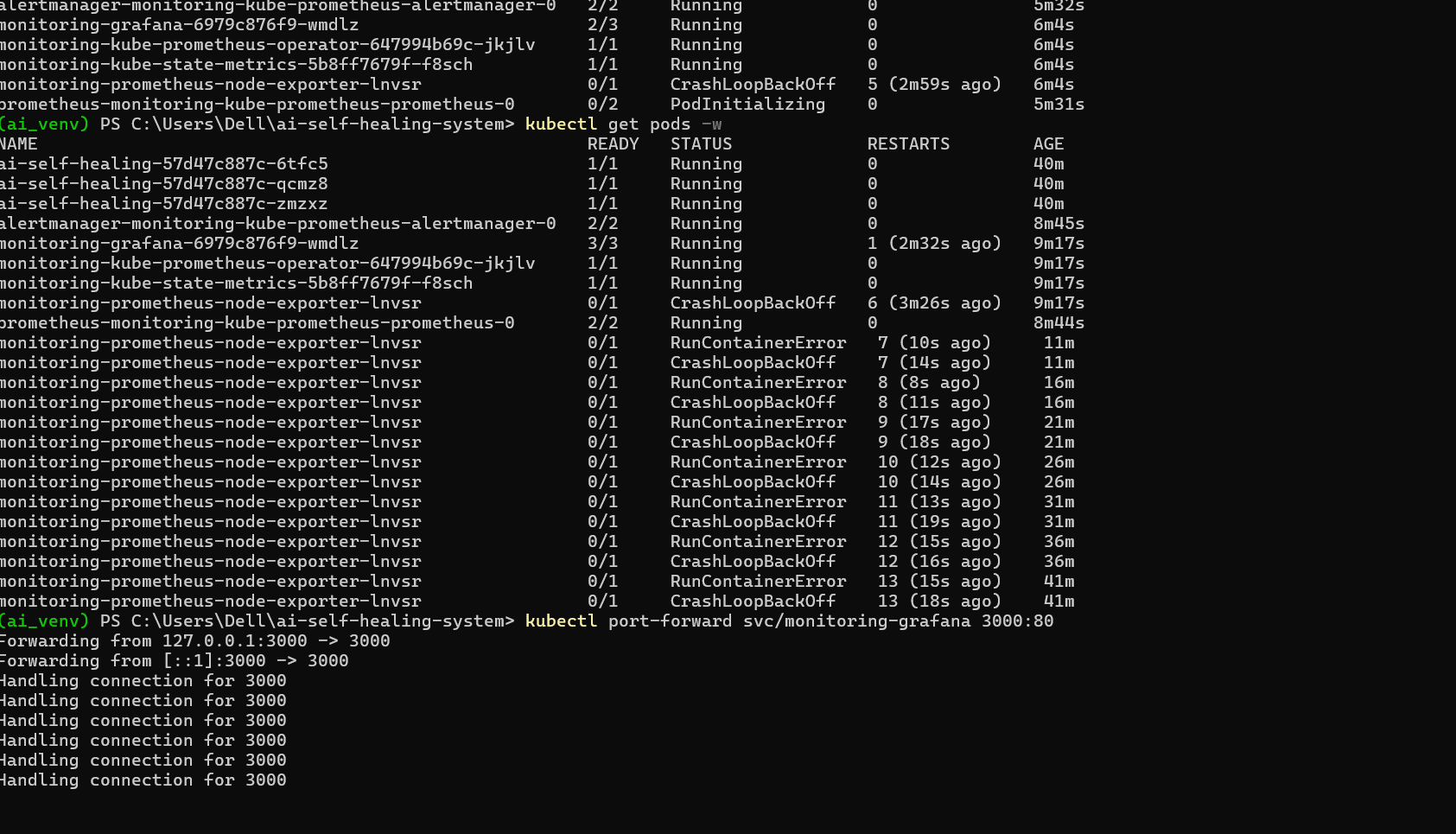
The monitoring stack (Prometheus and Grafana) took time to initialize, and debugging pod states required patience and careful observation.
Accessing services through NodePort and understanding port forwarding was initially confusing.
Another challenge was integrating AI with real-time metrics. Initially, we used dummy data, but later we connected the model with live data from Prometheus.
Accomplishments that we're proud of
The biggest achievement is building a fully automated system that works end-to-end without manual intervention.
Kubernetes self-healing is working successfully Real-time monitoring dashboard is active AI is reading live system metrics The system can detect and recover from failures automatically
This project feels like a real production-level system rather than just a simple demo.
What we learned
This project helped us understand many important concepts in depth.
We learned how containerization works using Docker and how Kubernetes manages applications in production environments.
We understood the importance of monitoring and observability in real systems.
We also learned how to integrate machine learning with infrastructure, which is not very common in beginner projects.
Most importantly, we understood the difference between development, DevOps, and production engineering.
What's next for WatchTower AI
The next step is to make the system more intelligent and scalable.
Future improvements include:
Using more advanced machine learning models for better predictions Integrating real-time data streams Adding alert systems like Slack or email notifications Implementing AI-driven auto-scaling Turning this into a SaaS platform for infrastructure monitoring
The long-term vision is to build a fully autonomous infrastructure system that can manage itself with minimal human involvement.

Log in or sign up for Devpost to join the conversation.