-
-
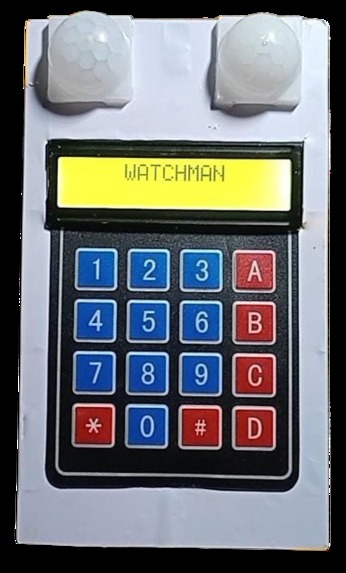
WatchMan
Inspiration
The inspiration behind this project began back in 2012 during my university days. Like most students then, I constantly struggled with Nigeria’s unreliable power supply. It was really frustrating! I could never tell if there was electricity in my hostel or not. Calling fellow students didn’t help because they might also be out.
So, I built a solution - a simple device called Mobile To Appliance Communicator (MTAC). It used a regular 2G SIM card and was always plugged into a socket. Whenever I needed to check if power was available at home, I’d just call it. It would aslo call my number when power was restored. I could even control appliances remotely with a simple beep (flash). That was the beginning.
A few years later, an unfortunate event shook my church as burglars stole our sound system equipment. Shortly after, shops near my hostel were broken into. That incident sparked a deeper interest in security. I decided to take things further and began designing a prototype that didn’t just notify about electricity but could also alert during emergencies like intrusions, fire, or power failures.
What it does
It is an offline, GSM-powered security and emergency alert system designed to protect remote farms, rural homes, and other vulnerable locations where internet access is poor or unavailable.
Here's what it does:
Intrusion Detection
It automatically activates (after 2, 5, or 10 minutes) when no one is around and immediately detects intrusions. Once triggered, it starts calling or sending SMS alerts to a list of pre-saved phone numbers.
False Alarm Prevention (45-Second PIN Window)
When authorized users arrive, they have a 45-second window to enter the correct PIN and prevent the system from calling others which reduces false alarms.
Fire Detection
It senses smoke and signs of fire, and quickly alerts the user and emergency contacts, helping minimize damage.
Electricity Monitoring
The device detects power outages and restorations. It alerts the owner by call, which is helpful in areas where electricity is unstable or critical to operations (e.g., poultry farms).
Emergency Panic Button
In threatening situations (such as theft or violence), pressing the panic button instantly triggers emergency calls and texts to trusted contacts.
Password Security
All sensitive operations, including shutdown or call abortion, are protected by a PIN system to prevent unauthorized control.
Offline, Low-Power Operation
It is designed not to depend on internet and powered efficiently to run on solar setups or small backup batteries for extended periods.
Multi-Contact Alerting
If an alert is triggered, it doesn’t just contact one number, it reaches multiple saved contacts to make sure someone responds.
WatchMan - FarmGuard Edition helps farmers and rural families sleep better, knowing they’ll be alerted immediately if something goes wrong, even without internet or constant human presence.
How we built it
The development of this project began as a response to both urban theft and the rural security challenges faced by farmers and property owners.
Hardware Foundation:
- Microcontroller: It is built around the Arduino platform for flexibility and reliability.
- GSM Module (SIM800L): Enables real-time call and SMS alerts to multiple pre-registered numbers.
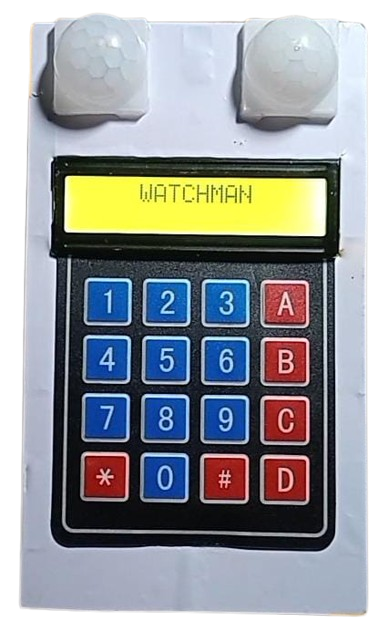
- LCD & Keypad: Allows local configuration, PIN entry, and system interaction.
EEPROM Memory: Securely stores passwords and user settings even when powered off.
Sensors:
Passive Infrared Sensors: Uses two PIRs to detect motions and to prevent false alarms.
Fire Sensor: Detects flames or excessive heat.
Power Line Monitor: Senses power availability or failure.
Manual Panic Button: Triggers immediate emergency response with just one press.
Firmware:
- It was developed using Arduino IDE with carefully optimized logic for power and memory constraints.
Features include:
Multi-contact alerting via SMS and phone calls.
45-second PIN abort window to cancel false alarms.
Timer function for automated arm/disarm scheduling.
Shutdown command via a unique PIN (0000) for secure deactivation.
Build Approach:
- Prototype Iterations: Multiple testing phases in different real-world locations (hostels, shops, and farms).
- Modular Code Design: Easy to expand features or customize for specific use-cases (e.g., cars, farms, homes).
- Manual Circuit Design & Soldering: Due to limited access to fabrication facilities.
Challenges we ran into
Building this project came with several technical, financial, and environmental challenges. But each one contributed to my growth and shaped the product into what it is today.
Power & Infrastructure:
- Epileptic electricity supply made prototyping and testing inconsistent.
- No access to professional-grade tools or testing labs. I improvised with what was available.
Component Limitations:
- Initially, I had no idea about GSM modules, so I had to hack a small mobile phone to get a working prototype.
- Delayed access to components due to location and cost affected (and still affect) my build timelines.
Financial Constraints:
- Self-funded development slowed progress, especially when trying to test in multiple environments like shops, hostels, and farms.
- I couldn’t afford off-the-shelf development kits or commercial-grade enclosures, so I used and repurposed electrical boxes.
Engineering Challenges:
- I had to carefully study the power consumption of different components to avoid damages.
- Built resilience by troubleshooting unexpected circuit failures and abnormalities.
Accomplishments that we're proud of
- Thought of a solution and brought it to life - from concept to working device.
- Built an offline security system that alerts emergency contacts via call and SMS.
- Detects power outage, fire, and intrusion with a simple interface.
- Users were amazed during early tests as it solved real needs in homes and farms.
- Designed to run with low power.
What I learned
- How to build reliable hardware for real-world emergencies.
- The importance of designing for unstable power environments.
- How to make tech simple enough for anyone to use.
- Learned through trial and error, from phone hacking to using proper modules.
- I gained patience, persistence, and problem-solving skills by overcoming delays, failures, and limited resources.
What's next for WatchMan - FarmGuard Edition
- Offline Expansion: Adding long-range wireless alert (LoRa) for remote farms without mobile coverage.
- Solar Integration: Designing a solar-powered version to ensure round-the-clock operation in off-grid areas.
- More Sensors: Adding support for temperature and humidity to make it even smarter.
- Pilot Programs: Deployment on real farms to gather feedback and refine the solution for wide adoption.
- Training: Offering basic training to farmers and local security teams to get the best out of the system.
Built With
- 16*2-lcd
- 20000mah-power-bank
- 4*4-matrix-keypad
- active-buzzer
- arduino
- pir
- sim800l-gsm-module
- smoke-detector


Log in or sign up for Devpost to join the conversation.