Inspiration
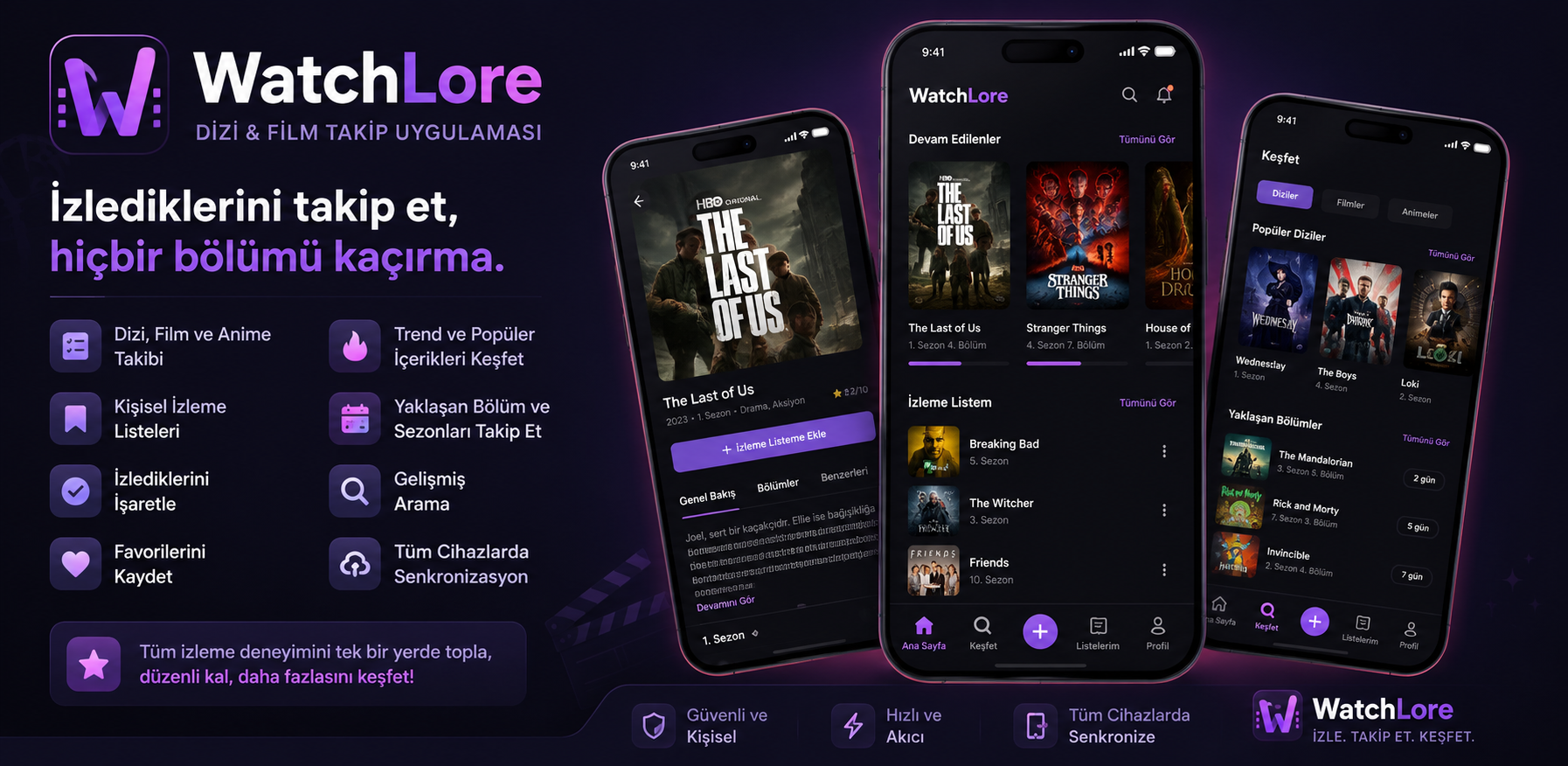
My goal across all of my software is to make daily life easier with a simplicity I often miss in comparable products. I developed WatchLore while managing multiple chronic health conditions, so the app was deliberately designed to remember the details for the user—tracking entertainment should feel effortless, not become another administrative task.
What it does
How we built it
Challenges we ran into
Accomplishments that we're proud of
What we learned
What's next for WatchLore
Inspiration
WatchLore grew out of a simple everyday problem: people watch movies, series and anime across different platforms, then lose track of what they watched, what episode comes next, and what they want to watch together with friends.
What it does
WatchLore is a multilingual movie, TV series, anime and episode tracker with Turkish and English support. Users can search titles, keep personal watchlists, track episodes, create shared lists, get reminders for upcoming episodes, and keep their progress synced across web and mobile.
How we built it
The app is built with React, TypeScript, TanStack Router/Start, Supabase, TMDB, TVMaze, Web Push, Firebase Cloud Messaging/APNs-ready notification flows, and Capacitor for Android/iOS packaging.
During OpenAI Build Week, Codex with GPT-5.6 helped extend the app from a tracker into a more complete product: auth flows, Supabase-backed sync, shared lists, notification scheduling, native packaging checks, performance fixes, tests, README setup instructions, and submission materials.
Challenges
The hardest parts were keeping the product coherent across web and native mobile, making notification logic reliable, keeping API keys/server work behind Supabase Edge Functions, and making the experience feel fast enough for daily use.
Accomplishments
We now have a runnable project with Google/Apple-oriented auth architecture, Supabase sync, shared lists, episode notifications, native packaging, regression tests, and a demo video that shows the core experience.
What we learned
Codex is strongest when used as a continuous pair programmer: it helped inspect existing code, propose safe architecture changes, run tests, identify edge cases, and document the build clearly enough for judges to run it.
What's next
Next steps are expanding closed testing, improving recommendation flows, adding richer social discovery, and polishing the mobile release pipeline for public launch.

Log in or sign up for Devpost to join the conversation.